Wisconsin Last Will and Testament for other Persons
What this document covers
The Last Will and Testament for Other Persons is a legal document that specifies how your property and assets will be distributed upon your death. It clearly states who will inherit your estate, appoints an executor, and can designate guardians for minor children. This form is particularly useful when a standard will does not meet your specific needs, ensuring you address your unique circumstances while adhering to Wisconsin legal requirements.
What’s included in this form
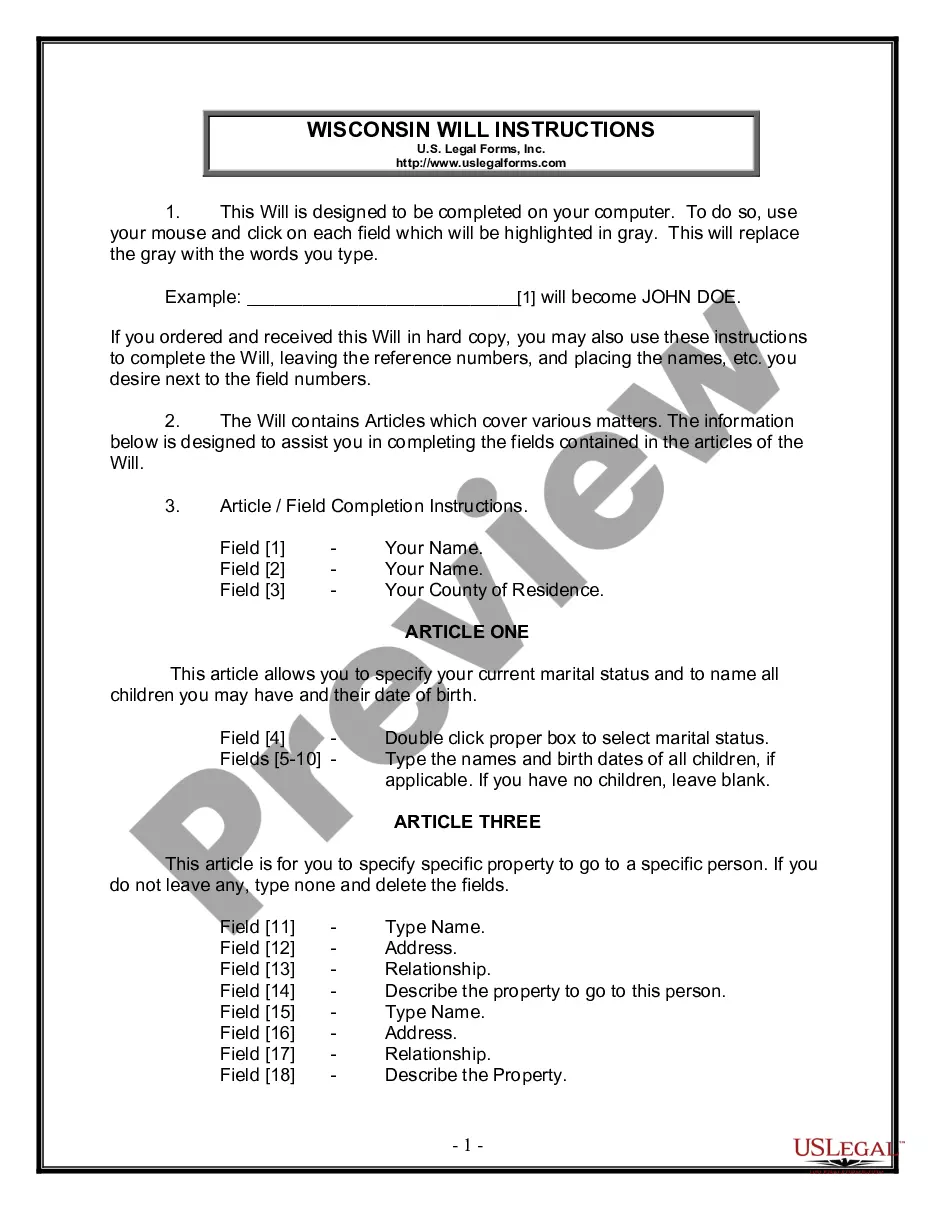
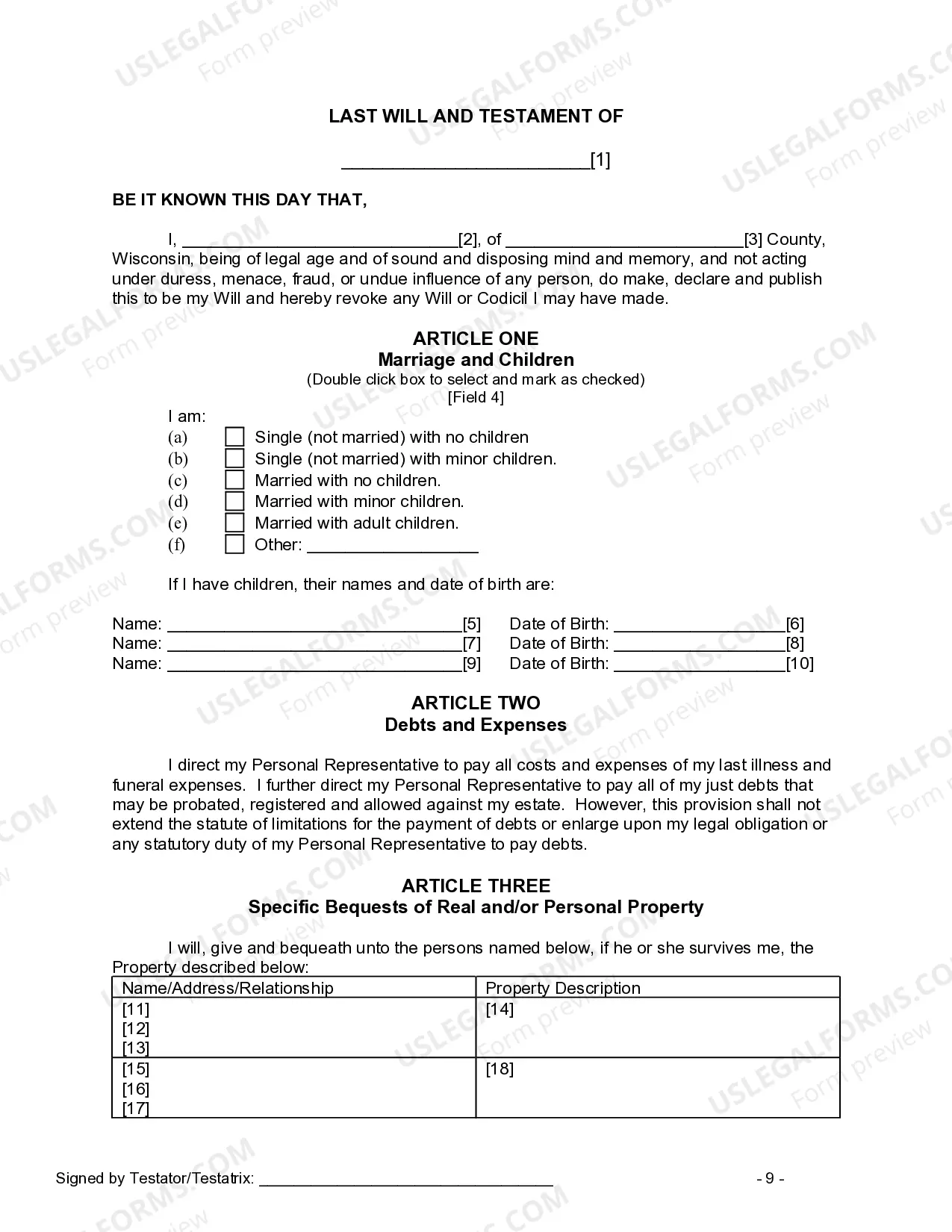
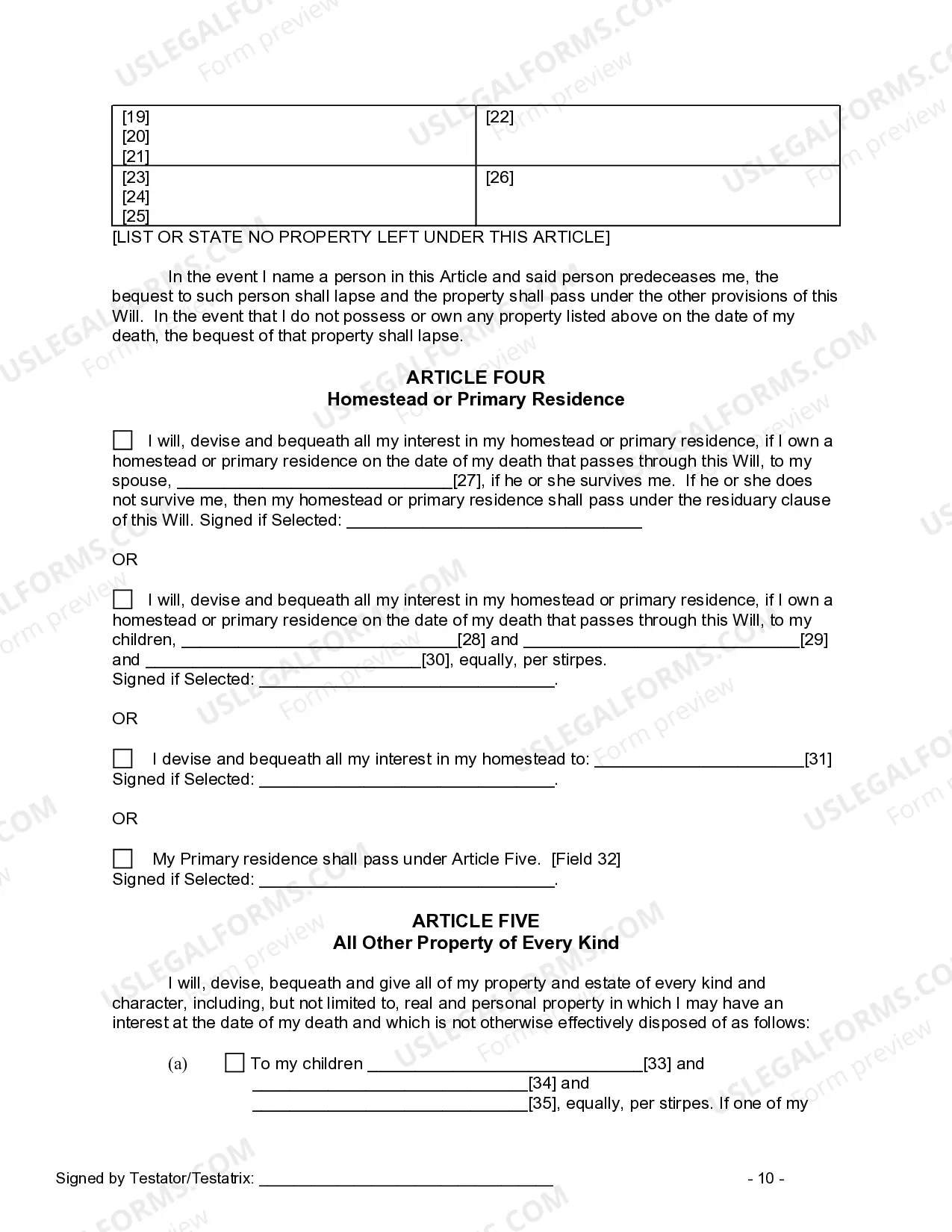
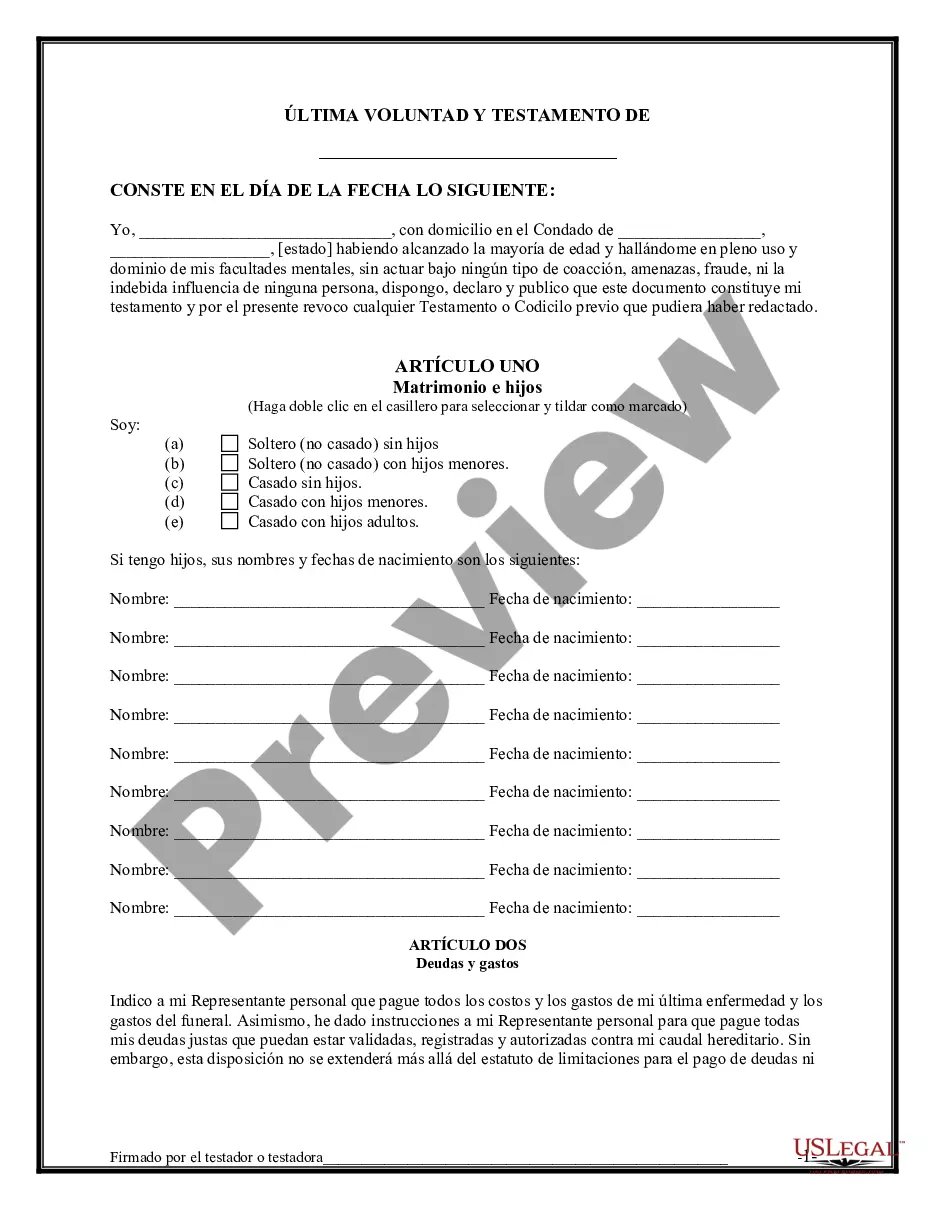
- Your personal information, including name and county of residence.
- Specification of marital status and names of any children.
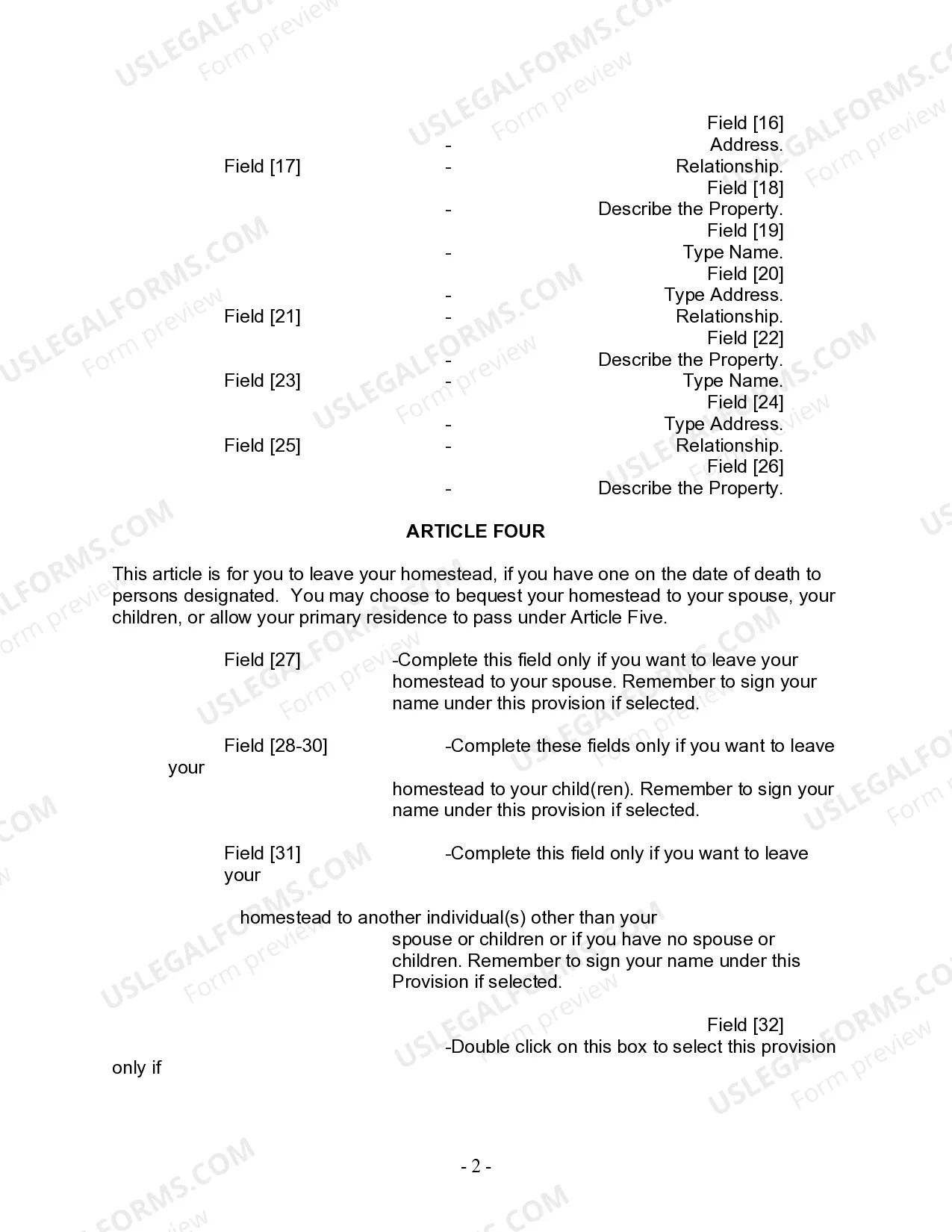
- Details for specific property bequests to designated individuals.
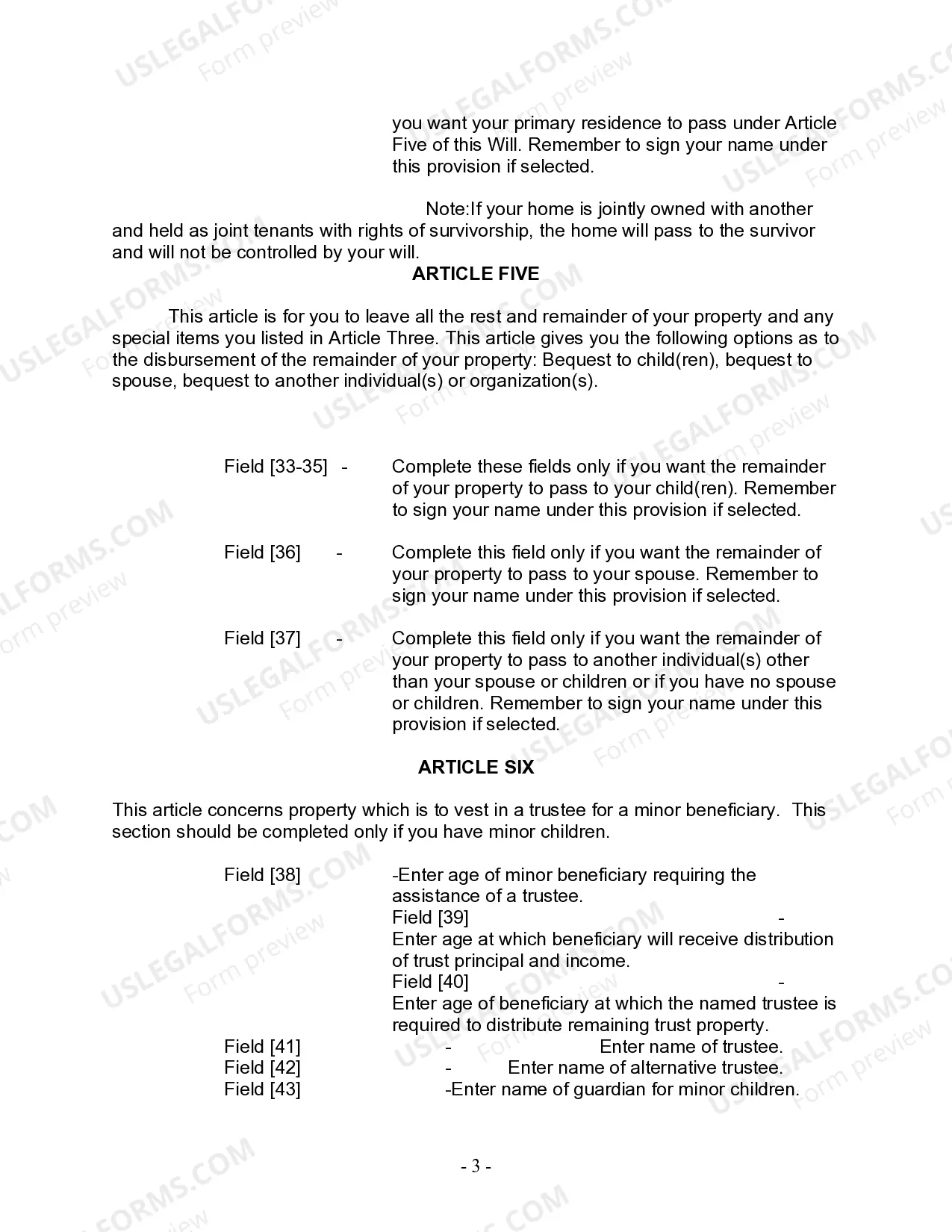
- Provisions regarding the distribution of your homestead and other properties.
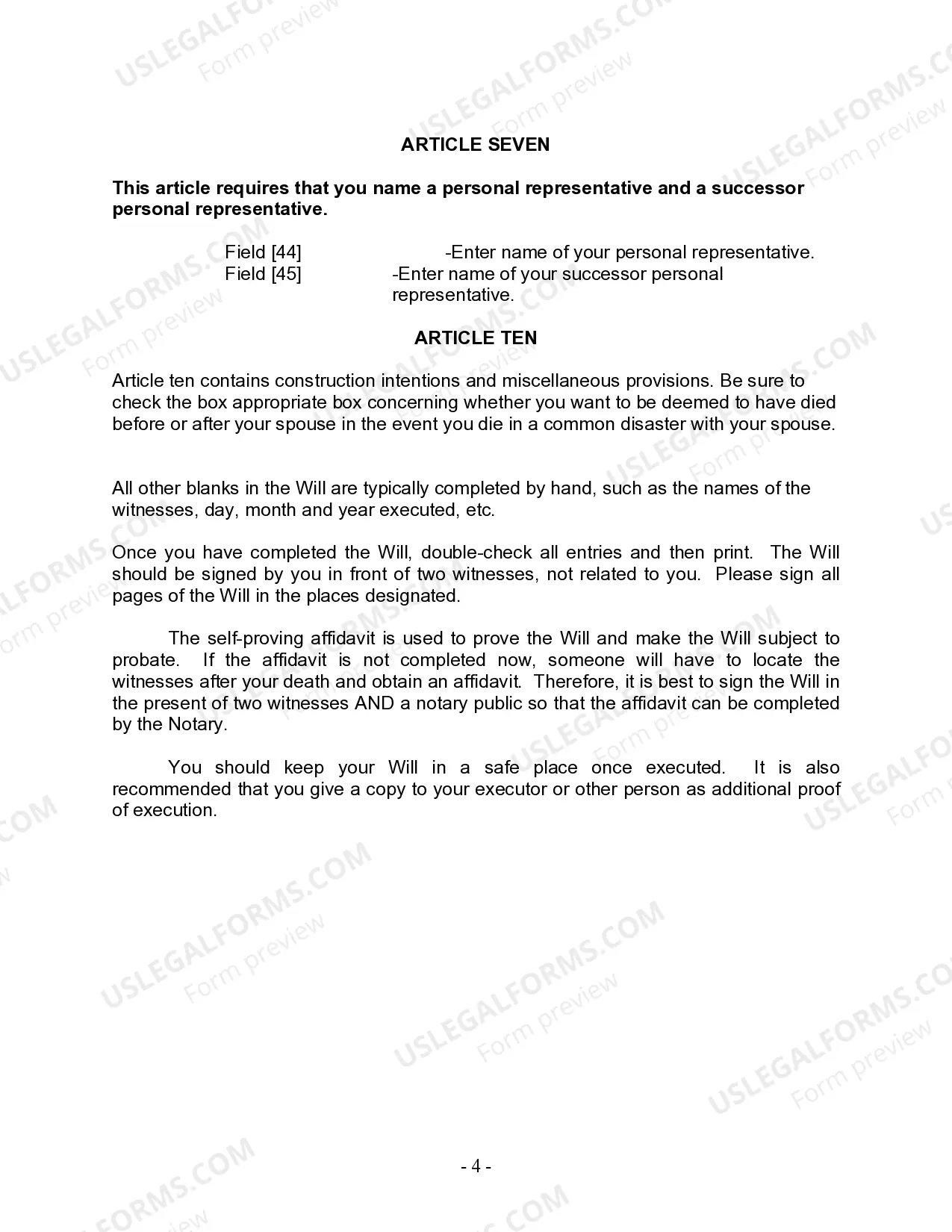
- Appointment of a personal representative to manage your estate.
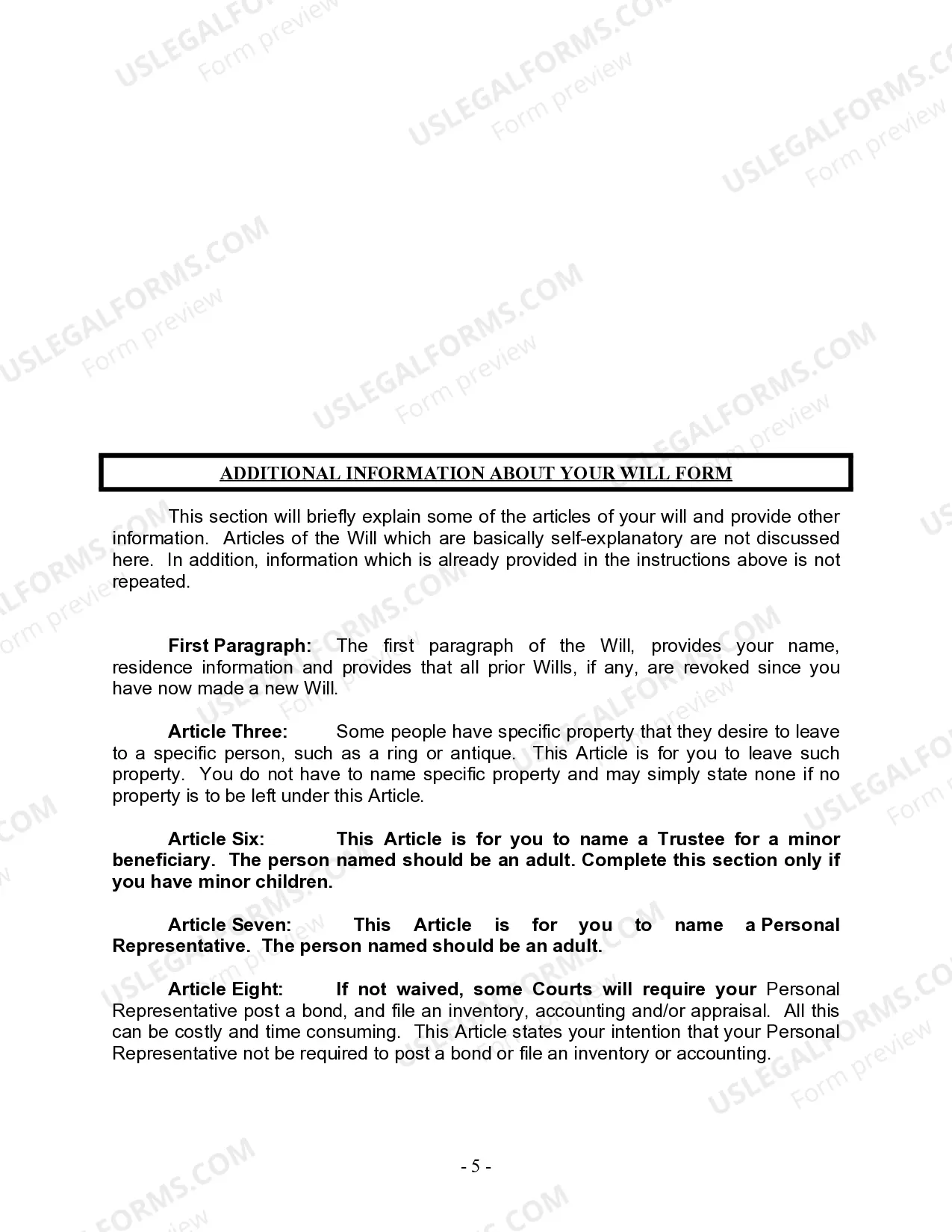
- Mechanisms for creating trusts for minor beneficiaries.






Situations where this form applies
This form should be used if you want to clearly outline your wishes for asset distribution and ensure that your estate is handled according to your specifications. It is particularly important to have a will in place if you have children or specific assets that you wish to leave to designated individuals. Additionally, using a will can prevent potential conflicts among family members and streamline the process of settling your estate after your passing.
Who can use this document
This form is intended for:
- Residents of Wisconsin who wish to create a will.
- Individuals aged 18 and over who are of sound mind.
- Anyone with specific wishes regarding asset distribution.
- Parents wanting to appoint guardians for their minor children.
How to prepare this document
- Identify the parties involved by entering your name and county of residence.
- Specify your marital status and list your children with their dates of birth.
- Detail any specific bequests of property and designate the recipients.
- Appoint a personal representative to manage your estate and a successor in case of their unavailability.
- Ensure the form is signed in front of two witnesses to validate your will.
Notarization guidance
This document requires notarization to meet legal standards. US Legal Forms provides secure online notarization powered by Notarize, allowing you to complete the process through a verified video call, available 24/7.
Get your form ready online
Our built-in tools help you complete, sign, share, and store your documents in one place.
Make edits, fill in missing information, and update formatting in US Legal Forms—just like you would in MS Word.
Download a copy, print it, send it by email, or mail it via USPS—whatever works best for your next step.
Sign and collect signatures with our SignNow integration. Send to multiple recipients, set reminders, and more. Go Premium to unlock E-Sign.
If this form requires notarization, complete it online through a secure video call—no need to meet a notary in person or wait for an appointment.
We protect your documents and personal data by following strict security and privacy standards.

Make edits, fill in missing information, and update formatting in US Legal Forms—just like you would in MS Word.

Download a copy, print it, send it by email, or mail it via USPS—whatever works best for your next step.

Sign and collect signatures with our SignNow integration. Send to multiple recipients, set reminders, and more. Go Premium to unlock E-Sign.

If this form requires notarization, complete it online through a secure video call—no need to meet a notary in person or wait for an appointment.

We protect your documents and personal data by following strict security and privacy standards.
Common mistakes
- Not having the will signed and witnessed appropriately.
- Leaving out key information regarding property and beneficiaries.
- Failing to revoke previous wills, which can create confusion.
Benefits of completing this form online
- Convenient access from your computer, enabling easy completion and customization.
- Editable fields allow you to make changes quickly as needed.
- Reliable formatting that meets legal standards in Wisconsin.
Legal use & context
- The will must be signed by the testator and witnessed appropriately to be valid.
- Specific terms, such as defining beneficiaries and property, must comply with Wisconsin law.
- It is advisable to consult a legal professional for additional guidance tailored to individual situations.
Quick recap
- The Last Will and Testament for other Persons is essential for estate planning.
- Ensure clear identification of beneficiaries and distribution of assets.
- Follow Wisconsin's requirements for signing and witness standards for enforceability.
- Regularly review and update your will to reflect life changes.
Looking for another form?
Form popularity
FAQ
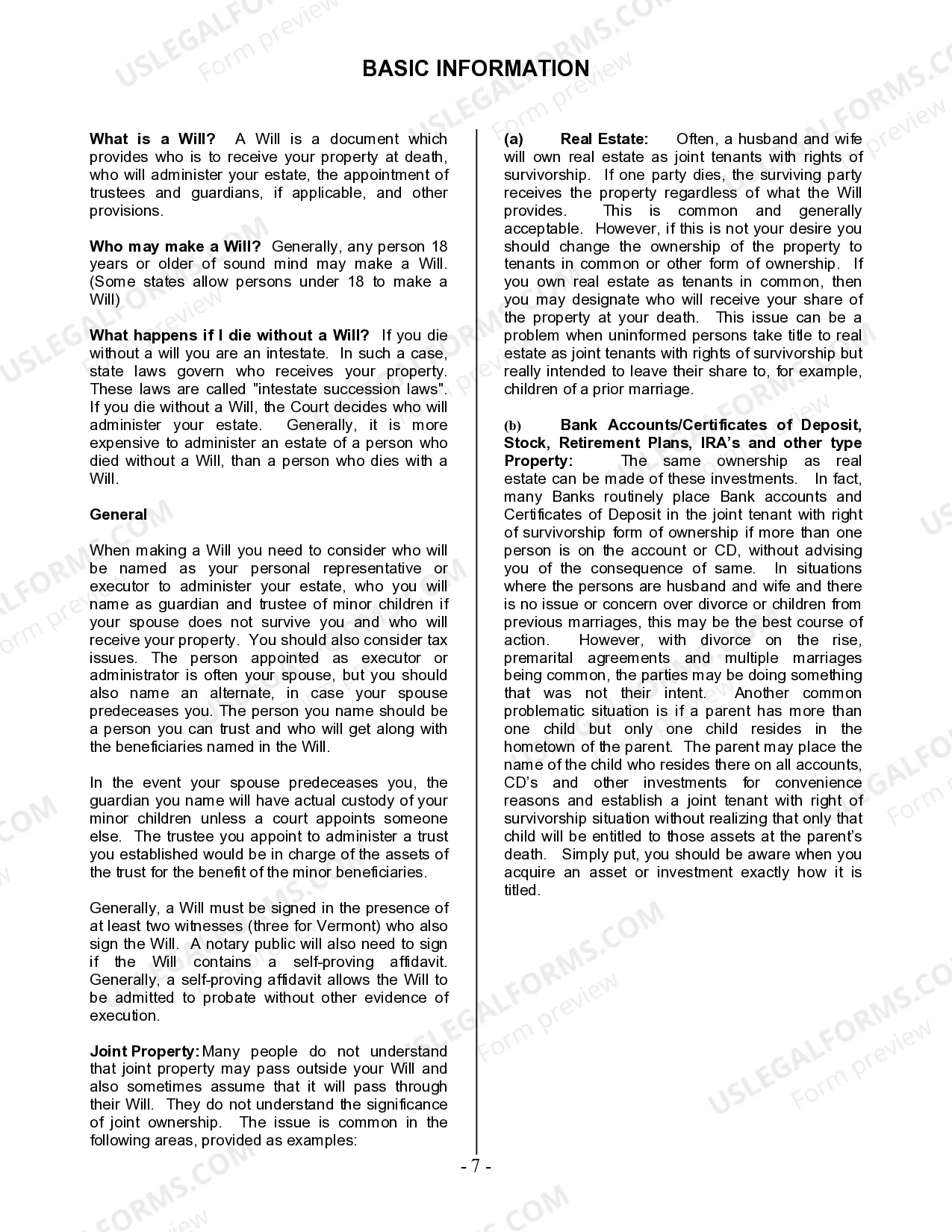
Drafting the will yourself is less costly and may put you out about $150 or less. Depending on your situation, expect to pay anywhere between $300 and $1,000 to hire a lawyer for your will. While do-it-yourself will kits may save you time and money, writing your will with a lawyer ensures it will be error-free.
What makes a will legal?The will must be signed by at least two witnesses. The witnesses must watch you sign the will, though they don't need to read it. Your witnesses, in most states, must be people who won't inherit anything under the will.
What is a will? A will is simply a legal document in which you, the testator, declare who will manage your estate after you die. Your estate can consist of big, expensive things such as a vacation home but also small items that might hold sentimental value such as photographs.
Decide what to include in your will. Be specific about where all of your stuff goes. Select your beneficiaries. Choose an executor for your will. Name guardians for your children. Sign your will in front of witnesses. Let everyone know beforehand. Store your will in a legacy drawer.