Wisconsin Life Documents Planning Package, including Will, Power of Attorney and Living Will
Overview of this form package
The Wisconsin Life Documents Planning Package is a comprehensive set of legal forms designed to help individuals manage their personal affairs in critical areas such as health care and property management. This package contains state-specific documents including a Last Will and Testament, Powers of Attorney, and a Living Will, ensuring that your wishes are honored in both health and financial matters. By utilizing this form package, you can effectively plan for your future and safeguard your interests and those of your loved ones.
Forms you’ll find in this package
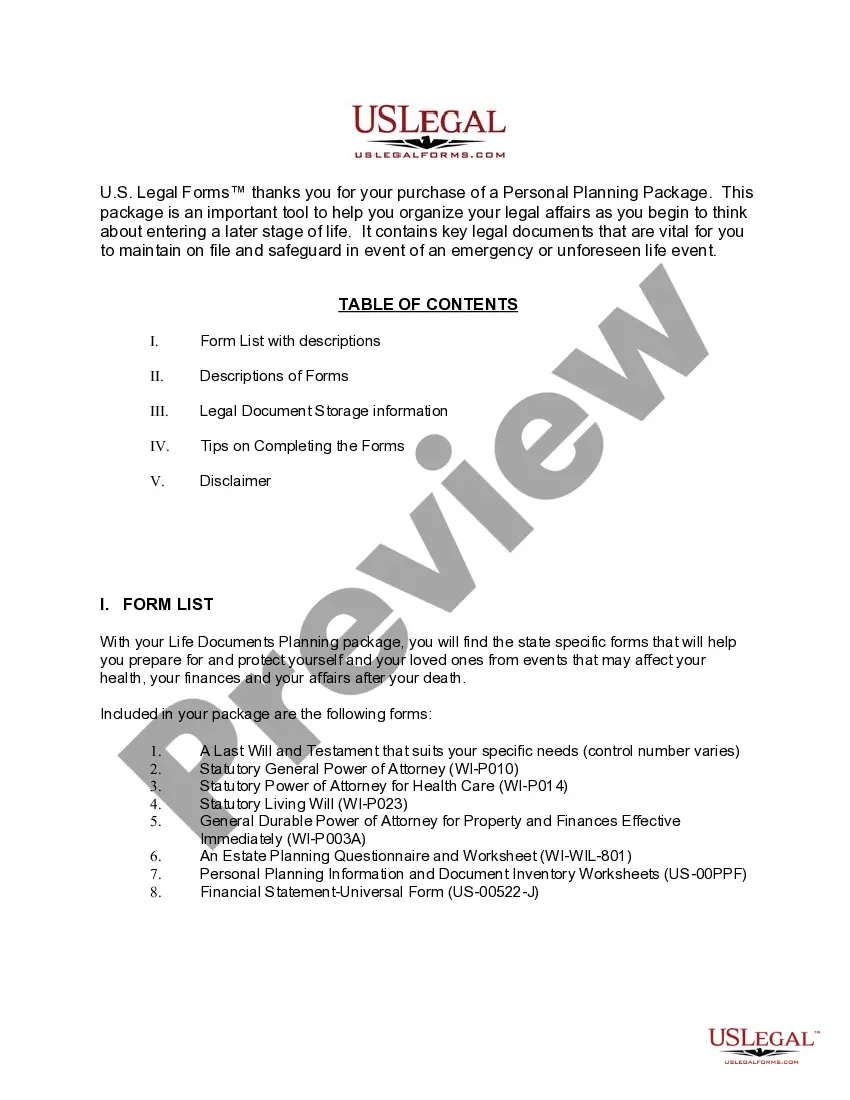
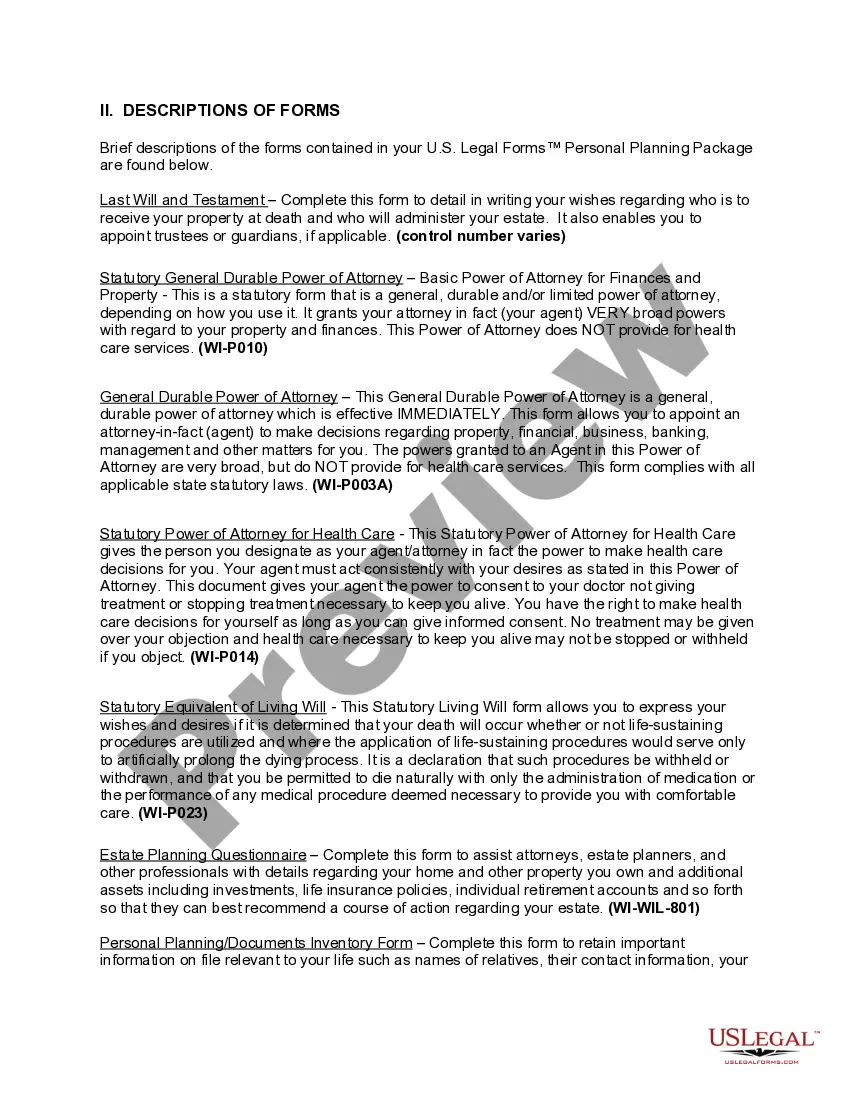
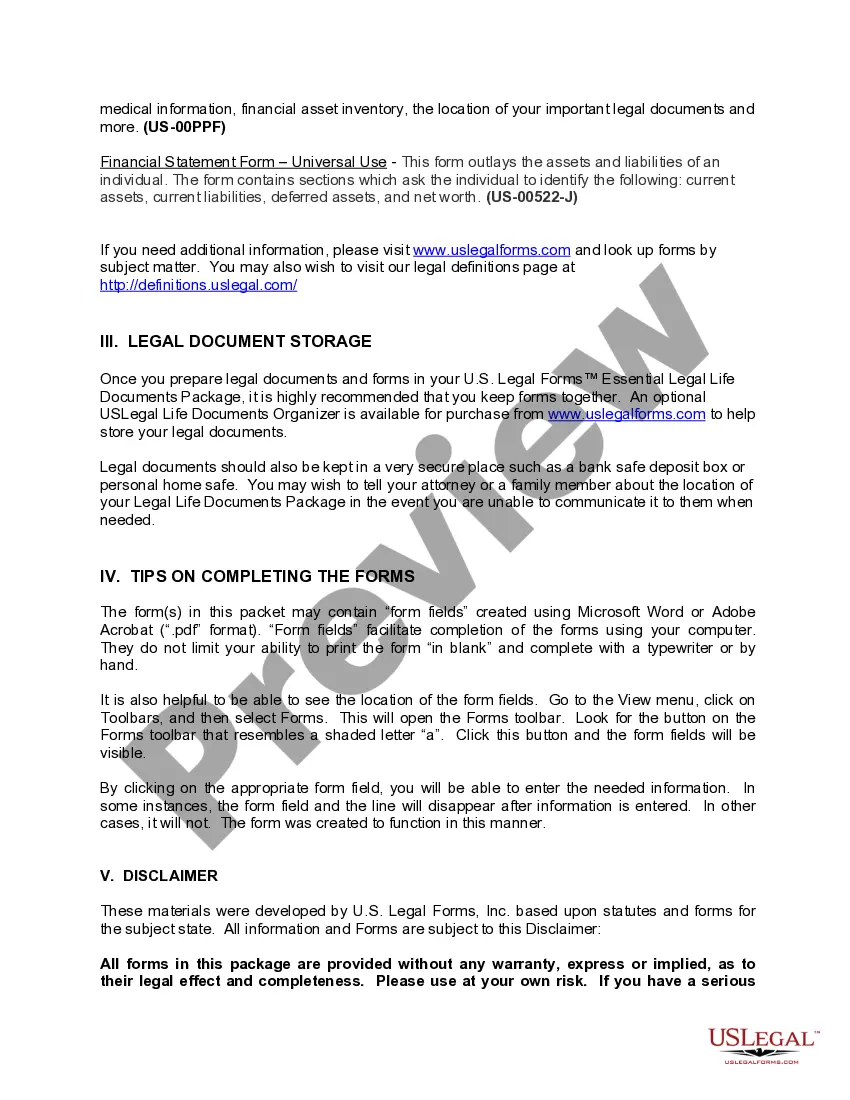
- Last Will and Testament
- General Durable Power of Attorney for Property and Finances or Financial Effective Immediately
- Statutory General Power of Attorney with Durable Provisions - Basic Power of Attorney for Finances and Property
- Statutory Power of Attorney for Health Care
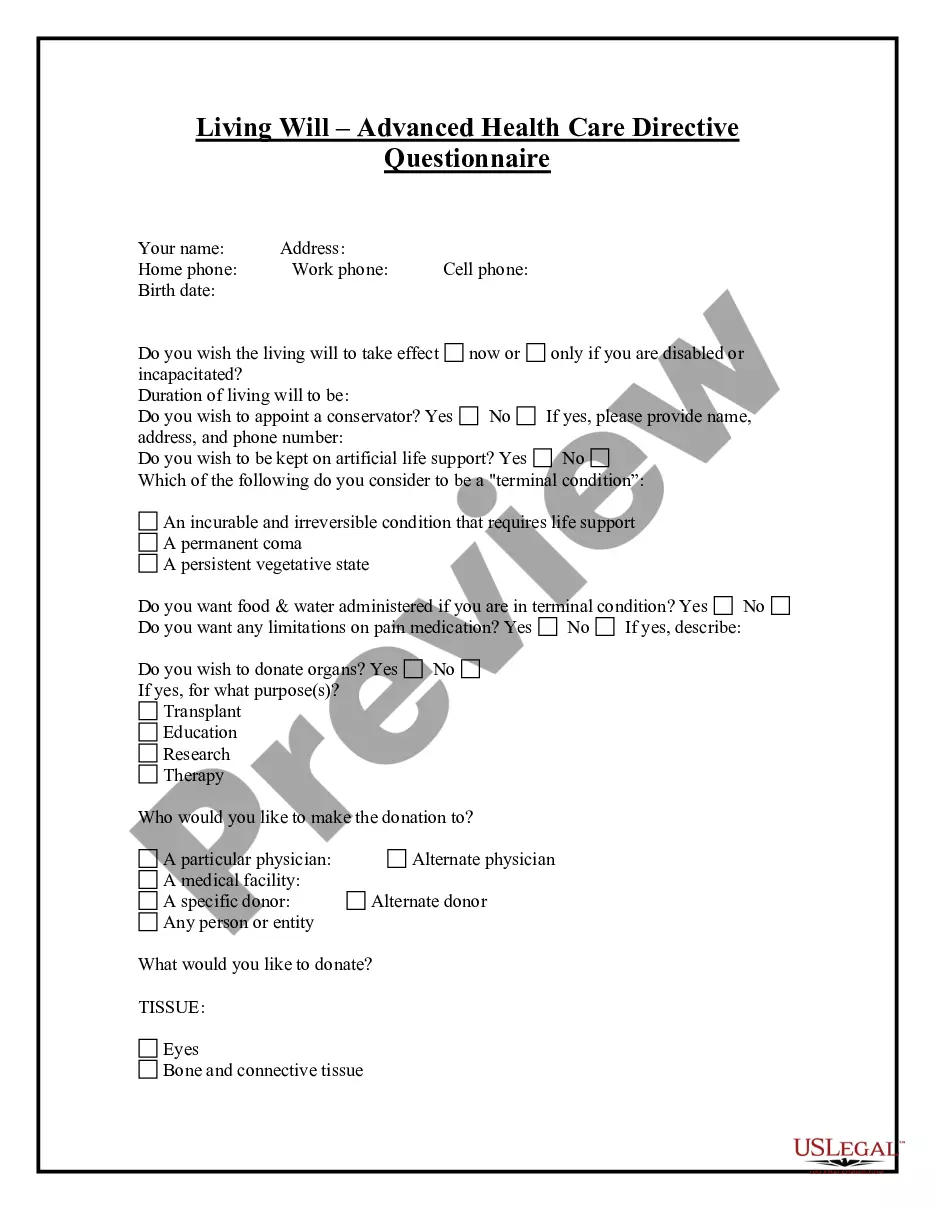
- Statutory Living Will - Declaration to Healthcare Professionals
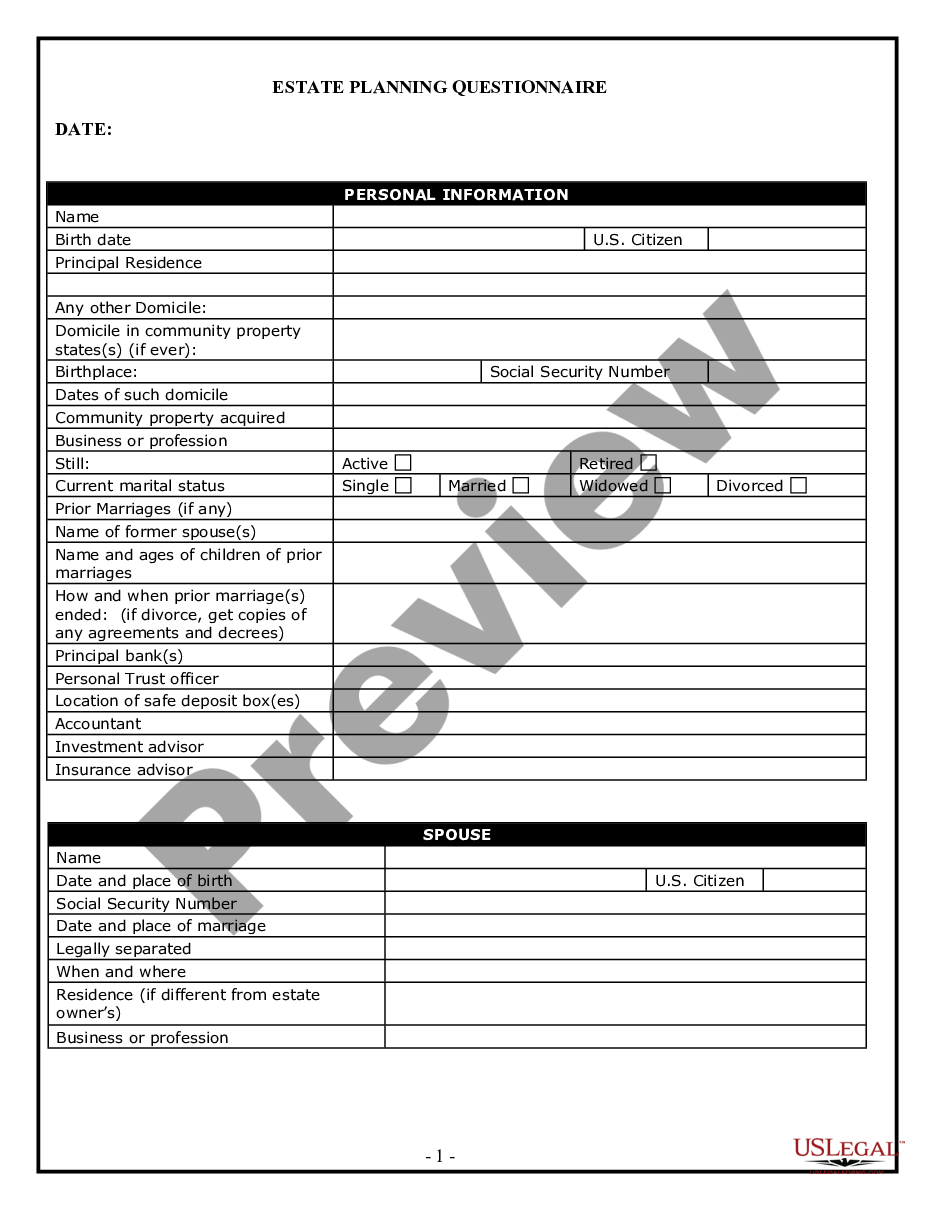
- Estate Planning Questionnaire and Worksheets
- Sample Letter for Request for Free Credit Report Allowed by Federal Law
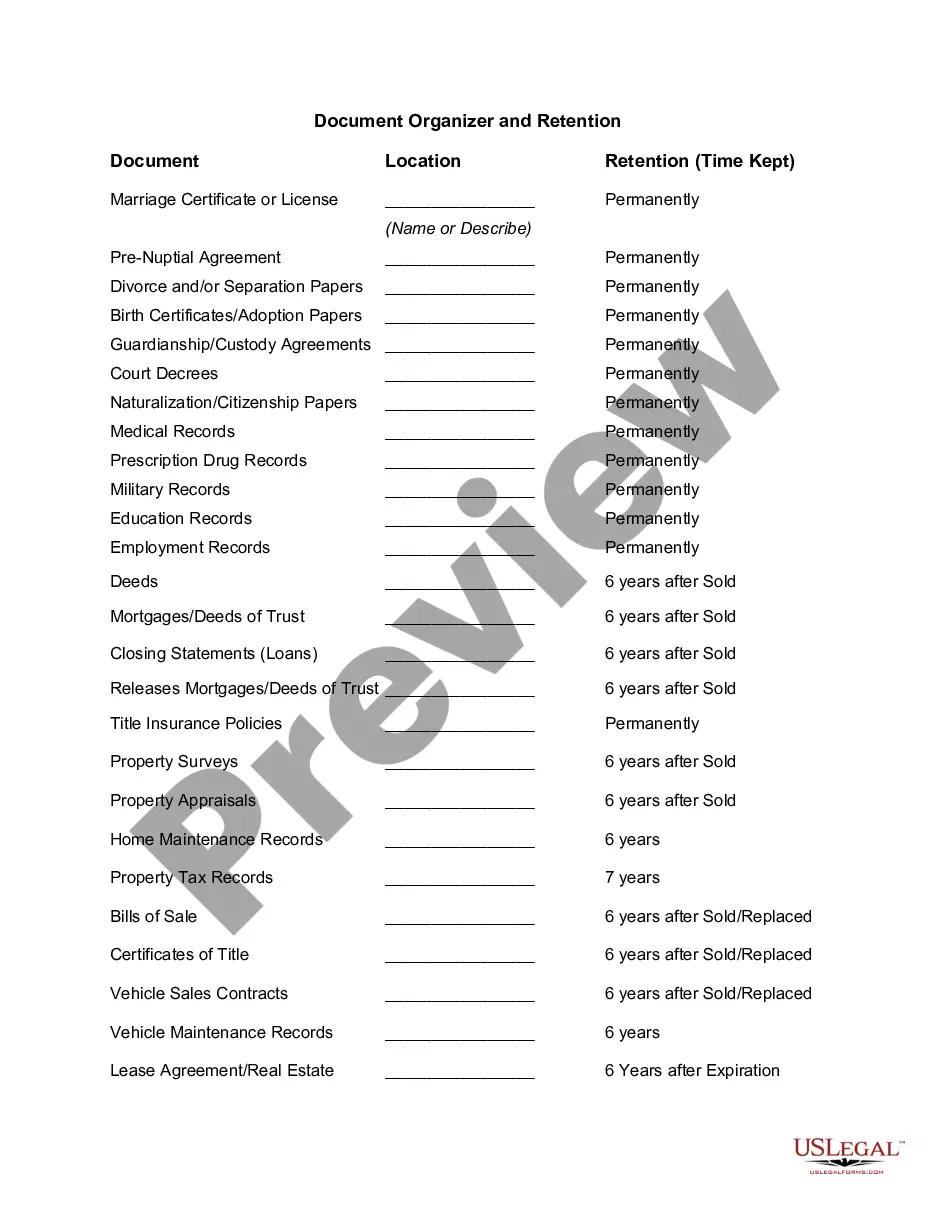
- Personal Planning Information and Document Inventory Worksheets - A Legal Life Document
- Estate Planning Questionnaire




Common use cases
This form package is essential in various situations, such as:
- When you want to ensure your assets are distributed according to your wishes after your passing.
- If you wish to designate someone to manage your financial affairs in the event you become incapacitated.
- To express your health care preferences and appoint someone to make medical decisions on your behalf.
- When creating a structured plan for your estate that reflects your unique circumstances.
Intended users of this form package
- Individuals preparing for future health-related decisions.
- Anyone looking to organize their estate and ensure proper asset distribution.
- People interested in appointing a trusted individual to manage financial or health care decisions.
- Residents of Wisconsin seeking legally compliant forms tailored to state requirements.
Completing these forms step by step
- Review the included forms and ensure you understand each document's purpose.
- Identify the relevant parties involved in each form (e.g., executor, health care agent).
- Complete the forms with accurate and truthful information, following the instructions carefully.
- Sign the documents in the presence of required witnesses, if applicable.
- Store the completed forms in a secure location and inform trusted individuals of their whereabouts.
Notarization details for included forms
Certain documents in this package must be notarized for legal effectiveness. Our online notarization service, powered by Notarize, lets you verify and sign documents remotely through an encrypted video session, available anytime.
Get your form ready online
Our built-in tools help you complete, sign, share, and store your documents in one place.
Make edits, fill in missing information, and update formatting in US Legal Forms—just like you would in MS Word.
Download a copy, print it, send it by email, or mail it via USPS—whatever works best for your next step.
Sign and collect signatures with our SignNow integration. Send to multiple recipients, set reminders, and more. Go Premium to unlock E-Sign.
If this form requires notarization, complete it online through a secure video call—no need to meet a notary in person or wait for an appointment.
We protect your documents and personal data by following strict security and privacy standards.

Make edits, fill in missing information, and update formatting in US Legal Forms—just like you would in MS Word.

Download a copy, print it, send it by email, or mail it via USPS—whatever works best for your next step.

Sign and collect signatures with our SignNow integration. Send to multiple recipients, set reminders, and more. Go Premium to unlock E-Sign.

If this form requires notarization, complete it online through a secure video call—no need to meet a notary in person or wait for an appointment.

We protect your documents and personal data by following strict security and privacy standards.
Avoid these common issues
- Failing to specify beneficiaries correctly in the Last Will.
- Not choosing alternate agents for Powers of Attorney, which may lead to complications if the primary agent is unavailable.
- Forgetting to review and update documents regularly to reflect major life events.
- Improperly executing forms, such as neglecting witness signatures or notarization when needed.
Benefits of using this package online
- Convenience: Access and complete your forms from home at any time.
- Editability: Easily update forms as your personal circumstances change.
- Reliability: Forms are drafted by licensed attorneys, ensuring they meet legal requirements.
- Time-saving: Quickly download and print your documents, avoiding long wait times.
Legal use & context
- These documents are legally recognized in Wisconsin and are essential for effective estate planning.
- Properly executed forms can help prevent disputes among family members after death.
- Understanding the contents and implications of the forms can empower you to make informed decisions.
What to keep in mind
- The Wisconsin Life Documents Planning Package provides essential forms for managing health care and financial decisions.
- Proper completion and storage of these documents are critical to ensure your wishes are honored.
- This package is tailored to comply with Wisconsin's specific legal requirements.
Looking for another form?

Form popularity
FAQ
The Wisconsin Life Documents Planning Package is a Wisconsin‑specific bundle of essential forms for health care and financial planning. It combines a Last Will and Testament, Powers of Attorney, and a Living Will to help you express wishes, appoint decision makers, and protect loved ones if you’re unable to act.
The package includes a Last Will and Testament, Powers of Attorney (for health care and financial matters), and a Living Will. These Wisconsin forms work together to guide asset distribution, designate an agent, and express medical preferences to protect you and your family.
A living will states your health care preferences for end‑of‑life decisions, while a durable power of attorney for health care designates someone to act on your medical wishes when you cannot. This package pairs both documents so you can document preferences and appoint an agent to carry them out.
A living will states medical preferences; a health care power of attorney appoints an agent to make decisions. In practice, the agent should follow your living will when possible, but the existence of a POA gives your designated person authority to act, so alignment and communication are key.
Yes, you can draft your own will, but Wisconsin generally requires the will to be in writing and properly executed, often with witnesses. Notarization alone does not guarantee validity. Using this package can help ensure the will follows Wisconsin requirements and aligns with your power of attorney and living will.
This package bundles a Last Will and Testament, Powers of Attorney, and a Living Will into a single Wisconsin‑compliant set. It promotes consistency, reduces the risk of conflicting directives, saves time, and helps ensure your health care and estate plans work together.