Living Will Questionnaire
Overview of this form
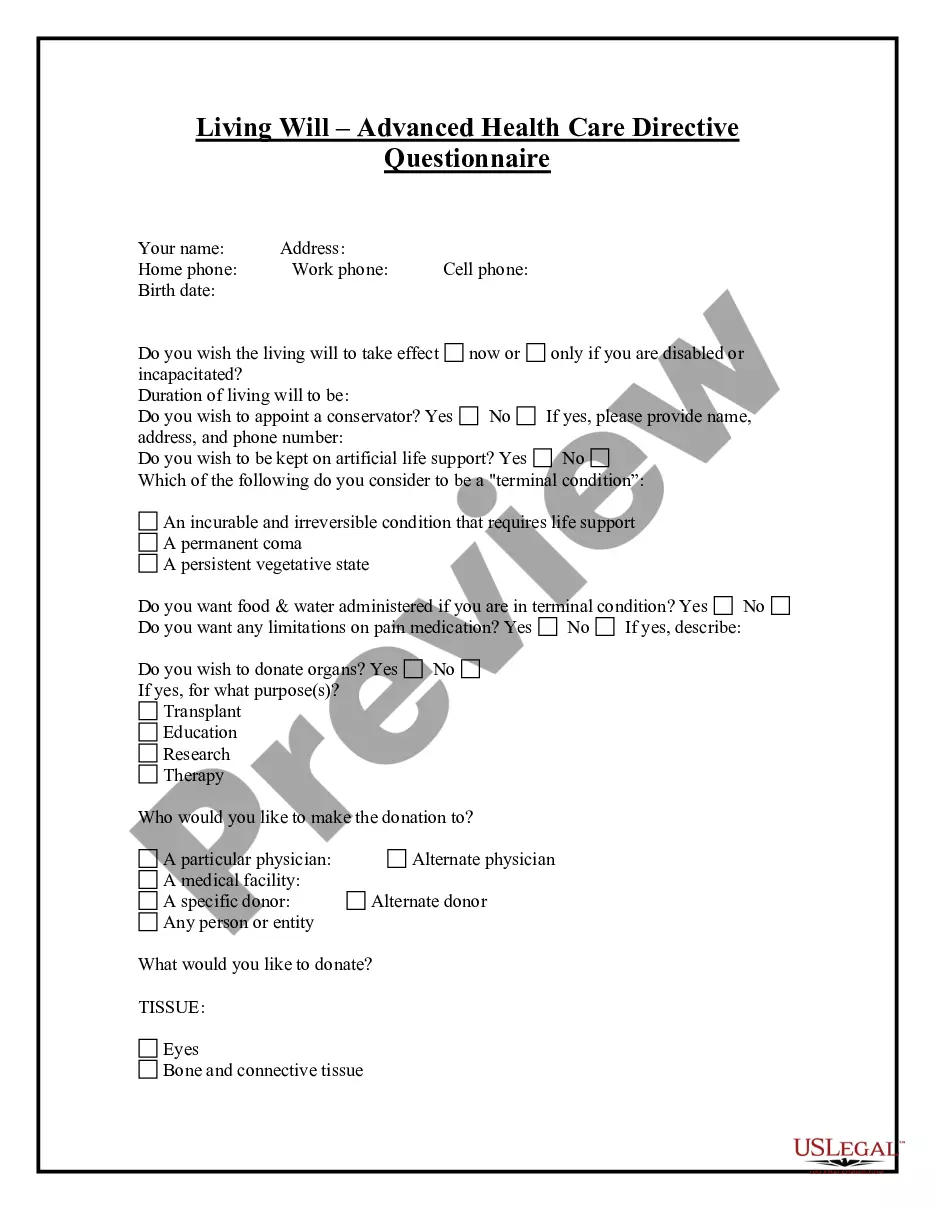
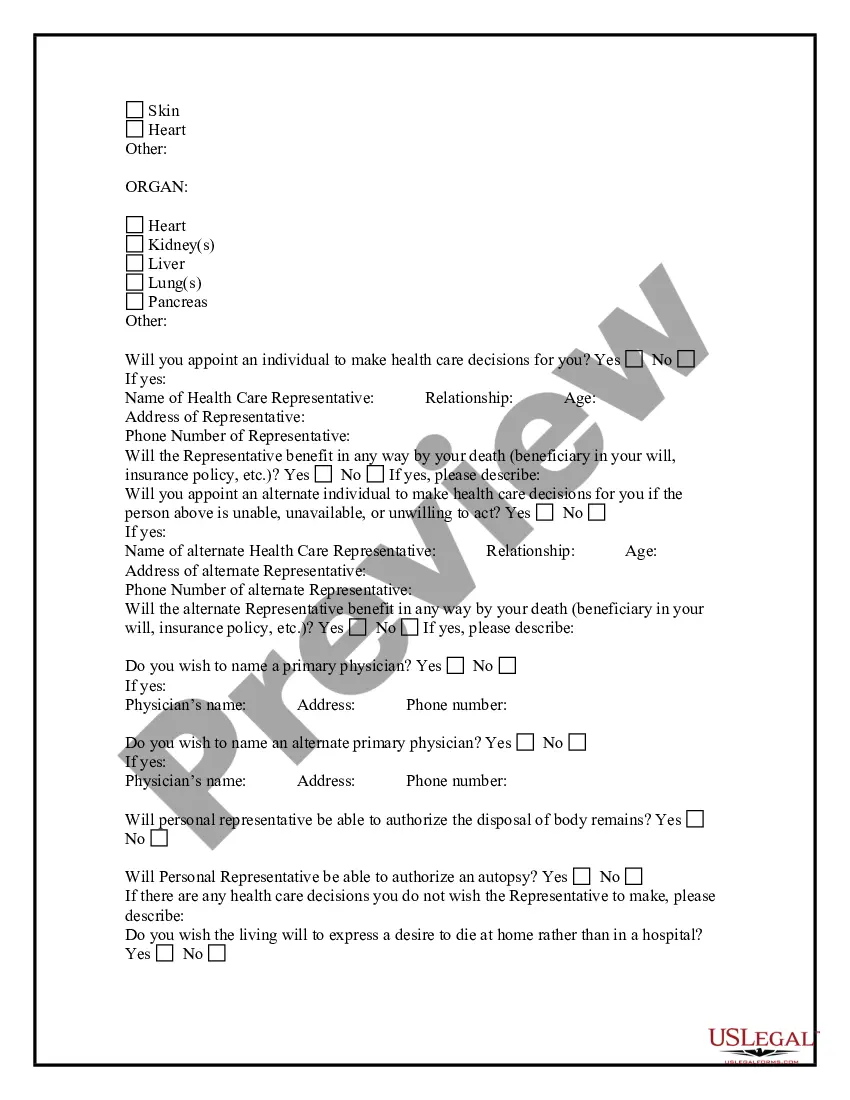
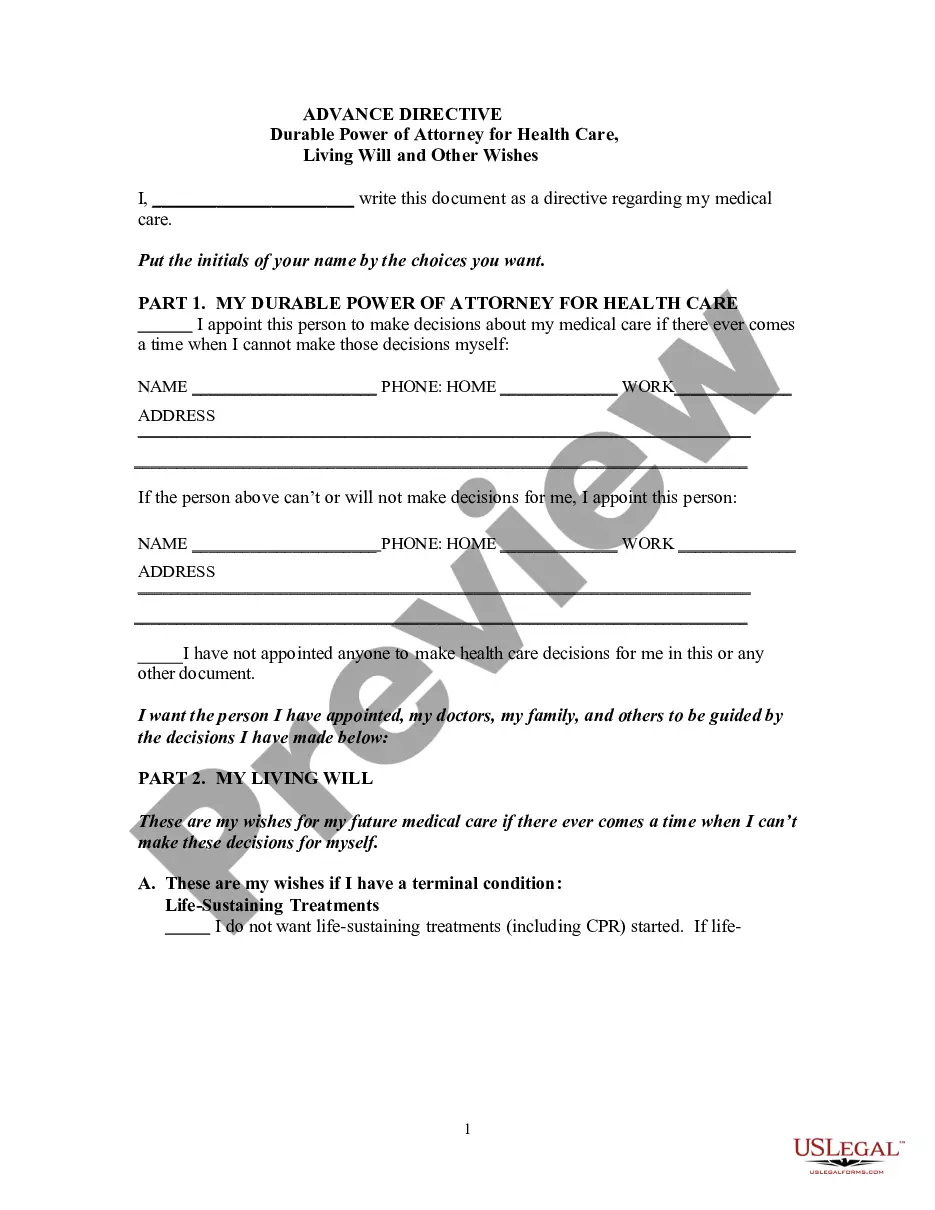
The Living Will Questionnaire is a tool designed to help individuals clarify their preferences regarding medical treatment in the event of a serious illness or incapacitation. This form differs from other legal documents by specifically focusing on the individual's wishes concerning life-sustaining measures, such as whether they wish to receive food and water in a terminal condition. By completing this questionnaire, users can ensure that their healthcare preferences are respected and understood by medical providers and loved ones.
What’s included in this form
- Options for medical scenarios, including permanent coma and persistent vegetative state.
- Questions about preferences for food and water administration in a terminal condition.
- Clear identification of the individual's wishes regarding end-of-life care.

Situations where this form applies
This form should be used when you want to establish your healthcare preferences regarding medical treatments in serious situations. It is particularly useful when you are preparing to discuss end-of-life care with family or healthcare providers. Completing the Living Will Questionnaire is a proactive step to ensure that your wishes are known and followed, especially if you become unable to communicate them yourself.
Who can use this document
This form is intended for anyone wishing to document their healthcare preferences. It is especially relevant for:
- Individuals with significant health concerns or chronic conditions.
- Persons who want to ensure their end-of-life wishes are respected.
- Family members of individuals who may be unable to make their own healthcare decisions in the future.
Completing this form step by step
- Review the medical scenarios listed, focusing on your personal views.
- Indicate your preferences for receiving food and water in terminal conditions.
- Provide any additional thoughts or wishes regarding healthcare preferences.
- Keep a copy for your own records and provide a copy to your healthcare providers and family members.
Notarization guidance
This form usually doesn’t need to be notarized. However, local laws or specific transactions may require it. Our online notarization service, powered by Notarize, lets you complete it remotely through a secure video session, available 24/7.
Get your form ready online
Our built-in tools help you complete, sign, share, and store your documents in one place.
Make edits, fill in missing information, and update formatting in US Legal Forms—just like you would in MS Word.
Download a copy, print it, send it by email, or mail it via USPS—whatever works best for your next step.
Sign and collect signatures with our SignNow integration. Send to multiple recipients, set reminders, and more. Go Premium to unlock E-Sign.
If this form requires notarization, complete it online through a secure video call—no need to meet a notary in person or wait for an appointment.
We protect your documents and personal data by following strict security and privacy standards.

Make edits, fill in missing information, and update formatting in US Legal Forms—just like you would in MS Word.

Download a copy, print it, send it by email, or mail it via USPS—whatever works best for your next step.

Sign and collect signatures with our SignNow integration. Send to multiple recipients, set reminders, and more. Go Premium to unlock E-Sign.

If this form requires notarization, complete it online through a secure video call—no need to meet a notary in person or wait for an appointment.

We protect your documents and personal data by following strict security and privacy standards.
Avoid these common issues
- Failing to discuss your preferences with loved ones after completing the form.
- Not updating the questionnaire as your preferences or health status changes.
- Leaving key sections blank or unclear, which can lead to misunderstandings.
Benefits of using this form online
- Immediate access to a professionally drafted questionnaire tailored to your needs.
- The ability to download and edit the form at your convenience.
- Secure storage of your completed form for easy access in the future.
Legal use & context
- This form is a crucial element in establishing your medical care preferences legally.
- It helps prevent potential disputes regarding your treatment in emergencies.
- Ensure the form is appropriately stored and accessible to relevant parties to maintain its effectiveness.
Quick recap
- The Living Will Questionnaire helps you articulate your medical treatment preferences.
- Completing this form can aid your loved ones and healthcare providers in decision-making.
- Review and update your preferences regularly to ensure they reflect your current wishes.
Looking for another form?


Form popularity
FAQ
Step 1 Download Your Living Will. Download in Adobe PDF, Microsoft Word (. Step 2 Health Care Directive. Step 3 Life Support. Step 4 Life-Sustaining Treatment. Step 5 End of Life Wishes. Step 6 Medical Power of Attorney. Step 7 Witness Acknowledgment. Step 8 Notary Acknowledgment.
The living will. Durable power of attorney for health care/Medical power of attorney. POLST (Physician Orders for Life-Sustaining Treatment) Do not resuscitate (DNR) orders. Organ and tissue donation.
The name and contact information of your healthcare agent/proxy. Answers to specific questions about your preferences for care if you become unable to speak for yourself. Names and signatures of individuals who witness your signing your advance directive, if required.
Living will. A living will is a written, legal document that spells out medical treatments you would and would not want to be used to keep you alive, as well as your preferences for other medical decisions, such as pain management or organ donation. In determining your wishes, think about your values.
Step 1 Download Your Living Will. Download in Adobe PDF, Microsoft Word (. Step 2 Health Care Directive. Step 3 Life Support. Step 4 Life-Sustaining Treatment. Step 5 End of Life Wishes. Step 6 Medical Power of Attorney. Step 7 Witness Acknowledgment. Step 8 Notary Acknowledgment.
Living will. A living will is a written, legal document that spells out medical treatments you would and would not want to be used to keep you alive, as well as your preferences for other medical decisions, such as pain management or organ donation. In determining your wishes, think about your values.
An advance directive is a set of instructions someone prepares in advance of ill health that determines his healthcare wishes. A living will is one type of advance directive that becomes effective when a person is terminally ill.
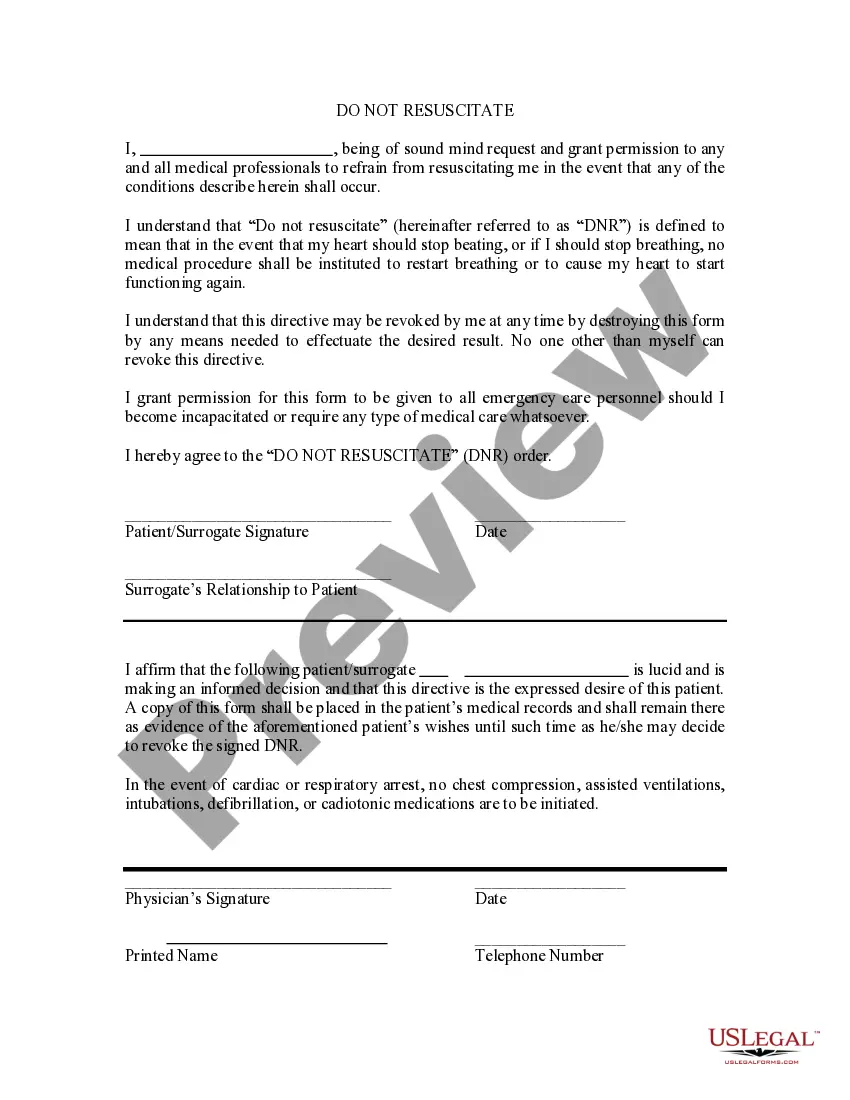
A DNR is a document that specifies that the patient does not want to be resuscitated.A Living Will is a legal document wherein the patient designates if they want life support continued if they are incapacitated and in a "terminal condition", an "end stage condition", or in a "persistent vegetative state".