Employer and Employee Confidentiality Agreement
What is this form?
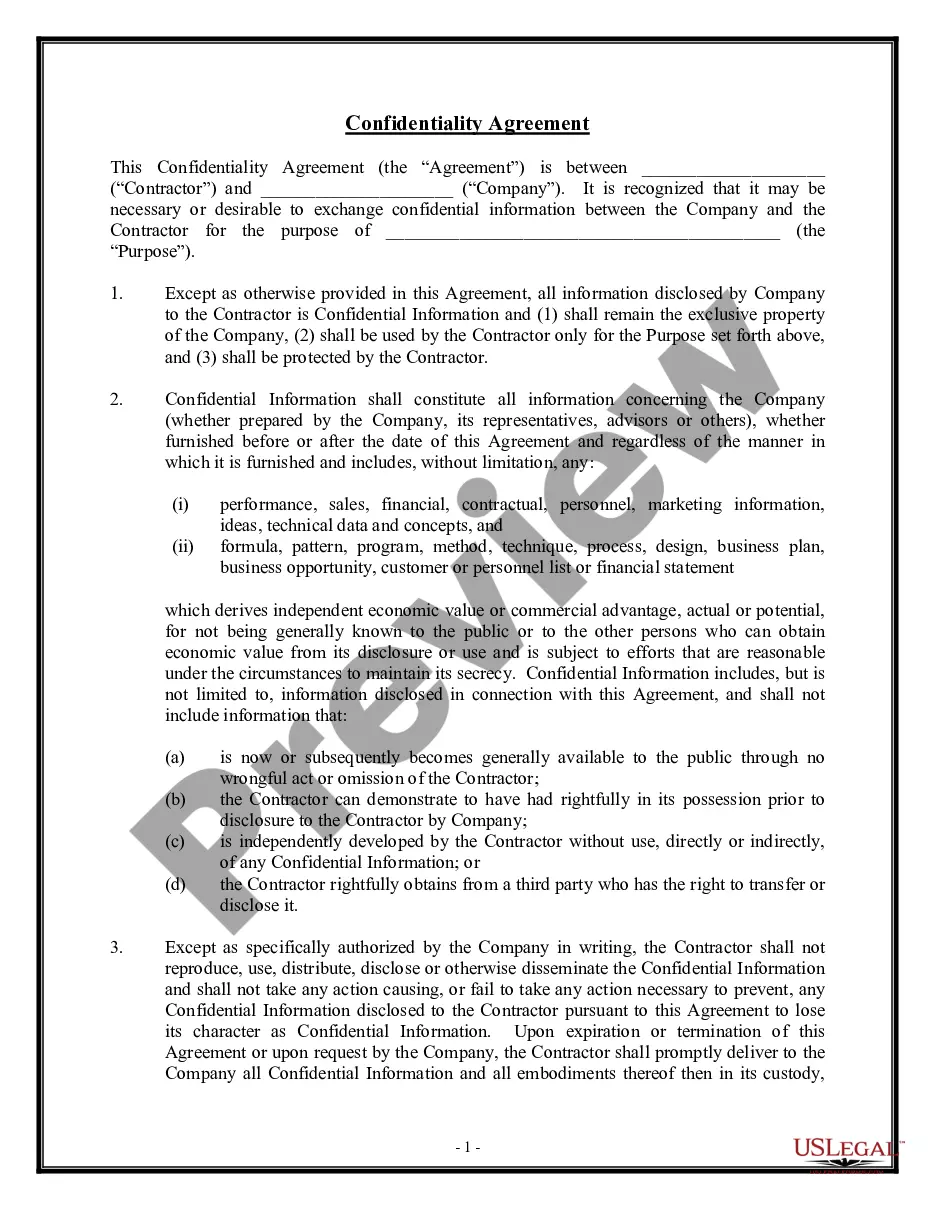
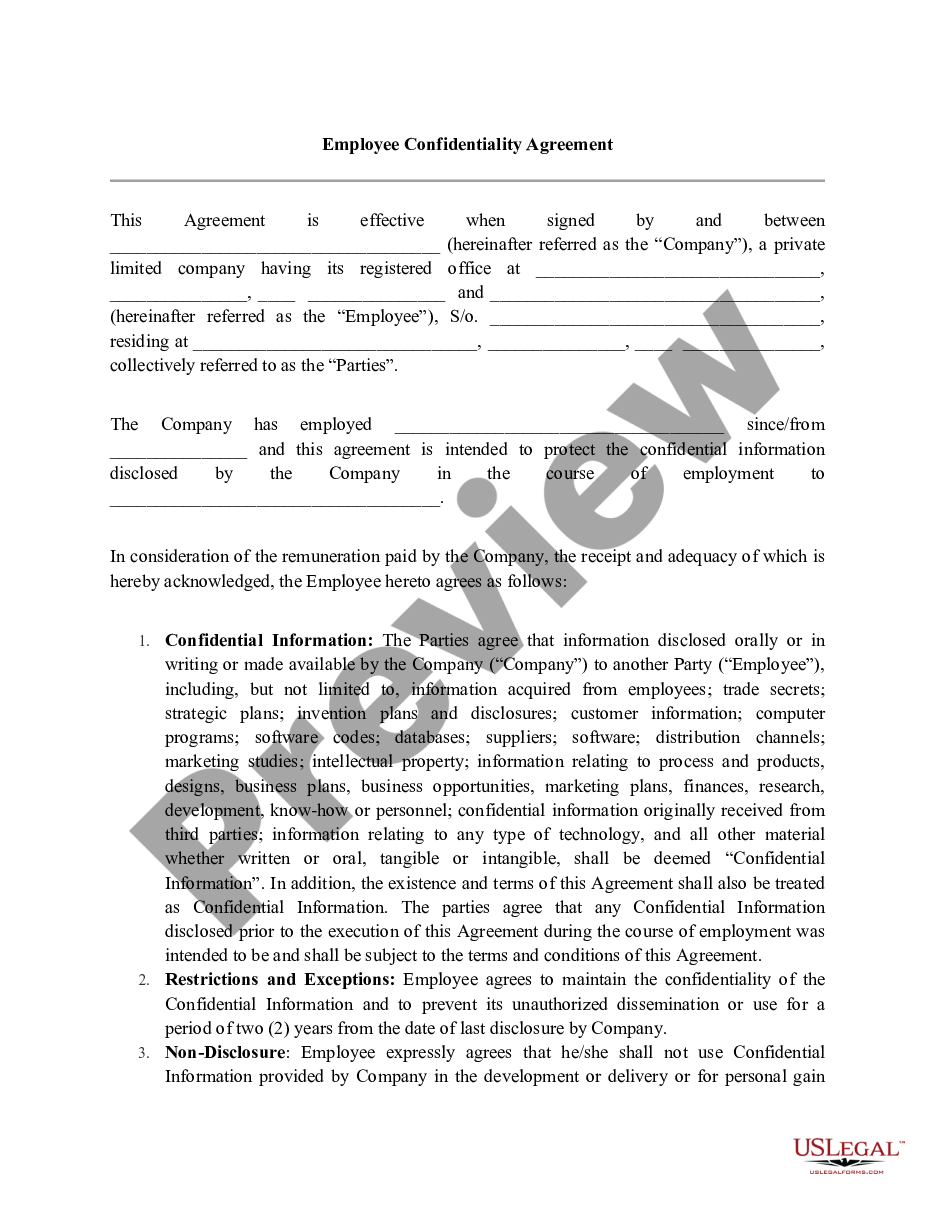
The Employer and Employee Confidentiality Agreement is a legal document designed to protect sensitive information shared between an employer and an employee. This agreement establishes the obligations of both parties to maintain confidentiality regarding proprietary and confidential information, including patient data and financial details. Unlike general non-disclosure agreements, this form specifically focuses on the employer-employee relationship, ensuring both parties understand their responsibilities and potential consequences in case of a breach.
What’s included in this form
- Identification of the Employee and Employer.
- Definitions of confidential information, including patient information and operational data.
- Obligations to safeguard sensitive information and restrict access to authorized personnel only.
- Conditions under which disclosure of confidential information is permitted.
- Consequences of breaching the agreement, including possible disciplinary action and legal penalties.
- Terms for returning confidential materials upon termination of employment.

When to use this form
This form should be used when an employee is hired or engaged by an employer who handles confidential information. It is particularly essential in healthcare, legal, and financial industries where maintaining privacy and confidentiality is legally required. Use this agreement when onboarding new employees, transferring employees to positions with access to sensitive data, or when any existing employee's access to confidential information changes.
Intended users of this form
This form is intended for:
- Employers who need to protect sensitive or proprietary information.
- Employees who will have access to confidential information as part of their job duties.
- Organizations in industries where confidentiality is a legal requirement, such as healthcare, finance, and law.
How to prepare this document
- Identify the Employee and Employer by filling in their names and other required details.
- Clearly define what constitutes confidential information within your organization.
- Specify any conditions under which the Employee may disclose confidential information.
- Both parties should read the agreement carefully before signing it.
- Obtain signatures from the Employee with the date and printed name for record-keeping.
Is notarization required?
This form does not typically require notarization unless specified by local law. It is crucial to keep a signed copy for your records to enforce the agreement effectively.
Get your form ready online
Our built-in tools help you complete, sign, share, and store your documents in one place.
Make edits, fill in missing information, and update formatting in US Legal Forms—just like you would in MS Word.
Download a copy, print it, send it by email, or mail it via USPS—whatever works best for your next step.
Sign and collect signatures with our SignNow integration. Send to multiple recipients, set reminders, and more. Go Premium to unlock E-Sign.
If this form requires notarization, complete it online through a secure video call—no need to meet a notary in person or wait for an appointment.
We protect your documents and personal data by following strict security and privacy standards.

Make edits, fill in missing information, and update formatting in US Legal Forms—just like you would in MS Word.

Download a copy, print it, send it by email, or mail it via USPS—whatever works best for your next step.

Sign and collect signatures with our SignNow integration. Send to multiple recipients, set reminders, and more. Go Premium to unlock E-Sign.

If this form requires notarization, complete it online through a secure video call—no need to meet a notary in person or wait for an appointment.

We protect your documents and personal data by following strict security and privacy standards.
Mistakes to watch out for
- Failing to clearly define what is considered confidential information.
- Not having both parties sign the agreement at the same time.
- Assuming verbal agreements are sufficient; written documentation is necessary.
- Neglecting to review or update the agreement as company policies change.
Why use this form online
- Convenience of downloading and filling out the form at any time.
- Editability allows customization to fit specific company needs.
- Reliable templates ensure compliance with legal standards.
Main things to remember
- This agreement is essential for protecting sensitive information in the workplace.
- Following the correct procedure when filling out the form helps avoid legal complications.
- Both parties must understand their obligations under the agreement.
Looking for another form?

Form popularity
FAQ
The purpose of a confidentiality clause in an employment contract is to ensure that the employee does not share confidential information/business secrets with others, such as a competitor for instance. This obligation applies both during and after the termination of employment.
An employee confidentiality agreement, or non-disclosure agreement or an ?NDA,? makes it crystal clear to an employee that he or she cannot under any circumstance, with the exception of prior written approval, disclose company secrets.
Ingly, to protect the Confidential Information that will be disclosed during employment, the Employee agrees as follows: Employee will hold the Confidential Information received from Company Name in strict confidence and will exercise a reasonable degree of care to prevent disclosure to others.
The Employee shall protect the Confidential Information by using the same degree of care, but no less than reasonable care, to prevent the unauthorized use, dissemination or publication of the Confidential Information as the Employee uses to protect its own Confidential Information.
An employee non-disclosure agreement allows an employer to prohibit an employee from revealing proprietary information. Proprietary information commonly refers to trade secrets, customer lists, and any other protected data.
Businesses use employee confidentiality agreements to protect their innovative ideas, effective processes, unique products, or customer information. With a confidentiality agreement, you can train employees on the ins and outs of your business and still protect your company's most private information.
A Confidential Disclosure Agreement (CDA), also referred to as non-disclosure agreement (NDA) or secrecy agreement, is a legal agreement between a minimum of two parties which outlines information the parties wish to share with one another for certain evaluation purposes, but wish to restrict from wider use and
As previously mentioned, in California, employment confidentiality agreements are considered to be enforceable when they contain specific information. Generally speaking, enforcing a confidentiality agreement is the same as enforcing any other sort of contract.