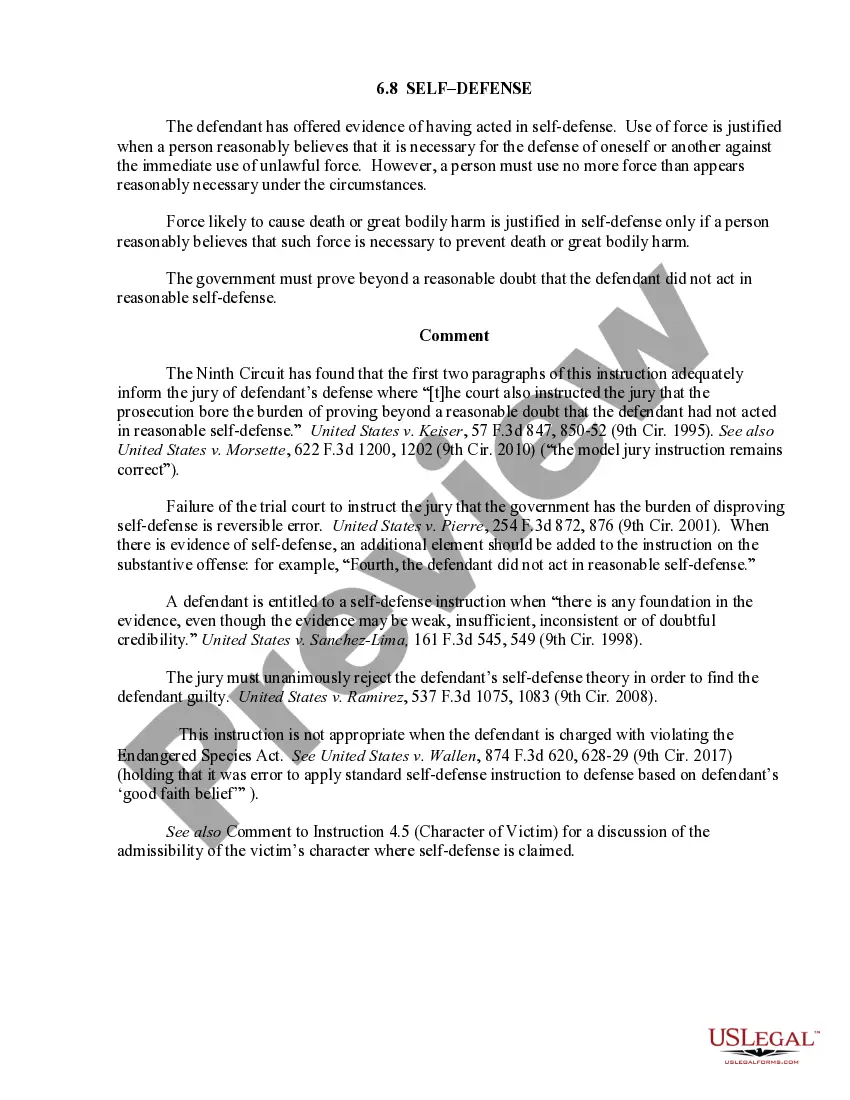
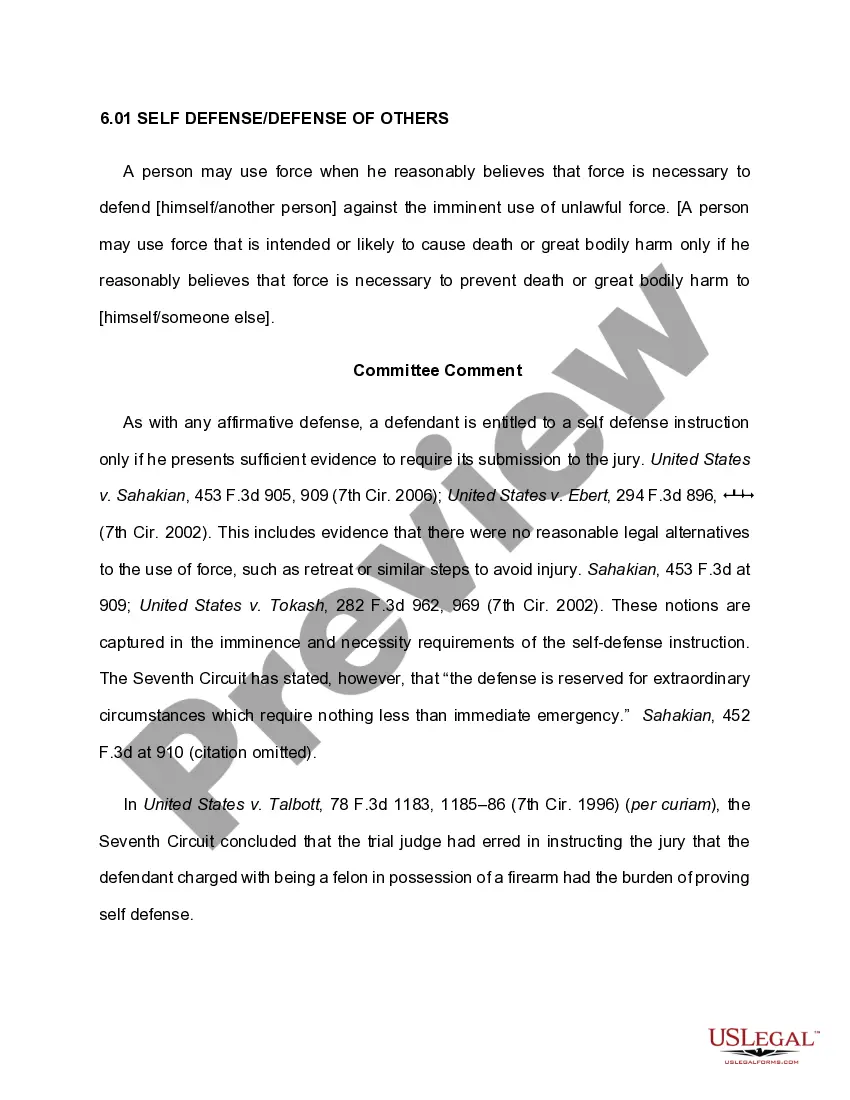
6.8 Self-Defense.
Is notarization required?
In most cases, this form does not require notarization. However, some jurisdictions or signing circumstances might. US Legal Forms offers online notarization powered by Notarize, accessible 24/7 for a quick, remote process.
Get your form ready online
Our built-in tools help you complete, sign, share, and store your documents in one place.
Make edits, fill in missing information, and update formatting in US Legal Forms—just like you would in MS Word.
Download a copy, print it, send it by email, or mail it via USPS—whatever works best for your next step.
Sign and collect signatures with our SignNow integration. Send to multiple recipients, set reminders, and more. Go Premium to unlock E-Sign.
If this form requires notarization, complete it online through a secure video call—no need to meet a notary in person or wait for an appointment.
We protect your documents and personal data by following strict security and privacy standards.

Make edits, fill in missing information, and update formatting in US Legal Forms—just like you would in MS Word.

Download a copy, print it, send it by email, or mail it via USPS—whatever works best for your next step.

Sign and collect signatures with our SignNow integration. Send to multiple recipients, set reminders, and more. Go Premium to unlock E-Sign.

If this form requires notarization, complete it online through a secure video call—no need to meet a notary in person or wait for an appointment.

We protect your documents and personal data by following strict security and privacy standards.
Looking for another form?
Form popularity
FAQ
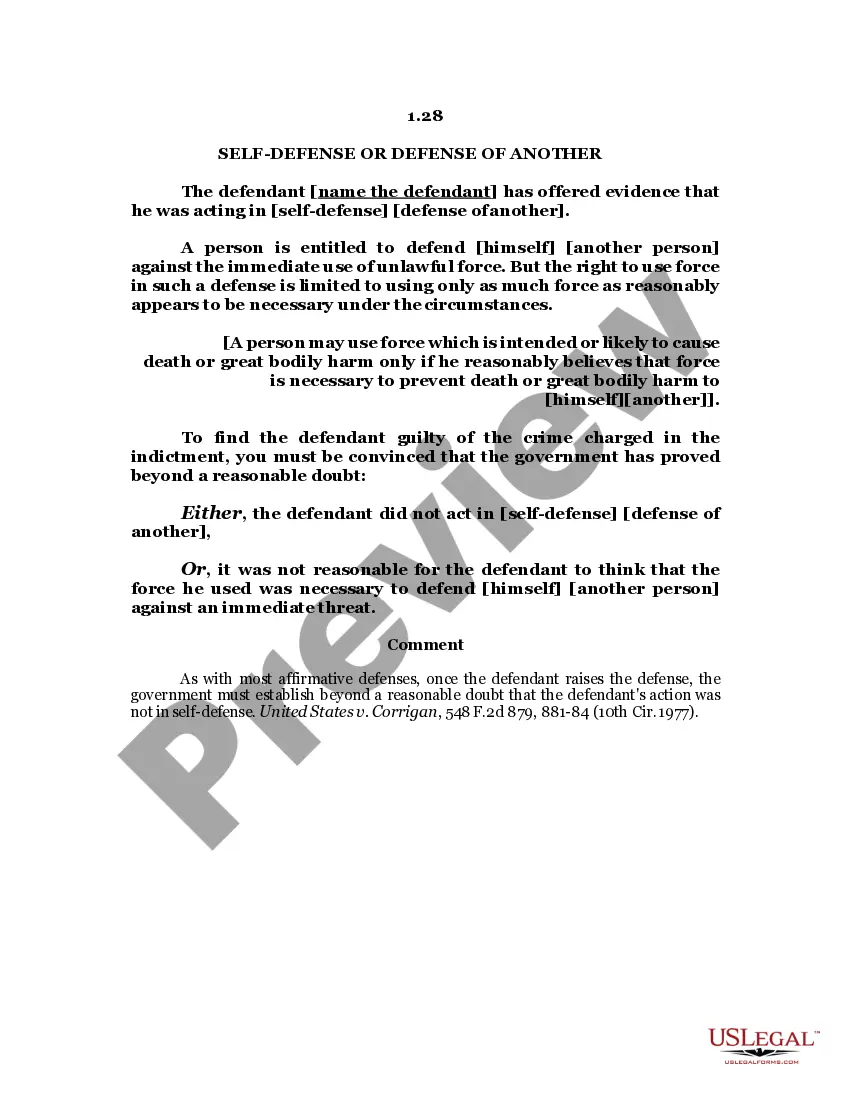
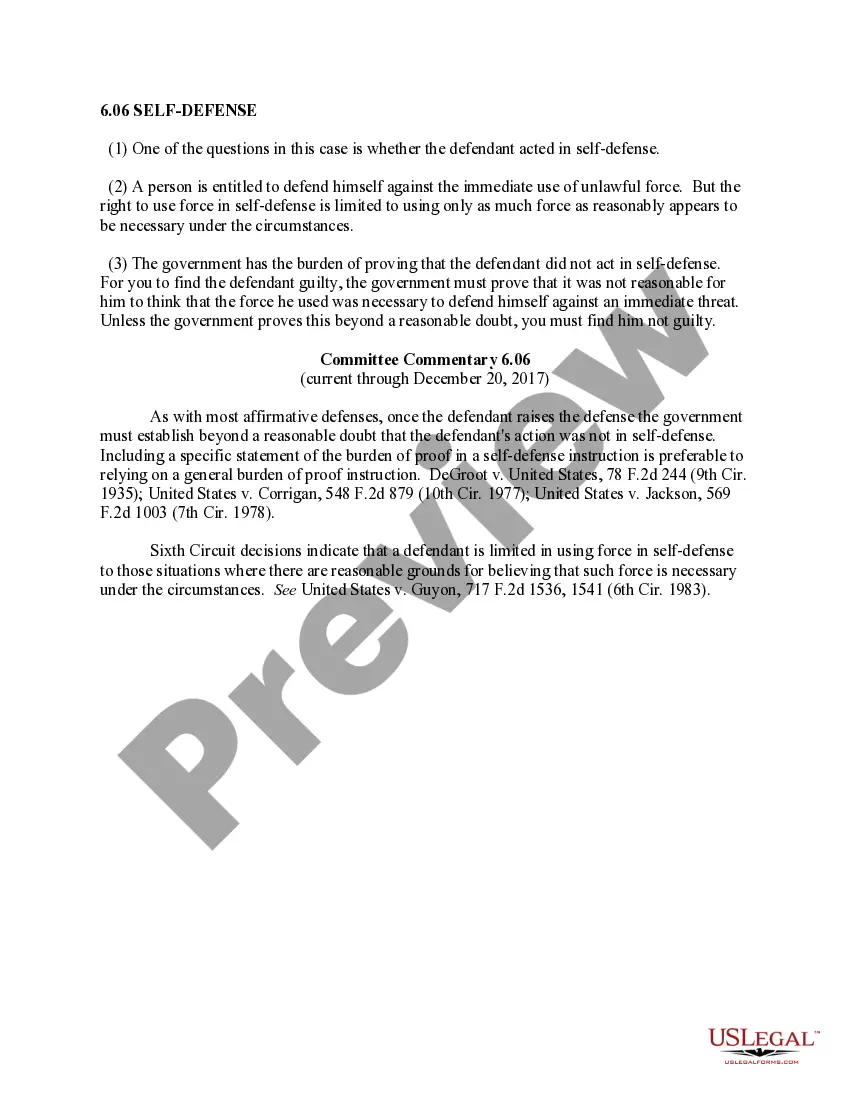
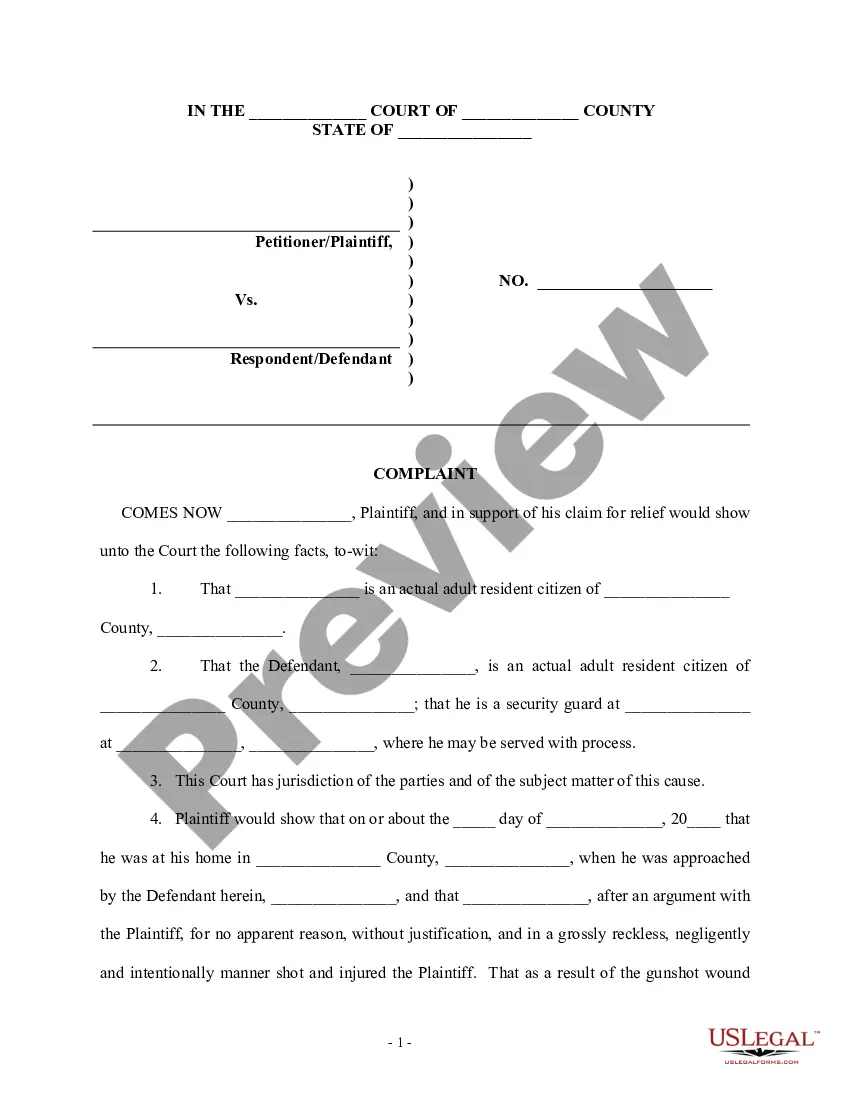
The use of force to protect oneself from an attempted injury by another. If justified, self-defense is a defense to a number of crimes and torts involving force, including murder, assault and battery.
?Defense of others? is a defense to liability for an alleged crime that is in defense of a person other than oneself. It refers to a person's right to use reasonable force to protect a third party from another person who threatens to use force on the third party.
Four elements are required for self-defense: (1) an unprovoked attack, (2) which threatens imminent injury or death, and (3) an objectively reasonable degree of force, used in response to (4) an objectively reasonable fear of injury or death.
What is Self-Defense in a Tort Claim? Self-defense in a tort case is used as a justified legal defense to prevail in a personal injury lawsuit. Self-defense may be used to reduce the amount of damages the defendant is required to pay or to absolve the defendant of any liability in the case.
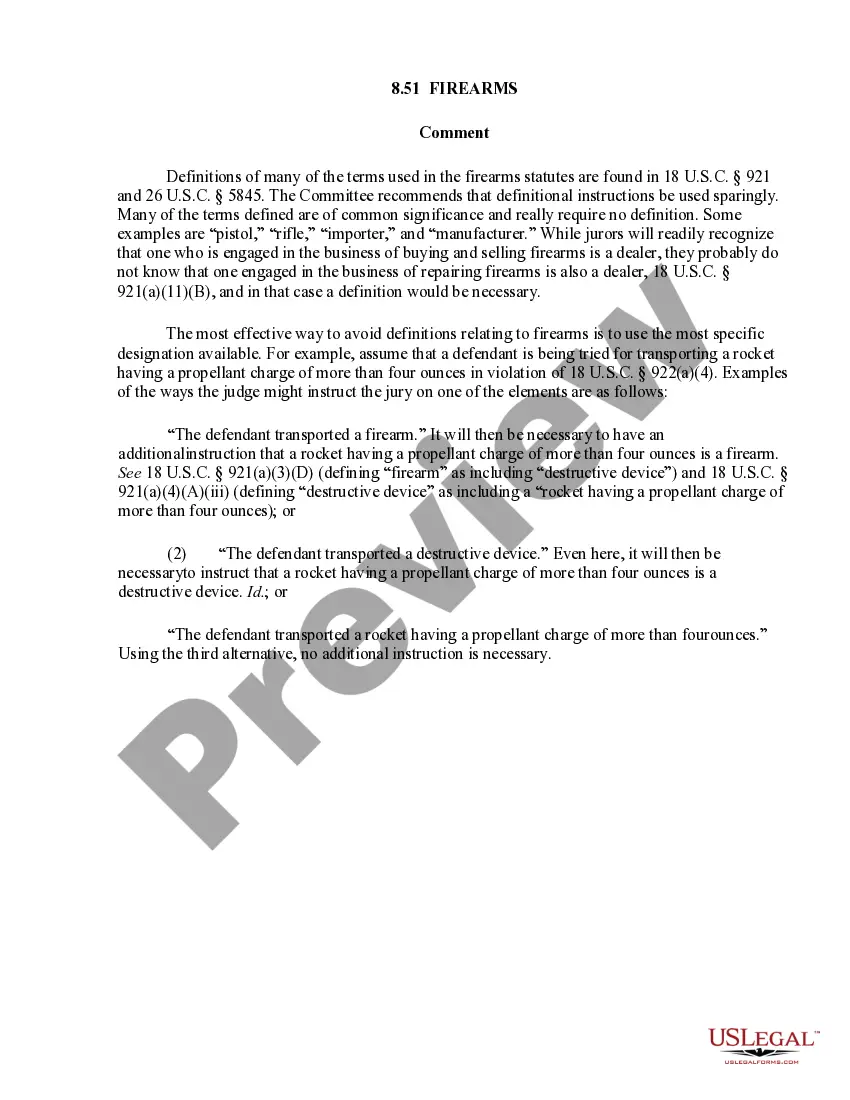
§ 1047.7 Use of deadly force. (a) Deadly force means that force which a reasonable person would consider likely to cause death or serious bodily harm. Its use may be justified only under conditions of extreme necessity, when all lesser means have failed or cannot reasonably be employed.
Self-defense. n. the use of reasonable force to protect oneself or members of the family from bodily harm from the attack of an aggressor, if the defender has reason to believe he/she/they is/are in danger. Self-defense is a common defense by a person accused of assault, battery or homicide.
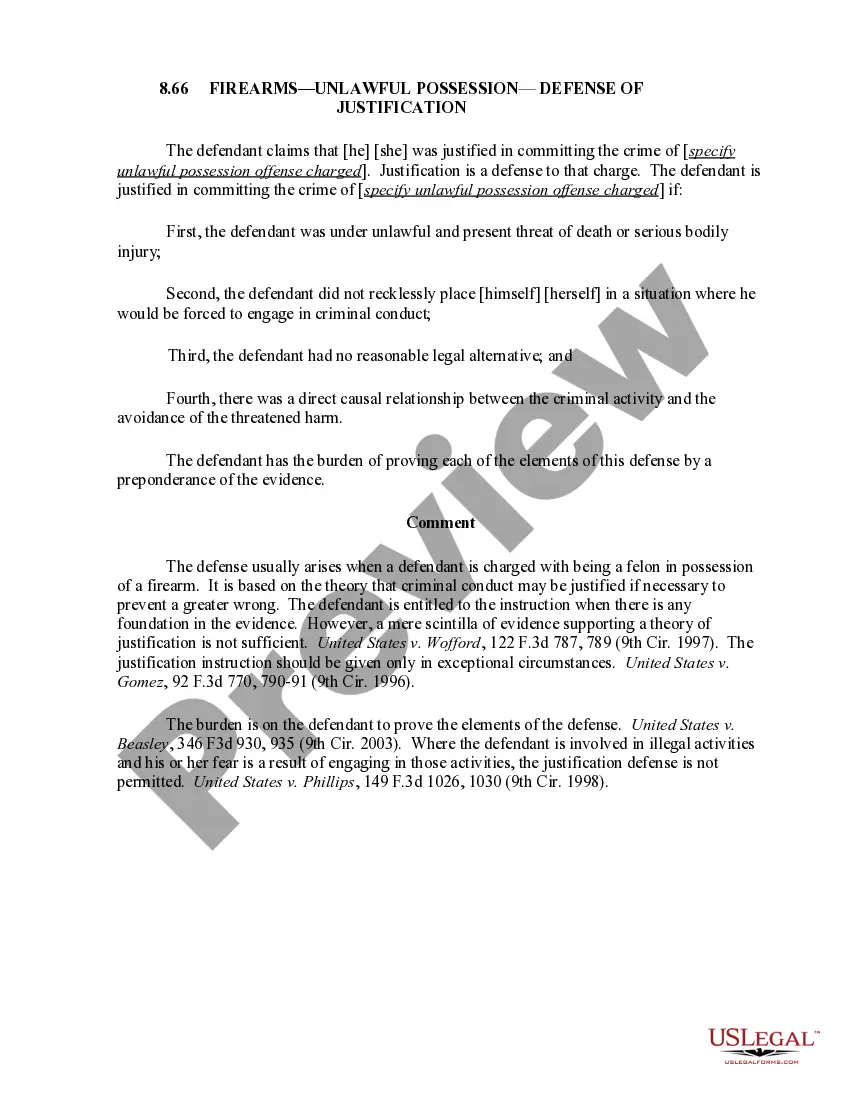
Independent Act: This defense can be asserted when a person other than the defendant commits or attempts to commit a crime which the defendant did not intend to occur and did not participate in, and which was not a reasonably foreseeable consequence of the common design or unlawful act contemplated by the defendant.
The most common defenses against the intentional torts are consent and self-defense. Additional defenses on behalf of others and defense of property are also sometimes available, as are the defenses of public and private necessity.