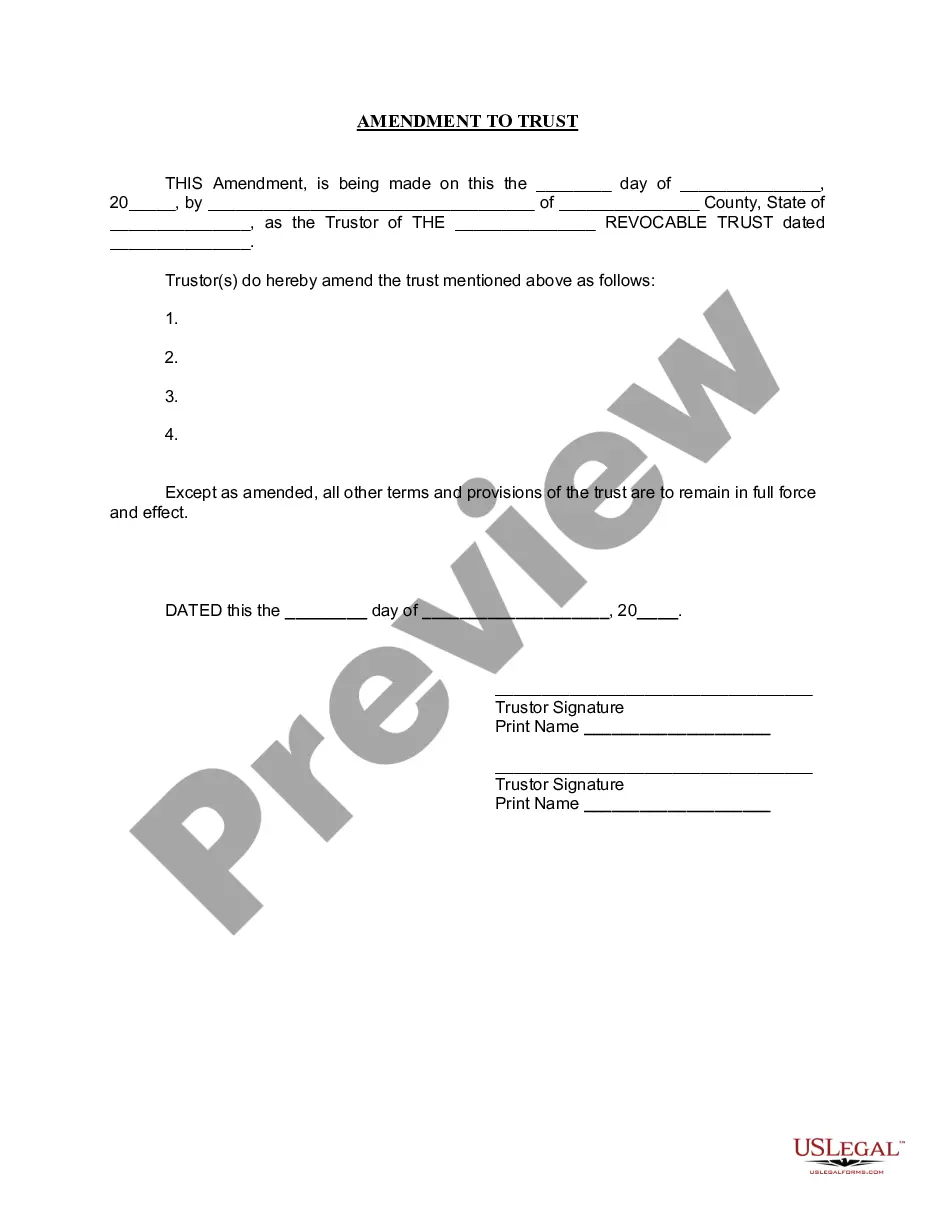
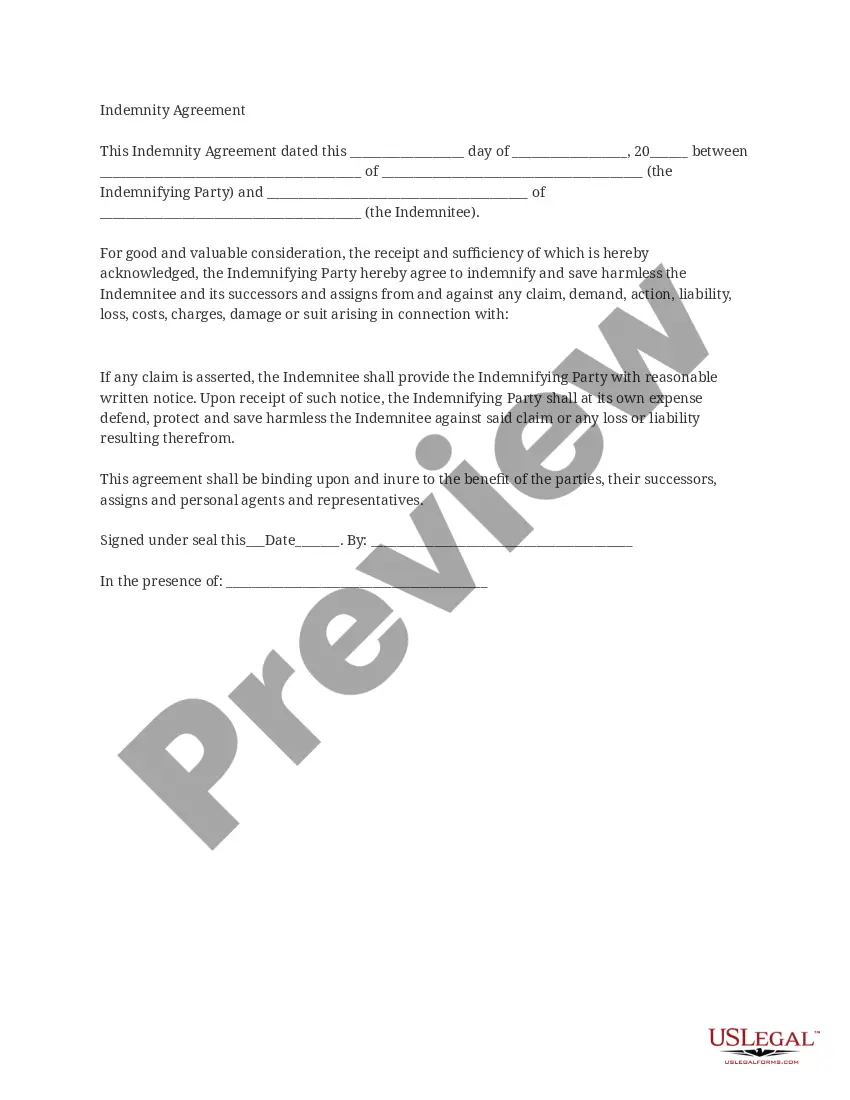
Basic Indemnity Agreement
What this document covers
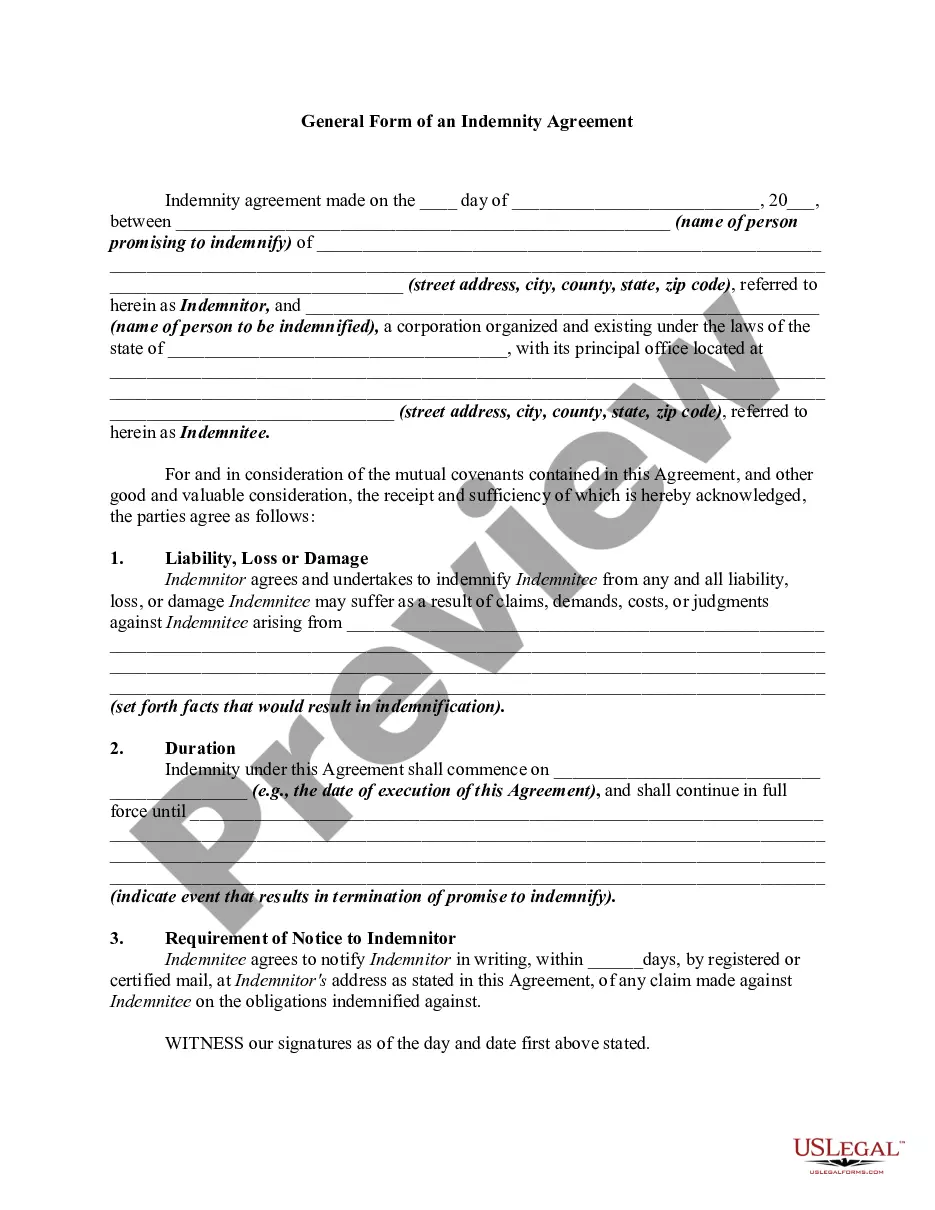
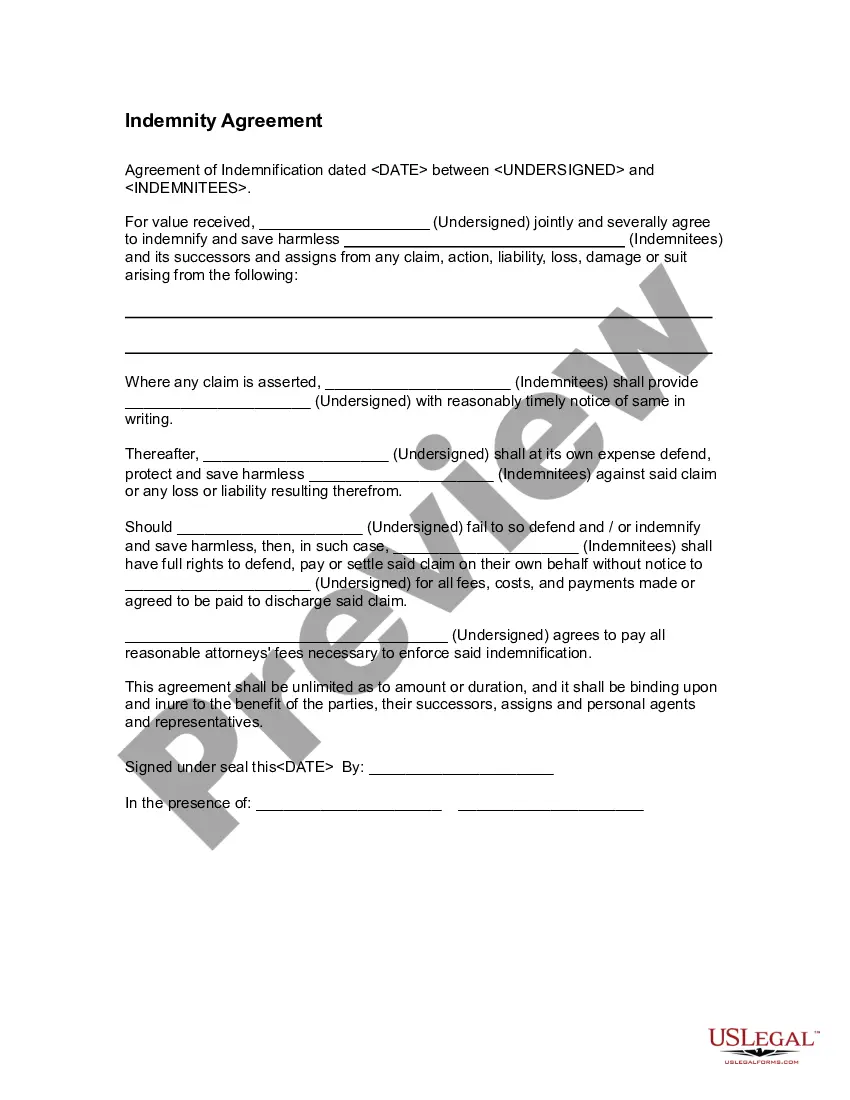
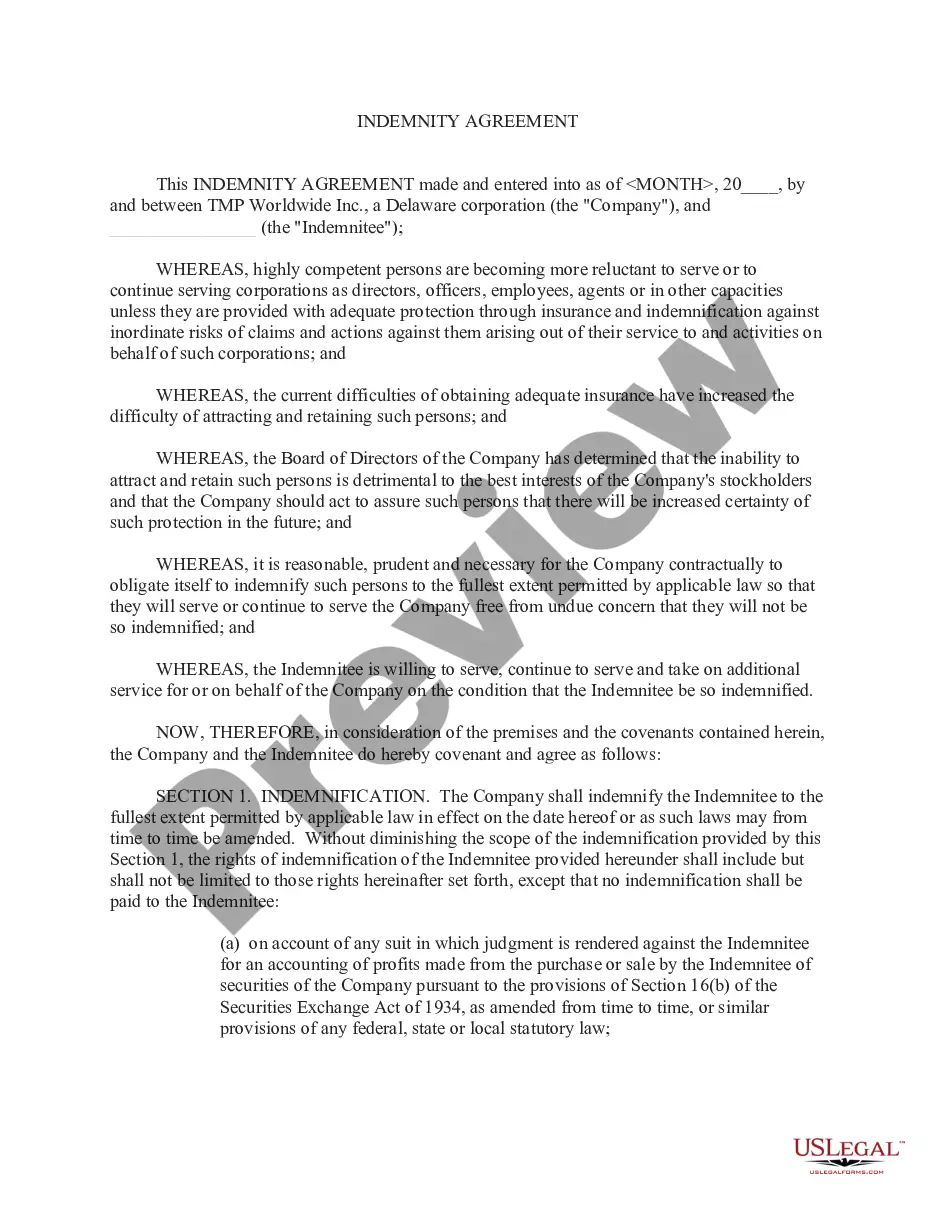
The Basic Indemnity Agreement is a legal document that outlines the responsibilities of one party (the Indemnifying Party) to protect another party (the Indemnitee) from potential losses or damages. This form is used to create a binding agreement specifying that the Indemnifying Party will compensate the Indemnitee for certain claims or liabilities, distinguishing it from other types of contracts that may not address indemnification specifically.
Form components explained
- Identification of parties involved: The Indemnifying Party and the Indemnitee.
- Description of obligations: The extent of indemnification and liabilities covered.
- Notice requirements: Process for notifying the Indemnifying Party of any claims.
- Defense responsibilities: Duties of the Indemnifying Party in defending against claims.
- Binding nature of the agreement: States that the agreement benefits successors and assigns.
Situations where this form applies
This form is useful in various situations where one party wants to protect another from financial losses due to claims related to specific activities, transactions, or contracts. Typically, it is used in business agreements, contractor arrangements, or any scenario where indemnification for damages or legal claims is necessary.
Who needs this form
- Businesses entering into contracts with third parties.
- Contractors working on projects that may expose them to liability.
- Individuals looking to protect themselves and others against potential claims.
- Lawyers drafting agreements for clients who require indemnification clauses.
How to prepare this document
- Identify the parties involved in the agreement as the Indemnifying Party and the Indemnitee.
- Enter the date the agreement is being executed.
- Clearly outline the claims and liabilities that the Indemnifying Party will cover.
- Specify the process for notifying the Indemnifying Party of any claims.
- Ensure both parties sign the agreement in the presence of a witness if necessary.
Notarization guidance
This form does not typically require notarization unless specified by local law. Always check local regulations to ensure compliance with specific requirements for enforceability.
Get your form ready online
Our built-in tools help you complete, sign, share, and store your documents in one place.
Make edits, fill in missing information, and update formatting in US Legal Forms—just like you would in MS Word.
Download a copy, print it, send it by email, or mail it via USPS—whatever works best for your next step.
Sign and collect signatures with our SignNow integration. Send to multiple recipients, set reminders, and more. Go Premium to unlock E-Sign.
If this form requires notarization, complete it online through a secure video call—no need to meet a notary in person or wait for an appointment.
We protect your documents and personal data by following strict security and privacy standards.

Make edits, fill in missing information, and update formatting in US Legal Forms—just like you would in MS Word.

Download a copy, print it, send it by email, or mail it via USPS—whatever works best for your next step.

Sign and collect signatures with our SignNow integration. Send to multiple recipients, set reminders, and more. Go Premium to unlock E-Sign.

If this form requires notarization, complete it online through a secure video call—no need to meet a notary in person or wait for an appointment.

We protect your documents and personal data by following strict security and privacy standards.
Mistakes to watch out for
- Forgetting to include specific details regarding the liabilities covered.
- Failing to sign the document properly, which can affect enforceability.
- Not updating the agreement if the circumstances change.
- Using vague language that can lead to different interpretations of the agreement.
Why complete this form online
- Convenient access to customizable templates that fit individual needs.
- Ability to download and complete the form at your own pace.
- Ensures the use of legal language drafted by licensed attorneys.
- Cost-effective compared to hiring a lawyer for drafting from scratch.
Looking for another form?
Form popularity
FAQ
An indemnity agreement is a contract that protects one party of a transaction from the risks or liabilities created by the other party of the transaction. Hold harmless agreement, no-fault agreement, release of liability, or waiver of liability are other terms for an indemnity agreement.?
Indemnity agreements, also known as indemnity clauses, play an integral role in contracts. That's because they are designed to punish the nonperforming party and reassure the damaged one they will be reimbursed for losses caused by the errant entity.
There are 3 levels of indemnification: broad form, intermediate form, and limited form. This requires the indemnitor to pay not only for its liabilities but also for the indemnitee's liability whether the indemnitee is solely (i.e. 100%) at fault or partially at fault. What are the 3 Levels of Indemnification? - TSIB, Inc. tsibinc.com ? what-are-the-3-levels-of-indem... tsibinc.com ? what-are-the-3-levels-of-indem...
How to fill a Letter of Indemnity? A letter of indemnity must include the following key details:- The names and addresses of both parties involved. The name and affiliation of the third party. Detailed descriptions of the items being shipped. Signatures of the parties. Date of execution of the contract. What is Letter of Indemnity Meaning, Process, Sample Format & more dripcapital.com ? resources ? blog ? letter-o... dripcapital.com ? resources ? blog ? letter-o...
An indemnity agreement is a contract that protects one party of a transaction from the risks or liabilities created by the other party of the transaction.
The purpose of indemnity agreements is to shield a party from liability associated with a contracting party's negligence or carelessness.
?Company/Business/Individual Name shall fully indemnify, hold harmless and defend and its directors, officers, employees, agents, stockholders and Affiliates from and against all claims, demands, actions, suits, damages, liabilities, losses, settlements, judgments, costs and expenses (including but not
Indemnity Clause Defined Indemnity clauses, also known as indemnification clauses, require one party to reimburse the other for recoverable damages from third-party claims. The indemnifying party is demanding payment. The indemnified party is required to pay.