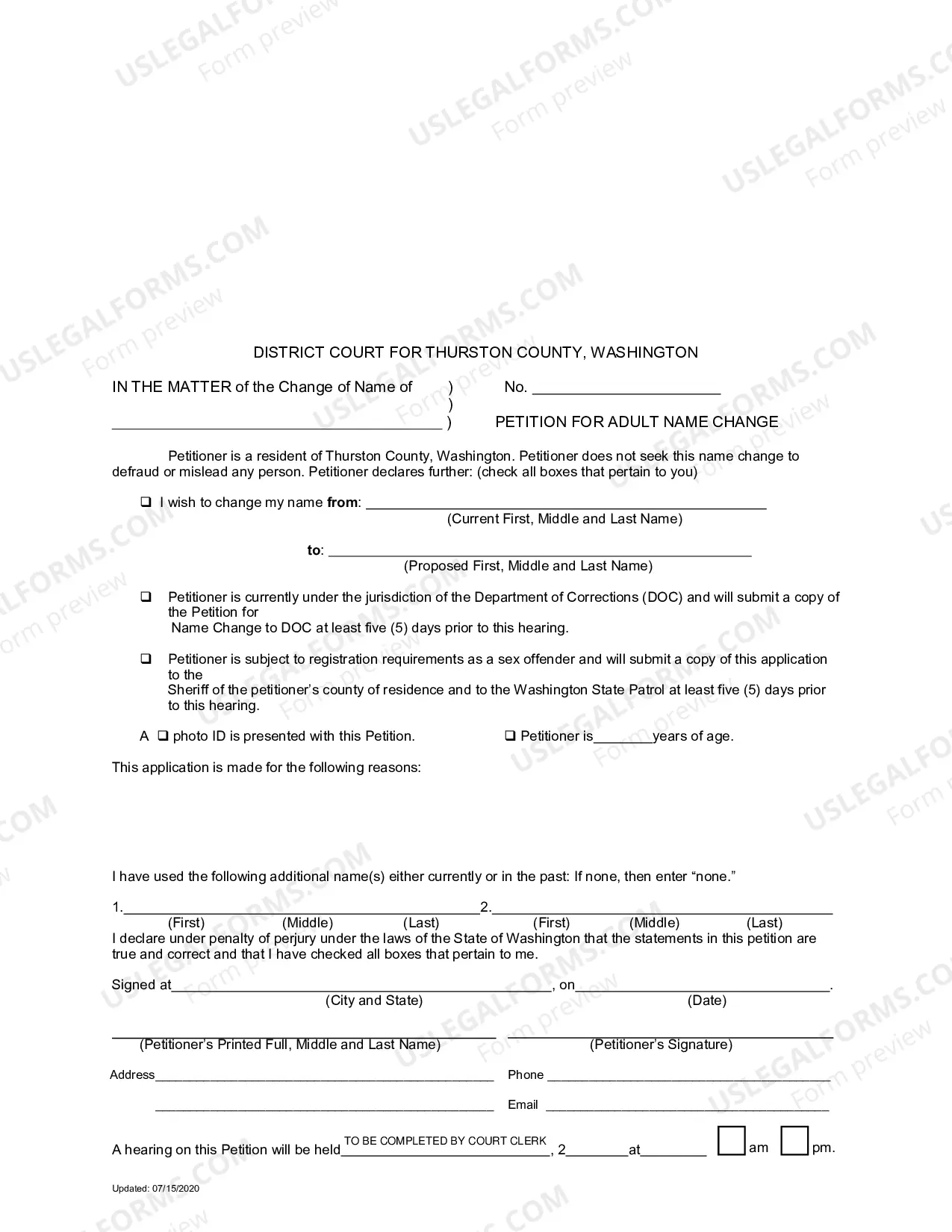
Engineering Agreement - Self-Employed Independent Contractor
Overview of this form
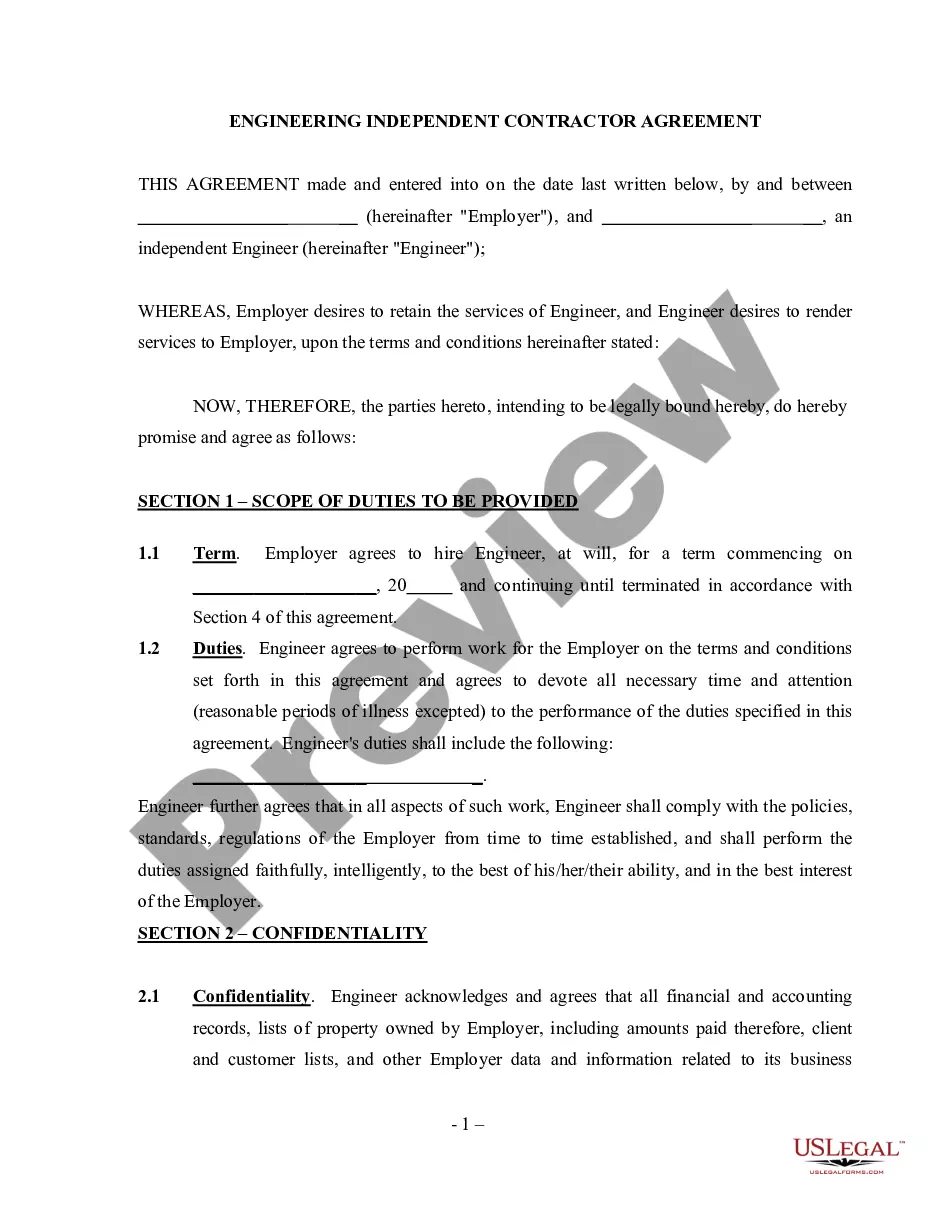
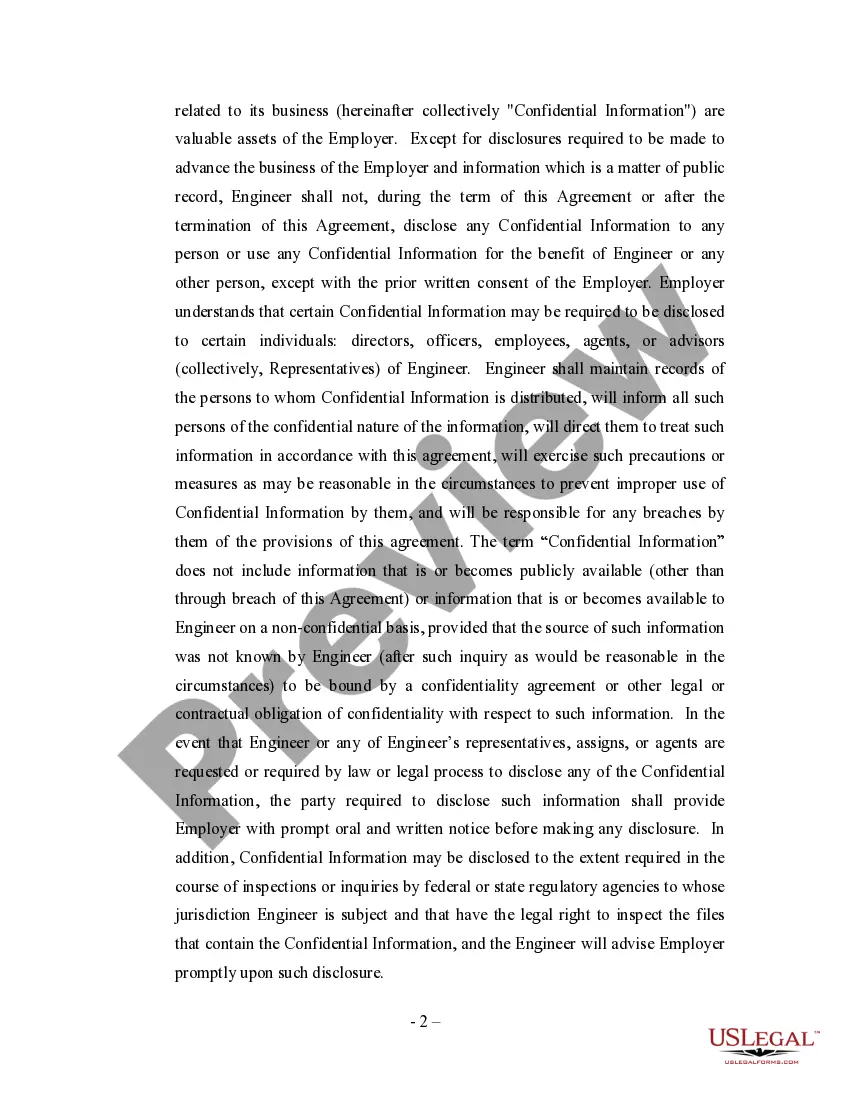
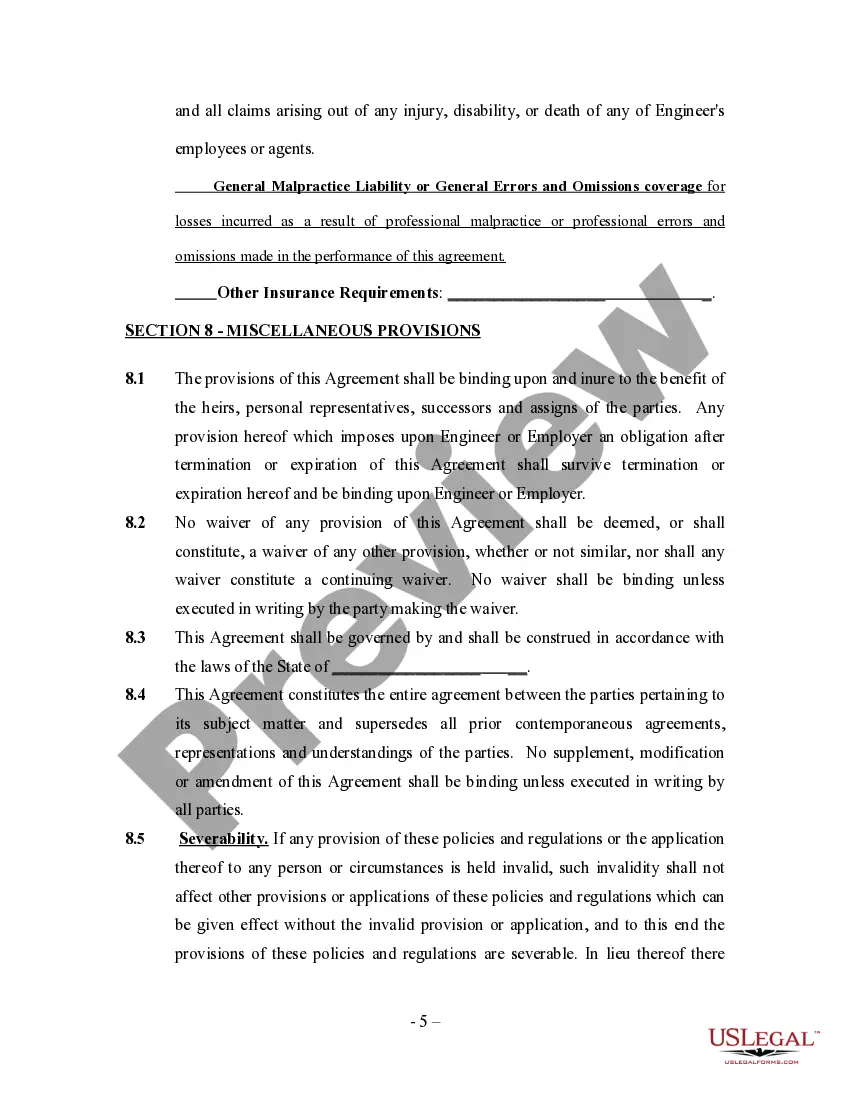
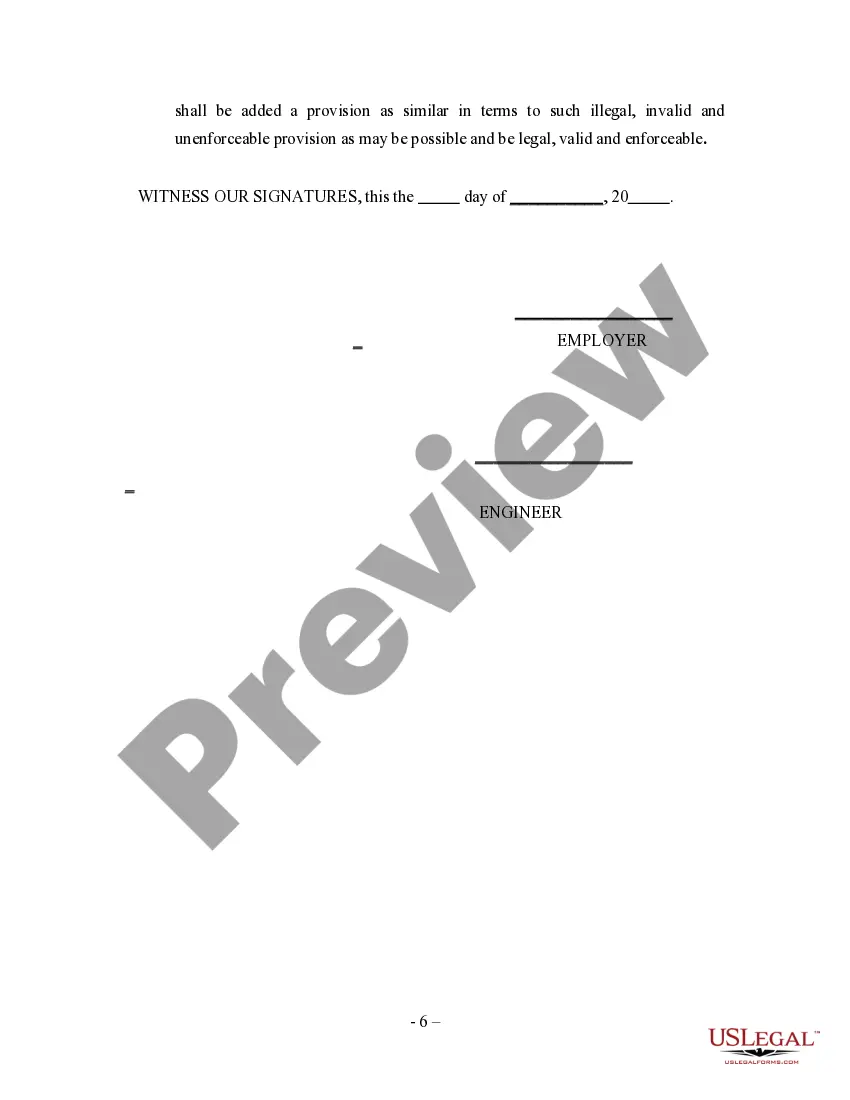
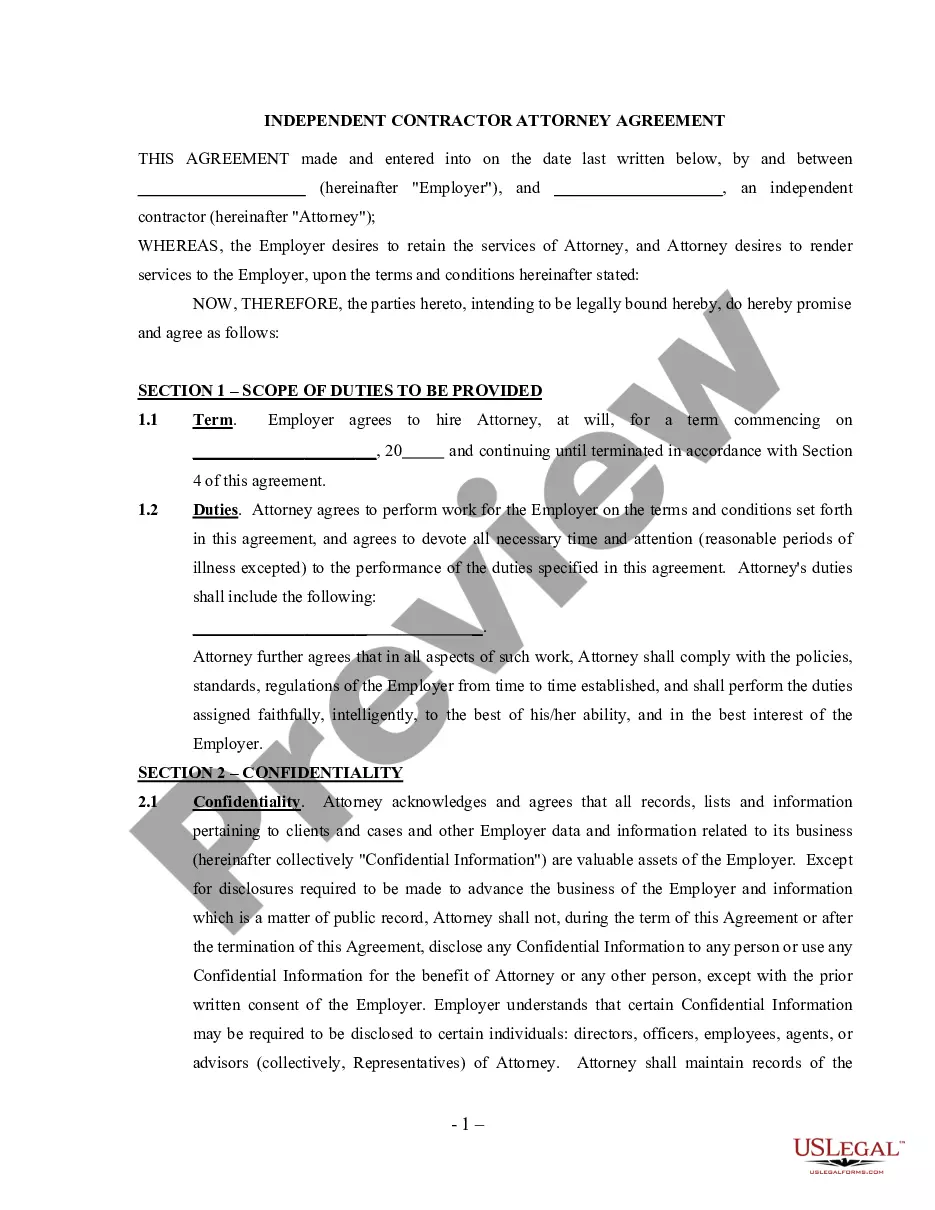
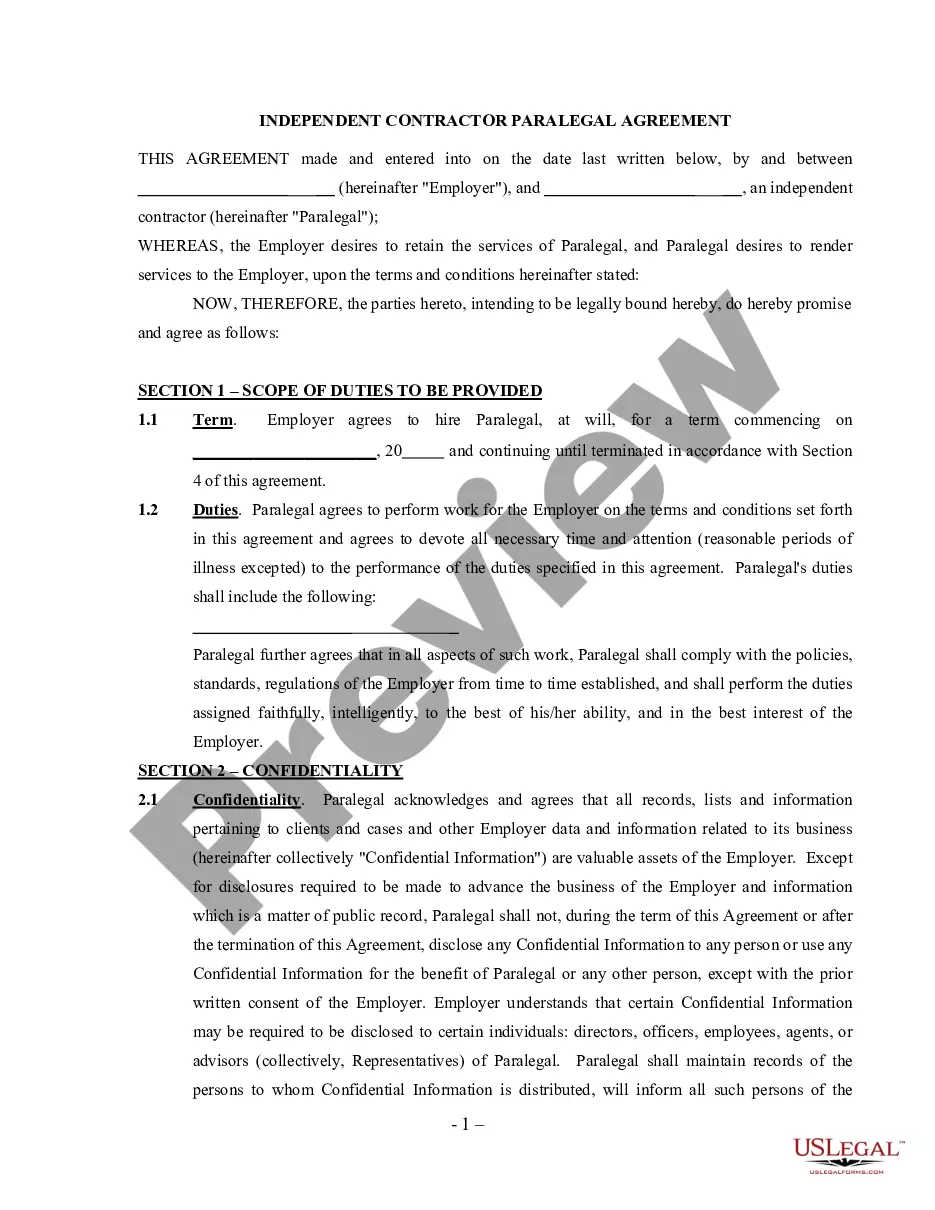
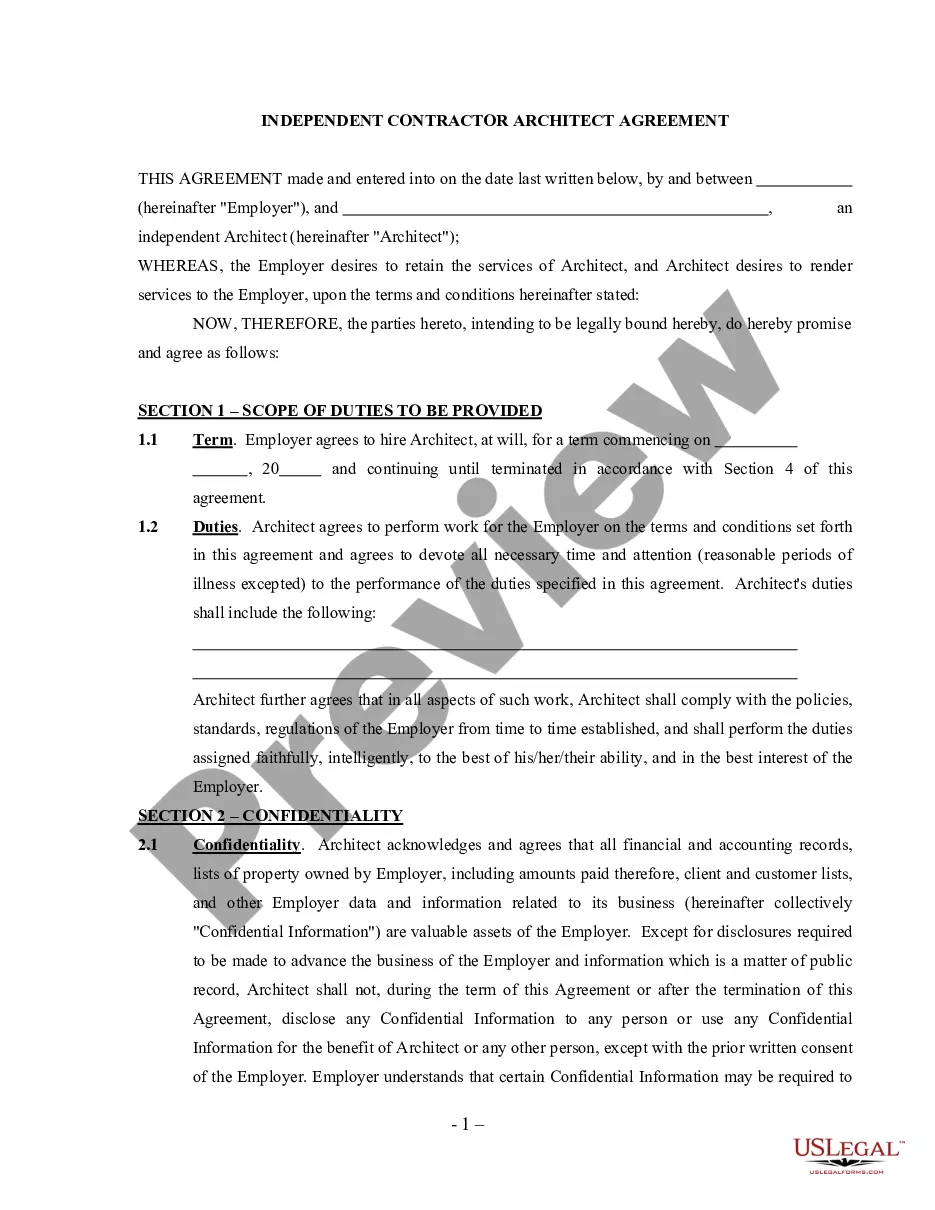
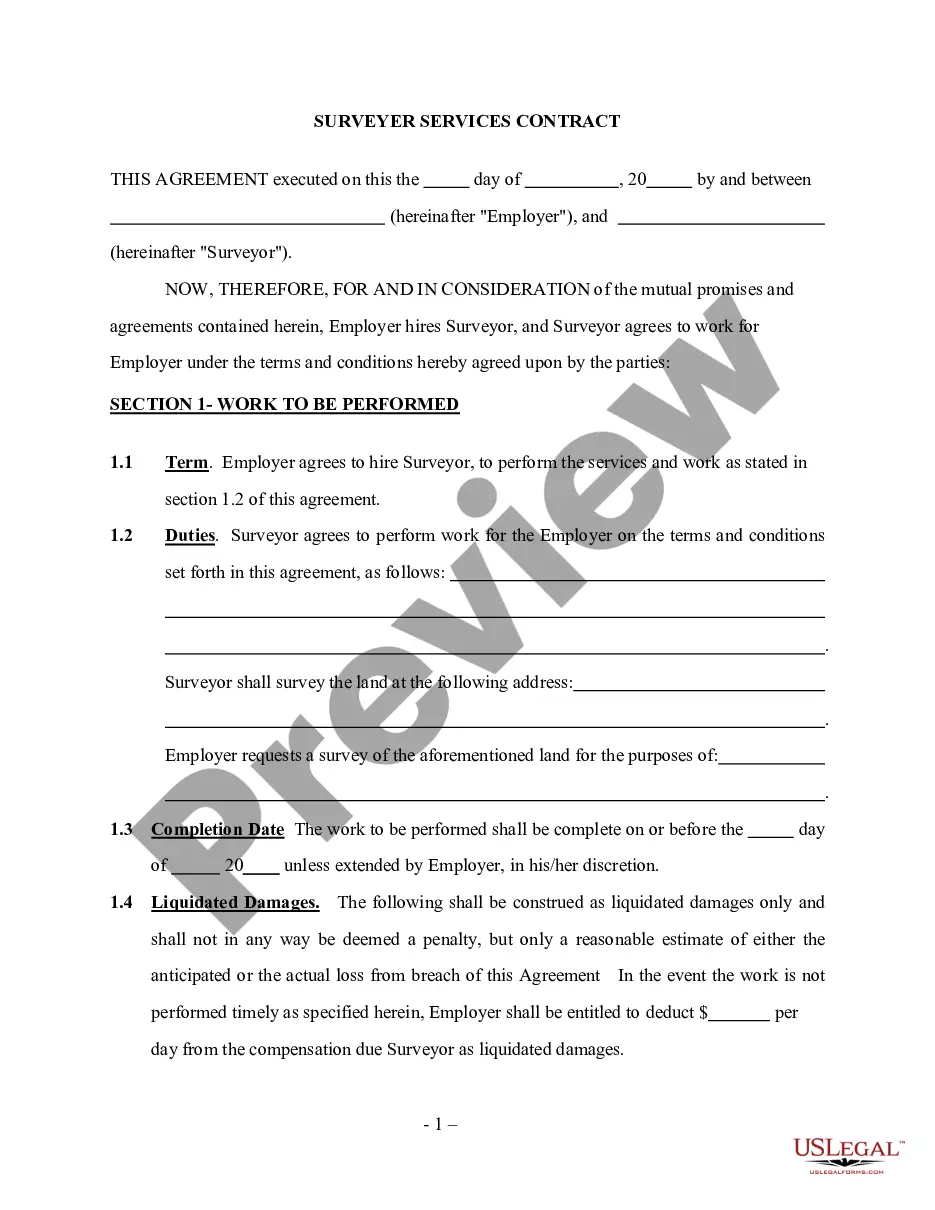
The Engineering Agreement - Self-Employed Independent Contractor is a legal document that outlines the terms and conditions between an employer and an independent contractor engineer. This agreement establishes the scope of work, responsibilities, and compensation while clarifying the independent contractor status of the engineer, distinguishing it from traditional employment contracts.
Form components explained
- Identification of parties involved (Employer and Engineer).
- Detailed description of the Engineer's duties and responsibilities.
- Confidentiality clauses outlining the handling of proprietary information.
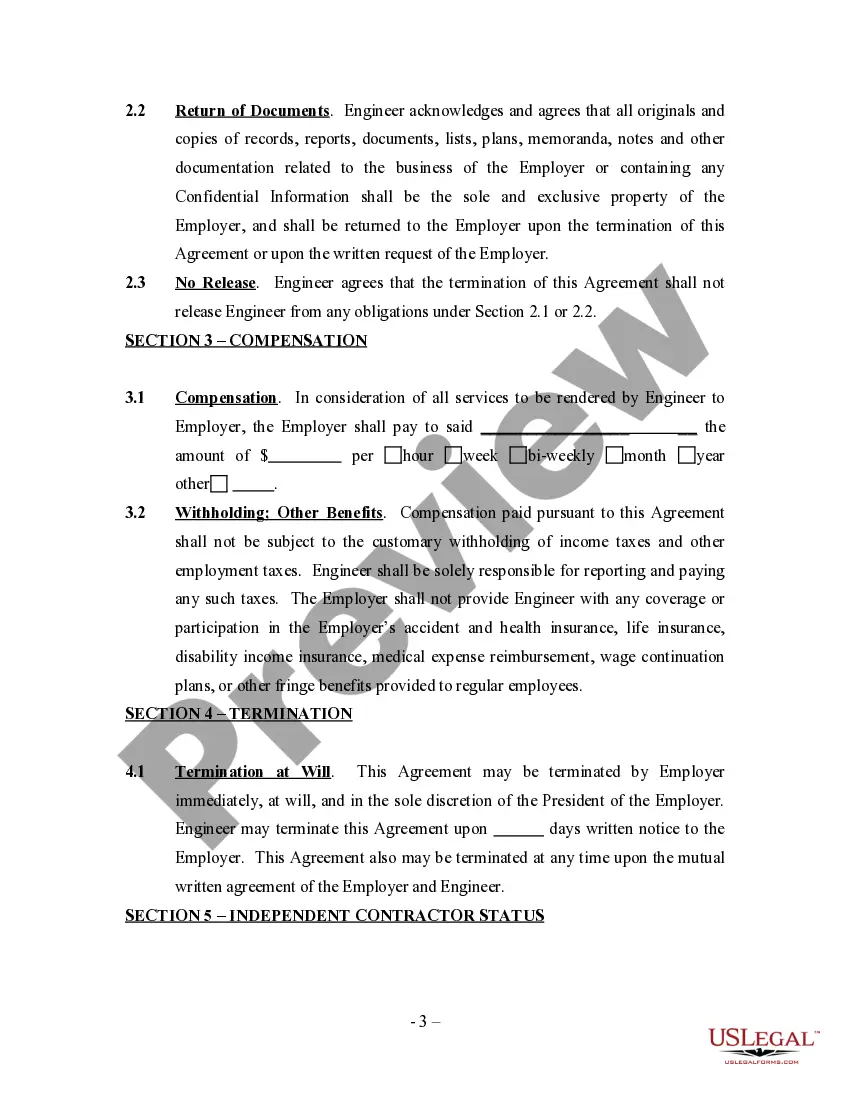
- Compensation terms and payment structure.
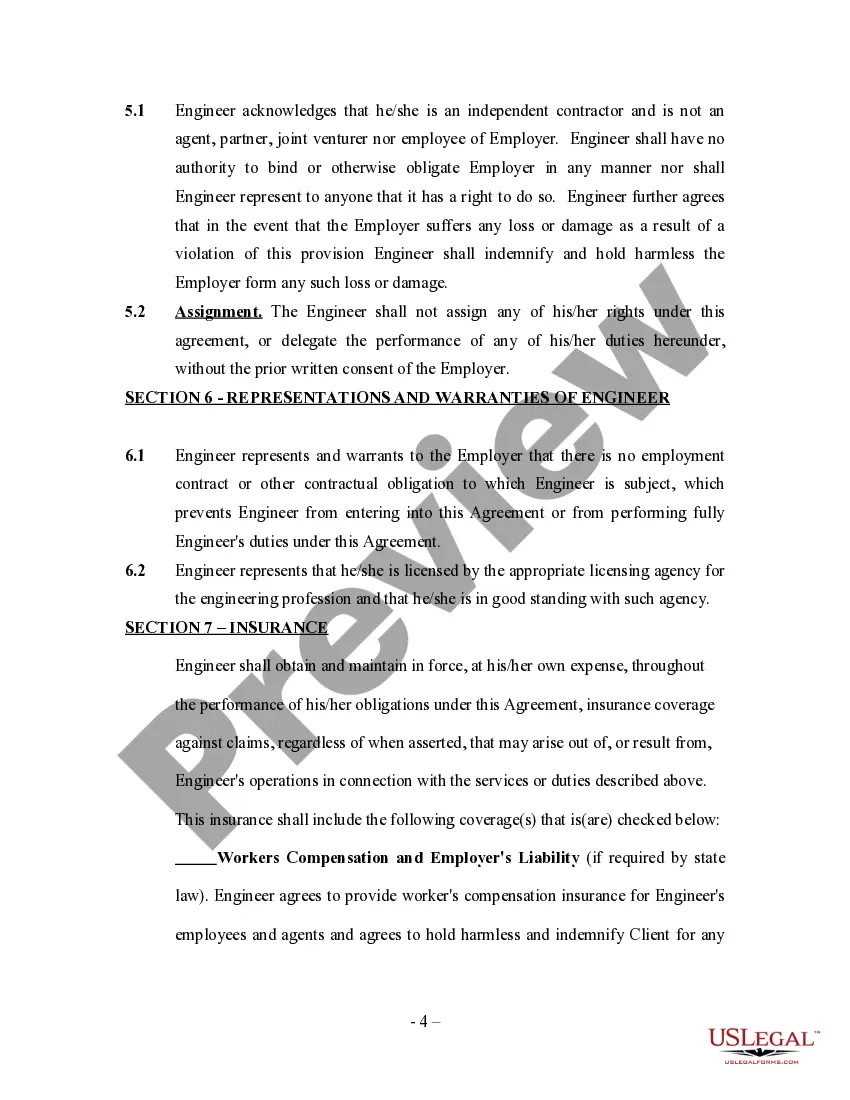
- Termination conditions and the non-agent status of the Engineer.
- Representations and warranties of the Engineer regarding licensing and contractual obligations.
When to use this form
This Engineering Agreement should be used when an employer seeks to hire a self-employed engineer to perform specific engineering services. It is essential when defining the professional relationship, ensuring both parties understand their roles, responsibilities, and expectations. Ideal situations include freelance projects, consulting arrangements, and temporary engineering contracts.
Who needs this form
- Employers looking to hire self-employed engineers for contract work.
- Independent engineers seeking to formalize their work agreement with clients.
- Businesses needing to clarify contracting terms in engineering projects.
Steps to complete this form
- Identify the parties by filling in the names of the Employer and the Engineer.
- Detail the specific duties and responsibilities of the Engineer in the designated section.
- Specify the compensation terms, including payment methods and timelines.
- Include any confidentiality requirements and obligations to protect sensitive information.
- Both parties should sign and date the agreement to validate it.
Notarization guidance
In most cases, this form does not require notarization. However, some jurisdictions or signing circumstances might. US Legal Forms offers online notarization powered by Notarize, accessible 24/7 for a quick, remote process.
Get your form ready online
Our built-in tools help you complete, sign, share, and store your documents in one place.
Make edits, fill in missing information, and update formatting in US Legal Forms—just like you would in MS Word.
Download a copy, print it, send it by email, or mail it via USPS—whatever works best for your next step.
Sign and collect signatures with our SignNow integration. Send to multiple recipients, set reminders, and more. Go Premium to unlock E-Sign.
If this form requires notarization, complete it online through a secure video call—no need to meet a notary in person or wait for an appointment.
We protect your documents and personal data by following strict security and privacy standards.

Make edits, fill in missing information, and update formatting in US Legal Forms—just like you would in MS Word.

Download a copy, print it, send it by email, or mail it via USPS—whatever works best for your next step.

Sign and collect signatures with our SignNow integration. Send to multiple recipients, set reminders, and more. Go Premium to unlock E-Sign.

If this form requires notarization, complete it online through a secure video call—no need to meet a notary in person or wait for an appointment.

We protect your documents and personal data by following strict security and privacy standards.
Typical mistakes to avoid
- Failing to clearly outline the Engineer's duties can lead to misunderstandings.
- Not specifying confidentiality provisions can compromise sensitive information.
- Neglecting to include compensation details may result in payment disputes.
Benefits of using this form online
- Convenience of downloading and customizing the form anytime.
- Access to templates drafted by licensed attorneys for trusted compliance.
- Easy editing features ensure that all necessary information can be included.
Legal use & context
- This agreement serves to formalize the relationship between the Employer and Engineer, ensuring clarity and reducing potential disputes.
- It is enforceable in a court of law, provided all parties understand and agree to its terms.
- Properly completing and signing the agreement provides legal protection for both parties involved.
Main things to remember
- The Engineering Agreement clarifies roles and responsibilities between an Employer and an Engineer.
- It protects both parties by outlining essential terms, including duties, compensation, and confidentiality.
- This form is suitable for use across multiple states, with specific legal requirements varying by jurisdiction.
- Follow the outlined steps for proper completion to ensure the agreement is legally binding.
Looking for another form?
Form popularity
FAQ
1. Not Having a Written Contract.The taxing, labor and employment, and insurance authorities expect a written contract that states that the worker is an independent contractor and will be paid as such with no tax withholding, no benefits, etc.
Form W-9. The IRS requires contractors to fill out a Form W-9, request for Taxpayer Identification Number and Certification, which you should keep on file for at least four years after the hiring. This form is used to request the correct name and Taxpayer Identification Number, or TIN, of the worker or their entity.
The earnings of a person who is working as an independent contractor are subject to Self-Employment Tax. If you are an independent contractor, you are self-employed. To find out what your tax obligations are, visit the Self-Employed Tax Center.
An Independent Contractor Agreement should contain all of these basic terms: Description of the services to be provided.Explanation of what the hiring party will provide or not provide, such as equipment, for the independent contractor to use. Ownership of work product if that is relevant to the work being performed.
Name of contractor and contact information. Name of homeowner and contact information. Describe property in legal terms. List attachments to the contract. The cost. Failure of homeowner to obtain financing. Description of the work and the completion date. Right to stop the project.
Protect your social security number. Have a clearly defined scope of work and contract in place with clients. Get general/professional liability insurance. Consider incorporating or creating a limited liability company (LLC).
Length of Contract. Each client contractor agreement should outline the length of the working relationship. Project Description. Payment Terms. Nondisclosure Terms. Rights and Responsibilities. Termination Clause. Disclaimers.
Simply put, being an independent contractor is one way to be self-employed. Being self-employed means that you earn money but don't work as an employee for someone else.An independent contractor is someone who provides a service on a contractual basis.
Finally, the new stimulus bill provides independent contractors with paid sick and paid family leave benefits through March 14, 2021.Under CARES Act II, unemployed or underemployed independent contractors who have an income mix from self-employment and wages paid by an employer are still eligible for PUA.