Common Law Spouse or Marriage Declaration or Affidavit
Understanding this form
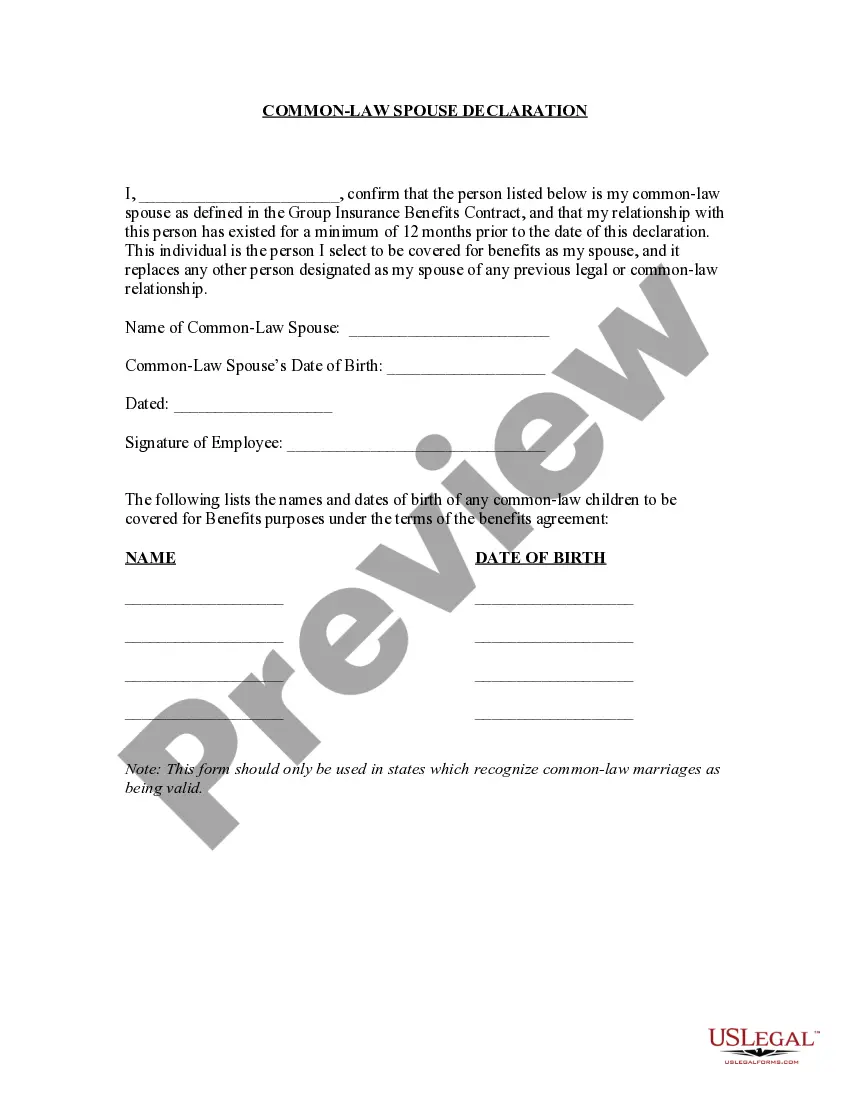
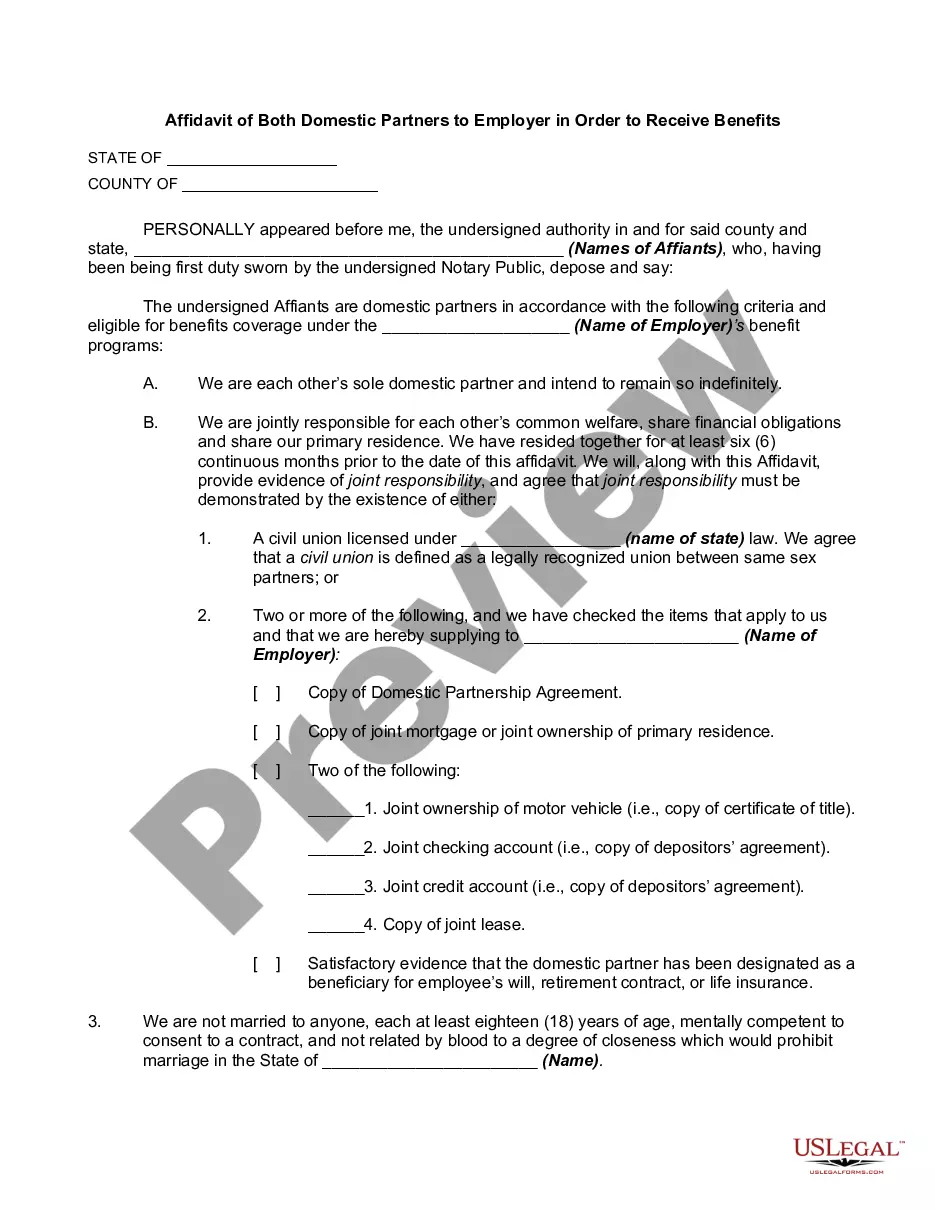
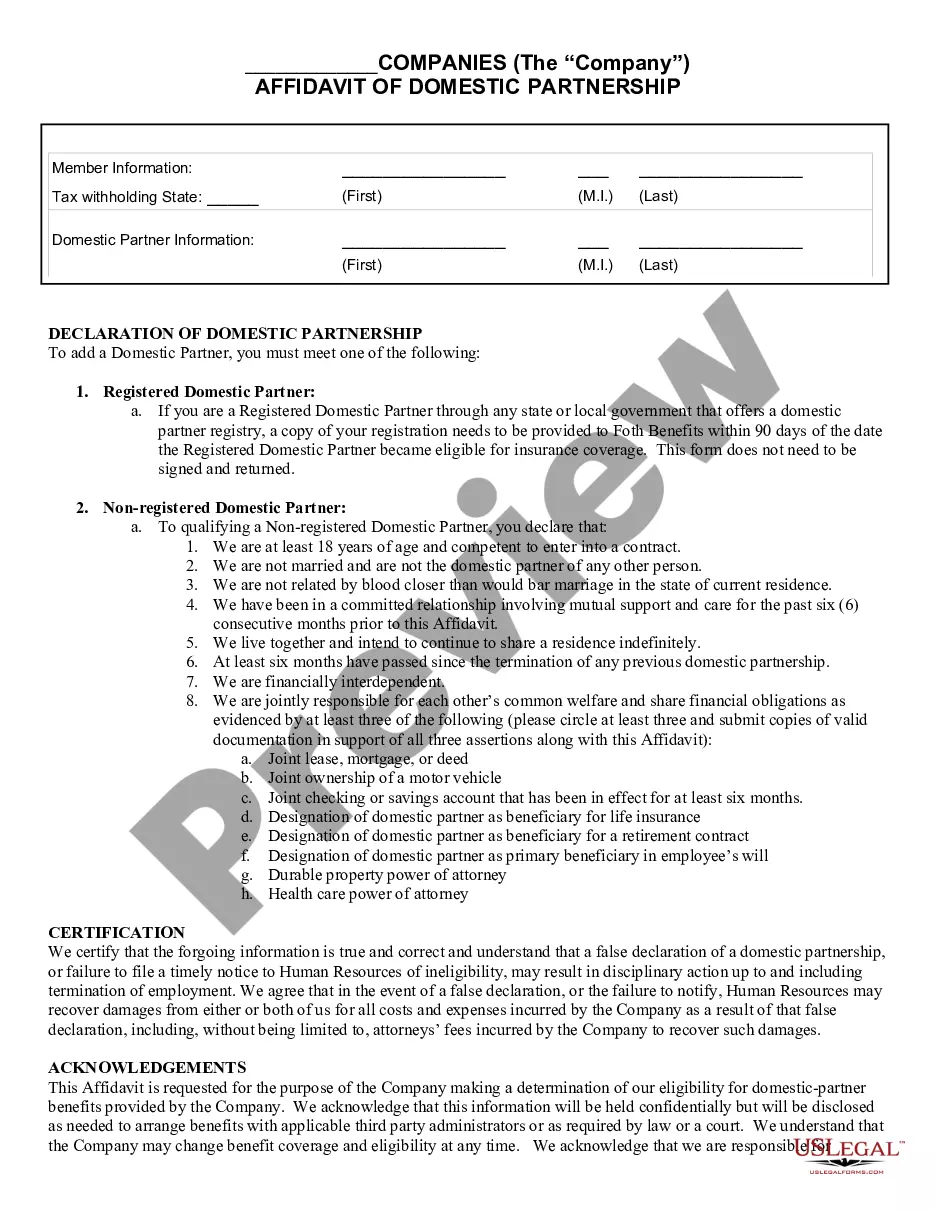
The Common Law Spouse Declaration or Affidavit is a legal form used to confirm a common-law marriage. This declaration is specifically designed for individuals residing in states that recognize common-law marriages. It serves to declare the relationship between two parties and facilitates the coverage of one partner as a spouse under certain benefits agreements.
Key components of this form
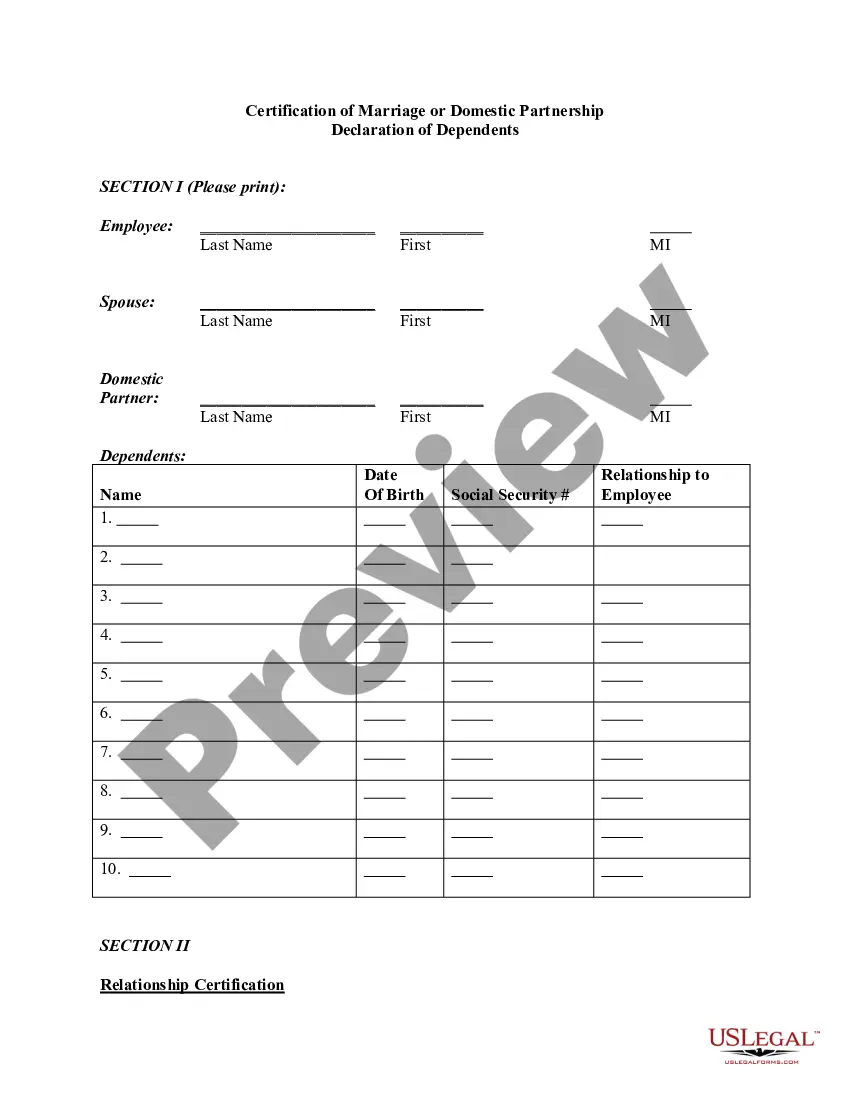
- Declarant's name and confirmation of relationship status.
- Name and date of birth of the common-law spouse.
- Signature of the employee declaring the relationship.
- List of any common-law children with their names and dates of birth.
- Statement affirming the relationship has existed for at least 12 months.
When to use this form
This form should be used when you need to officially declare a common-law marriage to access benefits, insurance, or other legal rights typically granted to spouses. It is particularly important for confirming coverage in employer-provided group insurance benefits plans or similar situations where marital status is a prerequisite.
Intended users of this form
- Individuals in a common-law marriage that recognize such relationships.
- Those seeking to declare their relationship for benefits coverage.
- Employers or benefits administrators requiring proof of marital status for insurance purposes.
Instructions for completing this form
- Begin by entering your name as the declarant.
- Clearly state the name and date of birth of your common-law spouse.
- Provide the date of the declaration.
- Sign the form to validate your declaration.
- List any children born to the common-law relationship with their names and dates of birth.
Notarization requirements for this form
This form usually doesn’t need to be notarized. However, local laws or specific transactions may require it. Our online notarization service, powered by Notarize, lets you complete it remotely through a secure video session, available 24/7.
Get your form ready online
Our built-in tools help you complete, sign, share, and store your documents in one place.
Make edits, fill in missing information, and update formatting in US Legal Forms—just like you would in MS Word.
Download a copy, print it, send it by email, or mail it via USPS—whatever works best for your next step.
Sign and collect signatures with our SignNow integration. Send to multiple recipients, set reminders, and more. Go Premium to unlock E-Sign.
If this form requires notarization, complete it online through a secure video call—no need to meet a notary in person or wait for an appointment.
We protect your documents and personal data by following strict security and privacy standards.

Make edits, fill in missing information, and update formatting in US Legal Forms—just like you would in MS Word.

Download a copy, print it, send it by email, or mail it via USPS—whatever works best for your next step.

Sign and collect signatures with our SignNow integration. Send to multiple recipients, set reminders, and more. Go Premium to unlock E-Sign.

If this form requires notarization, complete it online through a secure video call—no need to meet a notary in person or wait for an appointment.

We protect your documents and personal data by following strict security and privacy standards.
Avoid these common issues
- Failing to sign the form, which invalidates the declaration.
- Not including all required information, such as names and dates of birth.
- Assuming the form is valid in states without common-law marriage acknowledgment.
Why use this form online
- Easy access to templates created by licensed attorneys.
- Downloadable forms that allow for immediate use and editing.
- Secure storage of documents for future reference.
Looking for another form?
Form popularity
FAQ
The Common Law Spouse Declaration or Affidavit is a form used to officially confirm a common-law marriage for benefits purposes. It records the declarant’s name and relationship status, the common-law spouse’s name and date of birth, the employee’s signature, any common-law children with their birth dates, and a statement that the relationship has existed for at least 12 months. It helps employers verify marital status for coverage.
To write an affidavit for proof of a common-law relationship using this form, fill in the declarant’s name and confirmation of the relationship, provide the common-law spouse’s name and date of birth, have the employee sign the document, list any common-law children with birth dates, and include a statement that the relationship has existed for at least 12 months.
Yes. This form functions as an affidavit or declaration that can establish a common-law marriage for benefits purposes in states that recognize such relationships. It requires the declarant's name and relationship confirmation, the spouse's name and date of birth, the employee's signature, and details about any common-law children and the duration of the relationship.
Whether you can use this affidavit instead of a marriage certificate depends on the context. This Common Law Spouse Declaration or Affidavit is designed to confirm a common-law marriage for benefits, not to replace a formal license in every situation. Some employers may accept the declaration for coverage; others require a traditional marriage certificate.
A declaration of common law is a sworn statement used to confirm a common-law marriage for purposes such as benefits eligibility. This form collects the declarant’s name, the spouse’s name and birth dates, signatures, any common-law children, and a 12-month relationship duration, aligning with states that recognize common-law marriages.
This form is a Common Law Spouse Declaration or Affidavit, a sworn declaration used to prove a common-law relationship for benefits rather than a licensed marriage. It captures the declarant and spouse details, signatures, any children, and a 12-month duration, typically for employer benefit plans, and is not a substitute for a formal marriage certificate in every case.