Company Policy on AIDS
Understanding this form
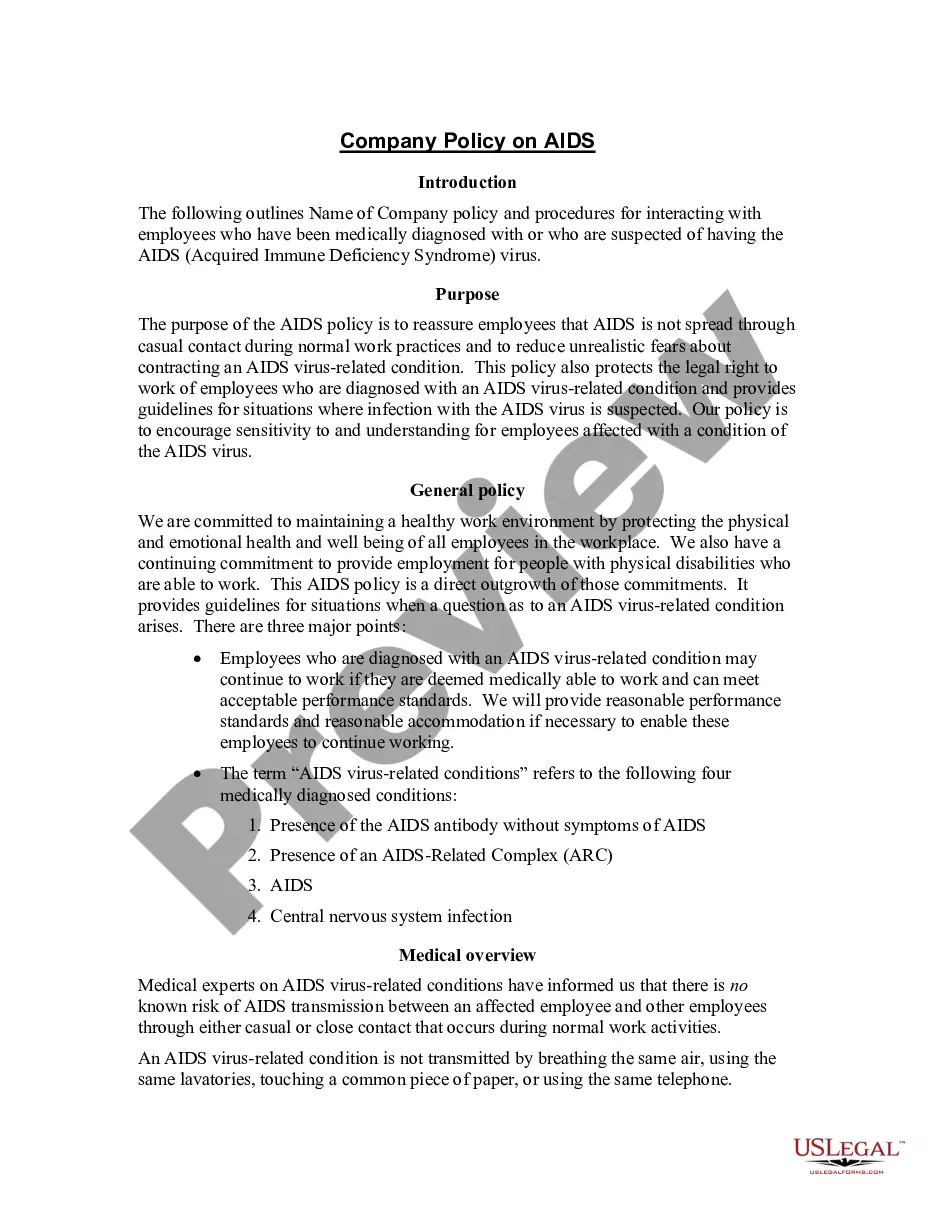
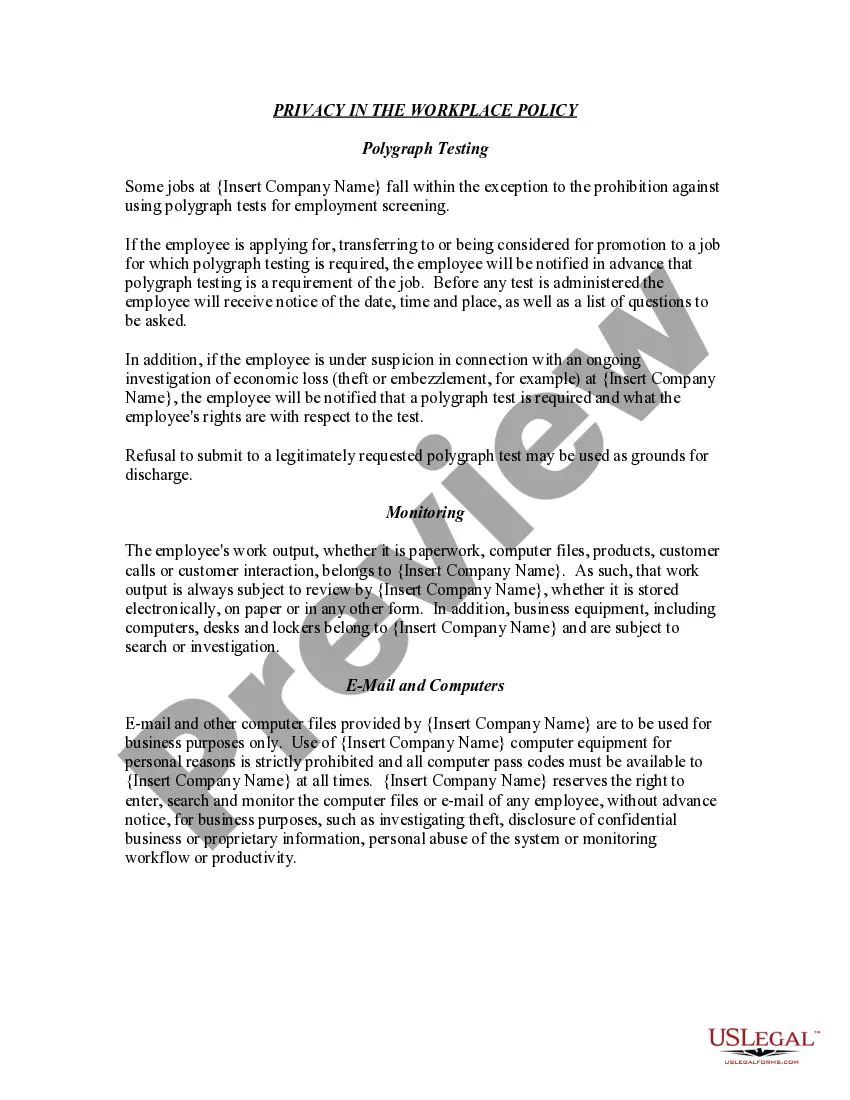
The Company Policy on AIDS form outlines a companyâs approach to managing interactions with employees who have AIDS or are suspected of having it. This form ensures a safe and respectful work environment while protecting the rights of affected employees. Its purpose is distinct from other HR policies as it specifically addresses concerns related to HIV/AIDS in the workplace, emphasizing education and support.
Form components explained
- Introduction providing the companyâs policy and procedures for handling cases of AIDS in the workplace.
- Purpose section detailing the reassurance regarding transmission risks and employee rights.
- General policy emphasizing commitment to a healthy work environment and employment opportunities for those with disabilities.
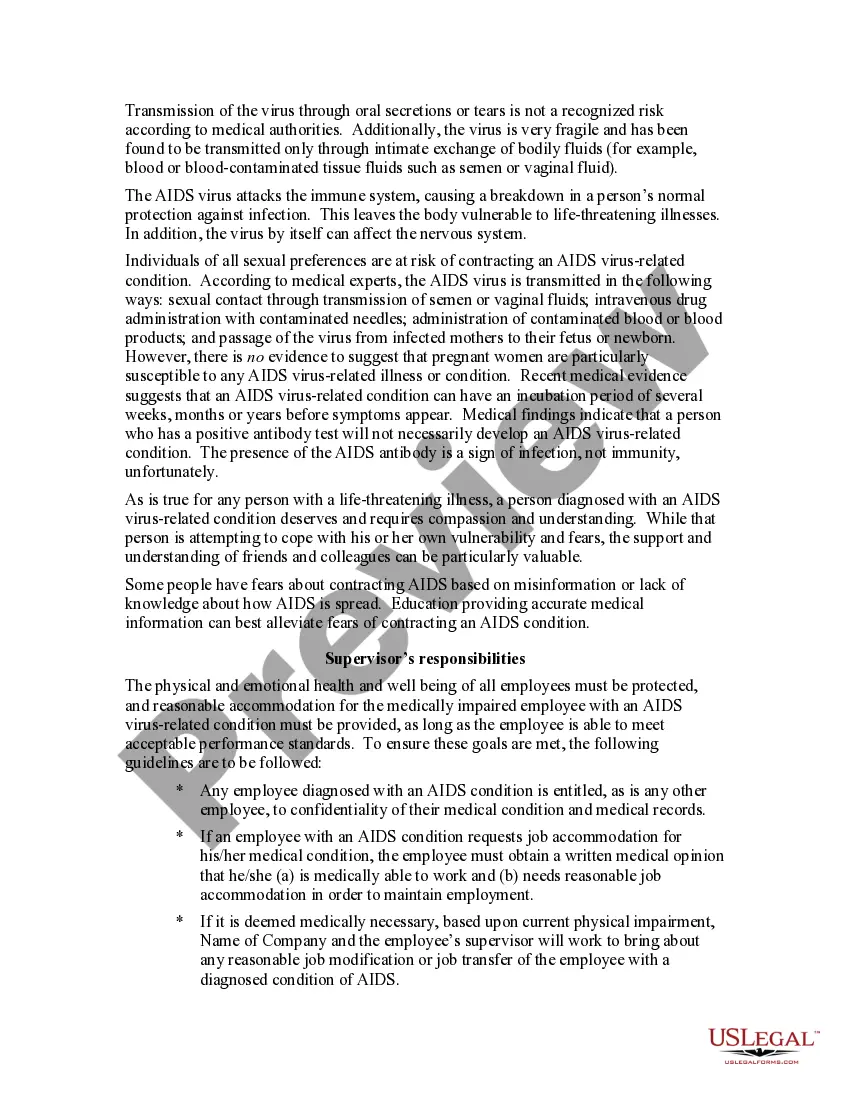
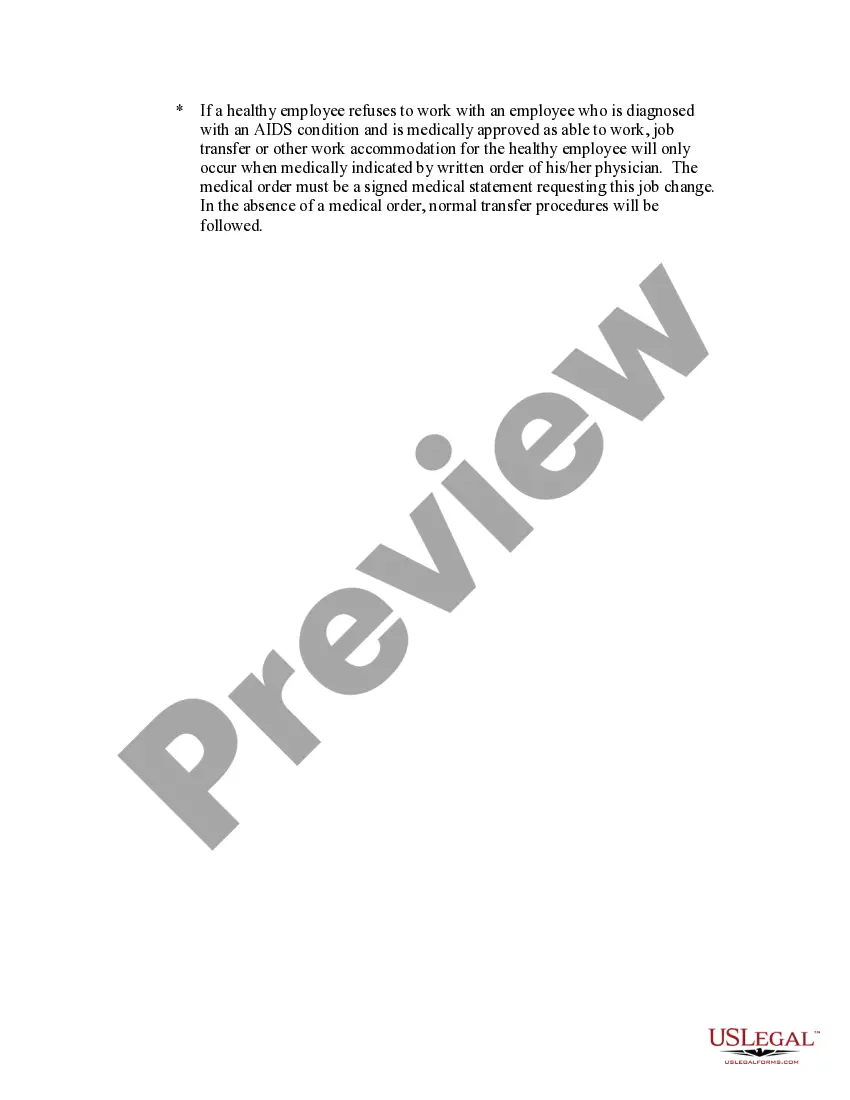
- Guidelines for supervisor responsibilities to ensure confidentiality and reasonable accommodation for affected employees.
- Medical overview providing information on the transmission risks and facts about AIDS.


When to use this document
This form is useful when a company needs to implement or revise its policies concerning employees who may be affected by AIDS. It can be used during the onboarding process of new employees, when a current employee receives a diagnosis, or when a company seeks to clarify its commitment to creating an inclusive work environment.
Who can use this document
Employers, HR managers, and administrators should utilize this form to formalize their company's policy regarding AIDS. Additionally, this form is beneficial for any organization looking to educate employees and foster a supportive workplace culture.
Instructions for completing this form
- Identify the company's name and the officially designated policy title.
- Outline the purpose of the policy, focusing on employee rights and health concerns.
- Detail the general policy that emphasizes a non-discriminatory work environment.
- Include specific guidelines for supervisors on how to handle cases of employees diagnosed with AIDS.
- Ensure that the form is reviewed and approved by legal counsel to remain compliant with applicable laws.
Notarization requirements for this form
In most cases, this form does not require notarization. However, some jurisdictions or signing circumstances might. US Legal Forms offers online notarization powered by Notarize, accessible 24/7 for a quick, remote process.
Get your form ready online
Our built-in tools help you complete, sign, share, and store your documents in one place.
Make edits, fill in missing information, and update formatting in US Legal Forms—just like you would in MS Word.
Download a copy, print it, send it by email, or mail it via USPS—whatever works best for your next step.
Sign and collect signatures with our SignNow integration. Send to multiple recipients, set reminders, and more. Go Premium to unlock E-Sign.
If this form requires notarization, complete it online through a secure video call—no need to meet a notary in person or wait for an appointment.
We protect your documents and personal data by following strict security and privacy standards.

Make edits, fill in missing information, and update formatting in US Legal Forms—just like you would in MS Word.

Download a copy, print it, send it by email, or mail it via USPS—whatever works best for your next step.

Sign and collect signatures with our SignNow integration. Send to multiple recipients, set reminders, and more. Go Premium to unlock E-Sign.

If this form requires notarization, complete it online through a secure video call—no need to meet a notary in person or wait for an appointment.

We protect your documents and personal data by following strict security and privacy standards.
Common mistakes
- Failing to address confidentiality concerns for employees diagnosed with AIDS.
- Not providing sufficient training and education to staff regarding the realities of AIDS.
- Using vague language that may lead to misunderstandings about the policy's intent.
Advantages of online completion
- Convenience of immediate access and downloading the form at any time.
- Editability to customize the form to fit specific company needs.
- Reliability by utilizing templates drafted by licensed attorneys, ensuring legal compliance.
Legal use & context
- This form promotes compliance with workplace laws and anti-discrimination policies regarding health conditions.
- It establishes guidelines that protect both employee rights and employer responsibilities.
- Adapting to this policy can help prevent legal disputes related to discrimination or workplace harassment.
Summary of main points
- Implementing a Company Policy on AIDS fosters a safe and inclusive work environment.
- The policy outlines clear responsibilities for management and staff regarding confidentiality and support.
- Education about AIDS transmission is crucial to alleviate fears and misinformation in the workplace.
Looking for another form?



Form popularity
FAQ
Several states criminalize one or more behaviors that pose a low or negligible risk for HIV transmission. In 21 states, laws require people with HIV who are aware of their status to disclose their status to sex partners, and 12 states require disclosure to needle-sharing partners.
The only way to tell. The only way to tell if a person has HIV is through the HIV Antibody Test, which detects the presence of antibodies produced by the body in response to the HIV virus. It can take up to three months for antibodies to be developed.
A person with a sexually transmissible disease, including HIV, in NSW, is no longer required by law to disclose that they have such a condition prior to sexual intercourse.
In 21 states, laws require people with HIV who are aware of their status to disclose their status to sex partners, and 12 states require disclosure to needle-sharing partners. The maximum sentence length for violating an HIV-specific statute is also a matter of state law.
The truth is that it's not nearly that easy to get HIV the medical literature estimates that the transmission rate is actually about 0.1% per sex act, or 10% per year. One way of interpreting these big overestimates of risks is that HIV education is working.
In California, AIDS cases have been reportable by name since 1983. HIV cases have been reportable since 2002.
HIV can be transmitted during unprotected sex; through sharing injecting equipment; from mother-to-baby during pregnancy, birth and breastfeeding; and through contaminated blood transfusions. Using condoms during sex, or taking PrEP consistently will protect you from HIV infection through sex.
There is a need for effective strategies in HIV control. However, there is no evidence that making HIV a notifiable disease will contribute to more effective prevention. Making HIV a notifiable disease does not result in more HIV testing and it may even hamper the current proactive testing policy.
With proper care and treatment, many people living with HIV lead normal, healthy lives, including having a job. Most people living with HIV can continue working at their current jobs or look for a new job in their chosen field.