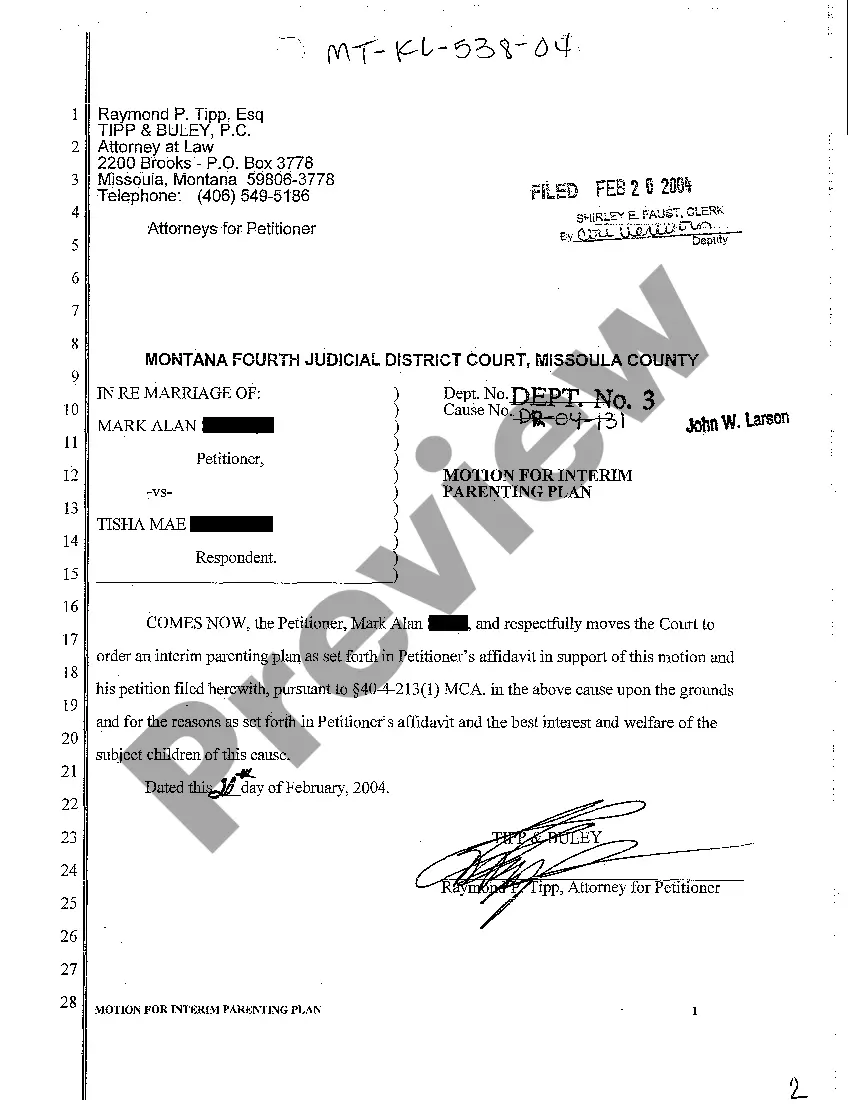
Complaint regarding Trover and Conversion of Auto by Mechanic
Overview of this form
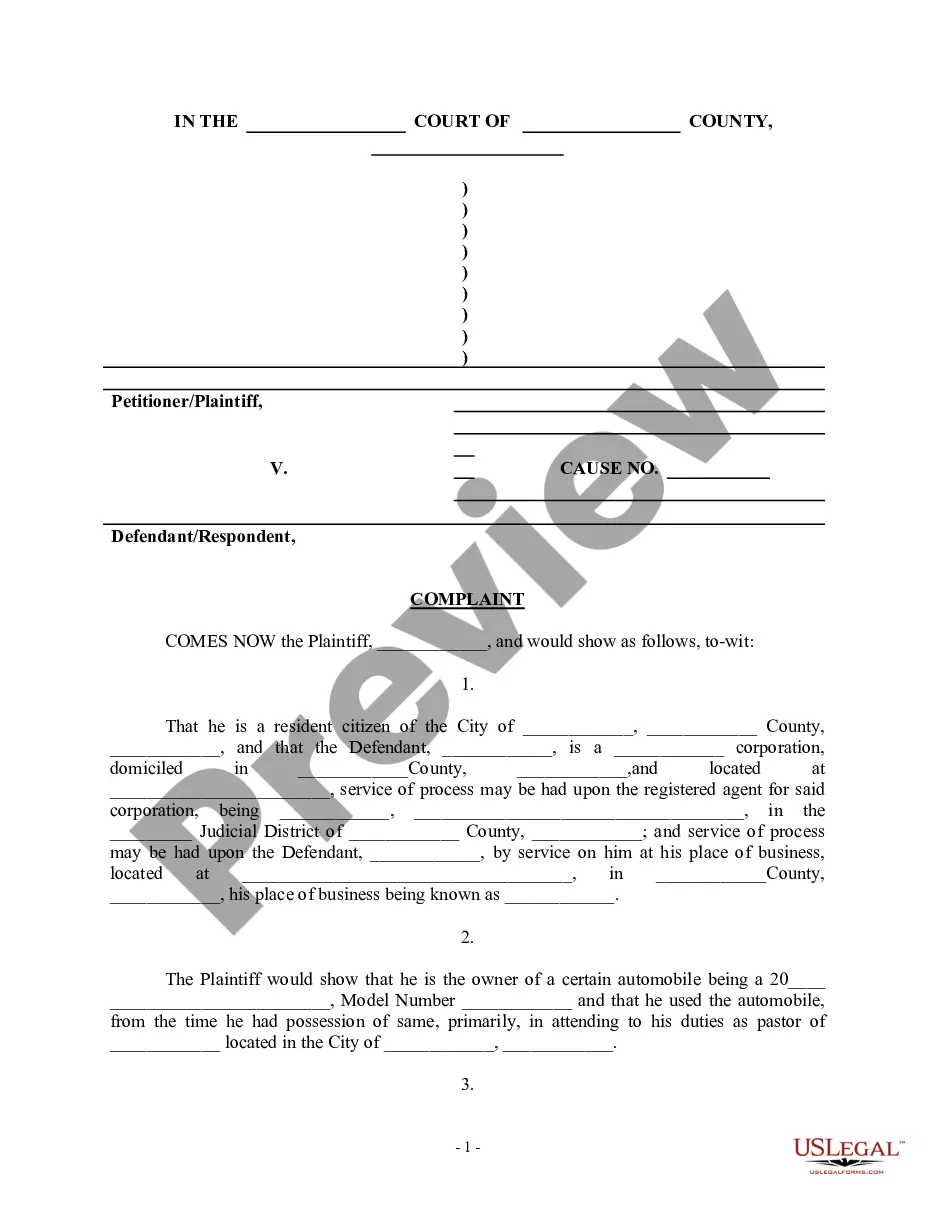
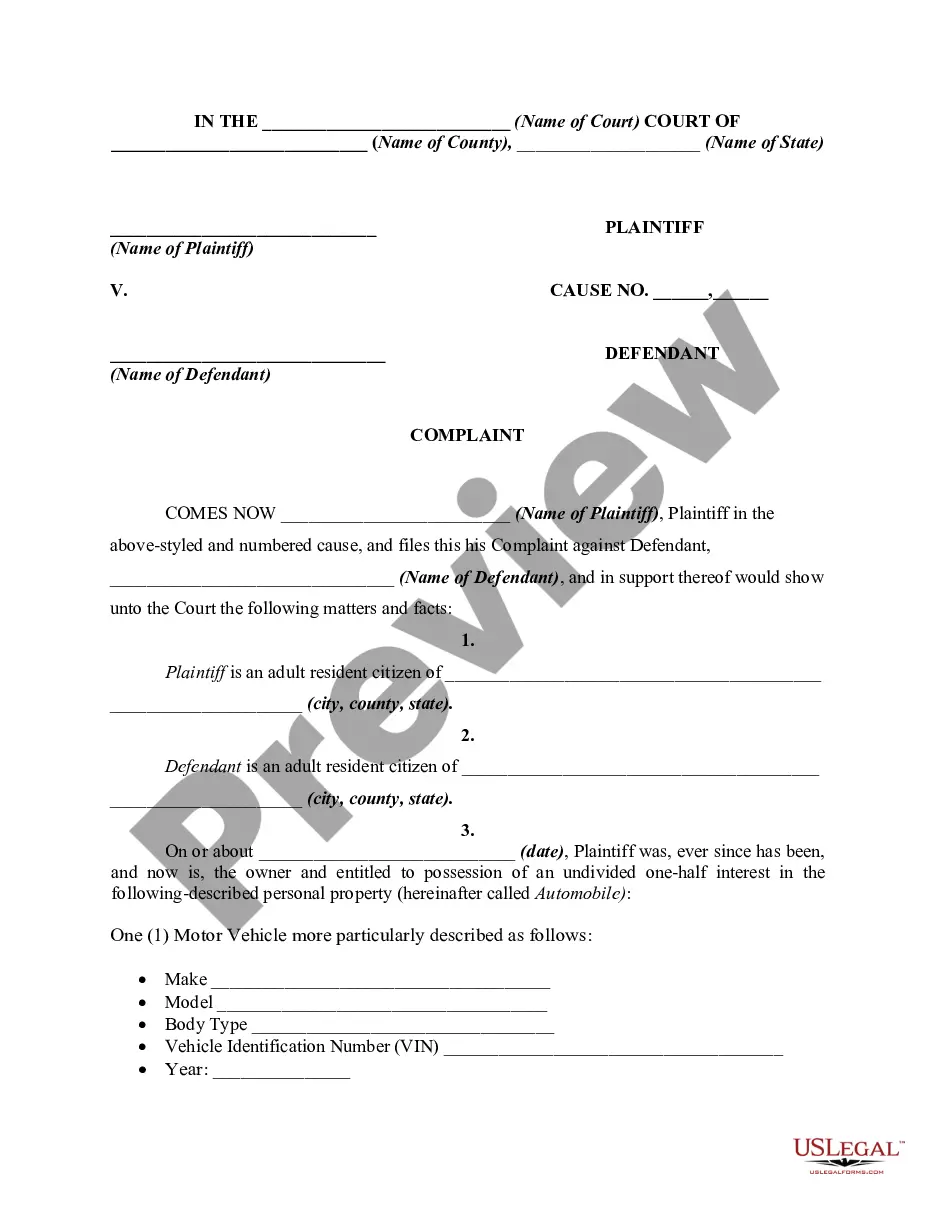
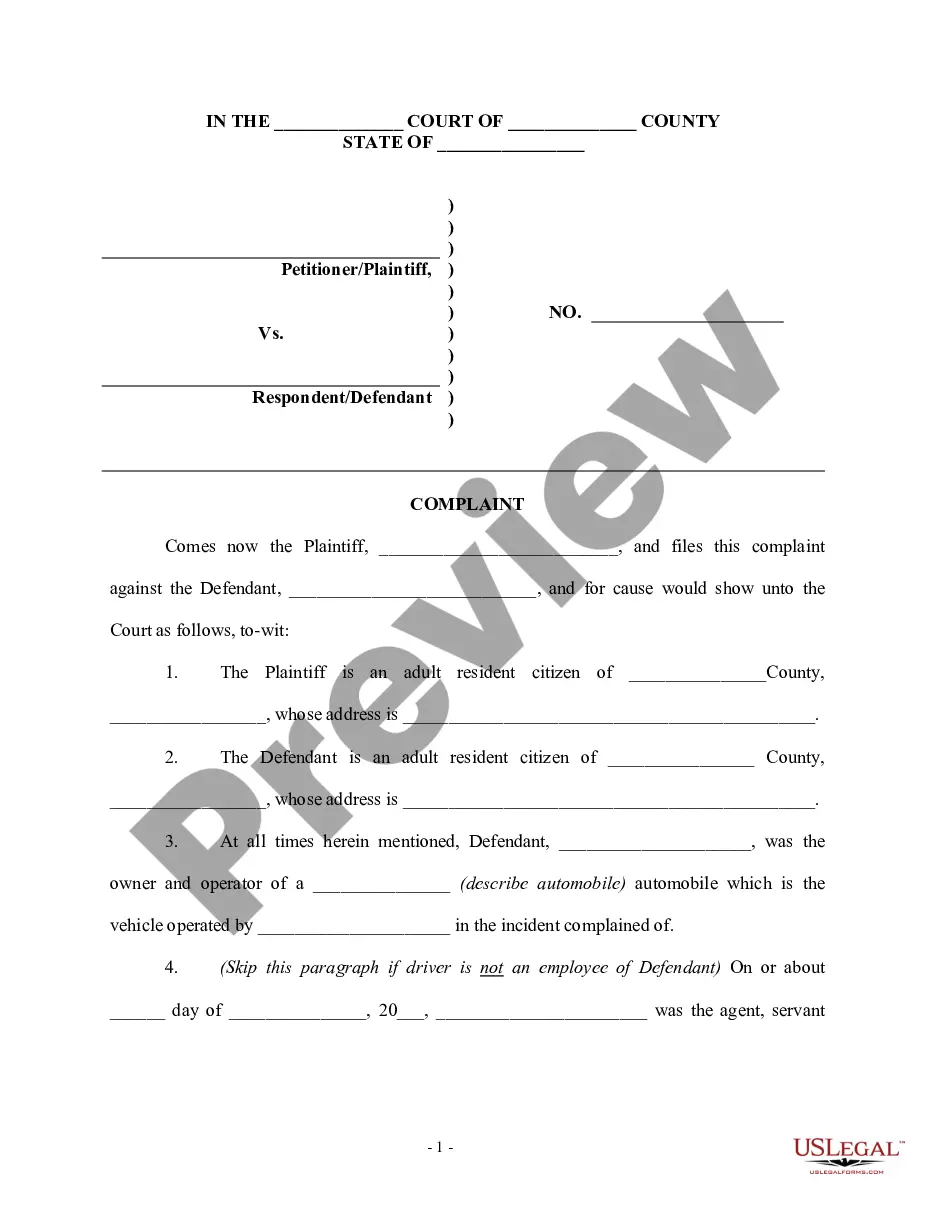
The Complaint regarding Trover and Conversion of Auto by Mechanic is a legal document that initiates a lawsuit when a mechanic has wrongfully detained a vehicle belonging to the owner. Unlike other forms of complaint, this document specifically addresses issues related to the conversion of property, emphasizing the unlawful holding of an automobile and seeking its return. The form is designed to lay out the basis of the plaintiff's claim, the facts surrounding the case, and the damages sought.
Form components explained
- Identification of parties involved, including plaintiff and defendant information.
- Details about the automobile in question.
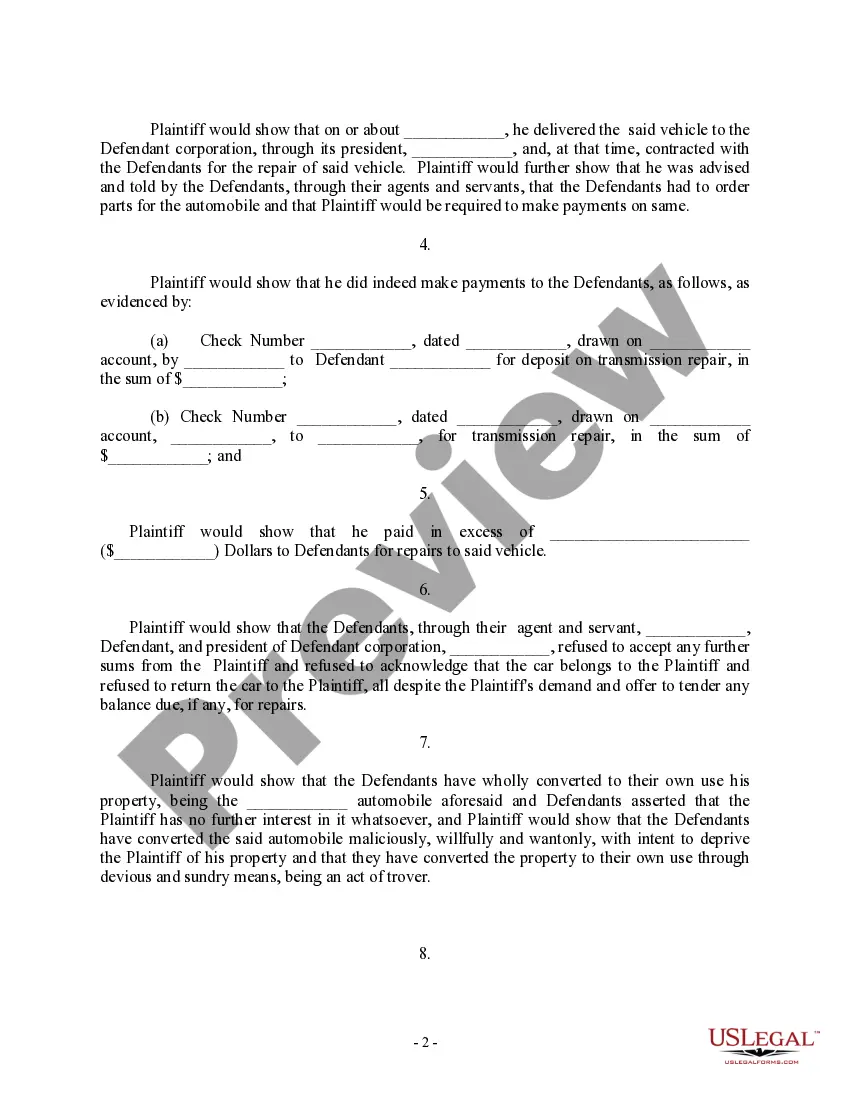
- Chronological description of events leading to the complaint, including agreements and payments made.
- Allegations of conversion and unlawful retention of the vehicle.
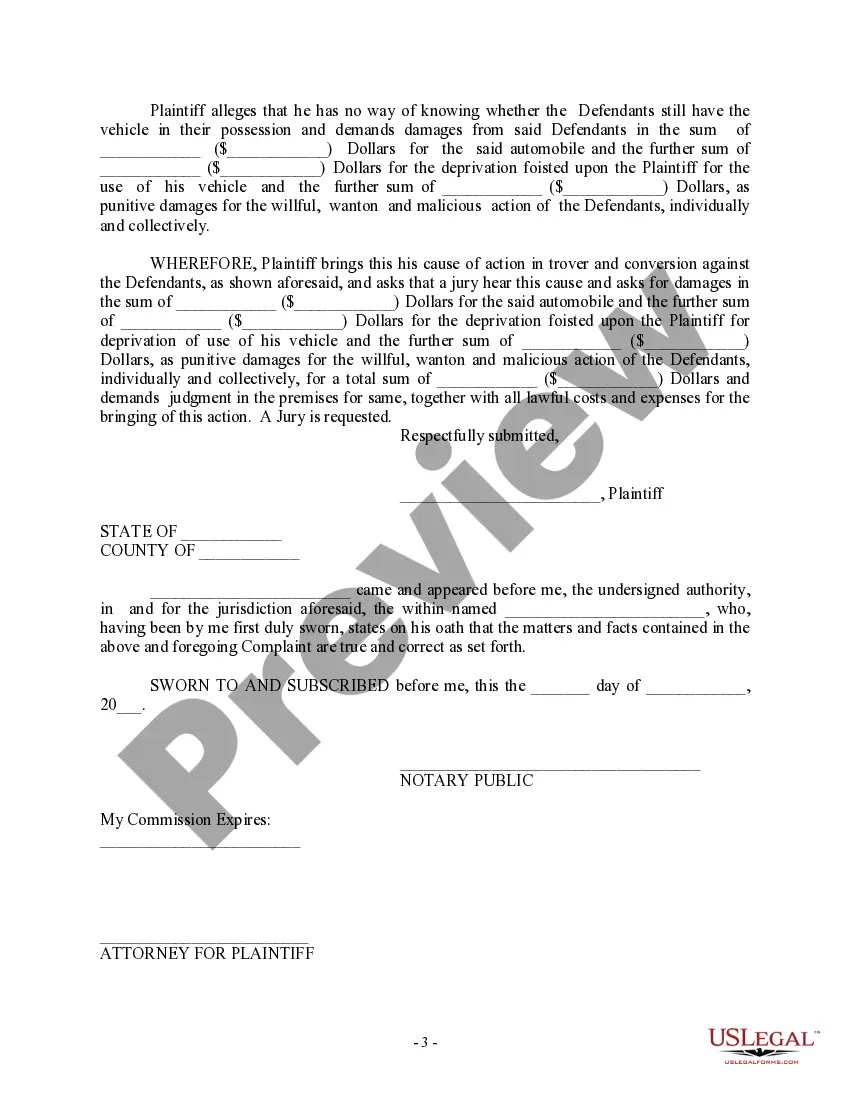
- Demand for specific damages, including compensatory and punitive amounts.
- Signature and notarization section for legal validation.
Situations where this form applies
This form is used when a vehicle owner believes that a mechanic or auto repair shop has unlawfully kept their vehicle, typically after repairs are completed or payment issues arise. It is appropriate when the owner has made attempts to retrieve the car or negotiate further payments but has been denied access to their property. Filing this complaint may be necessary to seek legal remedy, including the return of the vehicle and compensation for any losses incurred.
Intended users of this form
- Individuals or entities who own a vehicle that is being unlawfully retained by a mechanic.
- Owners who have made payments for repairs but still do not have their vehicle returned.
- Those seeking to recover damages related to the loss of use of their vehicle.
- People who are prepared to present their case in court, potentially before a jury.
Completing this form step by step
- Identify the parties: Fill in the names and addresses of the plaintiff and defendant.
- Describe the vehicle: Enter the make, model, and year of the automobile involved.
- Outline the facts: Provide a detailed narrative of events leading to the dispute, including any contracts and payments made.
- Specify damages: Clearly state the total amount of damages sought for the conversion and loss of use.
- Sign and notarize: Ensure that the plaintiff signs the document and arranges for notarization to validate the complaint.
Notarization requirements for this form
To make this form legally binding, it must be notarized. Our online notarization service, powered by Notarize, lets you verify and sign documents remotely through an encrypted video session.
Get your form ready online
Our built-in tools help you complete, sign, share, and store your documents in one place.
Make edits, fill in missing information, and update formatting in US Legal Forms—just like you would in MS Word.
Download a copy, print it, send it by email, or mail it via USPS—whatever works best for your next step.
Sign and collect signatures with our SignNow integration. Send to multiple recipients, set reminders, and more. Go Premium to unlock E-Sign.
If this form requires notarization, complete it online through a secure video call—no need to meet a notary in person or wait for an appointment.
We protect your documents and personal data by following strict security and privacy standards.

Make edits, fill in missing information, and update formatting in US Legal Forms—just like you would in MS Word.

Download a copy, print it, send it by email, or mail it via USPS—whatever works best for your next step.

Sign and collect signatures with our SignNow integration. Send to multiple recipients, set reminders, and more. Go Premium to unlock E-Sign.

If this form requires notarization, complete it online through a secure video call—no need to meet a notary in person or wait for an appointment.

We protect your documents and personal data by following strict security and privacy standards.
Common mistakes
- Failing to include accurate information about the defendant's address, which may delay service of process.
- Not detailing all payments made; insufficient documentation can weaken the case.
- Omitting to specify clear damages; ensure all claims for compensation are detailed.
- Neglecting to notarize the complaint, which could lead to dismissal or rejection of the filing.
Why complete this form online
- Convenient access: Downloadable forms allow users to complete the document at their own pace.
- Editability: Allows for easy input of specific details relevant to each case.
- Reliability: Created by licensed attorneys, ensuring legal accuracy and compliance.
Looking for another form?
Form popularity
FAQ
The easiest cars to convert to electric would be VW and Porsche air cooled vehicles such as Beetles, Karman Ghia, Bus, Squareback, Fastback, Porsche 912, 911 etc from 1950s to 1975+.
A conversion will cost you about $6000 in parts, and about $1000-$3000 for batteries and installation. But, for all this expense, you'll get a zero-emissions vehicle that costs only a few cents per mile to run. Your electric car will also be more reliable and require much less maintenance that a conventional one.
A converted vehicle or engine is one modified to use a different fuel or power source than the one for which it was originally designed. This includes converting a gasoline-powered vehicle to run on propane, natural gas, or ethanol-gasoline blends containing up to 83% ethanol.
A typical conversion uses a DC controller and a DC motor. The person doing the conversion decides what voltage the system will run at -- typically anything between 96 volts and 192 volts. The voltage decision controls how many batteries the car will need, and what sort of motor and controller the car will use.
With price points from £20,000 upwards, the traditional car market still has its better deals. One such specialist firm, Transition-One, has the tools and knowledge to convert a car to electric. As one of Europe's hopeful electric-conversion firms, the price points for fitting a kit costs, on average, A£7,737.
Porsche 924 EV. Mazda Miata EV. Chevy S-10 and Ford Ranger. GM's Chevrolet S-10 Electric Vehicle. Triumph Spitfire. This British classic no longer spits carbon after it's been converted to electric power. VW Bus (Officially, the Type 2 or T2) The Volkswagen Bus lends itself nicely to EV conversions.
As one might guess, the first step in converting a conventional vehicle into an electric car is to strip it of all ICE-related hardware, including the engine, fuel tank, muffler, exhaust, starter, and radiator. They'll be replaced by myriad components, the most significant of which is the electric motor.
Converted vehicle means a vehicle that has been retro- fitted to use one of the clean alternative fuels or a combination of fuels and meets the emission standards for that class of LEVs.
A converted vehicle or engine is one modified to use a different fuel or power source than the one for which it was originally designed. This includes converting a gasoline-powered vehicle to run on propane, natural gas, or ethanol-gasoline blends containing up to 83% ethanol.