Complaint with Jury Demand for Conversion and Negligence
About this form
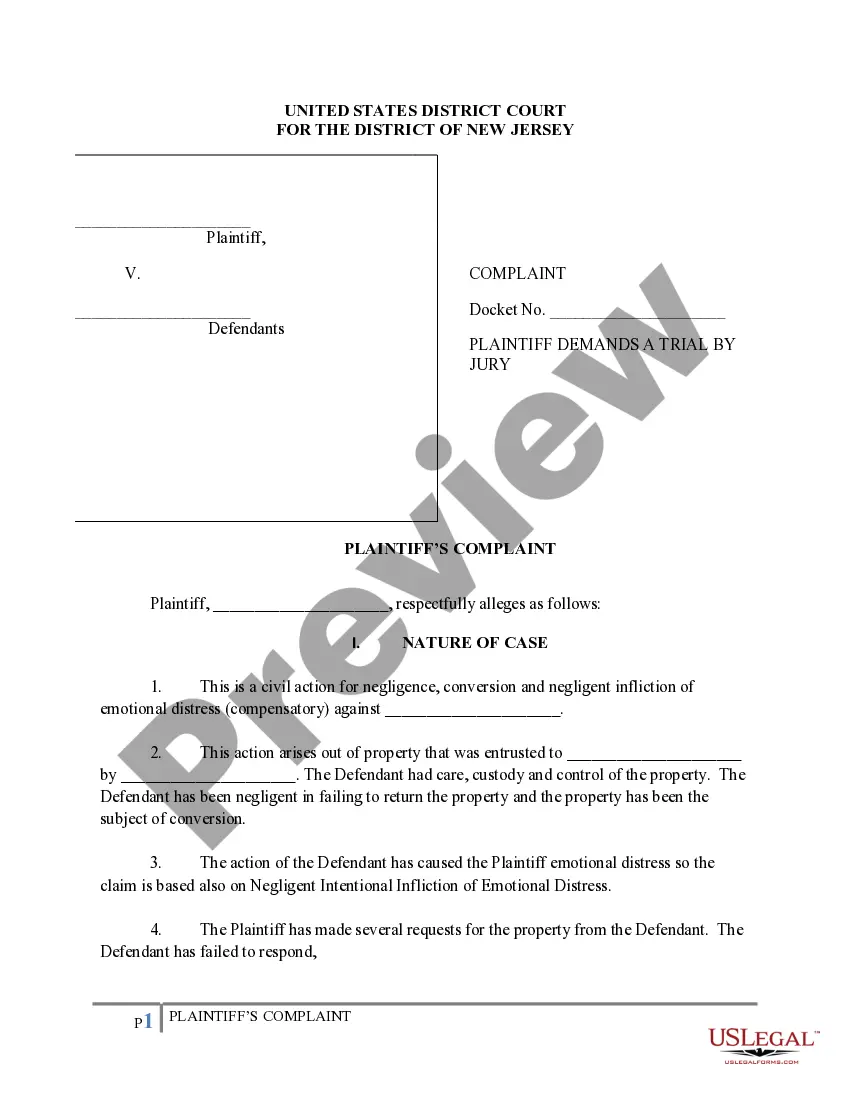
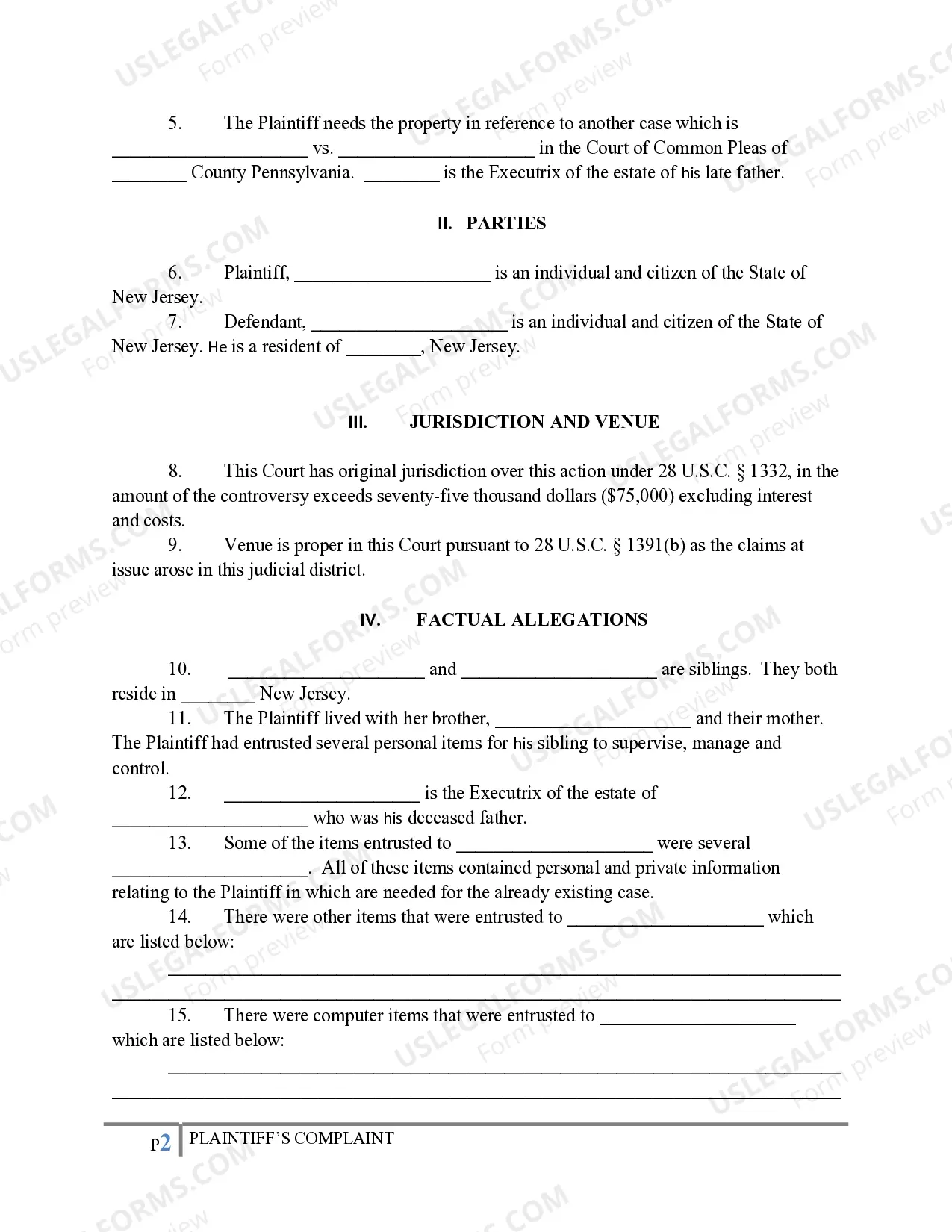
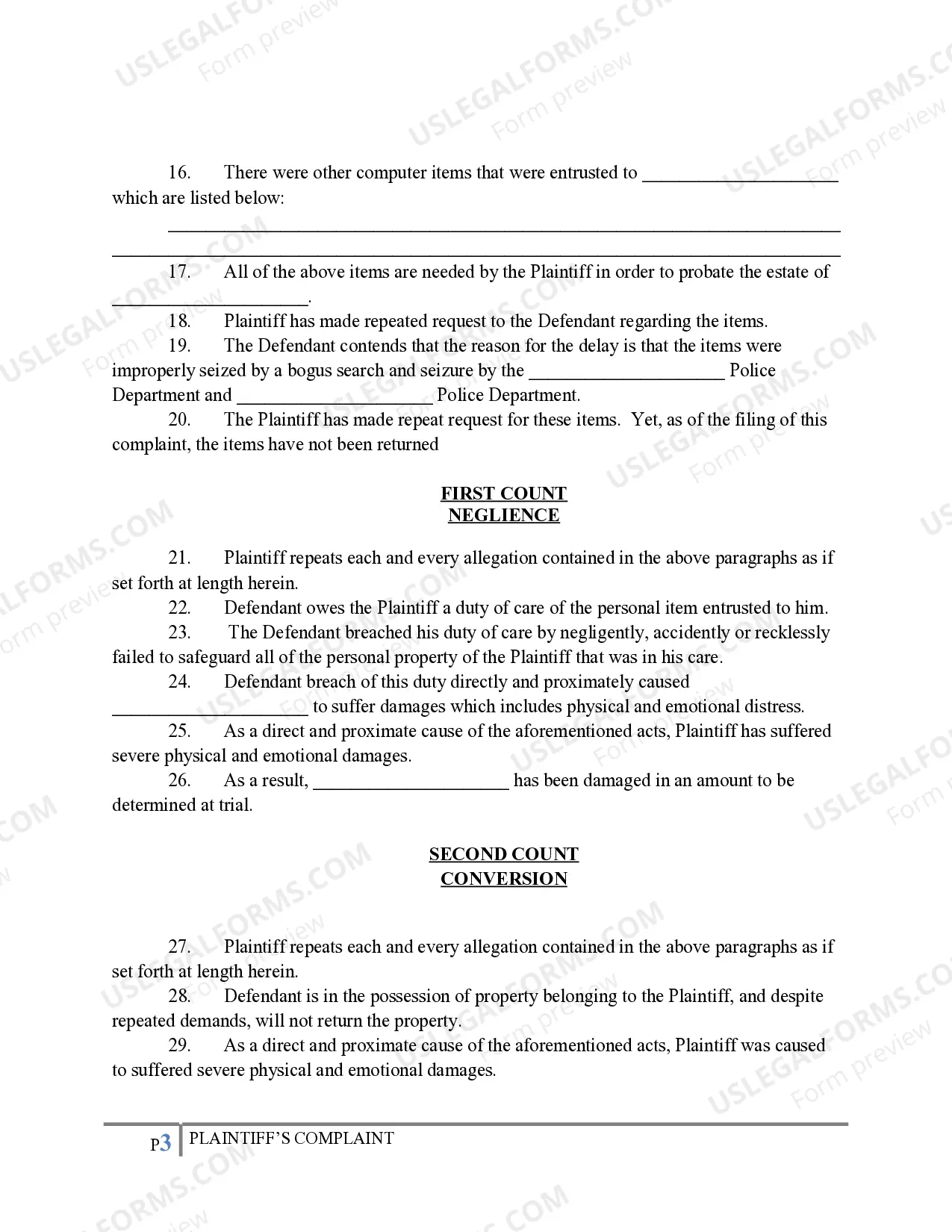
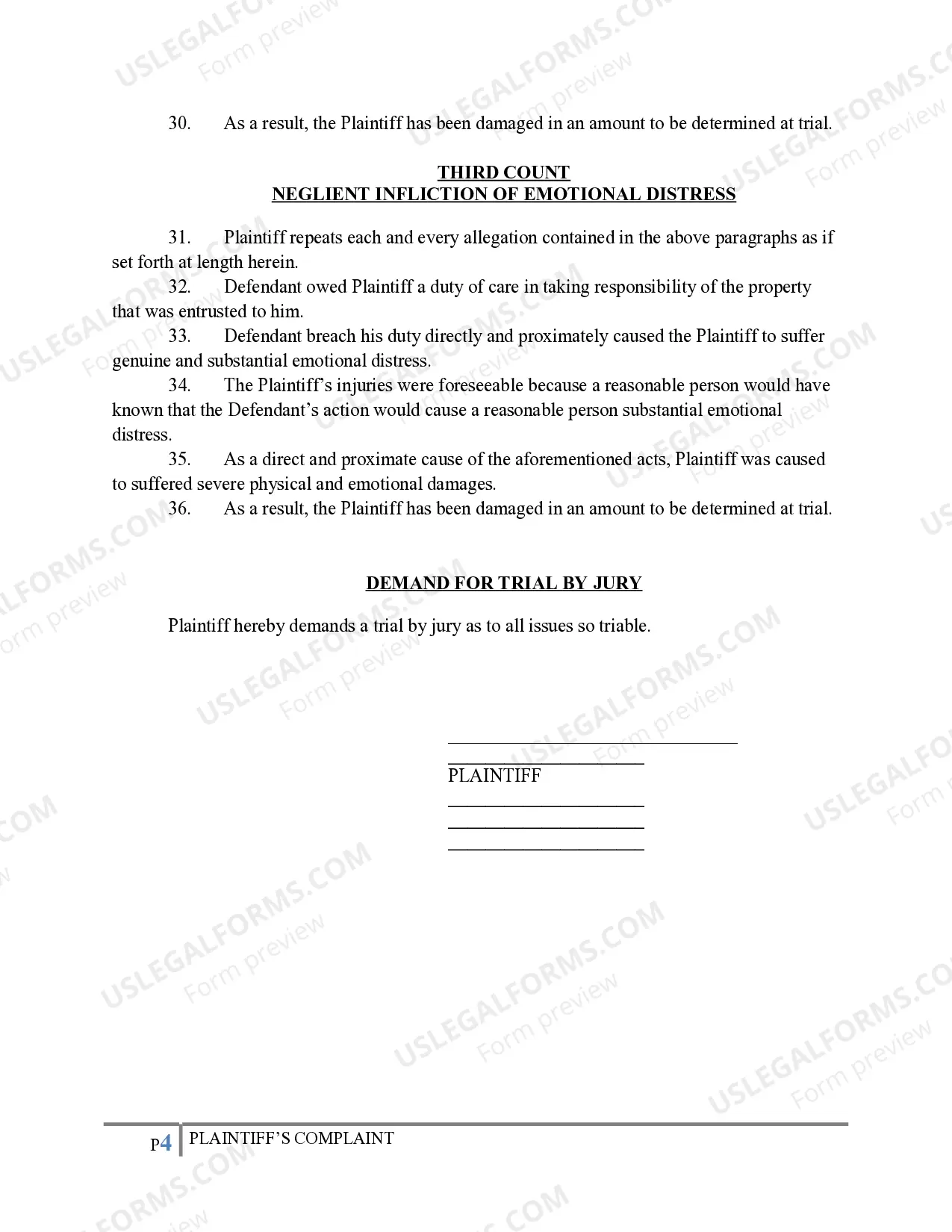
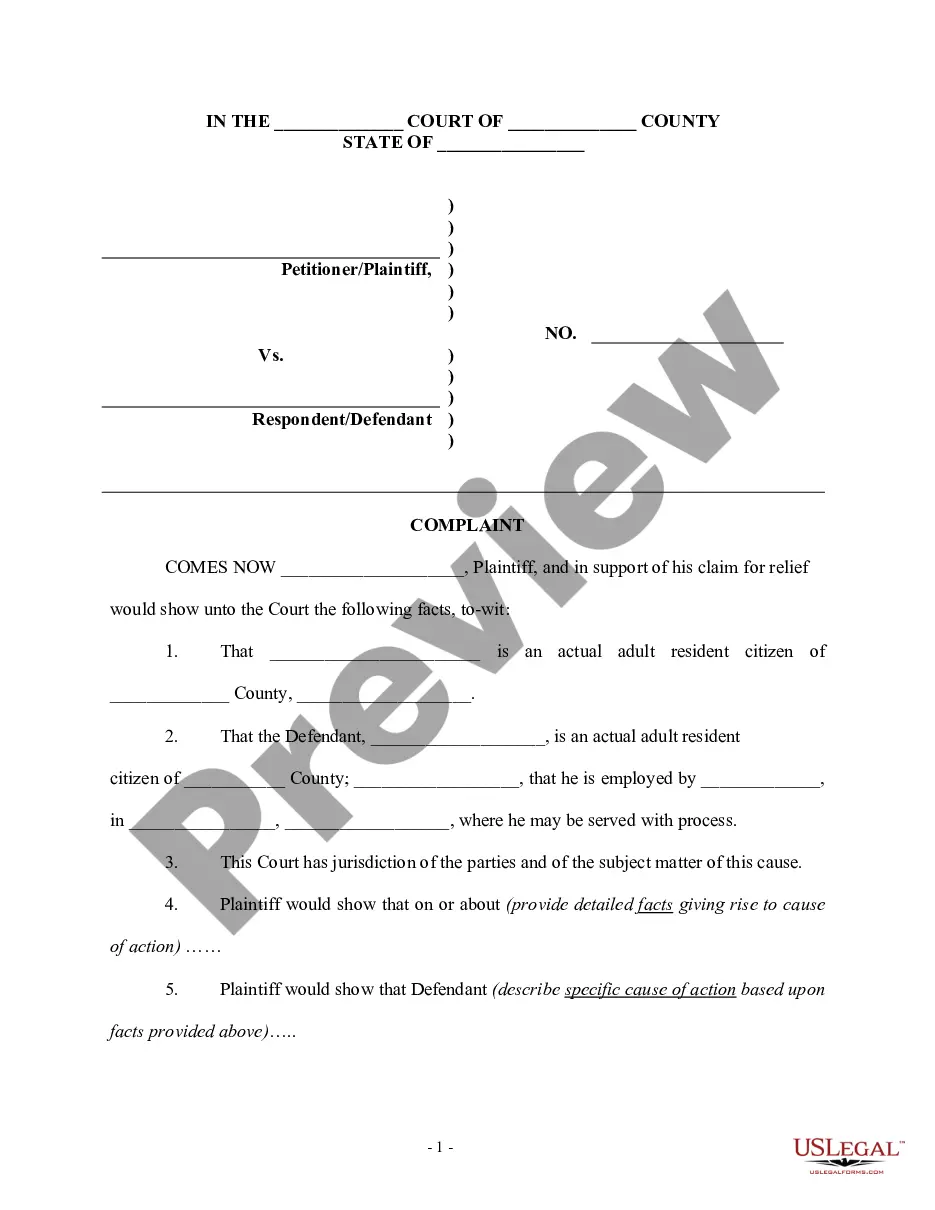
The Complaint with Jury Demand for Conversion and Negligence is a legal document used to initiate a civil lawsuit in the U.S. District Court for New Jersey. The form helps individuals seek compensation for damages stemming from negligence, conversion of property, and negligent infliction of emotional distress. This complaint is suitable for cases where a defendant has failed to return property entrusted to them, resulting in financial loss and emotional distress for the plaintiff.
What’s included in this form
- Parties section to identify plaintiff and defendant.
- Jurisdiction and venue details to establish court authority.
- Factual allegations outlining the specifics of the case.
- Counts for negligence, conversion, and negligent infliction of emotional distress.
- Demand for a trial by jury to assert the right to jury involvement in the trial process.


When to use this document
This form should be used when an individual has entrusted personal property to another party, which has not been returned. If the defendant's failure to return this property has resulted in damages related to negligence or caused emotional distress, this complaint is an appropriate course of action. It is commonly used in situations involving family disputes over inherited property, as demonstrated in scenarios involving estate management.
Who this form is for
- Individuals who have had personal property unlawfully retained by another party.
- Those seeking compensation for emotional distress due to negligence.
- People involved in estate disputes requiring legal recourse for property retrieval.
- Anyone who desires a jury trial in a civil complaint regarding property conversion and negligence.
Steps to complete this form
- Identify and fill in your name as the plaintiff and the defendant's name in the designated sections.
- Provide details about the jurisdiction and venue, including relevant statutes.
- Clearly describe the factual allegations and the property involved in the case.
- Specify the damages suffered due to negligence and conversion.
- Include your demands for a jury trial at the conclusion of the document.
Does this document require notarization?
This form does not typically require notarization to be legally valid. However, some jurisdictions or document types may still require it. US Legal Forms provides secure online notarization powered by Notarize, available 24/7 for added convenience.
Get your form ready online
Our built-in tools help you complete, sign, share, and store your documents in one place.
Make edits, fill in missing information, and update formatting in US Legal Forms—just like you would in MS Word.
Download a copy, print it, send it by email, or mail it via USPS—whatever works best for your next step.
Sign and collect signatures with our SignNow integration. Send to multiple recipients, set reminders, and more. Go Premium to unlock E-Sign.
If this form requires notarization, complete it online through a secure video call—no need to meet a notary in person or wait for an appointment.
We protect your documents and personal data by following strict security and privacy standards.

Make edits, fill in missing information, and update formatting in US Legal Forms—just like you would in MS Word.

Download a copy, print it, send it by email, or mail it via USPS—whatever works best for your next step.

Sign and collect signatures with our SignNow integration. Send to multiple recipients, set reminders, and more. Go Premium to unlock E-Sign.

If this form requires notarization, complete it online through a secure video call—no need to meet a notary in person or wait for an appointment.

We protect your documents and personal data by following strict security and privacy standards.
Avoid these common issues
- Failing to provide detailed factual allegations about the property and the circumstances of the case.
- Omitting critical information regarding the parties involved.
- Neglecting to specify the damages incurred, which can weaken your case.
- Not adhering to proper court formatting or filing requirements for the New Jersey District Court.
Benefits of using this form online
- Convenience of downloading and completing the form at your own pace.
- Access to legal templates drafted by licensed attorneys, ensuring legal compliance.
- Easy editing to tailor the form to your specific circumstances.
- Time-saving, as you can begin your legal process immediately without waiting for a lawyerâs appointment.
Legal use & context
- This form allows plaintiffs to assert claims for damages in cases involving negligence and property conversion.
- It provides a structured method for addressing grievances related to property disputes.
- Understanding this form is vital for those seeking restitution for financial loss or emotional distress.
Looking for another form?
Form popularity
FAQ
A conversion occurs when a person without authority or permission intentionally takes the personal property of another or deprives another of possession of personal property. It is a tort which allows the injured party to seek legal relief.
Conversion is a civil claim and is very similar to and often identical to the criminal charge of theft. Theft is a criminal charge where conversion is the civil claim for the same action.
Under California law, conversion is a civil cause of action that applies when a person unlawfully and without permission takes or interferes with your possession of your property. You can bring a claim for. recovery of the property, or. compensation for the value of the lost property.
Conversion can occur when someone, acting without your consent, does any of the following with your property: Takes and fails to return your property. Sells your property. Substantially changes your property, like cutting down trees to use the wood in construction. Severely damages or misuses your property.
For example, a person who picks up a necklace off the ground with the intent to resell it because they erroneously believed it was abandoned still converted that necklace. The standard remedy for conversion is return of the property in question or damages for the fair market value of the property.
To establish a conversion claim, a plaintiff must prove that: it had a possessory interest in the property, the defendants intentionally interfered with the plaintiff's possession, and. the defendants' acts are the legal cause of the plaintiff's loss of property.
Your neighbor took your bike without asking and now the frame is bent. The bike isn't rideable in this condition and the neighbor refuses to replace it. You could file a criminal complaint with the police, but that won't get your bike fixed.
For example, a janitor has a duty to put up a wet floor sign after mopping. If he or she fails to put up the sign and someone falls and injures themselves, a negligence tort case may be filed. Examples of negligence torts include car accidents, bicycle accidents and medical malpractice.