Complaint for Negligence and Wrongful Death
About this form
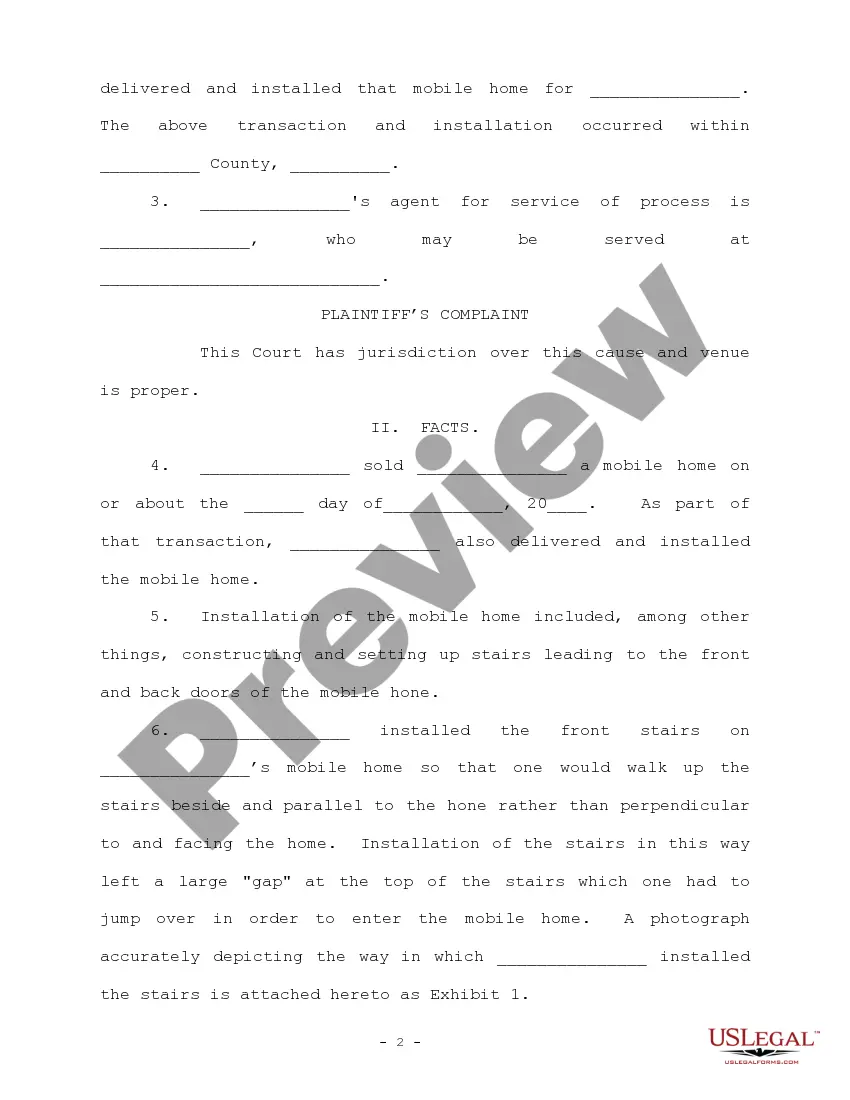
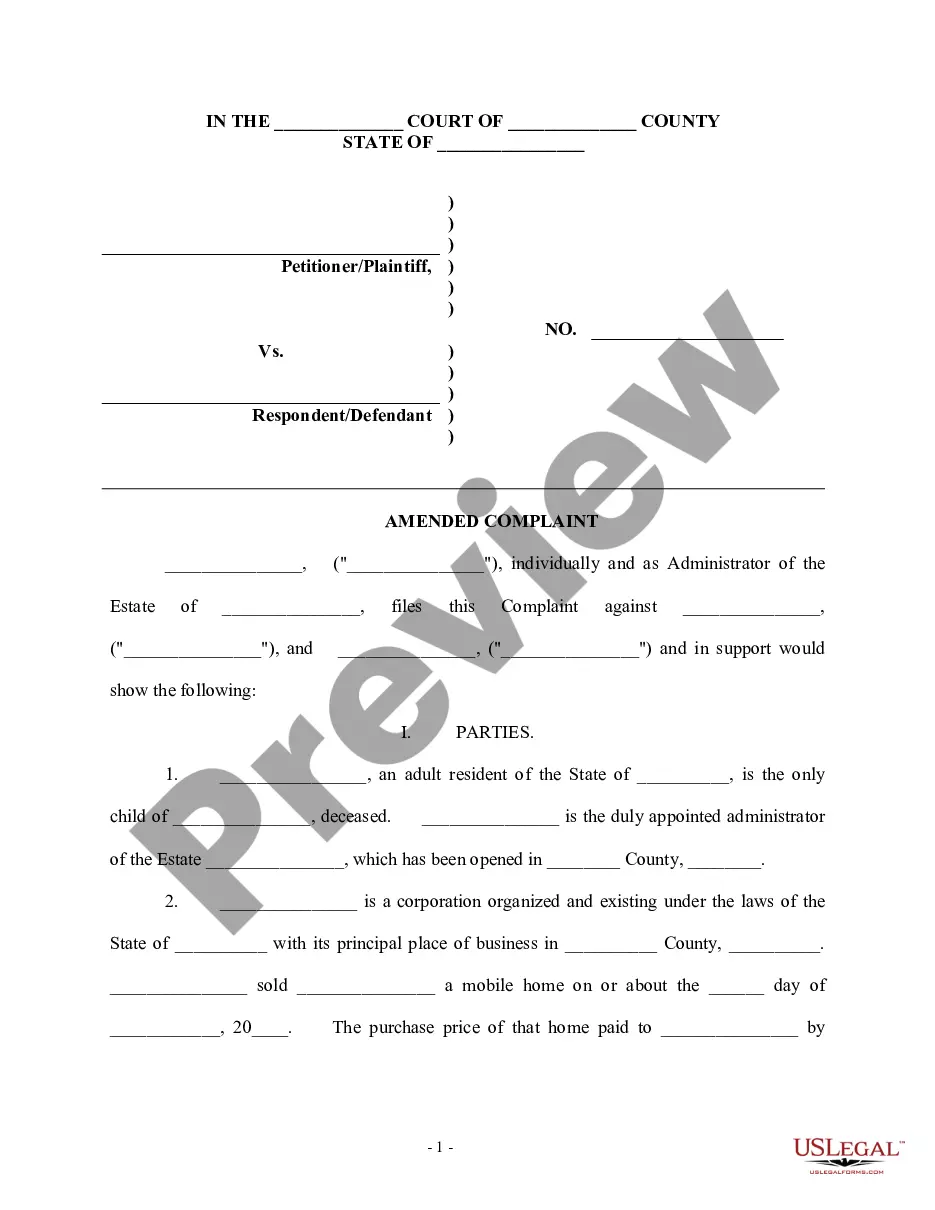
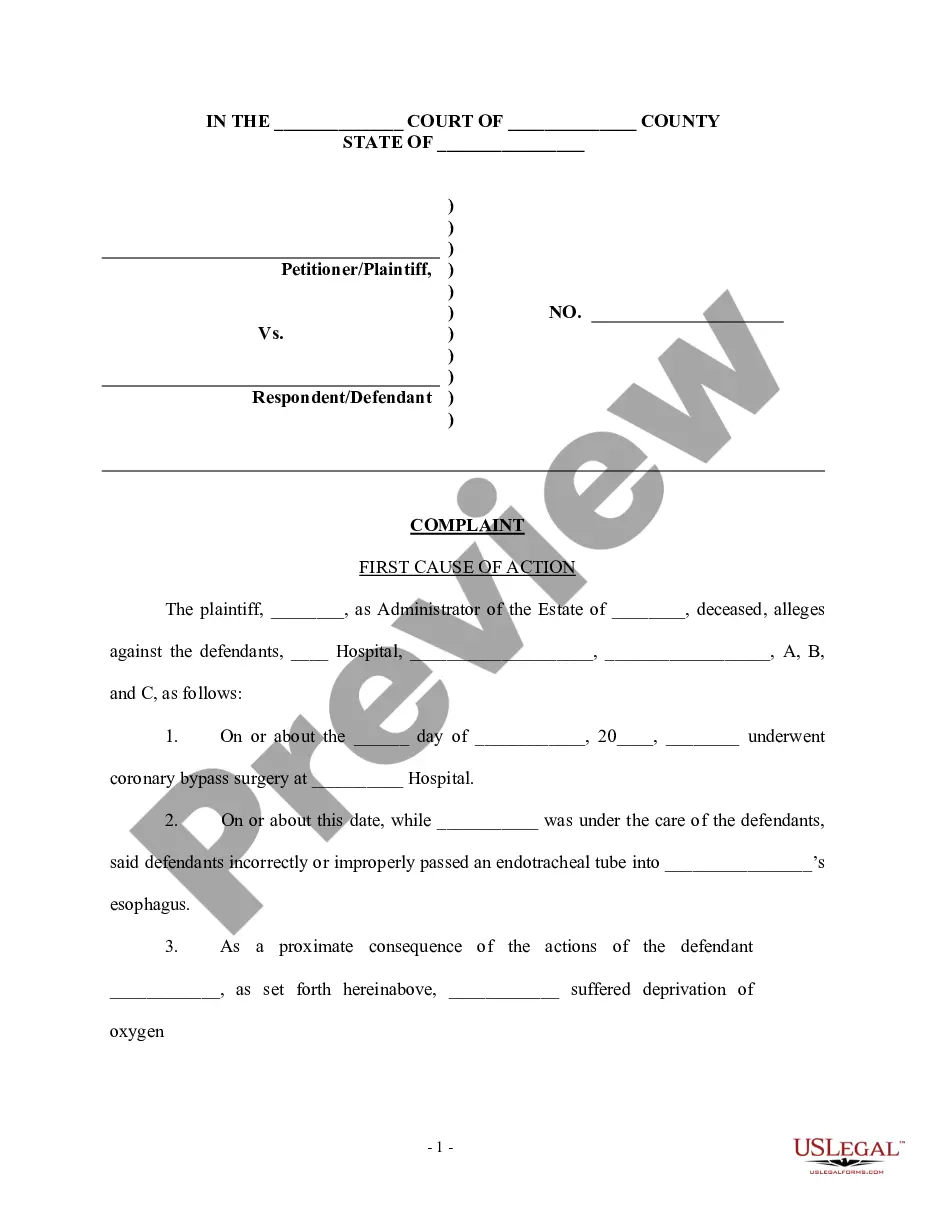
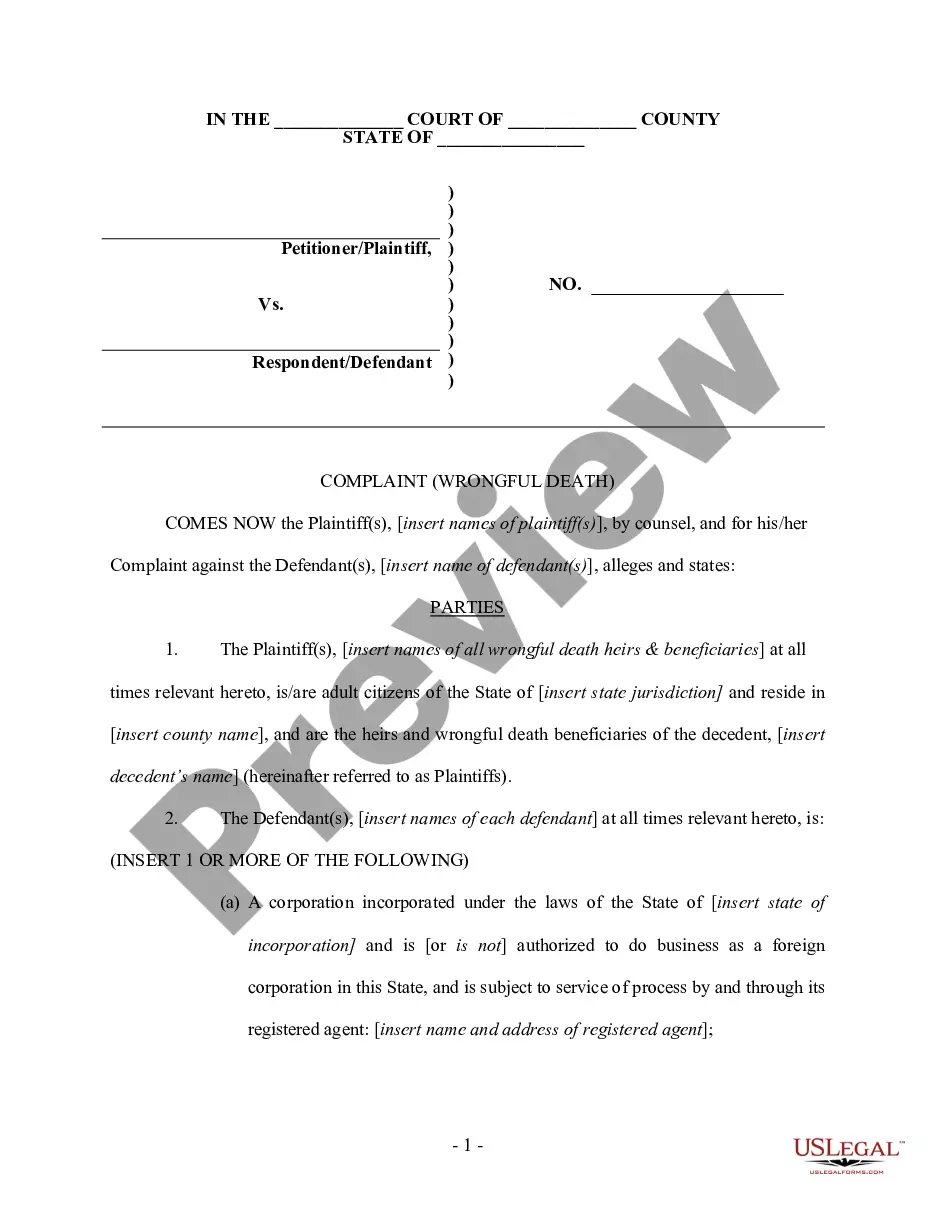
The Complaint for Negligence and Wrongful Death is a legal document used by individuals seeking to sue for damages due to a party's negligent behavior resulting in injuries and, ultimately, death. This form is specifically designed for cases related to personal injury and wrongful death, setting it apart from other personal injury forms by combining claims for both negligence and the consequences of that negligenceâsuch as wrongful death and punitive damages.
Form components explained
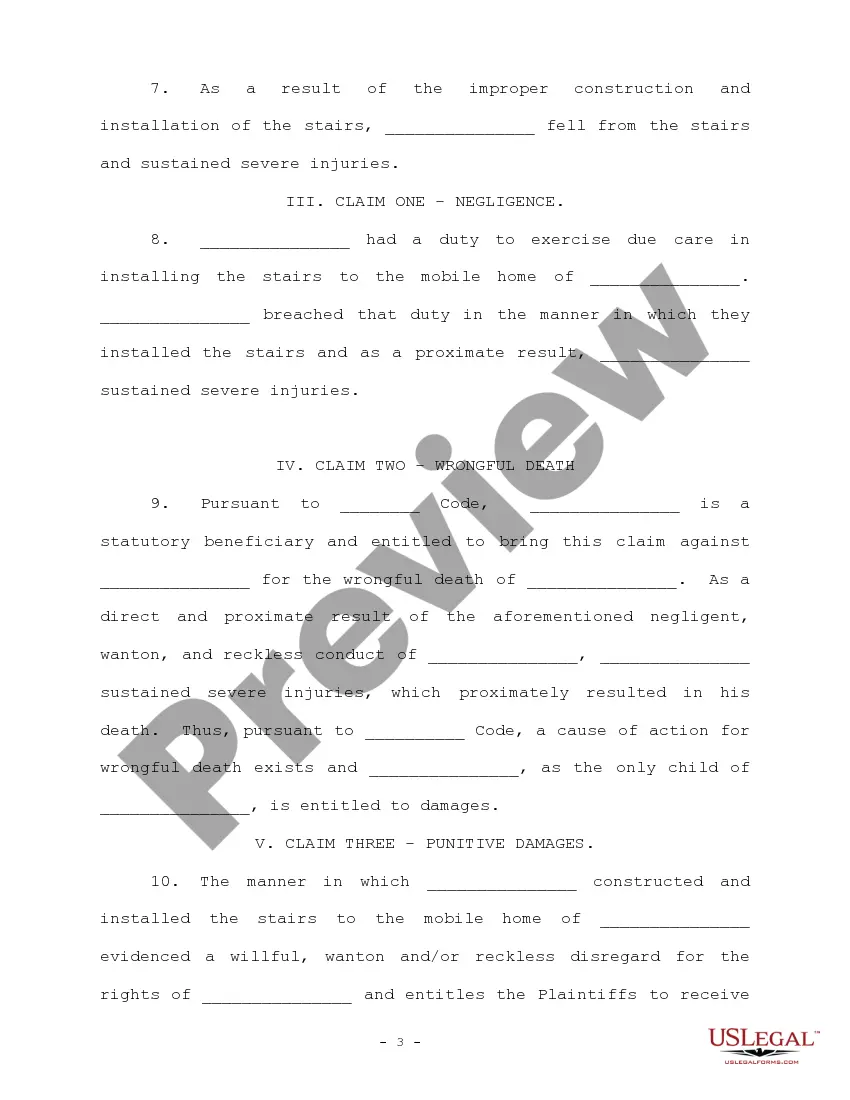
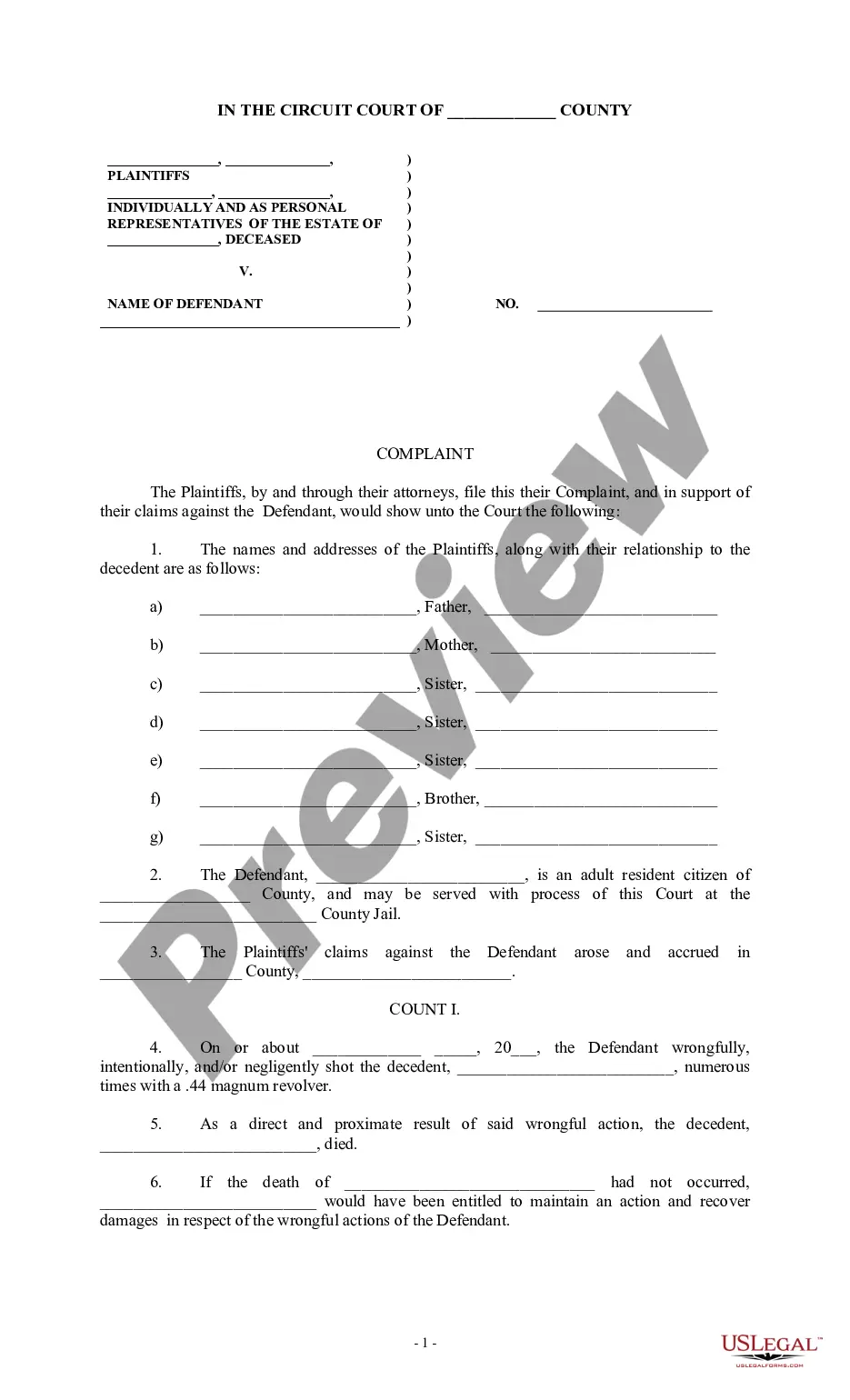
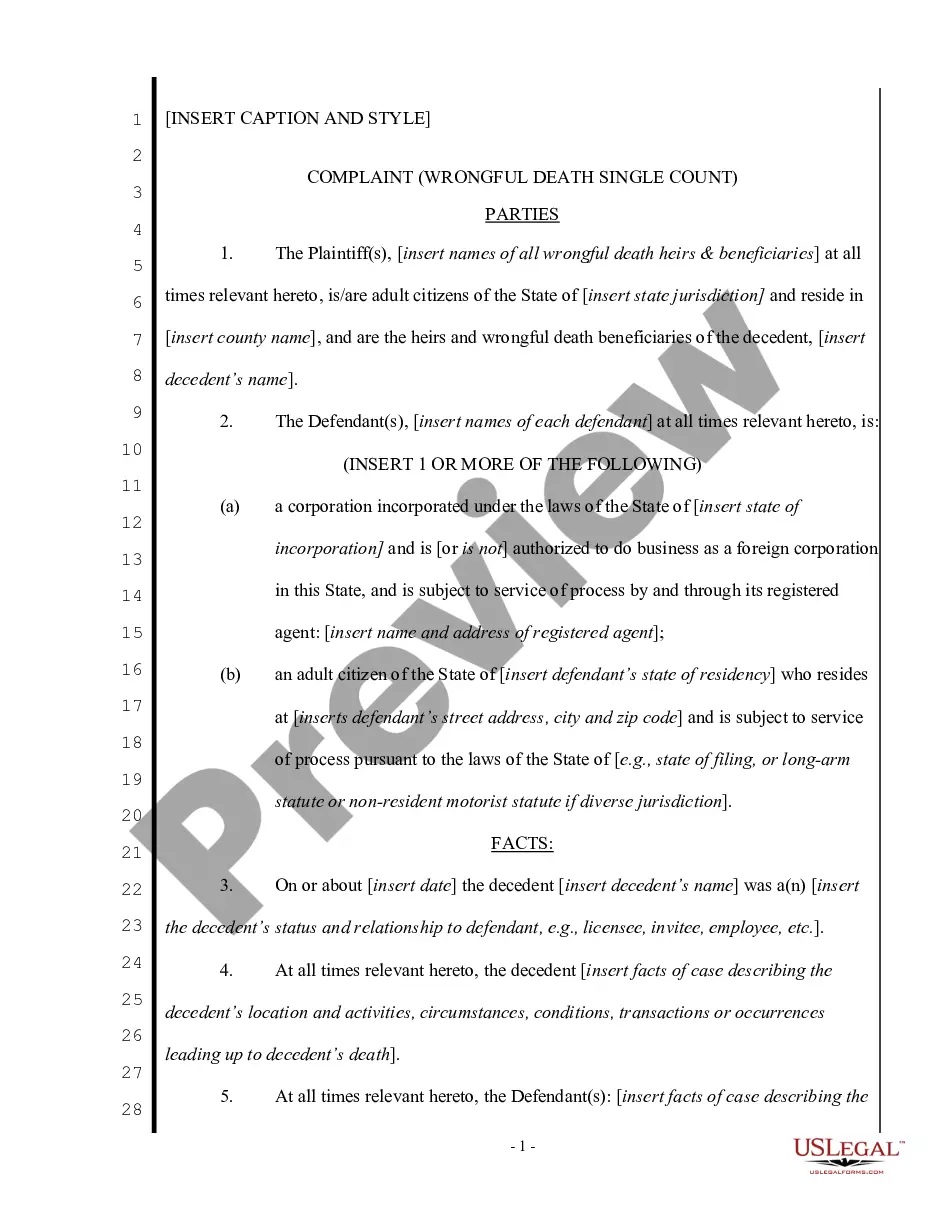
- Identification of the plaintiff and the deceased, including their relationship.
- Details of the defendant, including the corporation's name and registered agent.
- Incident description outlining the facts leading to the complaint.
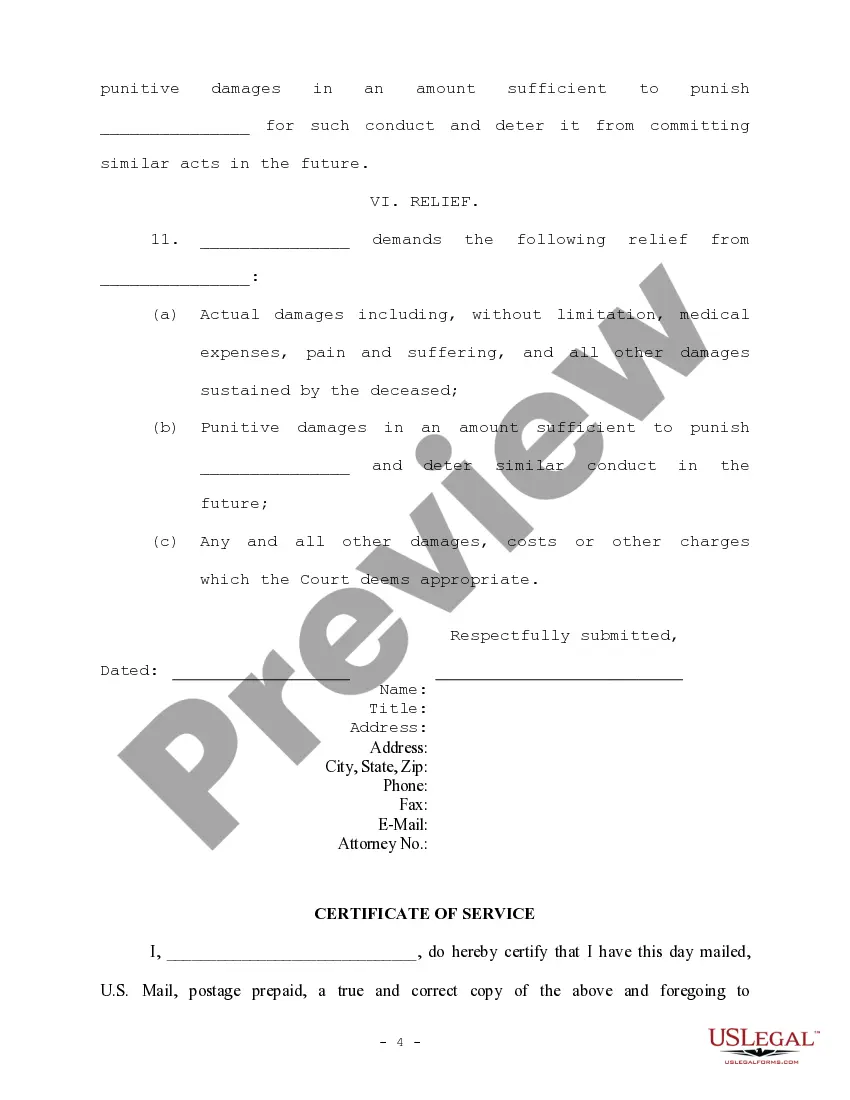
- Claims for negligence and wrongful death.
- Request for relief, including actual and punitive damages.


When to use this document
This form should be used in situations where an individual believes that negligent actionsâsuch as unsafe construction or installationâhave directly resulted in severe injury or death of a loved one. It is often employed in cases involving personal injuries from accidents related to property installations, where the plaintiff seeks accountability and compensation for medical expenses, pain, suffering, and other damages incurred.
Who this form is for
This form is intended for:
- Individuals who have lost a loved one due to negligence.
- The executor or administrator of an estate seeking to bring a wrongful death claim.
- Anyone looking to hold a corporation liable for failure to safely install fixtures that lead to injuries.
How to complete this form
- Enter the names and contact details of the plaintiff and the deceased.
- Provide the name and details of the defendant corporation, including the address for service of process.
- Clearly state the facts of the case, including the details of the incident and how negligence occurred.
- Outline your claims for negligence, wrongful death, and request for damages.
- Sign and date the form appropriately to ensure it is valid.
Does this document require notarization?
This form does not typically require notarization unless specified by local law. It is important to check with your state's regulations to ensure you comply with local requirements prior to filing.
Get your form ready online
Our built-in tools help you complete, sign, share, and store your documents in one place.
Make edits, fill in missing information, and update formatting in US Legal Forms—just like you would in MS Word.
Download a copy, print it, send it by email, or mail it via USPS—whatever works best for your next step.
Sign and collect signatures with our SignNow integration. Send to multiple recipients, set reminders, and more. Go Premium to unlock E-Sign.
If this form requires notarization, complete it online through a secure video call—no need to meet a notary in person or wait for an appointment.
We protect your documents and personal data by following strict security and privacy standards.

Make edits, fill in missing information, and update formatting in US Legal Forms—just like you would in MS Word.

Download a copy, print it, send it by email, or mail it via USPS—whatever works best for your next step.

Sign and collect signatures with our SignNow integration. Send to multiple recipients, set reminders, and more. Go Premium to unlock E-Sign.

If this form requires notarization, complete it online through a secure video call—no need to meet a notary in person or wait for an appointment.

We protect your documents and personal data by following strict security and privacy standards.
Avoid these common issues
- Failing to clearly outline the facts leading to the injury or death.
- Not identifying the proper defendant or their agent for service of process.
- Omitting specific details about the damages incurred.
- Providing incomplete or inaccurate contact information.
Benefits of using this form online
- Convenience of downloading and filling out the form at your own pace.
- Editable fields allow for easy customization based on your specific situation.
- The security of obtaining legal forms drafted by licensed attorneys.
Looking for another form?

Form popularity
FAQ
The average wrongful death settlement ranges from $500,000 to over $1 million. A typical wrongful death settlement depends on the circumstances surrounding the case. Your settlement may be more or less than average.
Some wrongful death cases settle for ten's of million of dollars while others may settle for under a million.
Wrongful death happens when somebody is killed because of another person or entity's negligence or misconduct. Although there may be a criminal prosecution related to the fatality, a wrongful death lawsuit is a civil action that is separate and distinct from any criminal charges.
A wrongful death suit is frequently coupled with a California survival cause of action under CCP 377.30. Survival causes of actions are brought on behalf of the victim's estate to compensate for losses suffered by the victim (as opposed to the family) from the wrongful act.
A wrongful death claim is a special kind of lawsuit brought when someone dies as a result of the defendant's negligent or intentional act.Wrongful death claims are brought against a defendant who has caused someone's death, either through negligence or as a result of some intentional action.
What is a Wrongful Death Civil Case? A wrongful death claim is a civil suit for monetary damages. A civil suit is very different from criminal charges that a prosecutor or district attorney may file against the same defendant. Criminal charges typically result in some type of punishment, such as a fine or imprisonment.
A wrongful death claim must be filed by a representative on behalf of the survivors who suffer damage from the decedent's death (they are called the "real parties in interest"). The representative is usually the executor of the decedent's estate. The "real parties in interest" vary from state to state.
Wrongful Death Damages the medical treatment costs that the deceased victim incurred as a result of the injury prior to death. funeral and burial costs. loss of the deceased person's expected income. loss of any inheritance as a result of the death.