Sample EMail Policy
What is this form?
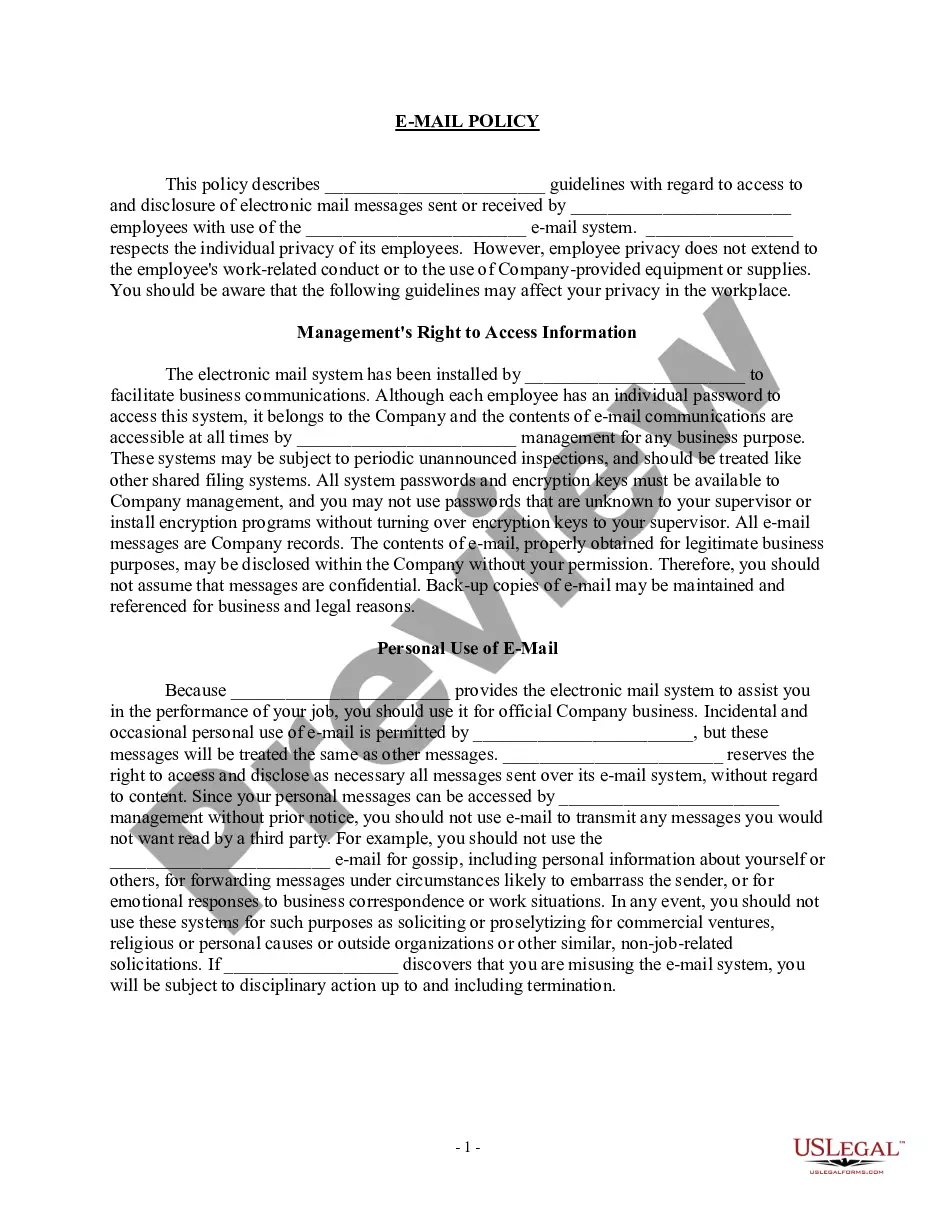
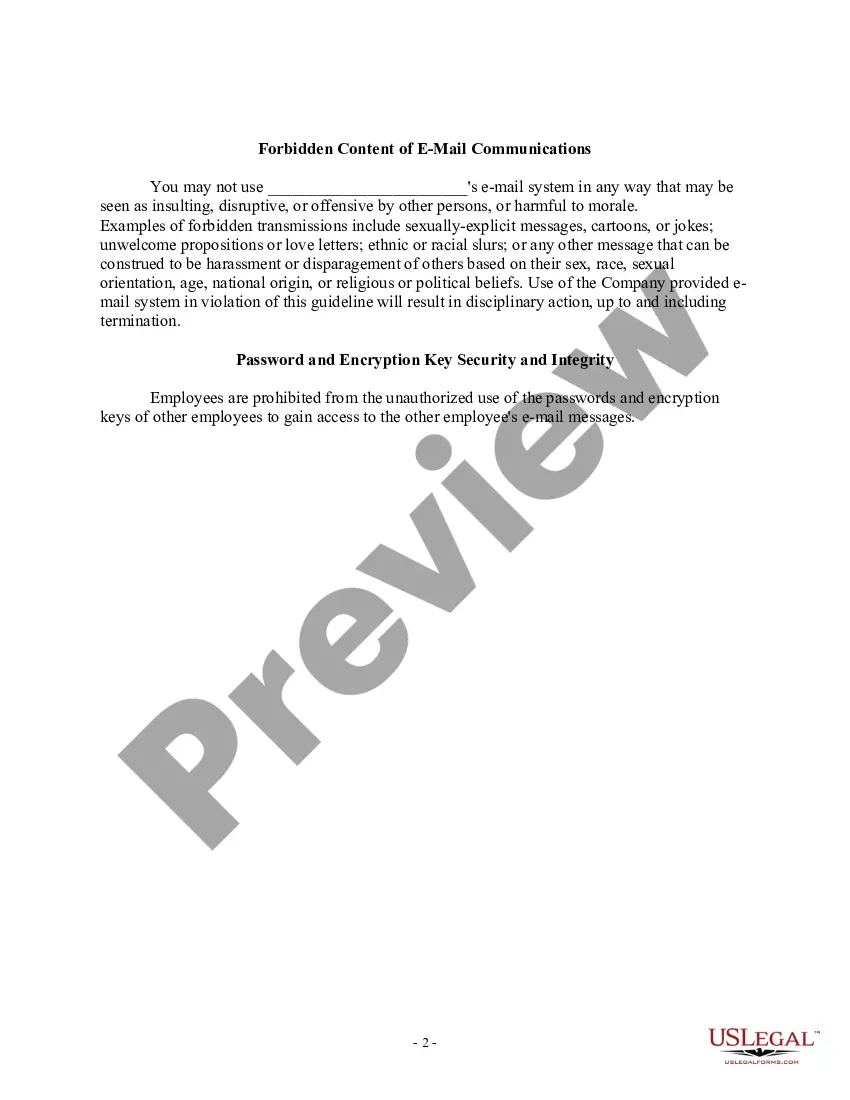
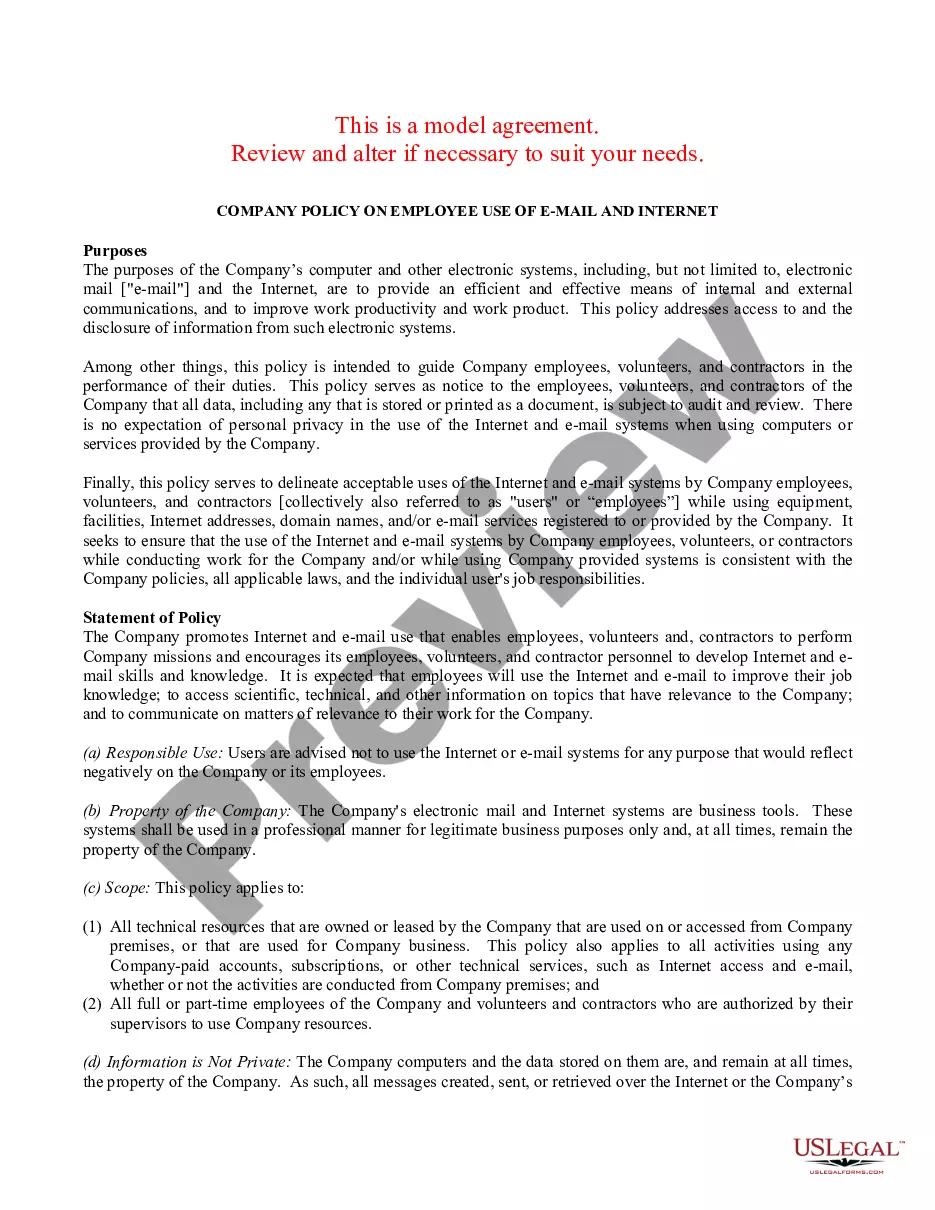
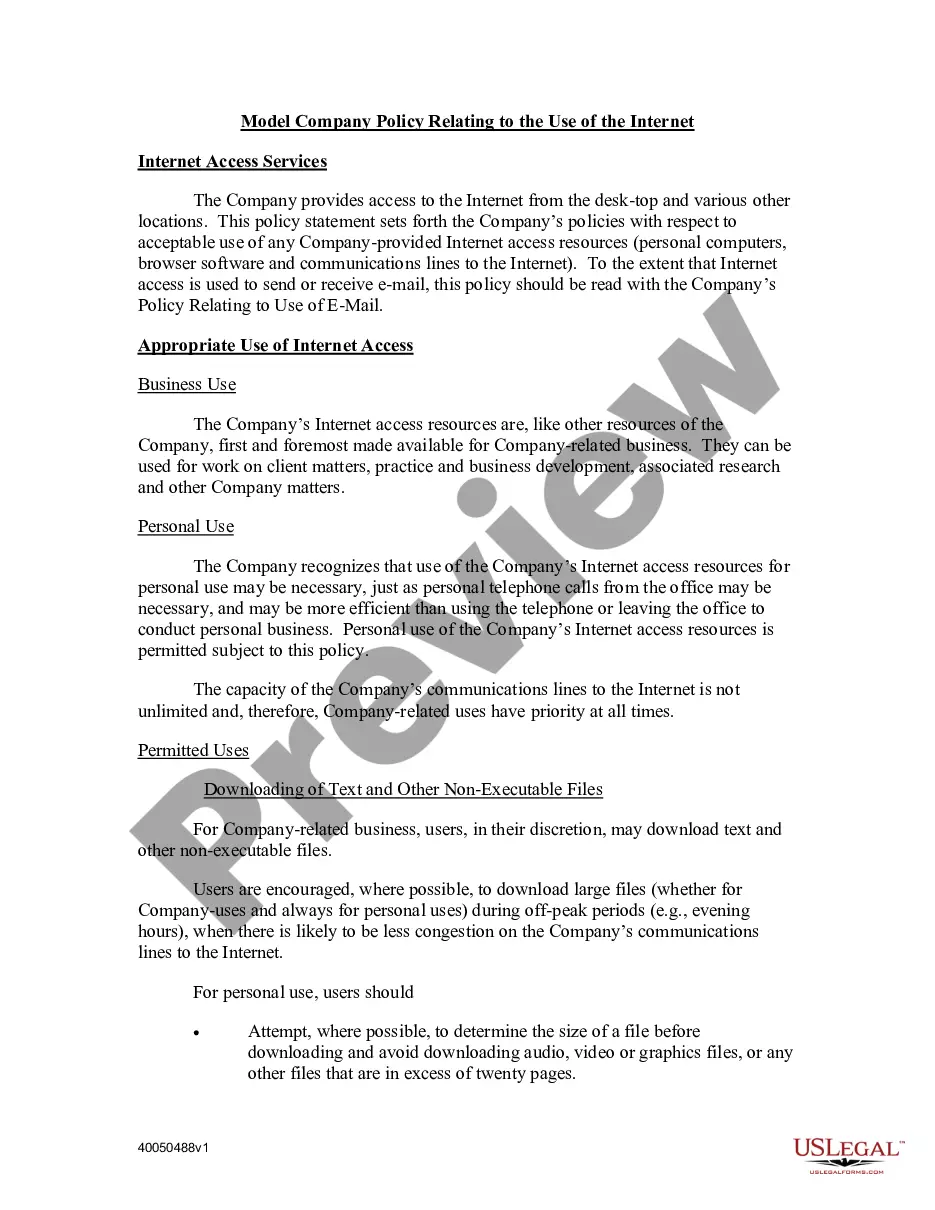
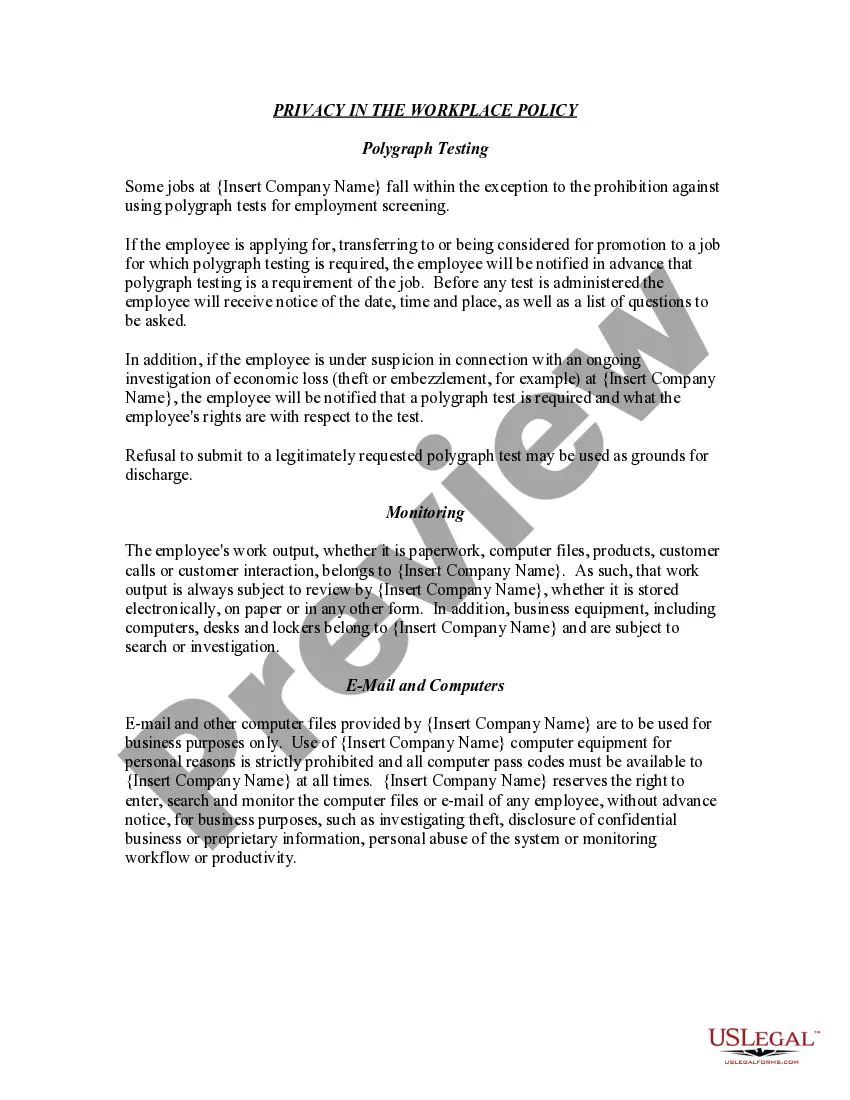
The Sample E-mail Policy is a legal document designed to outline the guidelines regarding the access to and disclosure of email communications within a business setting. This form is distinct from other workplace policies as it specifically addresses the use of email systems provided by the employer and highlights the balance between employee privacy and company rights. It helps businesses create a clear protocol for email usage and sets expectations for employees while safeguarding company interests.
Main sections of this form
- Management's right to access employee email communications
- Guidelines for personal use of the company's email system
- Prohibited content in email communications
- Security measures for passwords and encryption keys
- Consequences of policy violations
When this form is needed
This form is useful for businesses looking to establish formal email communication policies. It is particularly beneficial when onboarding new employees, revising current email practices, or implementing security measures related to electronic communications. Additionally, it helps to clarify expectations around personal use of company email and prevent misuse of the email system.
Who should use this form
- Business owners seeking to define email communication policies
- Human resources personnel responsible for employee guidelines
- Managers who oversee email system usage and compliance
- Employees wishing to understand the rules governing their email use
How to complete this form
- Fill in the company name throughout the document.
- Specify the guidelines for managing employee email usage.
- Clearly outline the management's rights regarding email access.
- Detail the rules regarding personal use and prohibited content.
- Establish security measures for passwords and encryption keys.
Notarization guidance
In most cases, this form does not require notarization. However, some jurisdictions or signing circumstances might. US Legal Forms offers online notarization powered by Notarize, accessible 24/7 for a quick, remote process.
Get your form ready online
Our built-in tools help you complete, sign, share, and store your documents in one place.
Make edits, fill in missing information, and update formatting in US Legal Forms—just like you would in MS Word.
Download a copy, print it, send it by email, or mail it via USPS—whatever works best for your next step.
Sign and collect signatures with our SignNow integration. Send to multiple recipients, set reminders, and more. Go Premium to unlock E-Sign.
If this form requires notarization, complete it online through a secure video call—no need to meet a notary in person or wait for an appointment.
We protect your documents and personal data by following strict security and privacy standards.

Make edits, fill in missing information, and update formatting in US Legal Forms—just like you would in MS Word.

Download a copy, print it, send it by email, or mail it via USPS—whatever works best for your next step.

Sign and collect signatures with our SignNow integration. Send to multiple recipients, set reminders, and more. Go Premium to unlock E-Sign.

If this form requires notarization, complete it online through a secure video call—no need to meet a notary in person or wait for an appointment.

We protect your documents and personal data by following strict security and privacy standards.
Mistakes to watch out for
- Failing to update the policy regularly to reflect technological changes.
- Not clearly defining personal use limits, which can lead to misunderstandings.
- Omitting details on the consequences of policy violations.
- Neglecting to communicate the policy to all employees effectively.
Why use this form online
- Easy access to customizable templates drafted by licensed attorneys.
- Safe and secure download process that provides immediate access.
- The ability to easily adapt and modify the policy to fit specific business needs.
- Reduced risk of legal issues by having a clear, comprehensive policy in place.
Legal use & context
- This policy is enforceable under employment laws governing electronic communications.
- Employees should be informed of their rights and the company's rights concerning email access.
- Clear documentation helps protect the company from potential legal claims related to email misuse.
Main things to remember
- The Sample E-mail Policy helps clarify email usage and employee rights.
- It is vital for employers to communicate this policy clearly to all staff.
- Regular updates ensure the policy remains relevant and in compliance with laws.
- Understanding this policy can protect both employees and employers.
Looking for another form?

Form popularity
FAQ
A corporate email policy is a management document that formally outlines how employees can use electronic communication tools.A company should have a corporate email policy in place to warn and guide employees against email threats such as phishing attacks.
In this letter, announce a new policy or changes in the existing ones. Give the reason for doing so in detail. Make an announcement about the new or changed policy. Give the reasons for this change and explain its benefits to the company and its employees. Express gratitude for everyone's cooperation.
An issue specific security policy would be needed to guide use of the web, e-mail, and office equipment for personal use.
Inform employees up-front. At the start of the project, let employees know that the company will work on developing (or updating) company policies and procedures. Ask for feedback. Introduce final product. Ask employees to review employee handbook or policy manual. Provide training where required. Request employee sign-off.
Announce and explain the new or changed policy. Tell the reader how the policy will benefit both employees and the company. Thank the employees for cooperation and offer to answer questions.
Email security is a term for describing different procedures and techniques for protecting email accounts, content, and communication against unauthorized access, loss or compromise. Email is often used to spread malware, spam and phishing attacks.Email encryption often includes authentication.
Title: Begin your policy with the title. Policy number: If your business has several policies, it's beneficial to number them. Introduction: Tell the employee what this policy is for. Policy statement: Next, provide the rules, regulations and guidelines employees should follow.
The purpose of an email policy is to set proper expectations with your employees. What are the rules and guidelines regarding email and what happens if you ignore the rules? The email policy should be written and reviewed with the employee at the time of employment.
Address your letter correctly. Be sure you have the correct address and salutation on your letter. Write to the legislators for whom you can vote. Address only one issue per letter. Ask for something specific. Keep it short. Make it personal. Use your institution's letterhead. Be courteous.