Employee Privacy Memo
Overview of this form
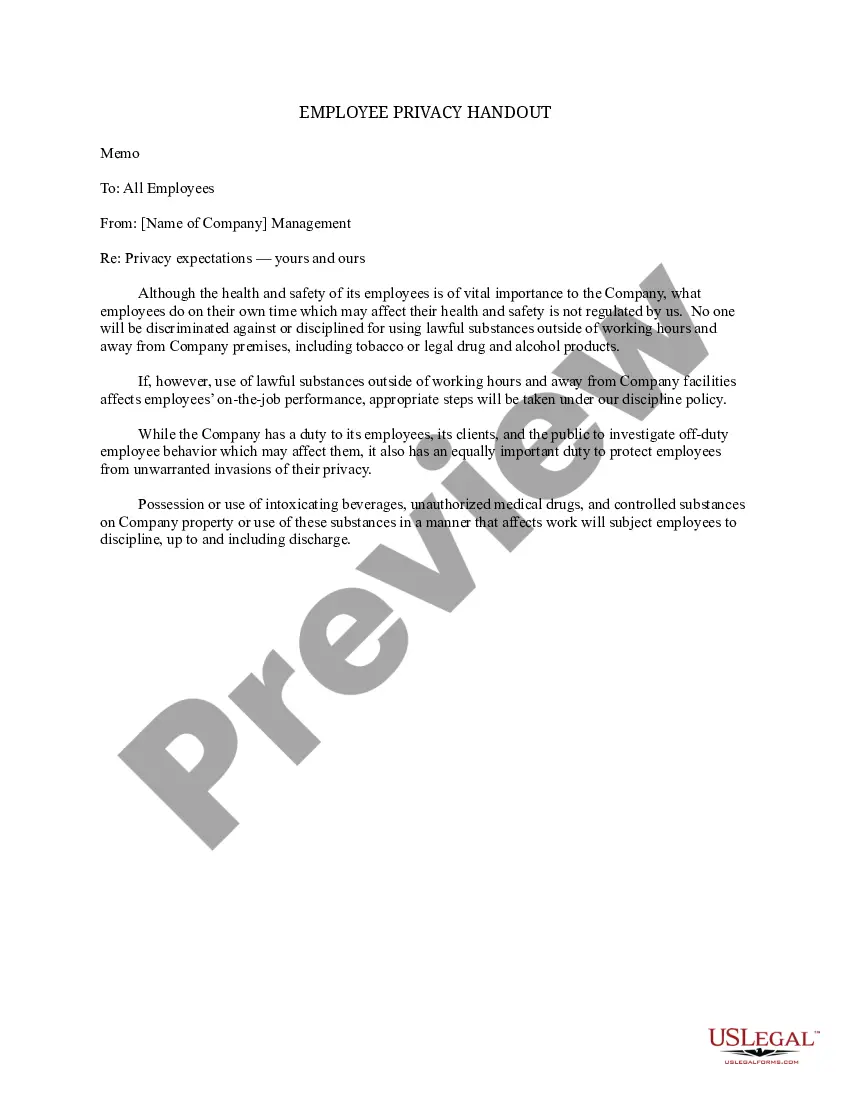
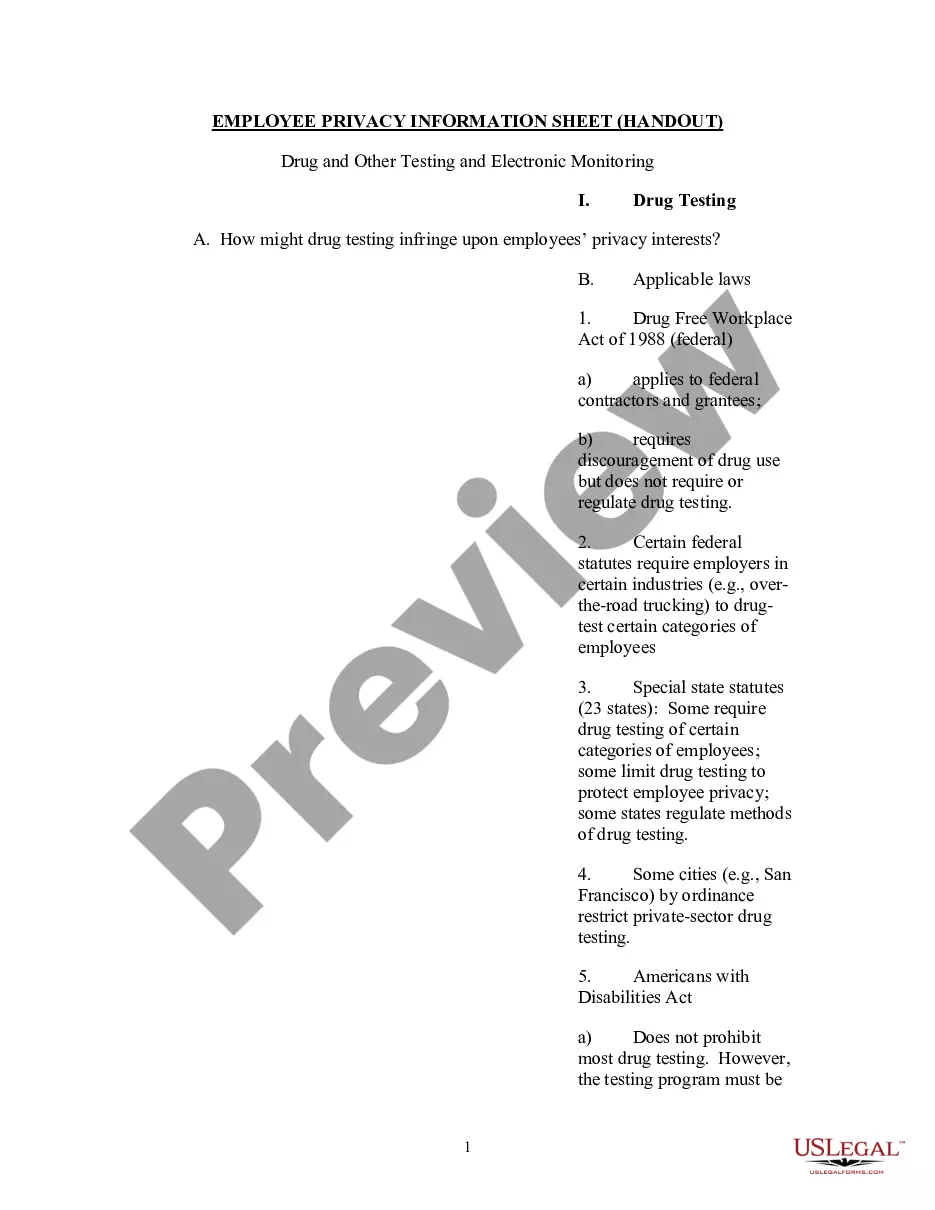
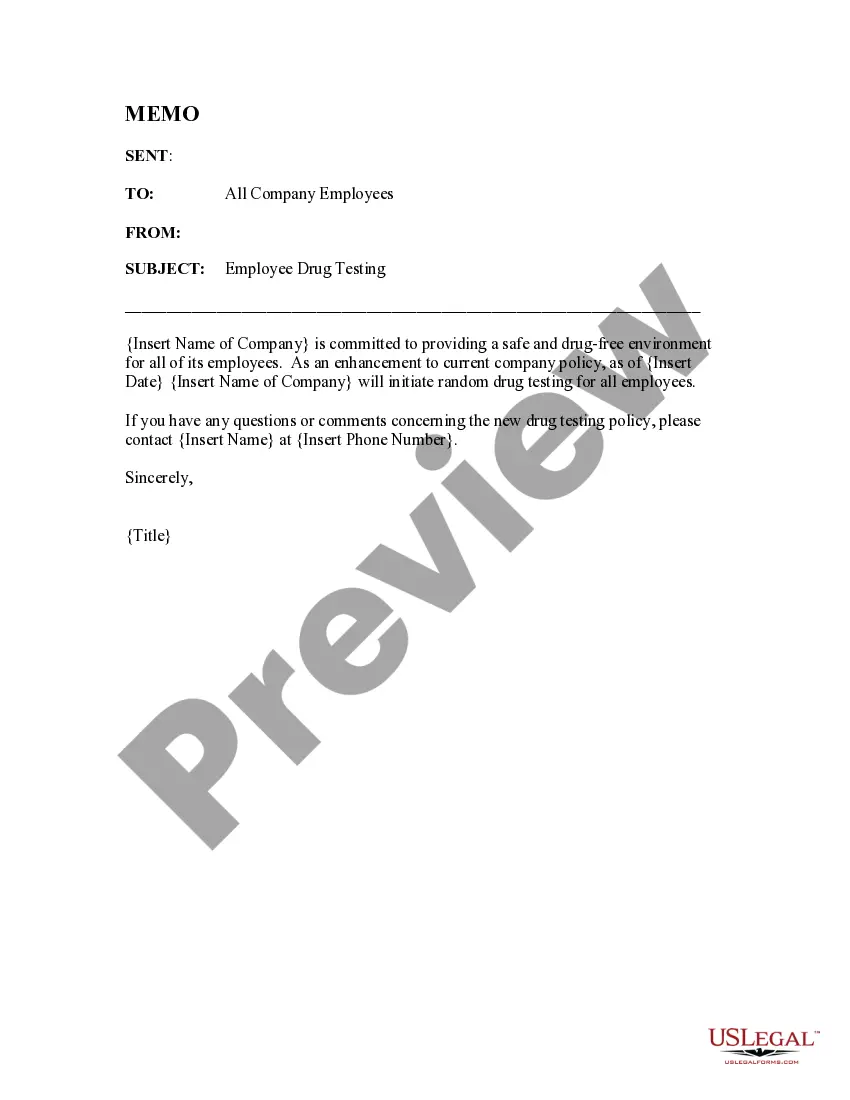
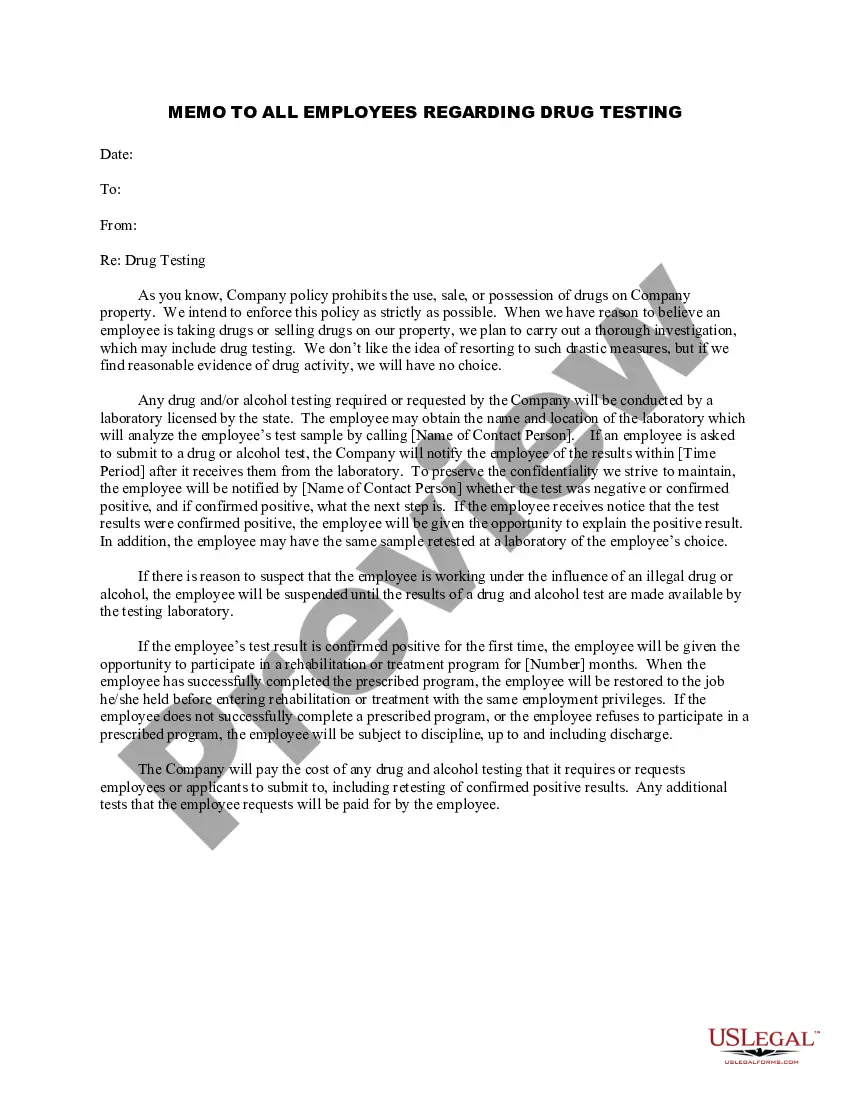
The Employee Privacy Memo is a legal document designed to communicate a company's policies regarding employee privacy and drug use. It serves to outline the expectations surrounding lawful substance use outside of working hours, ensuring that employees understand their rights and responsibilities while respecting the company's need for a safe and productive work environment. This memo is distinct from other employee handbooks or drug use policies in that it specifically addresses privacy concerns related to off-duty behavior.
What’s included in this form
- Introduction addressing employee privacy and the company's drug policy.
- Clarification of employees' rights regarding substance use during off-duty hours.
- Outline of the company's stance on performance-related issues arising from substance use.
- Policy on possession and use of intoxicating substances on company property.
When to use this document
This form should be used when an organization wants to formally communicate its policies regarding employee privacy and substance use. Employers can use this memo to ensure that all employees are aware of what is considered acceptable behavior concerning lawful substance use outside of the workplace, thus preventing potential issues related to performance and privacy breaches.
Who should use this form
- Human resources professionals looking to reinforce company policies.
- Business owners aiming to establish clear guidelines for employee behavior.
- Managers responsible for ensuring compliance with drug policies.
How to complete this form
- Identify the company's name and fill in the header section.
- Clearly state the company's policy regarding the privacy of employees.
- Add sections outlining the expectations for substance use outside work.
- Include any necessary disciplinary actions for violations of the policy.
- Distribute the completed memo to all employees.
Notarization guidance
Notarization is not commonly needed for this form. However, certain documents or local rules may make it necessary. Our notarization service, powered by Notarize, allows you to finalize it securely online anytime, day or night.
Get your form ready online
Our built-in tools help you complete, sign, share, and store your documents in one place.
Make edits, fill in missing information, and update formatting in US Legal Forms—just like you would in MS Word.
Download a copy, print it, send it by email, or mail it via USPS—whatever works best for your next step.
Sign and collect signatures with our SignNow integration. Send to multiple recipients, set reminders, and more. Go Premium to unlock E-Sign.
If this form requires notarization, complete it online through a secure video call—no need to meet a notary in person or wait for an appointment.
We protect your documents and personal data by following strict security and privacy standards.

Make edits, fill in missing information, and update formatting in US Legal Forms—just like you would in MS Word.

Download a copy, print it, send it by email, or mail it via USPS—whatever works best for your next step.

Sign and collect signatures with our SignNow integration. Send to multiple recipients, set reminders, and more. Go Premium to unlock E-Sign.

If this form requires notarization, complete it online through a secure video call—no need to meet a notary in person or wait for an appointment.

We protect your documents and personal data by following strict security and privacy standards.
Common mistakes to avoid
- Failure to update the memo after changes in state or federal laws.
- Using overly complicated language that may confuse employees.
- Not clearly outlining the consequences of policy violations.
Why complete this form online
- Easy access and the ability to edit for different company needs.
- Time-saving convenience of downloading and customizing the document.
- Reliability from using templates drafted by licensed attorneys.
Main things to remember
- The Employee Privacy Memo establishes clear guidelines about employee privacy and substance use.
- This memo is essential for protecting both employee rights and the company's obligations.
- Properly completing the memo can help avoid common pitfalls and ensure compliance with laws.
Looking for another form?
Form popularity
FAQ
Reasonable expectation of privacy in the workplace can be best defined as a fair treatment of employees by a company where their personal details are kept a secret and their personal lives or possessions are not intruded upon and that they would not be asked to compromise on any of these unless there is a grave need.
Confidential information is generally defined as information disclosed to an individual employee or known to that employee as a consequence of the employee's employment at a company.Confidential information can include information in any form, such as written documents/records or electronic data.
Employees have the right to keep private facts about themselves confidential and the right to some degree of personal space. An employer that discloses private facts or lies about an employee may be held accountable in a civil action for invasion of privacy or defamation.
Employers routinely disclose employees' personal information to other companies for business purposes, such as administering payroll and health benefits.Employees' personal information, however, should be protected from inappropriate use or from being willfully re-disclosed without authorization.
Embrace transparency. Clearly and constantly communicate corporate policy, informing employees of the specific steps being taken to enforce those policies. Maintain trust with employees by being clear about what you're monitoring and when, as well as the specific technologies and applications you're using to do so.
An Employee Privacy Policy outlines an employee's personal privacy rights while in the workplace and details the employer's policies, procedures, and practices regarding the collection, storage, and disclosure of employee personal information (such as their legal name, residential address, and other identity
Under the law, all employees have a "reasonable expectation of privacy" which prevents employers from searching employees wherever and whenever the employer wishes. What is considered reasonable depends on factors like the type of employment, whether there is evidence of misconduct, and the scope of the search.
Confidential Employee Information Personal data: Social Security Number, date of birth, marital status, and mailing address. Job application data: resume, background checks, and interview notes.Job termination data: the employee's resignation letter, termination records, and unemployment insurance claims.