Alabama Pretrial Order
Understanding this form
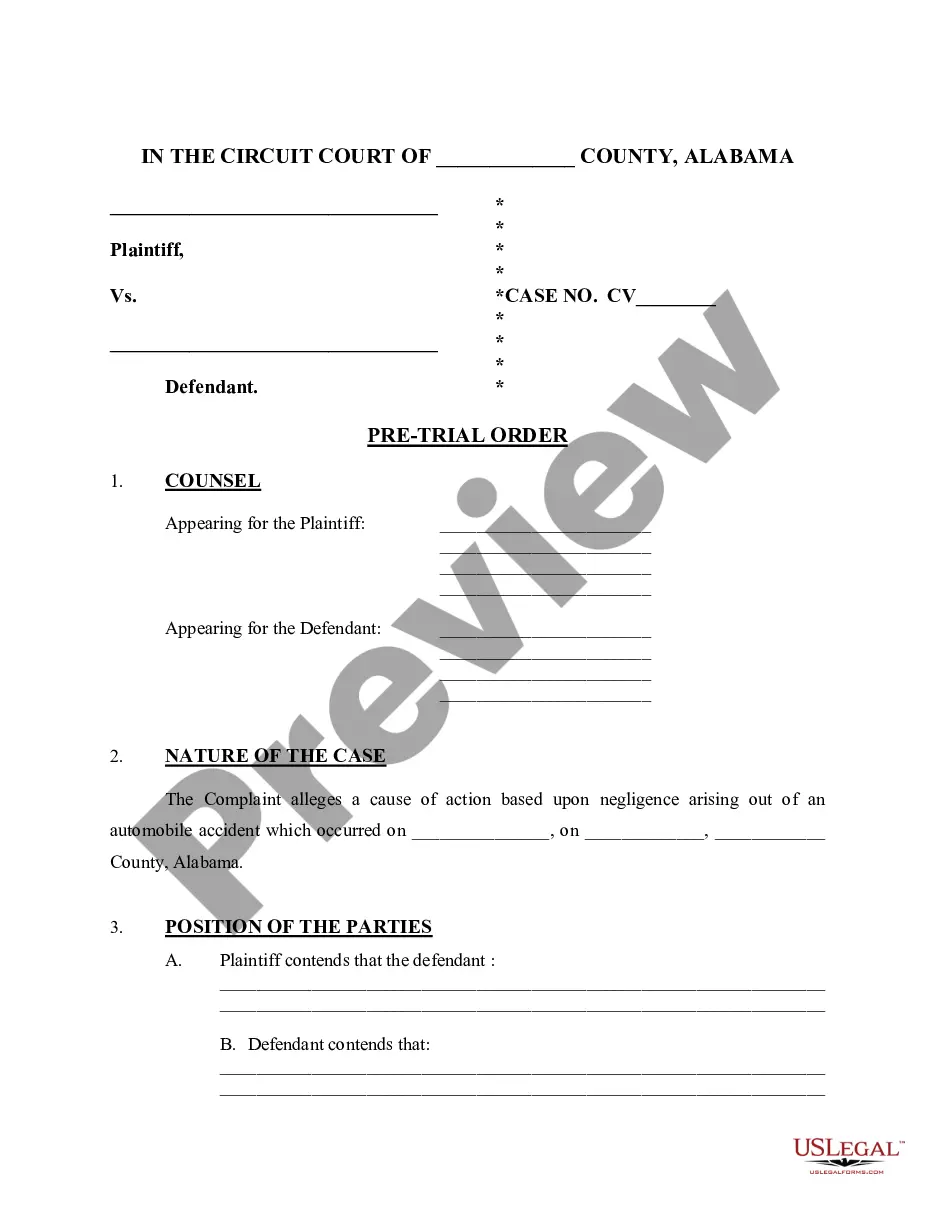
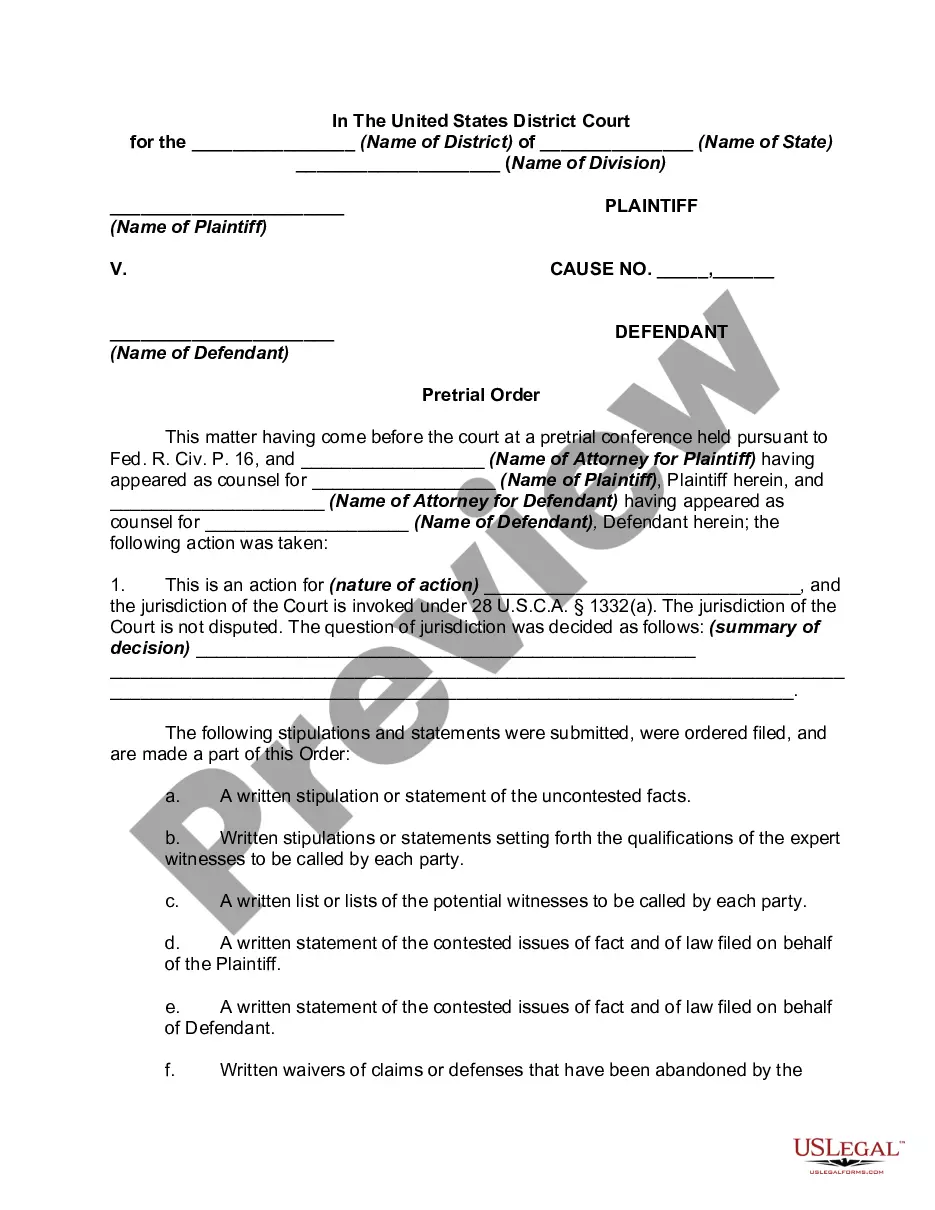
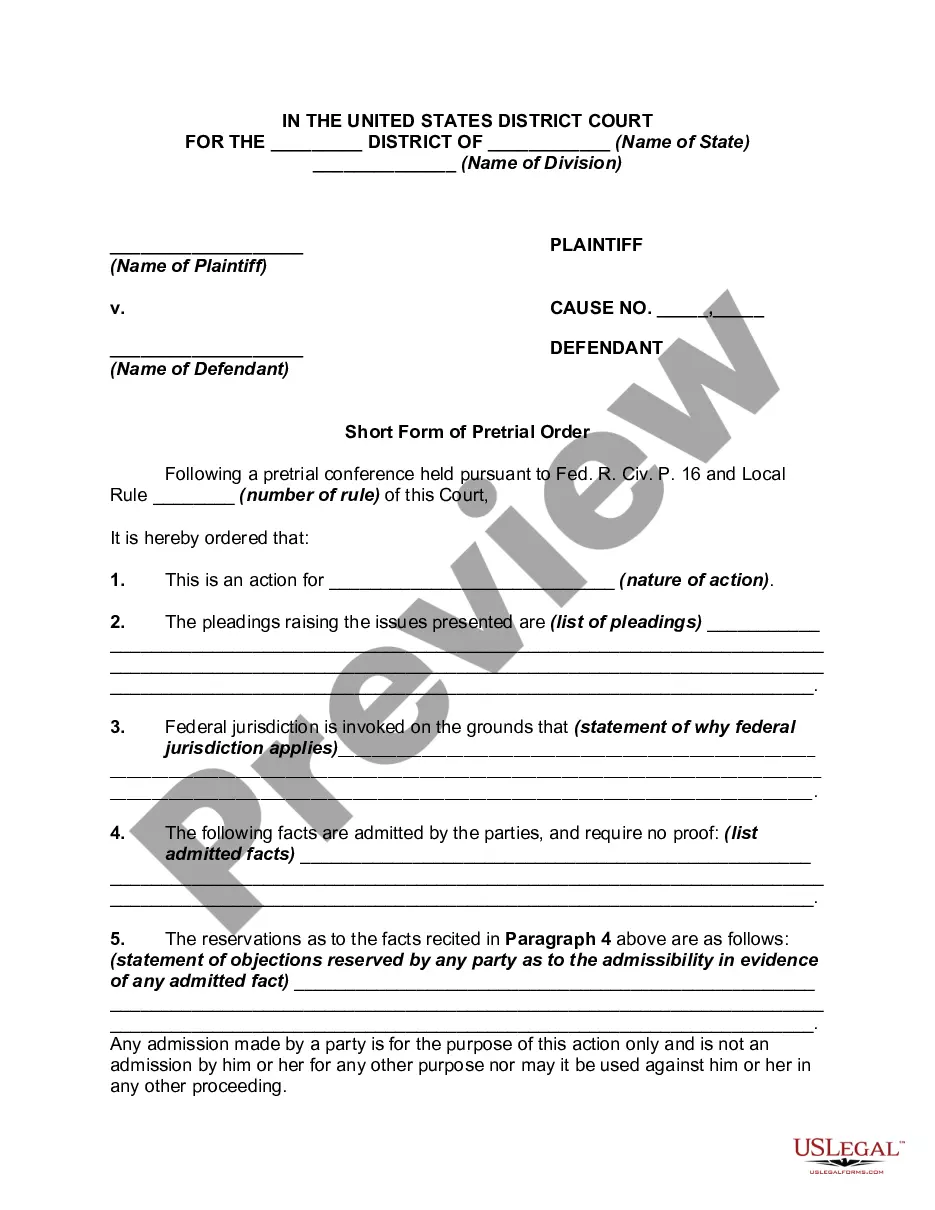
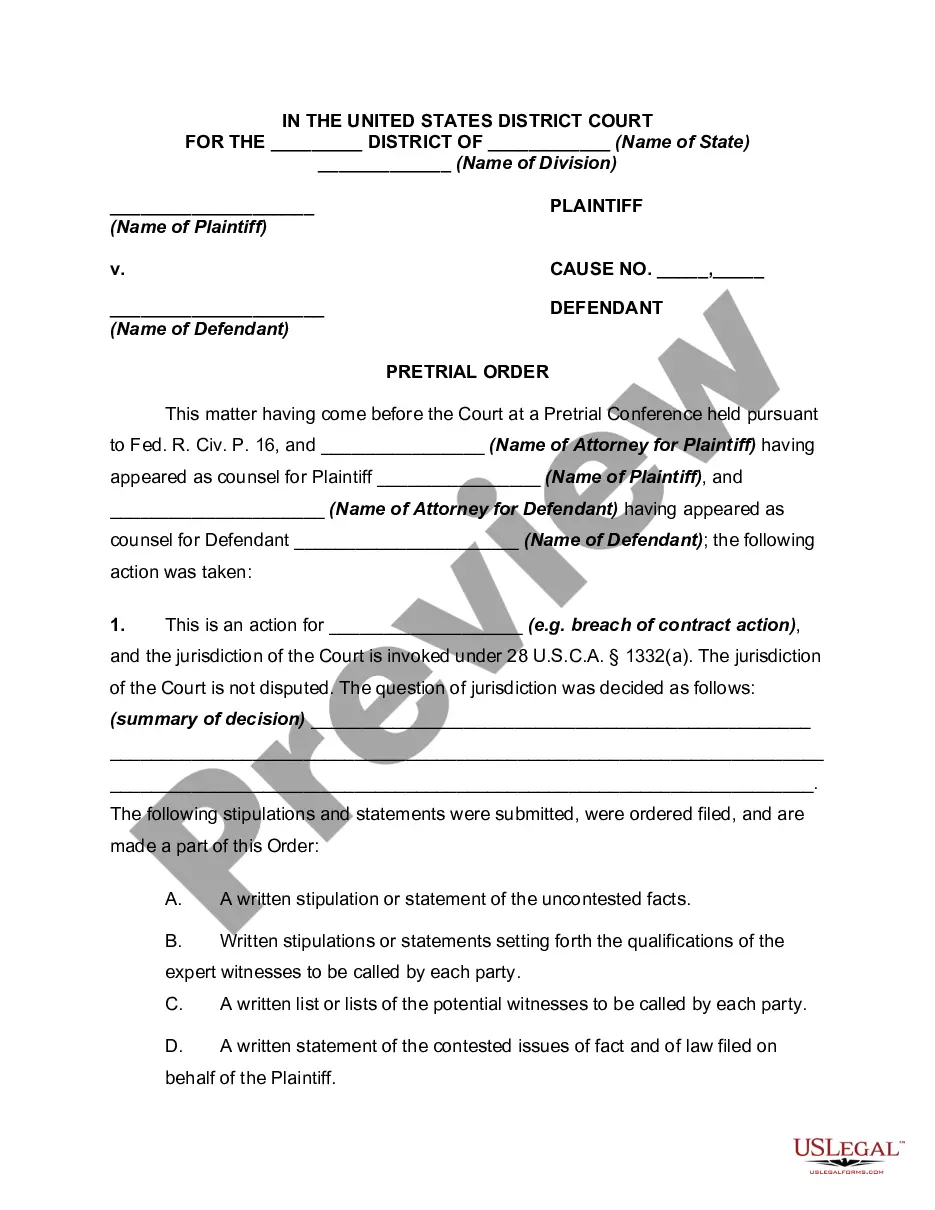
The Pretrial Order is a legal document filed before the start of a trial. It outlines the claims and defenses that will be presented, stipulations agreed upon by the parties, and procedural rules governing the case. This form serves as a roadmap for the trial, detailing case information such as the attorneys involved, the basis for the lawsuit, and witnesses expected to testify. Unlike other forms, its primary purpose is to establish clarity and organization before proceeding to trial.
Key components of this form
- Counsel section to identify attorneys representing each party.
- Nature of the case describing the underlying facts and legal issues.
- Position of the parties outlining the claims and defenses of each side.
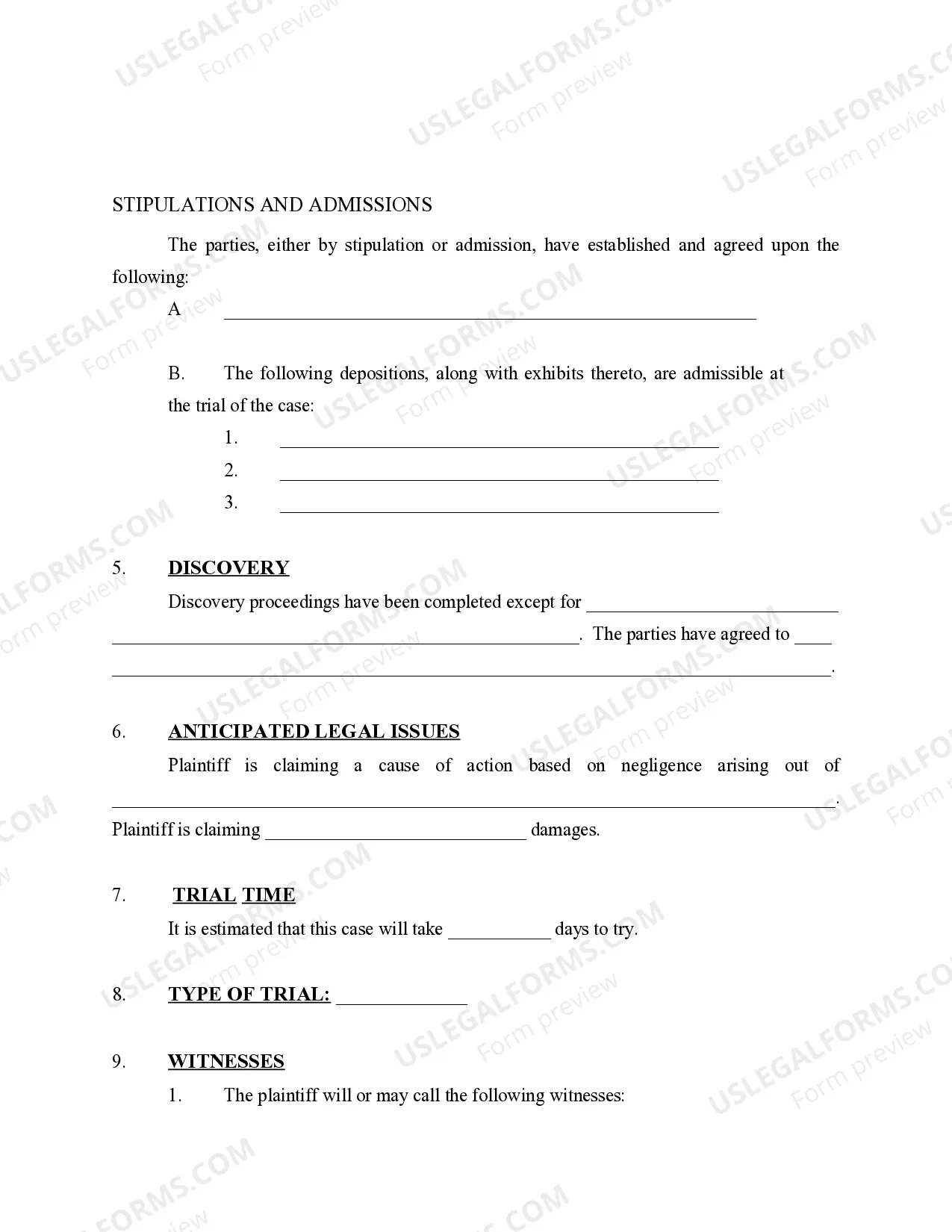
- Stipulations and admissions section for agreed-upon facts important to the case.
- Discovery status to indicate completed proceedings and outstanding issues.
- Anticipated legal issues outlining the main points of contention for the trial.
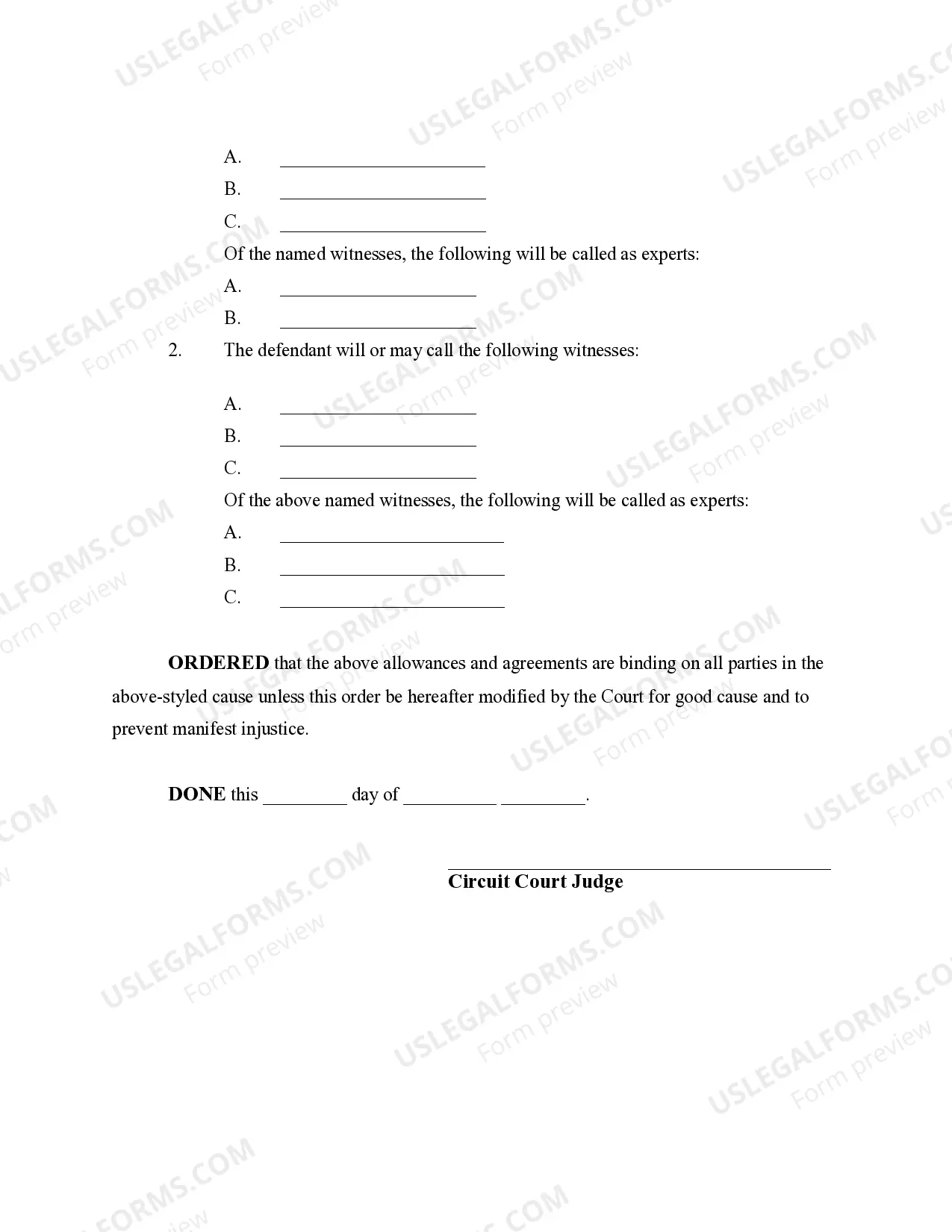
- Witness list specifying expected testifiers, including expert witnesses.
- Trial time estimation regarding the duration of the trial proceedings.
When to use this document
This form should be used prior to trial in civil litigation, particularly in cases involving disputes such as personal injury claims, contract breaches, or property issues. It is essential when both parties need to formalize their arguments and clarify key elements of the case before the trial begins.
Who should use this form
This form is intended for:
- Plaintiffs and defendants in civil lawsuits.
- Attorneys representing parties in a trial setting.
- Individuals seeking to prepare for court proceedings in matters such as negligence or contract disputes.
How to complete this form
To complete the Pretrial Order, follow these steps:
- Identify and list the attorneys for both the plaintiff and defendant.
- Describe the nature of the case and the events leading to the lawsuit.
- State the positions of both the plaintiff and defendant concerning the case.
- Document any stipulations or admissions relevant to the case.
- Update the discovery status to reflect completed and pending actions.
- Outline the anticipated legal issues and expected duration of the trial.
- List witnesses, distinguishing between general witnesses and experts.
Notarization guidance
This form does not typically require notarization unless specified by local law. Be sure to check your jurisdiction's regulations to confirm any notarization requirements.
Get your form ready online
Our built-in tools help you complete, sign, share, and store your documents in one place.
Make edits, fill in missing information, and update formatting in US Legal Forms—just like you would in MS Word.
Download a copy, print it, send it by email, or mail it via USPS—whatever works best for your next step.
Sign and collect signatures with our SignNow integration. Send to multiple recipients, set reminders, and more. Go Premium to unlock E-Sign.
If this form requires notarization, complete it online through a secure video call—no need to meet a notary in person or wait for an appointment.
We protect your documents and personal data by following strict security and privacy standards.

Make edits, fill in missing information, and update formatting in US Legal Forms—just like you would in MS Word.

Download a copy, print it, send it by email, or mail it via USPS—whatever works best for your next step.

Sign and collect signatures with our SignNow integration. Send to multiple recipients, set reminders, and more. Go Premium to unlock E-Sign.

If this form requires notarization, complete it online through a secure video call—no need to meet a notary in person or wait for an appointment.

We protect your documents and personal data by following strict security and privacy standards.
Common mistakes
- Failing to include the required signatures from both parties.
- Not accurately documenting the nature of the case or positions of the parties.
- Overlooking stipulations that may simplify trial proceedings.
- Submitting an incomplete witness list, missing critical expert testimonies.
Why complete this form online
- Convenience of accessing and filling out the form online.
- Editability allows users to customize as per their case needs.
- Reliability of having a professionally drafted legal document.
Key takeaways
- The Pretrial Order is essential for setting clear expectations before a trial.
- Complete accuracy in detail is crucial to prevent disputes during the trial.
- Using this form online allows for convenience and legal assurance.
- Always review state-specific requirements to ensure compliance.
Looking for another form?





Form popularity
FAQ
A pretrial hearing, sometimes called a pretrial conference, is a meeting of the defense, the prosecution, and the judge before a trial commences. If one party does not appear, the judge can impose sanctions. During this hearing, a range of documents may be presented, evidence can be presented and excluded, and more.
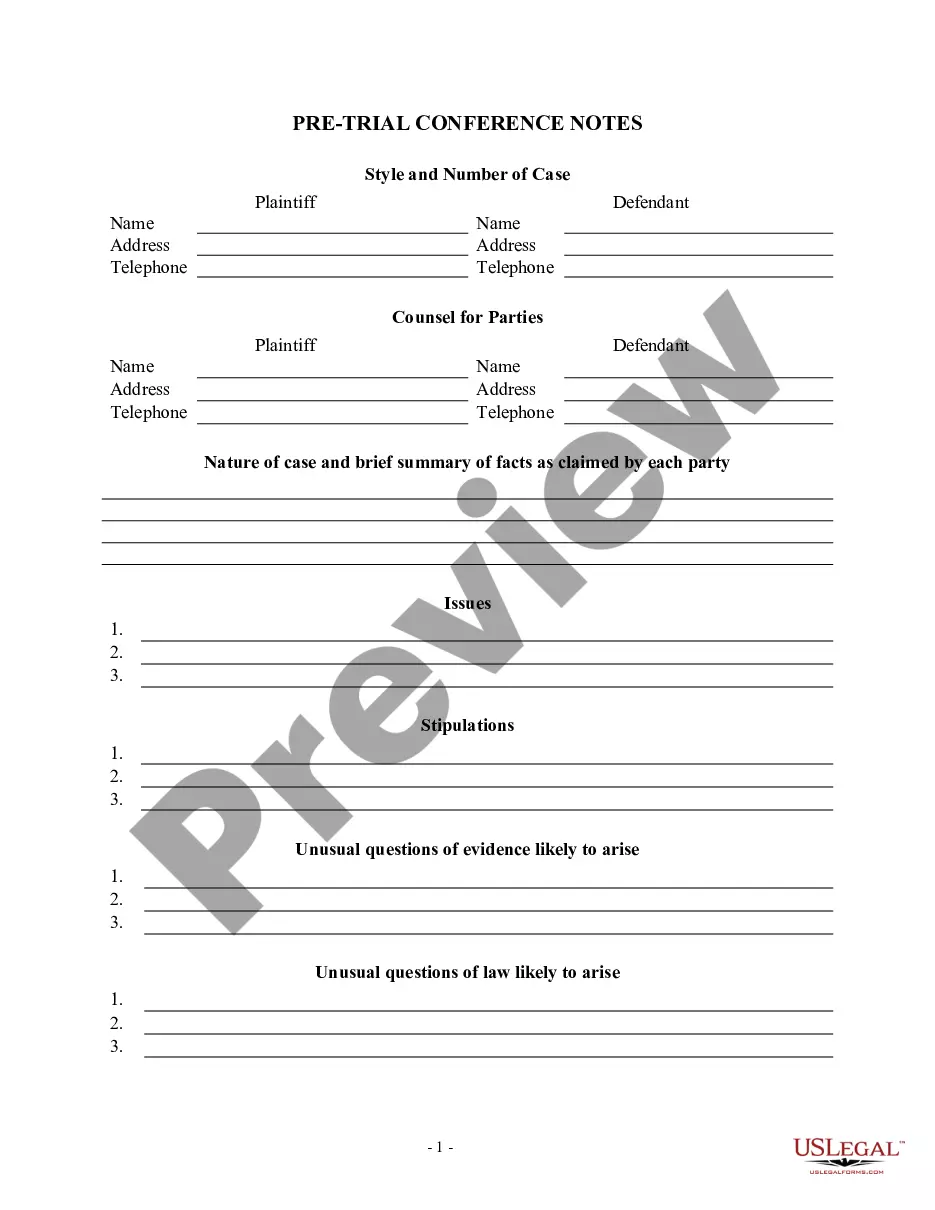
Several things may happen at a pretrial hearing. First, the judge may establish some basic rules regarding how the case is to proceed, as well as set a schedule for the trial and any other pretrial matters.The parties may attempt to settle the matter in a civil case, or work out a plea bargain in a criminal case.
A pretrial hearing, sometimes called a pretrial conference, is a meeting of the defense, the prosecution, and the judge before a trial commences. If one party does not appear, the judge can impose sanctions. During this hearing, a range of documents may be presented, evidence can be presented and excluded, and more.
The main forms of discovery include depositions, interrogatories, requests to produce, requests to admit, non-party production subpoenas, independent medical examinations, site visits and product testing.
In sequence, they are: Pleading Stage - filing the complaint and the defense's motions. Pretrial Stage - discovery process, finding of facts. Trial Stage - seating of the jury, testimony on behalf of the plaintiffs and testimony on behalf of the defendants.
In all criminal prosecutions, the accused shall enjoy the right to a speedy and public trial, by an impartial jury of the State, and to be informed of the nature and cause of the accusation; to be confronted with the witnesses against him or her; to have compulsory process for obtaining witnesses in his or her favor,
An order setting forth the substantive and procedural framework of a case to be tried, specifying the parties' claims and defenses, stipulations, and procedural rules.
Call Your Attorney. Write a Journal of Key Events About Your Case. Review the Police Report for Accuracy. Research How a Criminal Conviction Will Impact You or Your Career. Bring Your Calendar.
A pre-trial review is held if the case is complex or the trial is expected to be lengthy. The aim is to make sure the trial will proceed efficiently, particular areas of dispute being identified and narrowed down as far as possible.