Alabama Civil Litigation Forms Package
Understanding this form package
The Alabama Civil Litigation Forms Package provides essential legal documents specifically designed for civil litigation cases in Alabama. This form package stands out by offering state-specific forms drafted by licensed attorneys, ensuring that you have the necessary tools to navigate the complexities of civil law in Alabama effectively.
Forms you’ll find in this package
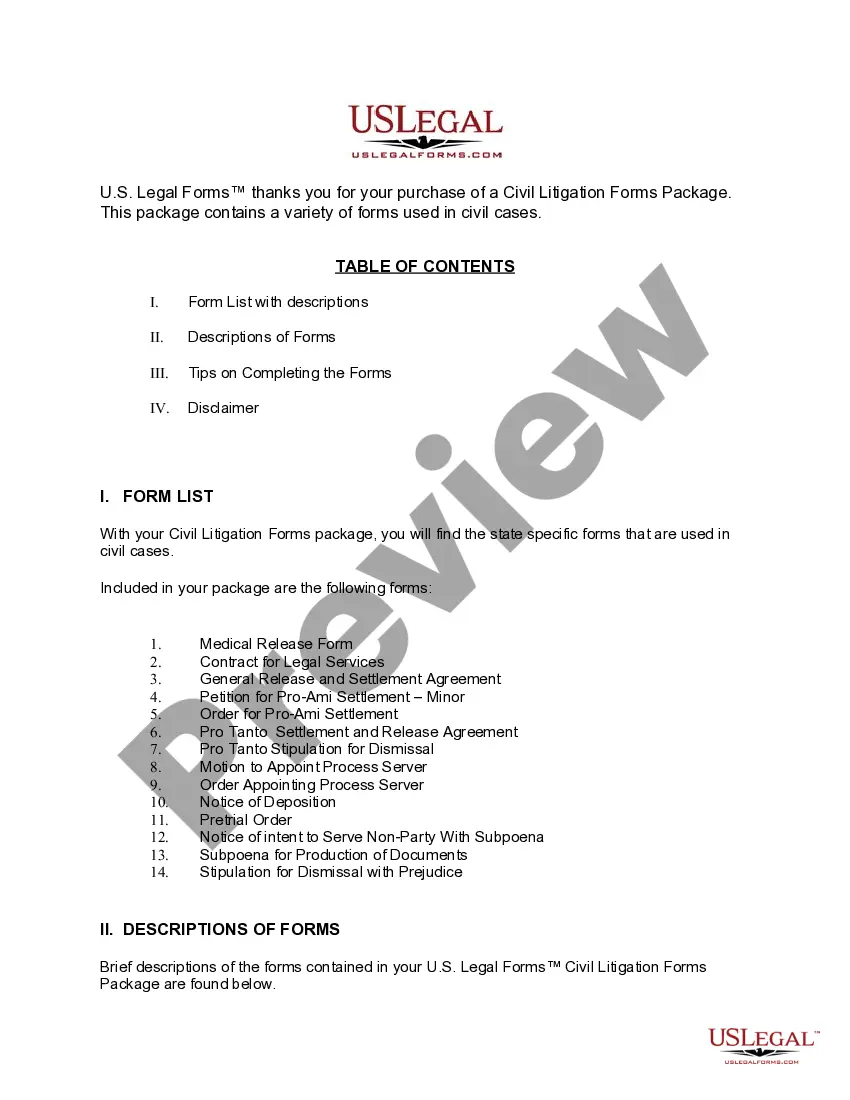
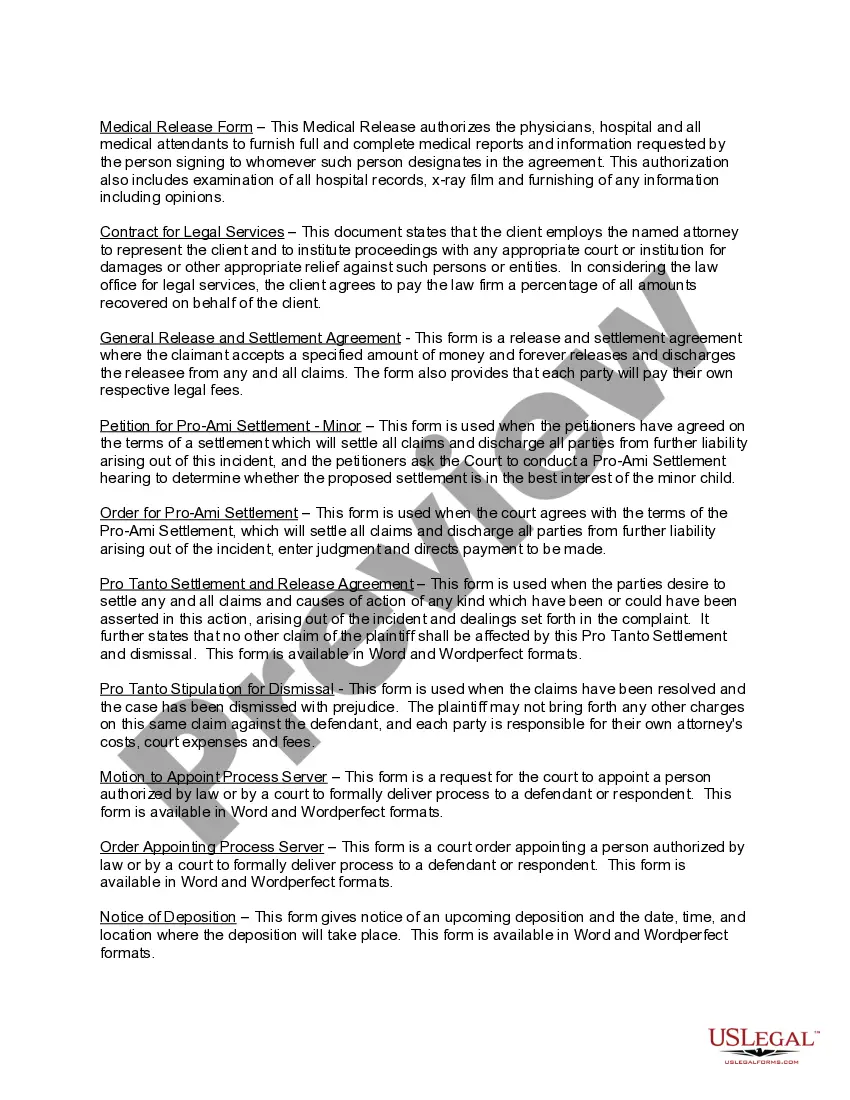
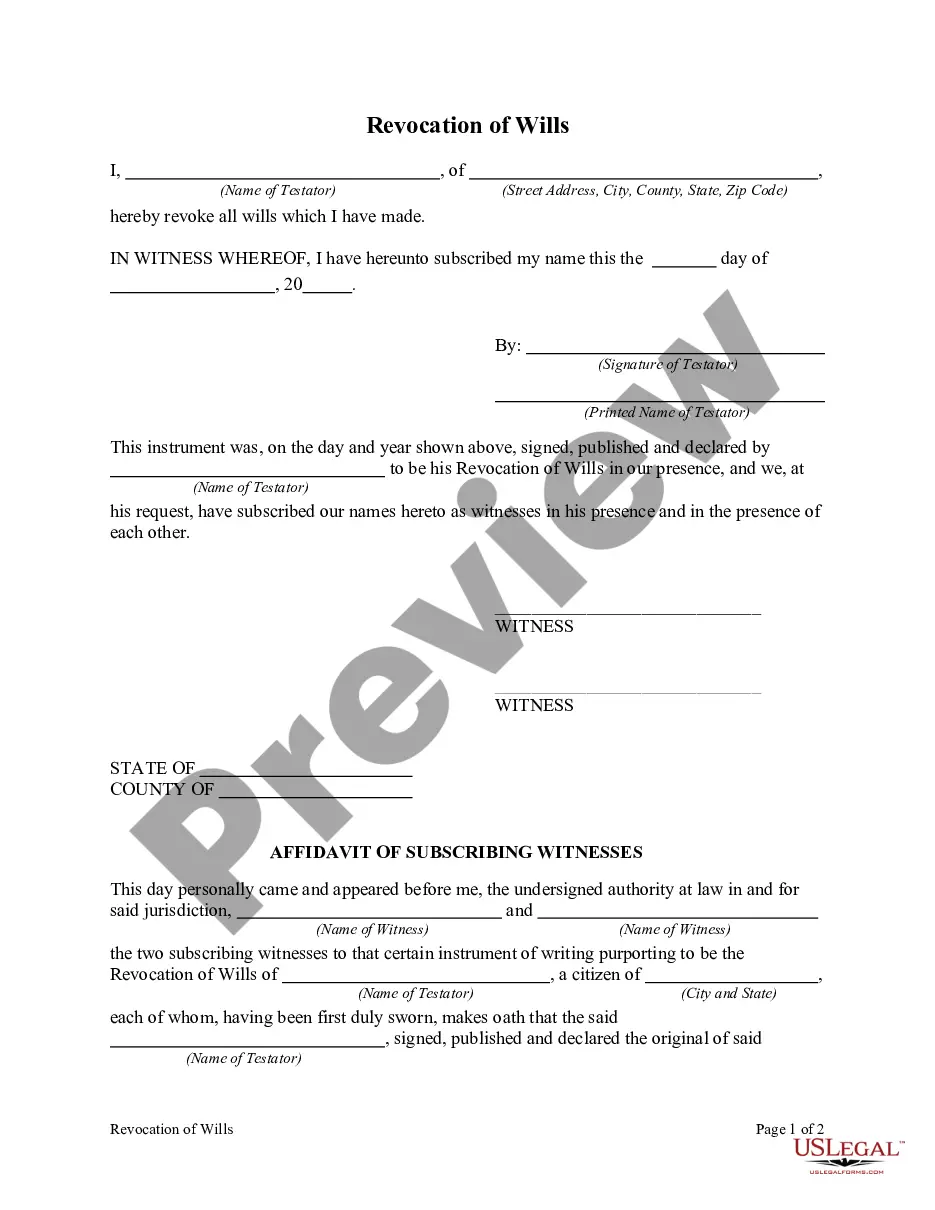
- Medical Release Form
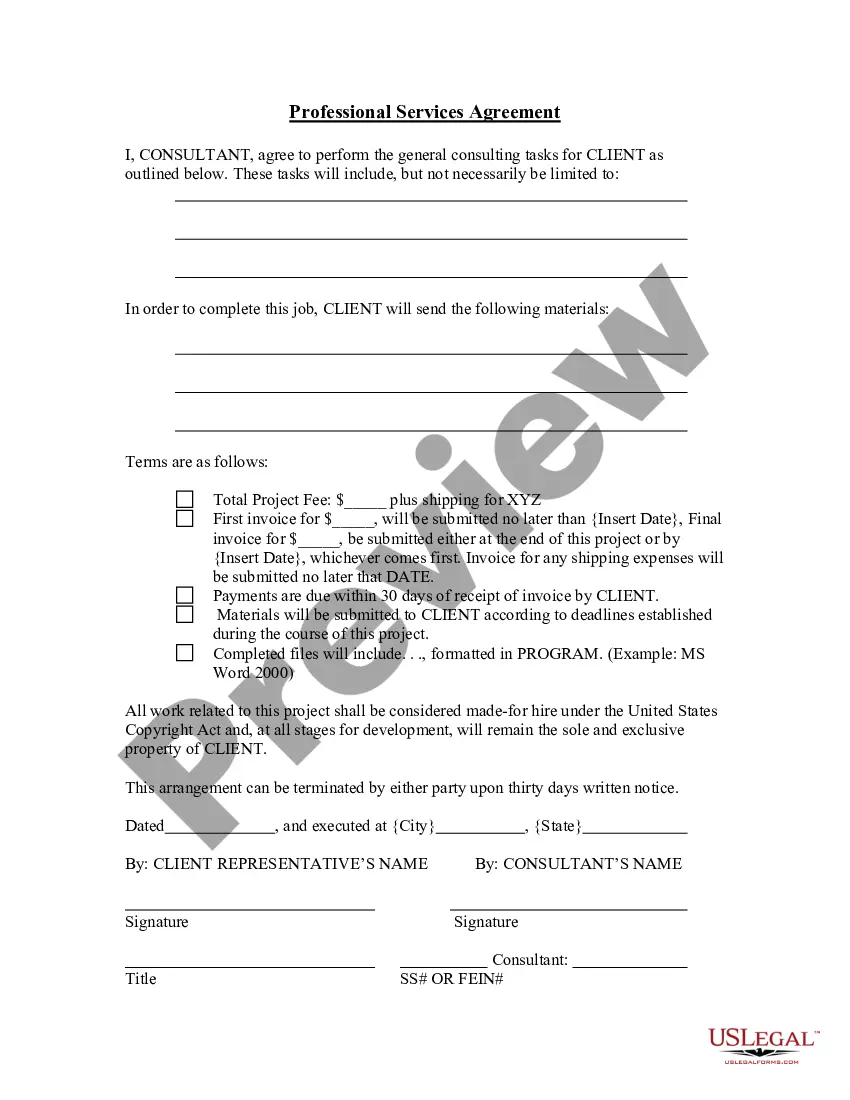
- Contract For Legal Services
- General Release and Settlement Agreement
- Petition For Pro-Ami Settlement - Minor
- Order For Pro-Ami Settlement
- Pro Tanto Settlement and Release Agreement
- Pro Tanto Stipulation For Dismissal
- Motion to Appoint Process Server
- Order Appointing Process Server
- Notice of Deposition
- Pretrial Order
- Notice of Intent to Serve Nonparty With Subpoena
- Subpoena For Production of Documents
- Joint Stipulation For Dismissal With Prejudice
Situations where these forms applies
This package is ideal for individuals and legal professionals who are preparing for civil litigation in Alabama. You may need this forms package in situations such as:
- Filing a lawsuit or responding to one.
- Settling claims involving minors that require court approval.
- Appointing a process server for delivering court documents.
- Preparing documentation for depositions and subpoenas.
Who needs this form package
- Individuals entering into civil litigation in Alabama.
- Lawyers seeking organized documentation for their civil cases.
- Parents or guardians representing minors in settlement cases.
- Parties wishing to streamline the legal process with proper documentation.
Completing these forms step by step
- Review the included forms to understand their purpose and legal implications.
- Identify the parties involved and enter their details in the appropriate sections.
- Fill out the necessary information, such as dates and signatures.
- Consult the instructions for any specific requirements related to each form.
- Print the completed forms as needed for filing with the court or serving on other parties.
Notarization guidance for this package
Notarization is not commonly needed for forms in this package. However, if your state’s laws require it, our notarization service, powered by Notarize, allows you to finalize documents online 24/7 without in-person visits.
Get your form ready online
Our built-in tools help you complete, sign, share, and store your documents in one place.
Make edits, fill in missing information, and update formatting in US Legal Forms—just like you would in MS Word.
Download a copy, print it, send it by email, or mail it via USPS—whatever works best for your next step.
Sign and collect signatures with our SignNow integration. Send to multiple recipients, set reminders, and more. Go Premium to unlock E-Sign.
If this form requires notarization, complete it online through a secure video call—no need to meet a notary in person or wait for an appointment.
We protect your documents and personal data by following strict security and privacy standards.

Make edits, fill in missing information, and update formatting in US Legal Forms—just like you would in MS Word.

Download a copy, print it, send it by email, or mail it via USPS—whatever works best for your next step.

Sign and collect signatures with our SignNow integration. Send to multiple recipients, set reminders, and more. Go Premium to unlock E-Sign.

If this form requires notarization, complete it online through a secure video call—no need to meet a notary in person or wait for an appointment.

We protect your documents and personal data by following strict security and privacy standards.
Common mistakes to avoid
- Failing to sign or date the documents.
- Not including all necessary parties in the forms.
- Using outdated versions of the forms.
- Overlooking specific state requirements for notarization or witness signatures.
Benefits of using this package online
- Convenient access from anywhere, allowing for easy completion at your own pace.
- Editability enables you to make changes before finalizing the forms.
- Reliability of documents drafted by licensed attorneys, to ensure legal compliance.
- Immediate downloads assist in keeping your case on track without delays.
Legal use & context
- These forms are designed to comply with Alabama laws governing civil litigation.
- Each form serves a specific function within the civil litigation process.
- Using this package can help ensure that your filings meet legal standards and procedures.
Main things to remember
- The package includes essential state-specific documents for civil litigation in Alabama.
- Proper completion of these forms is crucial for effective legal representation.
- Understanding when and how to use these forms can facilitate smoother legal proceedings.
Looking for another form?
Form popularity
FAQ
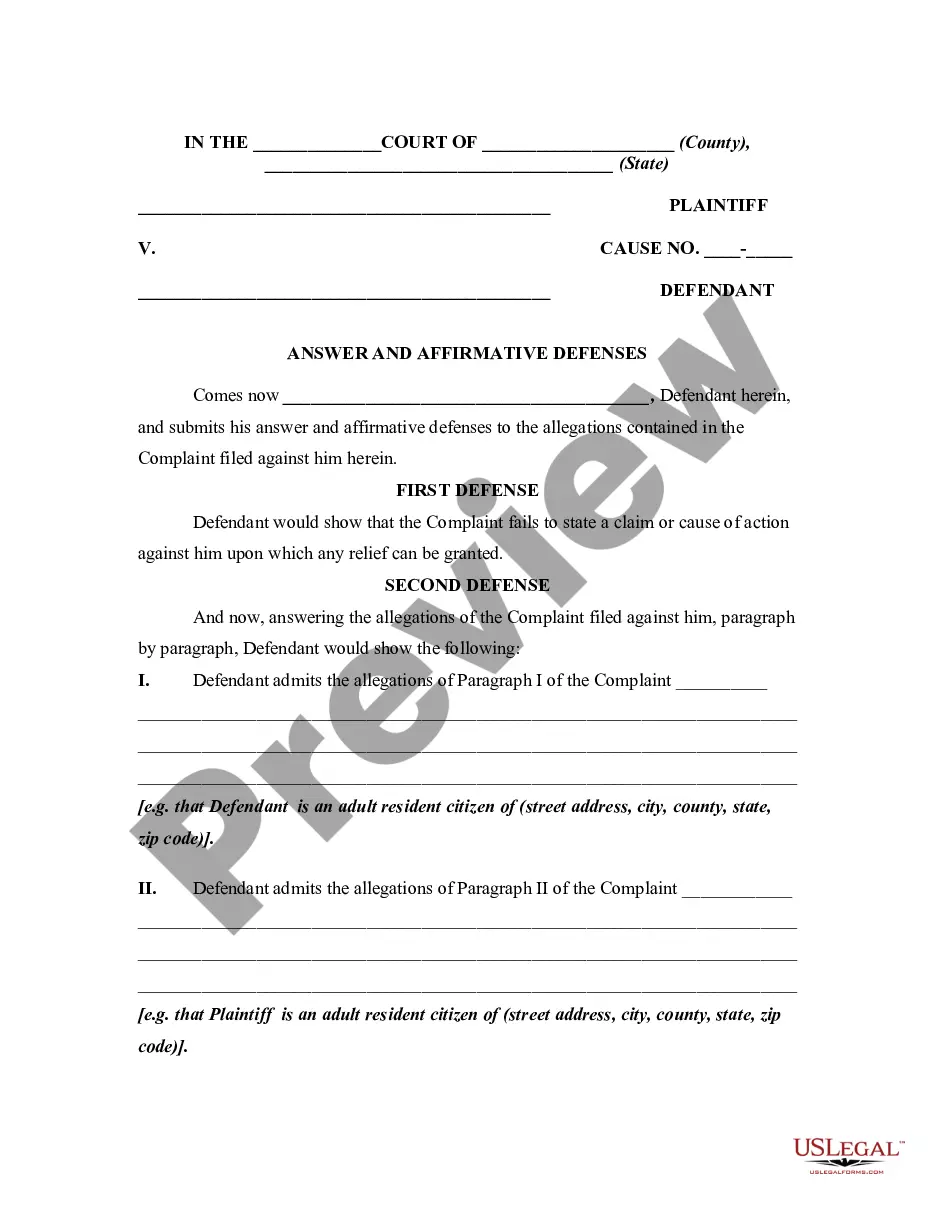
Answer each issue of the complaint. Assert affirmative defenses. File the answer with the court and serve the plaintiff with answer.
Read the summons and make sure you know the date you must answer by. Read the complaint carefully. Write your answer. Sign and date the answer. Make copies for the plaintiff and yourself. Mail a copy to the plaintiff. File your answer with the court by the date on the summons.
1 attorney answer It does not need to be notarized, but a copy must be mailed to every other party, in addition to being filed with the court. Be sure to put your name, address, and phone number on it.
There are no licensing or registration requirements to become a process server in Alabama. However, you will need to be designated by the courts before you can work as a process server. Private process servers are active in the State of Alabama.
A party shall not propound more than forty (40) interrogatories to any other party without leave of court. Upon motion, and for good cause shown, the court may increase the number of interrogatories that a party may serve upon another party.
Provide the name of the court at the top of the Answer. You can find the information on the summons. List the name of the plaintiff on the left side. Write the case number on the right side of the Answer. Address the Judge and discuss your side of the case. Ask the judge to dismiss the case.
At the beginning of a lawsuit, the parties formally submit their claims and defences. IN civil litigation, the word pleadings is used by lawyers.This means that a statement of claim could either be endorsed on the writ itself or prepared separately and served at the same time.
Service herein may be made by any person not less than eighteen (18) years of age who is not a party and who has been designated by order of the court. On request, the clerk shall deliver the summons to the plaintiff or the plaintiff's attorney for transmission to the person who will make the service.
When drafting an answer, one must: (1) follow the local, state, and federal court rules; (2) research the legal claims in the adversary's complaint; (3) respond to the adversary's factual allegations; and (4) assert affirmative defenses, counterclaims, cross-claims, or third-party claims, if applicable.