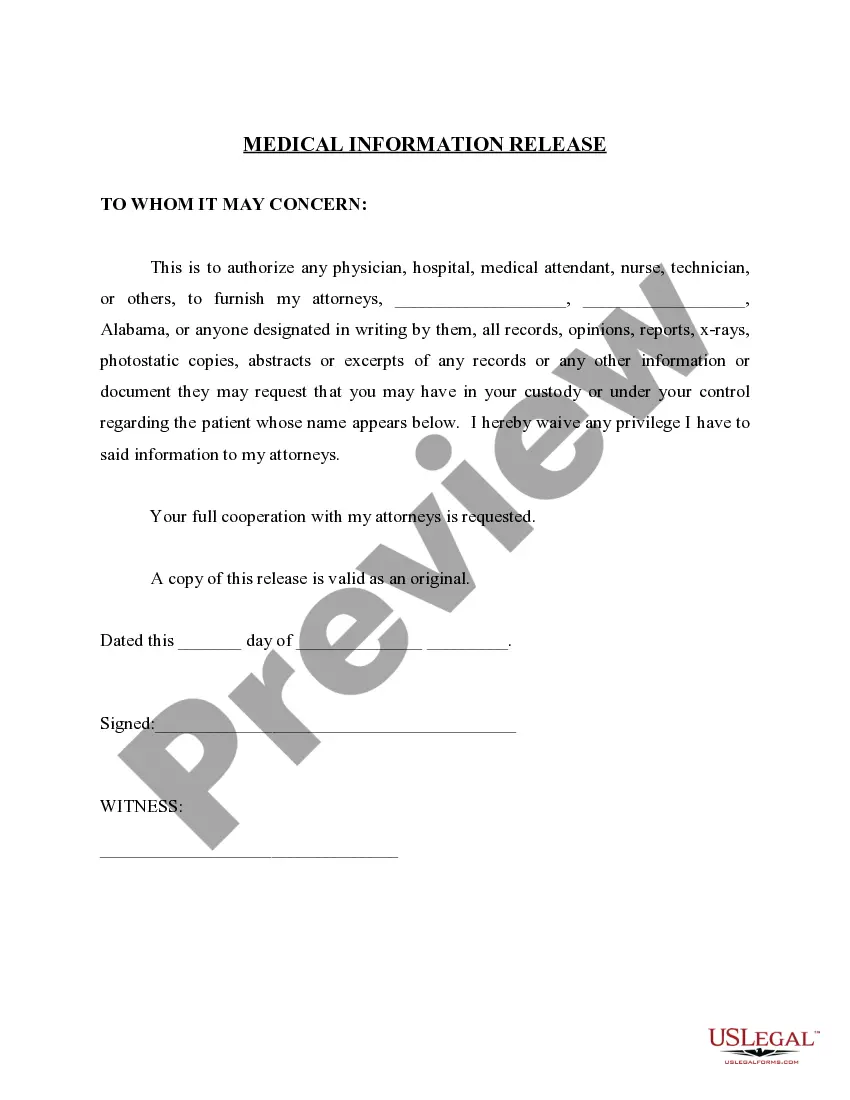
Alabama Medical Release Form
About this form
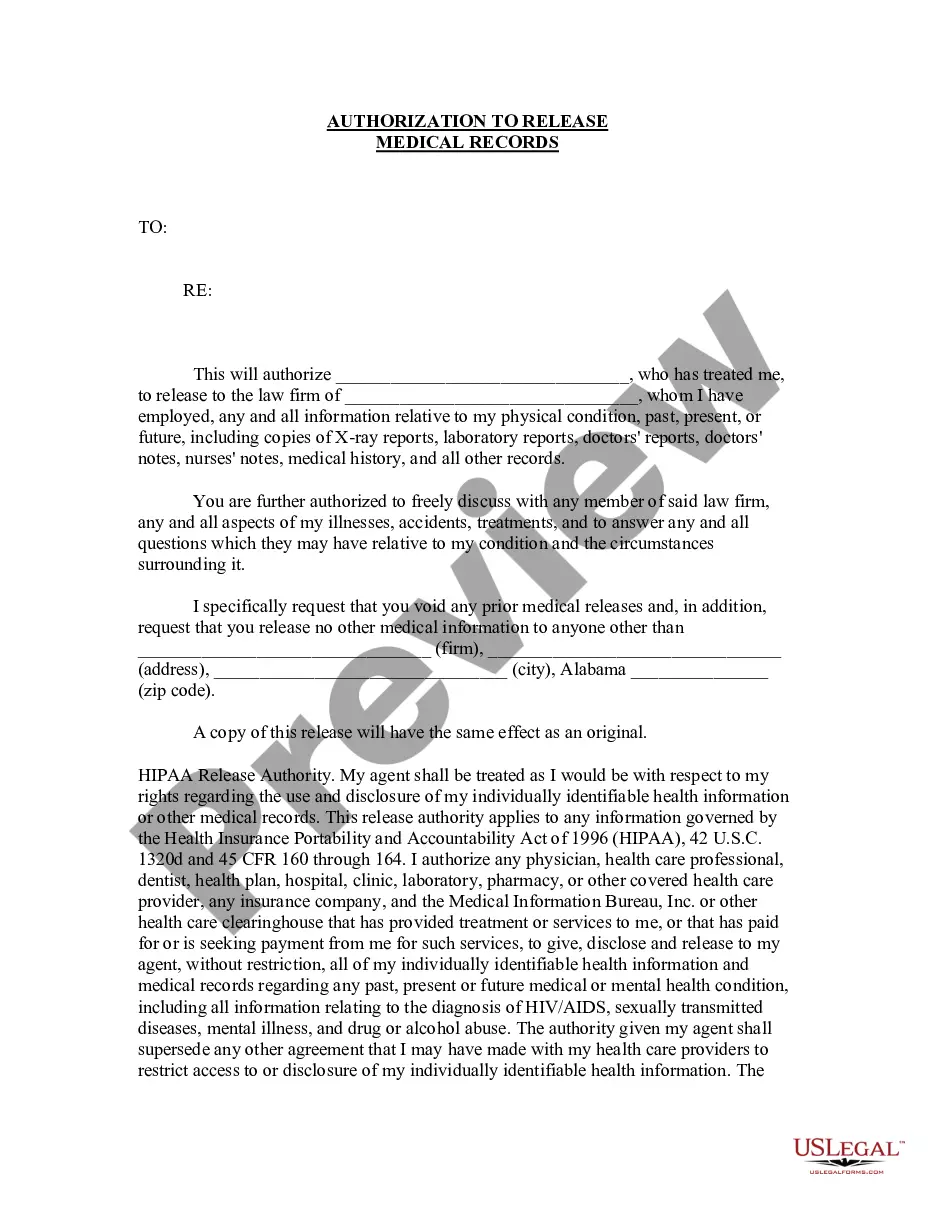
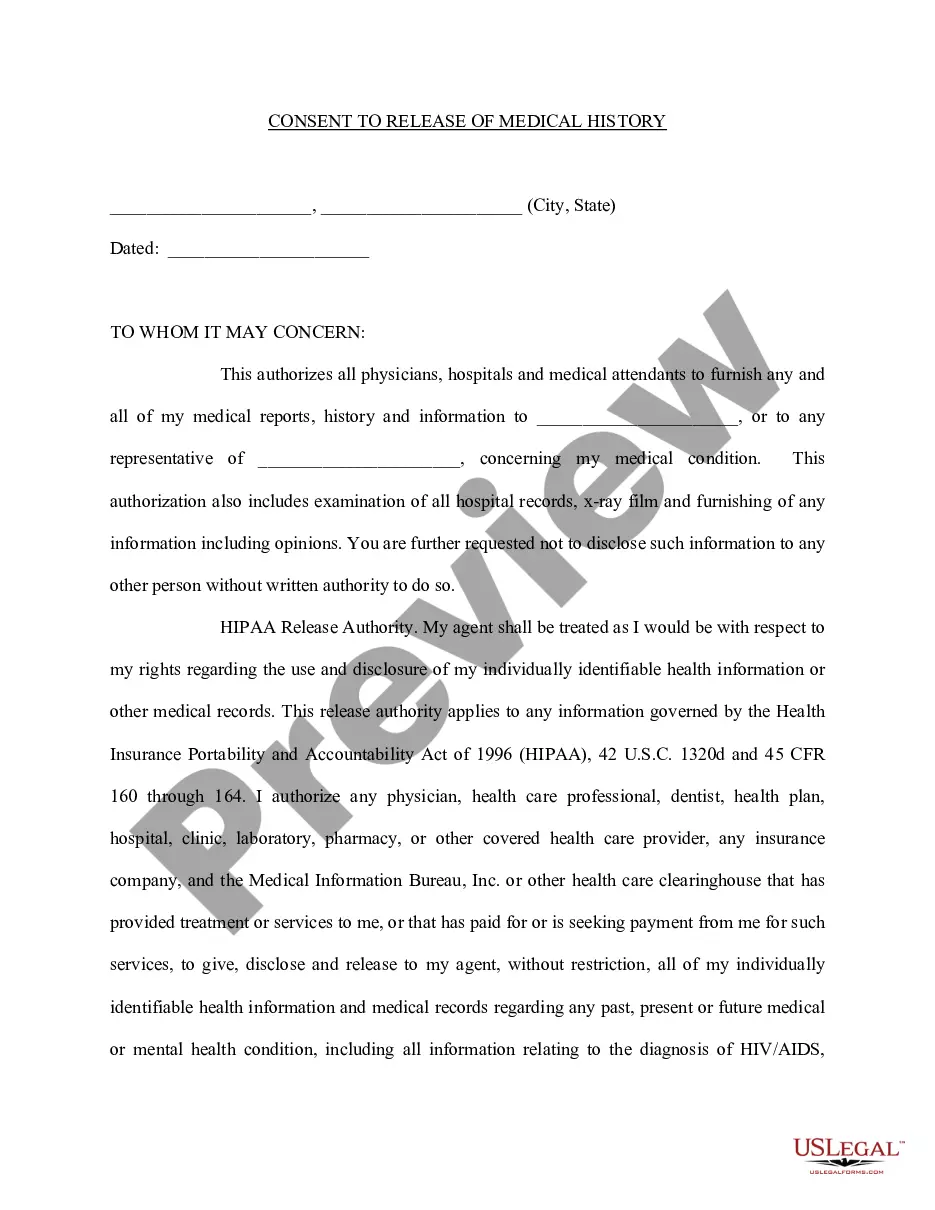
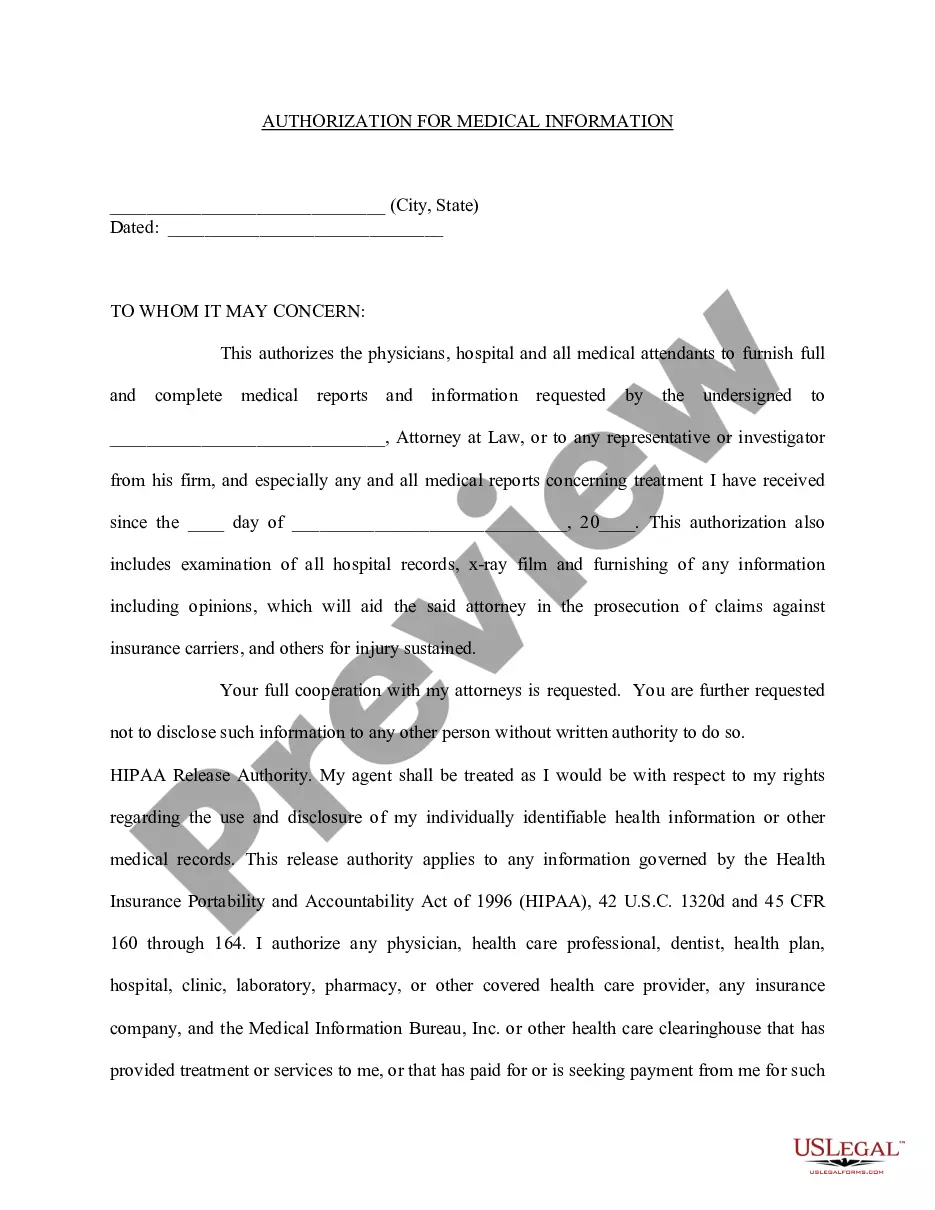
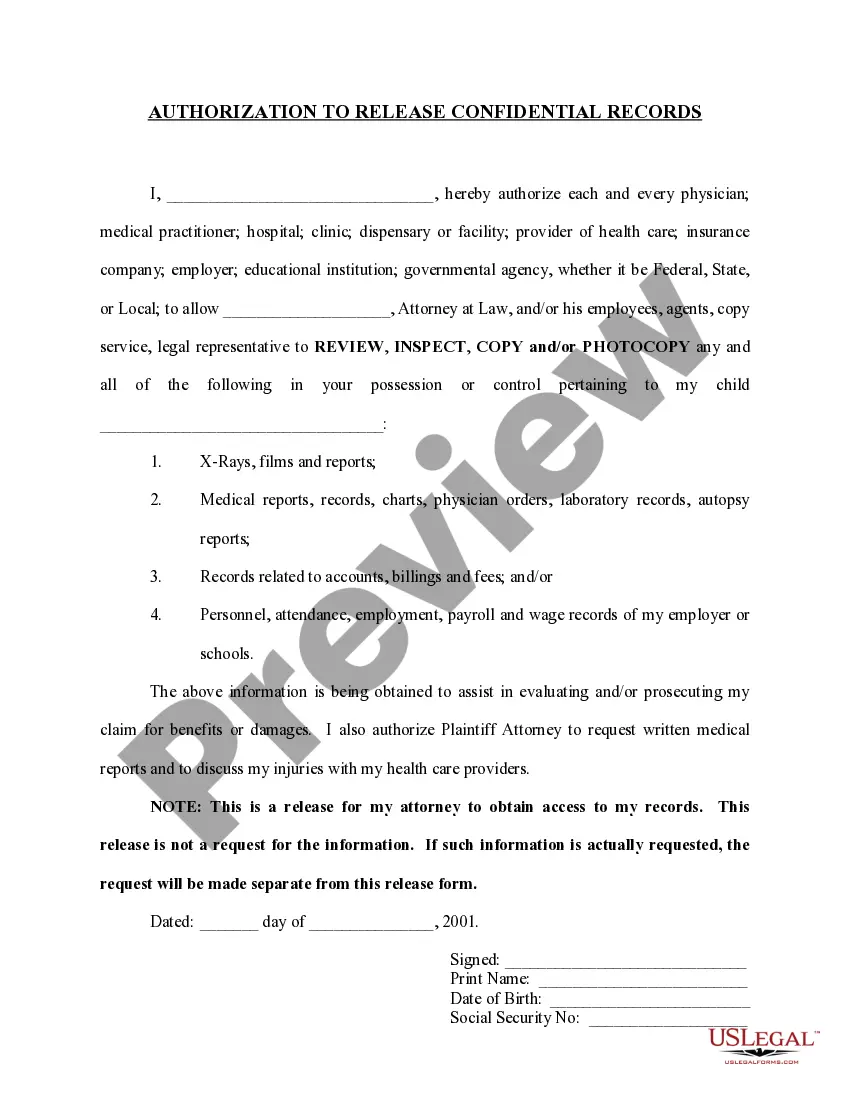
The Medical Release Form is a legal document that enables an individual to authorize medical professionals, such as physicians and hospitals, to release medical records and information to a designated person. This form is essential for facilitating communication between healthcare providers and the designated recipient, ensuring a smooth exchange of critical medical information. Unlike other medical forms, this release specifically focuses on the transfer of information and the waiver of confidentiality, which makes it vital for personal representation in legal matters, insurance claims, or patient care coordination.
Main sections of this form
- Authorization statement indicating permission for the release of medical information.
- Identification of the individual whose medical information is being released.
- Designation of the person or entity receiving the medical records.
- Waiver of any privilege associated with the medical information.
- Signature of the individual granting the authorization and date.

When to use this form
This form is commonly used in situations where an individual wishes to transfer their medical records to another entity, such as an attorney or another healthcare provider. It can be necessary when seeking legal advice related to medical issues, during insurance claims processes, or when coordinating treatment among multiple healthcare professionals. Using the Medical Release Form ensures that the recipient can access the necessary medical information without delays.
Who this form is for
This form is suitable for:
- Patients who want to allow their medical information to be shared with others.
- Legal representatives or attorneys needing access to medical records for case representation.
- Family members or caregivers assisting a patient with their medical care and requiring access to records.
- Individuals involved in insurance claims that necessitate detailed medical information.
How to prepare this document
- Begin by filling in the name of the patient whose medical information is being released.
- Clearly identify the individual or organization that will receive the medical records.
- Sign and date the form to validate the authorization.
- Ensure the designated recipient is informed of the release and understands the importance of confidentiality.
Is notarization required?
Notarization is generally not required for this form. However, certain states or situations might demand it. You can complete notarization online through US Legal Forms, powered by Notarize, using a verified video call available anytime.
Get your form ready online
Our built-in tools help you complete, sign, share, and store your documents in one place.
Make edits, fill in missing information, and update formatting in US Legal Forms—just like you would in MS Word.
Download a copy, print it, send it by email, or mail it via USPS—whatever works best for your next step.
Sign and collect signatures with our SignNow integration. Send to multiple recipients, set reminders, and more. Go Premium to unlock E-Sign.
If this form requires notarization, complete it online through a secure video call—no need to meet a notary in person or wait for an appointment.
We protect your documents and personal data by following strict security and privacy standards.

Make edits, fill in missing information, and update formatting in US Legal Forms—just like you would in MS Word.

Download a copy, print it, send it by email, or mail it via USPS—whatever works best for your next step.

Sign and collect signatures with our SignNow integration. Send to multiple recipients, set reminders, and more. Go Premium to unlock E-Sign.

If this form requires notarization, complete it online through a secure video call—no need to meet a notary in person or wait for an appointment.

We protect your documents and personal data by following strict security and privacy standards.
Mistakes to watch out for
- Failing to clearly specify who is authorized to receive the medical records.
- Not signing and dating the form, which makes it invalid.
- Assuming the form does not require additional consent from healthcare providers.
Benefits of using this form online
- Convenience: Prepare and download the form from anywhere at any time.
- Editability: Easily modify the form to suit your specific needs before downloading.
- Reliability: Ensure that the form meets industry standards established by licensed attorneys.
Looking for another form?

Form popularity
FAQ
Medical release forms are used to request that a healthcare provider share a patient's medical history with a third party (employer, insurance company, school, etc.).
By signing an authorization to release information, a party is consenting to provide another party with access to otherwise confidential information or records about an individual. However, signing a release doesn't mean the complete loss of confidentiality because most authorization forms are subject to limitations.
A Medical Records Release Form (also known as a Medical Information Release Form) is a form used to request that a health care provider (physician, dentist, hospital, chiropractor, psychiatrist, etc.)The automated form allows you to request information to be sent to multiple individuals and organizations at once.
A medical release form is a document that gives healthcare professionals permission to share patient medical information with other parties.
Dear Recipient's name, I am writing you to request copies of my medical records. I was treated in your office on xx/xx/xxxx. Please include all of my charts, test results, and consultation notes including referrals regarding my medical care.
Patient requests must be written without requiring a "formal" release form. Include signature, printed name, date, and records desired. Release a copy only, not the original. The physician may prepare a summary of the medical record, if acceptable to the patient.
Patient requests must be written without requiring a "formal" release form. Include signature, printed name, date, and records desired. Release a copy only, not the original. The physician may prepare a summary of the medical record, if acceptable to the patient.
Whether requesting your personal medical records from a doctor's office or a hospital, in Hawaii or Ohio, the federal law known as HIPAA applies. HIPAA entitles every person the right to access his or her medical records, receive copies of them, and request amendments to them.
Under HIPAA, they are required to provide you with a copy of your health information within 30 days of your request. A provider cannot deny you a copy of your records because you have not paid for the health services you have received.