Alabama Order Appointing Process Server
What is this form?
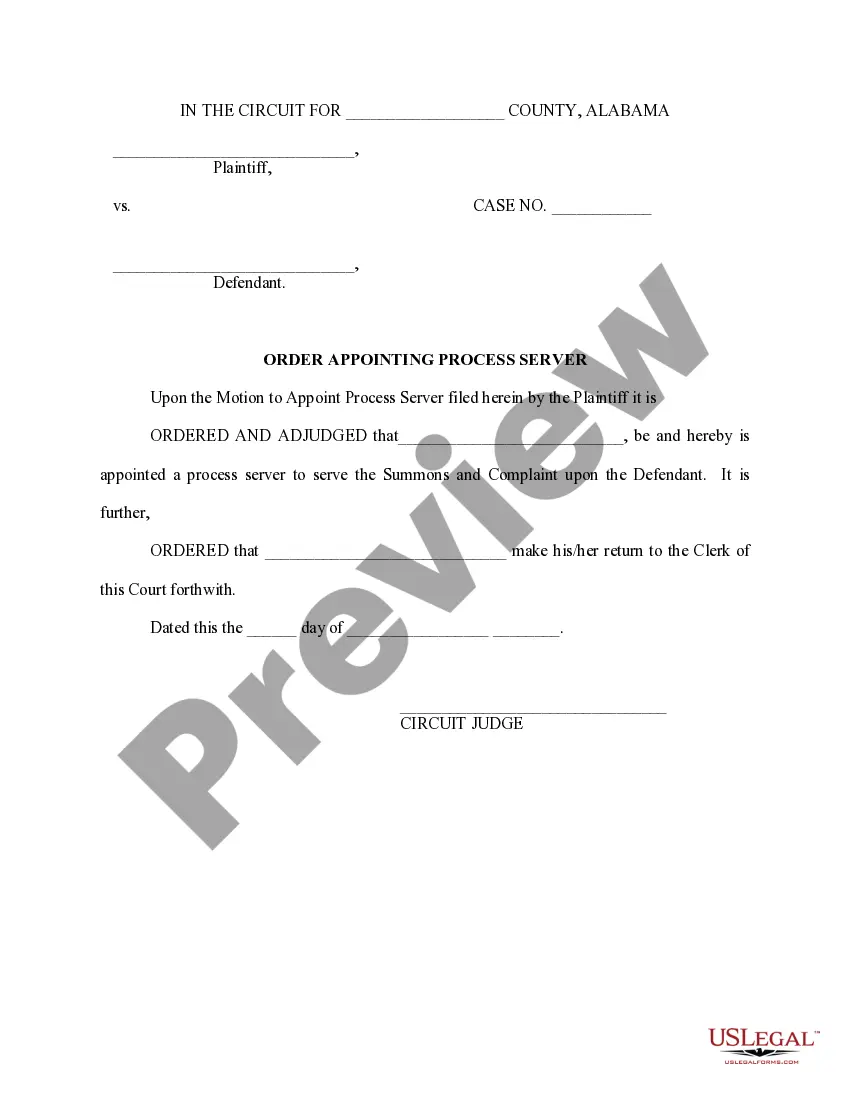
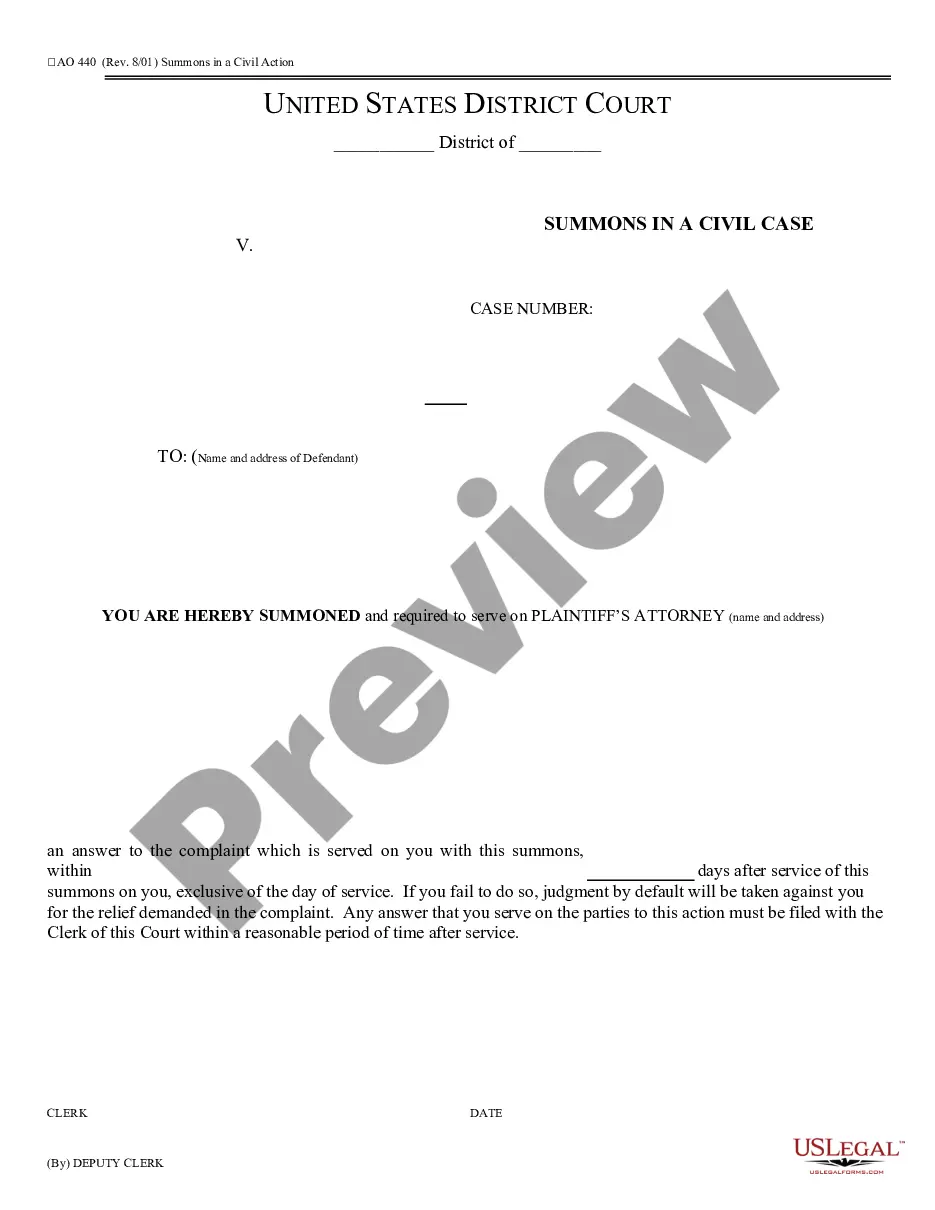
The Order Appointing Process Server is a legal document issued by a court that designates a specific individual to deliver legal documents, such as a summons and complaint, to a defendant or respondent. This form is essential for ensuring that all parties receive proper notice of legal proceedings, which is a crucial step in maintaining the integrity of the legal process.
Key components of this form
- The title of the court and case information, including the names of the plaintiff and defendant.
- A section for the court to appoint a process server by name.
- Instructions for the appointed process server to return confirmation to the clerk of the court.
- A date field for when the order is issued by the court.
- Signature line for the circuit judge overseeing the case.
Situations where this form applies
This form should be utilized when a plaintiff needs to formally appoint a process server to deliver legal documents to a defendant. It is necessary in various legal situations, such as starting a lawsuit or responding to a legal claim, ensuring that the defendant is appropriately notified about the case proceedings.
Who can use this document
- Individuals or entities involved in a legal dispute as plaintiffs.
- Attorneys representing clients in civil litigation cases.
- Parties required to provide formal notification of legal actions to defendants.
How to complete this form
- Enter the full names of the plaintiff and defendant, along with their respective addresses.
- Fill in the case number assigned by the court.
- Specify the name of the appointed process server in the designated area.
- Indicate the date when the order is being issued by the court.
- Have the circuit judge sign the document to validate the appointment.
Does this form need to be notarized?
This form does not typically require notarization unless specified by local law. However, it is advisable to check with your court or legal representative to ensure compliance with any specific requirements.
Get your form ready online
Our built-in tools help you complete, sign, share, and store your documents in one place.
Make edits, fill in missing information, and update formatting in US Legal Forms—just like you would in MS Word.
Download a copy, print it, send it by email, or mail it via USPS—whatever works best for your next step.
Sign and collect signatures with our SignNow integration. Send to multiple recipients, set reminders, and more. Go Premium to unlock E-Sign.
If this form requires notarization, complete it online through a secure video call—no need to meet a notary in person or wait for an appointment.
We protect your documents and personal data by following strict security and privacy standards.

Make edits, fill in missing information, and update formatting in US Legal Forms—just like you would in MS Word.

Download a copy, print it, send it by email, or mail it via USPS—whatever works best for your next step.

Sign and collect signatures with our SignNow integration. Send to multiple recipients, set reminders, and more. Go Premium to unlock E-Sign.

If this form requires notarization, complete it online through a secure video call—no need to meet a notary in person or wait for an appointment.

We protect your documents and personal data by following strict security and privacy standards.
Common mistakes to avoid
- Not providing complete case information, such as case number or court details.
- Failing to specify the appointed process server's name clearly.
- Leaving the date field blank or not using the correct date format.
- Forgetting to obtain the circuit judge's signature on the order.
Benefits of completing this form online
- Immediate access to a professionally drafted form, ensuring it meets legal standards.
- Editability allows users to customize the document to fit their specific needs easily.
- Convenience of downloading the form in multiple formats (Word and WordPerfect).
- Avoidance of potential errors, as the form follows established legal language.
Legal use & context
- This order provides legal authority for the appointed process server to serve documents, ensuring the defendant is properly notified of legal actions.
- Failure to properly serve documents can result in delays or dismissal of the case.
- Courts require adherence to protocols for serving legal documents to ensure fair process.
Quick recap
- The Order Appointing Process Server is essential for formally assigning a process server in legal cases.
- It is crucial to ensure all fields are accurately completed to validate the form in court.
- This form is designed for use in Alabama and reflects the specific requirements of that jurisdiction.
Looking for another form?




Form popularity
FAQ
According to the LinkedIn conversation, most process servers rarely or never actually say the words, 'you've been served,' but depending on the state in which they serve and the reaction of the defendant that opinion can change. Keep reading for more from your peers on this topic.
Generally, process servers make at least three attempts to serve somebody. These attempts are normally made at different times of day and on different days to maximize our chance of serving the papers.
It is NOT a legal requirement to say "You've Been Served", and in many cases, it may actually be a gateway to creating a dangerous escalation.
A. A Process Server is a person who is authorized by law (Registered Process Server) to 'serve' legal documents such as; Small Claims, Summons & Complaints, Subpoenas, Unlawful Detainers, Temporary Restraining Orders etc. to the Defendant, or Individual being sued, or other party.
Generally, process servers make at least three attempts to serve somebody. These attempts are normally made at different times of day and on different days to maximize our chance of serving the papers.
Process servers do not usually call ahead of time since this gives people time to avoid being served court papers. A process server will never ask for any money. They do not collect money owed for divorce cases, child support, or any other legal reason (especially via a wire transfer).
Process servers will call you, but they won't threaten you over the phone. A process server is always paid by the party hiring them to deliver legal documents. Whether it's a divorce, child support, or debt collection case, the party being served will never pay the server directly.
He says if you get a phone call from a process server on strange, non-local or blocked numbers, it's probably a scam. The process server initiates the lawsuit by notifying the party that's been sued that there is an action brought against them. A process server is not going to threaten you with legal action.
That's a long way to say yes, real process servers do sometimes call before they come attempt to serve you. One last thought: professional process servers call the people they're trying to serve because it works. Most people respond well to somebody trying to help them by delivering legal documents.