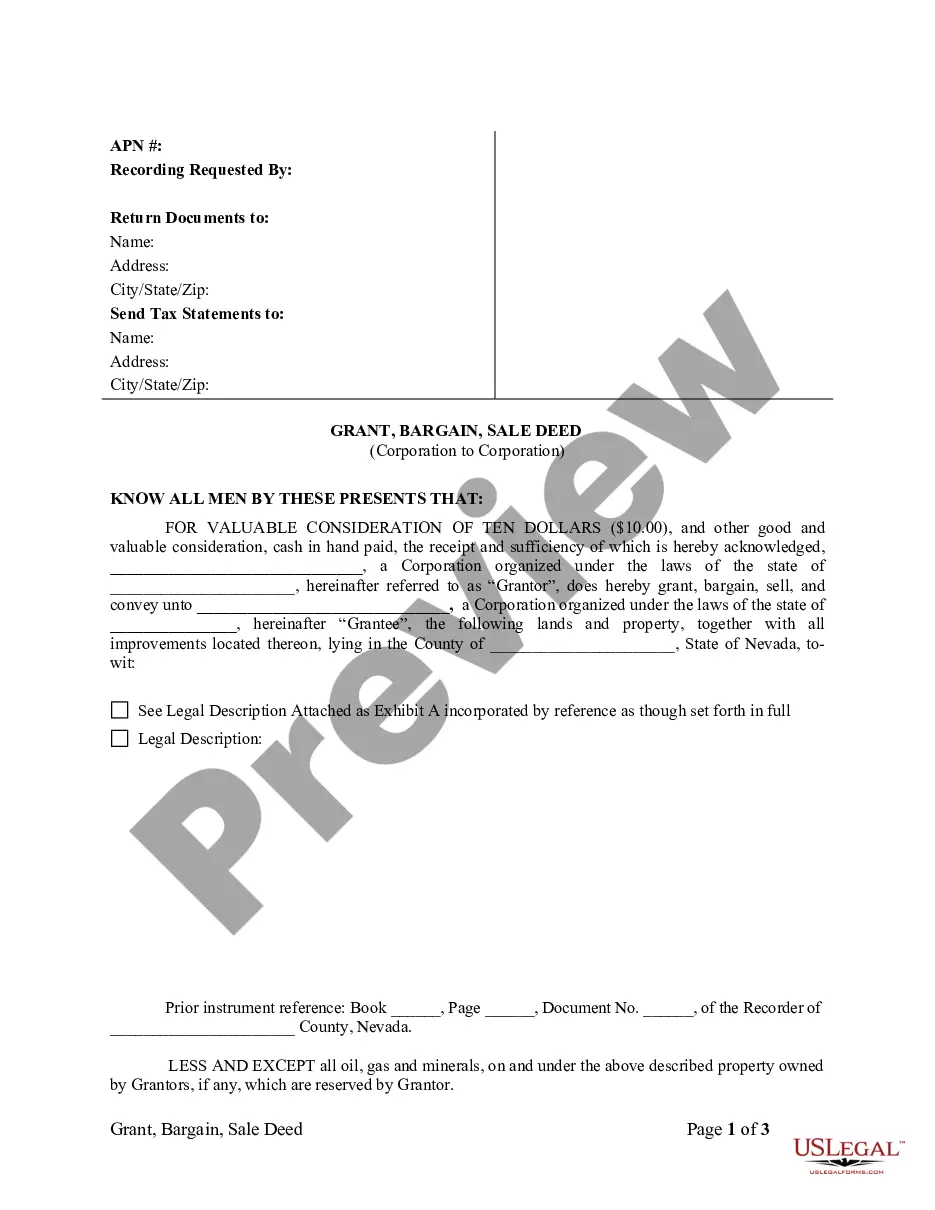
Colorado Temporary Civil Protection Order Issued Pursuant to Section 13-14-102, C.R.S.
About this form
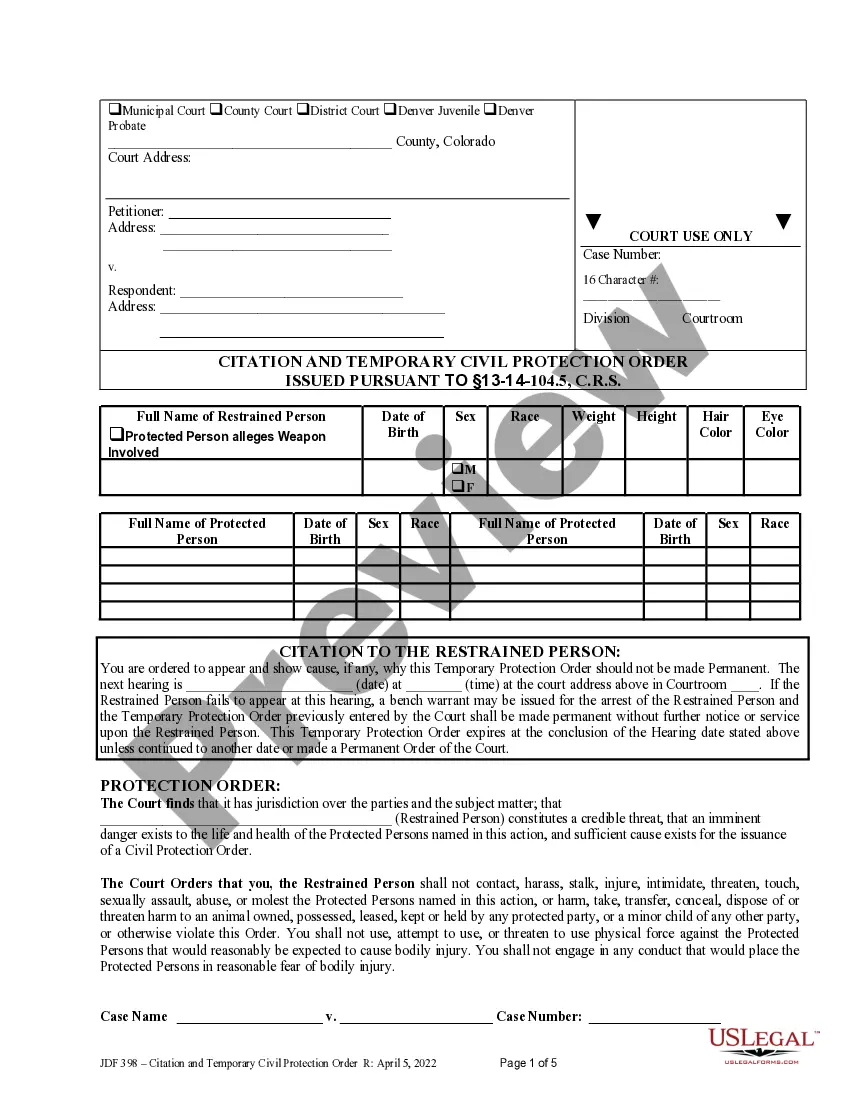
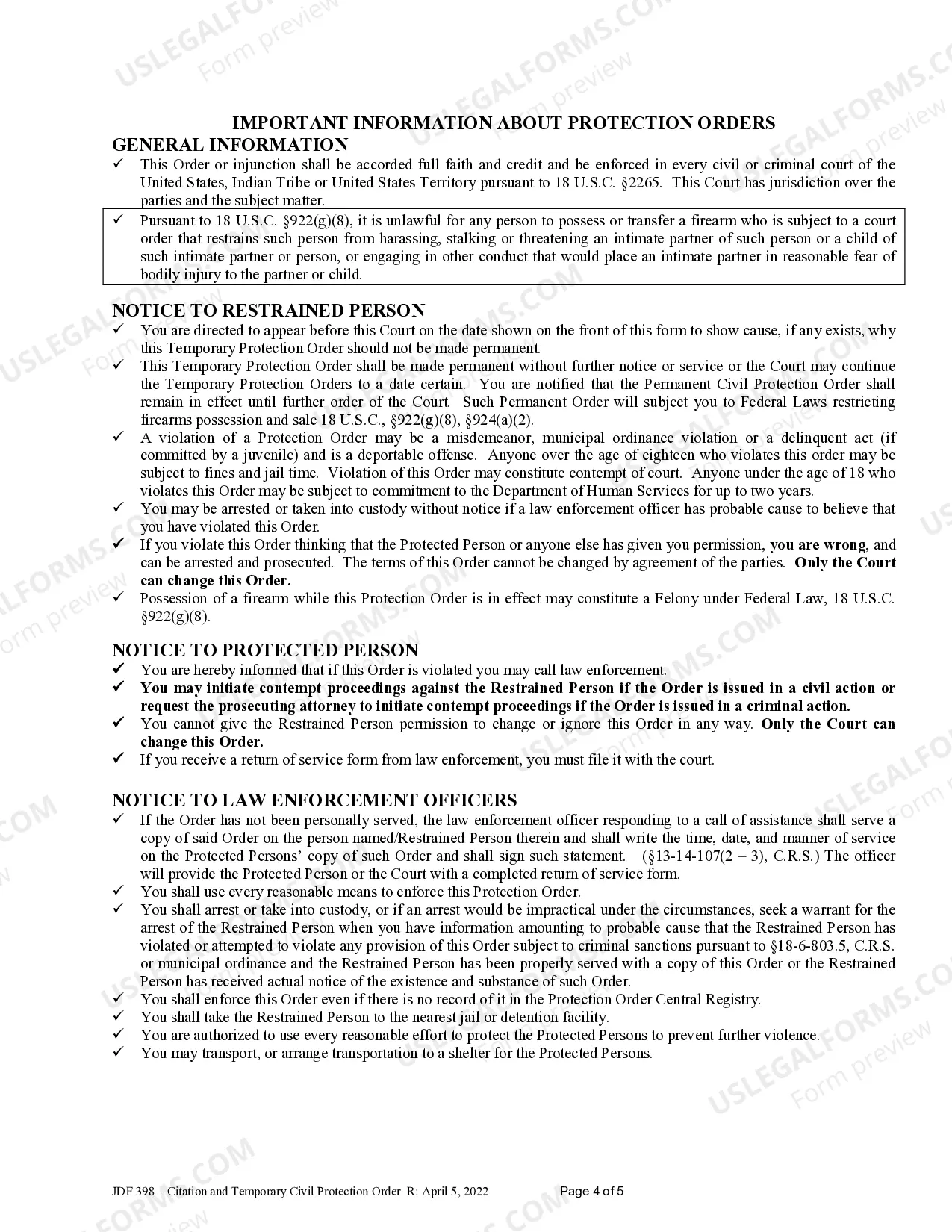
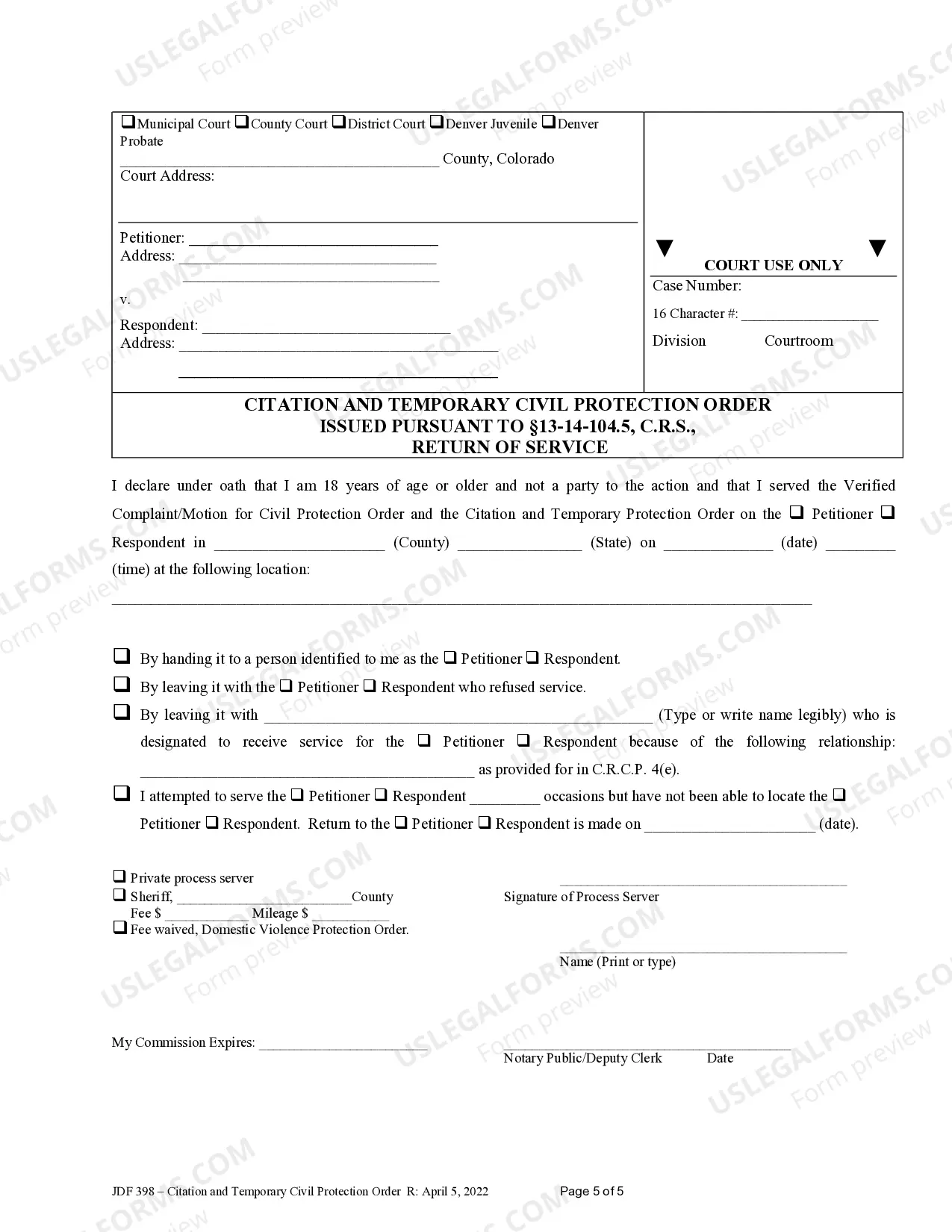
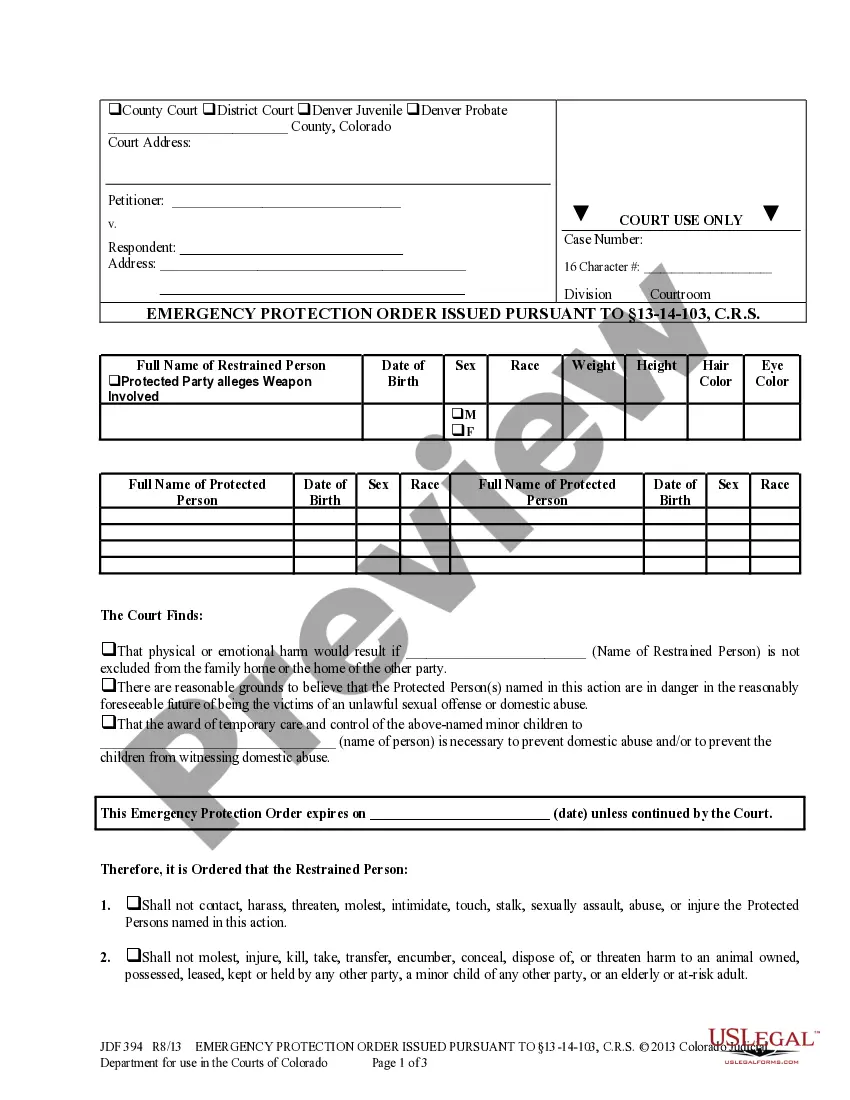
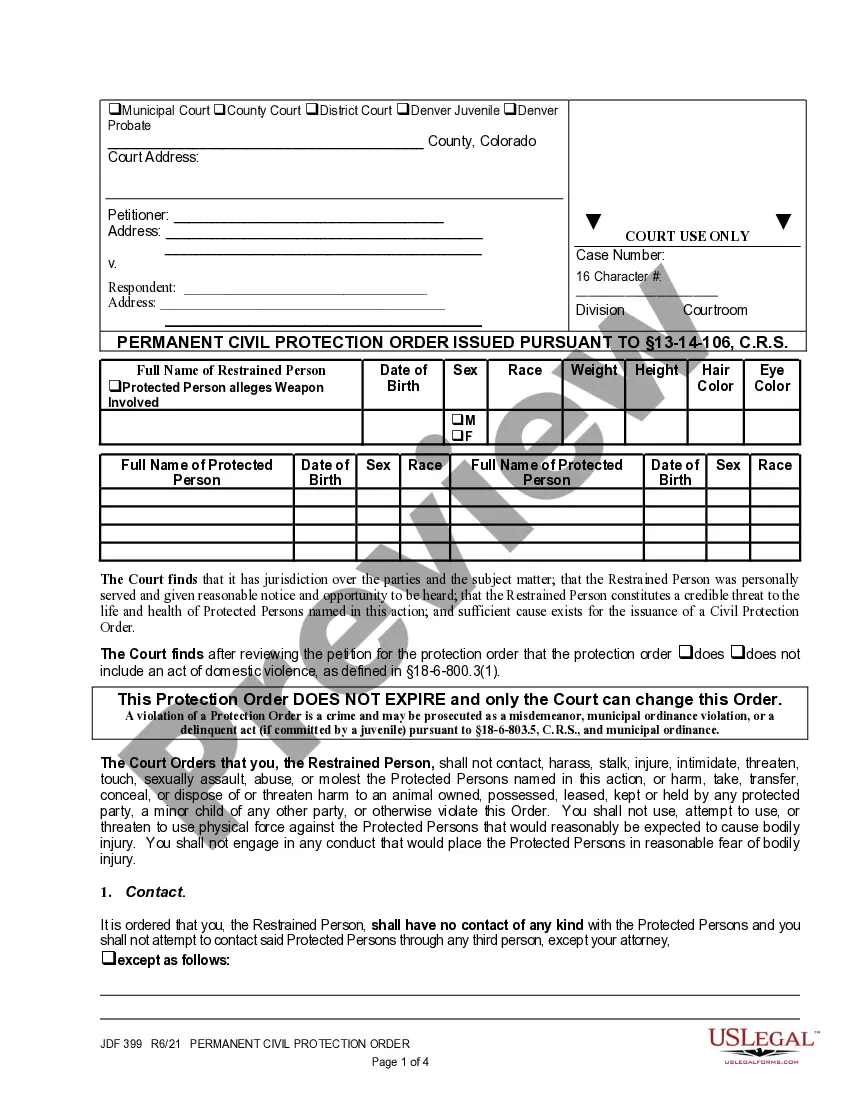
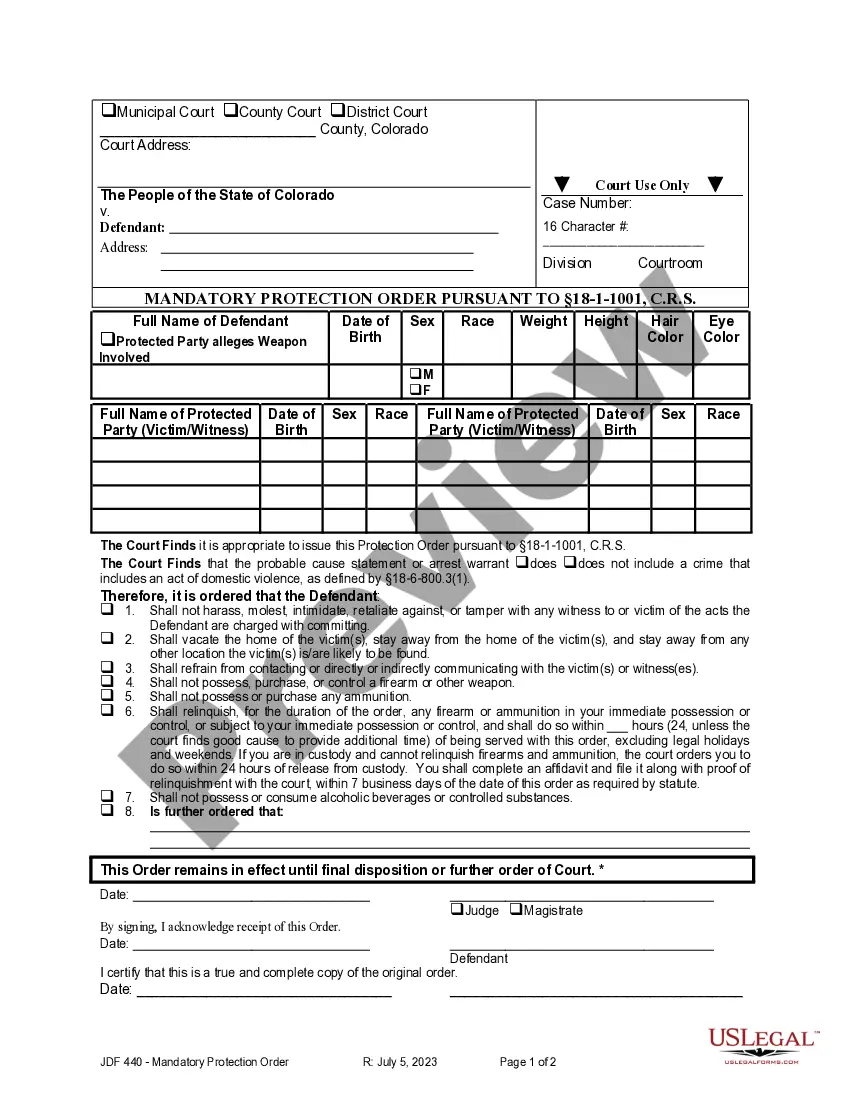
The Temporary Civil Protection Order Issued Pursuant to Section 13-14-102, C.R.S. is an official legal document from the Colorado District Court. This form is designed to protect individuals from threats or harm by issuing immediate prohibitions against a restrained person. Unlike other protective orders, this temporary order requires a subsequent hearing to determine whether it should be made permanent, providing critical protection during a potentially dangerous time.
Key components of this form
- Identification of parties: Names and addresses of the petitioner and the respondent.
- Court information: Case number, court division, and hearing details.
- Citations: Orders for the restrained person to appear in court.
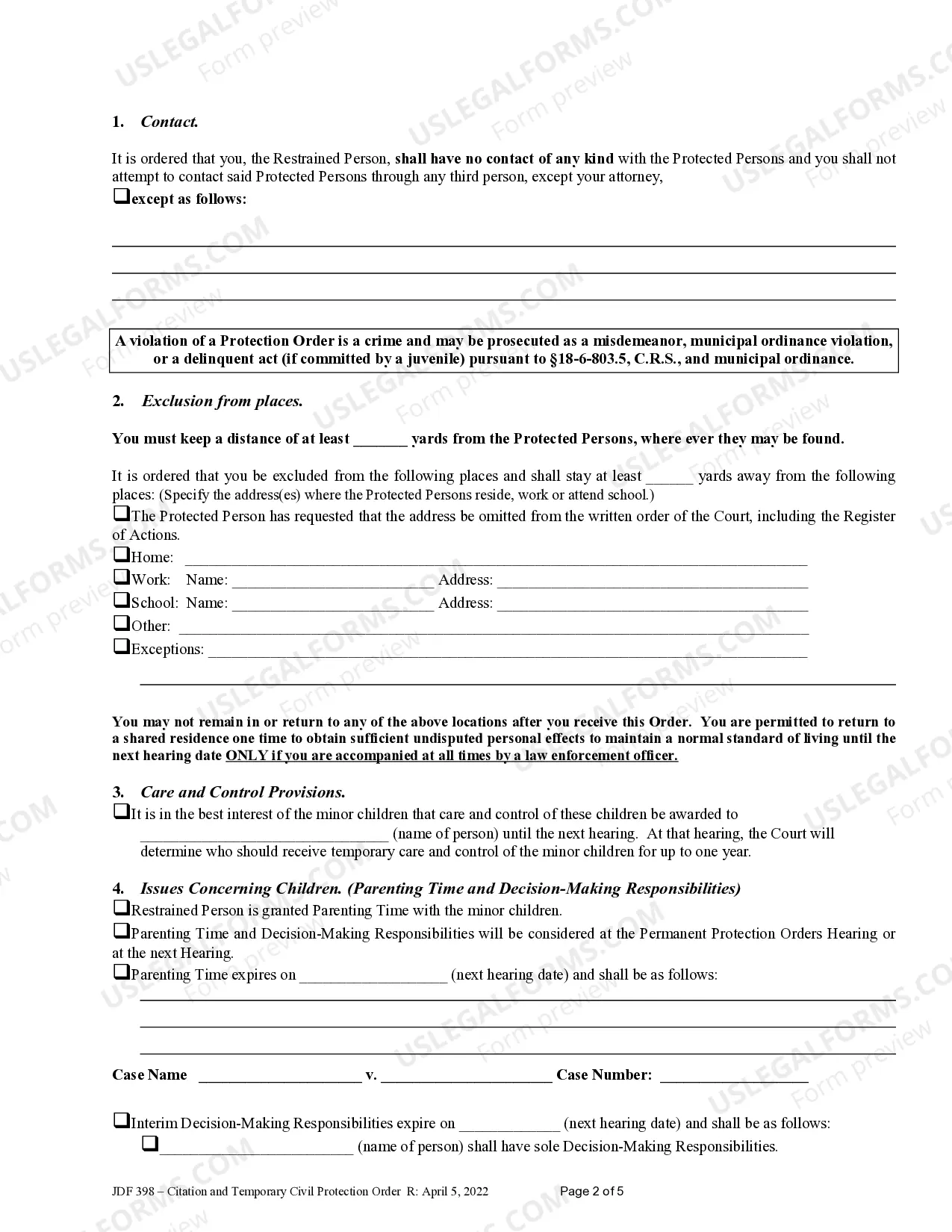
- Prohibitions: Specific restrictions placed on the restrained person, including no contact or harassment.
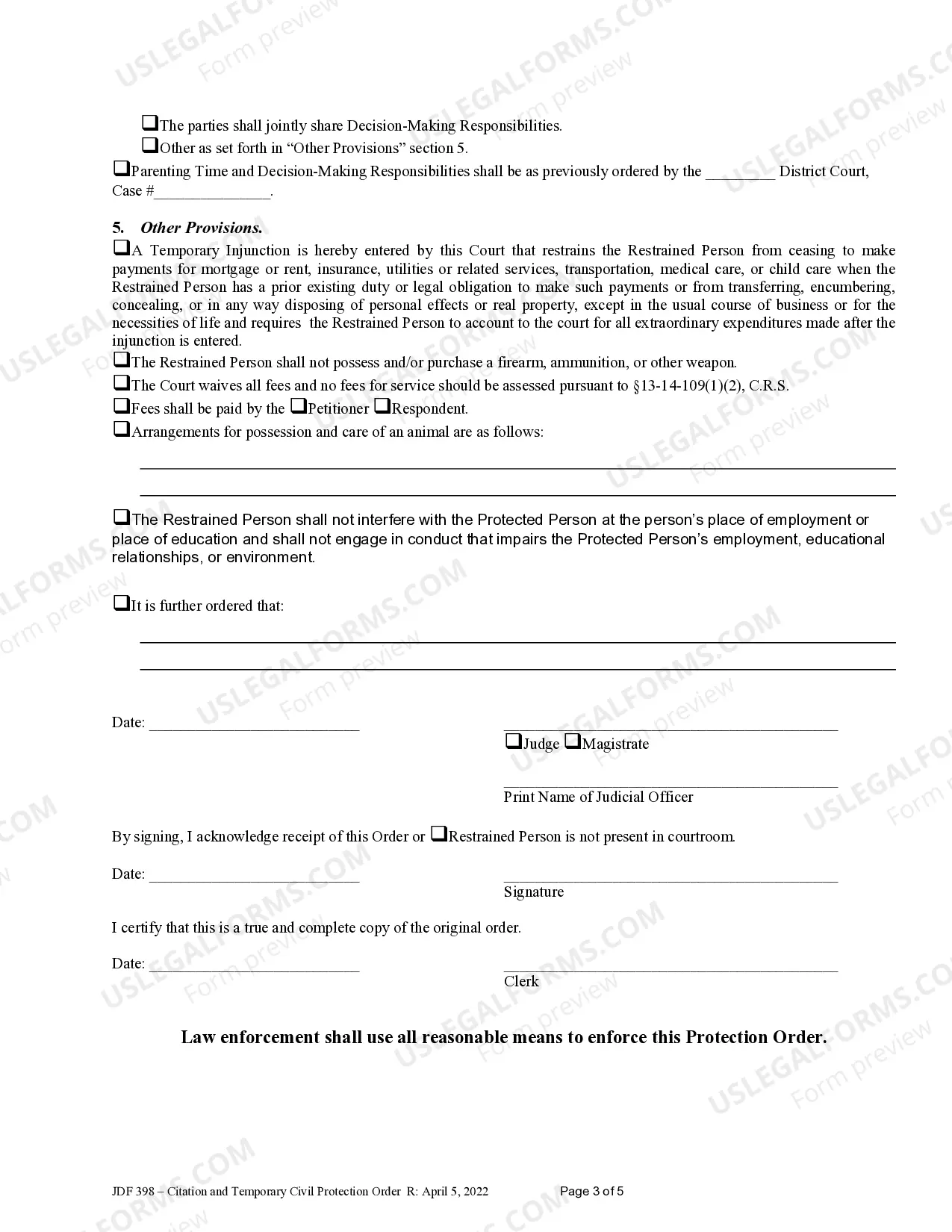
- Enforcement provisions: Instructions for law enforcement regarding the enforcement of the order.

Common use cases
This form is used when someone feels threatened or believes that they are in imminent danger from another person. It is typically filed in situations involving domestic violence, stalking, harassment, or any behavior that creates a credible threat to safety. If immediate legal protection is needed before a more permanent arrangement is either heard or instituted, this is the appropriate form to file.
Intended users of this form
- Individuals seeking protection from threats or harassment.
- Victims of domestic violence looking for immediate intervention.
- Parties engaged in a dispute with credible fear for their safety.
- Anyone needing to establish legal grounds for prohibiting contact with a specific individual.
Instructions for completing this form
- Identify the petitioner and respondent: Clearly fill in the names and addresses of both parties.
- Enter court details: Fill out the case number, division, and courtroom information.
- State the grounds for the order: Describe the threats or actions that prompted the request for protection.
- Specify the restrictions: Clearly state the prohibitions on the restrained person, including distance from protected persons and locations.
- Sign and date the form: Ensure that the appropriate parties have signed, certifying the accuracy of the information provided.
Is notarization required?
Notarization is not commonly needed for this form. However, certain documents or local rules may make it necessary. Our notarization service, powered by Notarize, allows you to finalize it securely online anytime, day or night.
Get your form ready online
Our built-in tools help you complete, sign, share, and store your documents in one place.
Make edits, fill in missing information, and update formatting in US Legal Forms—just like you would in MS Word.
Download a copy, print it, send it by email, or mail it via USPS—whatever works best for your next step.
Sign and collect signatures with our SignNow integration. Send to multiple recipients, set reminders, and more. Go Premium to unlock E-Sign.
If this form requires notarization, complete it online through a secure video call—no need to meet a notary in person or wait for an appointment.
We protect your documents and personal data by following strict security and privacy standards.

Make edits, fill in missing information, and update formatting in US Legal Forms—just like you would in MS Word.

Download a copy, print it, send it by email, or mail it via USPS—whatever works best for your next step.

Sign and collect signatures with our SignNow integration. Send to multiple recipients, set reminders, and more. Go Premium to unlock E-Sign.

If this form requires notarization, complete it online through a secure video call—no need to meet a notary in person or wait for an appointment.

We protect your documents and personal data by following strict security and privacy standards.
Avoid these common issues
- Failing to clearly identify all parties involved.
- Not providing specific locations or distances in the prohibitions.
- Missing court date and time details in the hearing notice.
- Not signing the form where required.
Why use this form online
- Convenience: Easily access and complete the form from home.
- Editable: Make changes to the form as needed before submission.
- Reliability: Ensure compliance with current Colorado law as the form is regularly updated.
Legal use & context
- The Temporary Protection Order is legally enforceable once issued by the court.
- Noncompliance with the order can lead to criminal charges against the restrained person.
- This order is recognized across all courts in the United States, providing broad protections.
Key takeaways
- The Temporary Civil Protection Order is essential for immediate safety from threats.
- It requires a court hearing to become permanent, ensuring ongoing legal protection.
- Properly completing the form is crucial for its effectiveness.
Looking for another form?

Form popularity
FAQ
To drop a temporary restraining order in Colorado, you typically need to file a motion with the court that issued the order. This process often involves scheduling a hearing, where you can explain your reasons for lifting the order. If you're navigating this situation, consider using US Legal Forms to access the necessary documentation and guidance for this procedure. This can help ensure you fulfill all legal requirements efficiently.
In Colorado, the law recognizes three main types of protection orders: emergency protection orders, temporary protection orders, and permanent protection orders. Each type serves a unique purpose based on the situation's urgency and severity. A Colorado Temporary Civil Protection Order Issued Pursuant to Section 13-14-102, C.R.S., provides immediate relief during critical situations, allowing victims to seek safety. Understanding these types can guide individuals in selecting the appropriate protection for their needs.
A Colorado Temporary Civil Protection Order Issued Pursuant to Section 13-14-102, C.R.S., typically lasts for 14 days but can be extended through a court hearing. During this period, you should gather necessary documentation and evidence to support your ongoing need for protection. After the 14 days, you may request a more permanent order if the situation warrants it. For assistance in understanding the timeline and requirements, uslegalforms is a valuable resource.
Statistics show that a significant percentage of applications for Colorado Temporary Civil Protection Orders Issued Pursuant to Section 13-14-102, C.R.S., are granted, especially when the applicant presents strong evidence of harassment or abuse. It's crucial to craft your application carefully and include all necessary details. Additionally, remember that each case is unique, so outcomes can vary based on the circumstances. Uslegalforms can assist you in preparing a compelling case to increase your chances of success.
In most cases, you can file a Colorado Temporary Civil Protection Order Issued Pursuant to Section 13-14-102, C.R.S., without the other party being immediately notified. However, this order will often require a hearing where both parties can testify. It is essential to understand the implications of filing such an order, including the need to present evidence supporting your case. If you need guidance, uslegalforms offers resources to help you navigate this process effectively.
A temporary protection order (TPO) in Colorado usually lasts for 14 days, during which a court hearing will determine if it should be extended to a more permanent order. This provides an immediate safety measure while the case is being evaluated. Always be prepared to present your evidence on the hearing date to increase the chances of a lasting Colorado Temporary Civil Protection Order Issued Pursuant to Section 13-14-102, C.R.S.
In Colorado, a protection order generally offers broader protections for individuals facing abuse or threats, while a restraining order is often used in cases involving family law or divorce proceedings. Both orders can help keep you safe, but they serve different legal purposes. Understanding these distinctions can help you decide which option suits your situation best.
To obtain a protection order in Colorado, start by filing a petition at the local courthouse. You will need to provide evidence supporting your request, such as incidents of harassment or threats. Following this, a judge will review your petition and may issue a Colorado Temporary Civil Protection Order Issued Pursuant to Section 13-14-102, C.R.S., if your case warrants it.
To establish verbal harassment in a Colorado Temporary Civil Protection Order Issued Pursuant to Section 13-14-102, C.R.S., you must provide clear evidence of the harassment. Documentation may include text messages, voicemails, emails, or witness statements detailing the verbal abuse. Collecting this information can strengthen your case and demonstrate the impact of the harassment.
Yes, protection orders typically show up on background checks in Colorado. This could impact your employment prospects and other areas where background checks are required. If you want to understand how a Colorado Temporary Civil Protection Order Issued Pursuant to Section 13-14-102, C.R.S., affects your background, seeking legal advice is beneficial.