Oregon Petitioner's Ex Parte Motion for Order of Default and Order
What is this form?
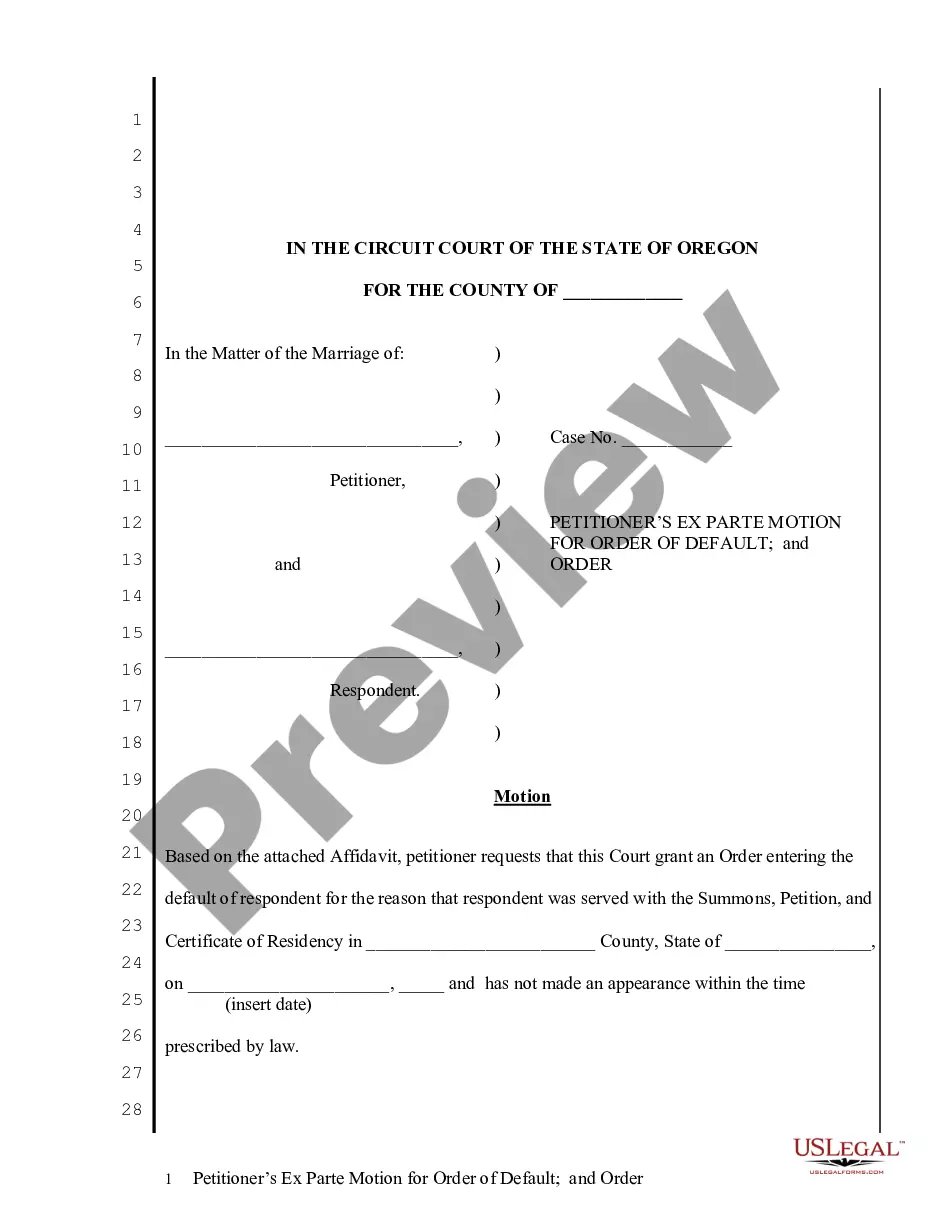
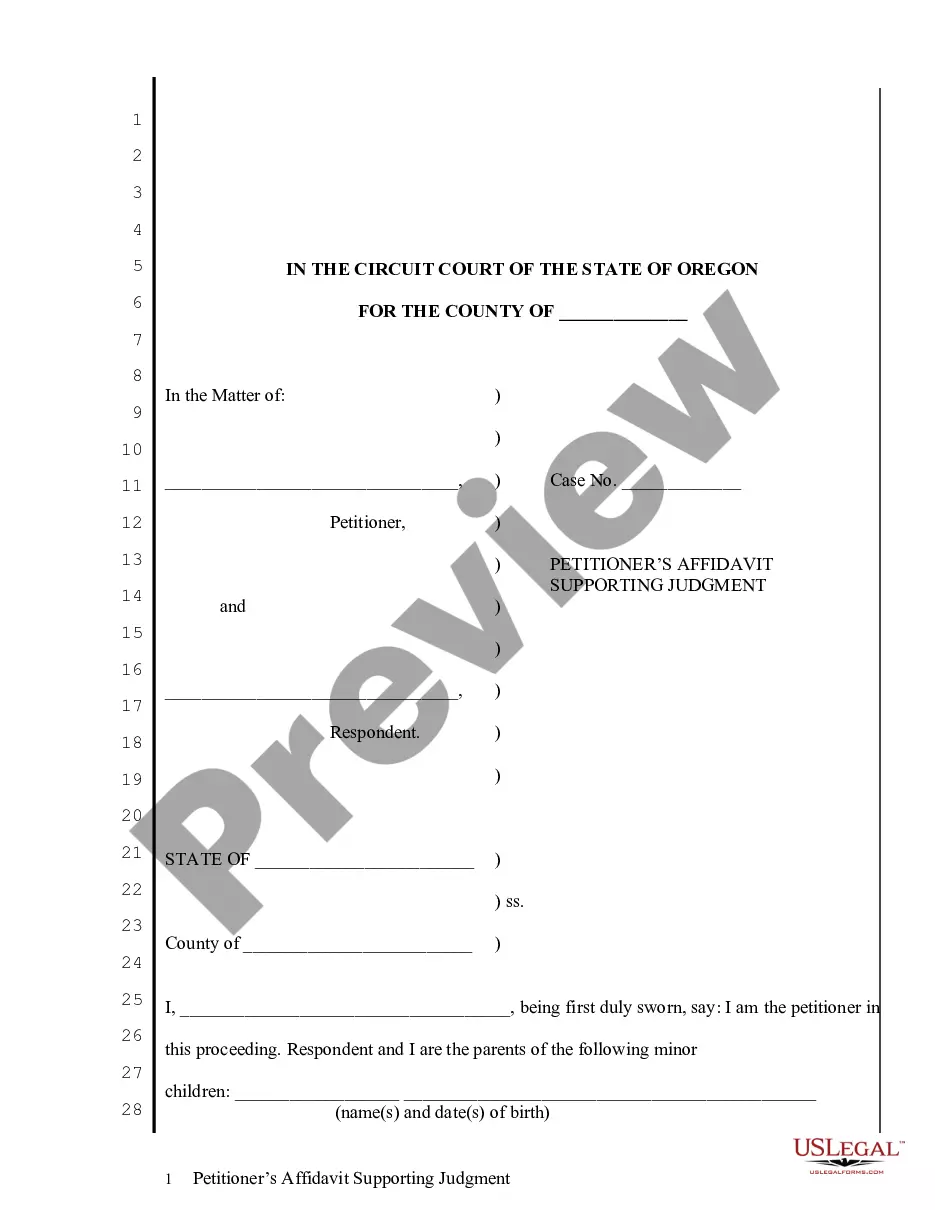
The Petitioner's Ex Parte Motion for Order of Default is a legal document used in domestic litigation in Oregon. This form allows a petitioner to request the court to enter a default against the respondent when they have been served but fail to respond within the legally prescribed time frame. It is essential for securing a judgment when the other party does not participate in the proceedings, differentiating it from other motions that may require more extensive interactions with the responding party.
What’s included in this form
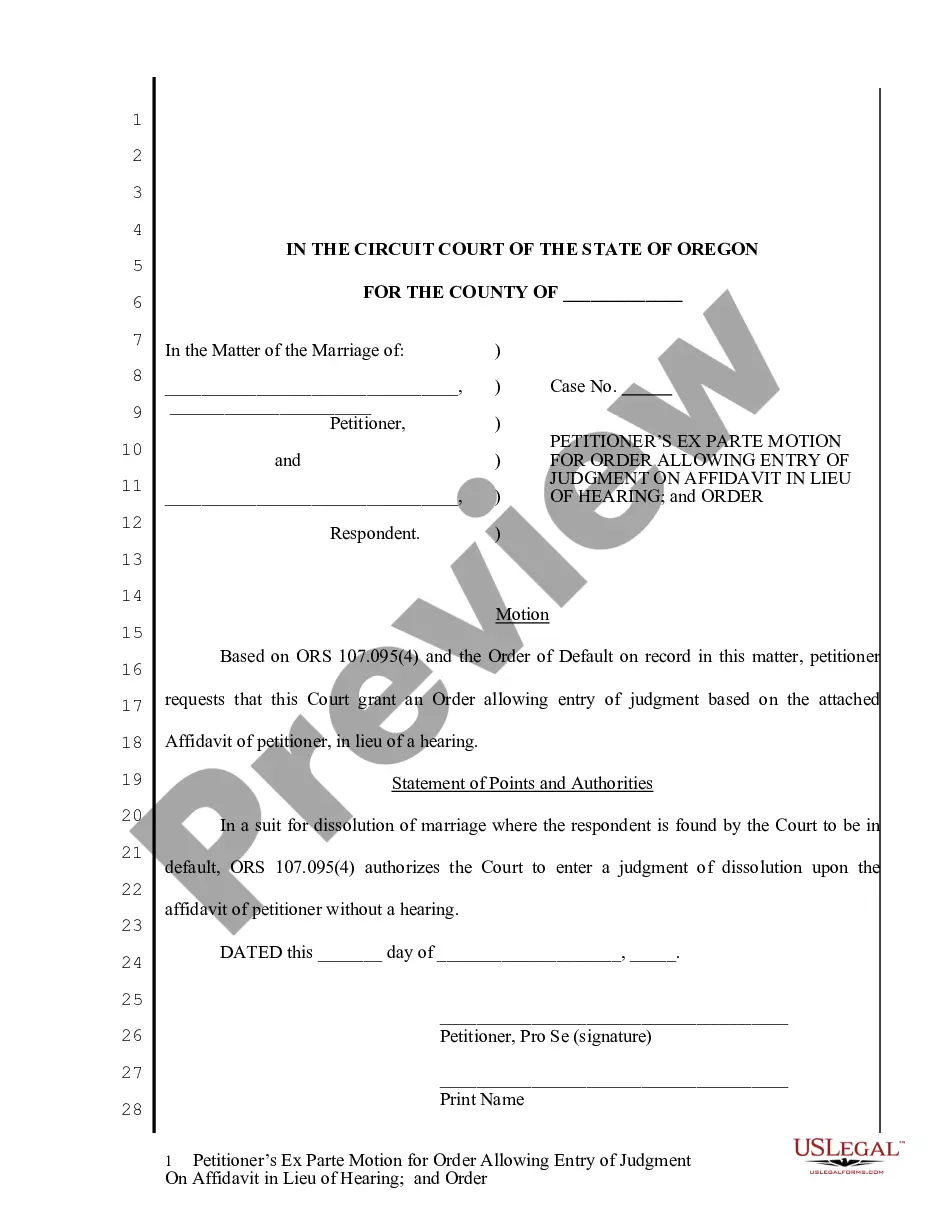
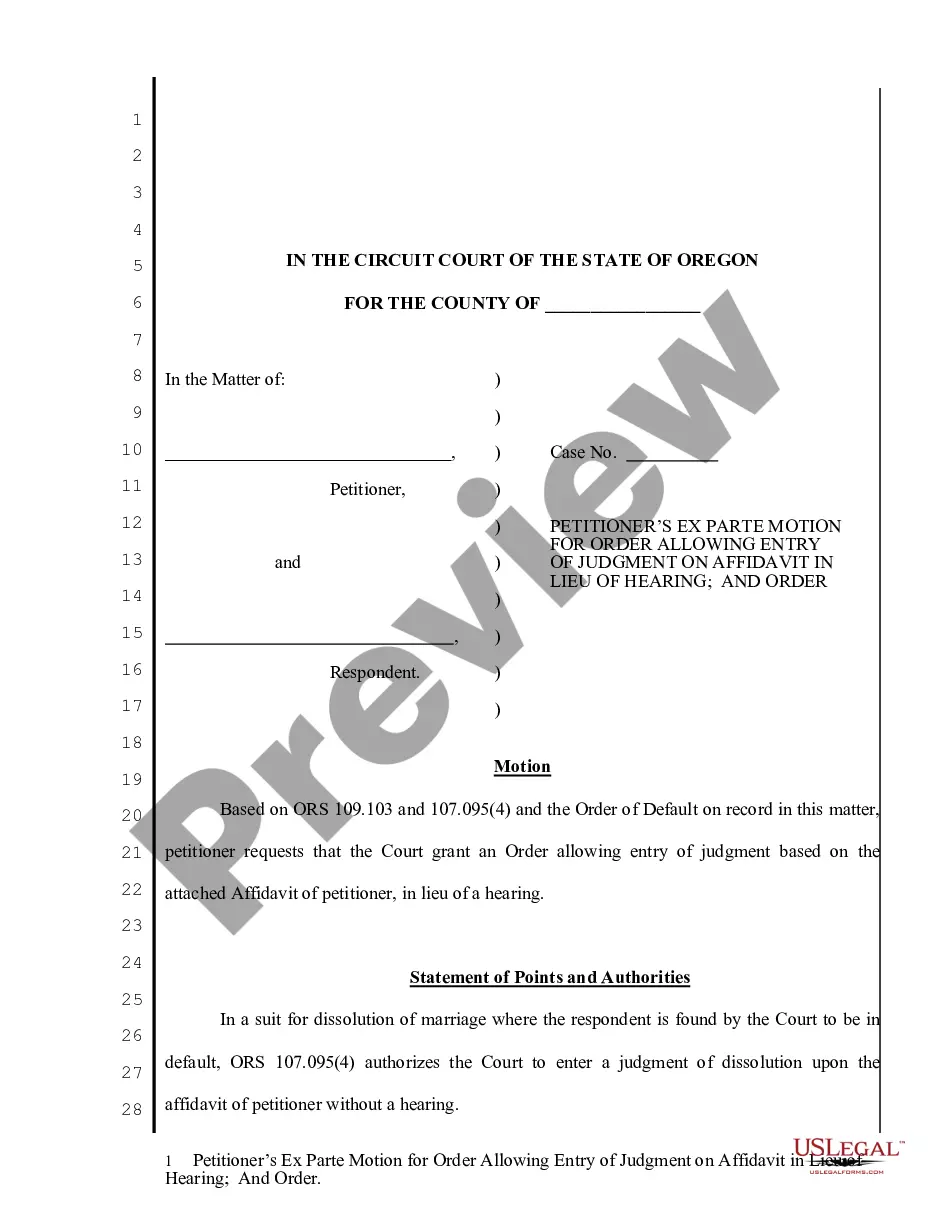
- Petitioner and Respondent information: Names and case number for both parties involved.
- Motion request: A section detailing the petitioner's request for the court to enter an order of default.
- Affidavit reference: A statement confirming that the respondent was served with the necessary documents.
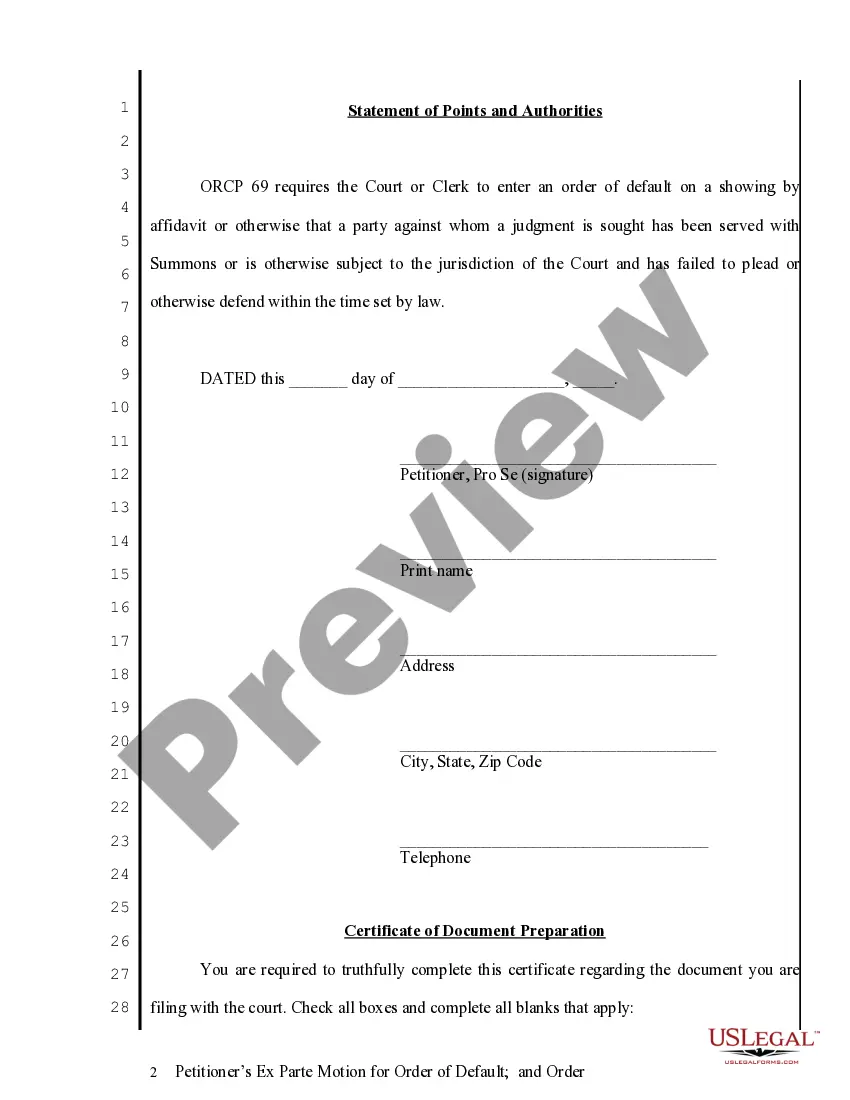
- Statement of Points and Authorities: Legal basis for the motion as per Oregon Rules of Civil Procedure.
- Signature fields: Areas for the petitioner to sign and provide contact information.
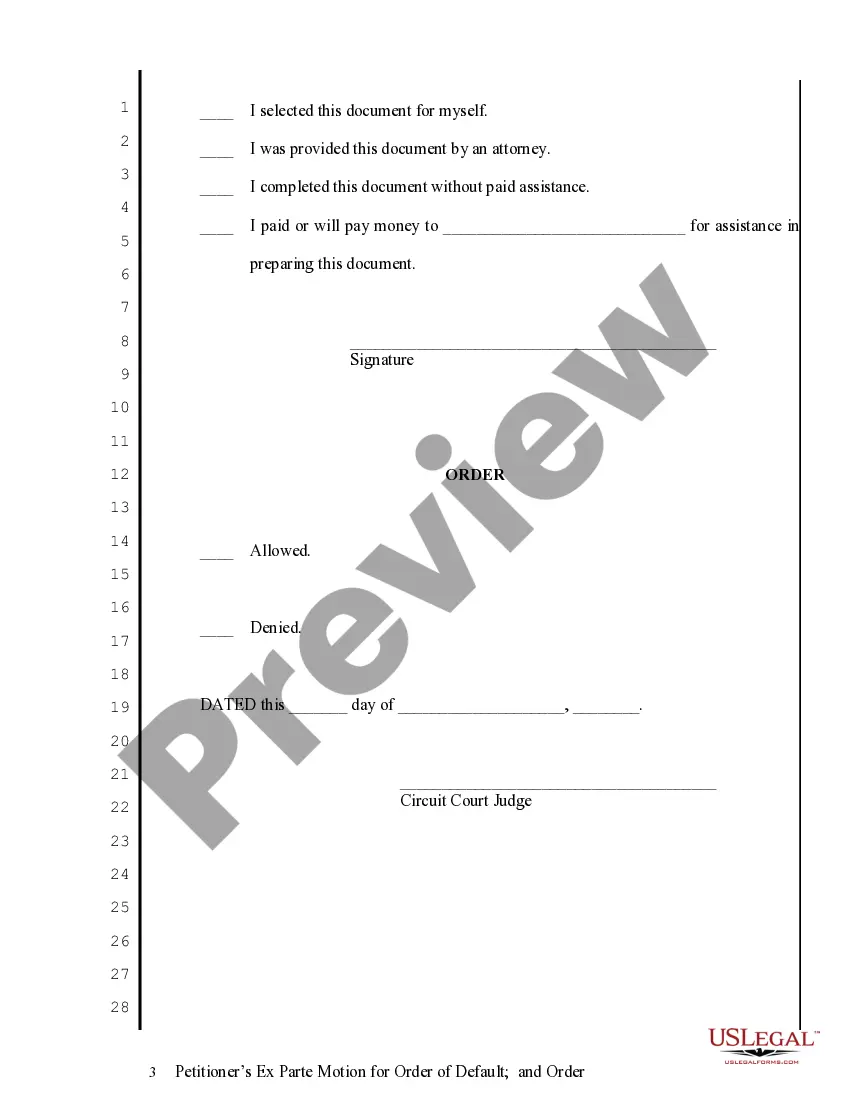
- Court order section: Space for the judge to indicate whether the motion is allowed or denied.
When to use this form
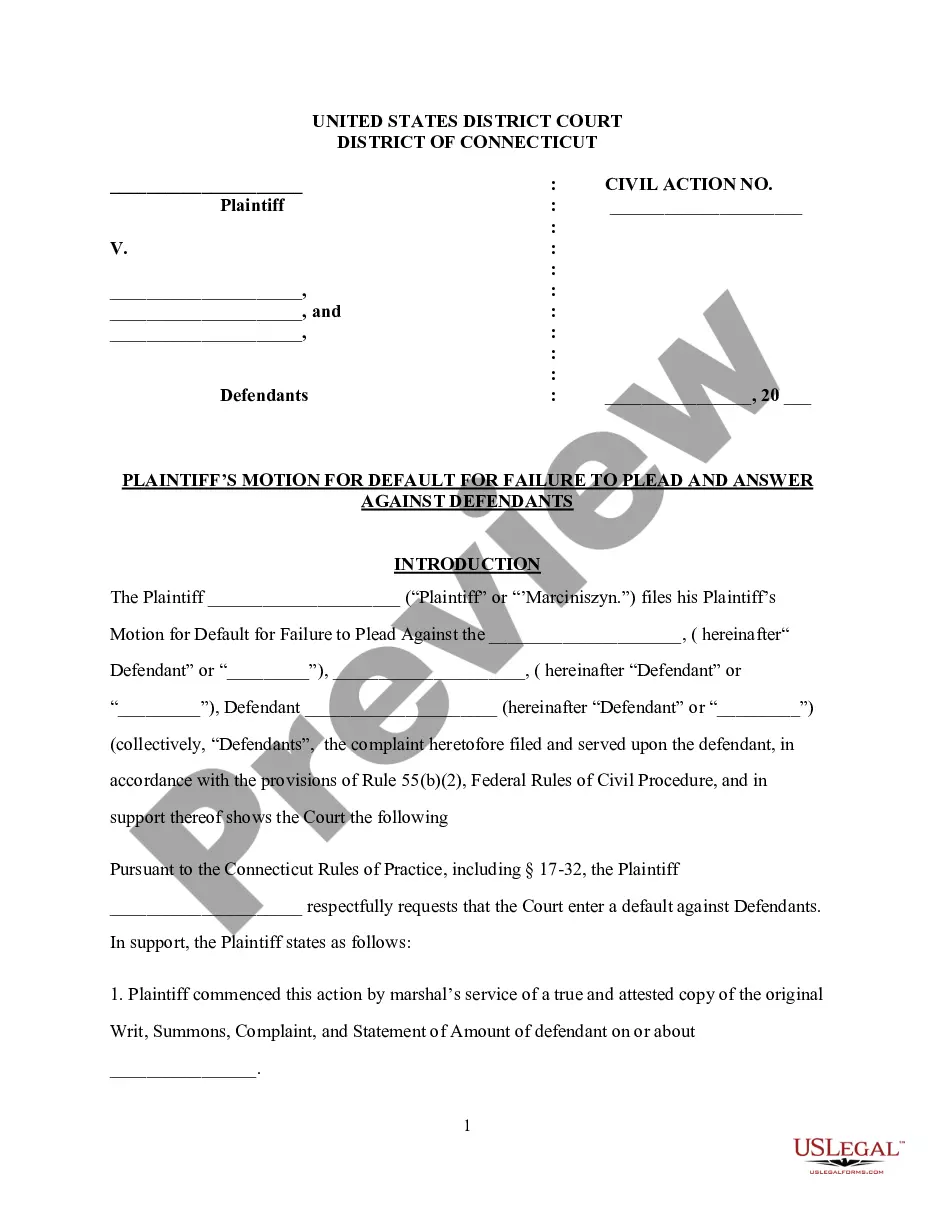
This form is used when the responding party in a domestic litigation case has been served but has not filed a response within the required timeline. By filing this ex parte motion, the petitioner seeks to move forward with the case and obtain a default judgment due to the respondent's inaction. Scenarios may include divorce proceedings, child custody disputes, or other family law matters where a resolution is needed despite one party's non-response.
Who this form is for
This form is intended for:
- Petitioners in domestic litigation cases in Oregon who have served the respondent with legal documents.
- Individuals representing themselves in their legal matters without an attorney (pro se litigants).
- Parties requiring a default judgment due to the lack of response from the other party.
Instructions for completing this form
- Identify the parties: Fill in the names of the petitioner and respondent and the case number.
- Complete the motion request: Detail the request for the court to enter an order of default.
- Attach the affidavit: Ensure the affidavit confirming service of the summons and petition is included.
- Enter the service date: Specify the date when the respondent was served with the necessary documents.
- Sign the document: Provide your signature and contact information in the designated fields.
Notarization guidance
Notarization is not commonly needed for this form. However, certain documents or local rules may make it necessary. Our notarization service, powered by Notarize, allows you to finalize it securely online anytime, day or night.
Get your form ready online
Our built-in tools help you complete, sign, share, and store your documents in one place.
Make edits, fill in missing information, and update formatting in US Legal Forms—just like you would in MS Word.
Download a copy, print it, send it by email, or mail it via USPS—whatever works best for your next step.
Sign and collect signatures with our SignNow integration. Send to multiple recipients, set reminders, and more. Go Premium to unlock E-Sign.
If this form requires notarization, complete it online through a secure video call—no need to meet a notary in person or wait for an appointment.
We protect your documents and personal data by following strict security and privacy standards.

Make edits, fill in missing information, and update formatting in US Legal Forms—just like you would in MS Word.

Download a copy, print it, send it by email, or mail it via USPS—whatever works best for your next step.

Sign and collect signatures with our SignNow integration. Send to multiple recipients, set reminders, and more. Go Premium to unlock E-Sign.

If this form requires notarization, complete it online through a secure video call—no need to meet a notary in person or wait for an appointment.

We protect your documents and personal data by following strict security and privacy standards.
Typical mistakes to avoid
- Failing to include the date of service for the respondent.
- Not signing the motion before submitting it to the court.
- Omitting the affidavit or failing to ensure it is properly completed.
- Providing incorrect case numbers or party names, which can delay the process.
Advantages of online completion
- Convenience: Access and download the form anytime, from anywhere.
- Editability: Customize the form directly to meet your specific needs before printing.
- Reliability: Ensure you are using the most current version of the form compliant with legal standards.
Looking for another form?


Form popularity
FAQ
After you notify the defendant of the judgment, you can begin to enforce the judgment. Your judgment might be for money, repossession, eviction, foreclosure, or any number of things. In any case, your rights at this point would be the same as if you had gone to trial and won.
What happens next? When you file your Motion and Affidavit to Set Aside Default, you will get a hearing date and time from the court clerk. At the hearing, the judge will grant or deny the motion. If the judge grants your motion, the default or default judgment will be set aside, and the case will move forward.
When a default is entered, the party who requested the entry of default must obtain a default judgment against the defaulting party within 45 days after the default was entered, unless the court has granted an extension of time.
A default judgment means that the court has decided that you owe money. This a result of the person suing you in small claims court and you failed to appear at the hearing.
A default judgment means that the court has decided that you owe money. This a result of the person suing you in small claims court and you failed to appear at the hearing.
A motion for default is made when a defendant fails to file a timely answer to a complaint/petition.If you were not served with the original petition/complaint, you can always file a petition to reopen the case.
A default judgment in a child custody case is a decision made by a judge in favor of one party due to the inaction of the opposing party. In a child custody battle, if a defendant fails to respond to the inquires of the court within enough time, a default judgment can be granted in favor of the plaintiff.