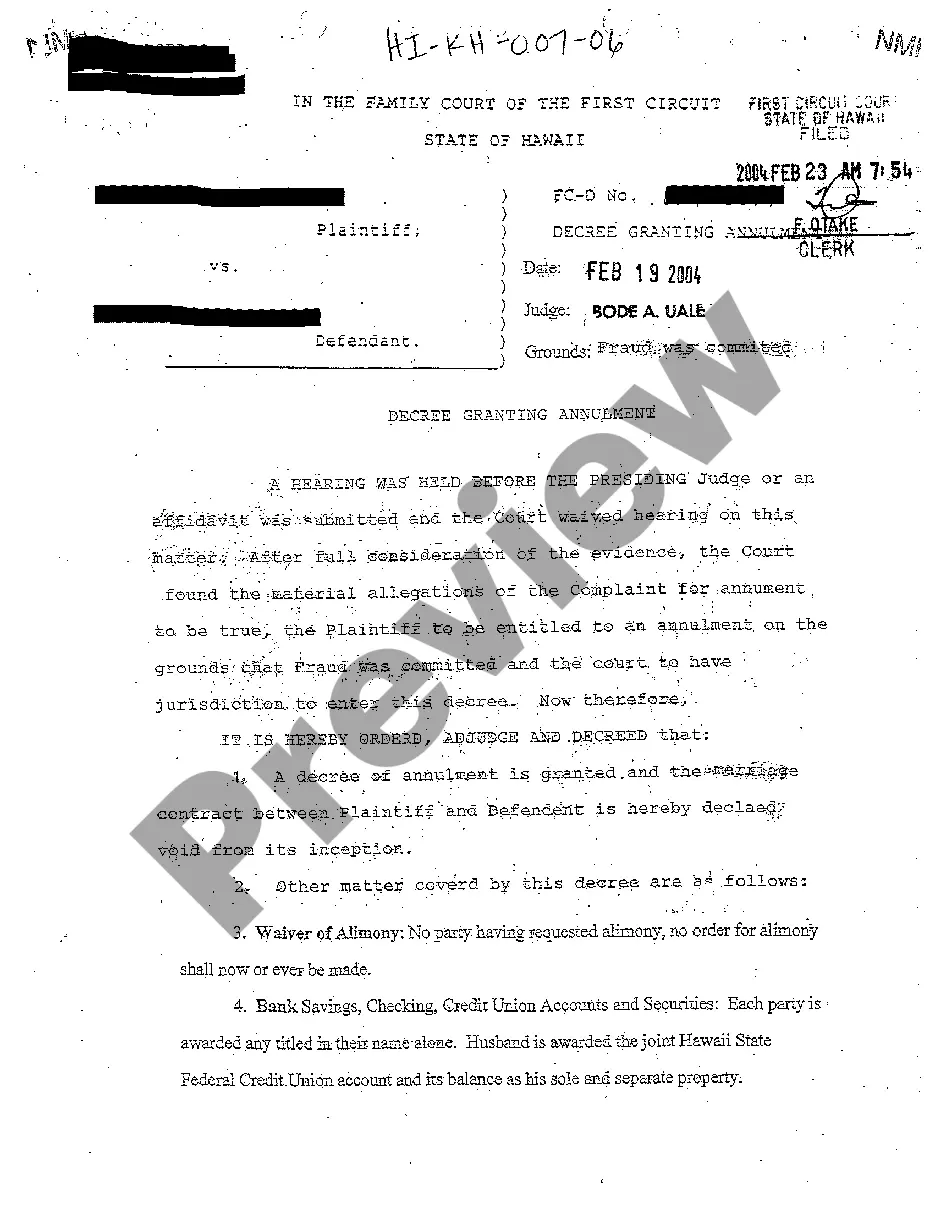
Oregon Petitioner's Ex Parte Motion for Order allowing Entry of Judgment on Affidavit in lieu of Hearing and Order
Understanding this form
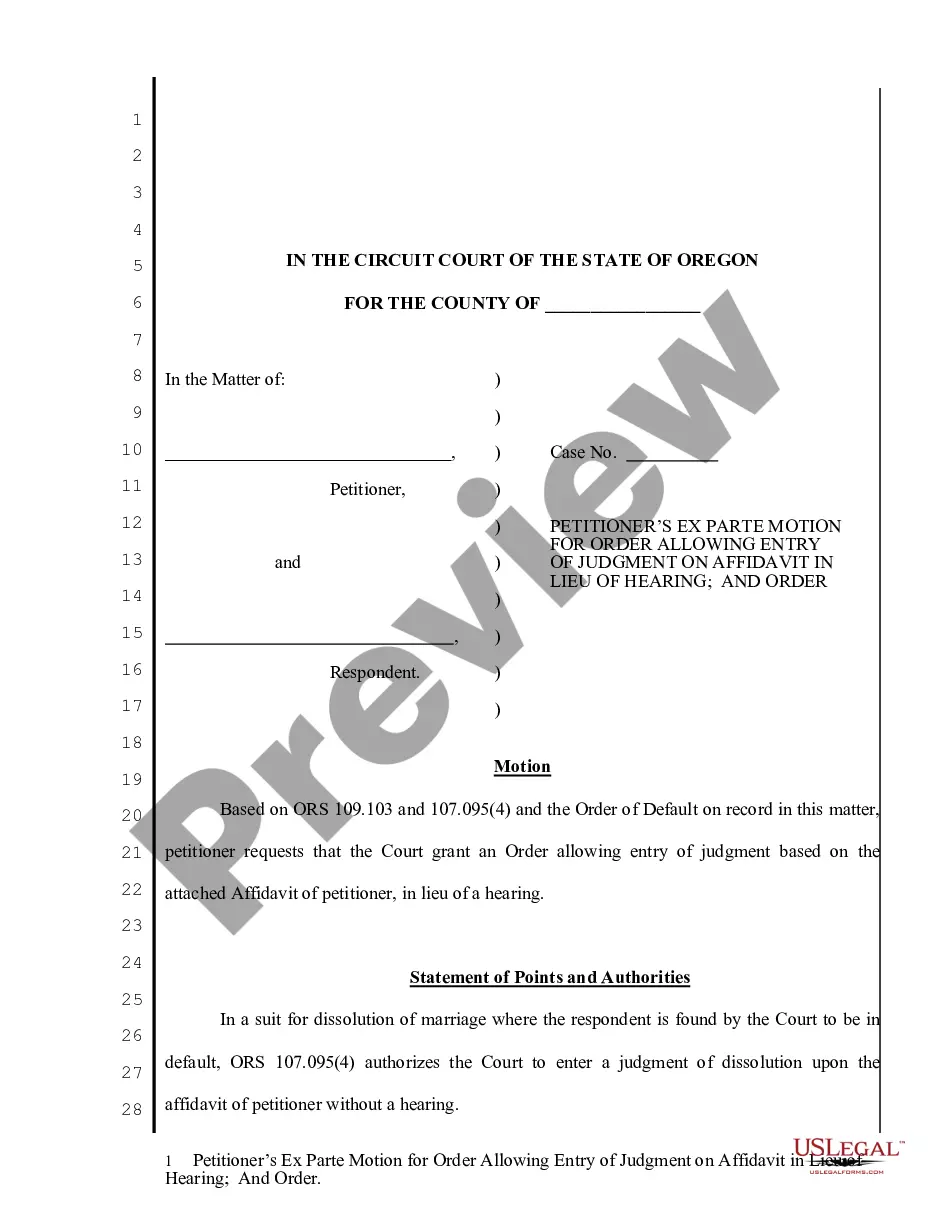
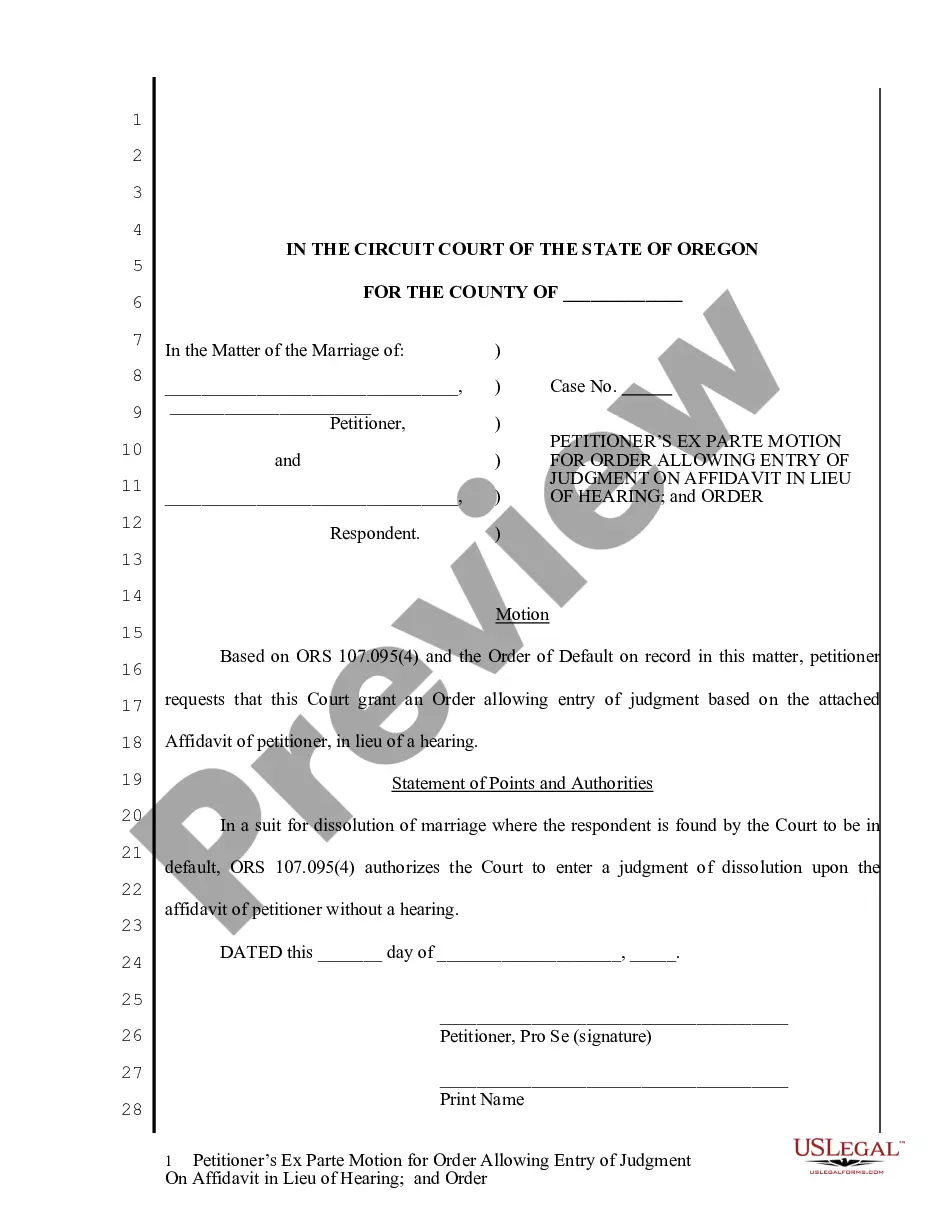
The Petitioner's Ex Parte Motion for Order Allowing Entry of Judgment on Affidavit in Lieu of Hearing is a legal document used in Oregon domestic litigation. This form allows a petitioner to request the court to enter a judgment based on an affidavit without a formal hearing. It is essential for situations where the respondent is found to be in default, streamlining the legal process for the petitioner. This form is particularly relevant when time constraints do not allow for a hearing, making it distinct from other motions that require court appearances.
Key components of this form
- Case caption: Identifies the court, case number, and parties involved.
- Motion section: States the request for the court to enter judgment based on the attached affidavit.
- Legal basis: References Oregon statutes (ORS 109.103 and 107.095(4)) that authorize this type of motion.
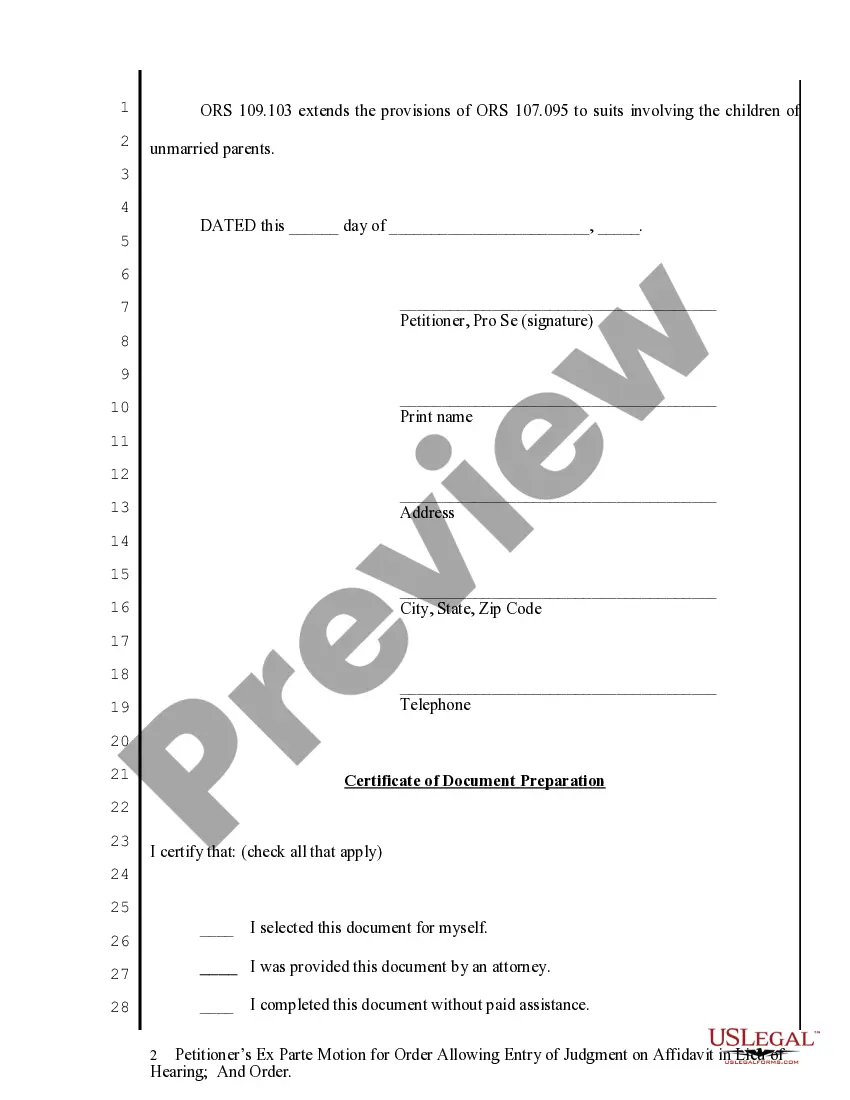
- Signature blocks: Includes areas for the petitioner's signature and contact information.
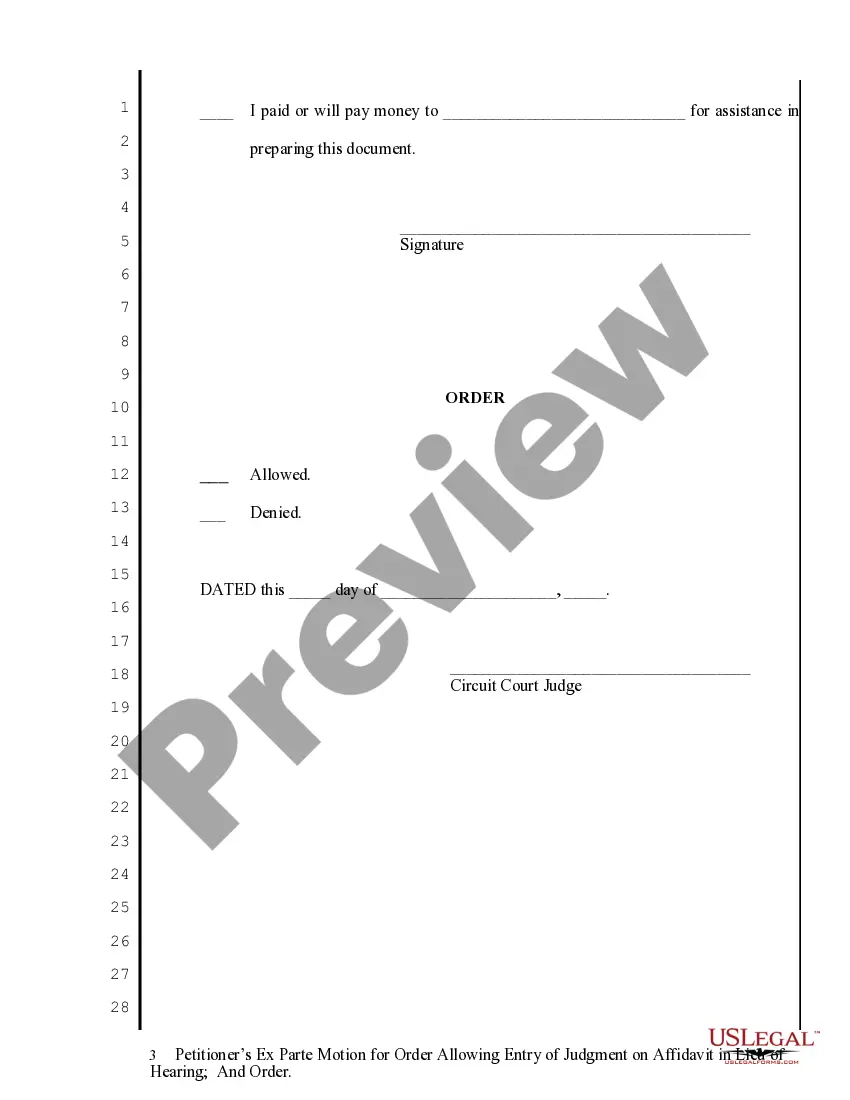
- Order section: Provides a space for the judge to approve or deny the motion.
When to use this document
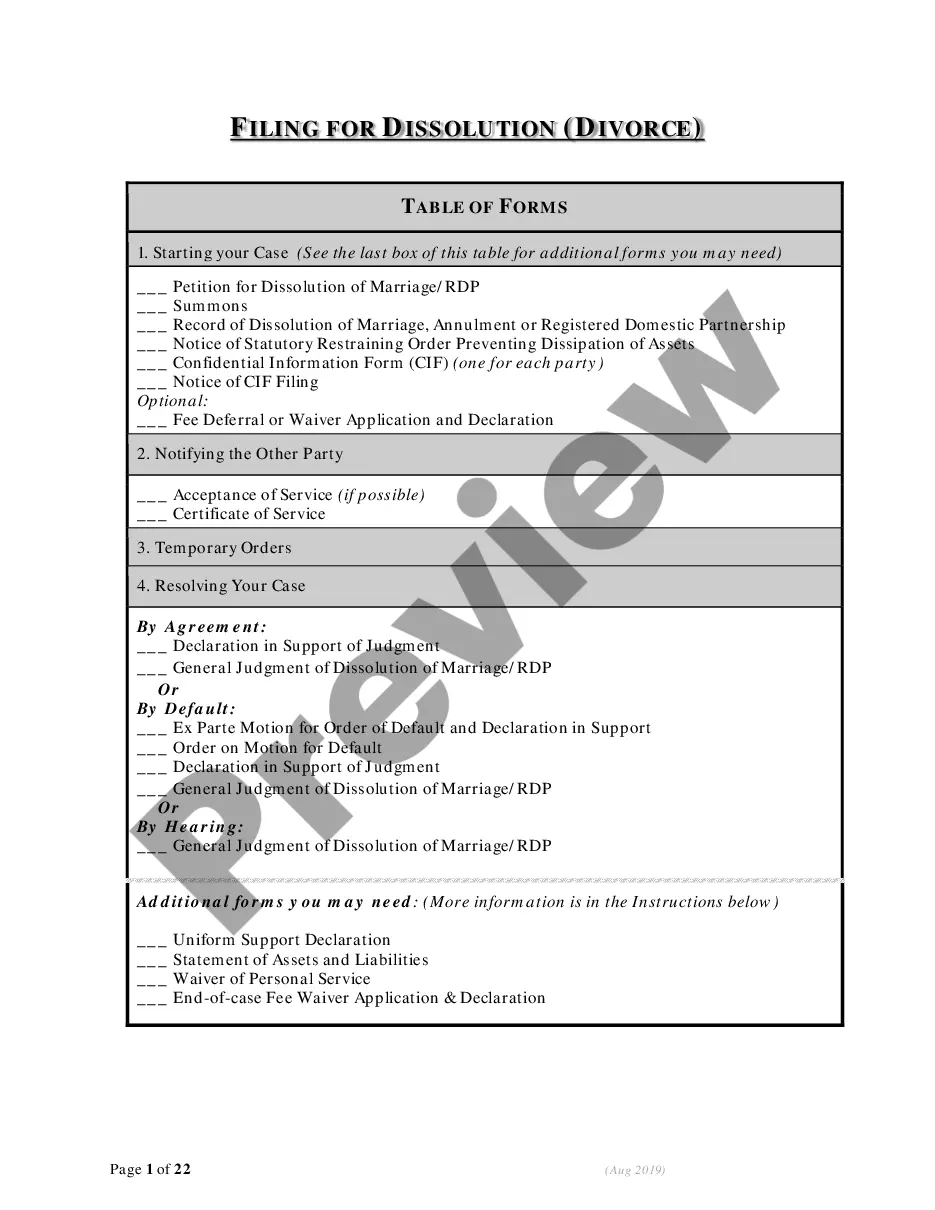
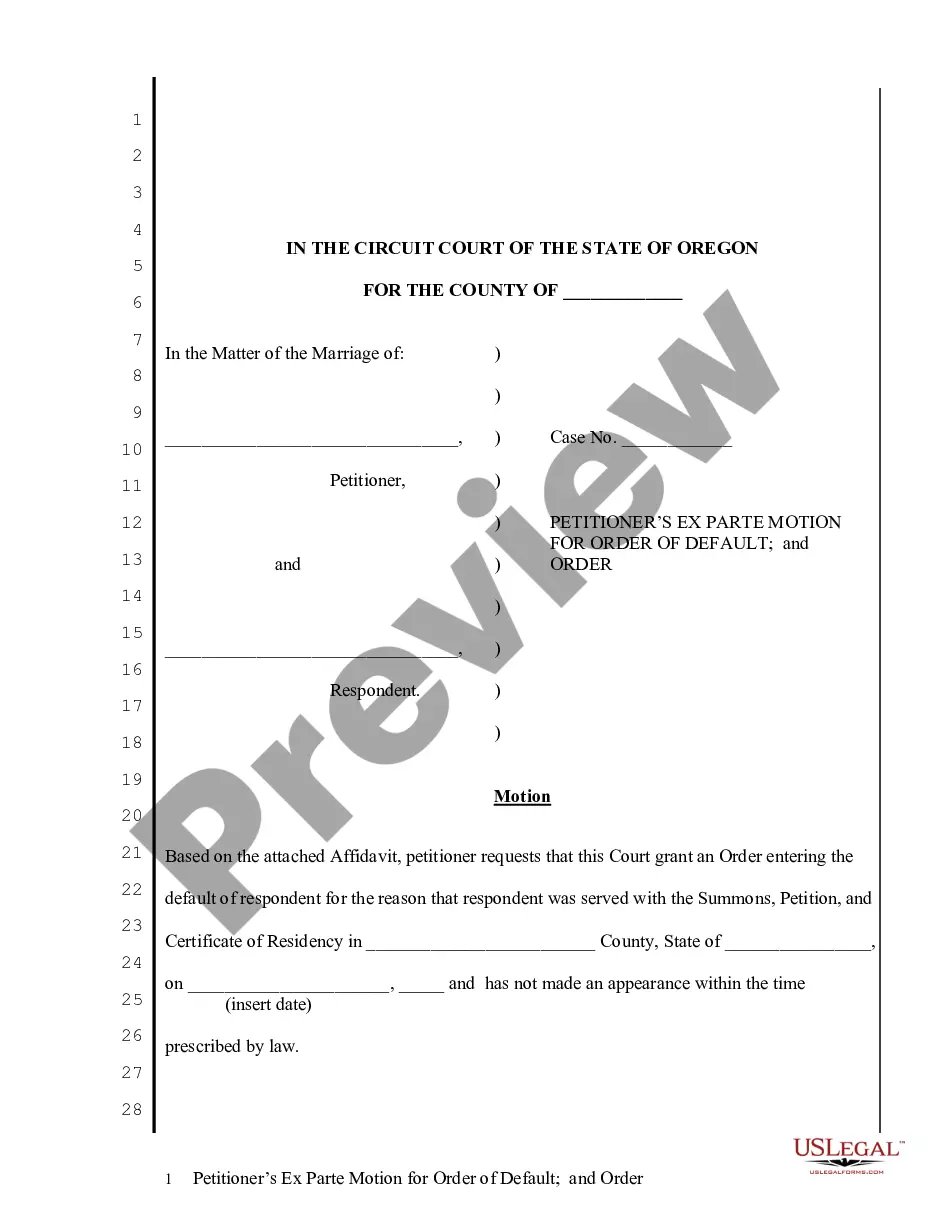
This form should be used in cases of domestic litigation where one party (the petitioner) seeks a judgment due to the other party (the respondent) being in default. Common scenarios include divorce cases where the respondent has not responded or participated. Utilizing this form can expedite the legal process when a hearing is not feasible or necessary due to the respondent's non-participation.
Who this form is for
This form is intended for:
- The petitioner in a domestic litigation case in Oregon.
- Individuals representing themselves in court without an attorney (Pro Se).
- Petitioners seeking a judgment due to a respondent's default.
Steps to complete this form
- Identify the parties involved by entering their names in the case caption.
- Fill in the case number assigned by the court.
- State your request clearly in the motion section, referencing the affidavit.
- Sign the form, ensuring to include your printed name and contact information.
- Submit the completed form to the court and await the judge's decision.
Does this form need to be notarized?
This form usually doesn’t need to be notarized. However, local laws or specific transactions may require it. Our online notarization service, powered by Notarize, lets you complete it remotely through a secure video session, available 24/7.
Get your form ready online
Our built-in tools help you complete, sign, share, and store your documents in one place.
Make edits, fill in missing information, and update formatting in US Legal Forms—just like you would in MS Word.
Download a copy, print it, send it by email, or mail it via USPS—whatever works best for your next step.
Sign and collect signatures with our SignNow integration. Send to multiple recipients, set reminders, and more. Go Premium to unlock E-Sign.
If this form requires notarization, complete it online through a secure video call—no need to meet a notary in person or wait for an appointment.
We protect your documents and personal data by following strict security and privacy standards.

Make edits, fill in missing information, and update formatting in US Legal Forms—just like you would in MS Word.

Download a copy, print it, send it by email, or mail it via USPS—whatever works best for your next step.

Sign and collect signatures with our SignNow integration. Send to multiple recipients, set reminders, and more. Go Premium to unlock E-Sign.

If this form requires notarization, complete it online through a secure video call—no need to meet a notary in person or wait for an appointment.

We protect your documents and personal data by following strict security and privacy standards.
Mistakes to watch out for
- Failing to complete the case caption correctly, which can delay processing.
- Not providing proper legal references in the motion section.
- Omitting required signatures or contact details, leading to incomplete forms.
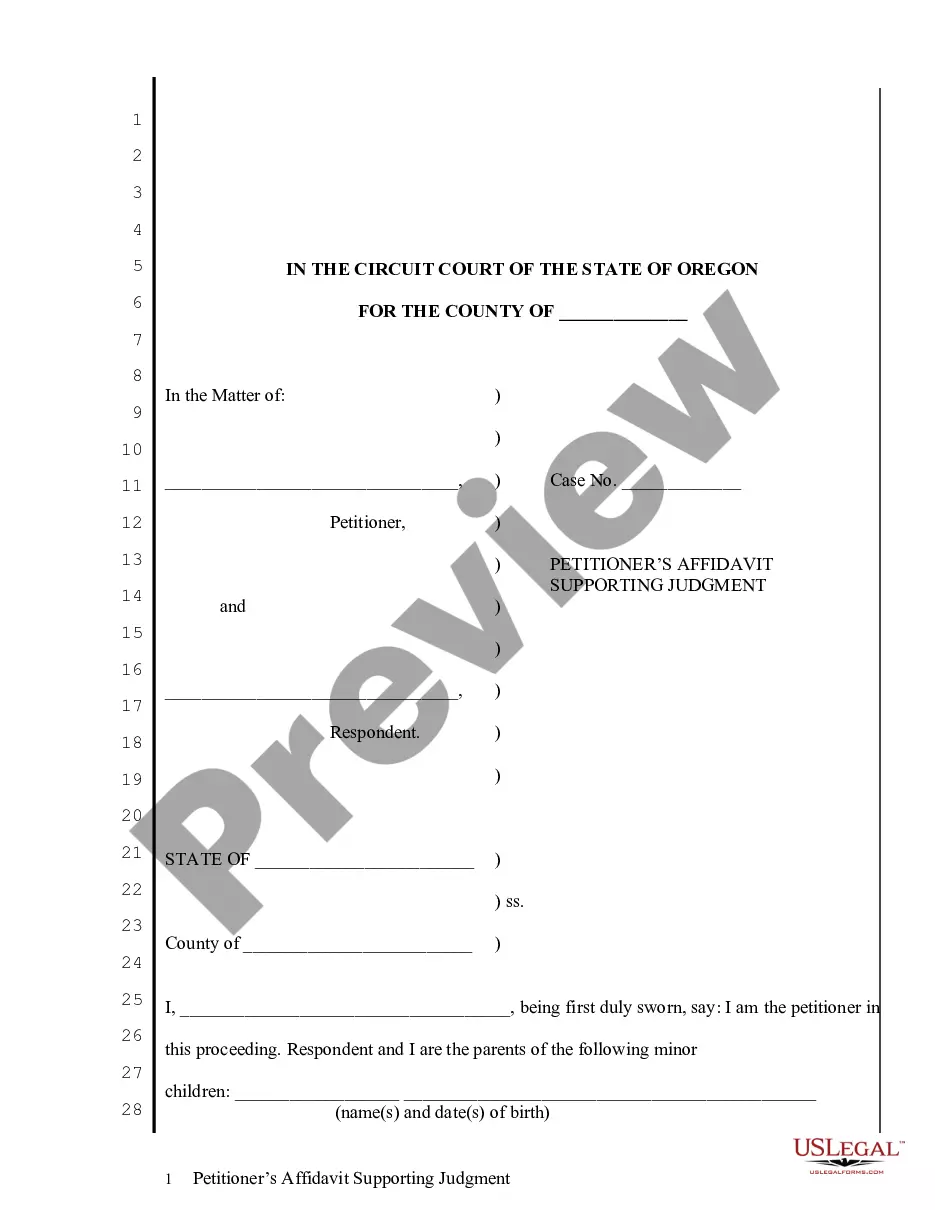
- Submitting the form without an attached affidavit when one is necessary.
- Not checking the entry for accuracy before submission.
Why complete this form online
- Convenience of downloading and completing the form at your own pace.
- Editable format allows for easy adjustments and updates.
- Access to clear instructions and guidance throughout the process.
- Reliable templates created by licensed attorneys to ensure legality and compliance.
Quick recap
- The form is essential for petitioners seeking a streamlined judgment process in domestic cases involving defaults.
- It simplifies legal proceedings by allowing judgments without a hearing when the other party does not respond.
- Proper completion of the form is crucial to avoid delays or rejections in court.
Looking for another form?


Form popularity
FAQ
Complaint. A lawsuit begins when a plaintiff (the party suing) files a complaint against a defendant (the party being sued.) Answer. The answer is the defendant's written response to the plaintiff's complaint. Counterclaim. Cross-claim. Amended Pleadings.
At a motion hearing, each party can argue its position and the judge can ask specific questions about the fact or law. After hearing the judge decides the motion and this is called an order. However, during a trial or a hearing, an oral motion may also be permitted.
The court generally hears oral argument on civil motions. Motion hearings are usually set for Tuesdays and Thursdays, at a.m. or p.m., and the court will send a notice of hearing with a specific date and time. Motions requiring protracted arguments may be set separately if requested by counsel in advance.
In civil trials, the side making the charge of wrongdoing is called the plaintiff. (The side charged with wrongdoing is called the defendant in both criminal and civil trials.)
During a civil case, most of your interactions with the judge will be the result of you or the other side filing a written motion. A motion is a written request to the judge that asks for a ruling on some issue in the case.
At or after the hearing, the judge will make a decision on the motion. The judge might write an order on the motion herself. Or she might direct one of the parties to prepare the order for her signature. An order is the written decision or judgment that grants or denies the motion.
A motion is an application to the court made by the prosecutor or defense attorney, requesting that the court make a decision on a certain issue before the trial begins. The motion can affect the trial, courtroom, defendants, evidence, or testimony. Only judges decide the outcome of motions.
Motion to dismiss. Discovery motions. Motion to compel. Motion to strike. Motion for summary judgment. Motion for a directed verdict. Motion for nolle prosequi. Motion in Limine.
This formal writing breaks down into two categories: pleadings and motions. A pleading demands that the other party do something, while a motion requests that the judge in the case do something.Pleadings set forth parties' positions in the action, such as allegations, claims, defenses and denials.
Motion to dismiss. Discovery motions. Motion to compel. Motion to strike. Motion for summary judgment. Motion for a directed verdict. Motion for nolle prosequi. Motion in Limine.