Assignment of Contract with Consent to Assignment
What this document covers
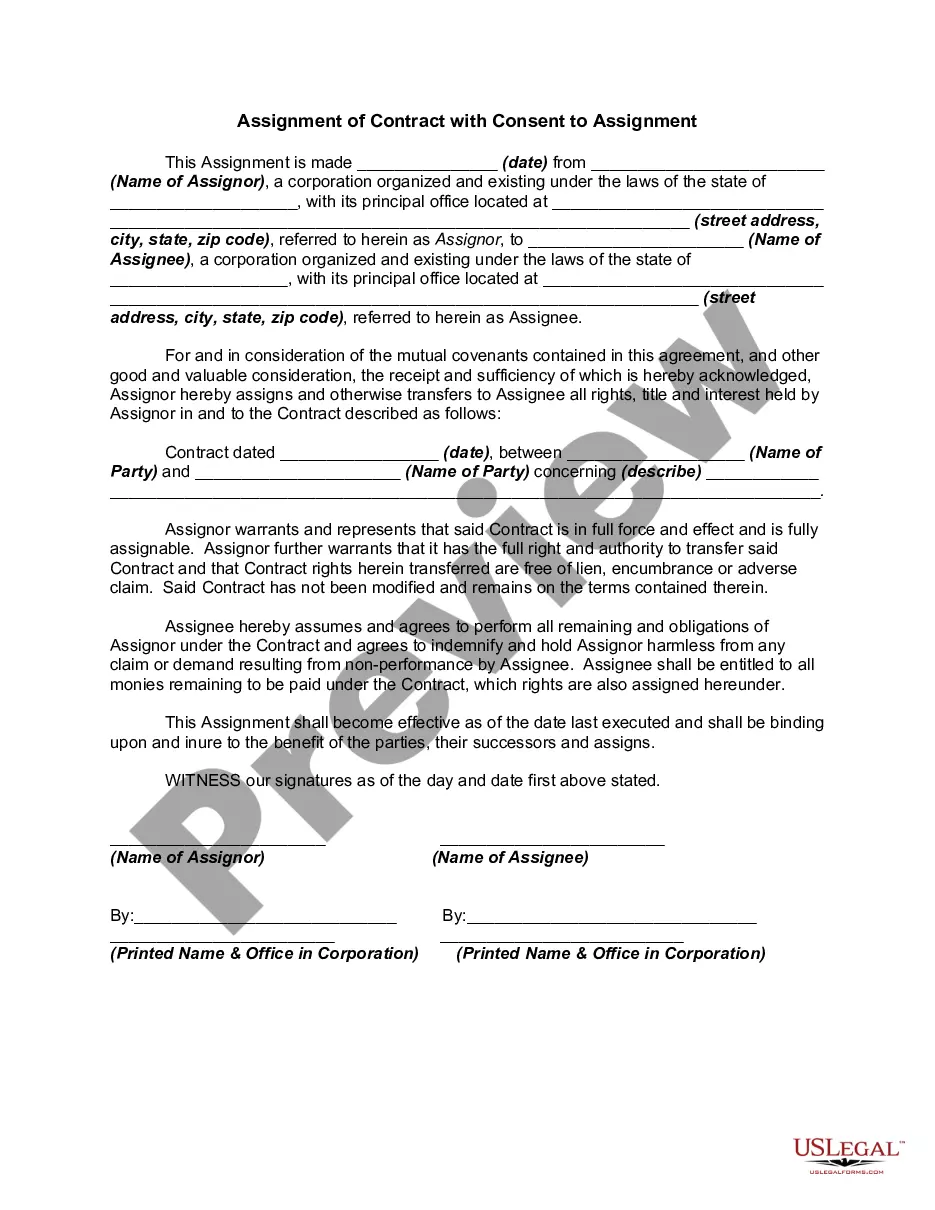
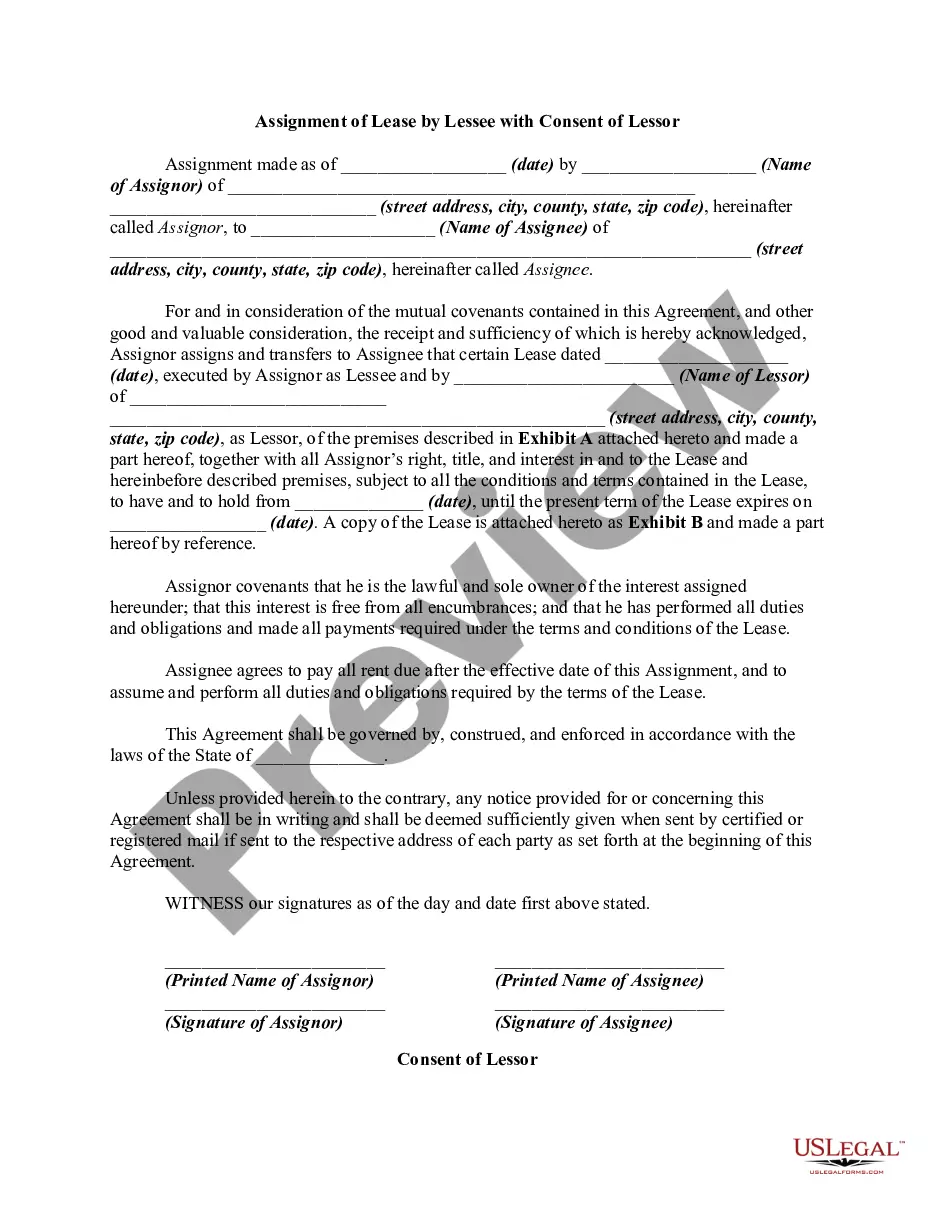
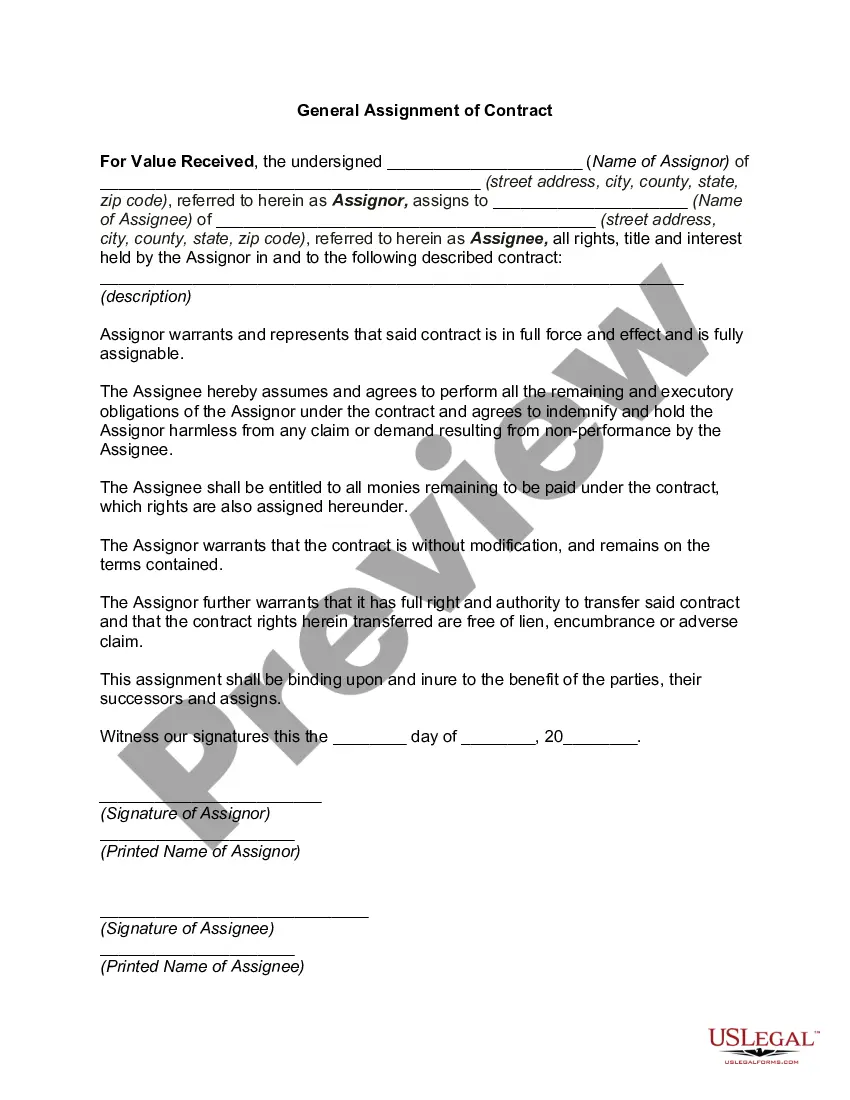
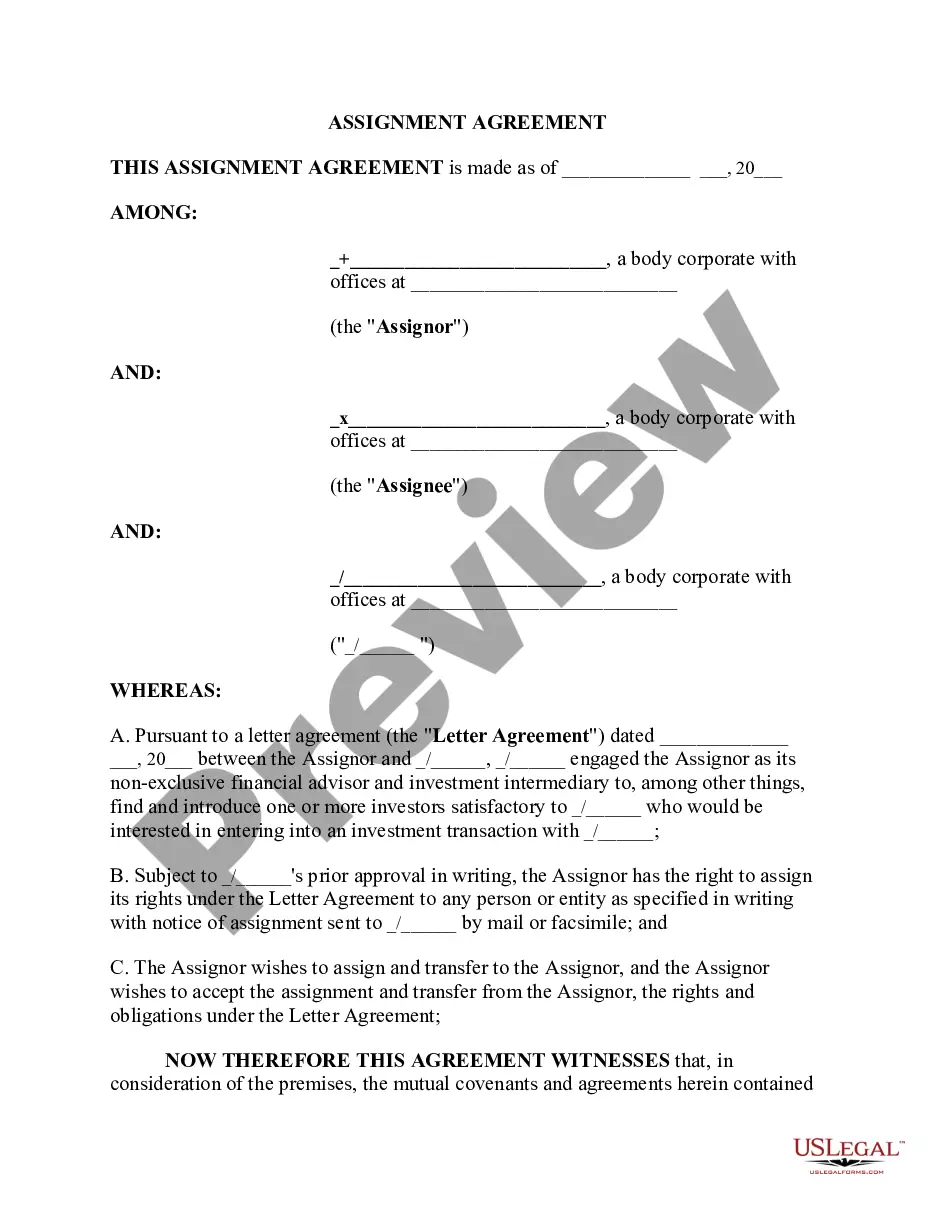
The Assignment of Contract with Consent to Assignment is a legal document that facilitates the transfer of contractual rights and obligations from one party, known as the Assignor, to another, known as the Assignee. Unlike a grant, which usually involves the transfer of tangible property, this assignment focuses on the intangible rights associated with a contract. This form is essential for ensuring that contractual agreements are honored even when the parties involved change throughout the duration of a contract.
Key components of this form
- Date of assignment
- Name and details of the Assignor and Assignee
- Description of the original contract being assigned
- Warranties by the Assignor regarding the assignability of the contract
- Assumption of obligations by the Assignee
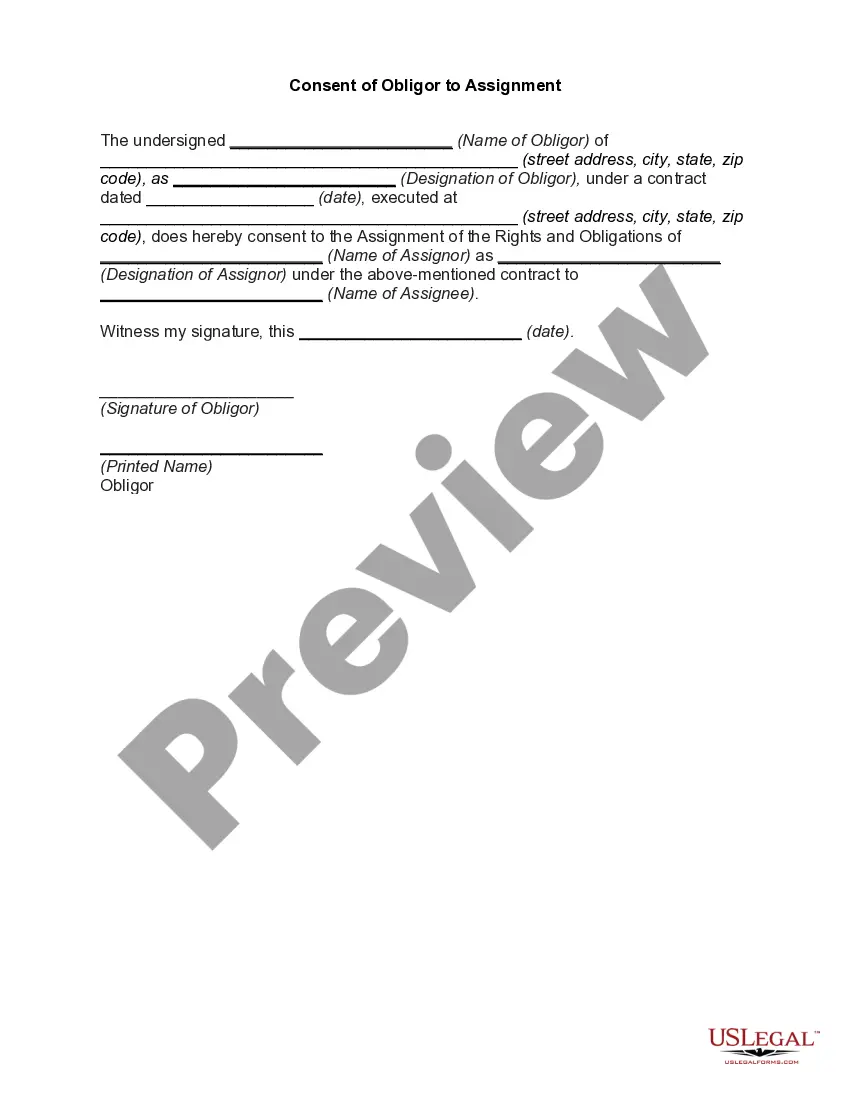
- Consent of any involved third party, if applicable

Situations where this form applies
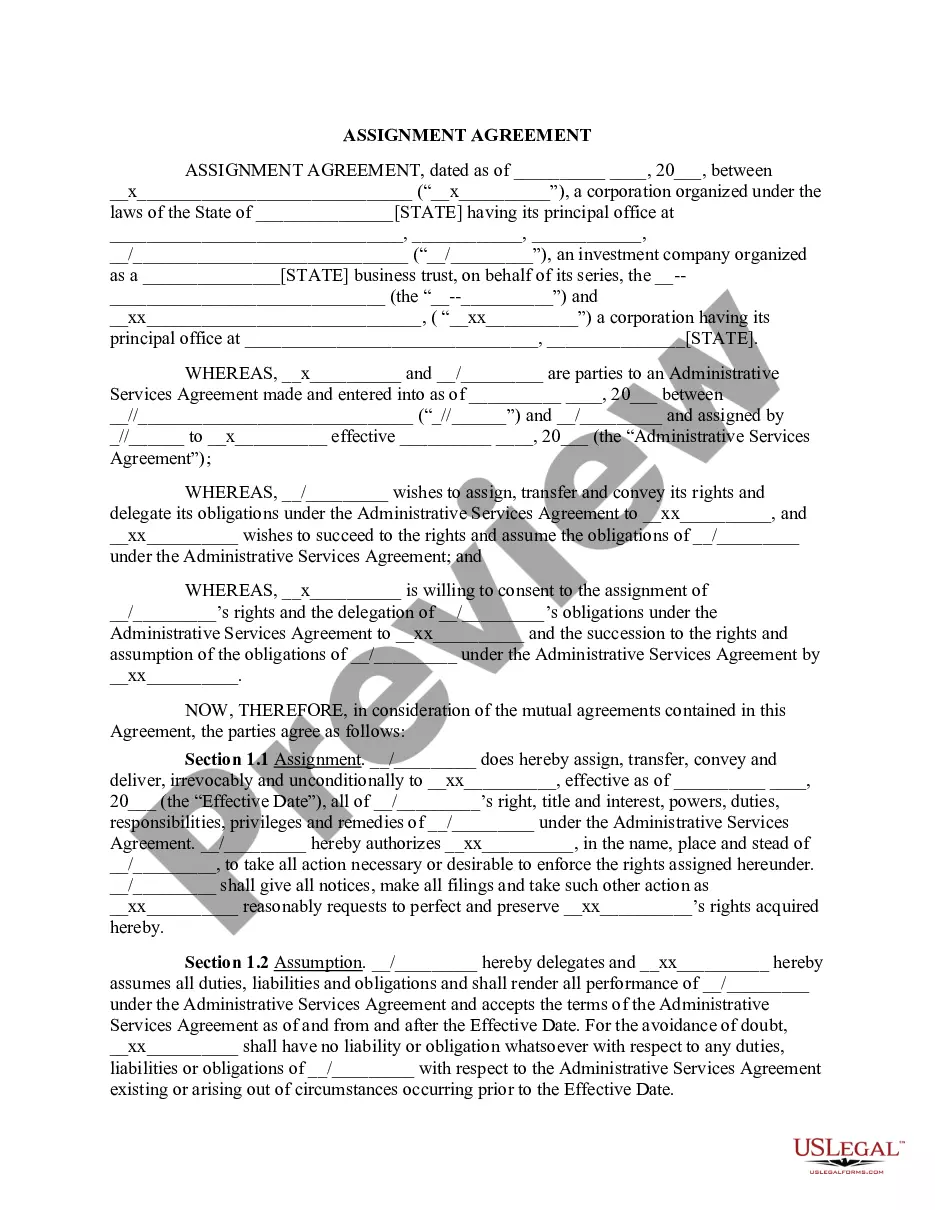
This form is useful when a party wishes to transfer its rights and responsibilities under a contract to another entity. Common scenarios include business partnerships where one partner exits, sales of contracts in commercial real estate, or financial agreements involving the transfer of payment rights. It helps in maintaining the continuity and enforceability of contractual obligations when circumstances change.
Who should use this form
- Businesses seeking to assign contracts to another party.
- Individuals needing to transfer their rights under a personal agreement.
- Any party involved in contractual agreements that may require reassignment.
- Consent parties who must acknowledge the assignment of rights.
How to prepare this document
- Identify the date of the assignment and correctly enter it at the top of the form.
- Fill in the names of the Assignor and Assignee, including their company details.
- Describe the original contract being assigned, including its date and parties involved.
- Ensure that the Assignor confirms their right to assign the contract and that it is free of encumbrances.
- Have the Assignee agree to assume responsibilities under the contract.
- Obtain necessary signatures from all parties involved, including any third-party consents.
Notarization requirements for this form
This form does not typically require notarization to be legally valid. However, some jurisdictions or document types may still require it. US Legal Forms provides secure online notarization powered by Notarize, available 24/7 for added convenience.
Get your form ready online
Our built-in tools help you complete, sign, share, and store your documents in one place.
Make edits, fill in missing information, and update formatting in US Legal Forms—just like you would in MS Word.
Download a copy, print it, send it by email, or mail it via USPS—whatever works best for your next step.
Sign and collect signatures with our SignNow integration. Send to multiple recipients, set reminders, and more. Go Premium to unlock E-Sign.
If this form requires notarization, complete it online through a secure video call—no need to meet a notary in person or wait for an appointment.
We protect your documents and personal data by following strict security and privacy standards.

Make edits, fill in missing information, and update formatting in US Legal Forms—just like you would in MS Word.

Download a copy, print it, send it by email, or mail it via USPS—whatever works best for your next step.

Sign and collect signatures with our SignNow integration. Send to multiple recipients, set reminders, and more. Go Premium to unlock E-Sign.

If this form requires notarization, complete it online through a secure video call—no need to meet a notary in person or wait for an appointment.

We protect your documents and personal data by following strict security and privacy standards.
Avoid these common issues
- Failing to include the correct date of the assignment.
- Not providing a clear description of the contract being assigned.
- Omitting signatures from all required parties.
- Not verifying that the original contract allows for assignment.
- Forgetting to obtain third-party consent if required.
Benefits of using this form online
- Convenient access to legal templates without the need for in-person meetings.
- Edit the form easily to fit specific needs and circumstances.
- Reliable and professionally drafted forms to ensure legal compliance.
Main things to remember
- The Assignment of Contract with Consent to Assignment facilitates the legal transfer of contract rights.
- It is essential for both the Assignor and Assignee to understand their rights and obligations.
- Completion and proper execution of the form are vital to ensure validity.
Looking for another form?

Form popularity
FAQ
An assignment of contract occurs when one party to an existing contract (the "assignor") hands off the contract's obligations and benefits to another party (the "assignee"). Ideally, the assignor wants the assignee to step into his shoes and assume all of his contractual obligations and rights.
What Is a Non-Assignment Provision and Why Do You Need It? Generally speaking, contracts can be freely assigned to third parties. Non-assignment provisions are designed so that contracts cannot be as freely assigned to third parties; or at least, not without first obtaining the contracting counterparty's consent.
The contract doesn't allow assignment Some contracts come with an anti-assignment clause which prohibits any assignments. The assignment violates public policy or the law Some jurisdictions have laws that prohibit or limit assignments.
In order for an assignment to be a legal assignment, the assignment must be agreed in writing, signed by the assignor, and the other party to the contract must be given notice of the assignment.Contracts often require the consent of the other party before any assignment can take place.
Primary tabs. Assignment is a legal term whereby an individual, the assignor, transfers rights, property, or other benefits to another known as the assignee. This concept is used in both contract and property law. The term can refer to either the act of transfer or the rights/property/benefits being transferred.
In both instances, assignment is the process whereby a person, the assignor, transfers rights or benefits to another, the assignee.While novation requires the consent of all parties, assignment needs no consent from other non-assigning parties.
In your Assignment Agreement, you should include information like: the name of the person handing over contractual duties (called "the assignor"); the recipient of the contractual rights and obligations (called "the assignee"); the other party to the original contract (called "the obligor"); the name of the contract
Consent to assignment refers to allowing a party of a contract (the assignor) to assign a contract and move the obligations to another party (the assignee).
Generally speaking, contracts can be freely assigned to third parties.This contract cannot be assigned to anyone without the written consent of both parties.