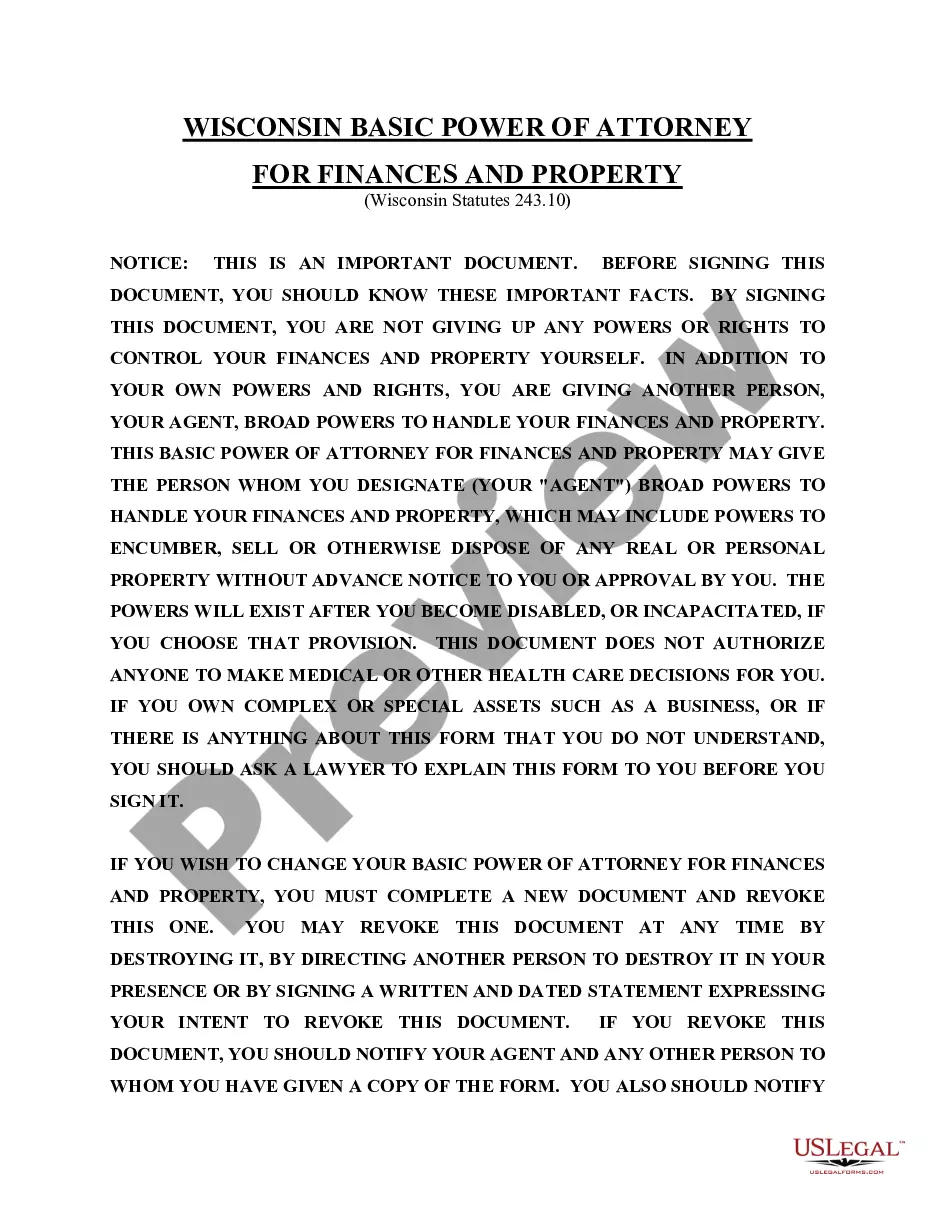
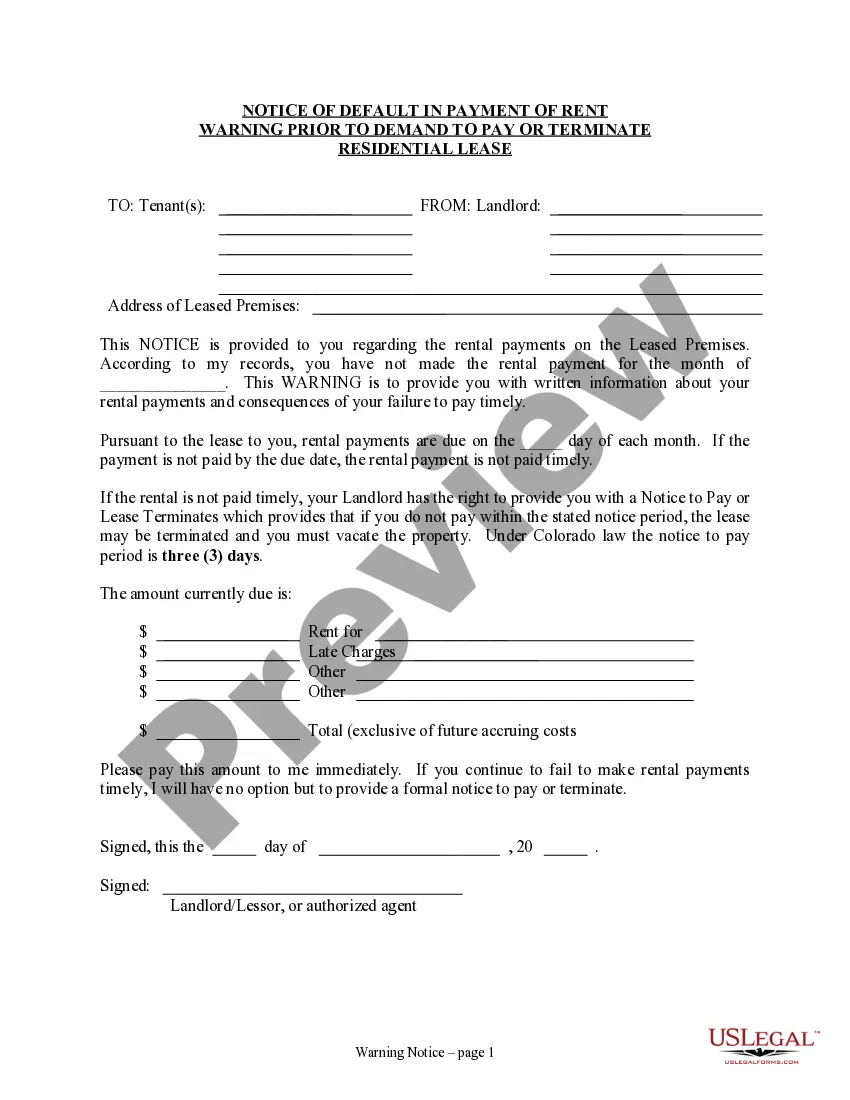
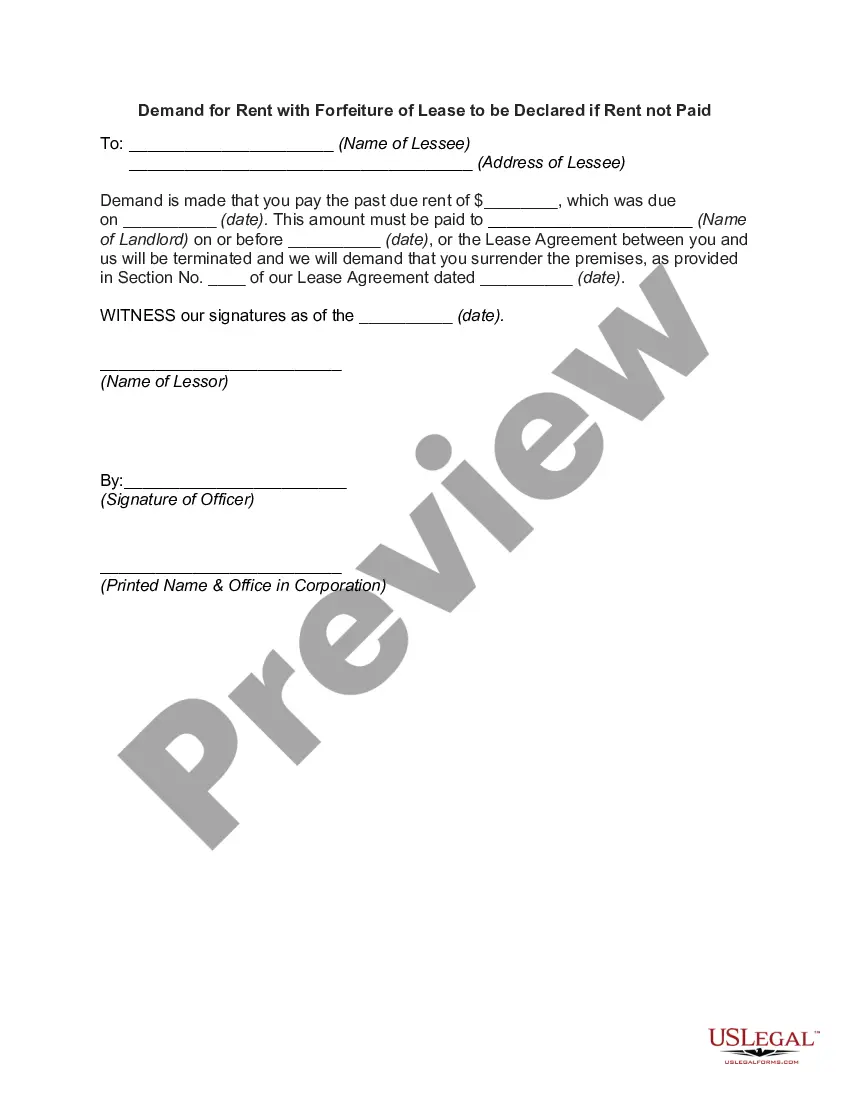
This Notice of Default in Payment of Rent as Warning Prior to Demand to Pay or Terminate for Non-Residential or Commercial Property form is for use by a Landlord to inform Tenant of Tenant's default in the payment of rent as a warning prior to a pay or terminate notice. The form advises the Tenant of the due date of rent and the consequences of late payment. This form may be used where you desire to remind the Tenant of payment terms, the default, demand payment and inform the Tenant that under the laws of this state or lease the Landlord may terminate in rent is not paid timely.
Colorado Notice of Default in Payment of Rent as Warning Prior to Demand to Pay or Terminate for Residential Property
State:
Colorado
Control #:
CO-1300LT
Format:
Word;
Rich Text
Instant download
Description
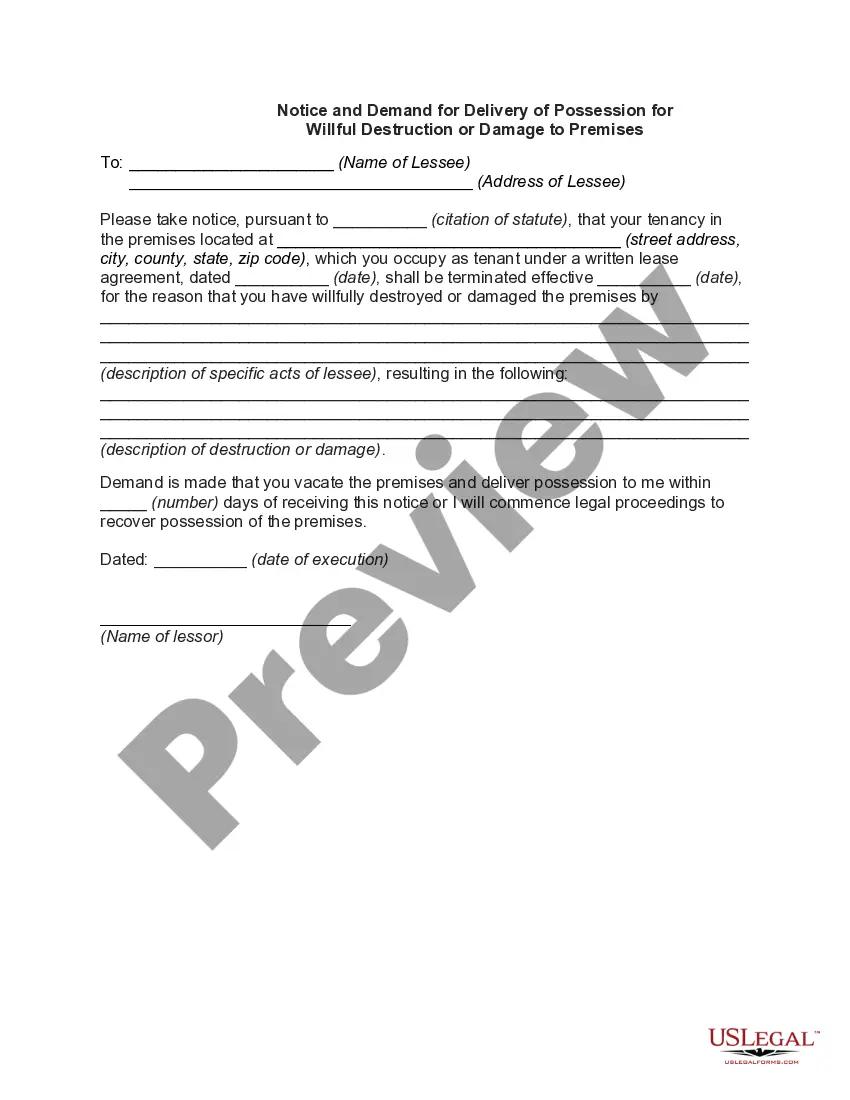







How to fill out Colorado Notice Of Default In Payment Of Rent As Warning Prior To Demand To Pay Or Terminate For Residential Property?
If you're looking for appropriate Colorado Notice of Default in Payment of Rent as Warning Prior to Demand to Pay or Terminate for Residential Property samples, US Legal Forms is what you require; discover documents crafted and reviewed by state-certified attorneys.
Using US Legal Forms not only alleviates your concerns regarding legal documentation; it also saves you time, effort, and money! Downloading, printing, and completing a competent document is far more cost-effective than hiring a lawyer to handle it for you.
And that’s all. In just a few straightforward clicks, you will have an editable Colorado Notice of Default in Payment of Rent as Warning Prior to Demand to Pay or Terminate for Residential Property. Once you establish your account, all future requests will be handled even more easily. When you possess a US Legal Forms subscription, simply Log In to your account and click the Download button visible on the form’s page. Subsequently, when you need to use this form again, you will always find it in the My documents section. Don’t waste your time comparing several forms on different sites. Purchase professional copies from a single reliable source!
- To get started, complete your registration process by providing your email address and creating a secure password.
- Follow the instructions below to establish your account and locate the Colorado Notice of Default in Payment of Rent as Warning Prior to Demand to Pay or Terminate for Residential Property template to address your needs.
- Utilize the Preview feature or check the file description (if accessible) to confirm that the template suits your requirements.
- Verify its legality in your residing state.
- Click on Buy Now to place your order.
- Select a preferred pricing plan.
- Create your account and pay with your credit card or PayPal.
- Choose a convenient format and download the document.
Form popularity
FAQ
The duration for backing out of a lease in Colorado generally depends on the lease terms. Typically, you may need written consent from the landlord or follow specific cancellation terms listed in the lease. To navigate this process effectively, checking legal forms at uslegalforms can provide the necessary insights and aid you in making informed decisions. Always ensure that you are aware of your obligations.
In Colorado, the ability to back out of a lease after signing depends on the specific terms of the agreement. Generally, if a tenant is seeking to cancel a lease, they may need to notify the landlord immediately, especially if there is a lease clause covering termination. If you're uncertain about the options available, consider using resources like uslegalforms to understand your rights better. Consulting legal documents can help clarify your situation.
To write a notice of moving out, start by stating your intent to vacate the property. Include the date of your planned departure and mention any applicable agreements or lease terms. Utilizing templates from US Legal Forms can simplify this writing process and ensure it meets legal requirements, particularly in Colorado.
A landlord needs to give a written notice to the tenant to move-out allowing 21 days for the tenant to vacate specifying the exact date on when the tenancy will end.
A. In a month-to-month tenancy, the landlord may raise the rent after giving the tenant 45 days' written notice.
Initial Notice Period between 1 and 91 days, depending on the notice type and reason for eviction. Issuance/Service of Summons and Complaint at least 7 days prior to the hearing. Court Hearing and Ruling on the Eviction 7-14 days after the date the summons is issued; longer if the tenant files an answer.
They must give the landlord at least 21 days notice of termination. Landlord Breaches the Agreement - the tenant can terminate the tenancy if the landlord breaches the agreement. If the landlord challenges the termination in the Tribunal, the breach must be serious enough to justify termination.
For evictions to terminate a lease, the first step is to serve the tenant with a Demand for Compliance or Possession Notice (JDF 101) or a Notice to Quit (JDF 97). You then have to wait for at least 3 days to elapse. If the last day of any period is a Saturday, Sunday, or legal holiday, the period is extended.
Substantial Violation If the landlord is evicting the tenant for any of these reasons, the landlord must give the tenant a three-day notice to quit. (Colo. Rev.If the tenant does not move out of the rental unit by the end of three days, then the landlord can file an eviction lawsuit against the tenant.
Eviction filings in Colorado have jumped since Jan. 1, an increase that lawyers and advocates say was triggered by Gov. Jared Polis not renewing a state moratorium and has been exacerbated by an overwhelmed housing assistance program.