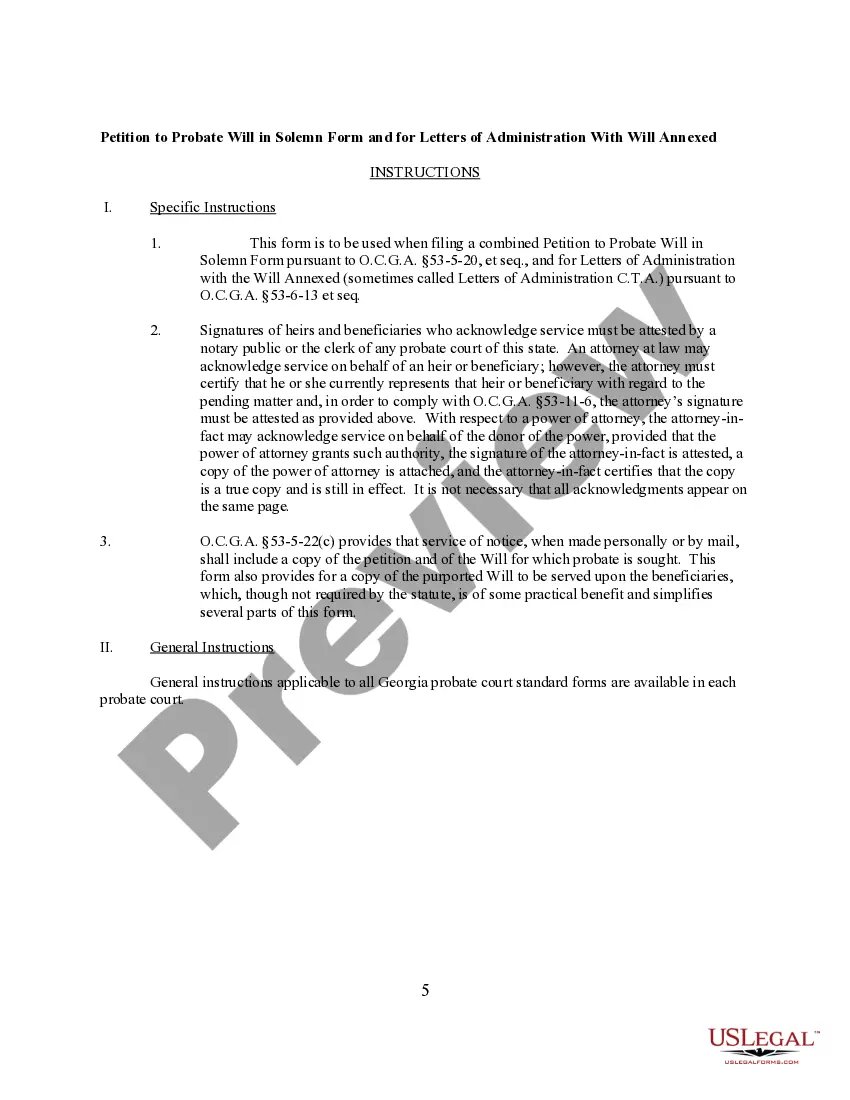
Oregon Motion for Order Allowing Entry of Judgment on Affidavit in Lieu of Hearing
What is this form?
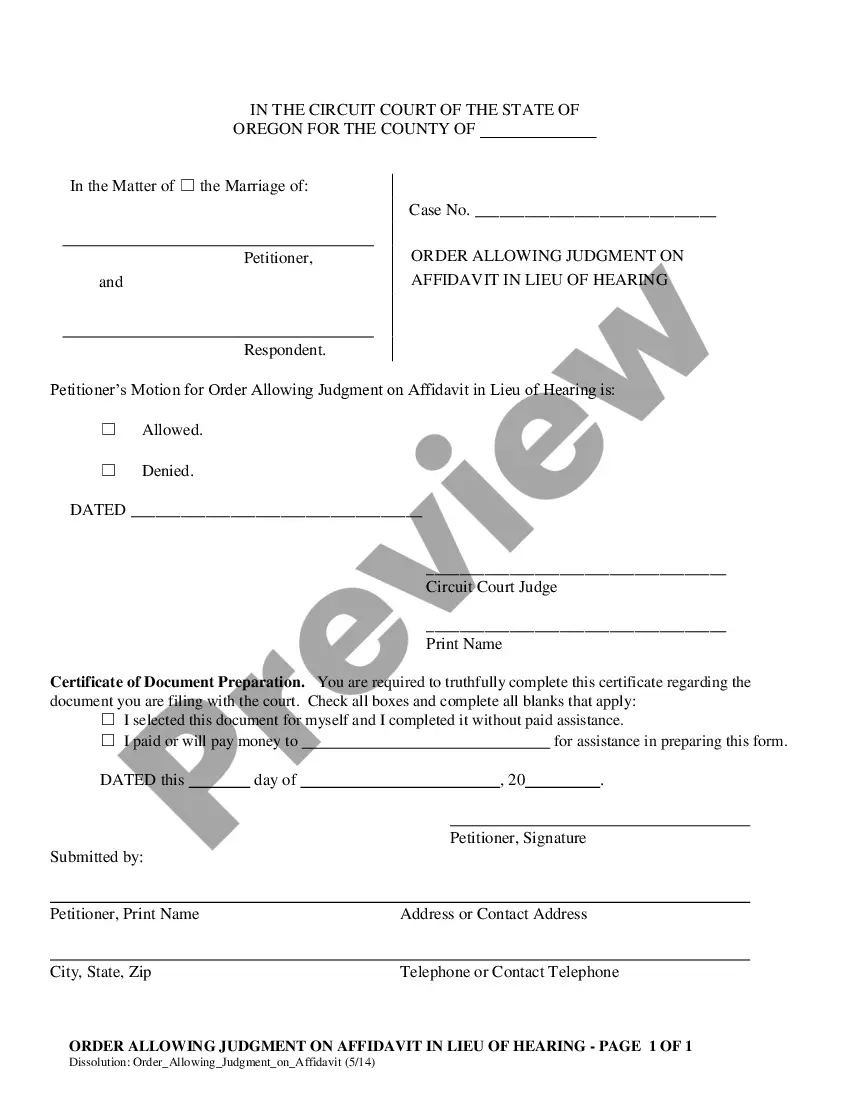
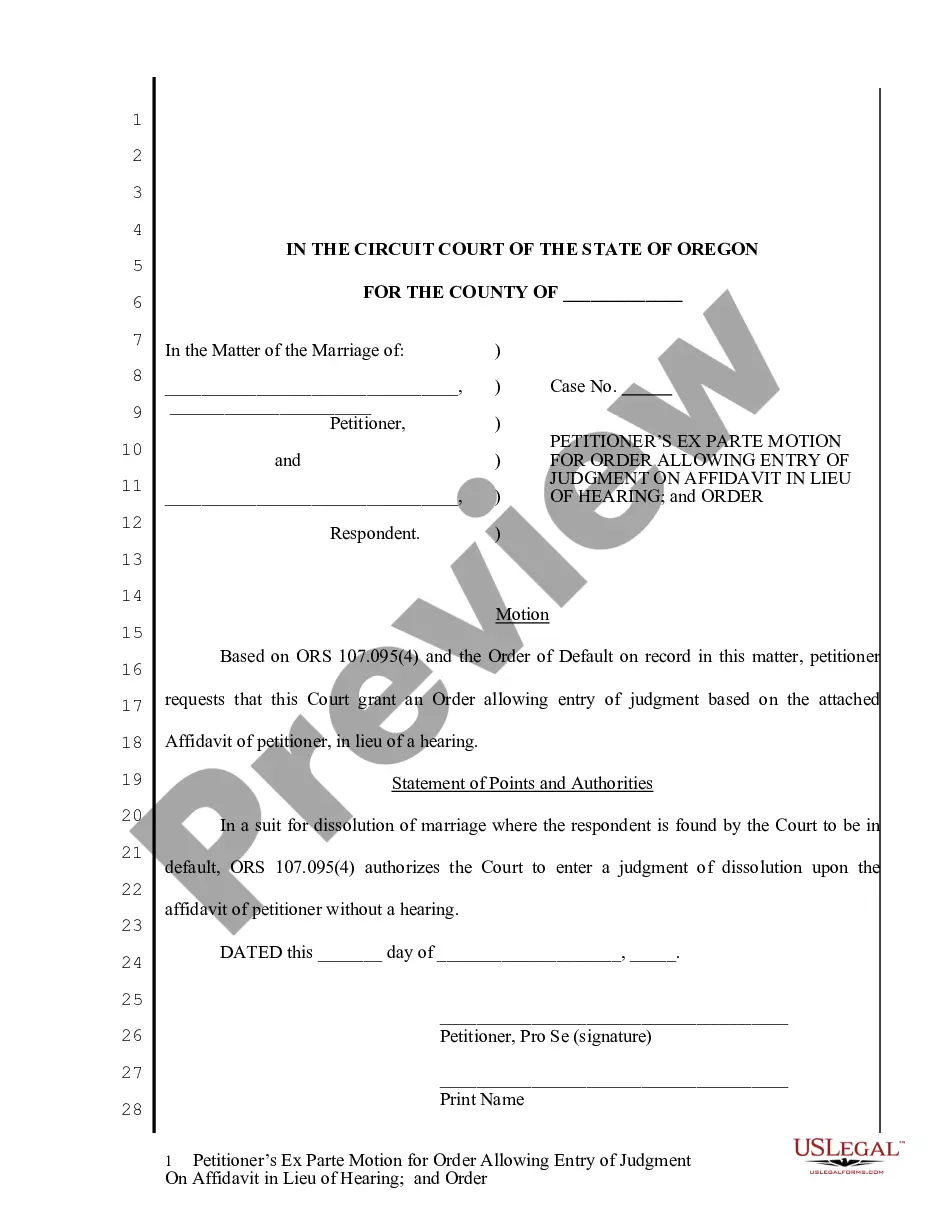
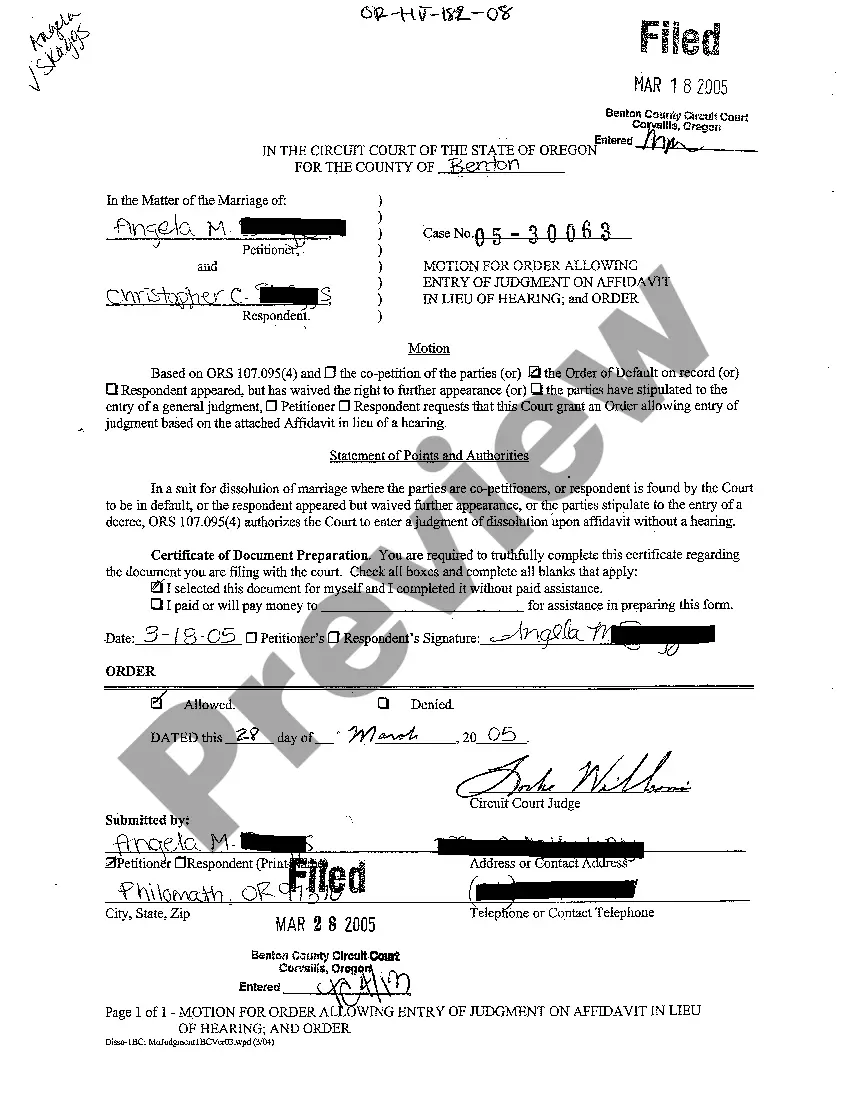
The Motion for Order Allowing Entry of Judgment on Affidavit in Lieu of Hearing is a legal document used in dissolution of marriage cases where the parties have reached an agreement or one party has defaulted. This form allows the court to issue a judgment based on affidavits without requiring a hearing. It is particularly useful for situations where both parties are co-petitioners or when a respondent has waived their right to appear in court.
Key parts of this document
- Petitioner's details: Information about the party filing the motion.
- Respondent's details: Information about the party against whom the motion is filed.
- Affidavit requirements: A sworn statement detailing the agreements or circumstances necessitating the judgment.
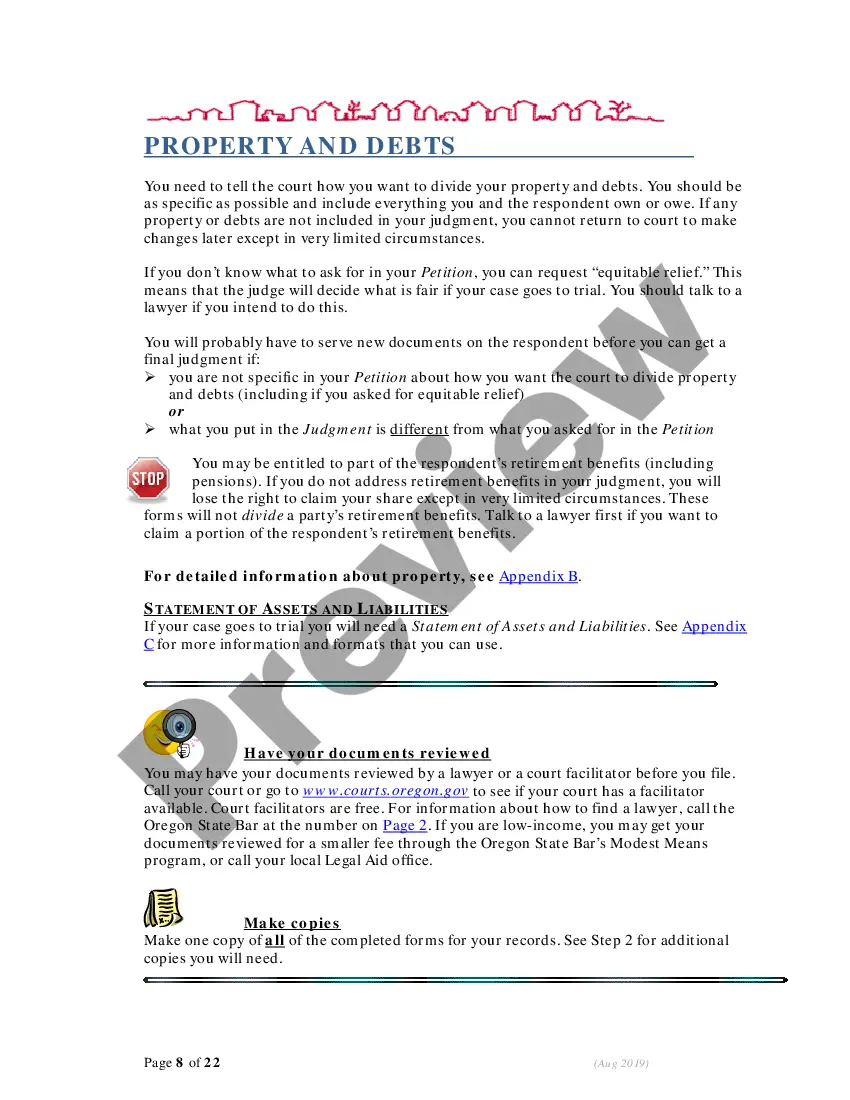
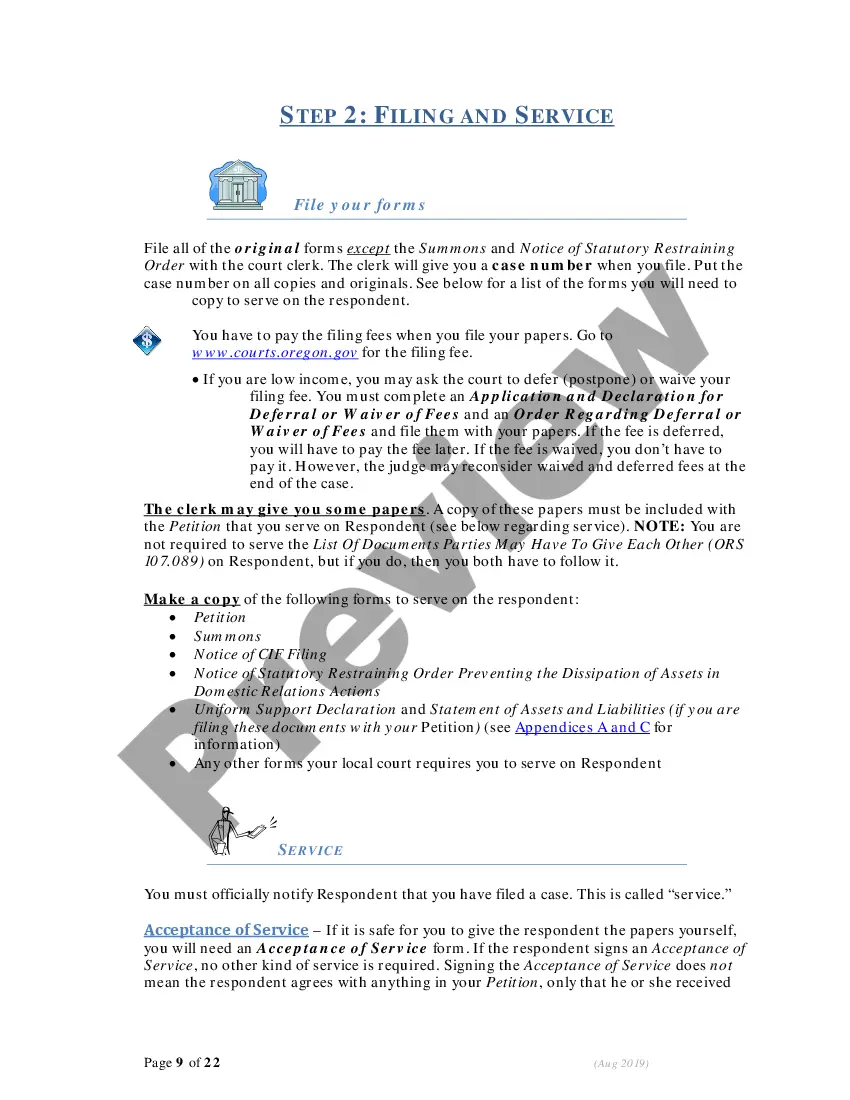
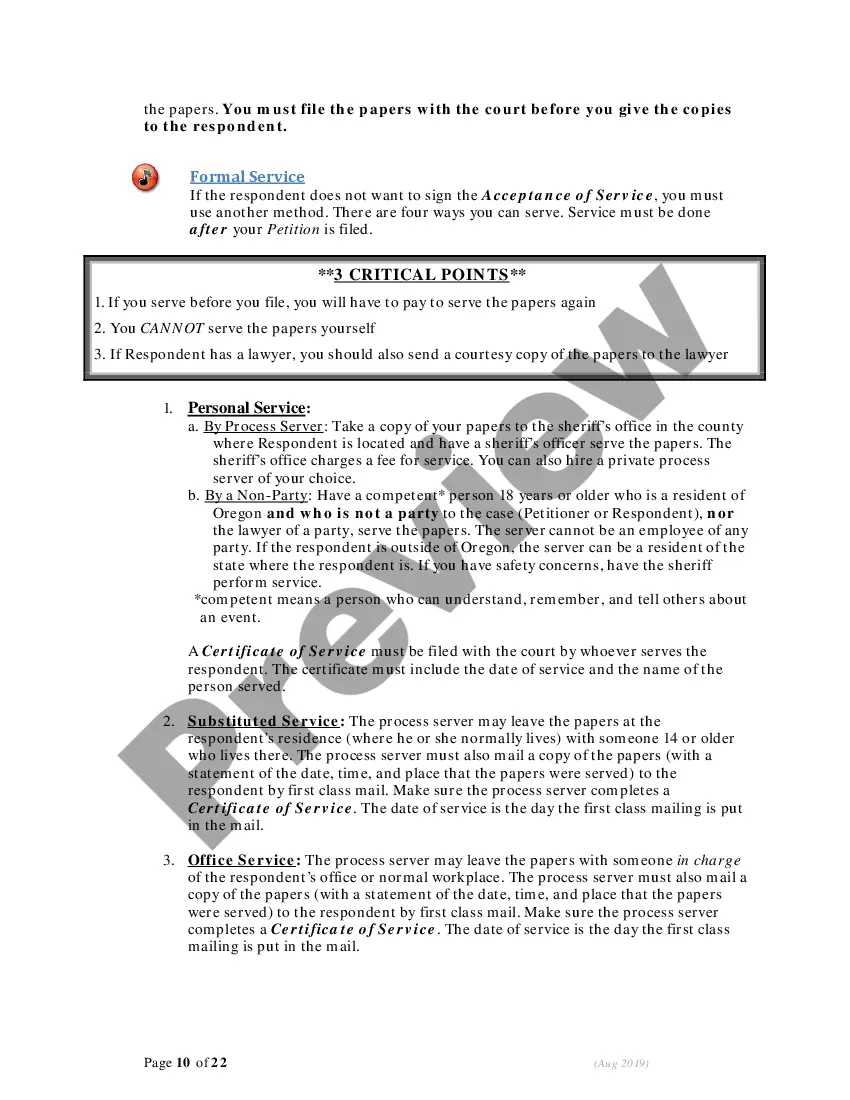
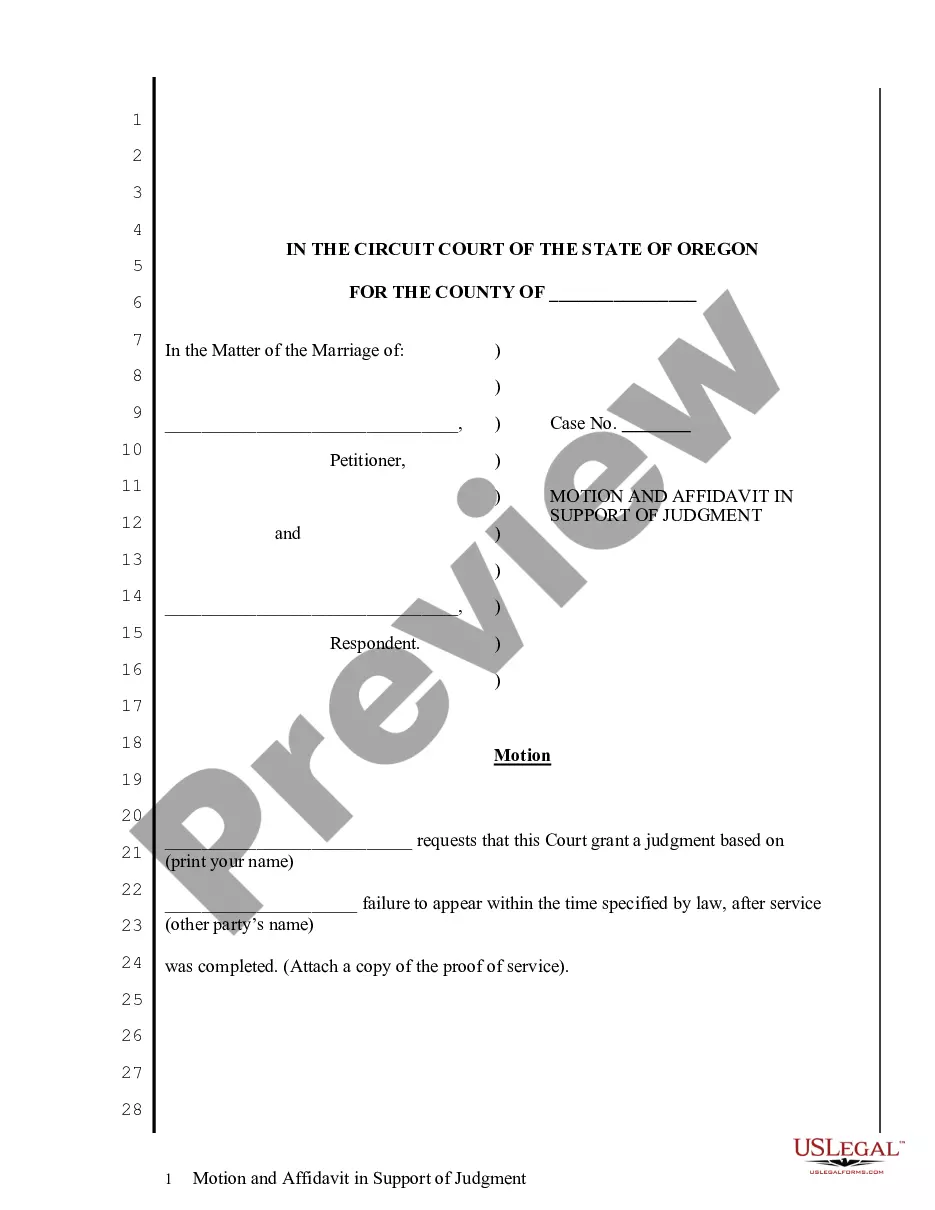
- Service confirmation: Evidence that the respondent has been properly served with the petition and other required documents.
- Judgment request: A section indicating what the petitioner is seeking from the court regarding the dissolution.

Common use cases
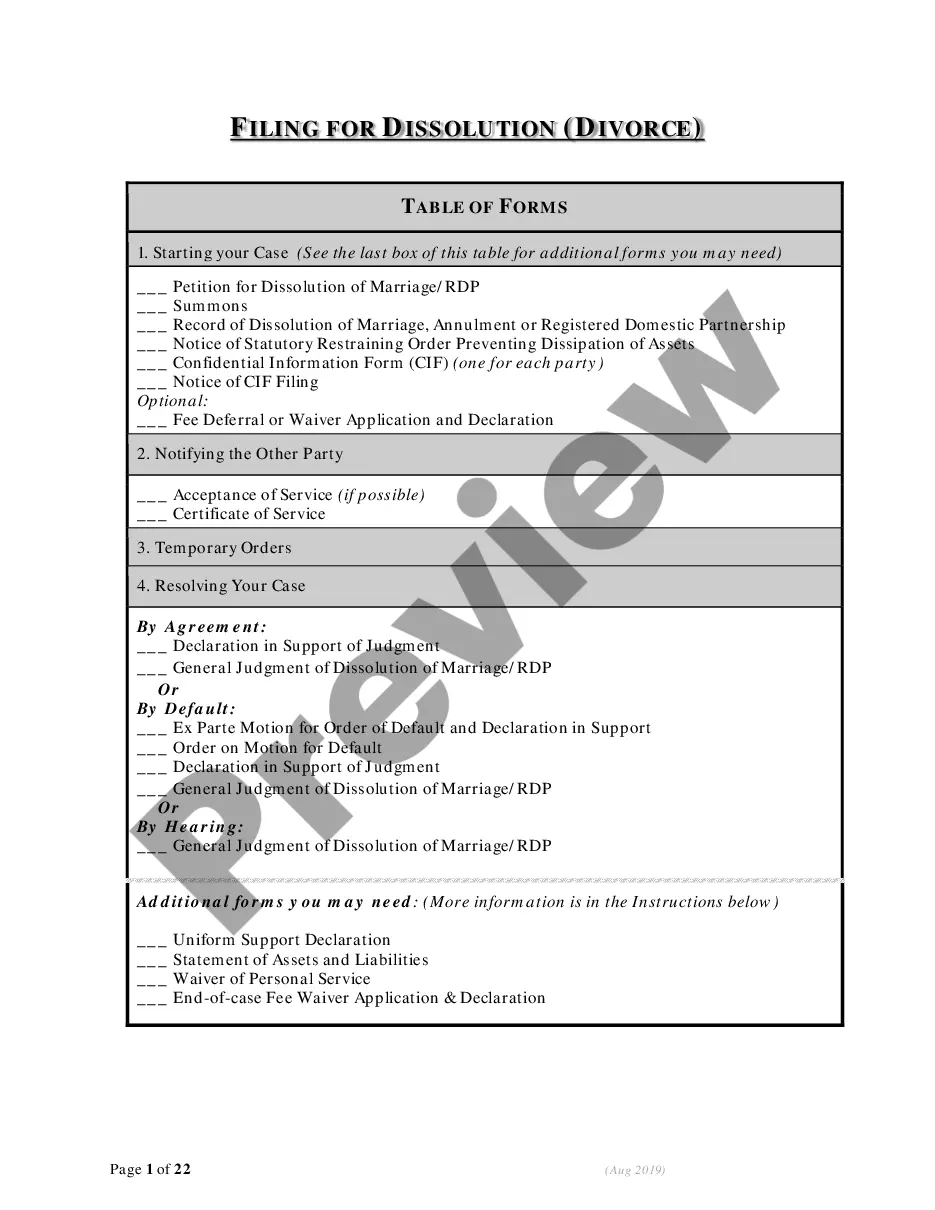
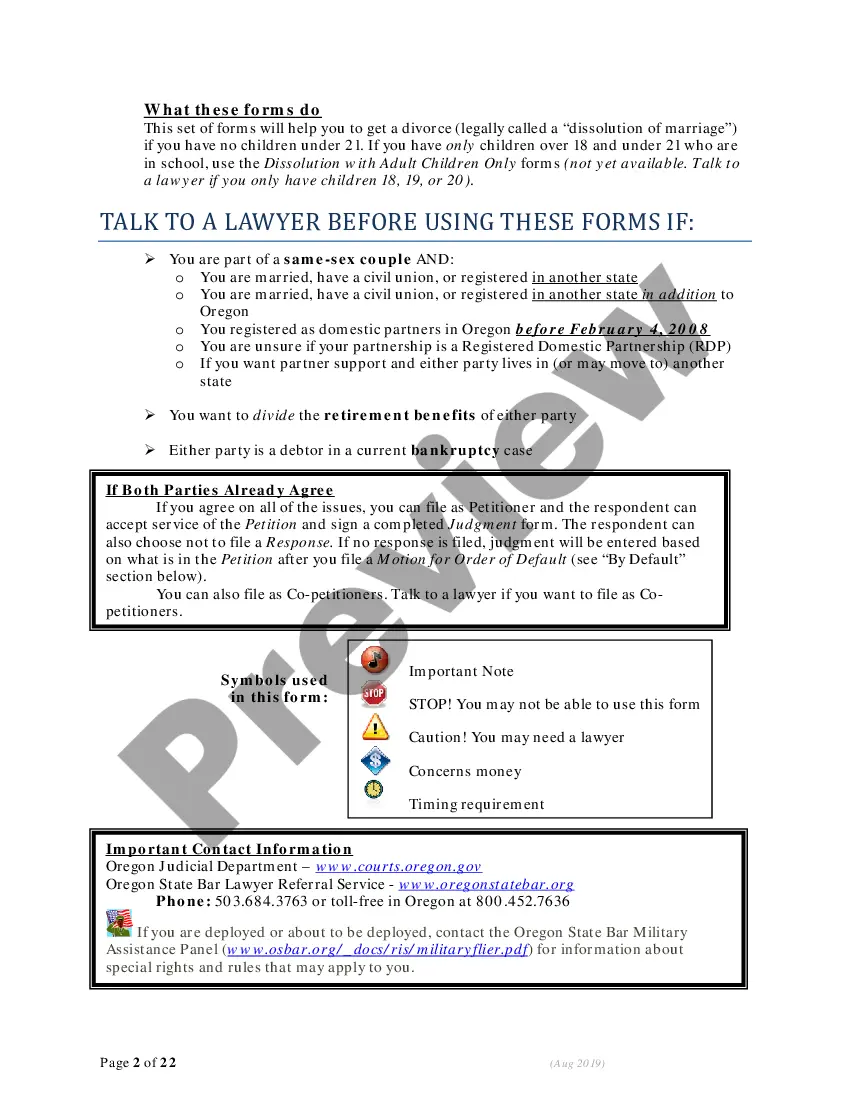
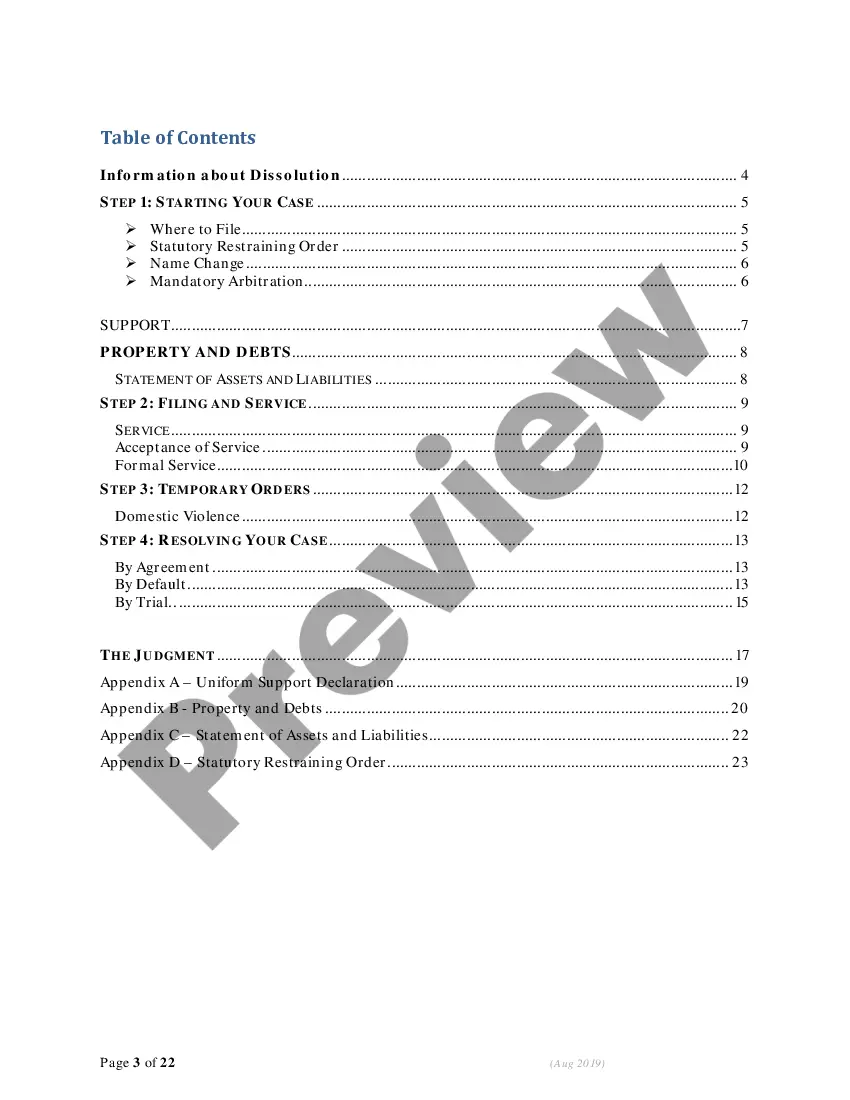
This form should be used when both parties in a dissolution of marriage case agree to the terms of their divorce or when one party is unable to respond after being properly served. It is particularly helpful in uncontested cases where the court can enter a judgment based solely on the submitted affidavits, streamlining the process for both parties.
Intended users of this form
- Couples seeking a divorce where both parties have agreed on the terms.
- Individuals who have filed a joint petition for dissolution of marriage.
- Parties involved in a case where a respondent has defaulted and is not challenging the petition.
- Those looking to finalize their divorce without a court hearing.
Steps to complete this form
- Identify the parties involved: Clearly specify the names of the petitioner and respondent in the appropriate sections.
- Provide affidavits: Ensure that proper affidavits are completed to support your motion, detailing agreements or facts pertinent to the case.
- Confirm service: Include evidence of proper service of the petition and other relevant documents on the respondent.
- Clearly state the request: Specify what judgment you are asking the court to enter based on the affidavits provided.
- Review and sign: Ensure that all sections are completed accurately and signed before submission.
Notarization requirements for this form
This form does not typically require notarization unless specified by local law. It is advisable to check with your attorney or local court rules for any additional requirements, particularly if the situation involves complex legal matters or contested issues.
Get your form ready online
Our built-in tools help you complete, sign, share, and store your documents in one place.
Make edits, fill in missing information, and update formatting in US Legal Forms—just like you would in MS Word.
Download a copy, print it, send it by email, or mail it via USPS—whatever works best for your next step.
Sign and collect signatures with our SignNow integration. Send to multiple recipients, set reminders, and more. Go Premium to unlock E-Sign.
If this form requires notarization, complete it online through a secure video call—no need to meet a notary in person or wait for an appointment.
We protect your documents and personal data by following strict security and privacy standards.

Make edits, fill in missing information, and update formatting in US Legal Forms—just like you would in MS Word.

Download a copy, print it, send it by email, or mail it via USPS—whatever works best for your next step.

Sign and collect signatures with our SignNow integration. Send to multiple recipients, set reminders, and more. Go Premium to unlock E-Sign.

If this form requires notarization, complete it online through a secure video call—no need to meet a notary in person or wait for an appointment.

We protect your documents and personal data by following strict security and privacy standards.
Common mistakes to avoid
- Not including necessary affidavits to support the motion.
- Failing to provide evidence of proper service to the respondent.
- Leaving sections blank or not signing the motion.
- Using incorrect or outdated forms as per state requirements.
Why use this form online
- Immediate access to the latest legal forms and templates.
- Easy to fill out and edit from the comfort of your home.
- Reliable legal formatting that meets court standards.
- Secure storage and easy retrieval of completed documents.
- Guidance through the process, ensuring you are not missing critical steps.
Looking for another form?
Form popularity
FAQ
Title the affidavit. First, you'll need to title your affidavit. Craft a statement of identity. The very next section of your affidavit is what's known as a statement of identity. Write a statement of truth. State the facts. Reiterate your statement of truth. Sign and notarize.
Fill out the forms. You have to fill out at least 2 forms, maybe more, to file your opposition. File the forms. Turn in your completed forms by mail or efiling. Serve the other party. Get ready for the hearing. Prepare an order.
A motion is an application to the court made by the prosecutor or defense attorney, requesting that the court make a decision on a certain issue before the trial begins. The motion can affect the trial, courtroom, defendants, evidence, or testimony. Only judges decide the outcome of motions.
A motion is a short statement not under oath asking the court to grant the relief wanted and citing the legal authority that allow the court to take such action. The affidavit is a sworn statement that sets forth the facts that support your motion.
In a nutshell, an affidavit is a sworn statement that is in writing. Affidavits are usually used in a court or in negotiations. They are common in family law cases and bankruptcy cases. They are also used in civil and criminal cases, though not as often as family or bankruptcy law cases.
A "motion" is simply a formal request to a court that it do something or decide an issue in favor of the party that asks for it. "Granted" means the court agreed with the request, and did or decided in favor of the requester.
After you complete your motion, you must file it with the court.You must then serve (mail) a copy of your filed motion (including all exhibits and the date, time, and place of hearing) to all other parties in the case. If a party is represented by an attorney, mail the motion directly to the attorney's office.
An affidavit is used for the purpose of proving in court that a claim is true, and is typically used in conjunction with witness statements and other corroborating evidence. Through an affidavit, an individual swears that the information contained within is true to the best of their knowledge.