Oregon Affidavit in Support of Motion for Order Allowing Entry of Judgment on Affidavit in Lieu of Hearing
What this document covers
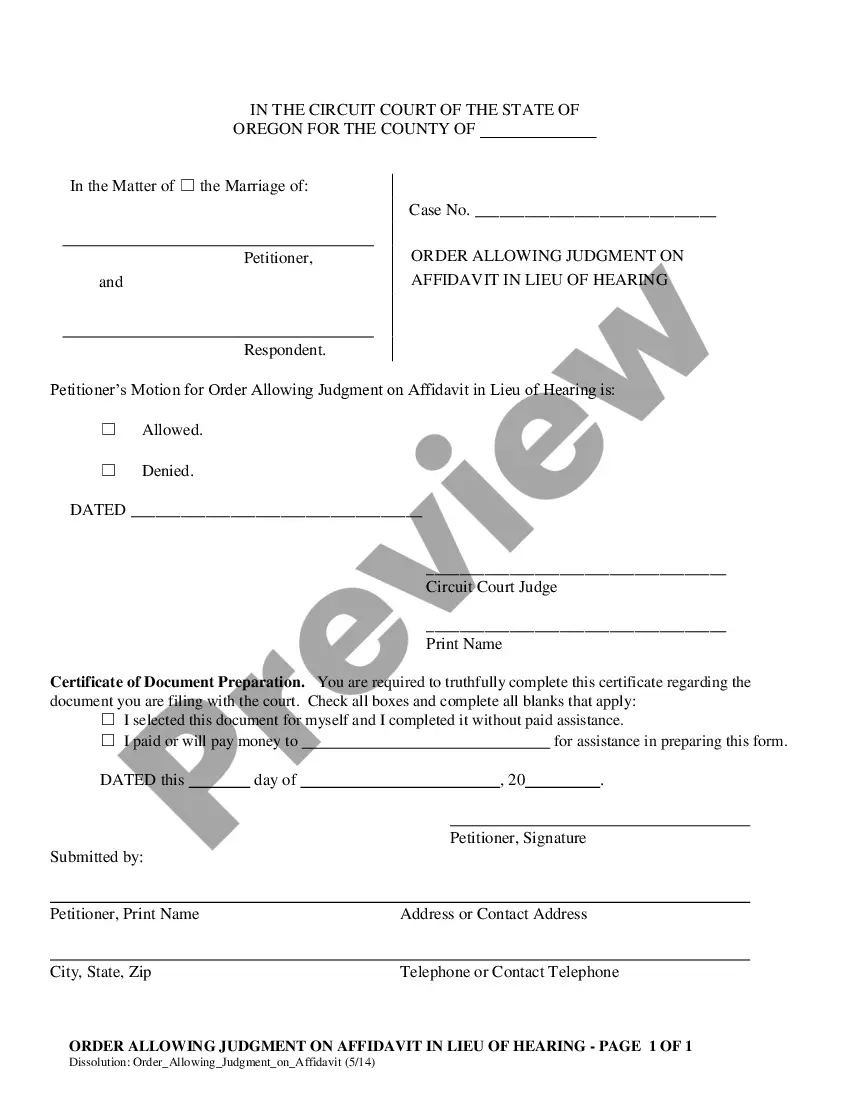
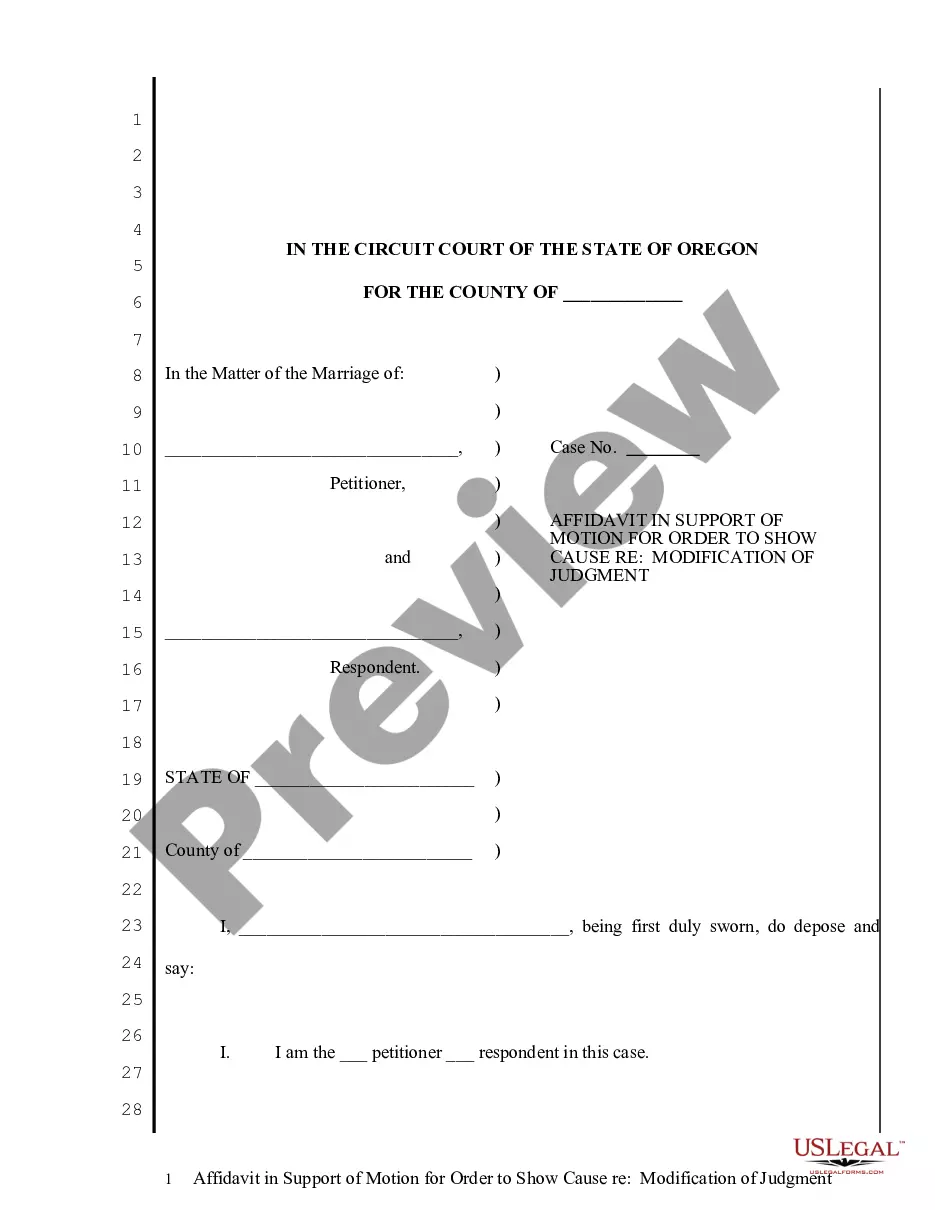
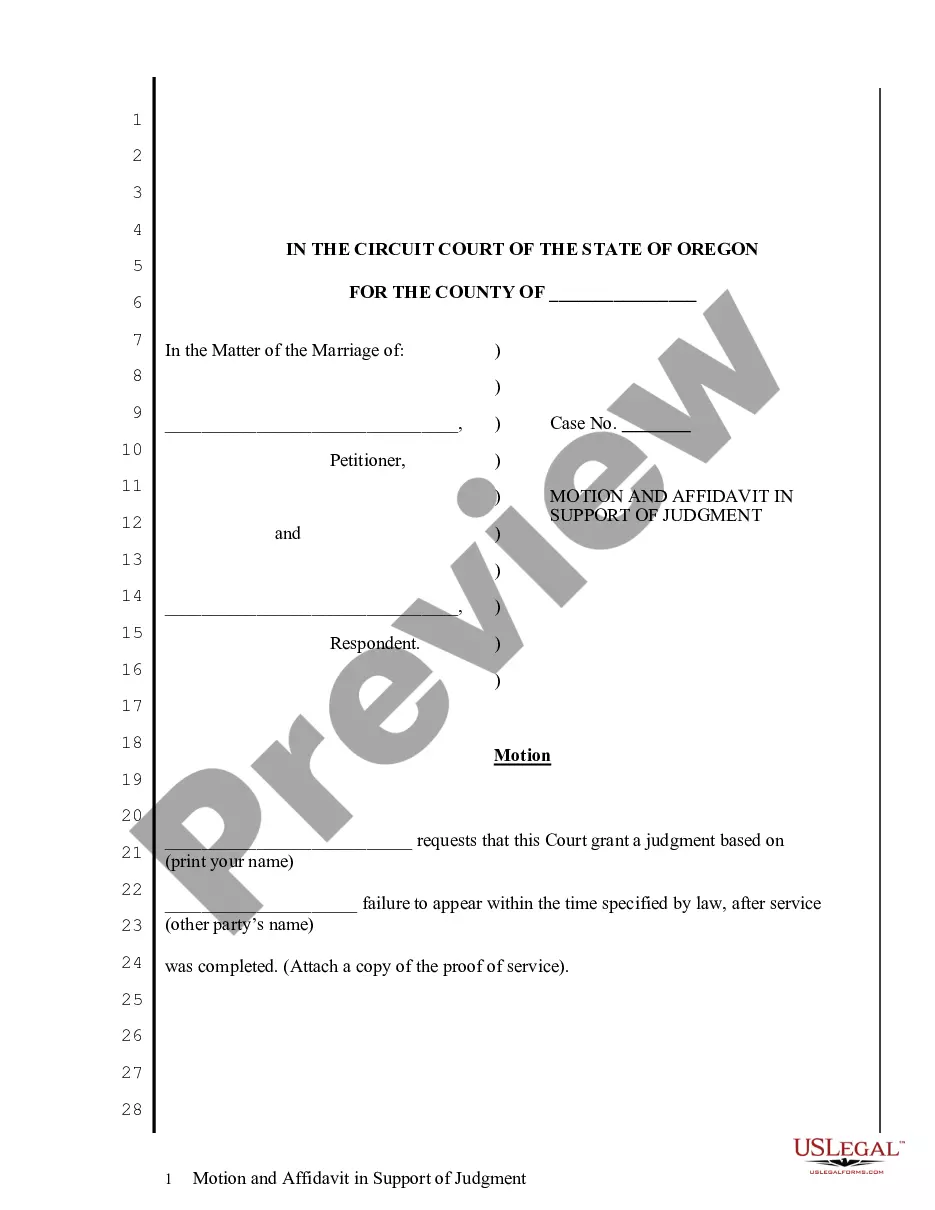
The Affidavit in Support of Motion for Order Allowing Entry of Judgment on Affidavit in Lieu of Hearing is a legal document that allows parties to request a court order for entry of judgment without requiring a full hearing. This affidavit indicates if a default order has been issued, if the respondent has previously appeared and waived further appearances, or if the parties have agreed to the judgment terms. It serves to streamline the legal process and can be critical in cases involving child or spousal support.
Key parts of this document
- Petitionerâs motion section indicating whether the motion is allowed or denied.
- Certification of Document Preparation, confirming how the form was completed.
- Signature lines for the petitioner and the court.
- Details on the case, including the names of the parties and case number.
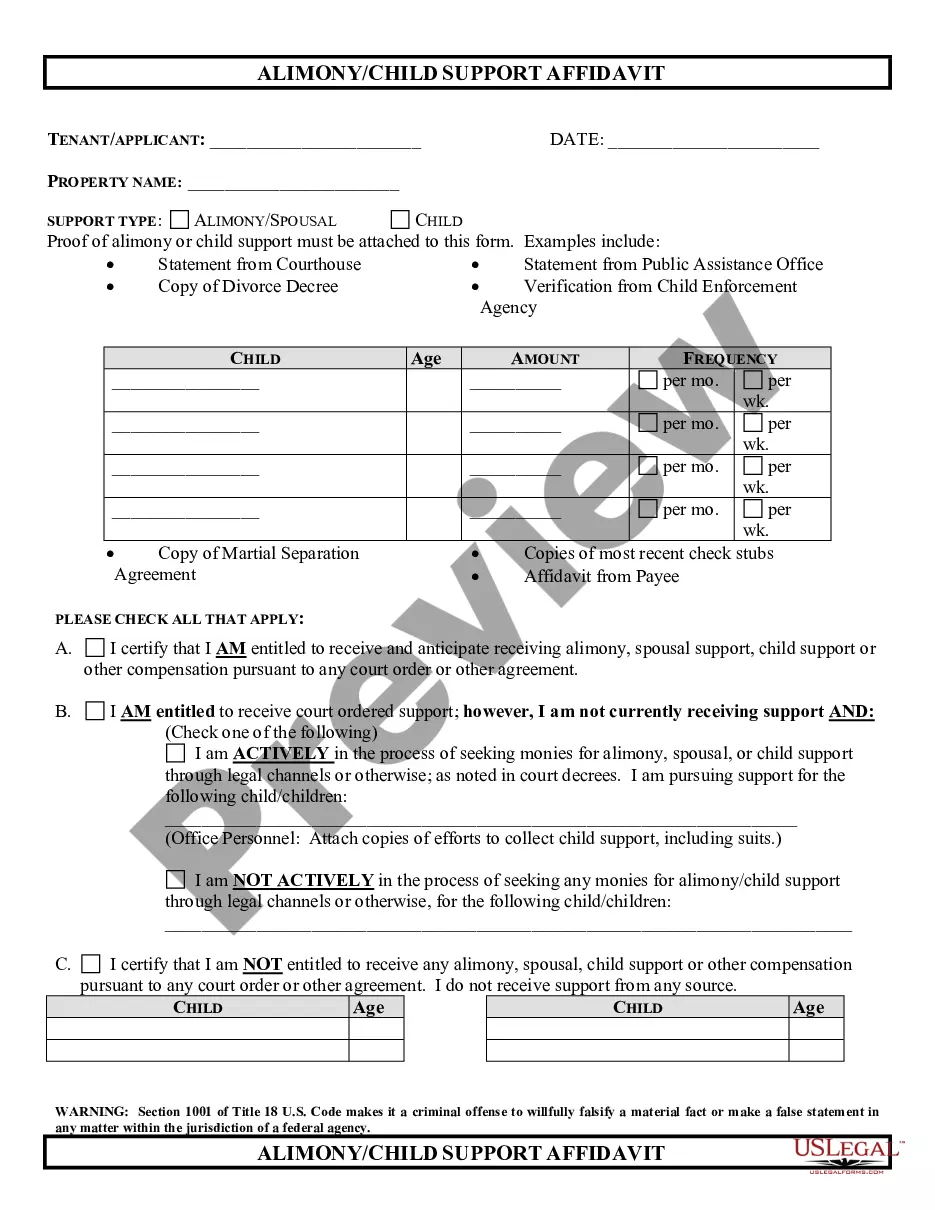
- Specific information on child or spousal support as applicable.
Common use cases
This affidavit is typically used when a petitioner wishes to obtain a judgment without a hearing, especially in situations involving defaults or stipulations made by the respondent. It is especially relevant in family law cases where child or spousal support arrangements are established, making it crucial for ensuring timely legal resolutions.
Who needs this form
- Individuals involved in family law matters where a hearing is not necessary.
- Petitioners who seek to resolve cases involving child or spousal support.
- Parties who have reached an agreement on judgment terms and need to formalize it.
- Those who have a respondent that has appeared but waived further hearings.
Steps to complete this form
- Identify the parties involved, including petitioner and respondent, and enter their names in the designated sections.
- Fill in the case number and specify details such as whether child or spousal support is being addressed.
- Indicate if the court has previously issued a default order or if the respondent has waived further hearings.
- Sign and date the affidavit, completing the certificate of document preparation accurately.
- Submit the completed form to the appropriate court for review and approval.
Notarization guidance
This form does not typically require notarization unless specified by local law. Ensure to check state regulations regarding any notarization requirements that may apply.
Get your form ready online
Our built-in tools help you complete, sign, share, and store your documents in one place.
Make edits, fill in missing information, and update formatting in US Legal Forms—just like you would in MS Word.
Download a copy, print it, send it by email, or mail it via USPS—whatever works best for your next step.
Sign and collect signatures with our SignNow integration. Send to multiple recipients, set reminders, and more. Go Premium to unlock E-Sign.
If this form requires notarization, complete it online through a secure video call—no need to meet a notary in person or wait for an appointment.
We protect your documents and personal data by following strict security and privacy standards.

Make edits, fill in missing information, and update formatting in US Legal Forms—just like you would in MS Word.

Download a copy, print it, send it by email, or mail it via USPS—whatever works best for your next step.

Sign and collect signatures with our SignNow integration. Send to multiple recipients, set reminders, and more. Go Premium to unlock E-Sign.

If this form requires notarization, complete it online through a secure video call—no need to meet a notary in person or wait for an appointment.

We protect your documents and personal data by following strict security and privacy standards.
Common mistakes
- Failing to include the case number or partiesâ names correctly.
- Not completing the certification of document preparation accurately.
- Omitting necessary signatures or dates.
- Assuming the form does not need to be filed promptly after completion.
Advantages of online completion
- Convenient download and edit options tailored to individual needs.
- Access to forms prepared by licensed attorneys, ensuring legal compliance.
- Time-saving compared to traditional methods of obtaining forms.
- Secure and reliable access to documents from anywhere.
Looking for another form?
Form popularity
FAQ
In a nutshell, an affidavit is a sworn statement that is in writing. Affidavits are usually used in a court or in negotiations. They are common in family law cases and bankruptcy cases. They are also used in civil and criminal cases, though not as often as family or bankruptcy law cases.
Motions are not pleadings but are requests for the judge to make a legal ruling. Some of the most common pre-trial motions include: Motion to Discover. A motion by which one party seeks to gain information from the adverse party.
A hearing for the purpose of asking a judge to issue a ruling or order. The motion is typically filed by one side and a notice is sent to the opposing attorney who responds in writing.
Title the affidavit. First, you'll need to title your affidavit. Craft a statement of identity. The very next section of your affidavit is what's known as a statement of identity. Write a statement of truth. State the facts. Reiterate your statement of truth. Sign and notarize.
When you file your motion, the court clerk will insert the date, time, and place of the hearing on your motion. You must then serve (mail) a copy of your filed motion (including all exhibits and the date, time, and place of hearing) to all other parties in the case.
A motion is a short statement not under oath asking the court to grant the relief wanted and citing the legal authority that allow the court to take such action. The affidavit is a sworn statement that sets forth the facts that support your motion.
After you complete your motion, you must file it with the court.You must then serve (mail) a copy of your filed motion (including all exhibits and the date, time, and place of hearing) to all other parties in the case. If a party is represented by an attorney, mail the motion directly to the attorney's office.
A "motion" is simply a formal request to a court that it do something or decide an issue in favor of the party that asks for it. "Granted" means the court agreed with the request, and did or decided in favor of the requester.
A motion is an application to the court made by the prosecutor or defense attorney, requesting that the court make a decision on a certain issue before the trial begins. The motion can affect the trial, courtroom, defendants, evidence, or testimony. Only judges decide the outcome of motions.