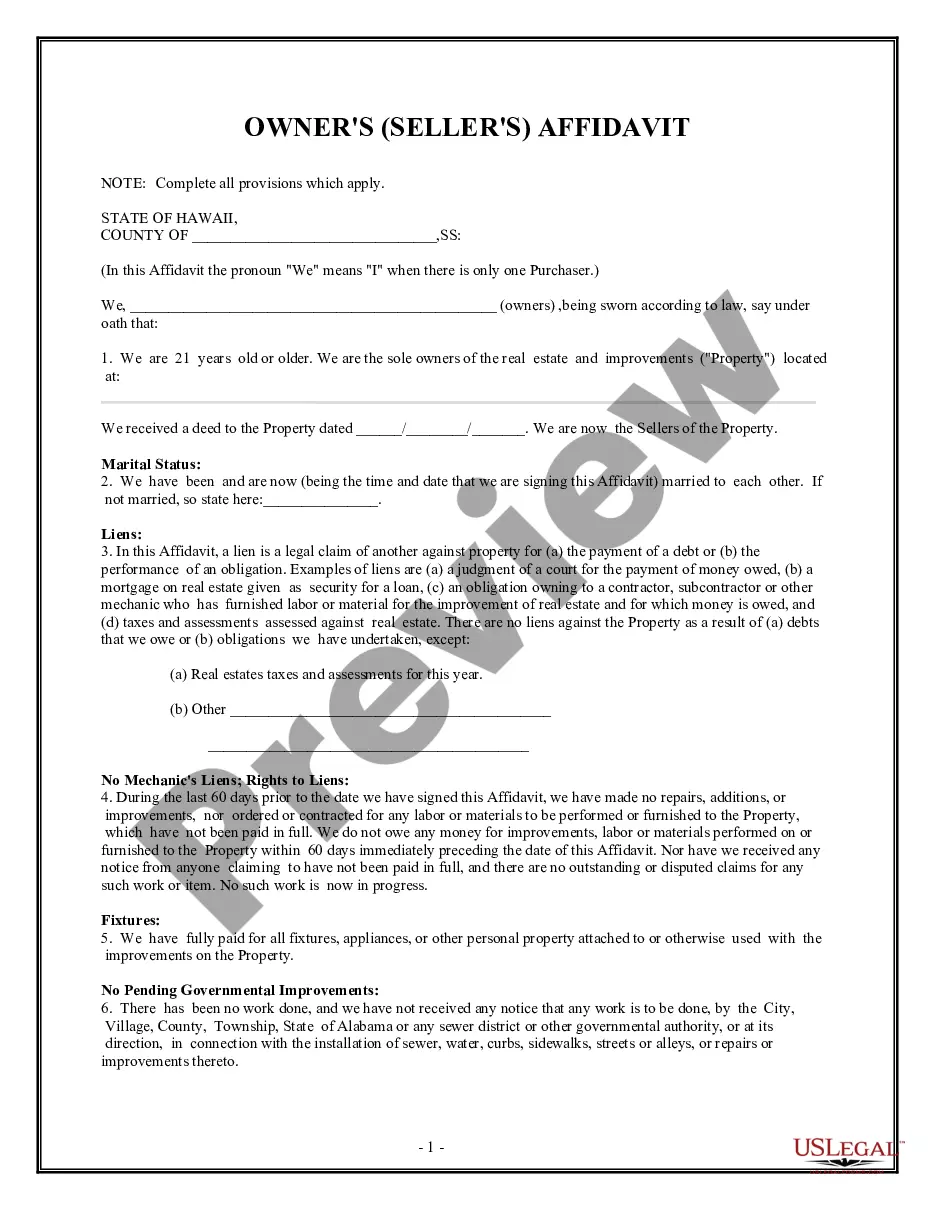
Oregon Affidavit in Support of Motion to Show Cause regarding Modification of Judgment
Overview of this form
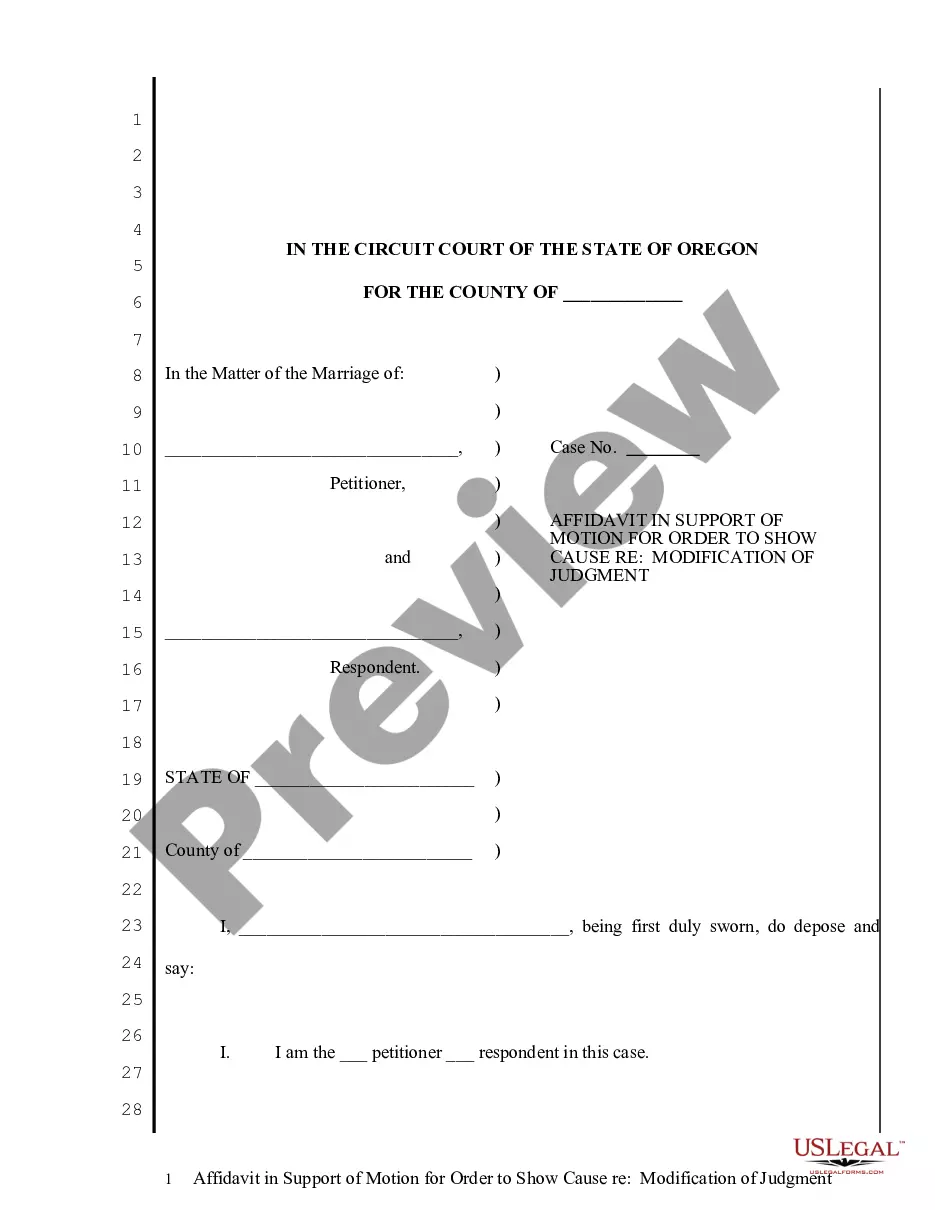
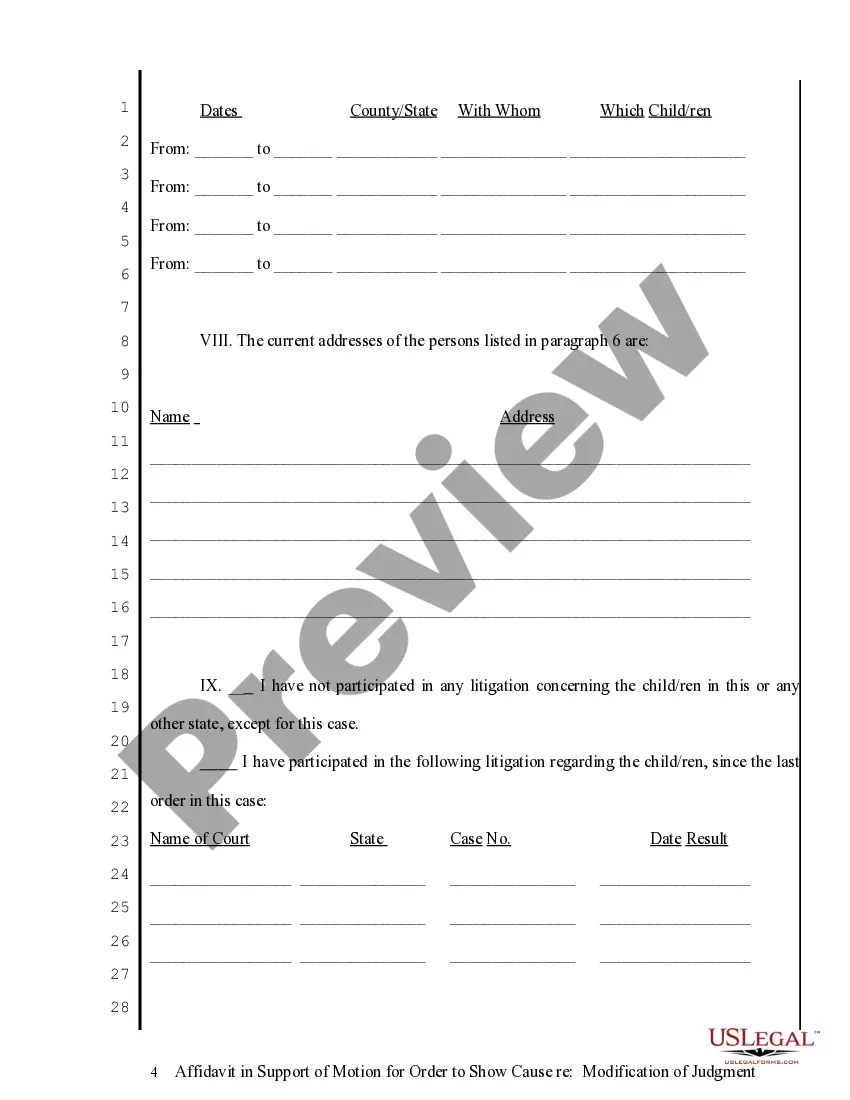
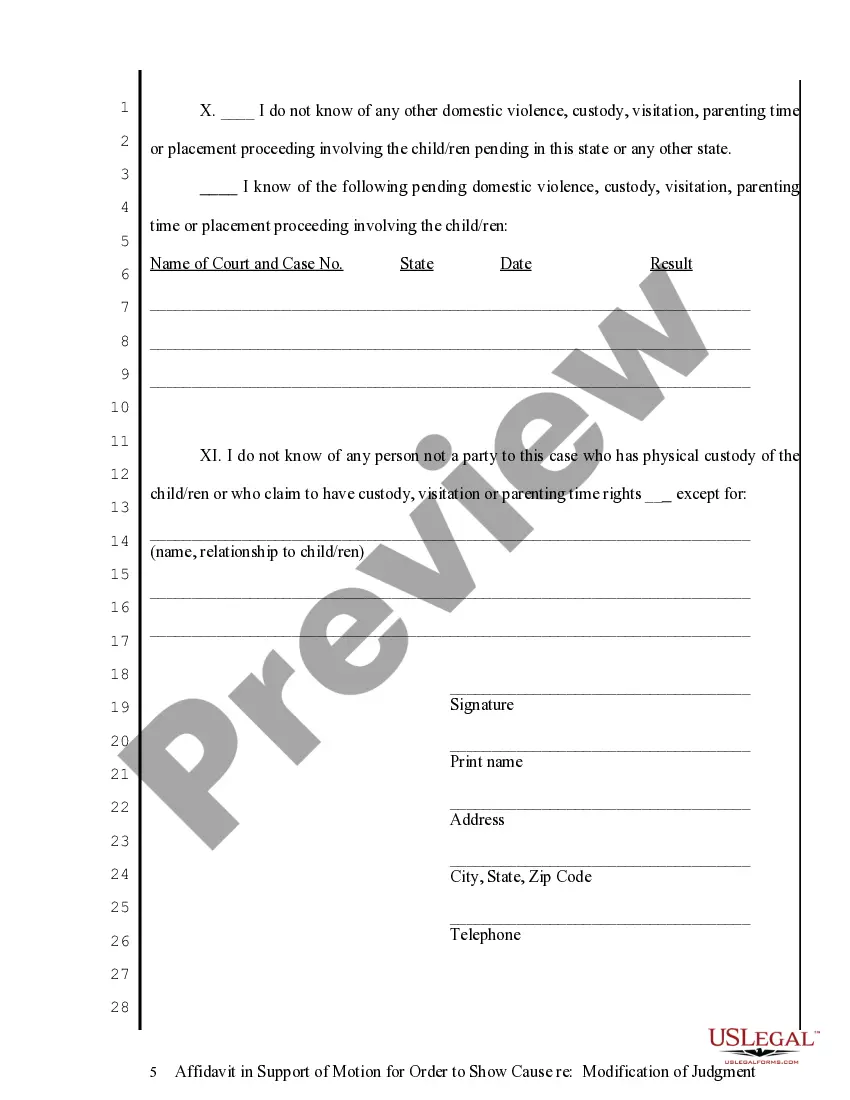
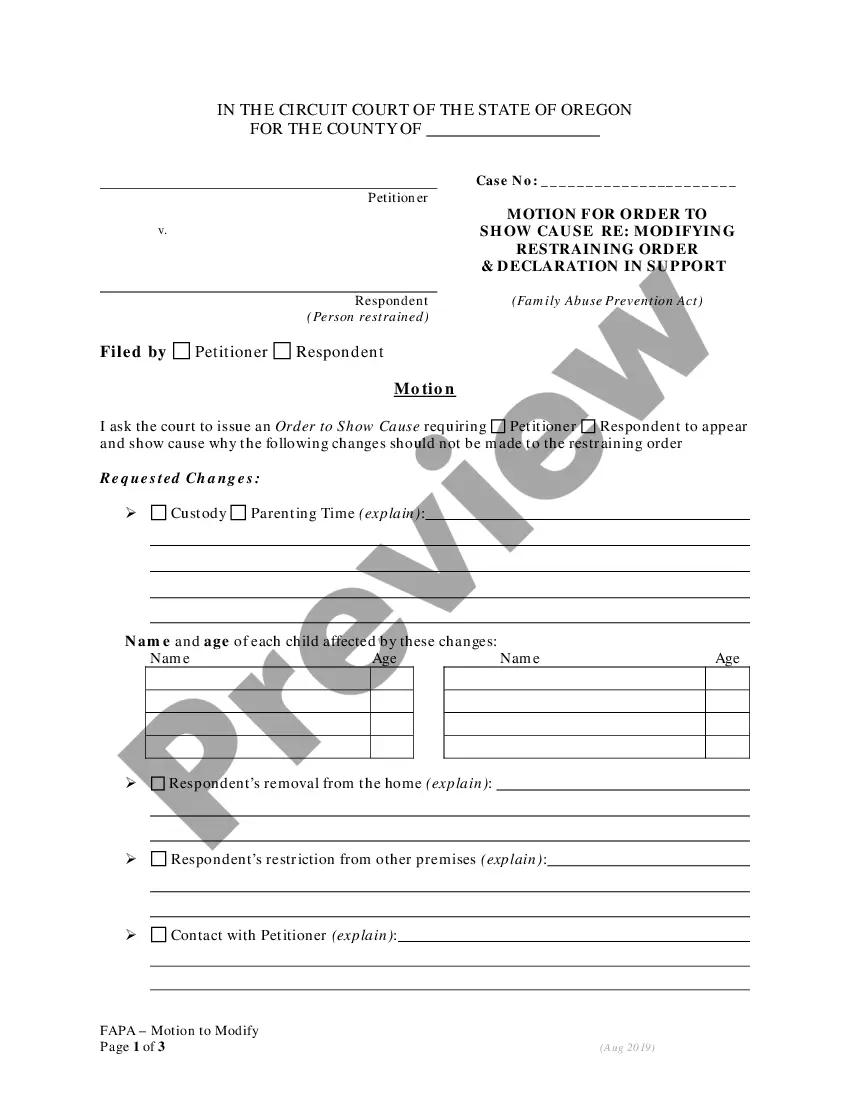
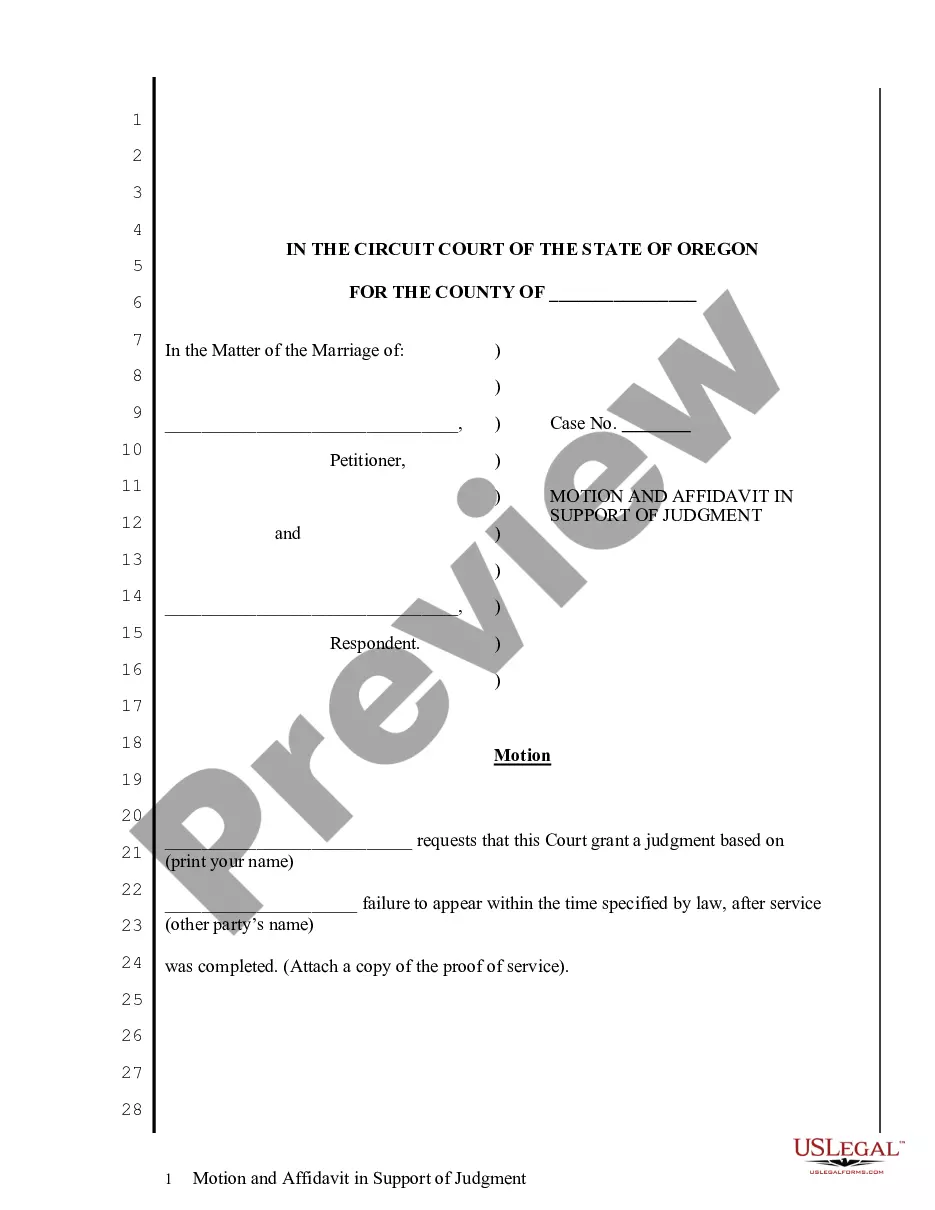
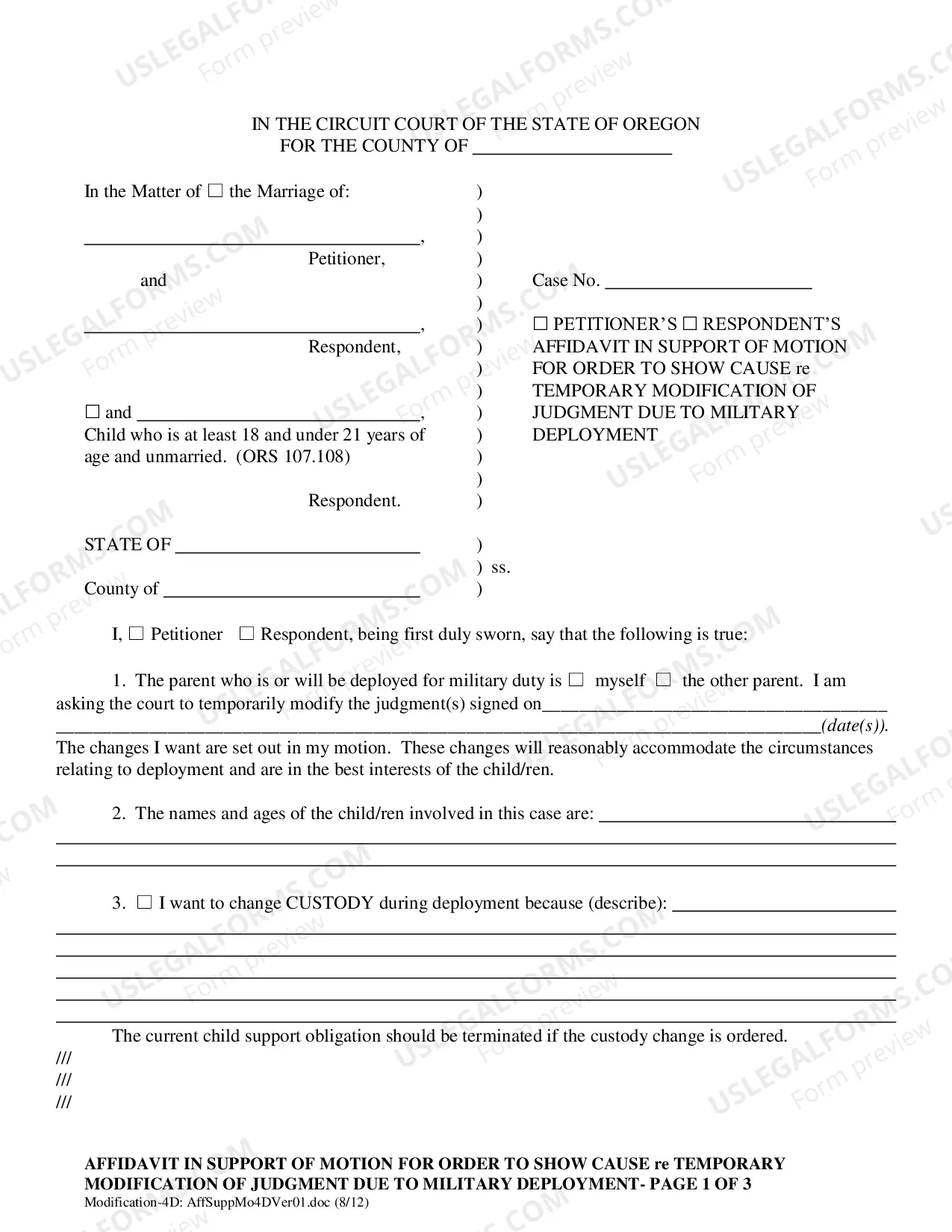
The Affidavit in Support of Motion to Show Cause regarding Modification of Judgment is a legal document used in domestic litigation in Oregon. It allows a party (petitioner or respondent) to present factual information to the court to support a motion for modifying a judgment, particularly regarding custody or parenting time. This form is specifically designed for situations where the circumstances have changed since the last custody order, necessitating a reevaluation by the court.
What’s included in this form
- Information about the parties involved, including names, case numbers, and roles.
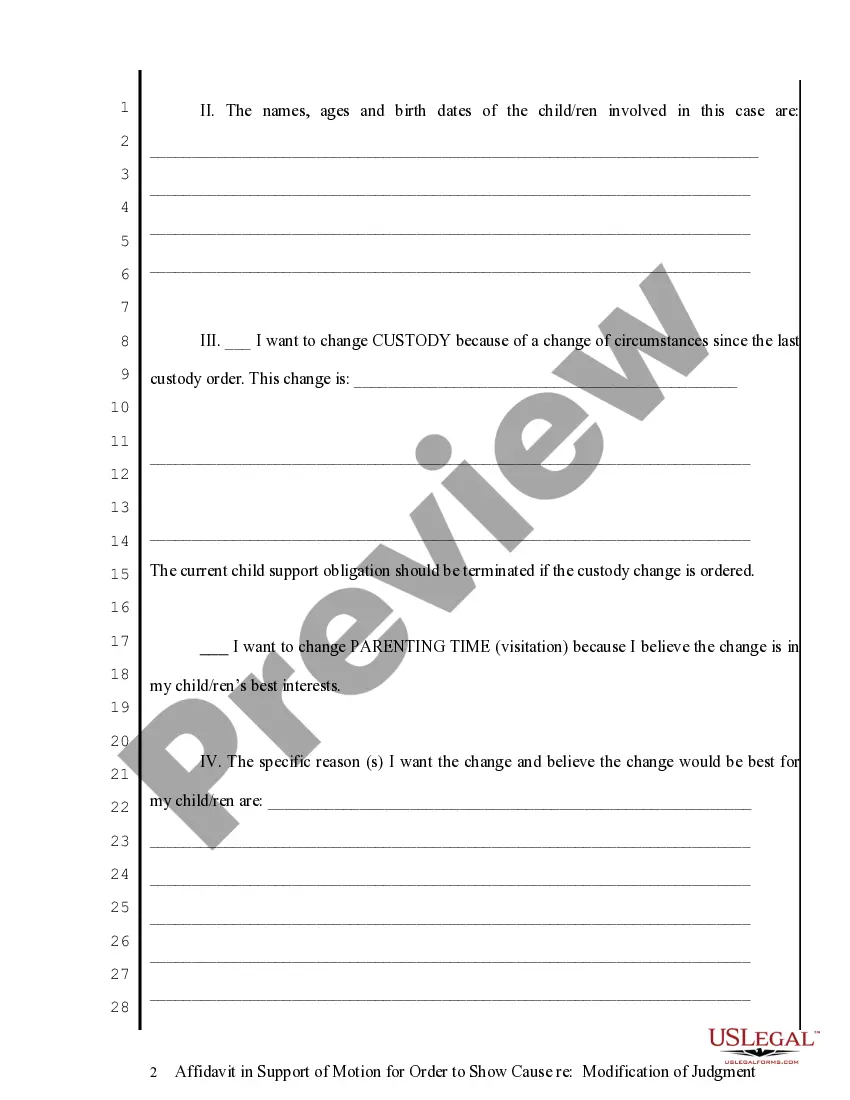
- Details regarding children involved, including their names, ages, and birth dates.
- Statements justifying the request for modification of custody or parenting time.
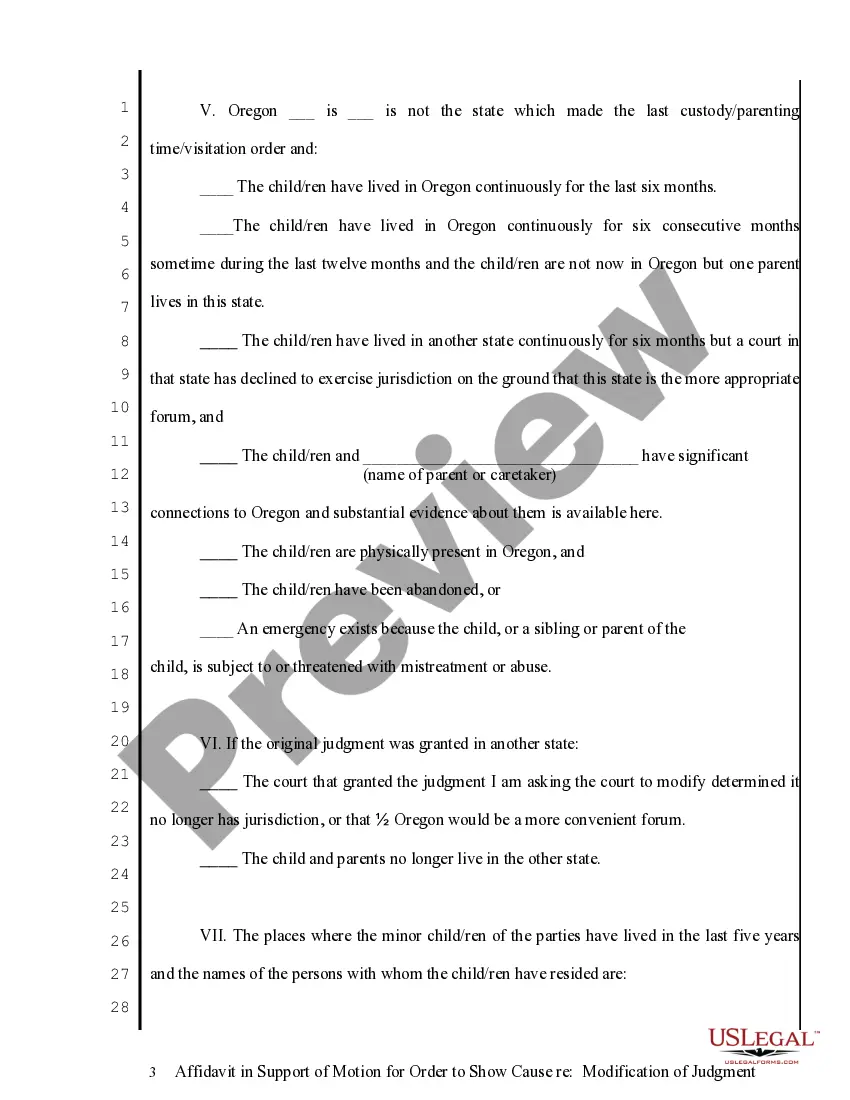
- History of previous custody arrangements and any relevant legal proceedings.
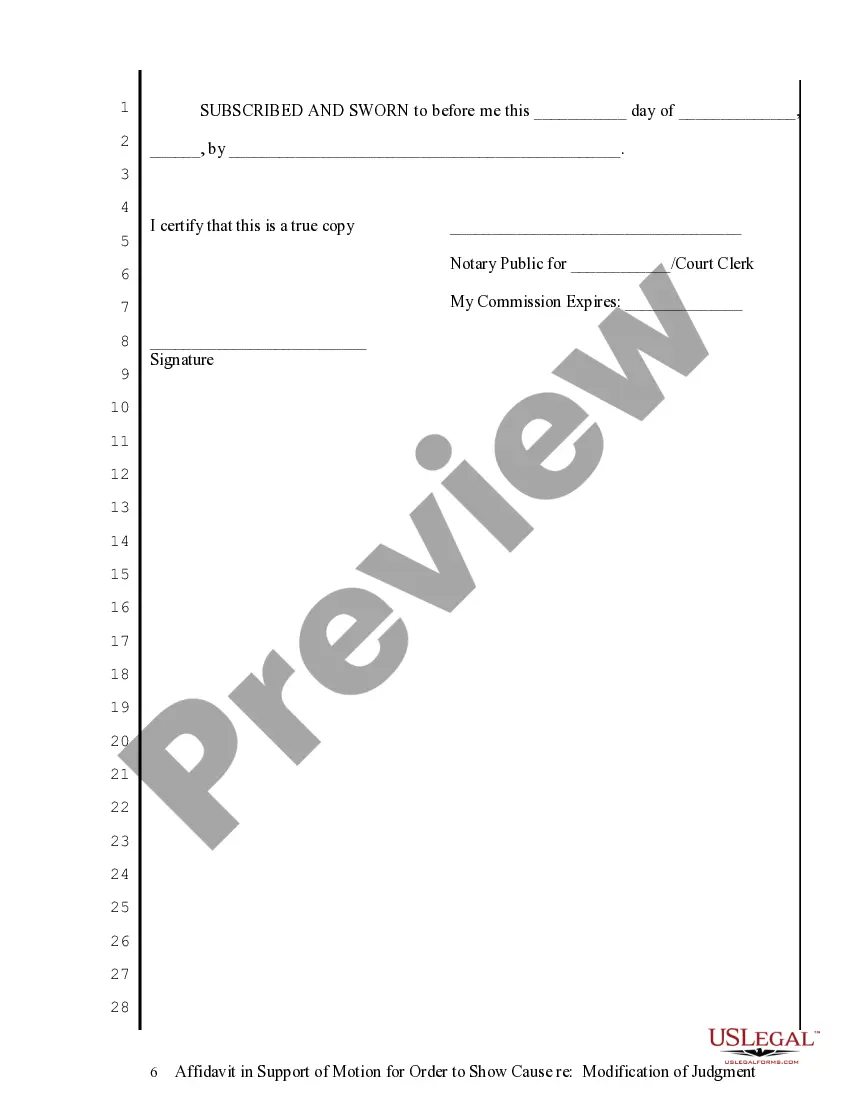
- Verification section for the affiant to sign and affirm the truth of the statements made.
Situations where this form applies
This form should be used when one party seeks to modify a custody or parenting time order due to significant changes in circumstances since the last court decision. It is appropriate in cases where change is necessary for the best interests of the child, such as changes in living conditions, financial status, or the well-being of the child or parents.
Who needs this form
This form is suitable for:
- Parents or guardians involved in a custody case in Oregon.
- Individuals who have experienced changes that warrant a modification of an existing custody or parenting time order.
- Petitioners who need to formally request the courtâs intervention regarding child custody issues.
How to complete this form
- Identify the parties involved by filling out the name of the petitioner and respondent.
- Provide details about the minor children involved, including their names, ages, and birth dates.
- Clearly state the reasons for requesting the modification of custody or parenting time.
- Include any relevant legal history pertaining to custody and confirm if there are other pending proceedings.
- Sign the affidavit in the presence of a notary public or court clerk.
Notarization requirements for this form
Yes, this form must be notarized to be legally valid. Notarization verifies your identity and ensures that the statements made in the affidavit are sworn to be true. US Legal Forms offers integrated online notarization, allowing you to complete this process securely from home via video call, available 24/7, without needing to travel.
Get your form ready online
Our built-in tools help you complete, sign, share, and store your documents in one place.
Make edits, fill in missing information, and update formatting in US Legal Forms—just like you would in MS Word.
Download a copy, print it, send it by email, or mail it via USPS—whatever works best for your next step.
Sign and collect signatures with our SignNow integration. Send to multiple recipients, set reminders, and more. Go Premium to unlock E-Sign.
If this form requires notarization, complete it online through a secure video call—no need to meet a notary in person or wait for an appointment.
We protect your documents and personal data by following strict security and privacy standards.

Make edits, fill in missing information, and update formatting in US Legal Forms—just like you would in MS Word.

Download a copy, print it, send it by email, or mail it via USPS—whatever works best for your next step.

Sign and collect signatures with our SignNow integration. Send to multiple recipients, set reminders, and more. Go Premium to unlock E-Sign.

If this form requires notarization, complete it online through a secure video call—no need to meet a notary in person or wait for an appointment.

We protect your documents and personal data by following strict security and privacy standards.
Mistakes to watch out for
- Failing to provide adequate justification for the requested modification.
- Leaving out critical information about the children involved.
- Not checking if there are any other pending legal proceedings involving the children.
- Neglecting to sign or date the affidavit before a notary.
Benefits of using this form online
- Immediate access to a professionally drafted form that meets Oregon legal standards.
- Edit and customize the form to accurately reflect your personal circumstances.
- Downloadable format for easy printing and filing with local courts.
Key takeaways
Key takeaways from this document include:
- The affidavit supports a motion to change a prior custody or visitation order.
- It is crucial to detail significant changes in circumstances and demonstrate how these changes are in the child's best interests.
- Proper completion and notarization of the form are necessary for legal validity.
- This form is specifically tailored for use in Oregon and complies with state-specific legal requirements.
Looking for another form?


Form popularity
FAQ
A "motion" is simply a formal request to a court that it do something or decide an issue in favor of the party that asks for it. "Granted" means the court agreed with the request, and did or decided in favor of the requester.
In effect, in both kinds of cases, the lawyer asks the judge to direct a verdict for the defendant. The judge will either grant or deny the motion. If it is granted, the case is over and the defendant wins. If the motion is denied, as it usually is, the defense is given the opportunity to present its evidence.
When a motion for summary judgement is granted, it indicates there is sufficient evidence to declare one party the clear winner.The judge will then rule on the case based on the facts and evidence. A summary judgement can often be beneficial as it potentially skips a lengthy (and costly) court trial.
A motion is an application to the court made by the prosecutor or defense attorney, requesting that the court make a decision on a certain issue before the trial begins. The motion can affect the trial, courtroom, defendants, evidence, or testimony. Only judges decide the outcome of motions.
After you complete your motion, you must file it with the court.You must then serve (mail) a copy of your filed motion (including all exhibits and the date, time, and place of hearing) to all other parties in the case. If a party is represented by an attorney, mail the motion directly to the attorney's office.
A motion is a written request made to the court, asking the judge to issue an order. The motion must be supported by evidence.
1Step 1: Name Your Document.2Step 2: Identify the Deponent / Affiant.3Step 3: Write a Statement of Truth.4Step 4: State the Facts.5Step 5: Sample Notary Public Statements for an Affidavit.
A declaration of custody.The division of parental authority and decision-making abilities.A child visitation schedule.Methods for reviewing and modifying the custody agreement.A method of dispute resolution.Any additional provisions you would like to include.
Background information: include names, ages and health of the parties, the date of cohabitation, date of marriage, date of separation, date of divorce, and dates of birth of the children.