Virginia Annual Financial Checkup Package
Overview of this form package
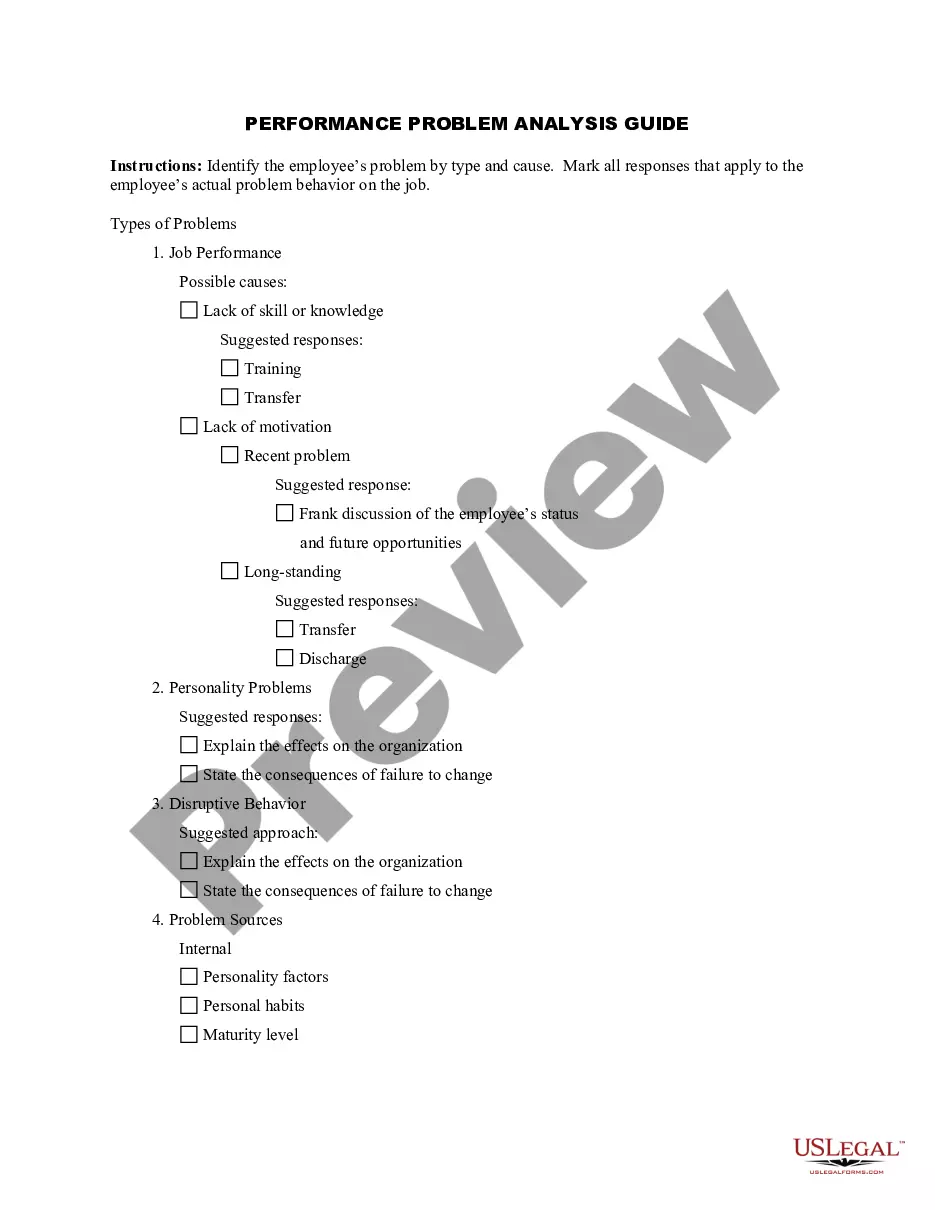
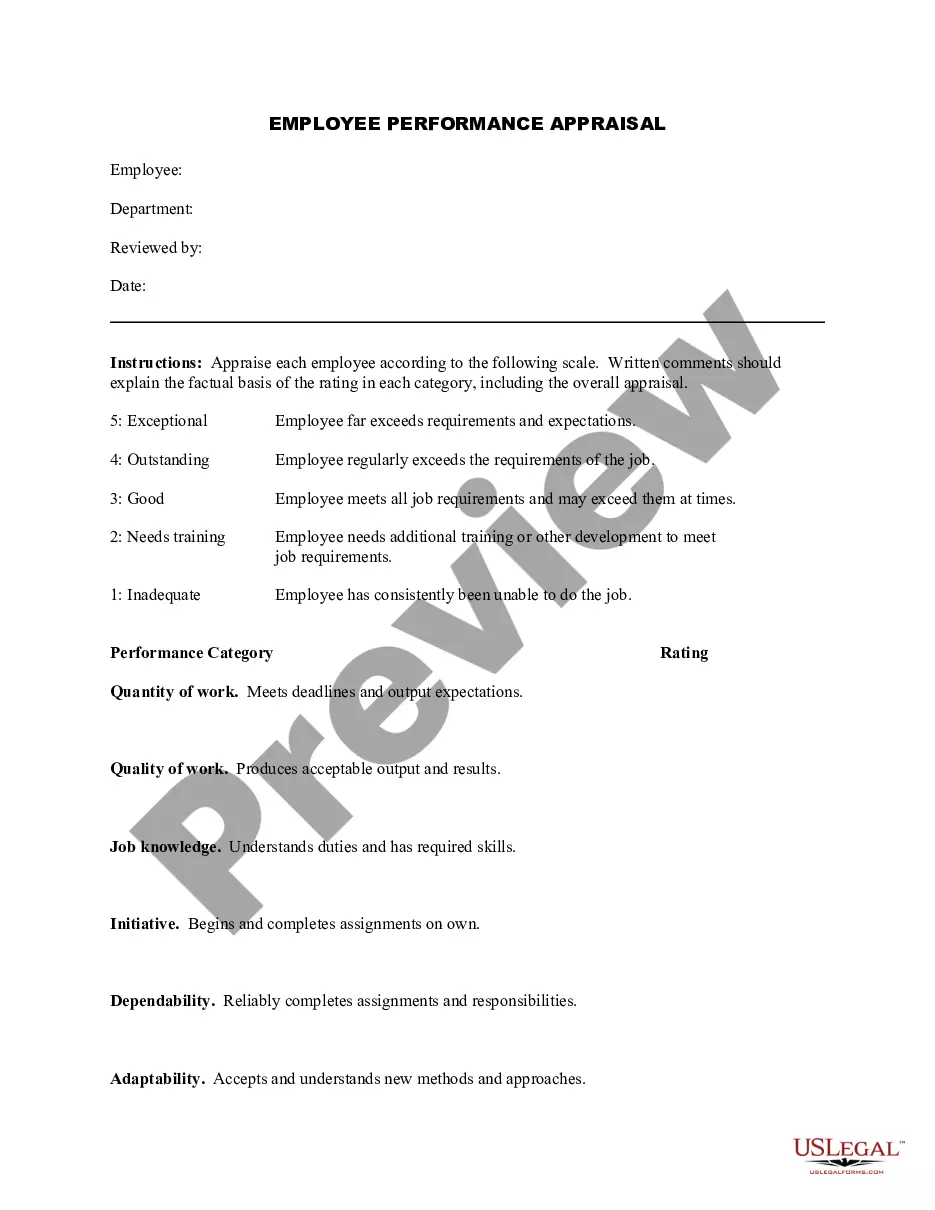
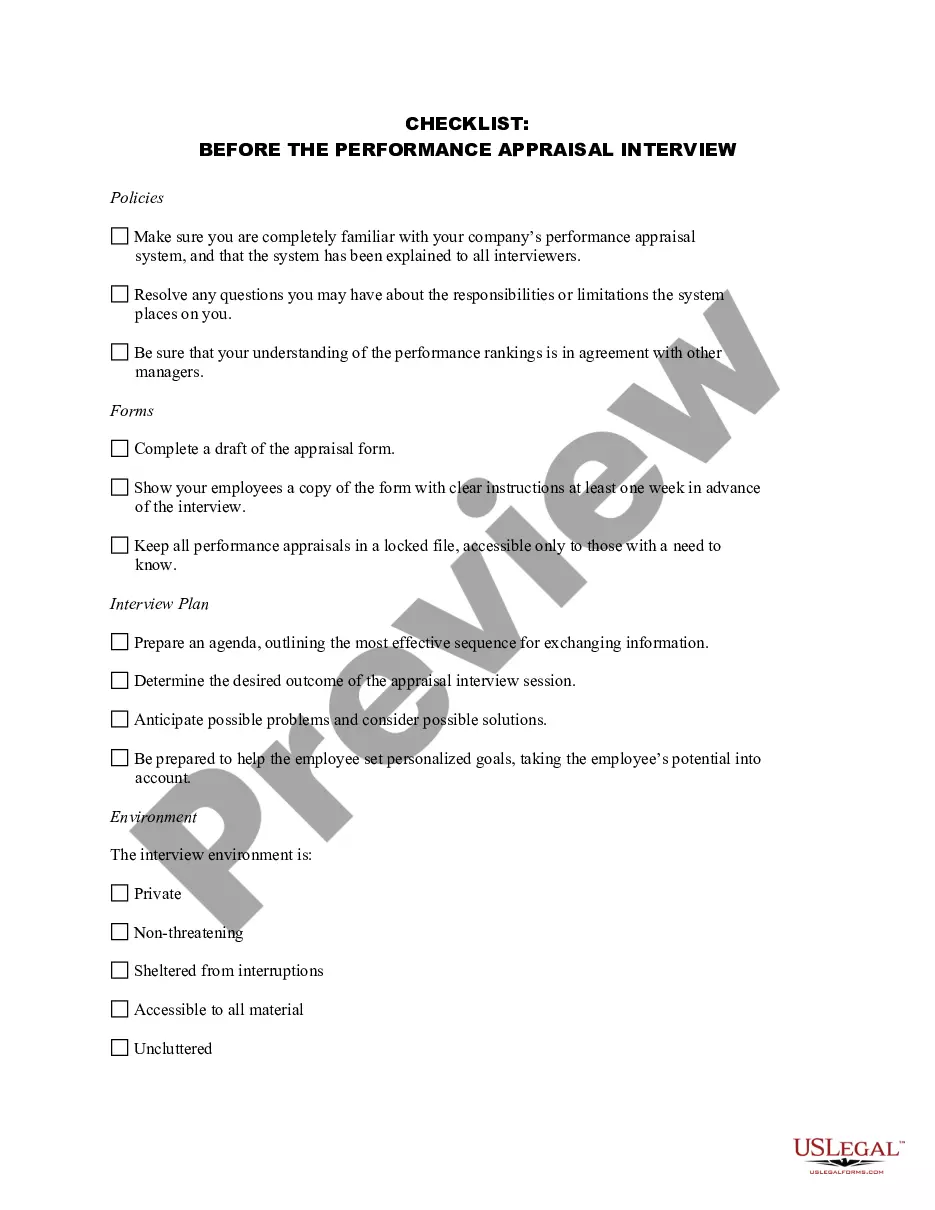
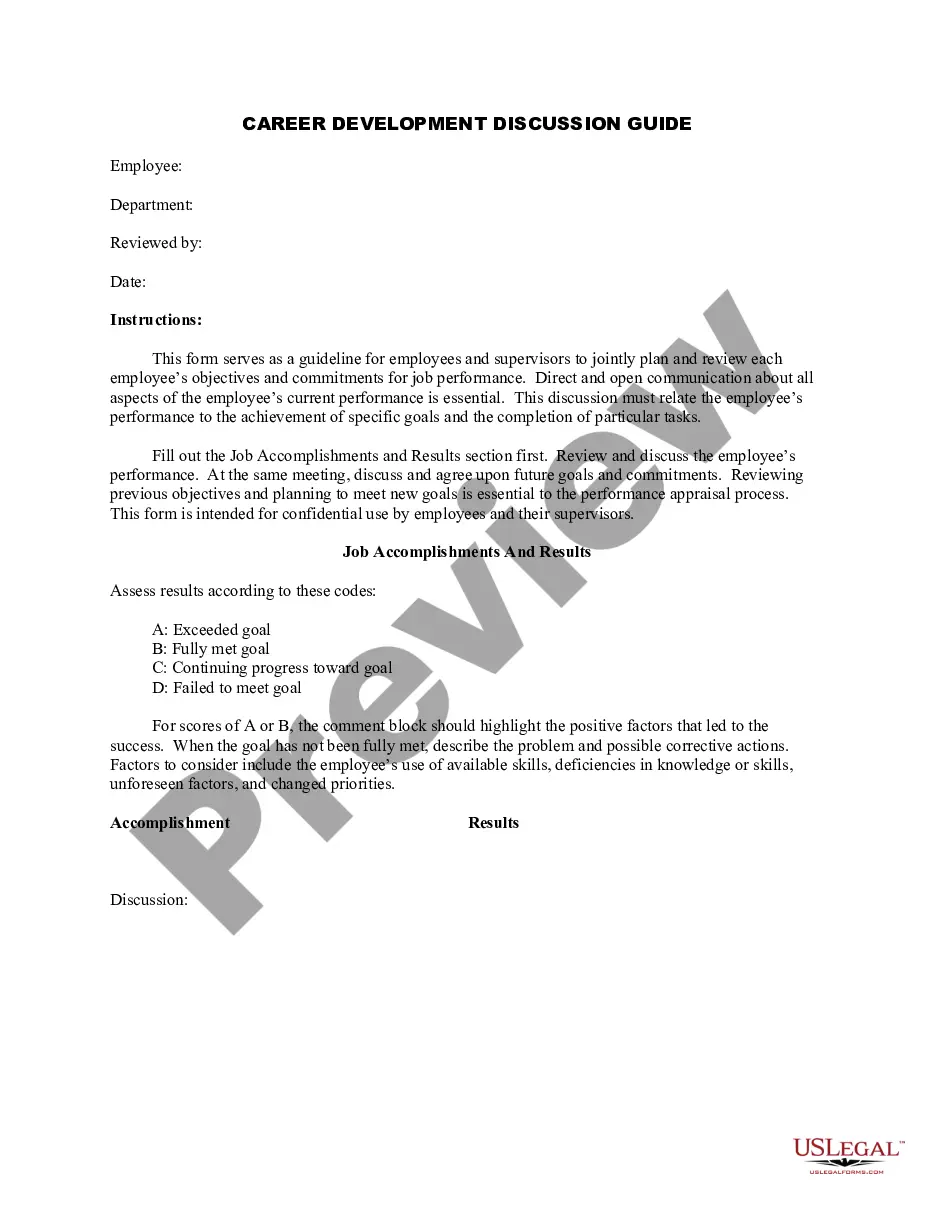
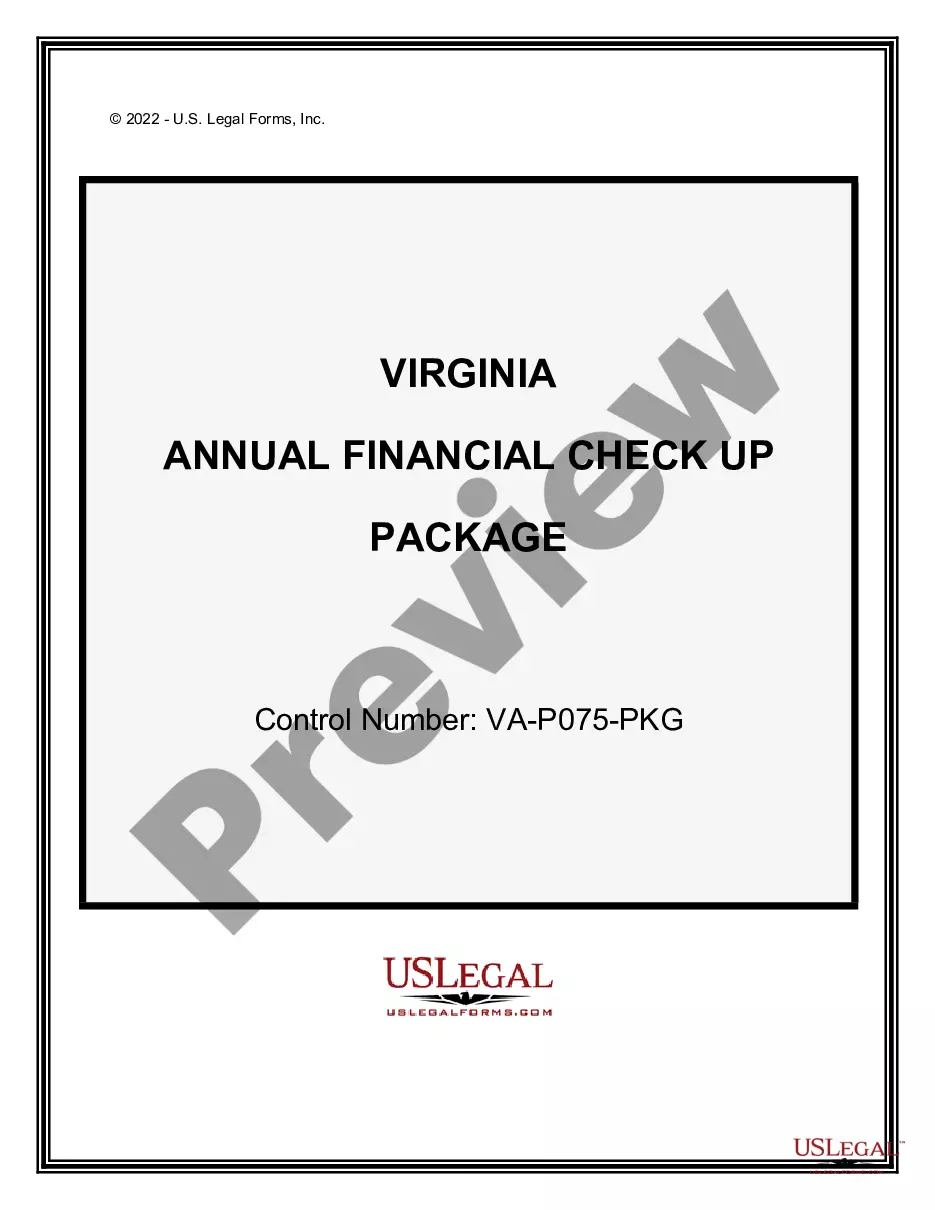
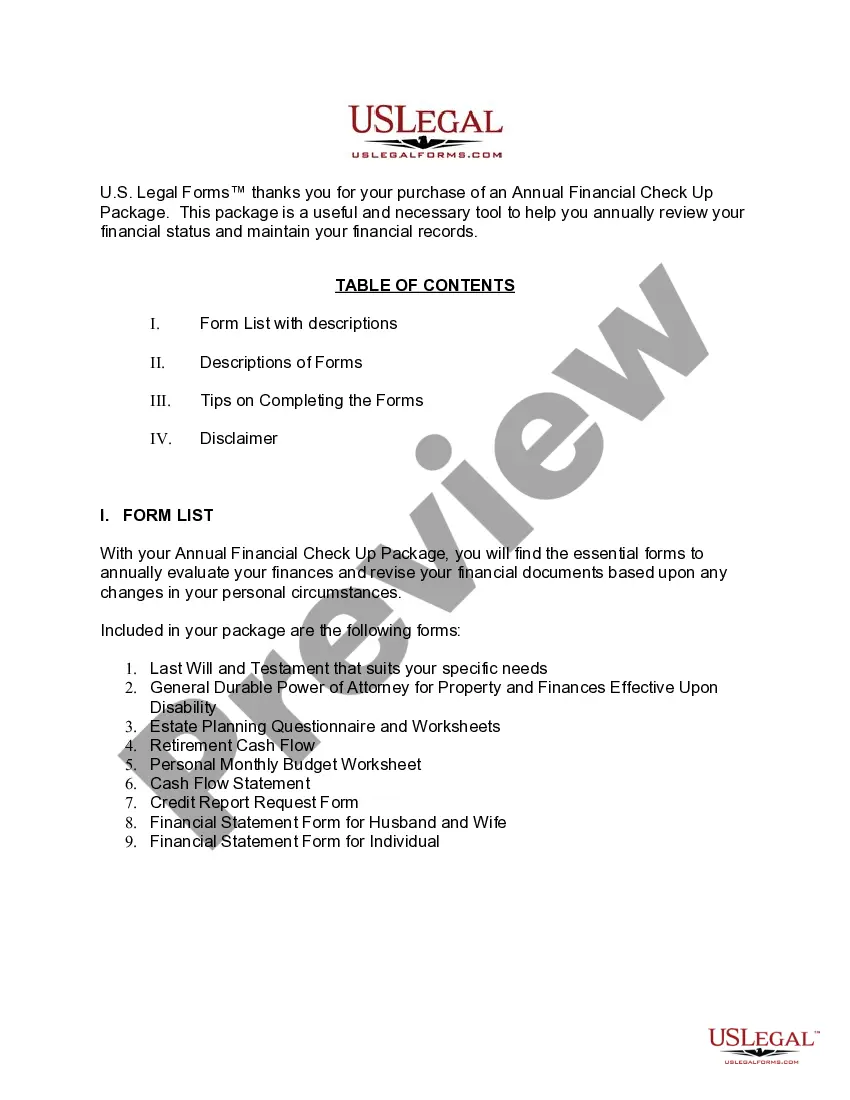
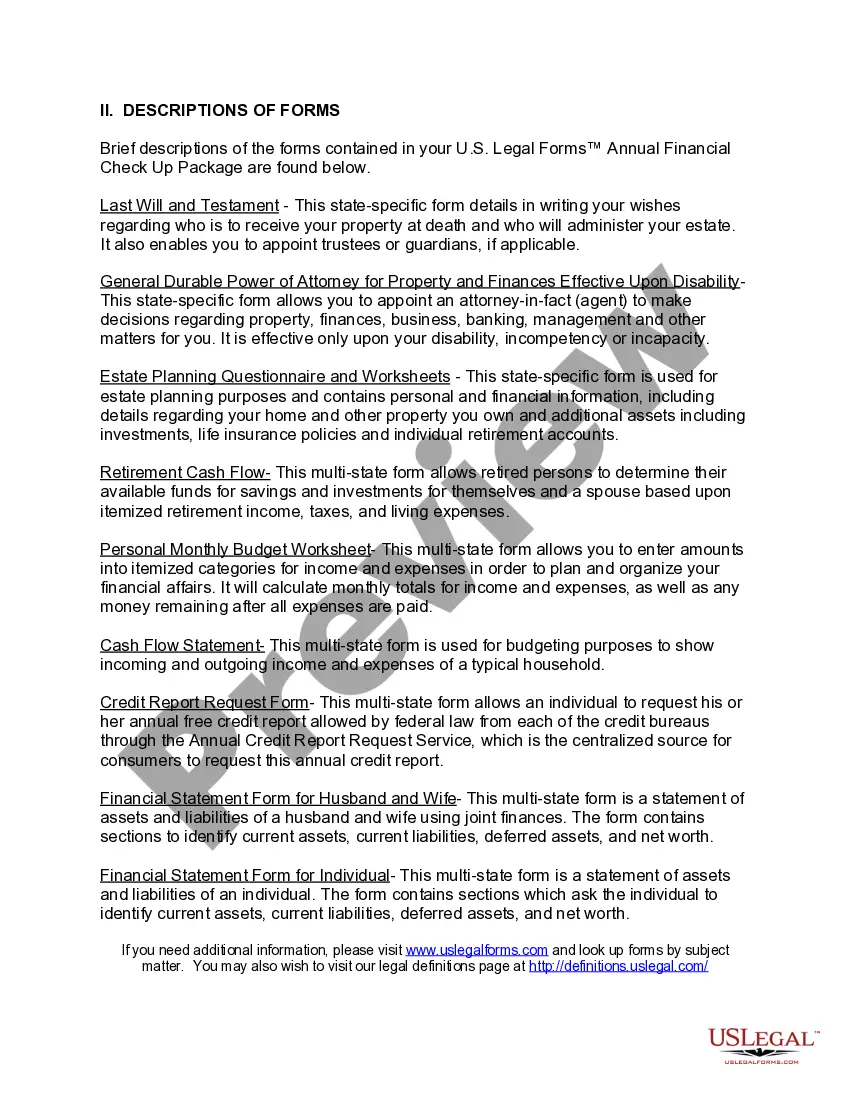
The Virginia Annual Financial Checkup Package is a comprehensive collection of legal forms designed to help you review and manage your financial status each year. This package sets itself apart by providing a suite of essential documents, including a Last Will and Testament, Powers of Attorney, and various financial worksheets. Each form in this package is tailored to address the specific financial and estate planning needs of individuals and families in Virginia, making it an invaluable resource for annual financial assessments.
Forms included in this package
- General Durable Power of Attorney for Property and Finances or Financial Effective upon Disability
- Estate Planning Questionnaire and Worksheets
- Financial Statement Form - Husband and Wife Joint
- Financial Statement Form - Individual
- Sample Letter for Request for Free Credit Report Allowed by Federal Law
- Cash Flow Statement
- Retirement Cash Flow
- Personal Monthly Budget Worksheet
When to use this document
This package is ideal for anyone looking to conduct an annual review of their financial situation. Use it when you need to:
- Update your Last Will and Testament based on life changes, such as marriage, divorce, or the birth of a child.
- Designate a Financial Power of Attorney in case of future incapacitation.
- Evaluate your financial standing using budget and cash flow worksheets.
- Request your credit report to monitor credit health.
- Organize and plan for retirement expenses accurately.
Who should use this form package
- Individuals and couples who want to ensure their estate plan reflects current circumstances.
- Those who wish to prepare for unforeseen financial challenges.
- Anyone looking to establish or update their financial documentation safely.
- Families planning for future financial needs and responsibilities.
Instructions for completing these forms
- Review all included forms and instructions carefully.
- Gather relevant financial documents, including assets and liabilities.
- Complete the forms by filling in the required information, ensuring accuracy.
- Read through the forms to confirm all necessary signatures and dates are included.
- Store completed documents securely and in an accessible location for future reference.
Notarization requirements for forms in this package
Forms in this package typically do not require notarization unless required by local law. However, itâs important to check the specific requirements for each form to ensure compliance with Virginia state laws.
Get your form ready online
Our built-in tools help you complete, sign, share, and store your documents in one place.
Make edits, fill in missing information, and update formatting in US Legal Forms—just like you would in MS Word.
Download a copy, print it, send it by email, or mail it via USPS—whatever works best for your next step.
Sign and collect signatures with our SignNow integration. Send to multiple recipients, set reminders, and more. Go Premium to unlock E-Sign.
If this form requires notarization, complete it online through a secure video call—no need to meet a notary in person or wait for an appointment.
We protect your documents and personal data by following strict security and privacy standards.

Make edits, fill in missing information, and update formatting in US Legal Forms—just like you would in MS Word.

Download a copy, print it, send it by email, or mail it via USPS—whatever works best for your next step.

Sign and collect signatures with our SignNow integration. Send to multiple recipients, set reminders, and more. Go Premium to unlock E-Sign.

If this form requires notarization, complete it online through a secure video call—no need to meet a notary in person or wait for an appointment.

We protect your documents and personal data by following strict security and privacy standards.
Mistakes to watch out for
- Failing to update the Last Will and Testament after major life events.
- Not having a separate Financial Power of Attorney for property and finances.
- Leaving sections of financial worksheets or forms blank.
- Overlooking the need for witnessed signatures on certain documents.
Benefits of completing this package online
- Convenience of accessing and downloading forms instantly from anywhere.
- The ability to edit and customize forms easily to fit individual needs.
- Compliance with the latest legal standards, ensuring reliability.
Looking for another form?

Form popularity
FAQ
The VA disability 5 year rule allows the VA to ex-examine your VA disability rating within 5 years of your initial examination if your condition is expected to improve over time. However, the VA may still change your disability rating past the 5-year deadline if your condition has significantly improved.
No, you don't have to go, and it will in no way affect your disability compensation...
If you're in one of the lower priority groups, you could lose your VA health care benefits in the future. If you don't keep your private insurance, this would leave you without health coverage.
Q: Is everyone scheduled for a VA claim exam? No, not everyone will be requested to attend a VA exam. After you have applied for disability compensation and/or pension, you may receive a phone call or a letter from VA or a VA partner asking you to come to a claim exam, also known as a C&P exam.
It is important to have a regular doctor who helps make sure you receive the medical care that is best for your individual needs. But healthy people often don't need annual physicals, and they can even do more harm than good.
When Does the VA Re-Evaluate Disability Cases? The VA may require medical re-examination of the veteran six months after leaving service, and then again between two and five years later, in order that the VA can verify either the continued existence or the current severity of a disability.
How Often Do Veterans Attend VA Reexaminations? VA usually re-evaluates veterans' service-connected conditions on two occasions: Six months after leaving military service; and. Between two and five years from the date of the decision to grant VA disability benefits.
Ten Year Rule) The 10 year rule is after 10 years, the service connection is protected from being dropped. Twenty Year Rule) If your disability has been continuously rated at or above a certain rating level for 20 or more years, the VA cannot reduce your rating unless it finds the rating was based on fraud.