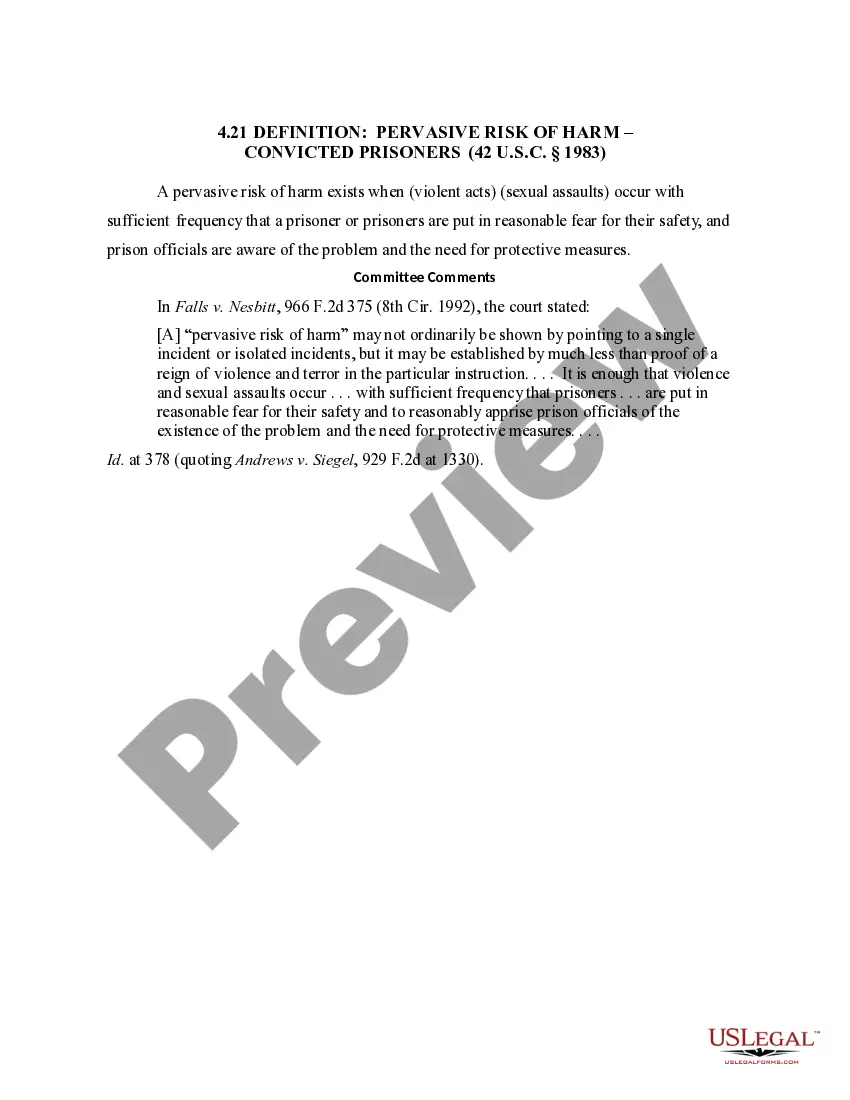
4.21 DEFINITION: PERVASIVE RISK OF HARM - CONVICTED PRISONERS (42 U.S.C. Civ. 1983
Overview of this form
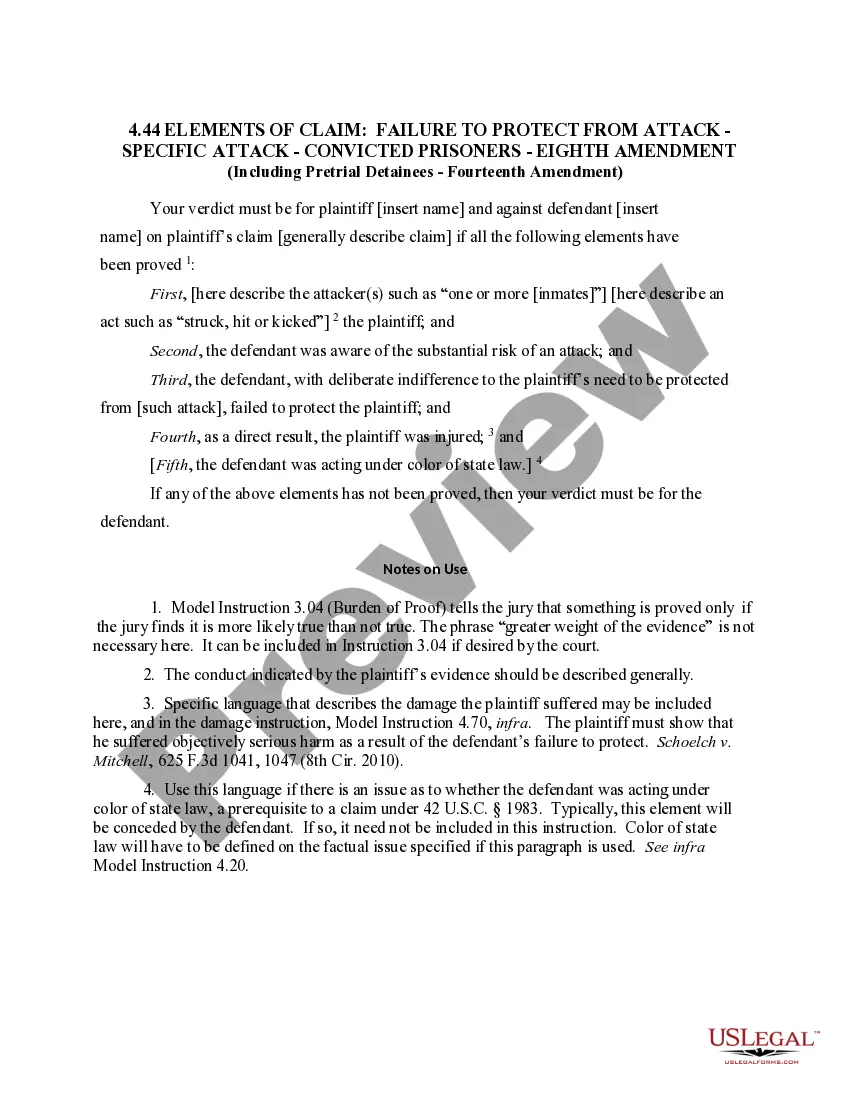
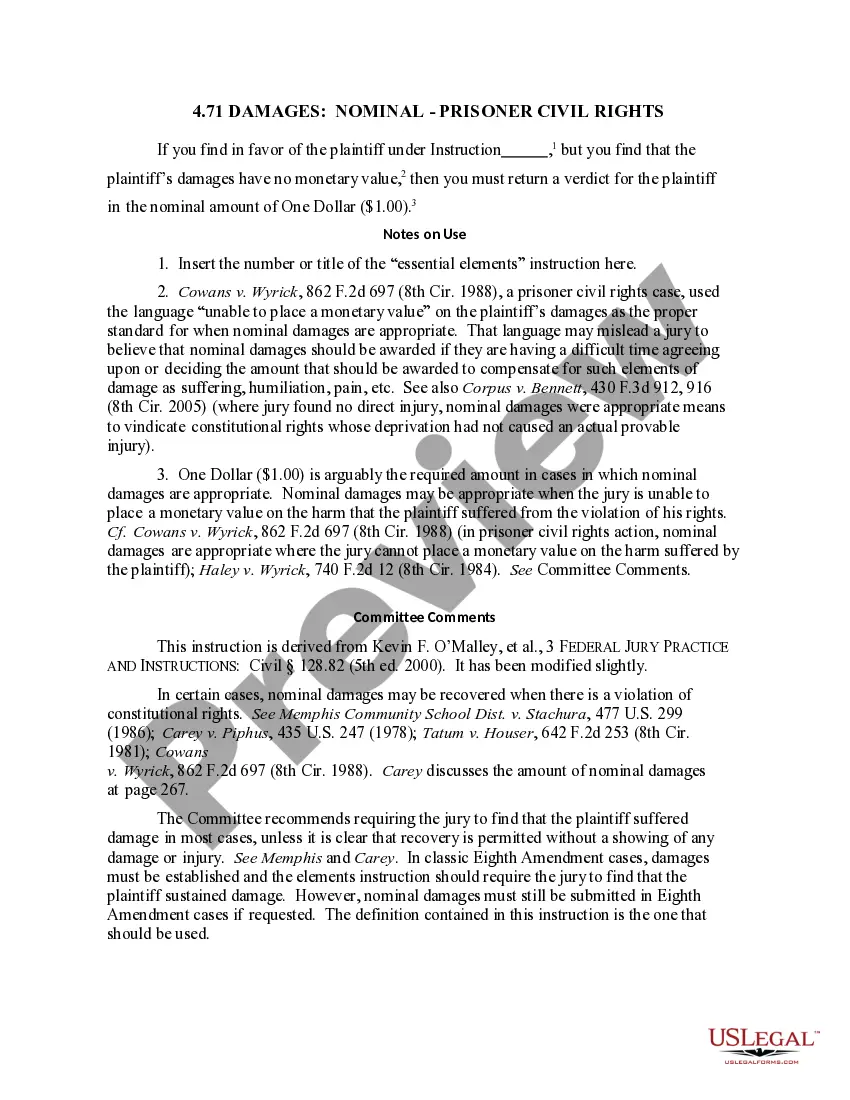
The 4.21 definition of pervasive risk of harm for convicted prisoners is a legal framework used under 42 U.S.C. § 1983. This form helps establish whether a prison environment poses a continual threat to inmates due to frequent violent or sexual acts. Unlike other legal forms, it specifically addresses situations where prisons fail to protect inmates from known dangers, highlighting the responsibility of prison officials to take adequate protective measures.
Key components of this form
- Definition of pervasive risk of harm.
- Criteria for establishing a continual threat to inmate safety.
- Judicial references and case law supporting the definition.
- Responsibilities of prison officials when aware of the risks.
Situations where this form applies
This form is essential when a convicted prisoner faces danger from other inmates that stems from persistent violent or sexual assaults. It is particularly relevant in situations where there is a pattern of violence that prison officials are aware of but have failed to address adequately, placing inmates in fear for their safety.
Who needs this form
- Convicted prisoners who believe they are at risk of harm within the facility.
- Legal representatives advocating for the safety of their clients in correctional settings.
- Advocacy groups focused on prison reform and inmate rights.
Instructions for completing this form
- Identify the specific incidents of violence or threats made against the inmate.
- Gather evidence demonstrating the frequency of these events.
- Document the awareness of prison officials regarding these risks.
- Explain how these factors contribute to a pervasive risk of harm.
- Provide details about any previous complaints made to prison authorities.
Notarization guidance
This form does not typically require notarization unless specified by local law. Ensure you check your jurisdiction for any specific requirements related to the legal documentation of inmate safety concerns.
Get your form ready online
Our built-in tools help you complete, sign, share, and store your documents in one place.
Make edits, fill in missing information, and update formatting in US Legal Forms—just like you would in MS Word.
Download a copy, print it, send it by email, or mail it via USPS—whatever works best for your next step.
Sign and collect signatures with our SignNow integration. Send to multiple recipients, set reminders, and more. Go Premium to unlock E-Sign.
If this form requires notarization, complete it online through a secure video call—no need to meet a notary in person or wait for an appointment.
We protect your documents and personal data by following strict security and privacy standards.

Make edits, fill in missing information, and update formatting in US Legal Forms—just like you would in MS Word.

Download a copy, print it, send it by email, or mail it via USPS—whatever works best for your next step.

Sign and collect signatures with our SignNow integration. Send to multiple recipients, set reminders, and more. Go Premium to unlock E-Sign.

If this form requires notarization, complete it online through a secure video call—no need to meet a notary in person or wait for an appointment.

We protect your documents and personal data by following strict security and privacy standards.
Mistakes to watch out for
- Relying on isolated incidents instead of establishing a pattern of risk.
- Failing to adequately document incidents or responses from prison officials.
- Not presenting all relevant evidence when filing a complaint.
Why complete this form online
- Convenient access to legal documentation without needing to visit an attorney's office.
- Editable forms that allow users to customize their details easily.
- Reliability that comes from templates drafted by licensed attorneys.
Looking for another form?
Form popularity
FAQ
What is the purpose of Section 1983 of the U.S. Code, as it relates to prisoners? It allows inmates to sue in federal court.
Prisoners' rights have four legal foundations: the U.S. Constitution, federal statutes, states constitutions, and state statutes. It is important to remember that constitutional rights are not absolute.
The fourth amendment guarantees prisoners the limited right to be free from unreasonable searches and seizures. See, e.g., United States v. Chamorro, 687 F.
However, the U.S. Supreme Court has interpreted Section 1983 of the U.S. Code to permit prisoners to sue state correctional officials when the conditions of confinement fail to meet constitutional standards of physical security, adequate medical treatment, freedom of religious expression, and so forth.
Section 1983 allows defendants to be found liable only when they have acted ?under color of any statute, ordinance, regulation, custom, or usage, of any State or Territory or the District of Columbia.? 42 U.S.C.
Section 1983 provides an individual the right to sue state government employees and others acting "under color of state law" for civil rights violations. Section 1983 does not provide civil rights; it is a means to enforce civil rights that already exist.
3 The eighth amendment provides: "Excessive bail shall not be required, nor excessive fines imposed, nor cruel and unusual punishments inflicted." U.S. CONST.
The right to access the court comes from section 1983 of the Civil Rights Act of 1871, which grants people the ability to turn to the federal courts when states violate rights guaranteed by law, including the right to Medicaid services.