Plaintiff's Response to Defendant's First Request for Production of Documents - Personal injury
About this form
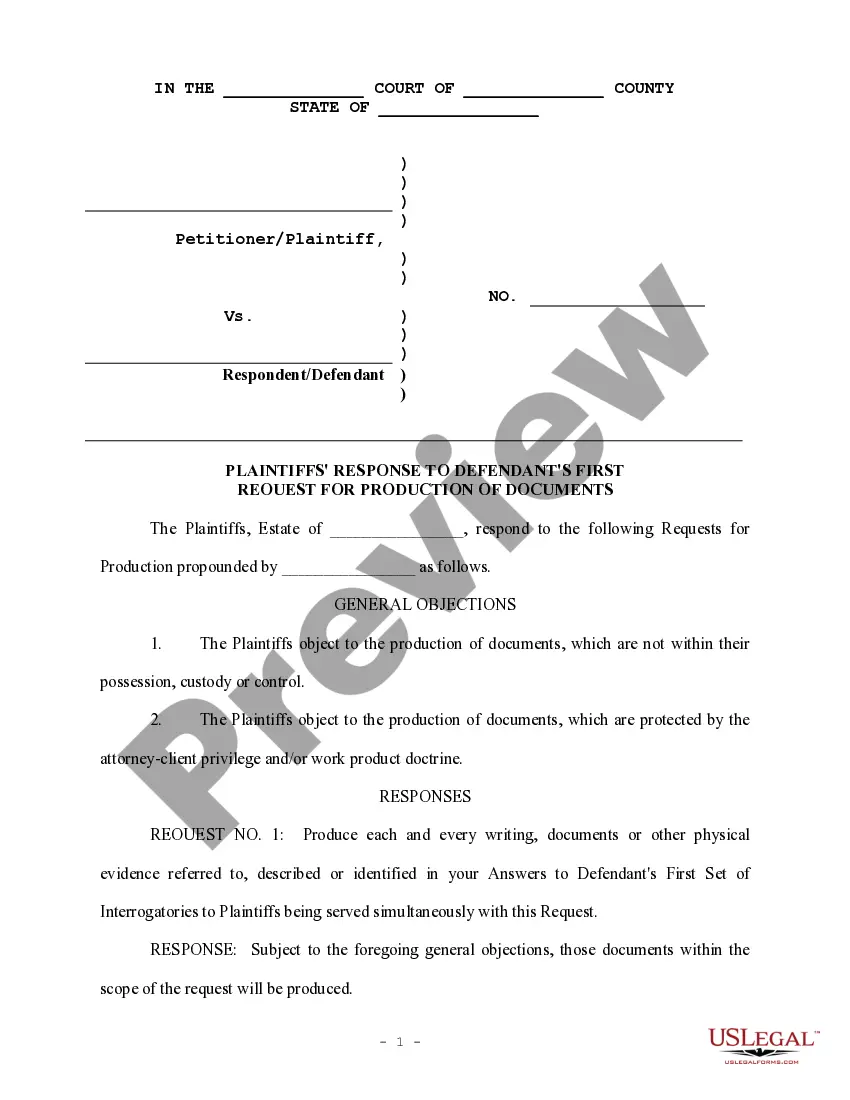
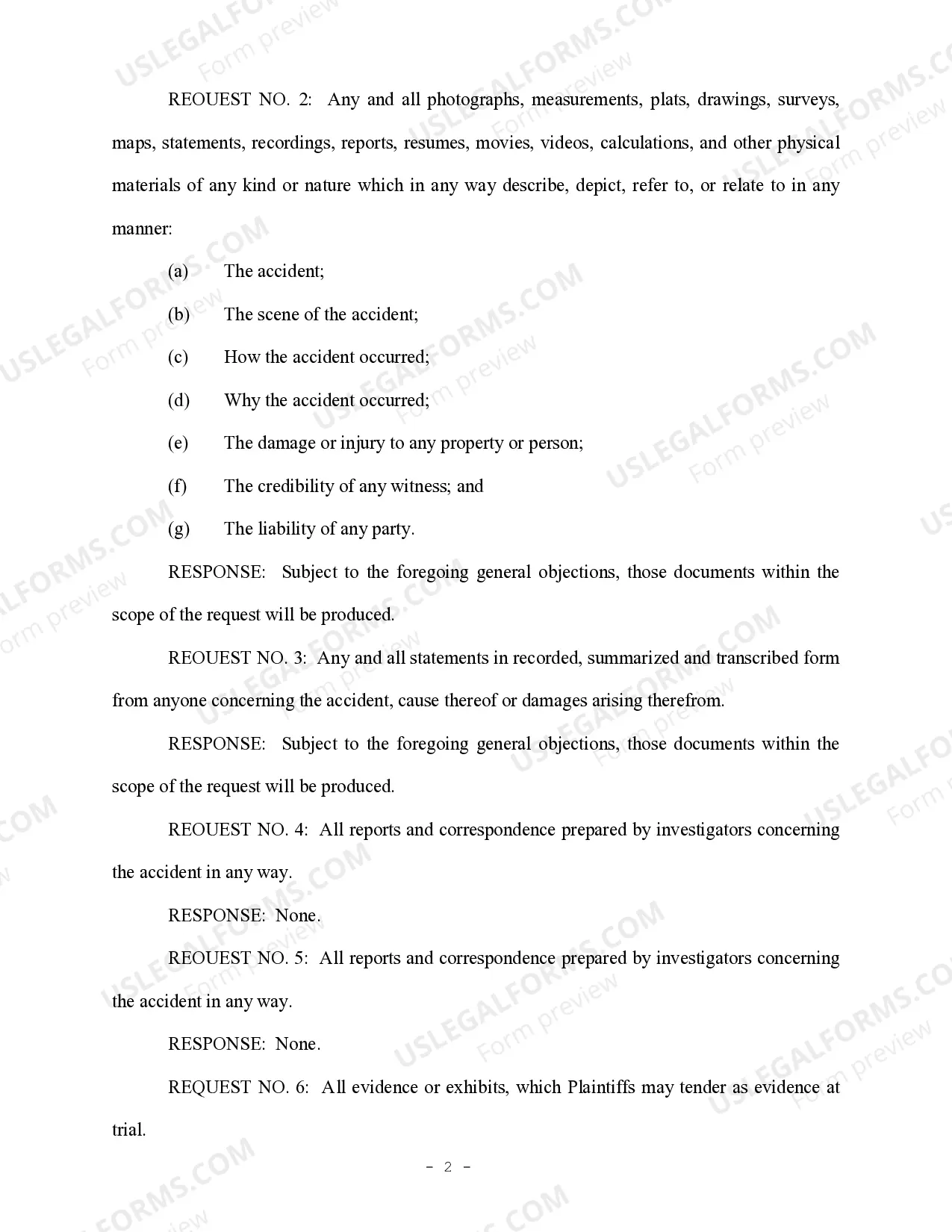
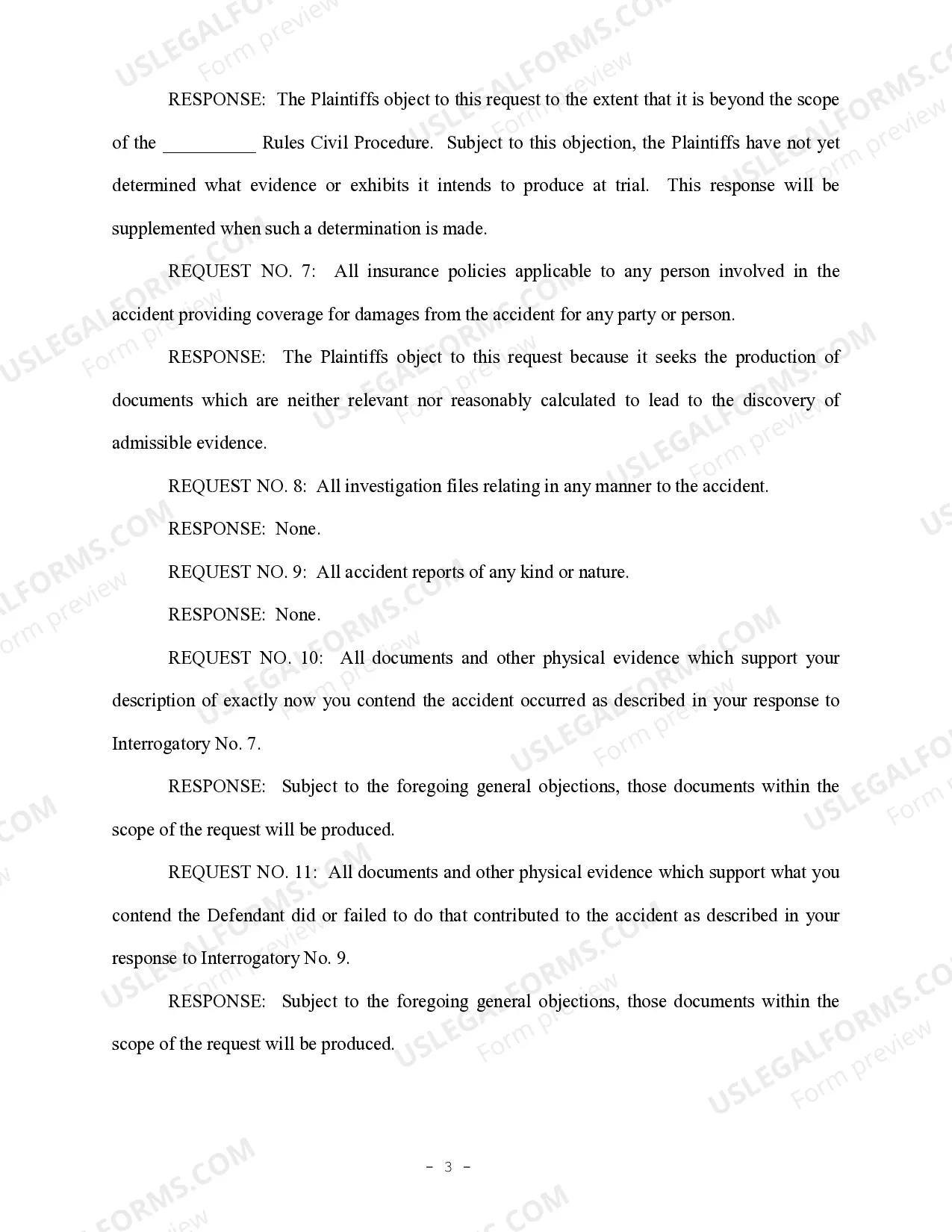
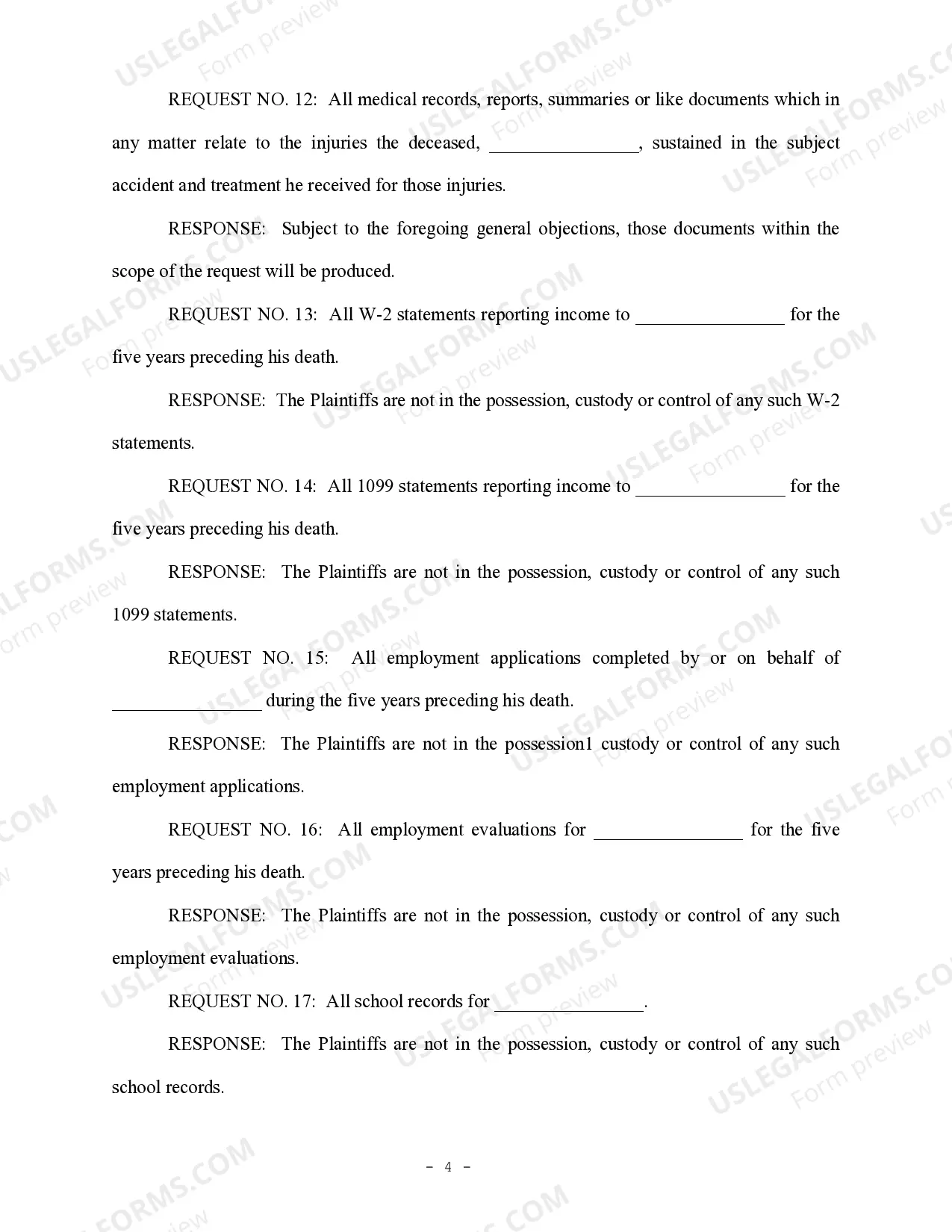
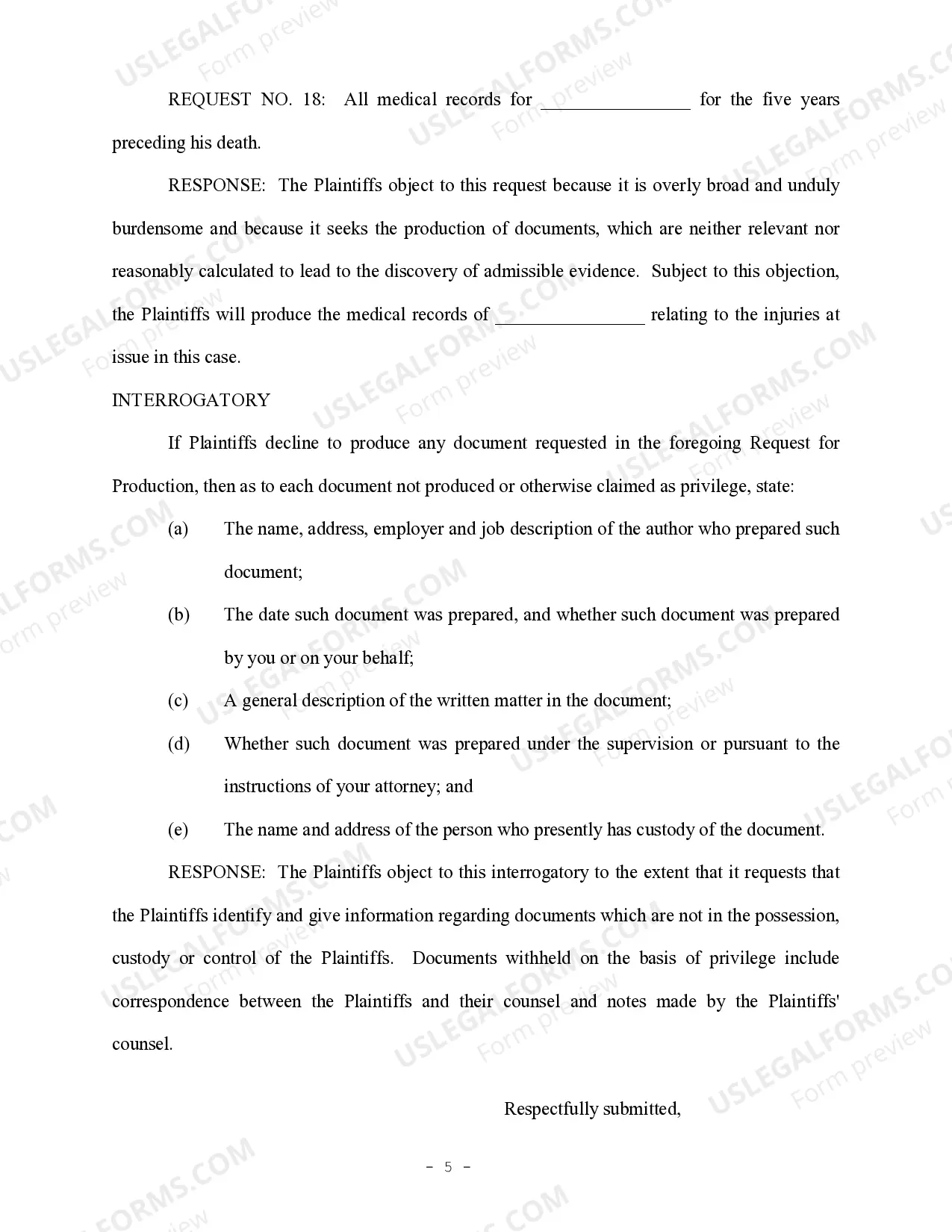
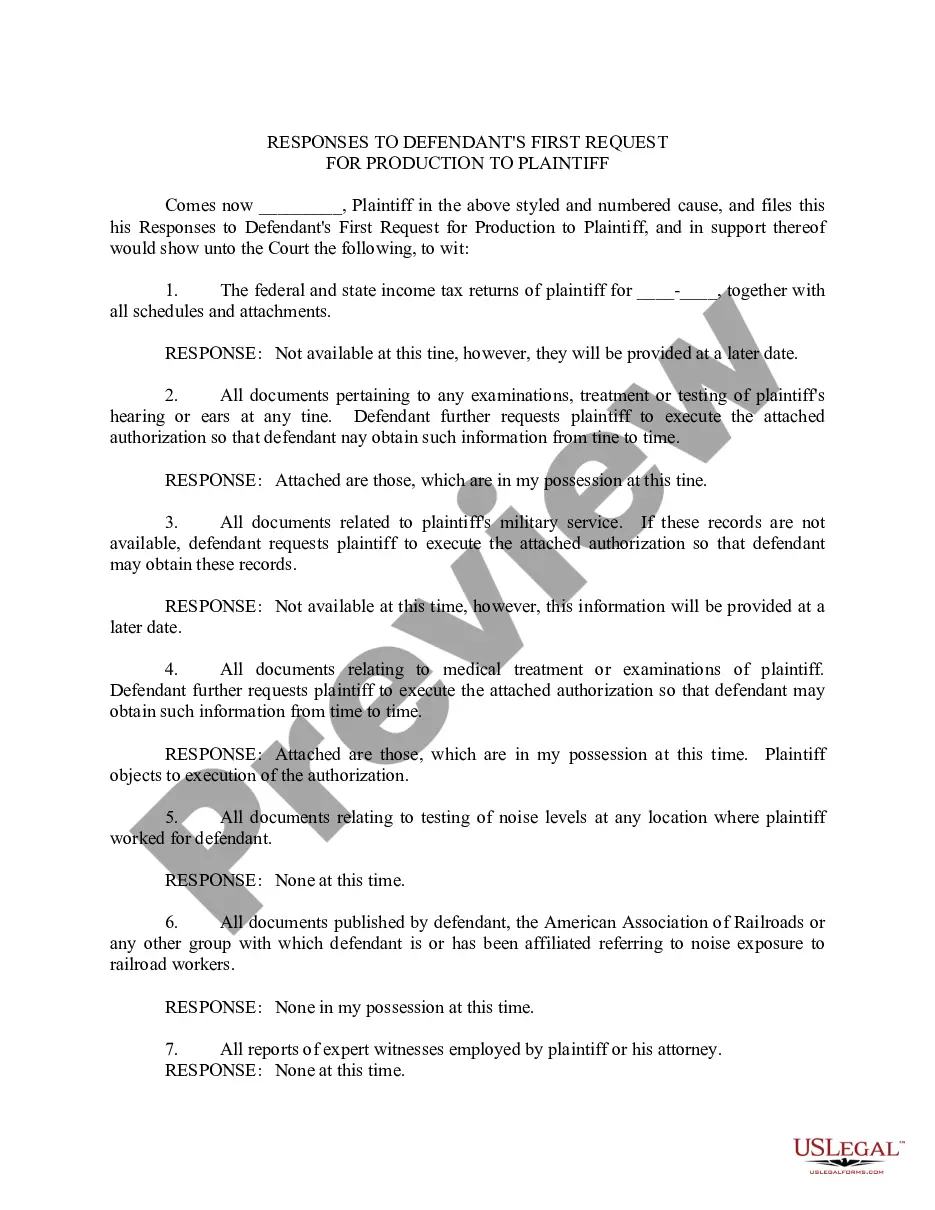
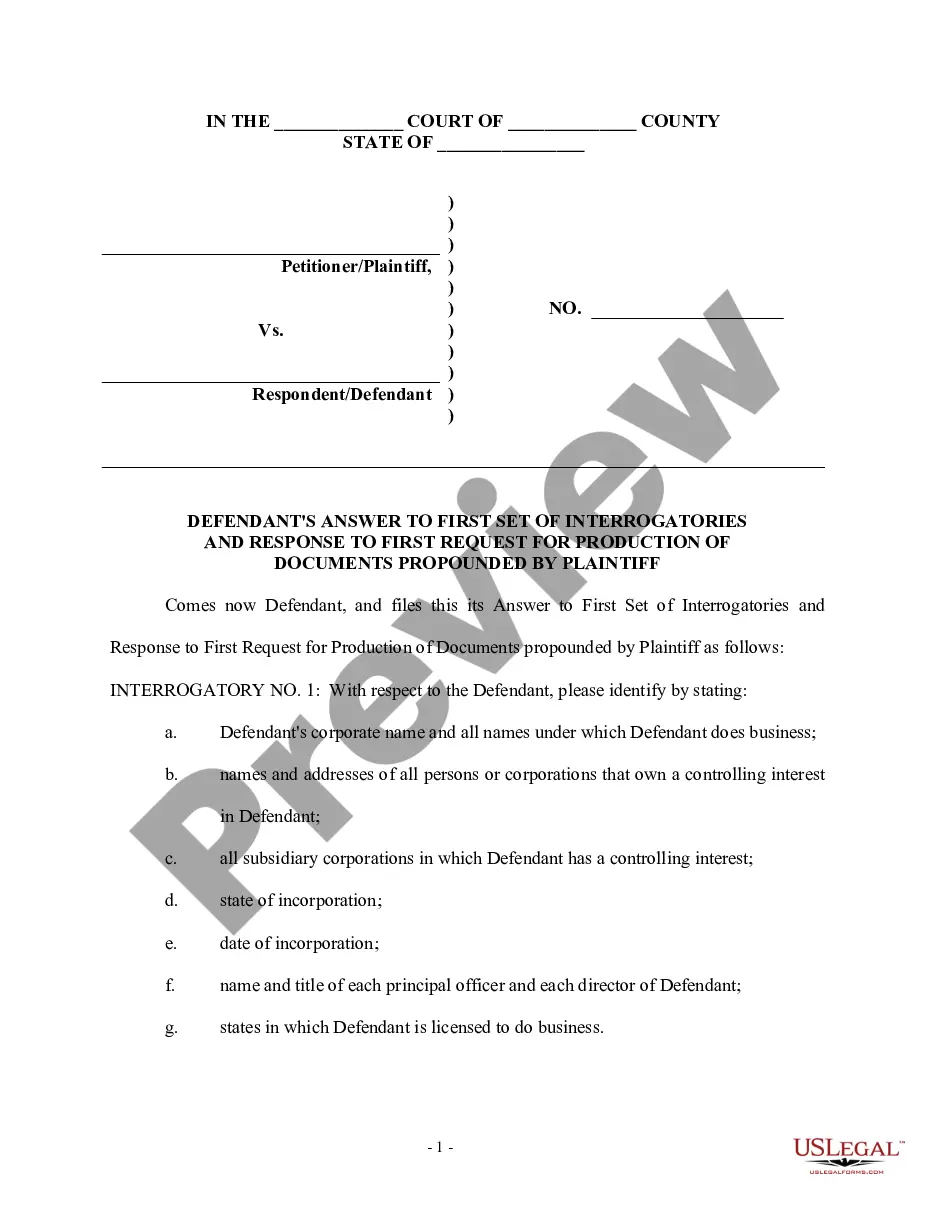
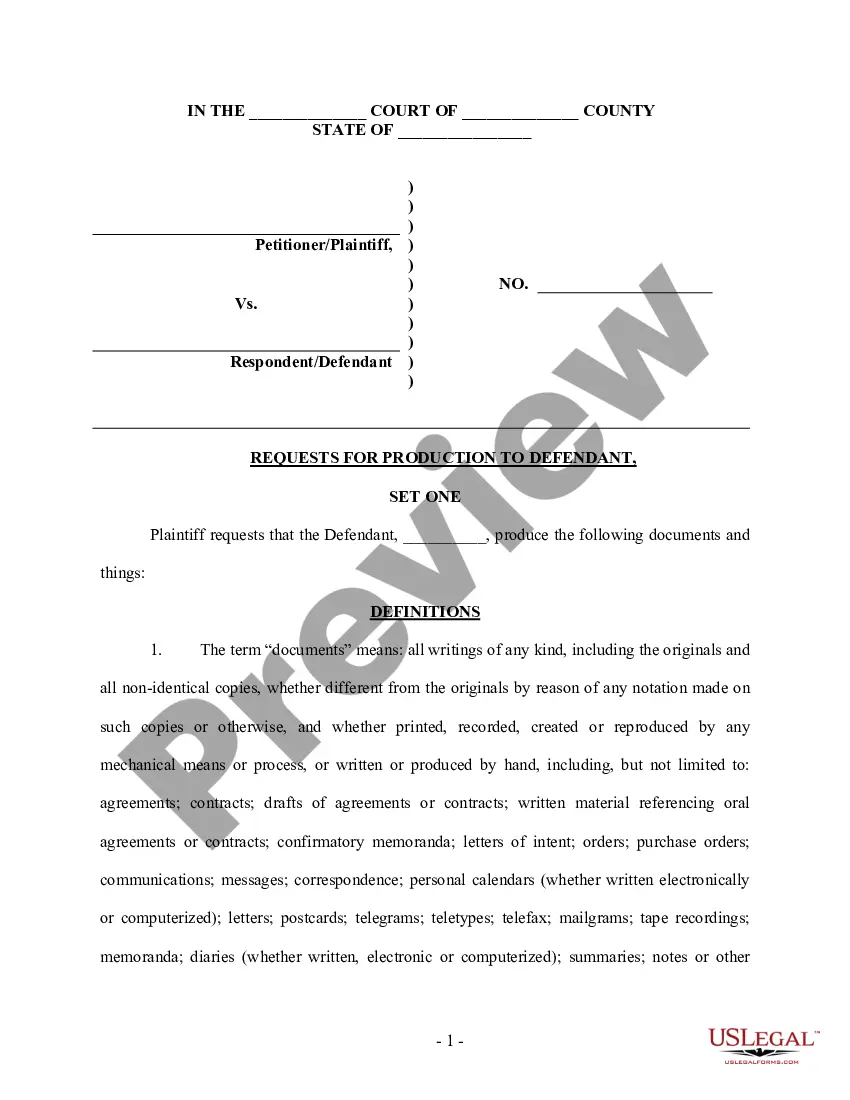
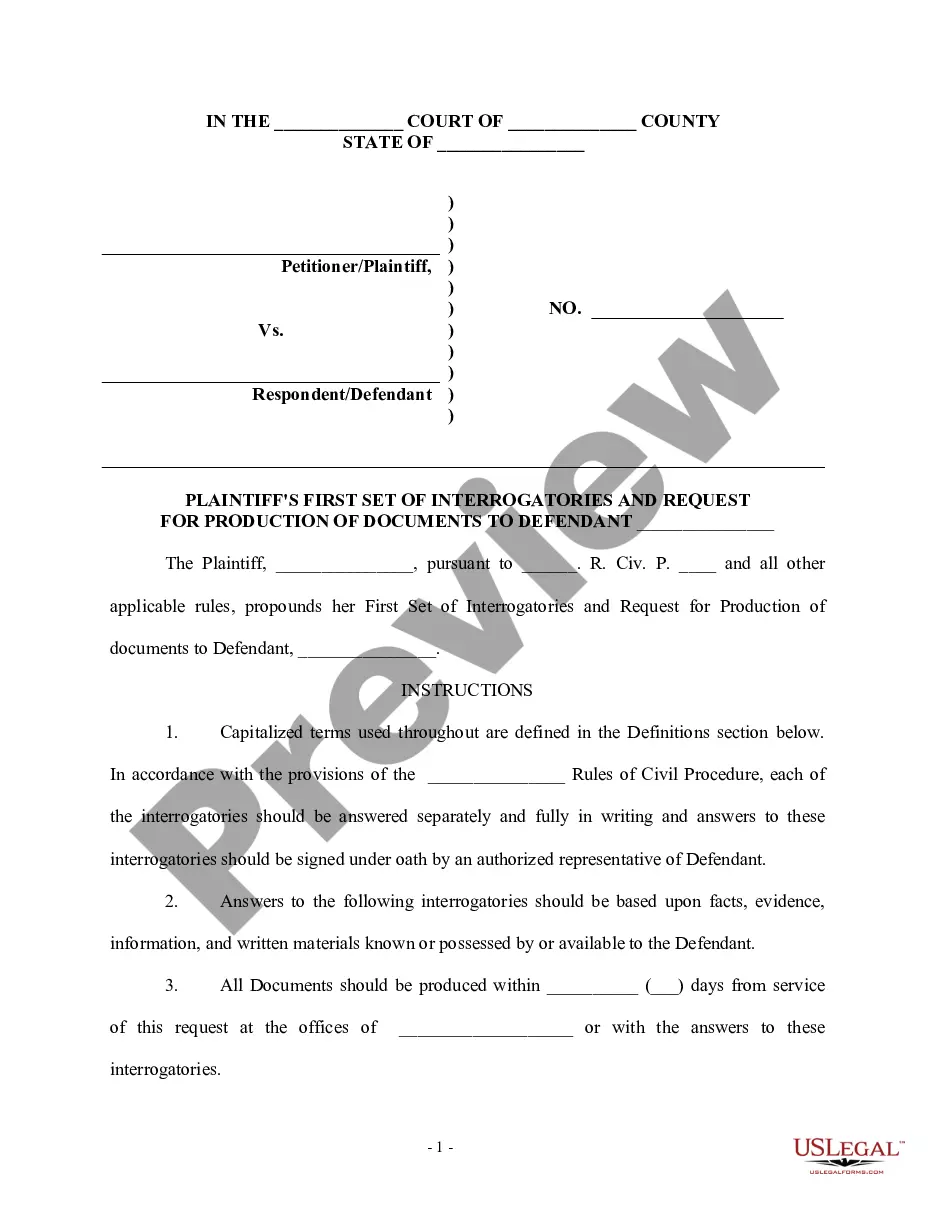
The Plaintiff's Response to Defendant's First Request for Production of Documents is a legal document used in personal injury litigation. This form allows the plaintiff to respond to requests made by the defendant regarding the production of documents that may be relevant to the case. It specifies which documents will be provided and outlines any objections the plaintiff has regarding the request, distinguishing it from similar legal forms aimed at different phases of litigation.
Form components explained
- General objections section addressing the production of documents not in the plaintiff's possession.
- Responses to each request detailing what documents will or will not be produced.
- Citation of applicable legal rules for objections made.
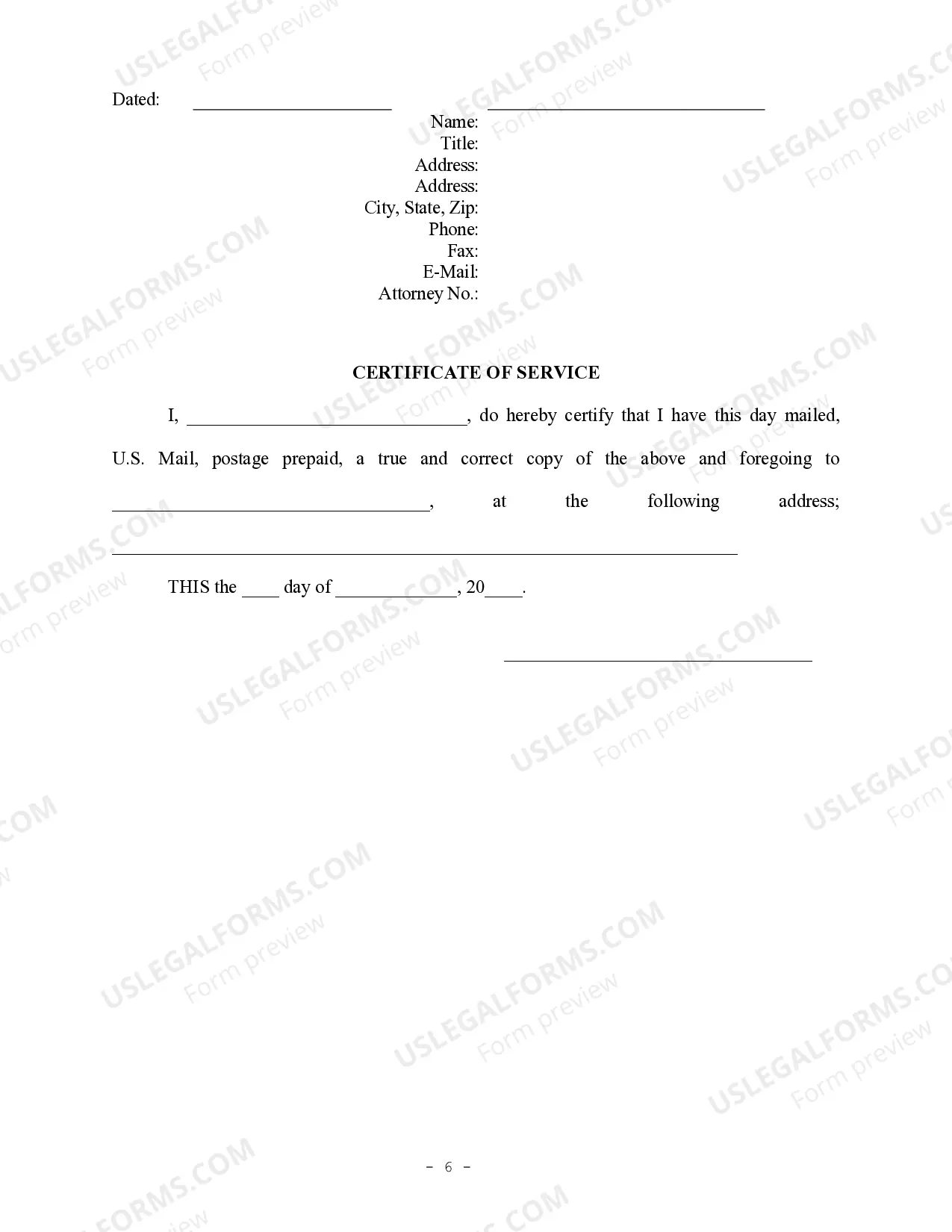
- Certificate of service confirming the response was sent to the defendant.
- Space for signatures and dates to finalize the response.
When to use this document
This form is used during the discovery phase of a personal injury lawsuit when the defendant requests specific documents from the plaintiff. It is essential when the plaintiff needs to formally respond to demands for evidence related to the case, including any documents, photographs, or records that support their claims or defenses.
Intended users of this form
- Individuals who have filed a personal injury lawsuit as plaintiffs.
- Legal representatives or attorneys managing personal injury cases.
- Anyone involved in a legal dispute where document production is requested by the opposing party.
How to prepare this document
- Identify the parties involved, including the plaintiff and defendant.
- Review the defendant's requests for production of documents carefully.
- Respond to each request, indicating which documents you will produce and stating any objections clearly.
- Include a certificate of service to confirm that the response has been sent to the defendant.
- Sign and date the response, ensuring it is properly completed.
Does this document require notarization?
In most cases, this form does not require notarization. However, some jurisdictions or signing circumstances might. US Legal Forms offers online notarization powered by Notarize, accessible 24/7 for a quick, remote process.
Get your form ready online
Our built-in tools help you complete, sign, share, and store your documents in one place.
Make edits, fill in missing information, and update formatting in US Legal Forms—just like you would in MS Word.
Download a copy, print it, send it by email, or mail it via USPS—whatever works best for your next step.
Sign and collect signatures with our SignNow integration. Send to multiple recipients, set reminders, and more. Go Premium to unlock E-Sign.
If this form requires notarization, complete it online through a secure video call—no need to meet a notary in person or wait for an appointment.
We protect your documents and personal data by following strict security and privacy standards.

Make edits, fill in missing information, and update formatting in US Legal Forms—just like you would in MS Word.

Download a copy, print it, send it by email, or mail it via USPS—whatever works best for your next step.

Sign and collect signatures with our SignNow integration. Send to multiple recipients, set reminders, and more. Go Premium to unlock E-Sign.

If this form requires notarization, complete it online through a secure video call—no need to meet a notary in person or wait for an appointment.

We protect your documents and personal data by following strict security and privacy standards.
Typical mistakes to avoid
- Failing to respond to all requests; ensure each request is addressed.
- Not clearly stating objections, which can lead to confusion.
- Overlooking the requirement to provide a certificate of service.
- Submitting responses without proper review, which may lead to incomplete or incorrect information.
Benefits of using this form online
- Convenient access to legal forms without the need for in-person visits.
- Editable templates allow for customization to fit individual cases.
- Reliable, attorney-drafted content ensures compliance with legal standards.
- Instant downloads, which save time and expedite the legal process.
Legal use & context
- Responses must be truthful and comply with court rules to avoid penalties.
- Documents produced as part of this request can be used in court during trial.
- Understanding the legal standards for document discovery is crucial to adequately respond.
What to keep in mind
- The form is essential for responding to discovery requests in personal injury cases.
- Clear objections and a thorough response are critical for legal compliance.
- Using this form online ensures efficiency and access to reliable legal resources.
Looking for another form?

Form popularity
FAQ
When responding to Requests for Admissions, remember to answer as follows: Admit: If any portion of the Request for Admission is true then you must admit to that portion of the request. You are also allowed to have a hybrid response admit the part of the request that is true while denying another part.
The making available by a party of documents in his possession, custody or power for inspection by the other party or for use as evidence at trial.
The plaintiff must respond to your requests for discovery. The plaintiff must respond by the deadline. There are different ways to make sure you get each kind of discovery if the plaintiff does not give it to you by the deadline.
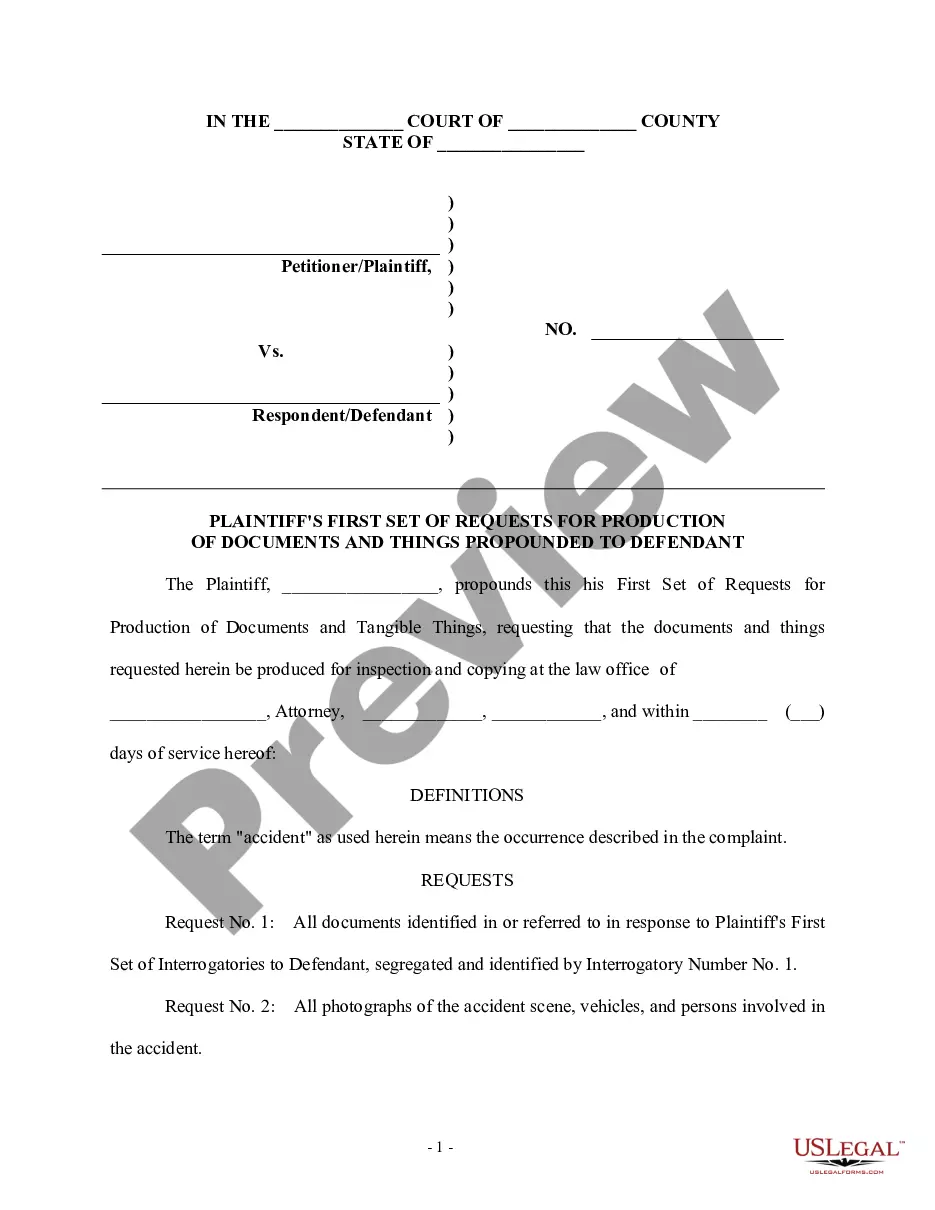
A request for production is a discovery device used to gain access to documents, electronic data, and physical items held by an opposing party in a legal matter. The aim is to gain insight into any relevant evidence that the opposing party holds.
When responding to Requests for Admissions, remember to answer as follows: Admit: If any portion of the Request for Admission is true then you must admit to that portion of the request. You are also allowed to have a hybrid response admit the part of the request that is true while denying another part.
Thank you for your inquiry regarding our product or service. Thank you for your interest in our product or service. We would like to thank you for your letter inquiring about our product. We truly appreciate your letter asking for information about our service.
If a request asks for a document, make a copy of the document; in your response, describe the document and say that a copy is attached; and attach a copy of the document to the responses you send back to the other side.
In a civil action, a request for admission is a discovery device that allows one party to request that another party admit or deny the truth of a statement under oath. If admitted, the statement is considered to be true for all purposes of the current trial.