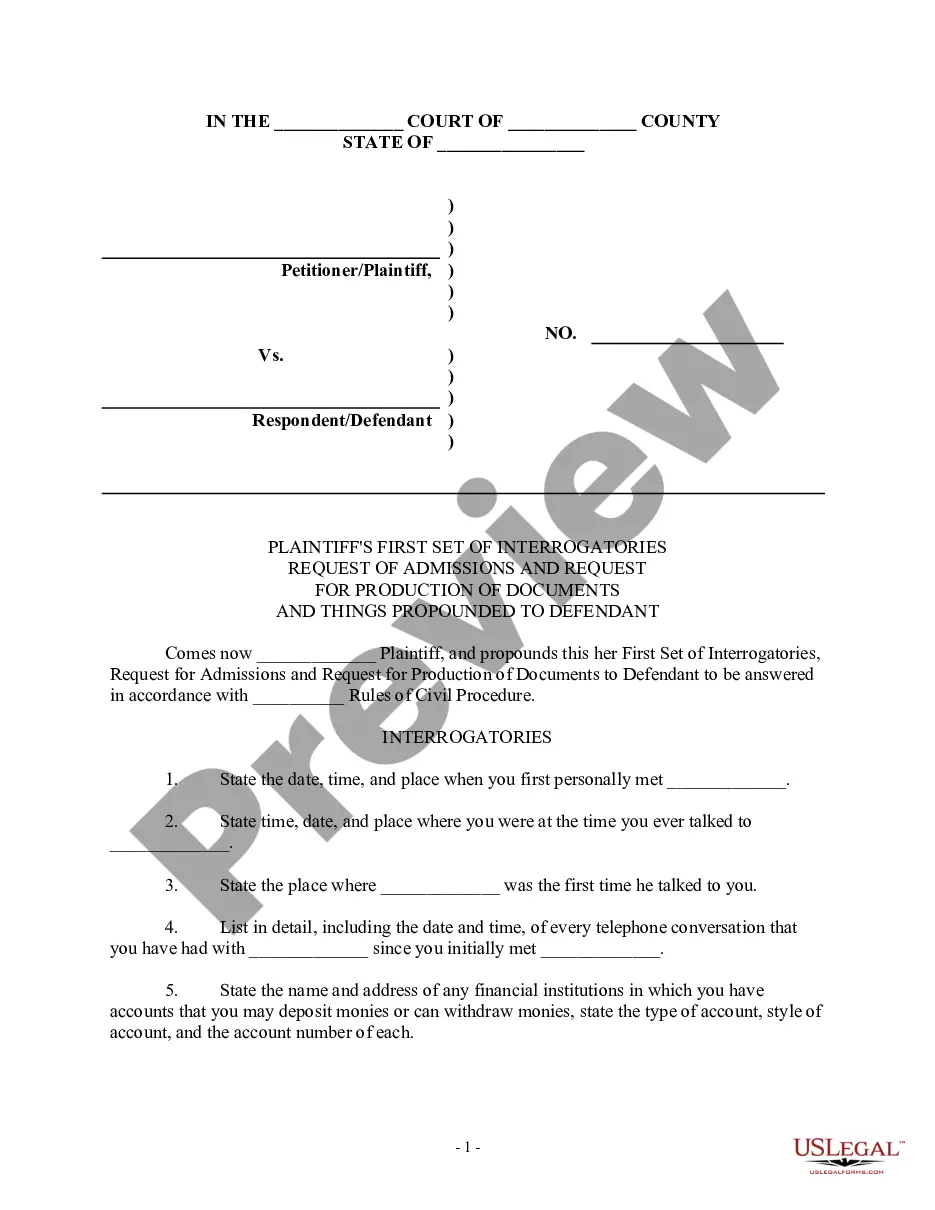
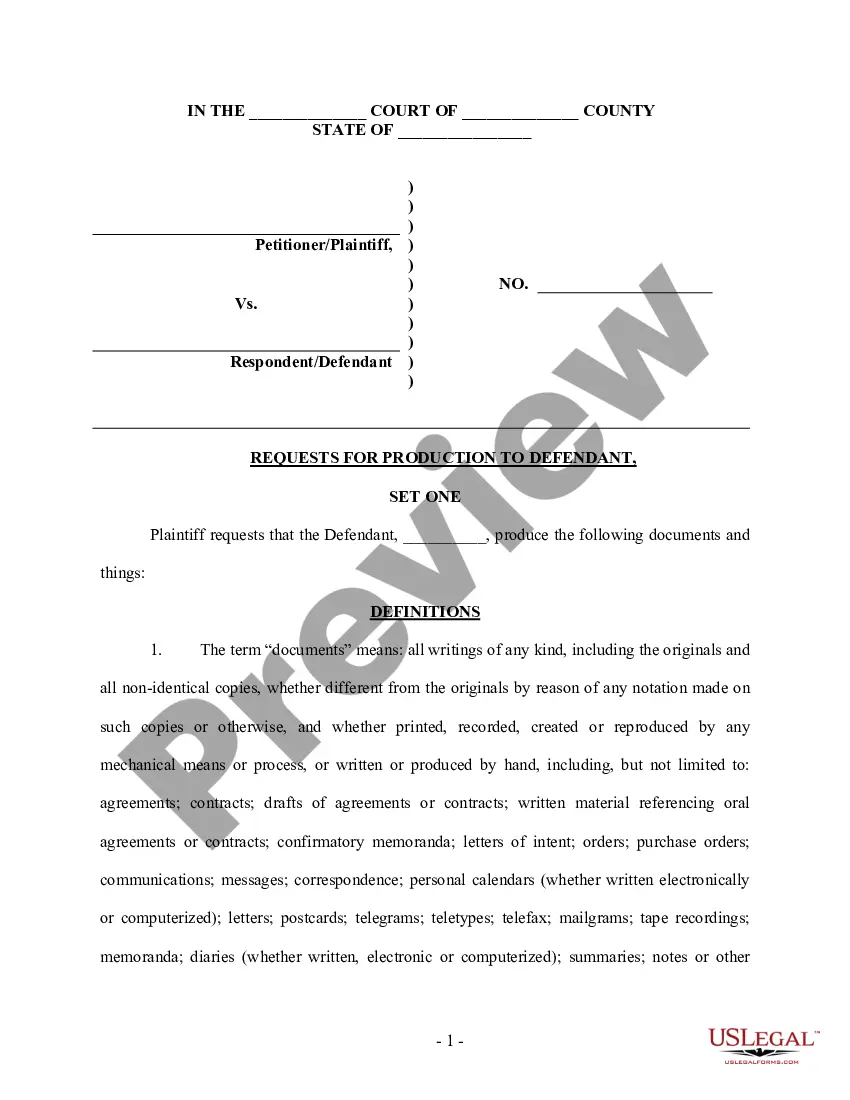
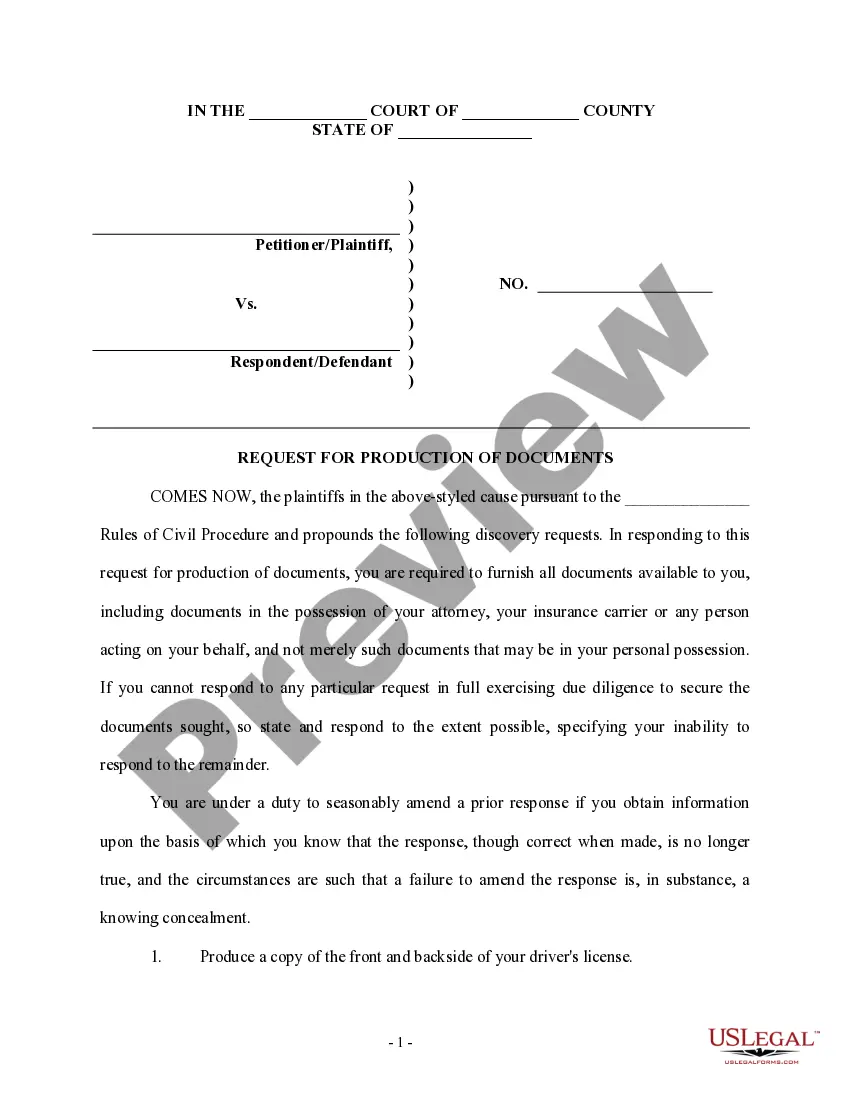
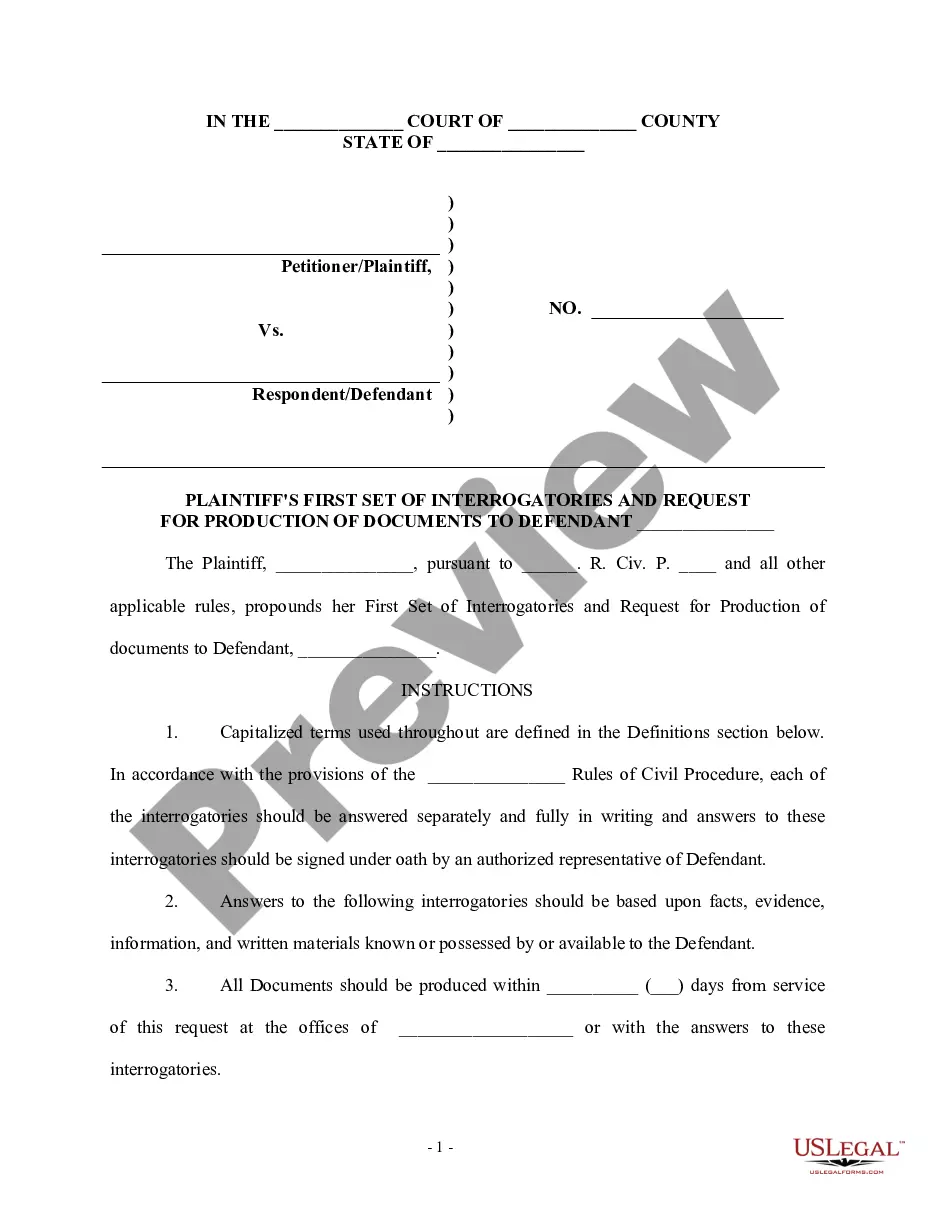
Plaintiff's First Set of Requests for Production of Documents and Things Propounded to Defendant
About this form
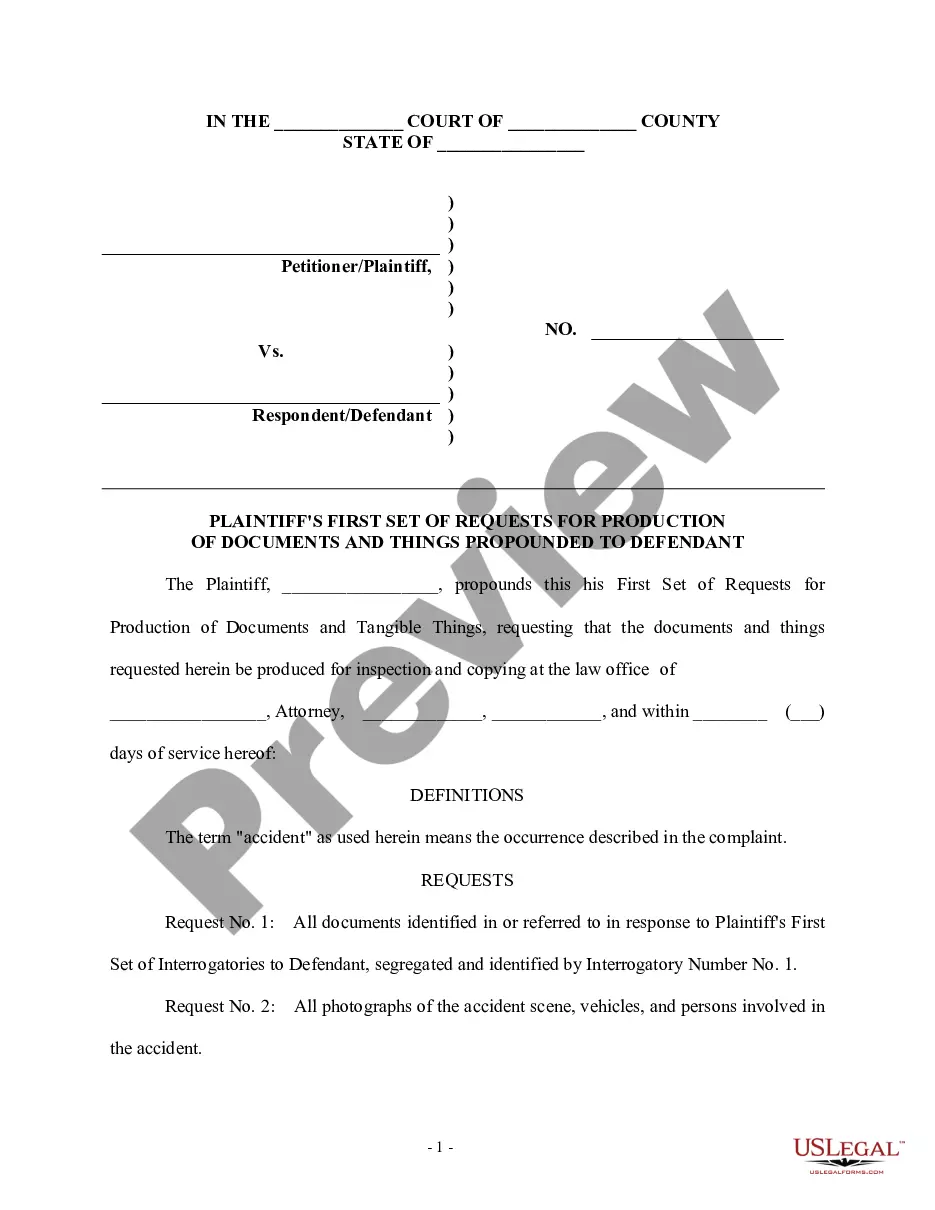
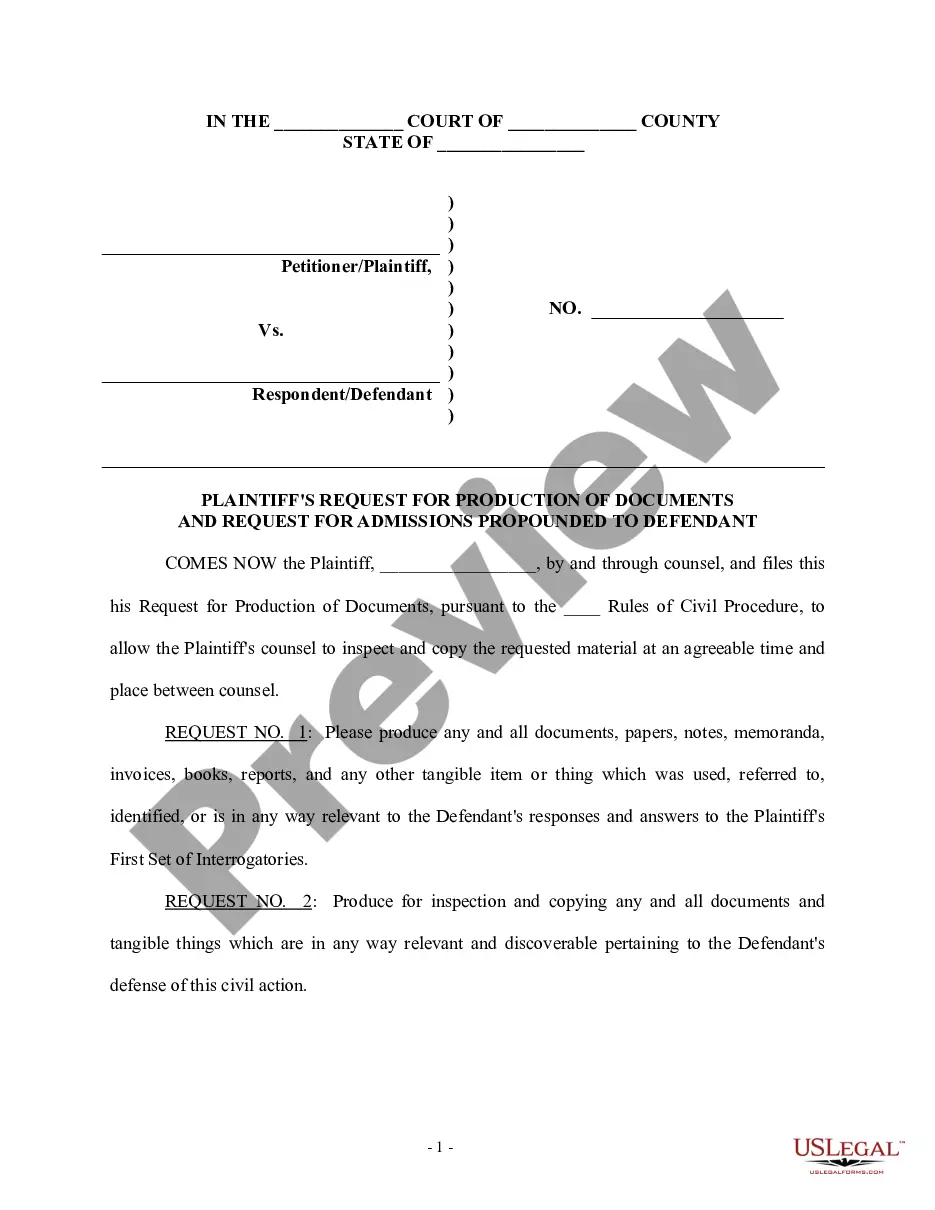
The Plaintiff's First Set of Requests for Production of Documents and Things Propounded to Defendant is a crucial legal document used in lawsuits. This form allows a plaintiff to formally request the defendant to provide specific documents and items related to the case, which are essential for building a strong argument. Unlike general discovery forms, this document focuses specifically on the production of evidence that may support the plaintiffâs claims.
What’s included in this form
- Definitions: Clarifies key terms used throughout the document.
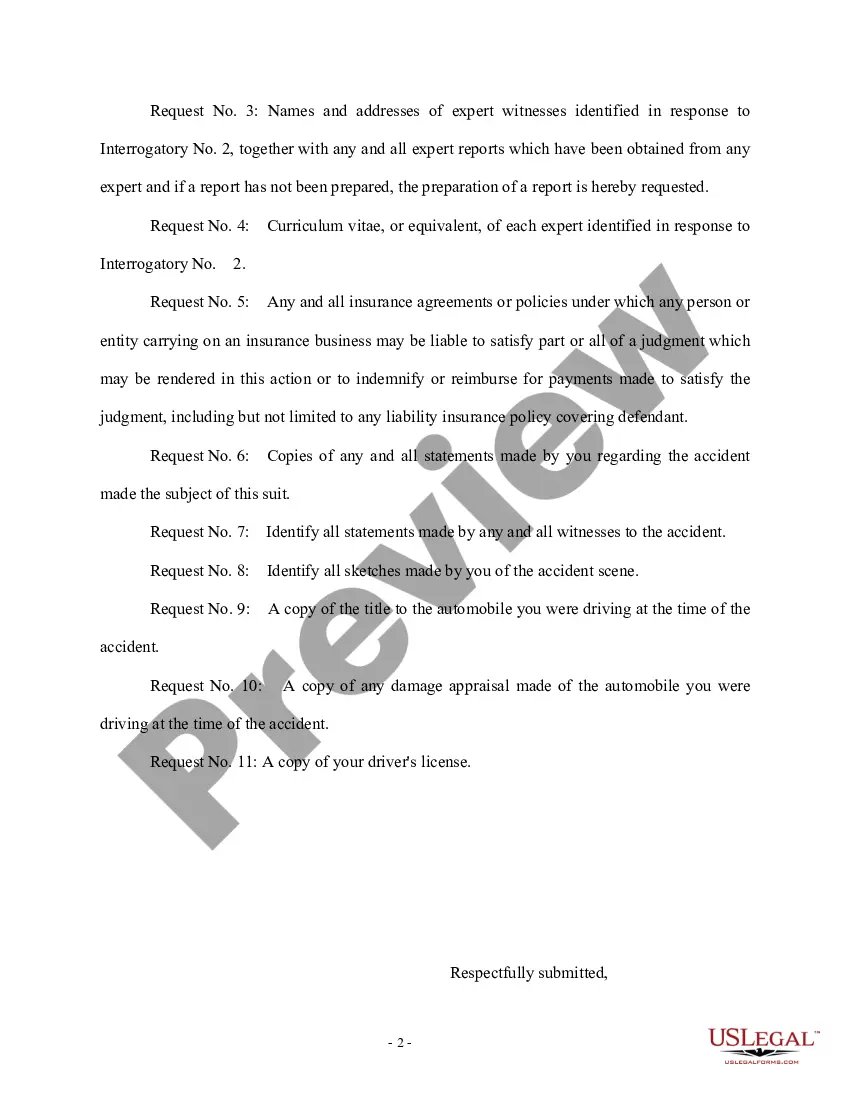
- Requests for Production: Lists specific items and documents the plaintiff is seeking from the defendant.
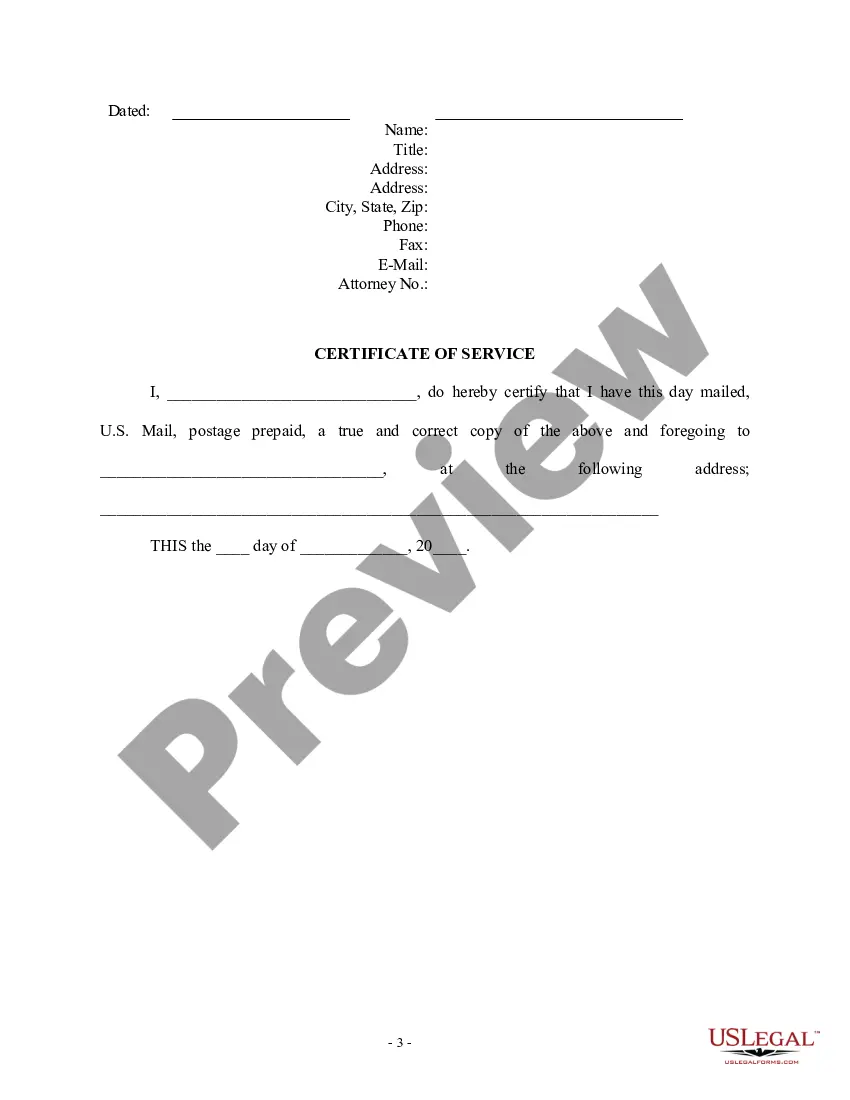
- Certificate of Service: A section for the plaintiff to certify that the requests were properly mailed to the defendant.
When this form is needed
This form should be used in the discovery phase of a lawsuit when the plaintiff needs access to documents that are in the defendant's possession. It is typically utilized in personal injury cases, contract disputes, or any situation where evidence is necessary to prove the plaintiff's case in court.
Intended users of this form
- Individuals or parties acting as plaintiffs in a civil lawsuit.
- Attorneys representing plaintiffs in litigation.
- Anyone seeking to gather evidence from a defendant through formal requests.
Instructions for completing this form
- Identify the parties involved in the lawsuit, including the plaintiff and defendant.
- Clearly list each request for production, specifying the documents or items needed.
- Number each request for easy reference during the discovery process.
- Sign and date the document, certifying that it has been served to the defendant.
- Retain a copy of the completed form for your records.
Notarization requirements for this form
This form does not typically require notarization unless specified by local law. Always check your stateâs requirements to confirm whether notarization is necessary.
Get your form ready online
Our built-in tools help you complete, sign, share, and store your documents in one place.
Make edits, fill in missing information, and update formatting in US Legal Forms—just like you would in MS Word.
Download a copy, print it, send it by email, or mail it via USPS—whatever works best for your next step.
Sign and collect signatures with our SignNow integration. Send to multiple recipients, set reminders, and more. Go Premium to unlock E-Sign.
If this form requires notarization, complete it online through a secure video call—no need to meet a notary in person or wait for an appointment.
We protect your documents and personal data by following strict security and privacy standards.

Make edits, fill in missing information, and update formatting in US Legal Forms—just like you would in MS Word.

Download a copy, print it, send it by email, or mail it via USPS—whatever works best for your next step.

Sign and collect signatures with our SignNow integration. Send to multiple recipients, set reminders, and more. Go Premium to unlock E-Sign.

If this form requires notarization, complete it online through a secure video call—no need to meet a notary in person or wait for an appointment.

We protect your documents and personal data by following strict security and privacy standards.
Mistakes to watch out for
- Failing to clearly specify the documents requested.
- Not numbering the requests for easy identification.
- Neglecting to include the certificate of service.
Benefits of completing this form online
- Convenient download and editing options make it easy to customize the form for your needs.
- Access to reliable templates drafted by licensed attorneys ensures you are using a legally sound document.
- Quick access to updates and revisions based on changing laws or legal standards.
Legal use & context
- This form is legally enforceable as part of the discovery process in civil court cases.
- It is essential to adhere to the timeline set by the court for submitting requests for production.
- Failure to respond to this request can result in legal consequences, including sanctions.
Main things to remember
- The Plaintiff's First Set of Requests for Production is vital for gathering evidence in a lawsuit.
- Complete the form carefully to avoid common mistakes and ensure clarity.
- Consult local laws to determine any specific requirements related to discovery forms.
Looking for another form?
Form popularity
FAQ
A Request for Production of Documents (often referred to as a Notice to Produce) requires a spouse to provide the other spouse with certain documents for review.depositions (proceedings in which a spouse testifies under oath about various aspects of the marriage, usually at one of the attorney's offices).
When responding to Requests for Admissions, remember to answer as follows: Admit: If any portion of the Request for Admission is true then you must admit to that portion of the request. You are also allowed to have a hybrid response admit the part of the request that is true while denying another part.
In a civil action, a request for admission is a discovery device that allows one party to request that another party admit or deny the truth of a statement under oath. If admitted, the statement is considered to be true for all purposes of the current trial.
When responding to Requests for Admissions, remember to answer as follows: Admit: If any portion of the Request for Admission is true then you must admit to that portion of the request. You are also allowed to have a hybrid response admit the part of the request that is true while denying another part.
The making available by a party of documents in his possession, custody or power for inspection by the other party or for use as evidence at trial.
A request for production is a discovery device used to gain access to documents, electronic data, and physical items held by an opposing party in a legal matter. The aim is to gain insight into any relevant evidence that the opposing party holds.
Thank you for your inquiry regarding our product or service. Thank you for your interest in our product or service. We would like to thank you for your letter inquiring about our product. We truly appreciate your letter asking for information about our service.
If a request asks for a document, make a copy of the document; in your response, describe the document and say that a copy is attached; and attach a copy of the document to the responses you send back to the other side.