Parent Referral Letter Form for Mentorship Program
About this form
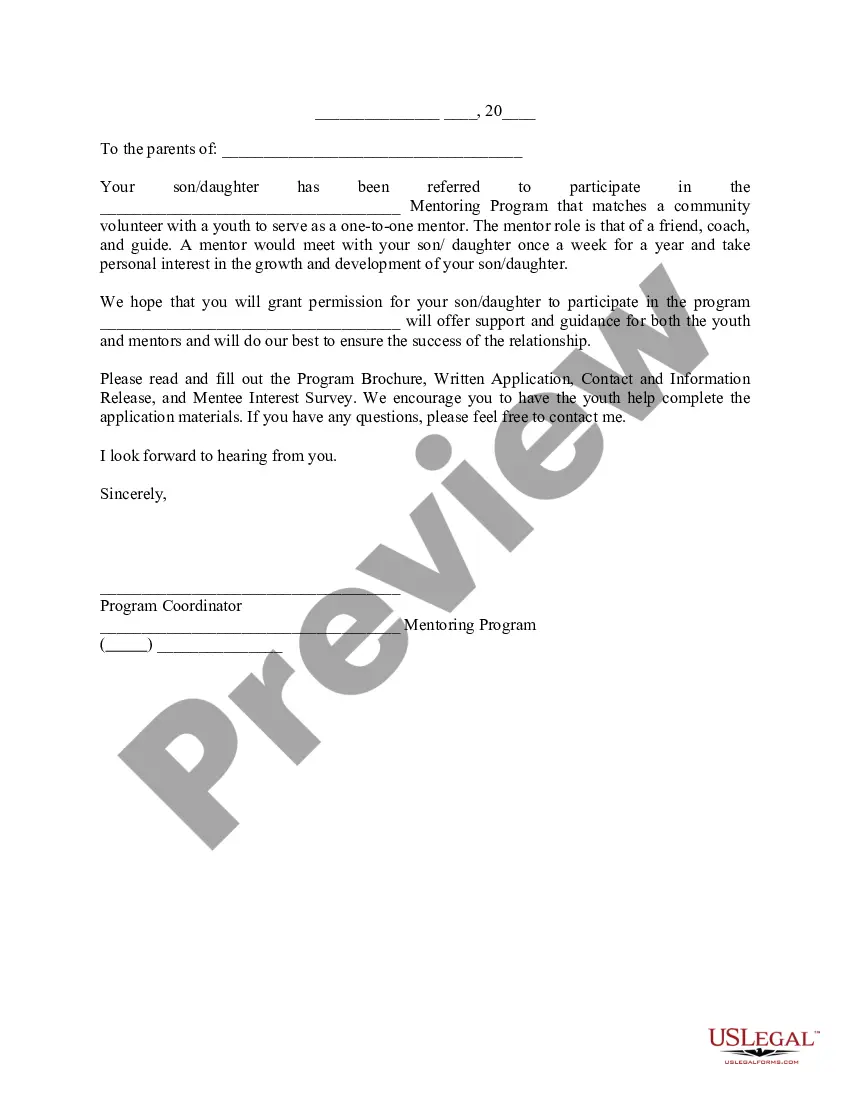
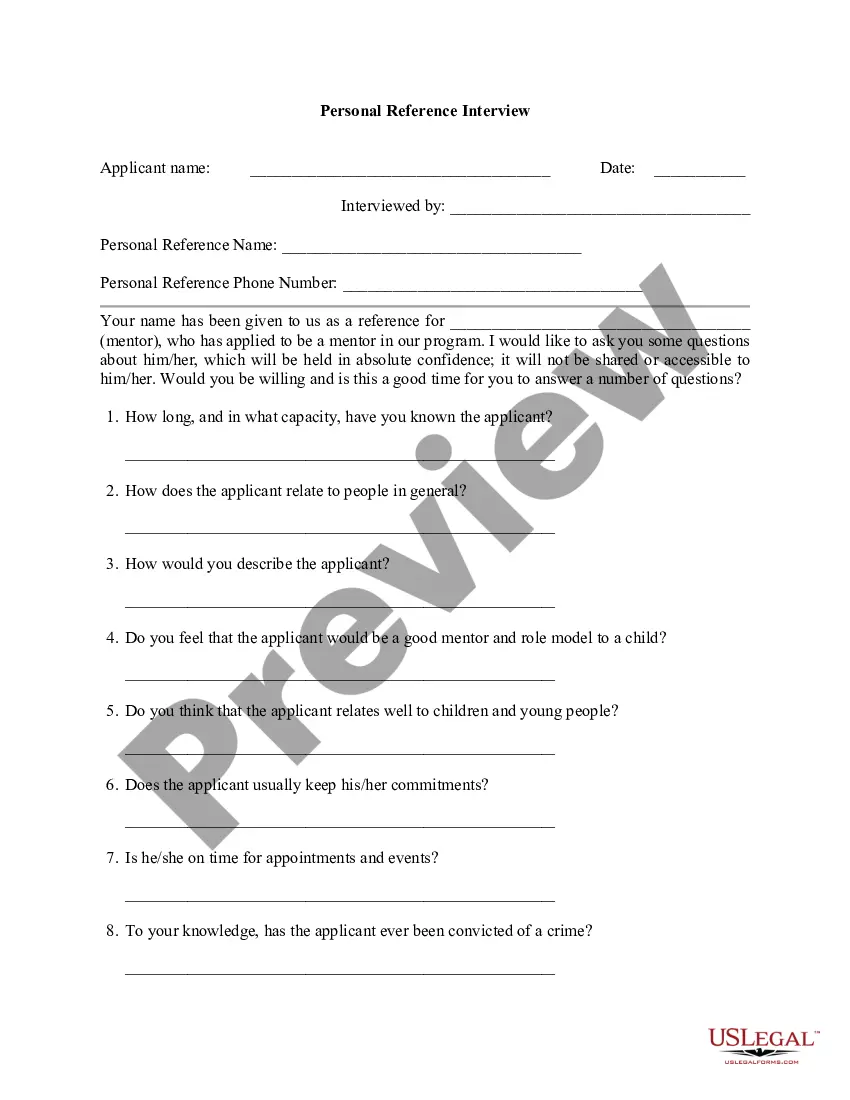
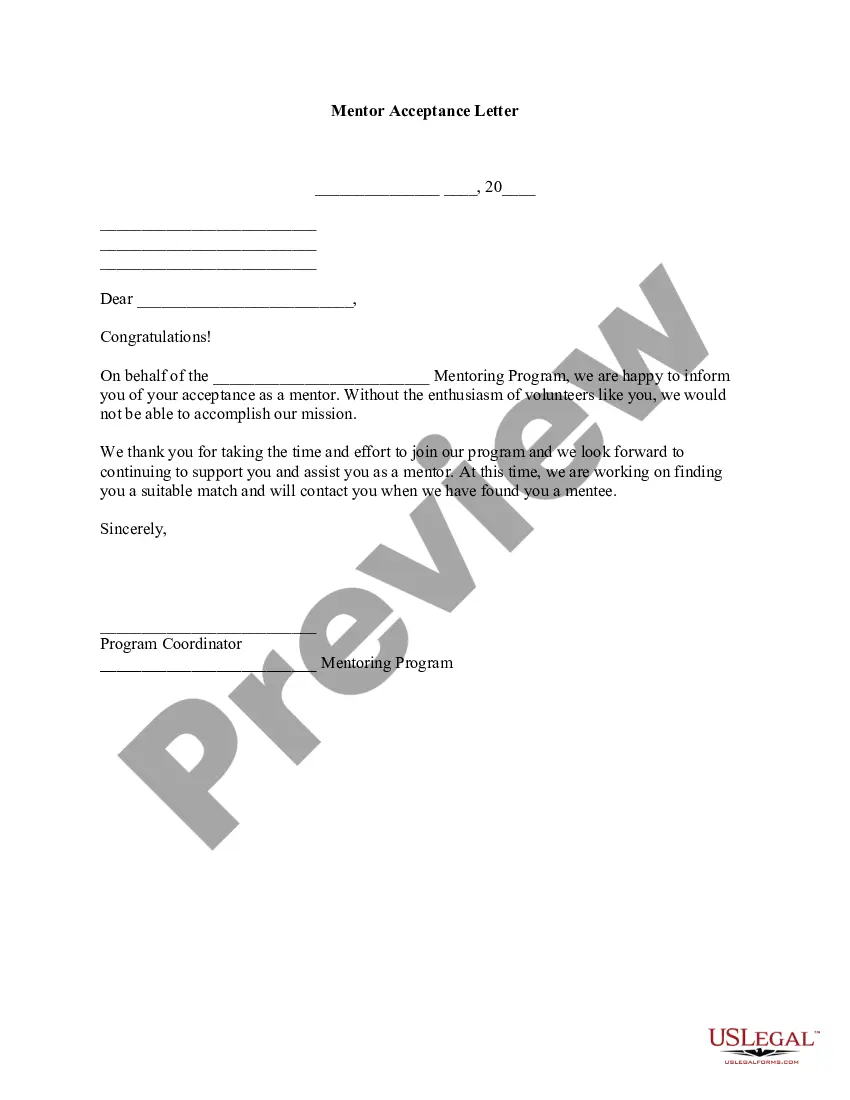
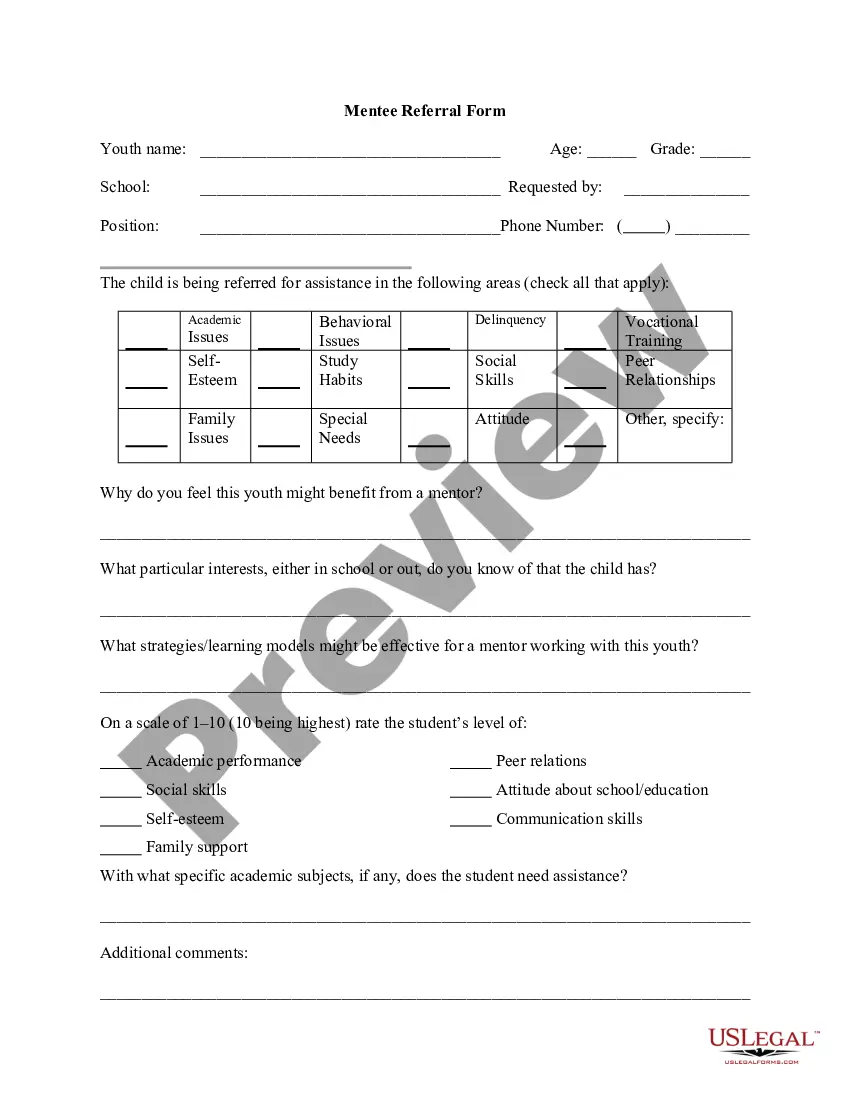
The Parent Referral Letter Form for Mentorship Program is a document that allows parents or guardians to formally refer their child to a mentoring program. This form ensures that the organization obtains necessary permission to include the youth in its mentorship activities. It serves a unique purpose by specifically addressing the referral process, distinguishing it from other forms of parental consent and enrollment documentation.
Form components explained
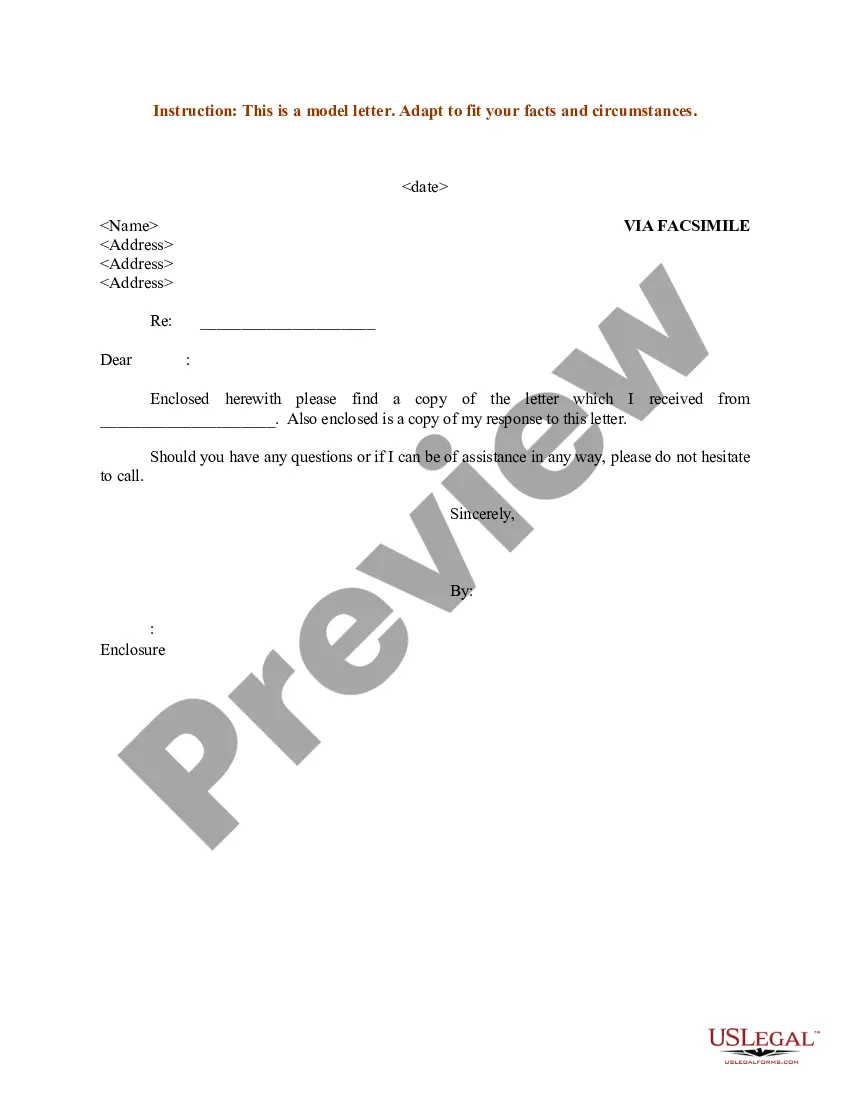
- Date of the letter
- Name of the mentee
- Name of the mentoring program
- Explanation of the mentor's role
- Contact information for the program coordinator
- Request for permission to participate
- Encouragement for parental involvement in completing additional materials
Situations where this form applies
This form is needed when a parent or guardian would like their child to participate in a mentorship program. It is essential in scenarios where a formal referral is required to initiate the engagement between the child and a community volunteer mentor. Use this form to ensure that the organization has the parent's consent, which is often a prerequisite for participation.
Who this form is for
- Parents or guardians of children eligible for mentorship
- Community organizations running mentorship programs
- Program coordinators seeking formal records of referrals
Steps to complete this form
- Fill in the date at the top of the form.
- Enter the name of the child who is being referred.
- Write the name of the mentoring program.
- Provide your name and contact information as the parent or guardian.
- Sign the letter to grant permission for your child's participation.
- Complete any supplementary documents provided by the mentoring program.
Is notarization required?
This form does not typically require notarization unless specified by local law. It is intended for parental use without the need for a notary, streamlining the process.
Get your form ready online
Our built-in tools help you complete, sign, share, and store your documents in one place.
Make edits, fill in missing information, and update formatting in US Legal Forms—just like you would in MS Word.
Download a copy, print it, send it by email, or mail it via USPS—whatever works best for your next step.
Sign and collect signatures with our SignNow integration. Send to multiple recipients, set reminders, and more. Go Premium to unlock E-Sign.
If this form requires notarization, complete it online through a secure video call—no need to meet a notary in person or wait for an appointment.
We protect your documents and personal data by following strict security and privacy standards.

Make edits, fill in missing information, and update formatting in US Legal Forms—just like you would in MS Word.

Download a copy, print it, send it by email, or mail it via USPS—whatever works best for your next step.

Sign and collect signatures with our SignNow integration. Send to multiple recipients, set reminders, and more. Go Premium to unlock E-Sign.

If this form requires notarization, complete it online through a secure video call—no need to meet a notary in person or wait for an appointment.

We protect your documents and personal data by following strict security and privacy standards.
Typical mistakes to avoid
- Not including the date on the letter.
- Failing to provide the mentee's full name or the mentoring program name.
- Overlooking additional submission requirements, such as application materials.
- Not signing the letter or neglecting to include contact information.
Advantages of online completion
- Convenient access to download and complete the form from home.
- Editable fields allow for personalization and easy completion.
- Reliable templates drafted by licensed attorneys for legal compliance.
- No need to worry about formatting or legal jargon; guidance is provided.
Looking for another form?
Form popularity
FAQ
structured mentoring program should provide clear guidelines on how it operates, including the balance of leadership, roles, career choice process and expectations of both mentors and mentees. This will help mentees to set achievable goals and focus on areas where they need to improve.
Template to ask someone to be your mentor I'm writing to you because I would like to gauge your interest in serving as my professional mentor. I'm at a stage in my career where describe what you hope to gain from their mentorship, and I believe that I could benefit from your guidance.
The agreement should include contact information (including preferred methods and time), establish a meeting schedule, iterate objectives and goals of both parties, set progress check dates, and a termination date. After this is negotiated and completed, you are ready to start your mentoring partnership.
Explain the benefits to individuals and the organization, don't forget to discuss how you will implement it too. Reinforce the importance of mentorship.Tie mentorship back to organizational goals.Outline roles and responsibilities of the program administrators.Outline how you will generate employee engagement.
Be sure to include details about the target audience, program length, structure and qualifications of participants. Think about how the program will fit with your organization's overall mission and culture and be sure to ensure that all stakeholders are in agreement and on board with the goals of the proposal.
Clarity, Communication, Commitment ? the key to successful mentoring programmes.
I am writing to you to say how grateful I am for the mentorship you've given me over the past year. Having the opportunity to learn from you has made a substantial change in my career. When we first began working together, I never imagined I would be able to make as much progress as I have.
Plan how the program will be managed (e.g., organizational structure). Identify a management team. Ensure clear roles. Establish policies and procedures. Implement ongoing training. Develop a financial plan (e.g., securing funding streams, establishing internal controls).