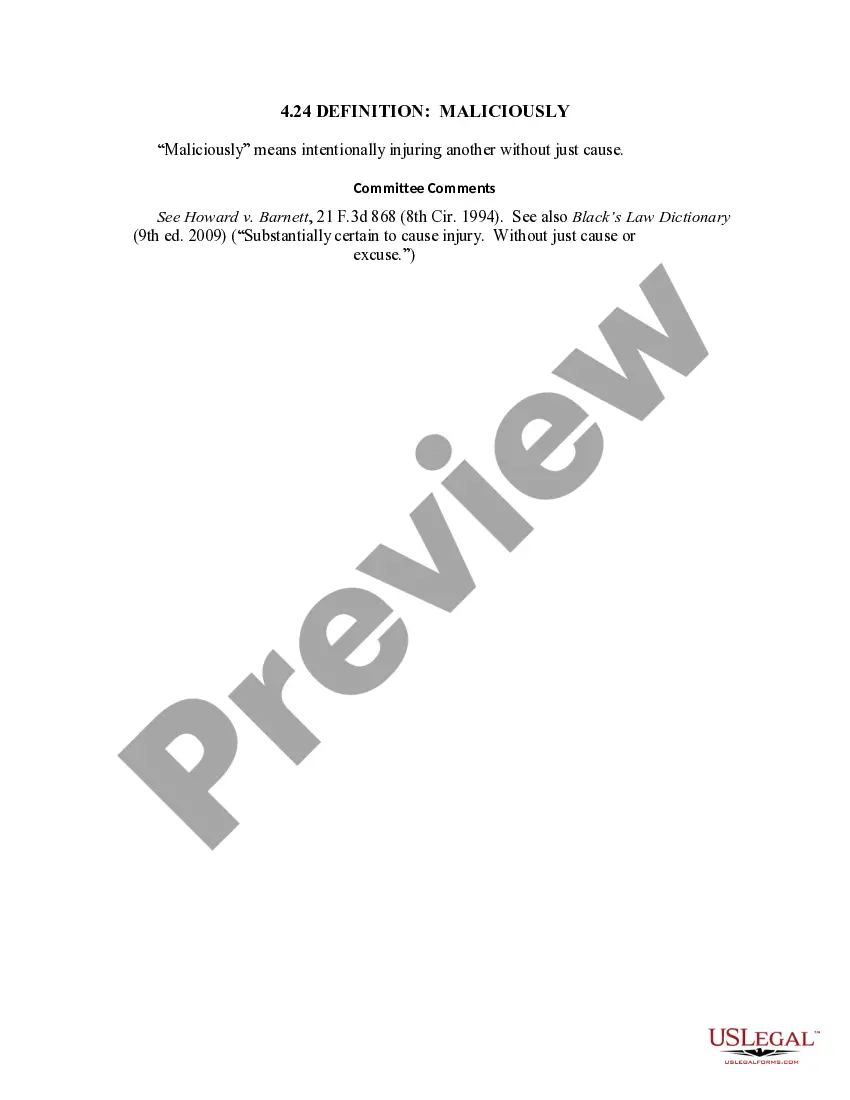
4.24 DEFINITION: MALICIOUSLY
What this document covers
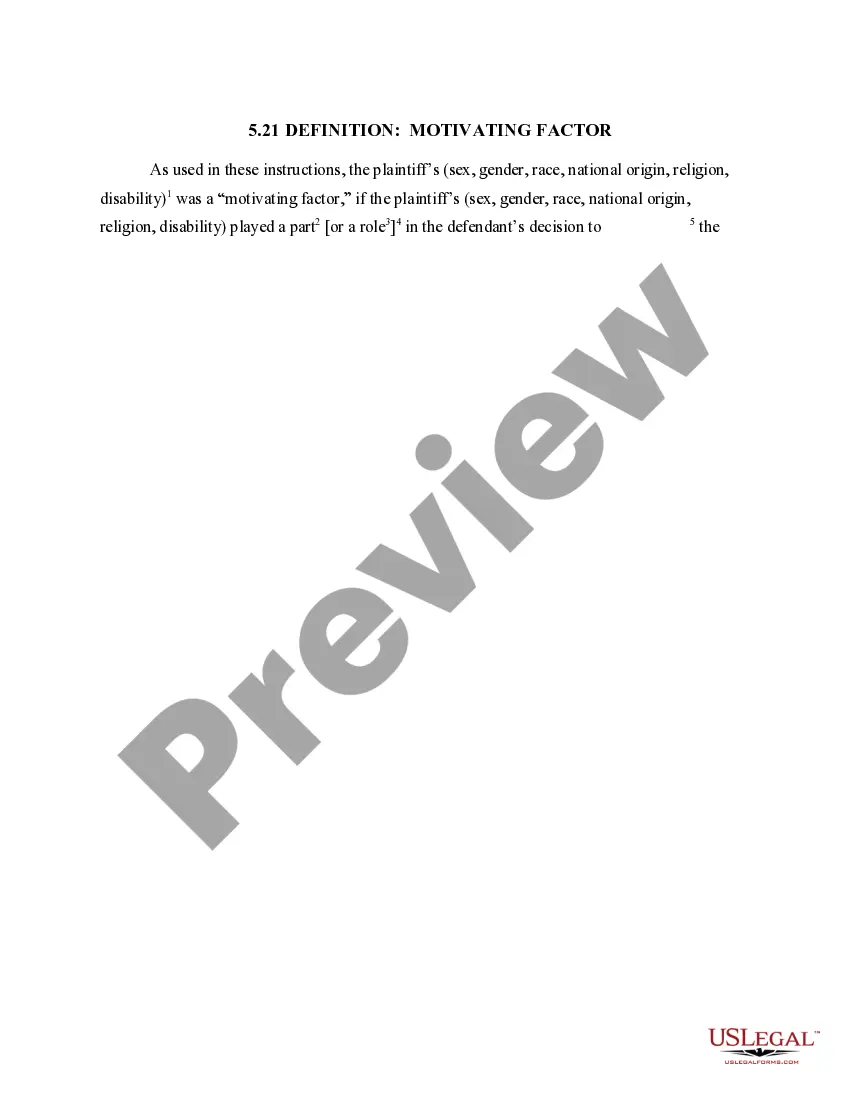
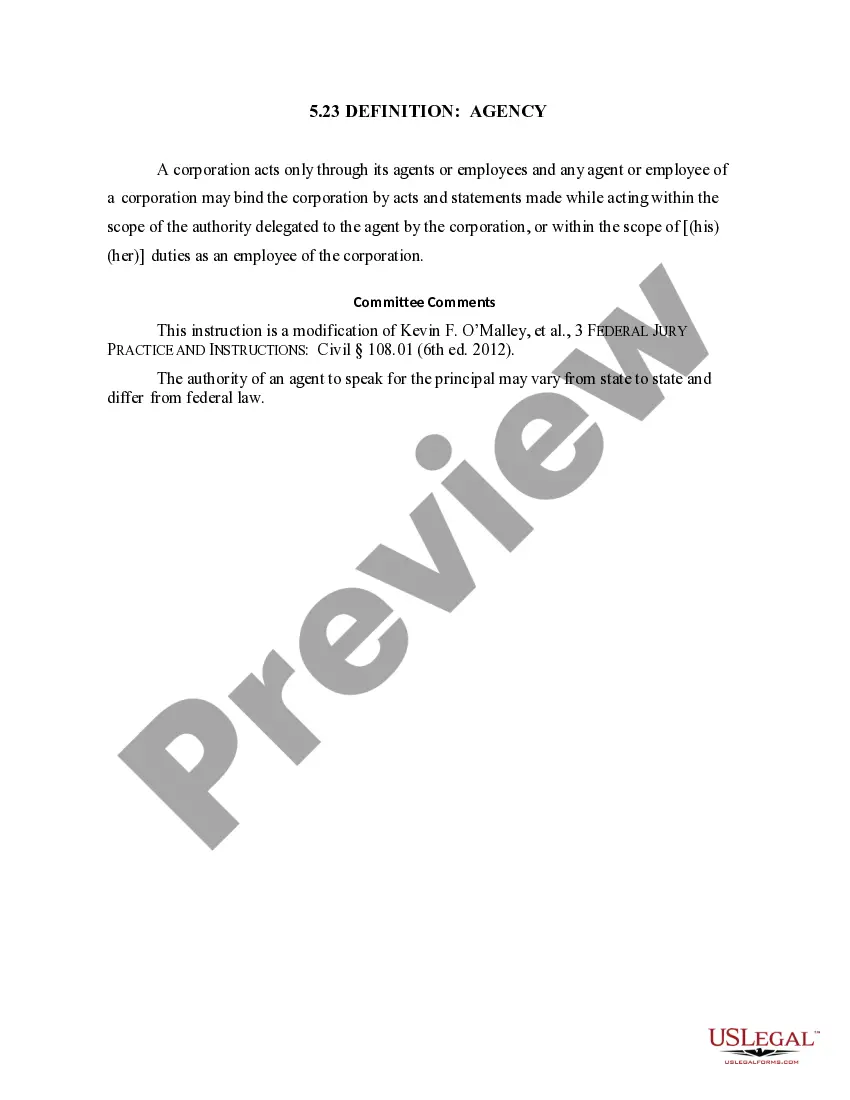
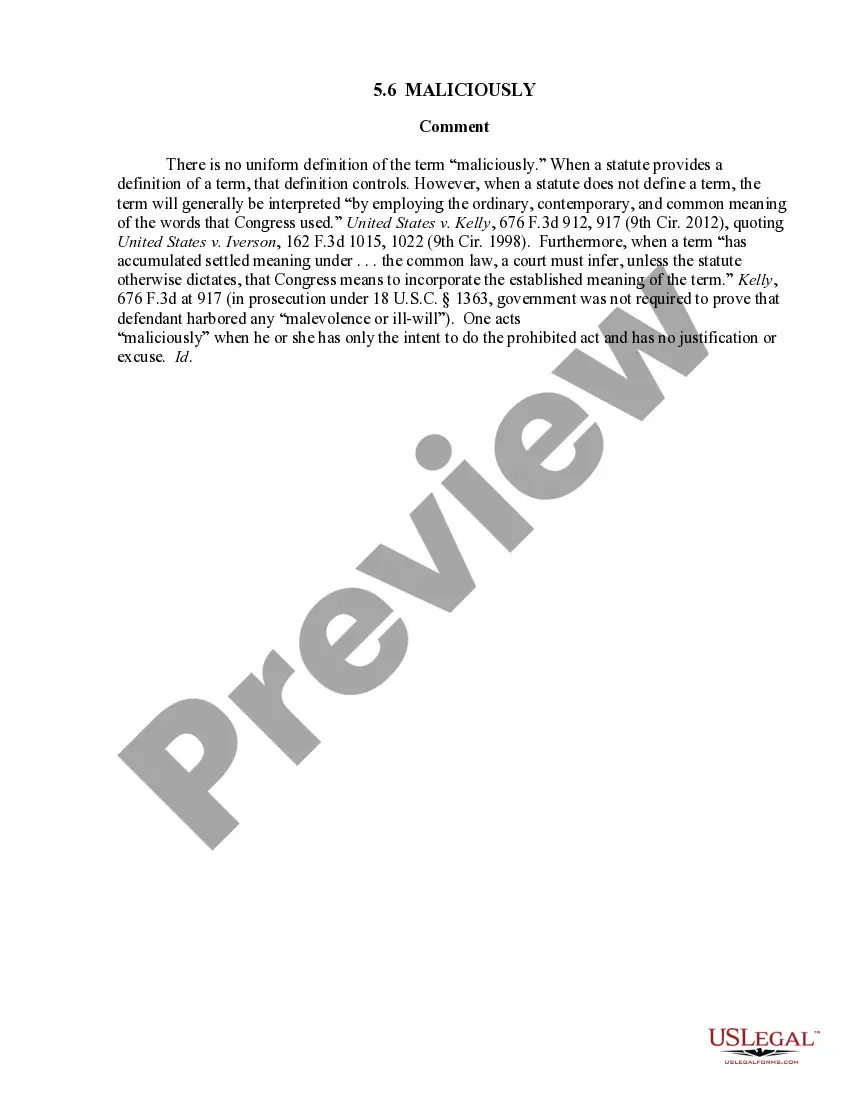
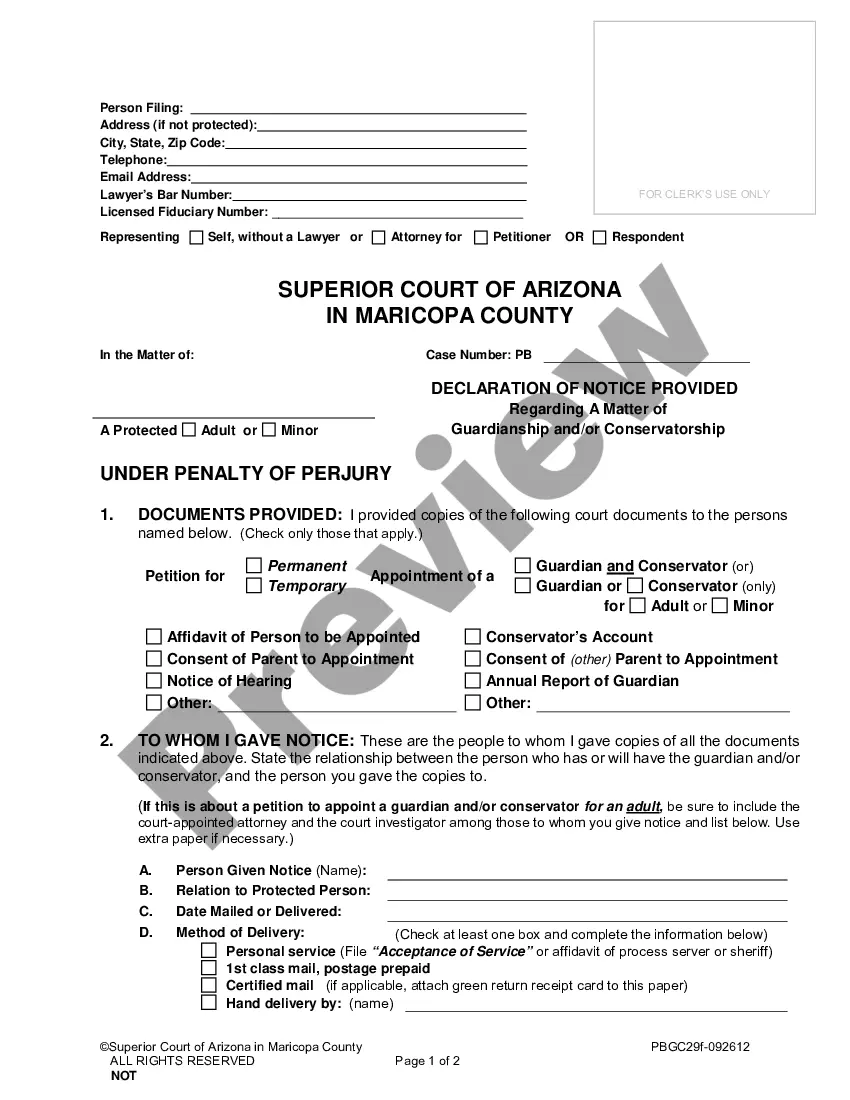
The "Maliciously" definition form is a legal template that provides a clear understanding of the term "maliciously," which is defined as intentionally causing injury to another person without just cause. This form is essential for legal proceedings involving claims of malice and helps differentiate it from other concepts of intent within legal contexts.
Main sections of this form
- Definition of "maliciously"
- Explanation of intent and injury
- Reference to relevant legal cases and definitions
When to use this document
This form is used in legal situations where understanding the definition of "maliciously" is crucial. It is commonly applied in cases involving defamation, personal injury, or when assessing intent in criminal law. If you are facing legal action that requires clarity on malicious intent or preparing a legal argument involving malice, this definition is essential.
Who should use this form
- Attorneys preparing legal cases involving malice
- Individuals involved in lawsuits that hinge on claims of intentional harm
- Legal students and educators studying concepts of intention in law
Steps to complete this form
- Review the definition of "maliciously" provided in the form.
- Understand the context in which this definition is being applied.
- Cite relevant legal cases or references included in the form.
- Incorporate this definition into legal documents or arguments as needed.
Notarization guidance
Notarization is not commonly needed for this form. However, certain documents or local rules may make it necessary. Our notarization service, powered by Notarize, allows you to finalize it securely online anytime, day or night.
Get your form ready online
Our built-in tools help you complete, sign, share, and store your documents in one place.
Make edits, fill in missing information, and update formatting in US Legal Forms—just like you would in MS Word.
Download a copy, print it, send it by email, or mail it via USPS—whatever works best for your next step.
Sign and collect signatures with our SignNow integration. Send to multiple recipients, set reminders, and more. Go Premium to unlock E-Sign.
If this form requires notarization, complete it online through a secure video call—no need to meet a notary in person or wait for an appointment.
We protect your documents and personal data by following strict security and privacy standards.

Make edits, fill in missing information, and update formatting in US Legal Forms—just like you would in MS Word.

Download a copy, print it, send it by email, or mail it via USPS—whatever works best for your next step.

Sign and collect signatures with our SignNow integration. Send to multiple recipients, set reminders, and more. Go Premium to unlock E-Sign.

If this form requires notarization, complete it online through a secure video call—no need to meet a notary in person or wait for an appointment.

We protect your documents and personal data by following strict security and privacy standards.
Common mistakes to avoid
- Failing to differentiate between malicious intent and negligence.
- Misapplying the term in contexts where it does not apply.
- Overlooking the requirement for proper legal citations in arguments.
Benefits of using this form online
- Immediate access to legally drafted definitions.
- Convenience of downloading and editing as needed.
- Reliable information prepared by licensed attorneys.
Legal use & context
- This definition is enforceable in legal proceedings where intent is examined.
- It's crucial for both criminal and civil cases involving claims of malice.
Looking for another form?
Form popularity
FAQ
(1) Except in an action arising out of law enforcement activities resulting in personal injury or death, it is a complete defense to any action for damages for personal injury or wrongful death that the person injured or killed was engaged in the commission of a felony at the time of the occurrence causing the injury
The purpose of RCW 4.24. 500 through 4.24. 520 is to protect individuals who make good-faith reports to appropriate governmental bodies.
A father or mother, may maintain an action as plaintiff for the seduction of a child, and the guardian for the seduction of a ward, though the child or the ward be not living with or in the service of the plaintiff at the time of the seduction or afterwards, and there be no loss of service. 1973 1st ex. s.
(1) A limited jurisdiction court that provides misdemeanant supervision services is not liable for civil damages based on the inadequate supervision or monitoring of a misdemeanor defendant or probationer unless the inadequate supervision or monitoring constitutes gross negligence.
(1) An appointed or elected official or member of the governing body of a public agency is immune from civil liability for damages for any discretionary decision or failure to make a discretionary decision within his or her official capacity, but liability shall remain on the public agency for the tortious conduct of
RCW 4.24. 330: Action for damages caused by criminal street gang tagging and graffiti.