Shared Access Area Easement and Private Land Use Restrictions
Understanding this form
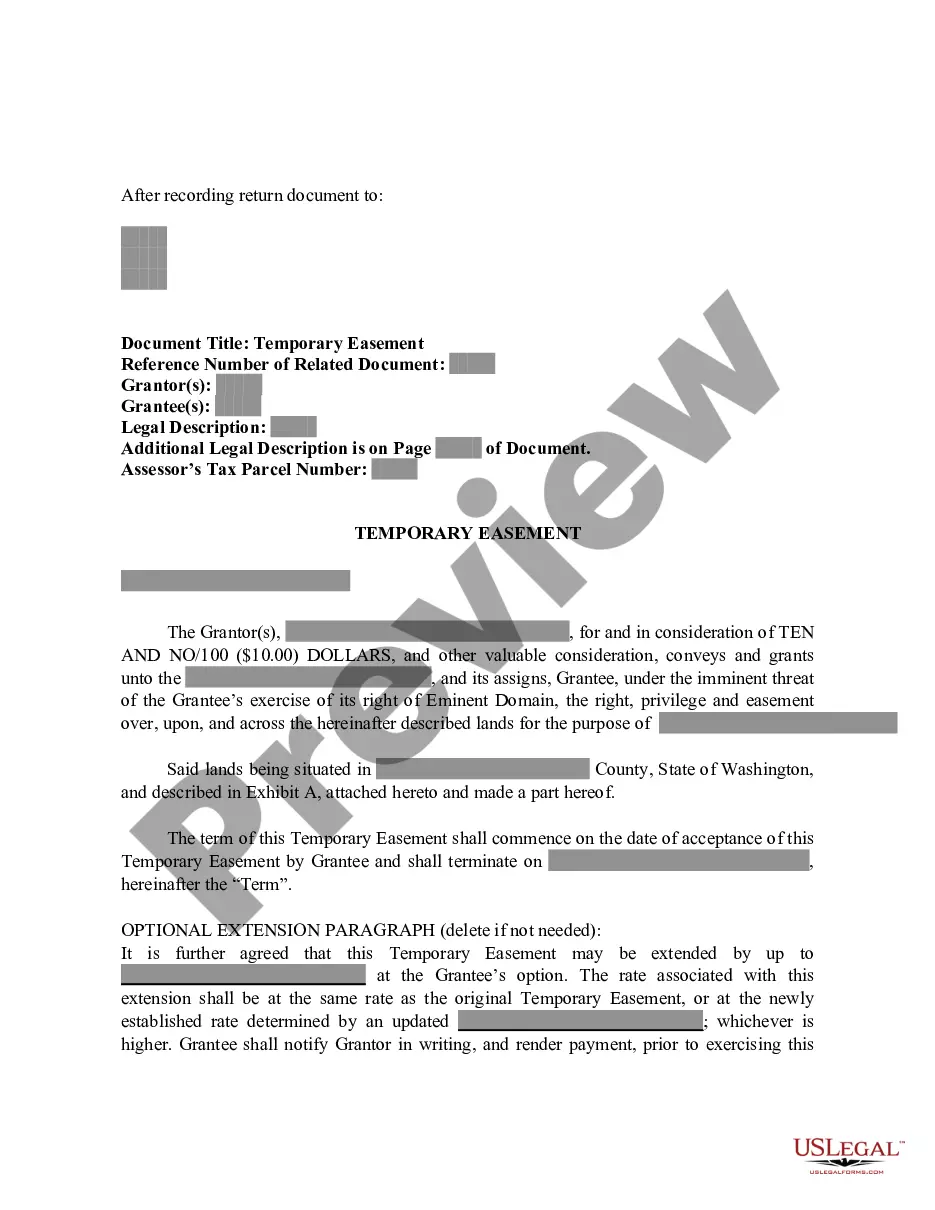
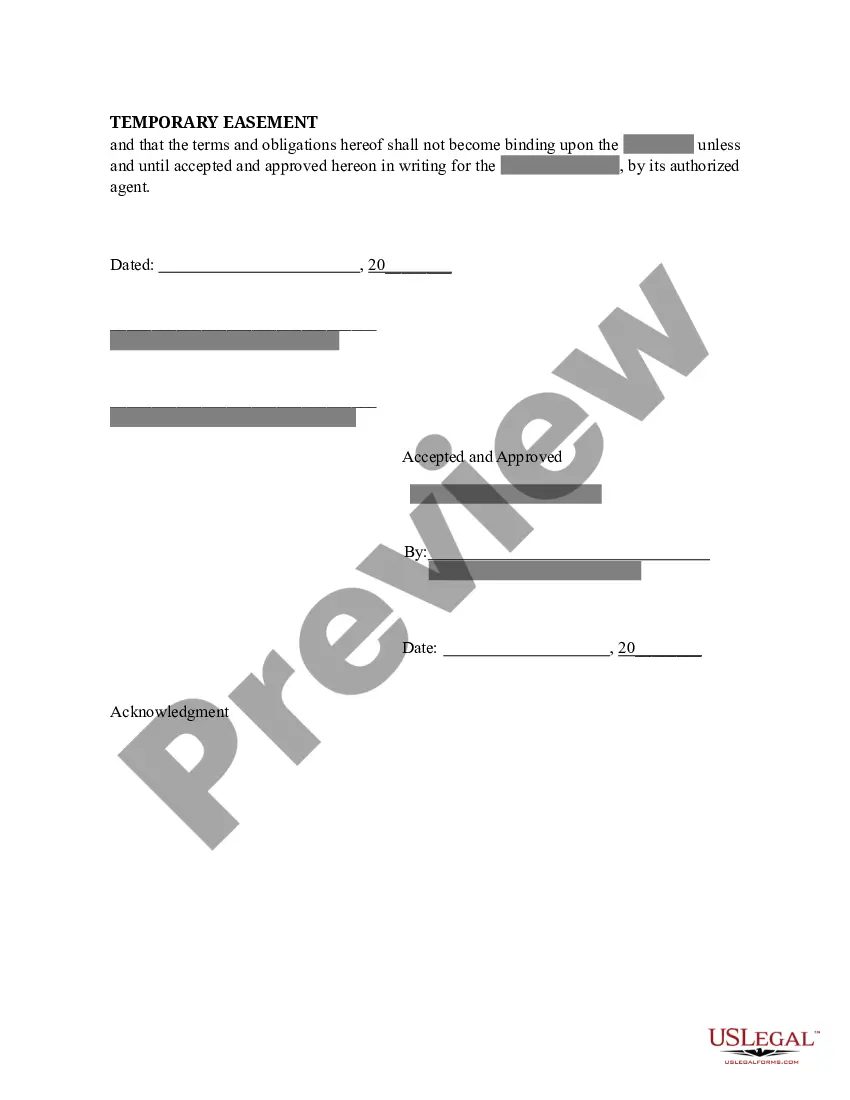
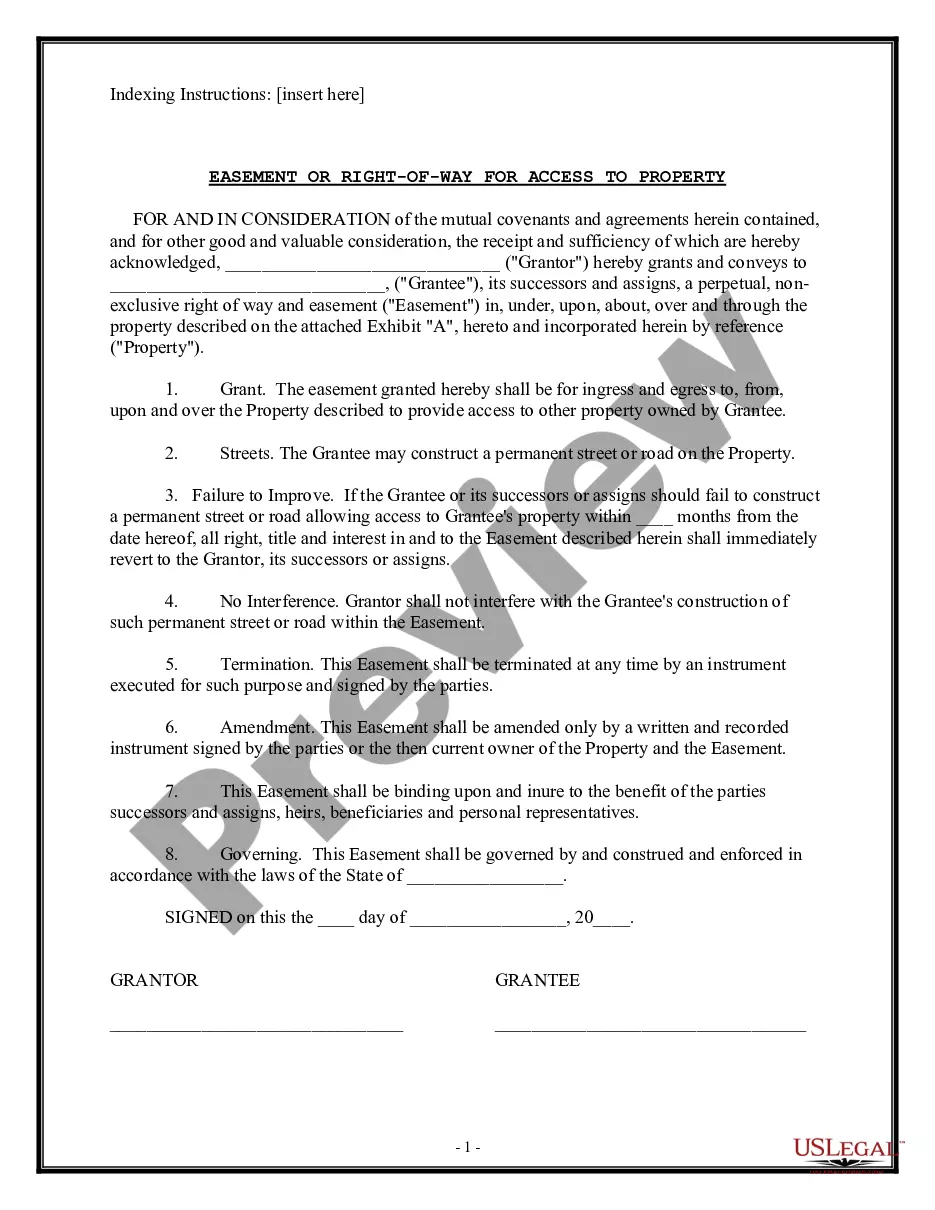
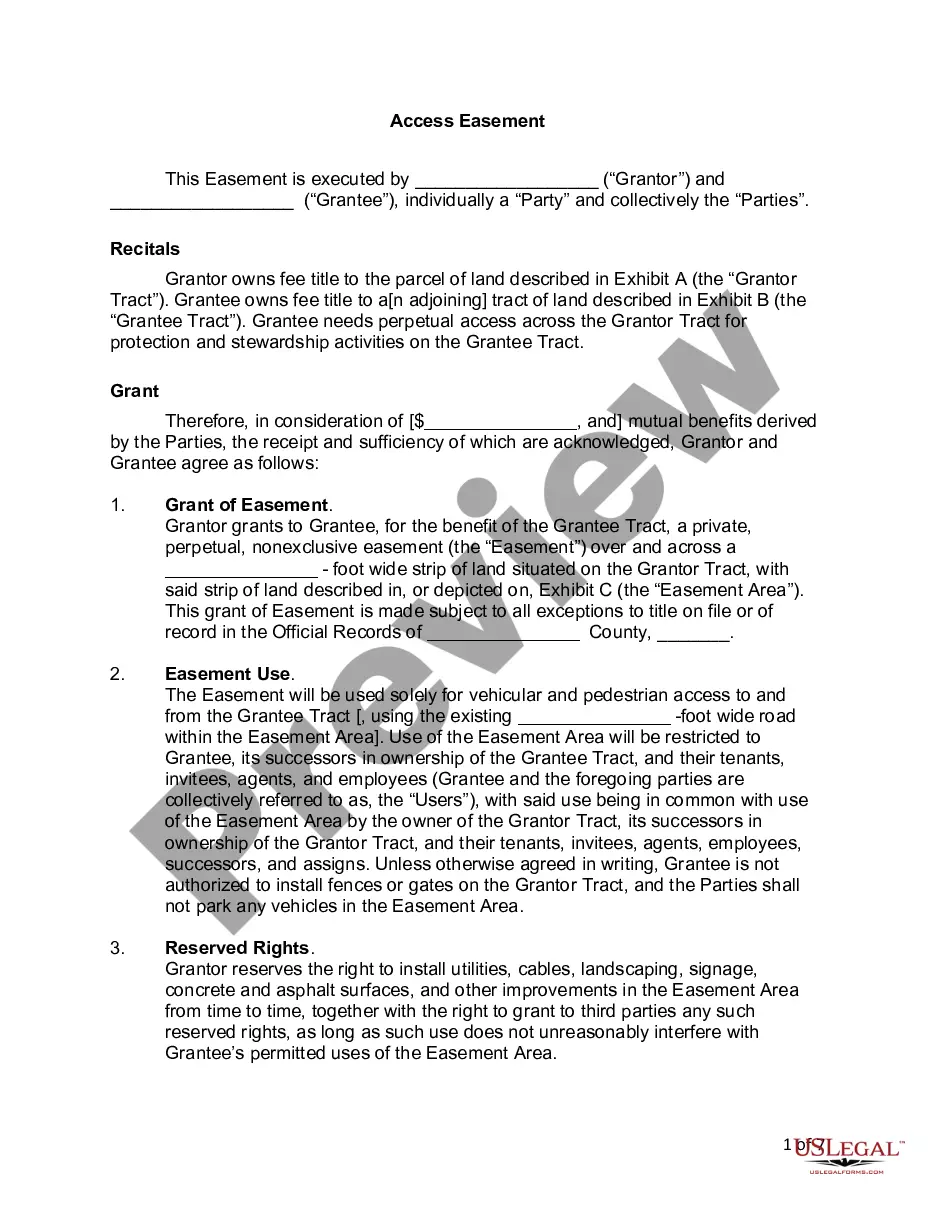
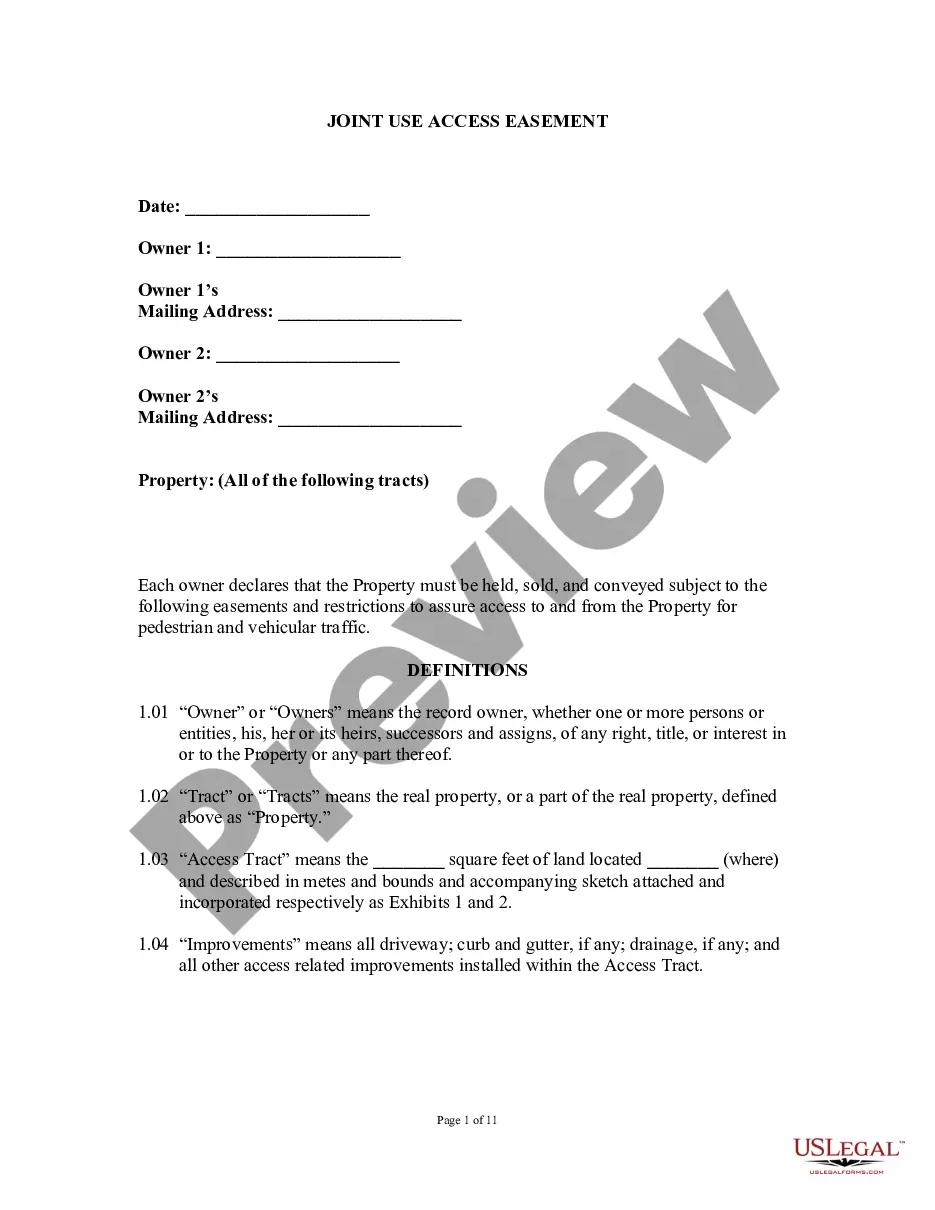
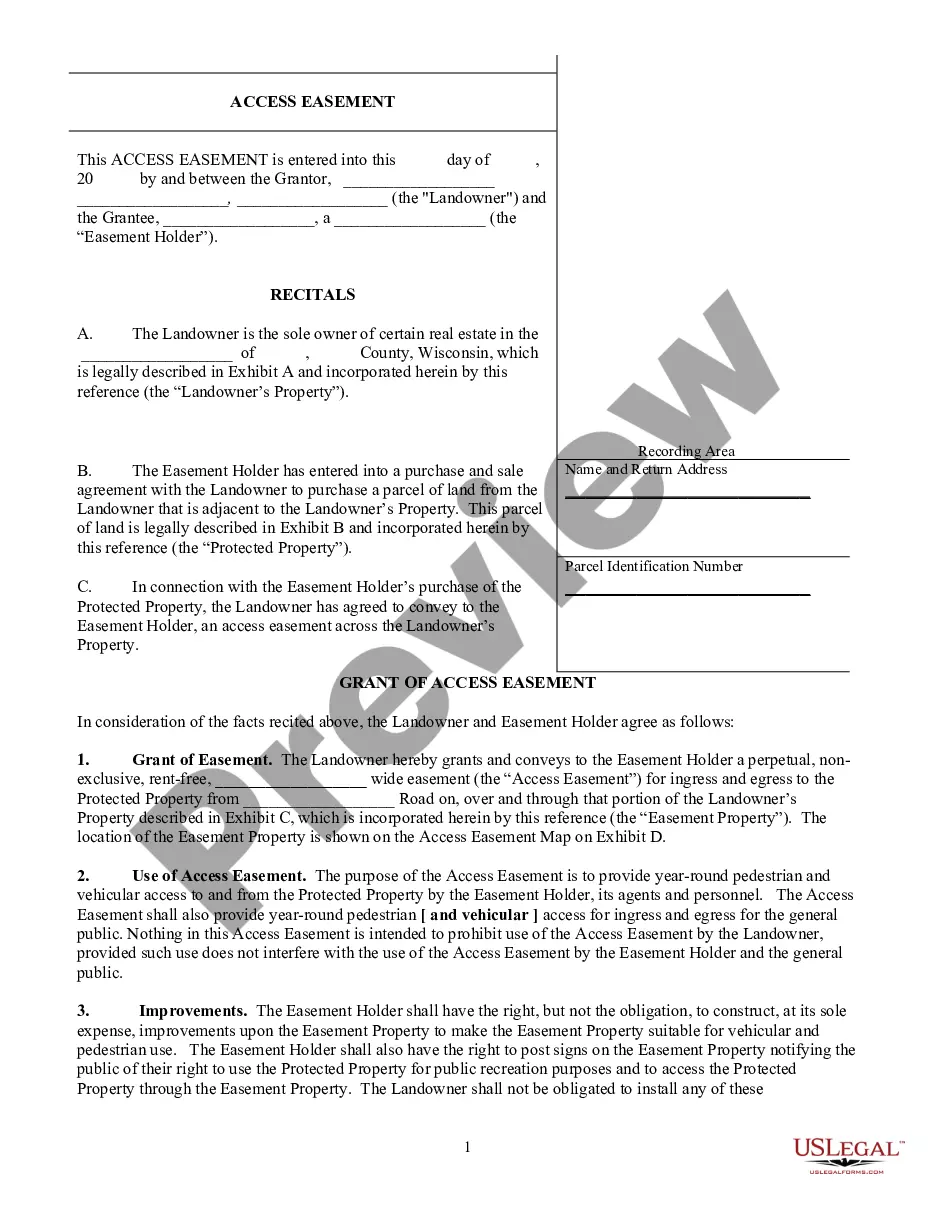
The Shared Access Area Easement and Private Land Use Restrictions form is a legal agreement that grants a party the limited right to use a specific tract of land without transferring full ownership. Unlike other property agreements, this easement allows for temporary use while maintaining the grantor's ownership rights. This form is particularly relevant in circumstances where land usage is regulated and space is shared among multiple parties.
Main sections of this form
- Name and description of the Grantor(s) and Grantee.
- Consideration details, including any monetary compensation.
- Description of the specific land subject to the easement.
- Intent and purpose of the easement use.
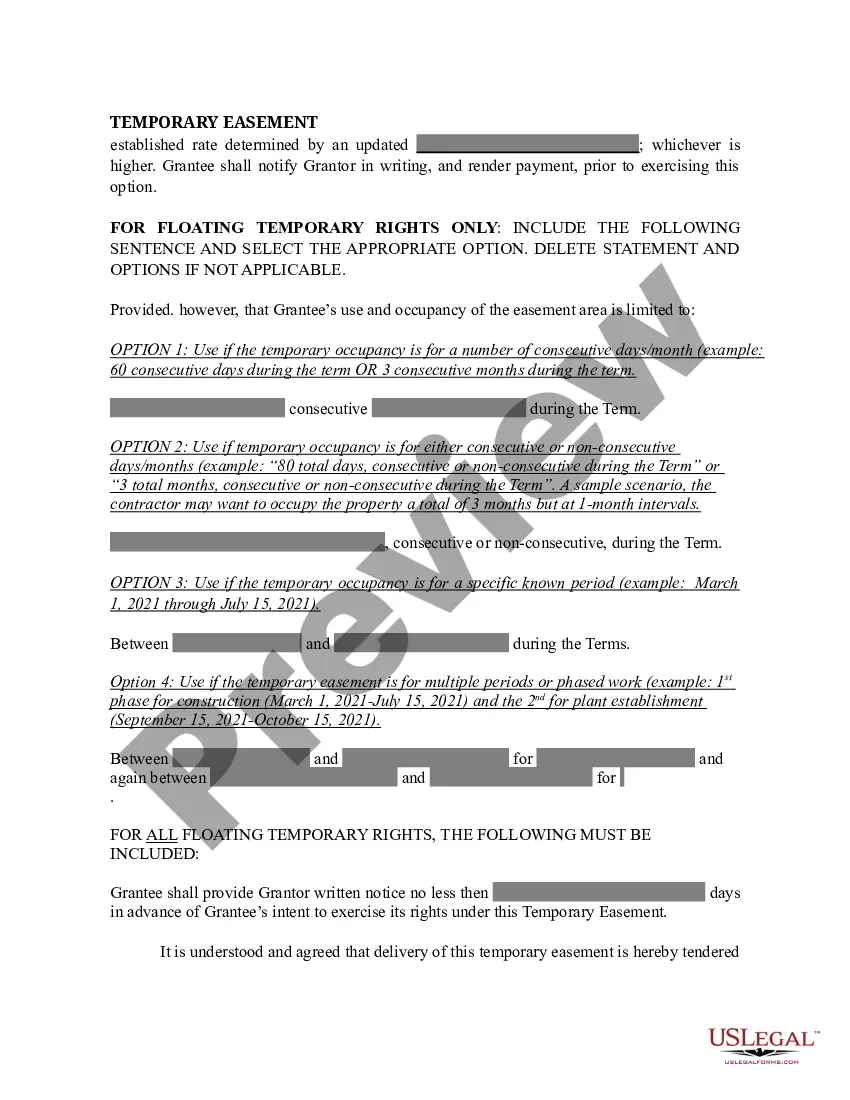
- Duration of the easement and optional extension clause.
- Conditions for the Granteeâs use of the easement area.
Common use cases
This form should be used when a property owner (the Grantor) wishes to allow another party (the Grantee) limited access to their land for a specified purpose. Typical scenarios can include allowing contractors temporary access for construction projects, utility companies needing to place equipment, or providing access for road or maintenance work where shared land usage is necessary.
Intended users of this form
This form is intended for:
- Property owners who need to establish easement agreements with other parties.
- Contractors requiring access to private land for project completion.
- Utility companies that need authorization for temporary land usage.
- Individuals or businesses that need to formalize land usage restrictions and rights.
How to prepare this document
- Identify and enter the names of the Grantor(s) and Grantee.
- Specify the consideration amount, typically expressed in dollars.
- Describe the exact tract of land being utilized under the easement.
- Clearly state the permitted purpose and duration of the easement.
- Complete any optional extension provisions if necessary.
- Ensure all parties date and sign the form to make it legally binding.
Notarization guidance
This form does not typically require notarization unless specified by local law. However, it is recommended to check specific state regulations to ensure full legal validity.
Get your form ready online
Our built-in tools help you complete, sign, share, and store your documents in one place.
Make edits, fill in missing information, and update formatting in US Legal Forms—just like you would in MS Word.
Download a copy, print it, send it by email, or mail it via USPS—whatever works best for your next step.
Sign and collect signatures with our SignNow integration. Send to multiple recipients, set reminders, and more. Go Premium to unlock E-Sign.
If this form requires notarization, complete it online through a secure video call—no need to meet a notary in person or wait for an appointment.
We protect your documents and personal data by following strict security and privacy standards.

Make edits, fill in missing information, and update formatting in US Legal Forms—just like you would in MS Word.

Download a copy, print it, send it by email, or mail it via USPS—whatever works best for your next step.

Sign and collect signatures with our SignNow integration. Send to multiple recipients, set reminders, and more. Go Premium to unlock E-Sign.

If this form requires notarization, complete it online through a secure video call—no need to meet a notary in person or wait for an appointment.

We protect your documents and personal data by following strict security and privacy standards.
Common mistakes to avoid
- Failing to accurately describe the land location, leading to potential disputes.
- Not properly identifying the rights granted to the Grantee, causing misuse.
- Omitting the duration of the easement or extension options, leading to legal ambiguity.
Why use this form online
- Conveniently complete and download the form at your own pace.
- Edit the document as needed to suit your specific circumstances.
- Access forms that are drafted by licensed attorneys to ensure legal compliance.
Looking for another form?


Form popularity
FAQ
Can You Build on an Easement? Yes, you can usually build on a property easement, even a utility easement. Yet if you value peace of mind over everything else, not building on that easement is the best way to go. The dominant estate owning the easement may need to access the easement.
Generally, the owner of any easement has a duty to maintain the easement. If the easement is owned by more than one person, or is attached parcels of land under different ownership, each owner must share in the cost of maintaining the easement pursuant to their agreement.
An easement grants the right to utilize another person's land for a certain purpose, such as exit and entry. However, it is crucial to understand that easements do not grant holders a possessory right. They also do not provide the holder the right to profit from the land or the right to inhabit the property.
Depending on the circumstances and how the easement was created, it is generally the responsibility of the dominant tenement to maintain the easement site in the same way they would manage the rest of the attached land. There is generally no obligation for the servient tenement to maintain the right of carriageway.
FHA: A Private Road Maintenance Agreement is not required, however you will be asked to provide a recorded road easement.
California Civil Code § 845 states: (a) The owner of any easement in the nature of a private right-of-way, or of any land to which any such easement is attached, shall maintain it in repair.
Instead, a negative easement includes the right to restrict some type of activity on, or use of, the servient tenement. For example, an easement for light and air, or for a particular view, would be a negative easement.