Joint Use Access Easement
What is this form?
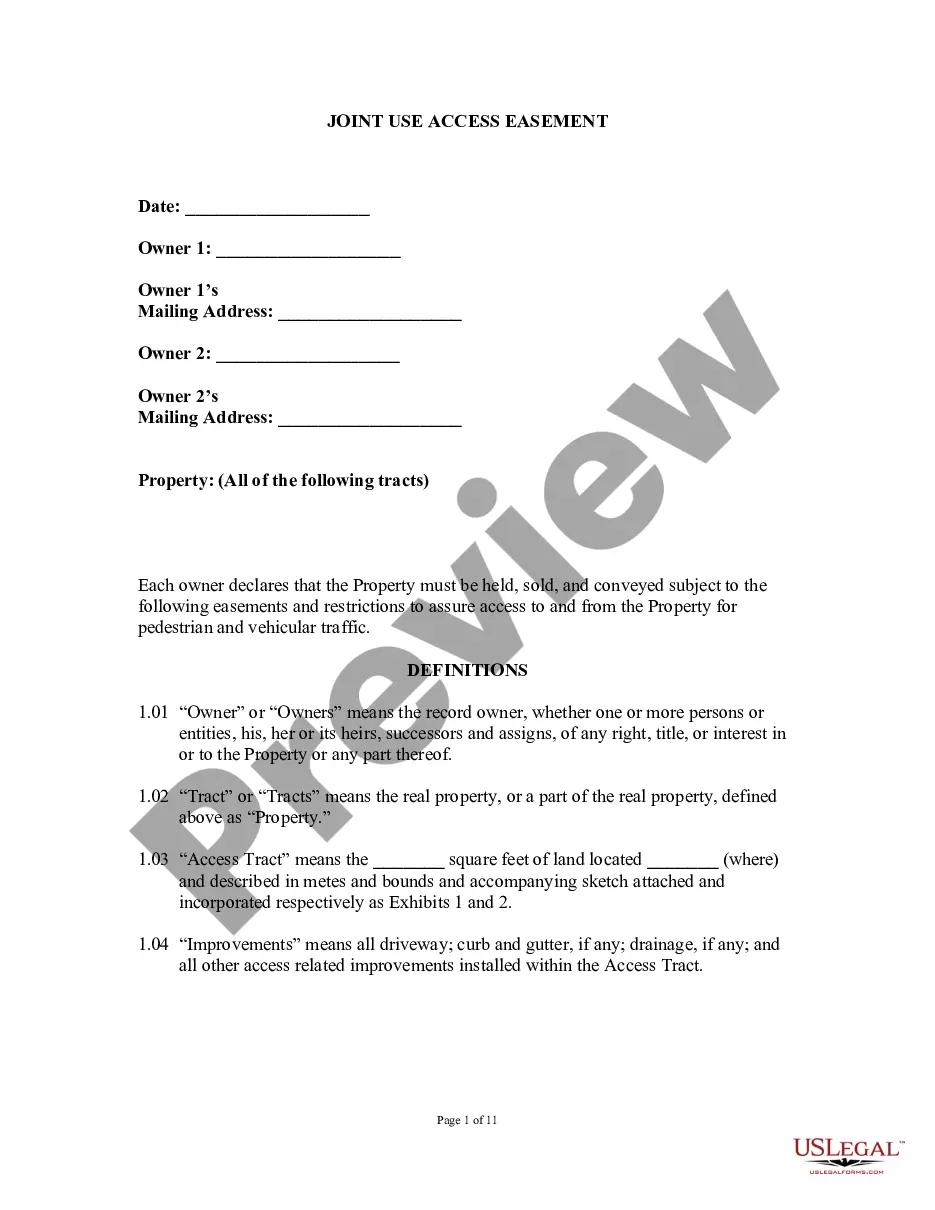
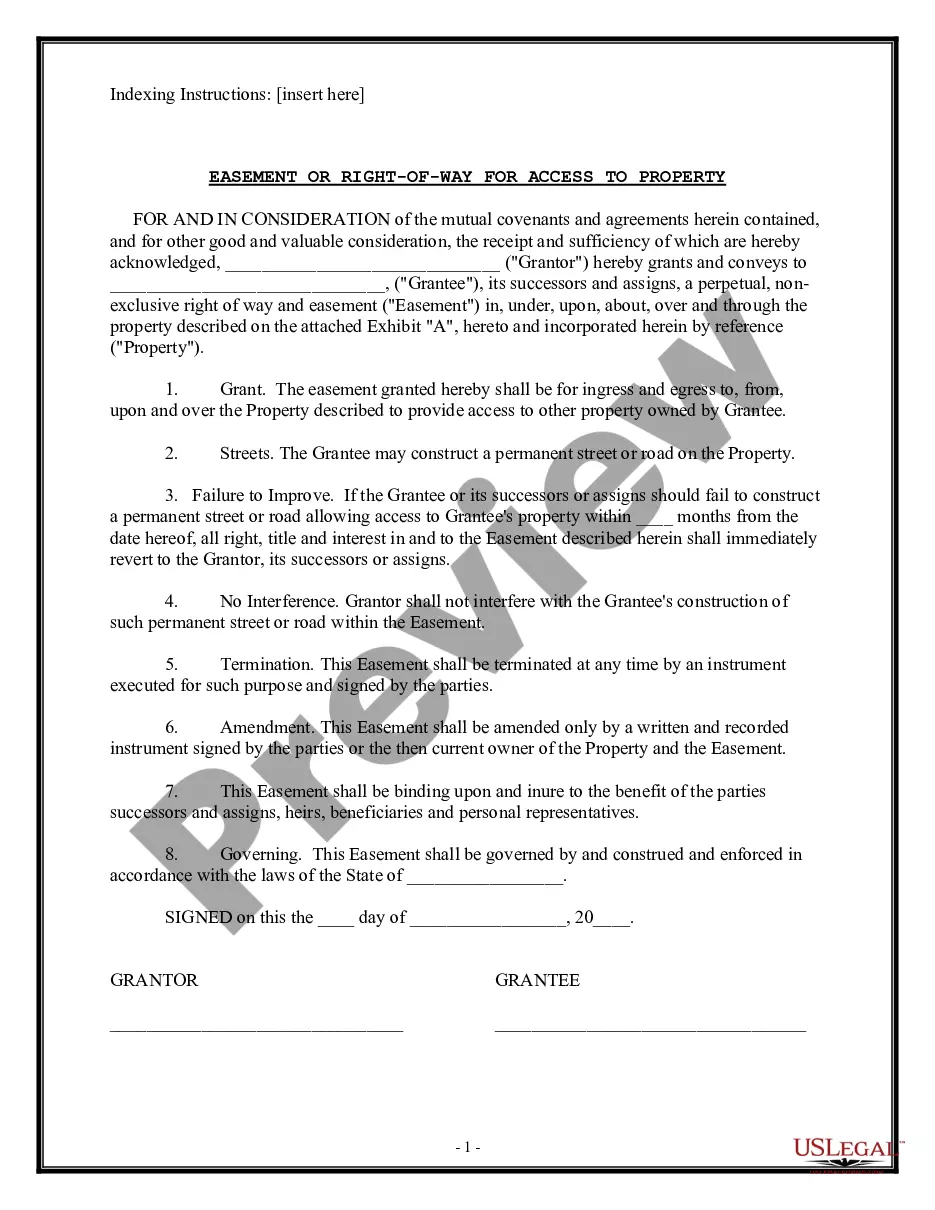
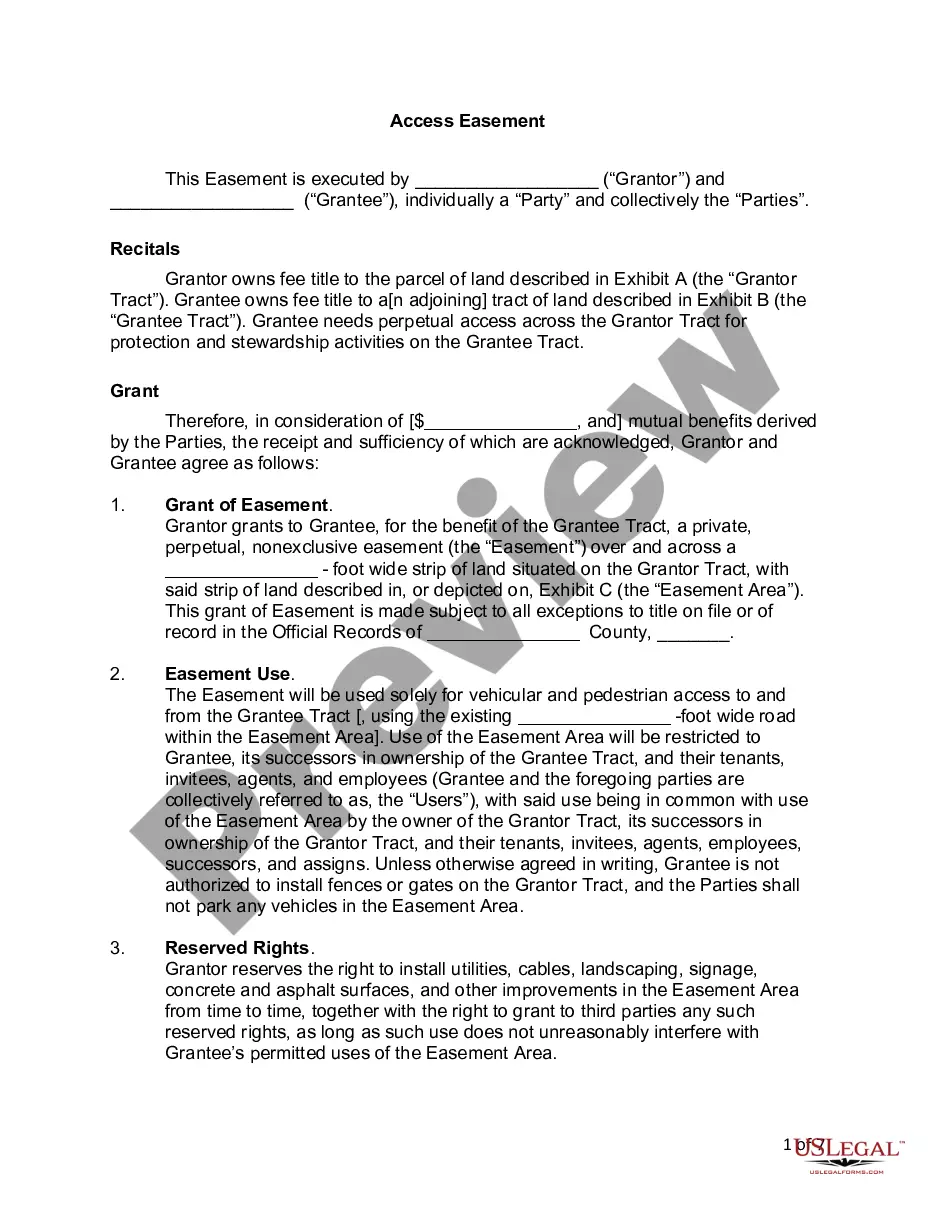
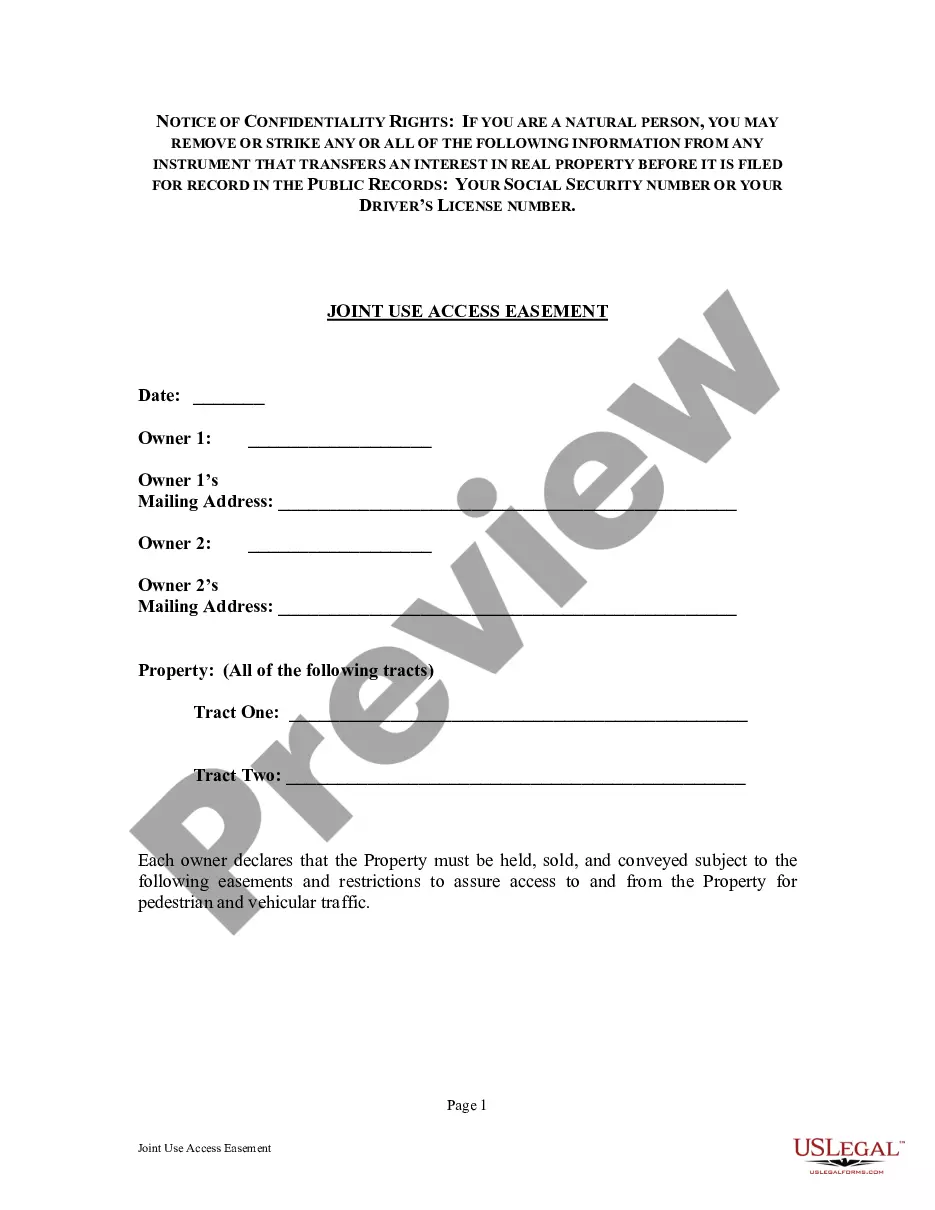
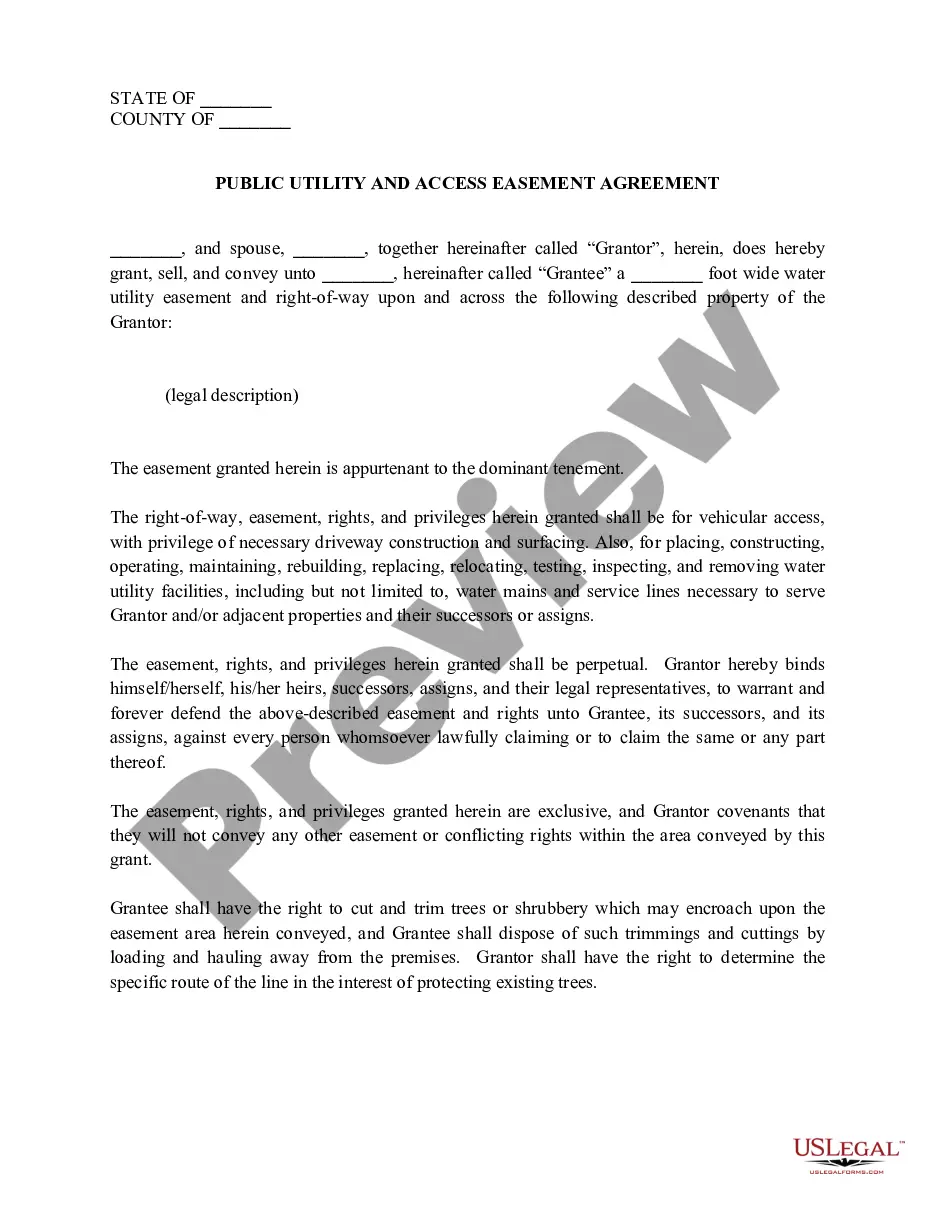
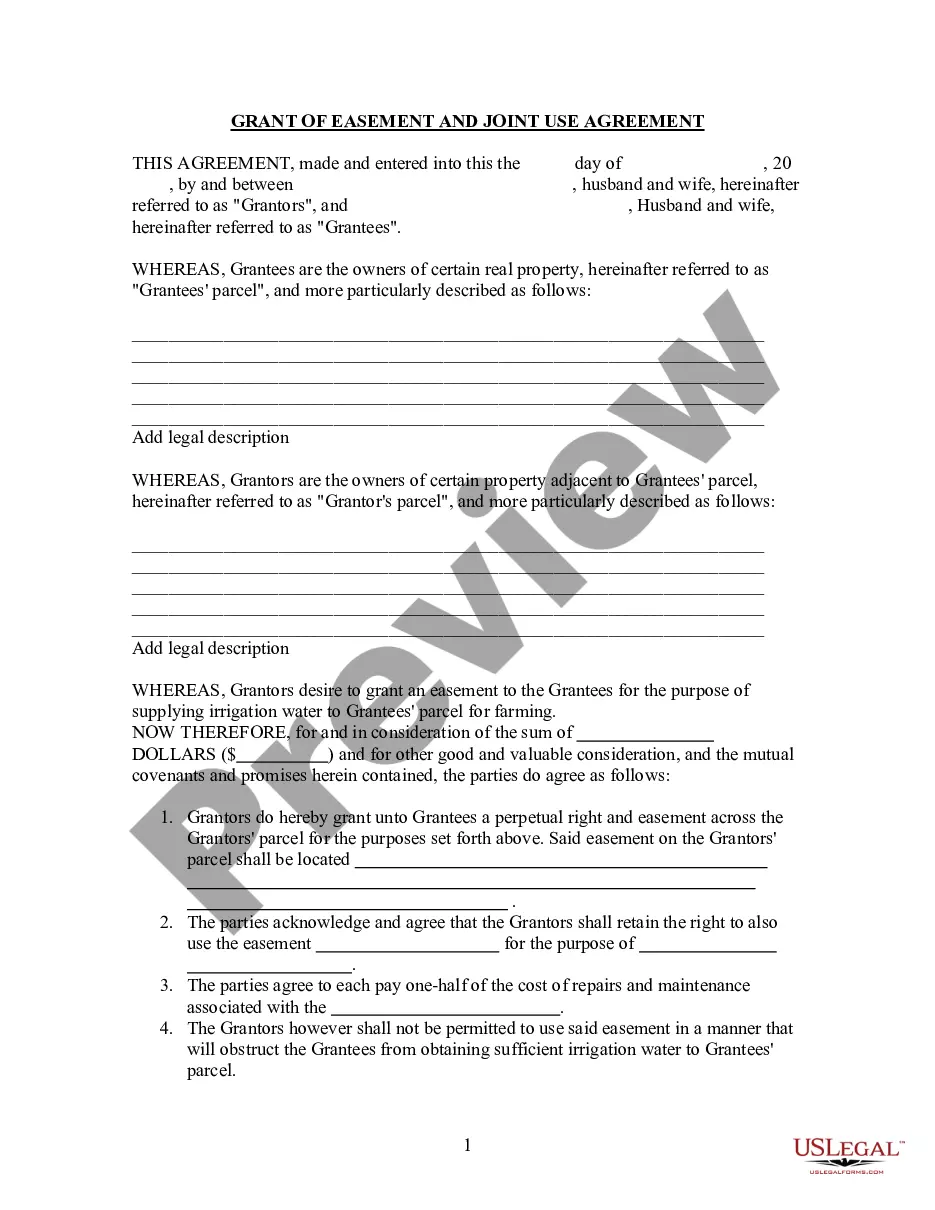
The Joint Use Access Easement is a legal agreement that allows one party to use a specific tract of land owned by another party while maintaining the original owner's rights. Unlike a lease, this easement does not grant possession or the right to alter or sell the land. It is particularly useful for ensuring that multiple property owners have access to shared driveways or pathways, facilitating both pedestrian and vehicular traffic.
Key components of this form
- Date: The date the agreement is executed.
- Owner Names and Addresses: Information about the parties involved.
- Property Description: Detailed description of the property involved.
- Access Tract: Specifies the nonexclusive area reserved for access.
- Maintenance Obligations: Outlines responsibilities for maintaining the property and access tract.
- Enforcement Provisions: Describes how the easement can be enforced and modified.


When this form is needed
This form is used when property owners wish to formalize shared access to property for purposes such as driveways or pedestrian paths. It is particularly beneficial in residential or commercial developments where multiple owners need coordinated access without transferring ownership rights.
Who should use this form
This form is intended for:
- Property owners who share access rights.
- Developers managing joint access across properties.
- Real estate professionals advising clients on easements.
How to complete this form
- Identify the parties involved by filling in Owner 1 and Owner 2 details.
- Clearly define the property by providing a detailed description.
- Specify the Access Tract, including dimensions and location.
- Outline maintenance obligations and costs associated with the access improvements.
- Have all parties sign the document in the presence of a notary public if required.
- File the finalized easement with the local property records office if necessary.
Is notarization required?
Yes, this form must be notarized to be legally valid. US Legal Forms offers an integrated online notarization service, available 24/7. This secure option allows you to complete the notarization via video call, ensuring compliance without the need for travel.
Get your form ready online
Our built-in tools help you complete, sign, share, and store your documents in one place.
Make edits, fill in missing information, and update formatting in US Legal Forms—just like you would in MS Word.
Download a copy, print it, send it by email, or mail it via USPS—whatever works best for your next step.
Sign and collect signatures with our SignNow integration. Send to multiple recipients, set reminders, and more. Go Premium to unlock E-Sign.
If this form requires notarization, complete it online through a secure video call—no need to meet a notary in person or wait for an appointment.
We protect your documents and personal data by following strict security and privacy standards.

Make edits, fill in missing information, and update formatting in US Legal Forms—just like you would in MS Word.

Download a copy, print it, send it by email, or mail it via USPS—whatever works best for your next step.

Sign and collect signatures with our SignNow integration. Send to multiple recipients, set reminders, and more. Go Premium to unlock E-Sign.

If this form requires notarization, complete it online through a secure video call—no need to meet a notary in person or wait for an appointment.

We protect your documents and personal data by following strict security and privacy standards.
Common mistakes to avoid
- Failing to accurately list all owners and the property description.
- Not specifying the access tract details adequately.
- Overlooking the maintenance and cost-sharing clauses.
- Not obtaining the required notarization.
Benefits of completing this form online
- Convenience of downloading and filling out the form at your own pace.
- Editability allows customization to meet specific needs.
- Reliable legal language drafted by licensed attorneys.
Looking for another form?
Form popularity
FAQ
There are usually two core principles of Georgia easement law: The easement holder's use of the land cannot exceed the scope and the purpose of the easement. The property owner cannot interfere with the easement holder's rights.
Generally, the owner of any easement has a duty to maintain the easement. If the easement is owned by more than one person, or is attached parcels of land under different ownership, each owner must share in the cost of maintaining the easement pursuant to their agreement.
Prescriptive easements ? To obtain a prescriptive easement in Washington, one property owner must openly, hostilely, and continuously use part of another's land for 10 years without permission. The laws for establishing a prescriptive easement are almost the same as the requirements for establishing adverse possession.
Temporary Sewer Easements are typically an additional 20 feet outside of the permanent easement with 10 feet on each side of the 20 feet wide permanent easement. The combined width of a temporary and permanent easement is typically 40 feet.
Under Georgia utility easement law, the government has the right to easements of private property in order to , expand, and maintain utilities such as power lines. Very often, new construction can impact the location of existing utility lines.
An easement is the right to use or access a parcel of property owned by someone else for a specific purpose. Properties adjacent to public rights-of-way may have easements for such things as power lines, water/sewer lines, drainage structures and the like.
An easement is a legal tool that gives an individual the right to use land that is owned by someone else, for a particular purpose. Easements vary significantly depending on the particular situation to which they apply. They can be created for specific people, certain lengths of time, and for specified purposes.
Cross Access Easement - An easement or other development right offered to one party by another party that allows ingress and egress across private lands.