Joint Use Access Easement
About this form
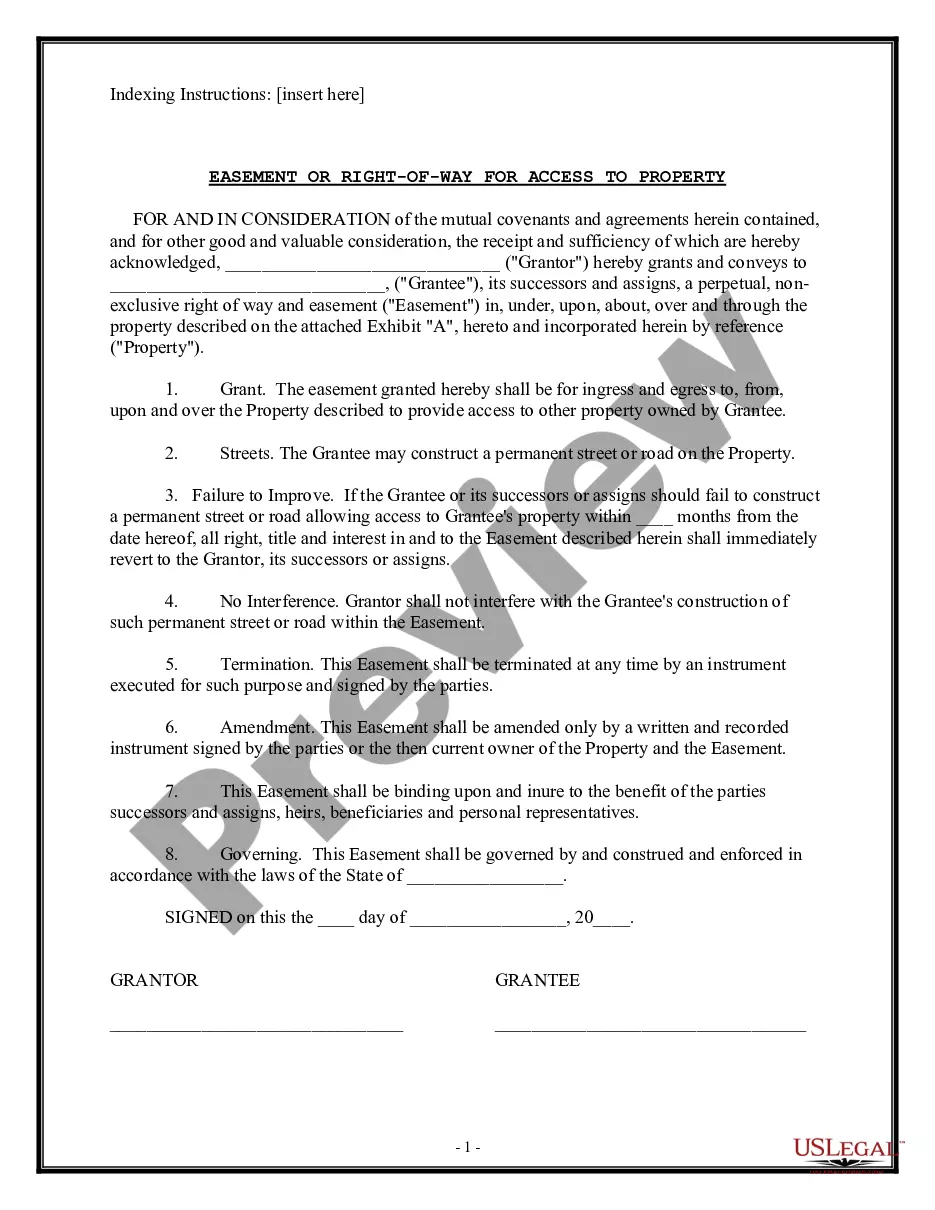
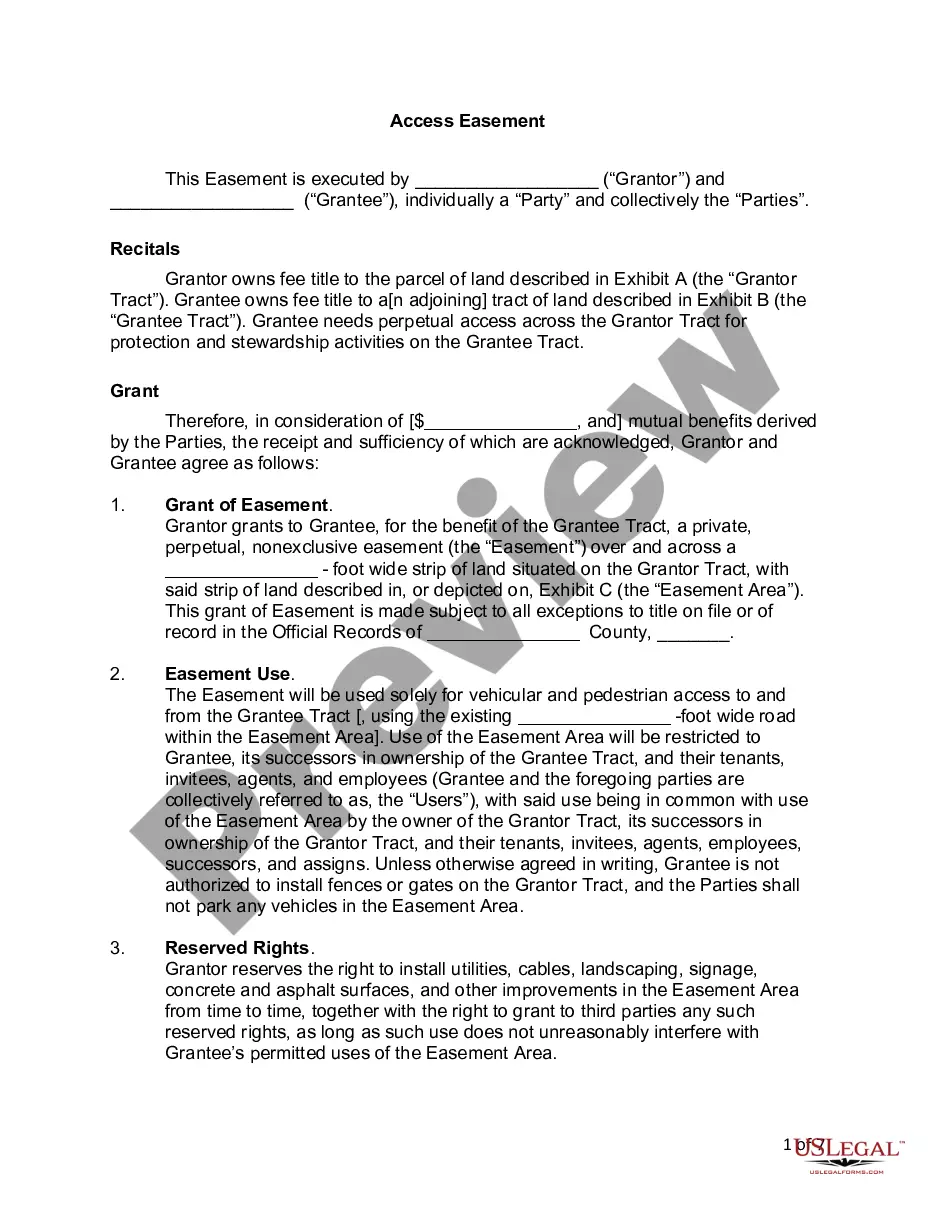
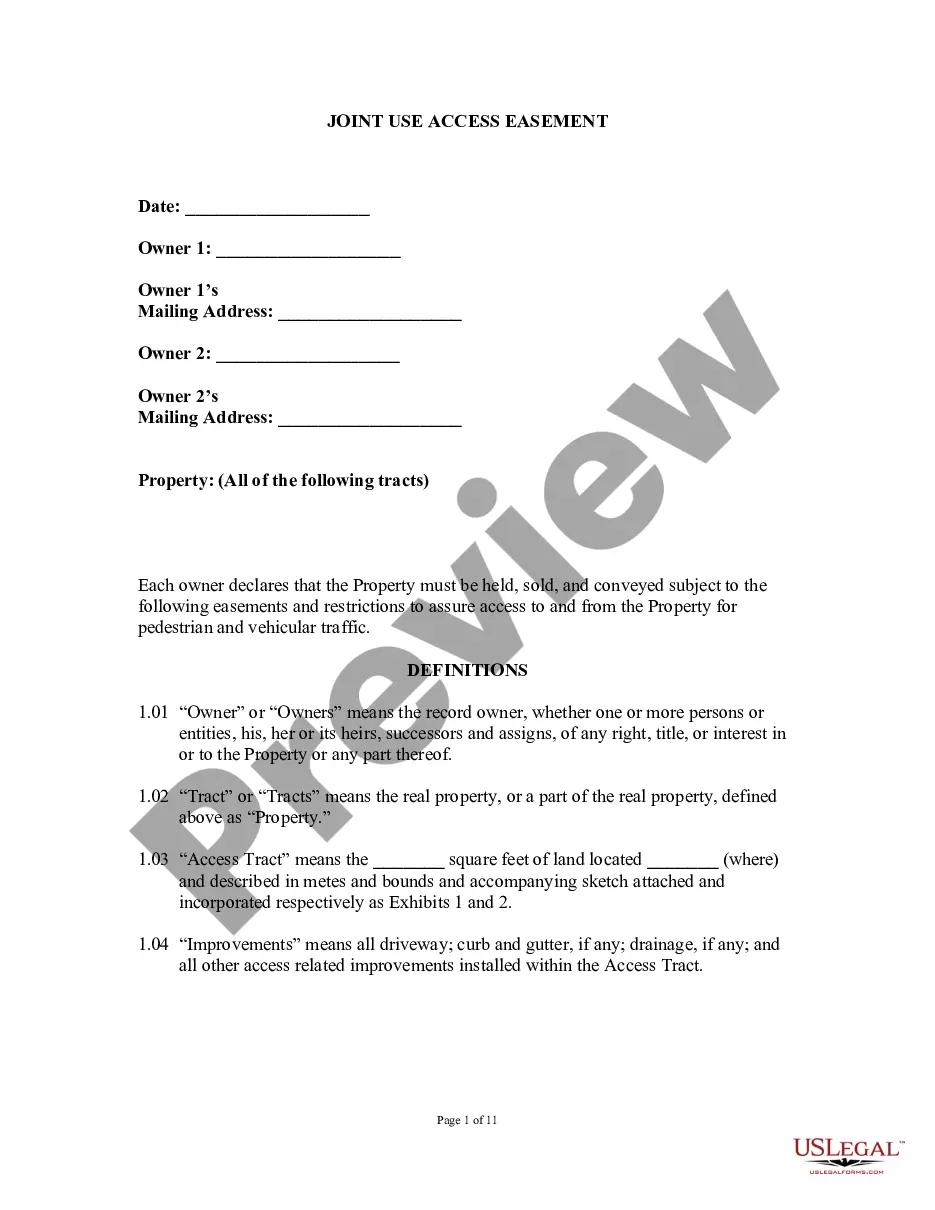
The Joint Use Access Easement is a legal agreement that provides use privileges for a specific limited purpose on a tract of land. Unlike other property agreements, this form allows parties to access the land without transferring ownership. It is essential for landowners seeking to establish clear usage rights without conceding possession or the right to make significant changes to the property.
Key components of this form
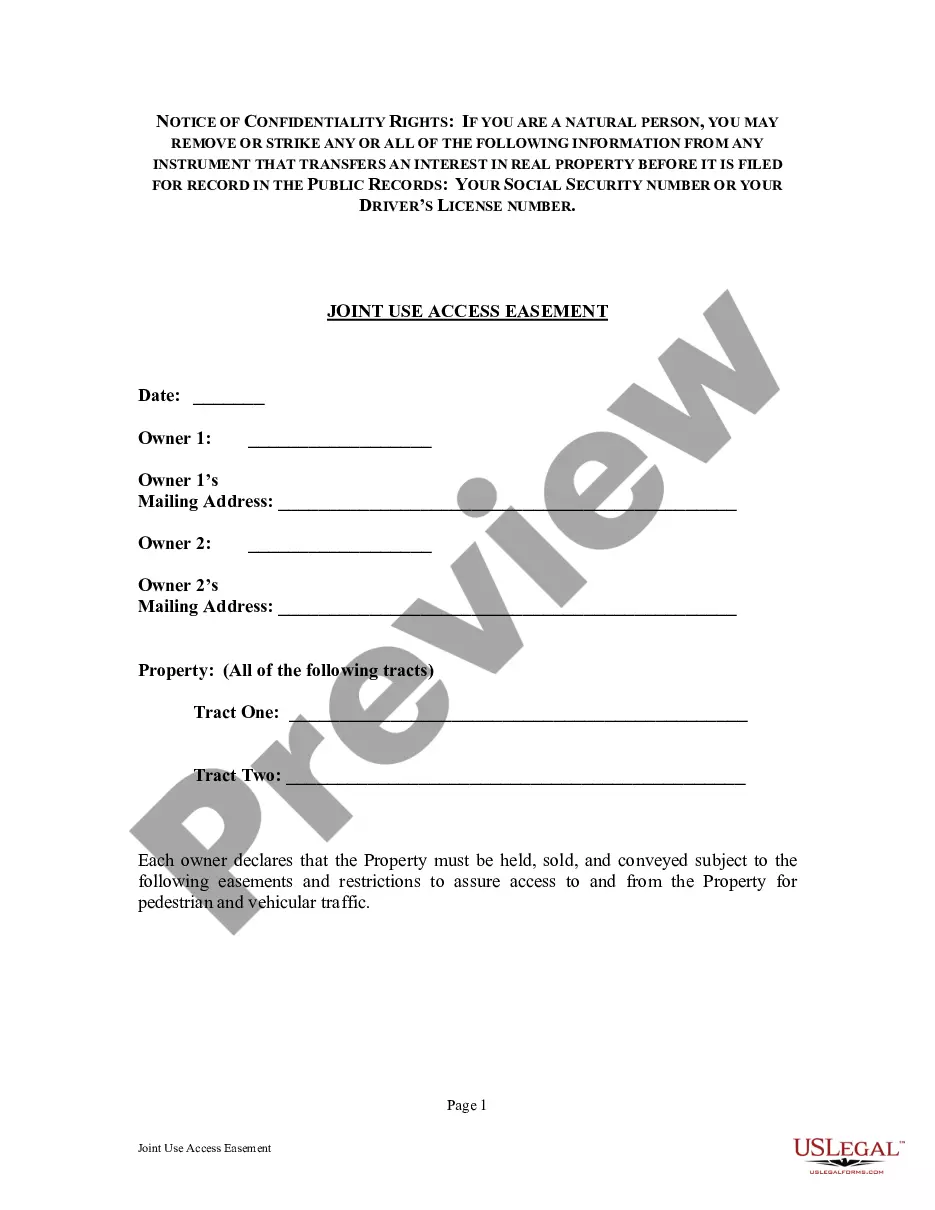
- Owner Declaration: Identification of the landowners and their respective mailing addresses.
- Property Description: Details about the land involved, including specific tracts and their definitions.
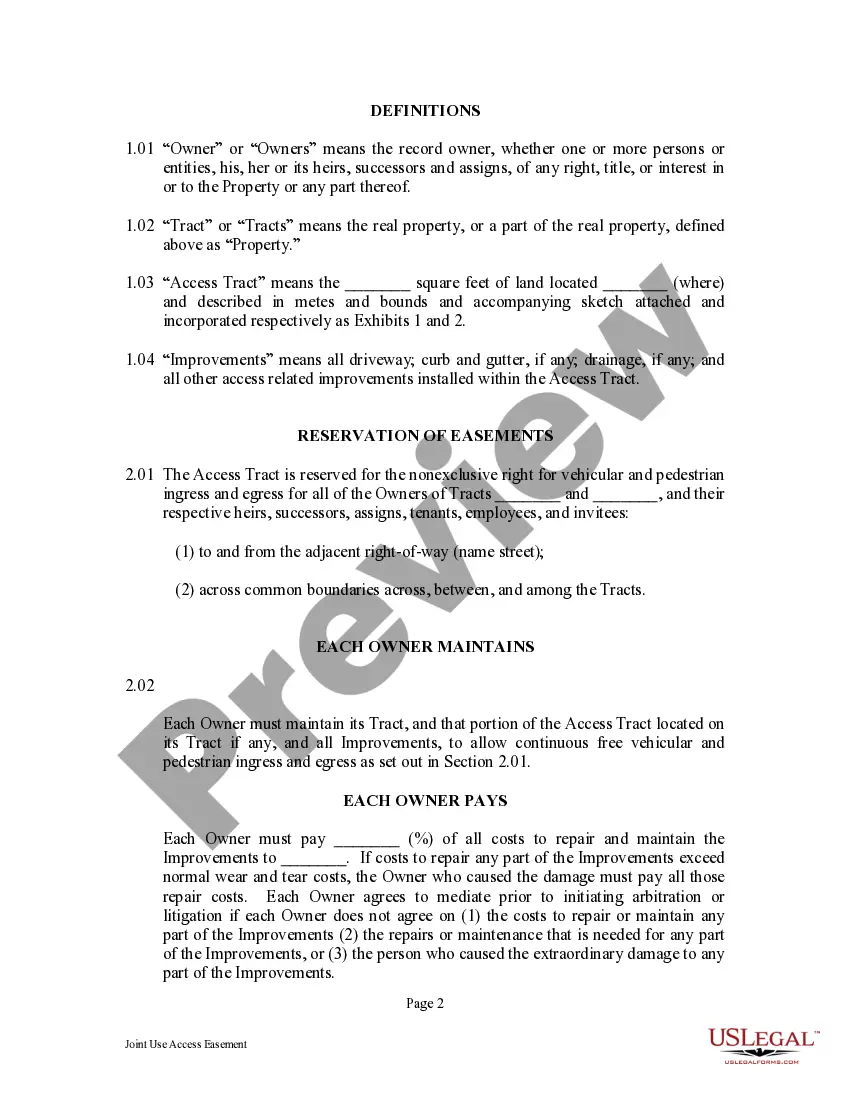
- Access Rights: Nonexclusive rights for vehicular and pedestrian access among owners.
- Maintenance Obligations: Responsibilities of each owner regarding property upkeep and repair costs.
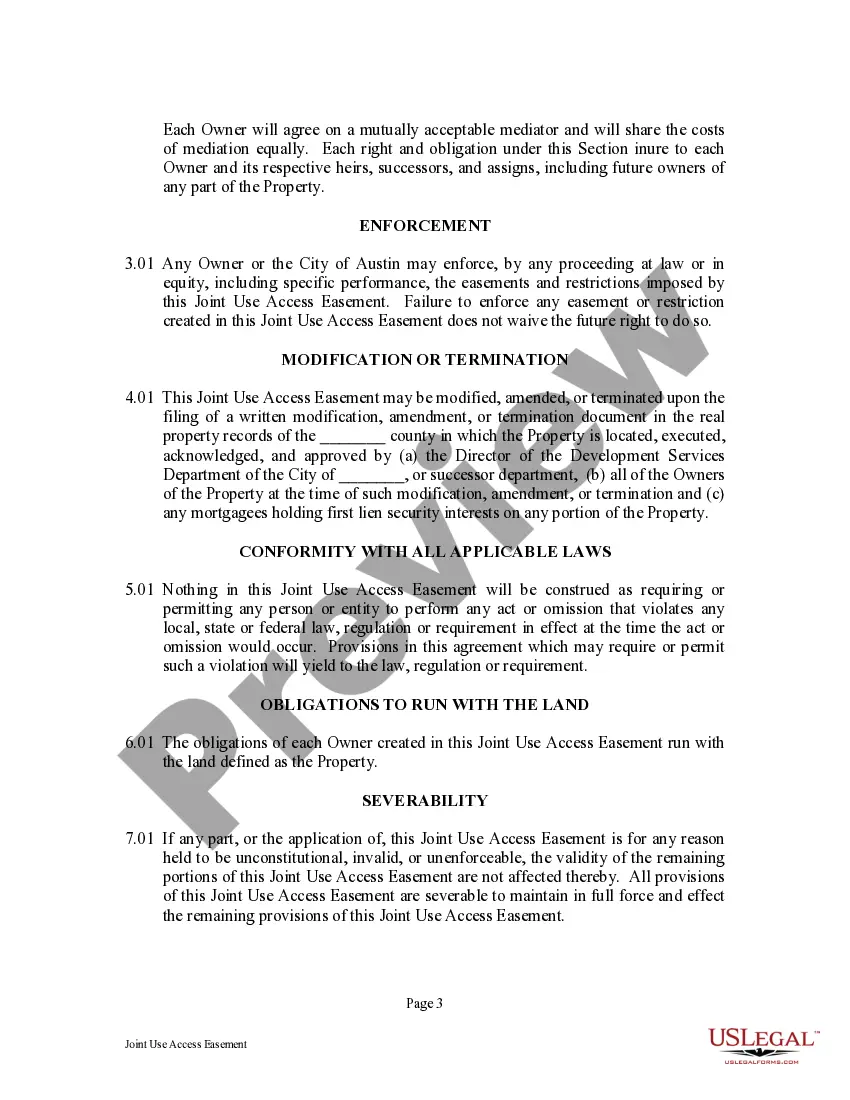
- Enforcement Clause: Framework for legal enforcement of the easement terms.
- Modification Terms: Process for amending or terminating the easement agreement.
Situations where this form applies
This form is typically used when multiple owners share a tract of land and need to establish rights for access and use. Situations that may require this easement include property developments, shared driveways, or when one property needs access to public roads through another property. It clarifies responsibilities and maintains access rights for all parties involved.
Who this form is for
- Property owners who need to formalize shared access to their land.
- Developers seeking to outline access rights for a real estate project.
- Landowners adjacent to one another requiring clarity on usage rights.
Instructions for completing this form
- Identify the owners: Fill in the names and mailing addresses of all property owners.
- Specify the property: Clearly describe the tracts of land involved in the easement.
- Detail access rights: Outline the agreed terms for vehicular and pedestrian access.
- Fill in maintenance responsibilities: Indicate which owner is responsible for the upkeep and associated costs.
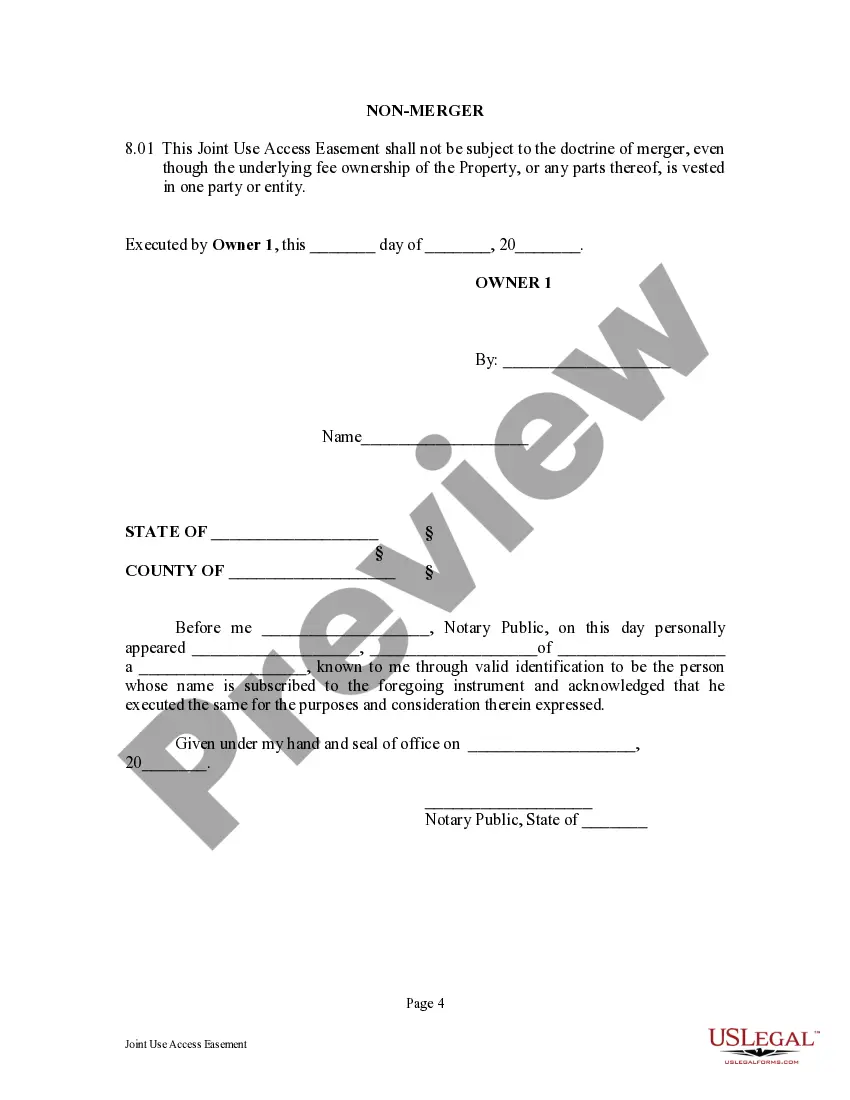
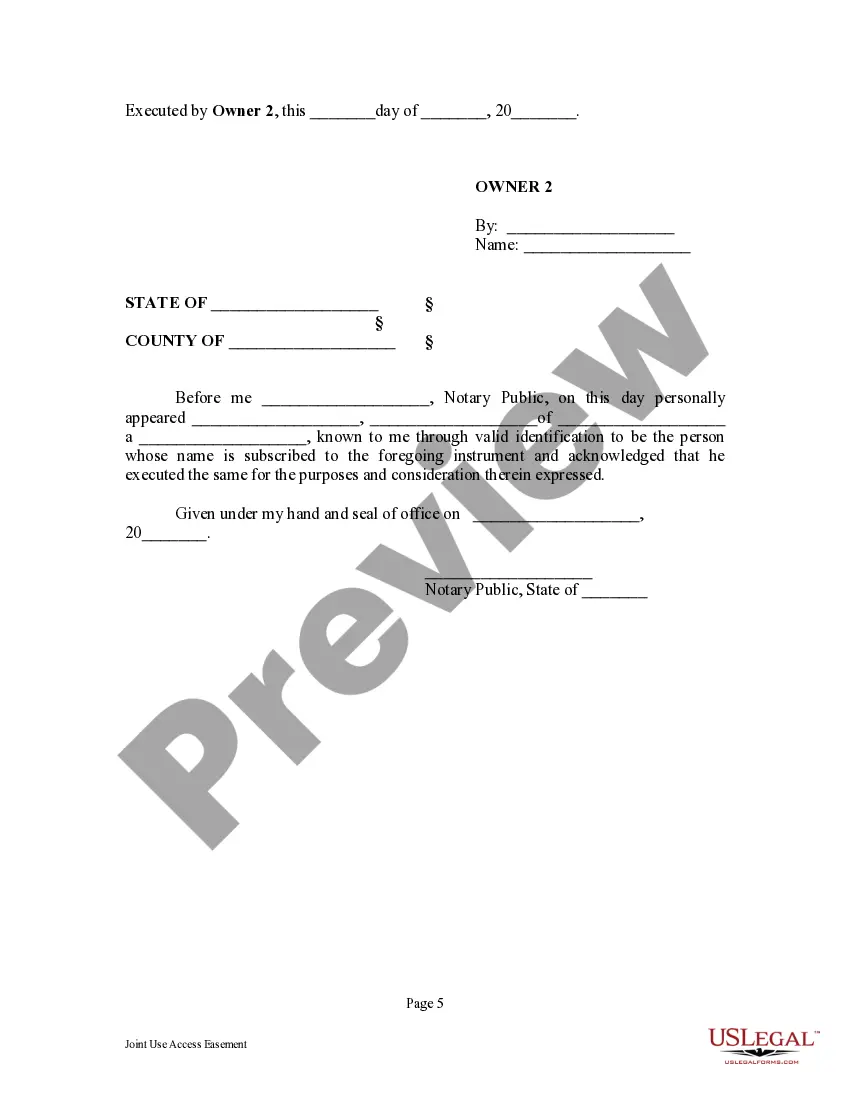
- Obtain necessary signatures: All owners must sign in the presence of a notary if required.
Notarization guidance
Yes, this form must be notarized to be legally valid. This notarization process can be completed online through US Legal Forms, ensuring a secure video call with a notary public available 24/7, eliminating the need for travel.
Get your form ready online
Our built-in tools help you complete, sign, share, and store your documents in one place.
Make edits, fill in missing information, and update formatting in US Legal Forms—just like you would in MS Word.
Download a copy, print it, send it by email, or mail it via USPS—whatever works best for your next step.
Sign and collect signatures with our SignNow integration. Send to multiple recipients, set reminders, and more. Go Premium to unlock E-Sign.
If this form requires notarization, complete it online through a secure video call—no need to meet a notary in person or wait for an appointment.
We protect your documents and personal data by following strict security and privacy standards.

Make edits, fill in missing information, and update formatting in US Legal Forms—just like you would in MS Word.

Download a copy, print it, send it by email, or mail it via USPS—whatever works best for your next step.

Sign and collect signatures with our SignNow integration. Send to multiple recipients, set reminders, and more. Go Premium to unlock E-Sign.

If this form requires notarization, complete it online through a secure video call—no need to meet a notary in person or wait for an appointment.

We protect your documents and personal data by following strict security and privacy standards.
Typical mistakes to avoid
- Failing to accurately describe the property involved in the easement.
- Not specifying the maintenance responsibilities of each owner.
- Neglecting to obtain all required signatures and notary acknowledgment.
Advantages of online completion
- Convenience: Download your Joint Use Access Easement anytime and from anywhere.
- Editability: Easily modify the template to suit your specific needs.
- Reliability: Forms are drafted by licensed attorneys to ensure legal compliance.
Looking for another form?
Form popularity
FAQ
Prescriptive easements ? To obtain a prescriptive easement in Washington, one property owner must openly, hostilely, and continuously use part of another's land for 10 years without permission. The laws for establishing a prescriptive easement are almost the same as the requirements for establishing adverse possession.
Easements are usually permanent unless terminated by one of the ways recognized under Washington law. For example, an easement can be terminated if the property owner benefiting from the easement signs a written document stating that the easement is terminated.
Cross Access Easement - An easement or other development right offered to one party by another party that allows ingress and egress across private lands.
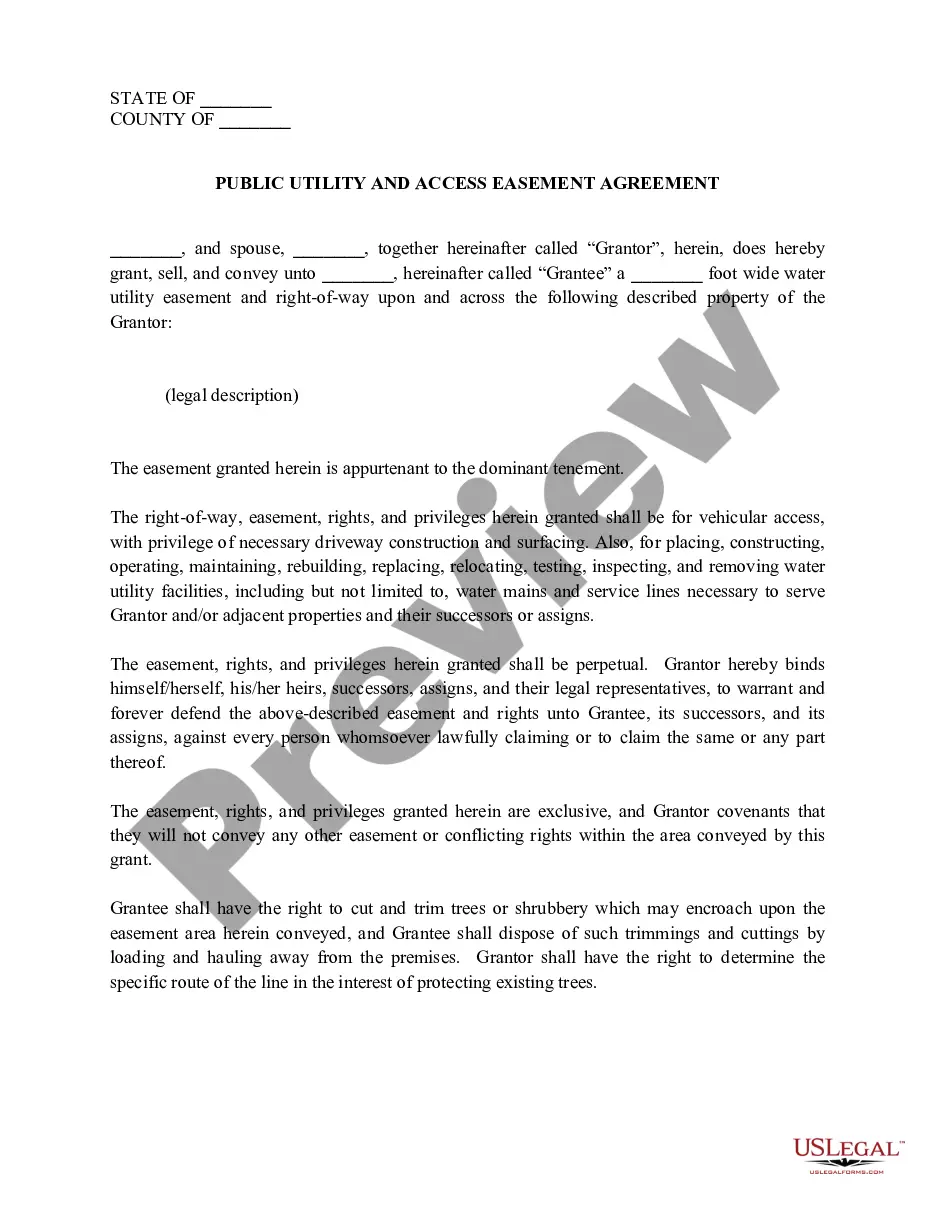
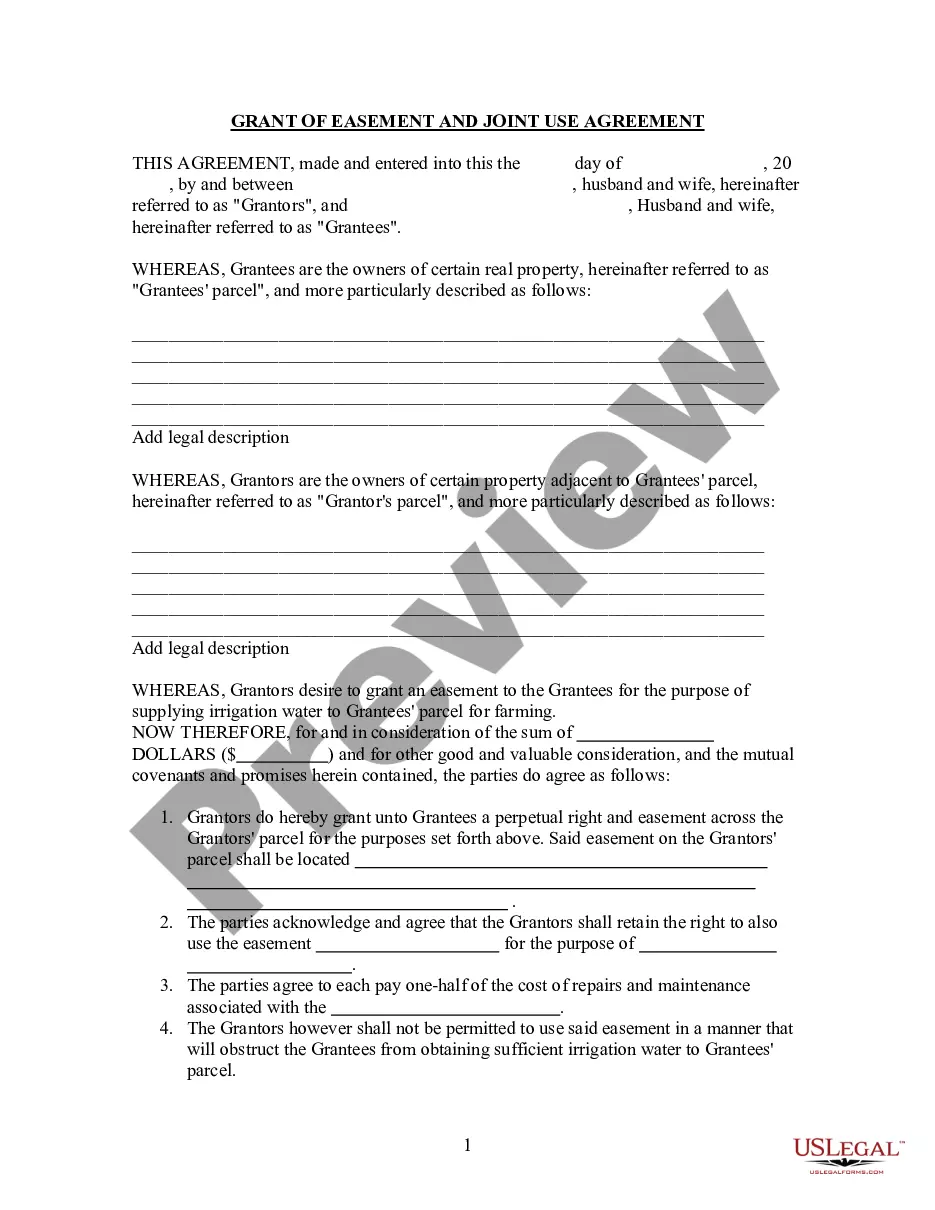
An easement allows an individual or entity to access a portion of your property for a specific purpose. For instance, if you have a driveway and your neighbor does not, you may decide to grant your neighbor an easement allowing them to use your driveway to reach their property.
Generally, the owner of any easement has a duty to maintain the easement. If the easement is owned by more than one person, or is attached parcels of land under different ownership, each owner must share in the cost of maintaining the easement pursuant to their agreement.
Washington case law addresses property owners' right to trim encroaching branches from a tree located on a neighbor's property. The law recognizes your right to exercise "self help" by trimming encroaching branches up to the property line.
Under Georgia utility easement law, the government has the right to easements of private property in order to , expand, and maintain utilities such as power lines. Very often, new construction can impact the location of existing utility lines.
An easement is a legal tool that gives an individual the right to use land that is owned by someone else, for a particular purpose. Easements vary significantly depending on the particular situation to which they apply. They can be created for specific people, certain lengths of time, and for specified purposes.