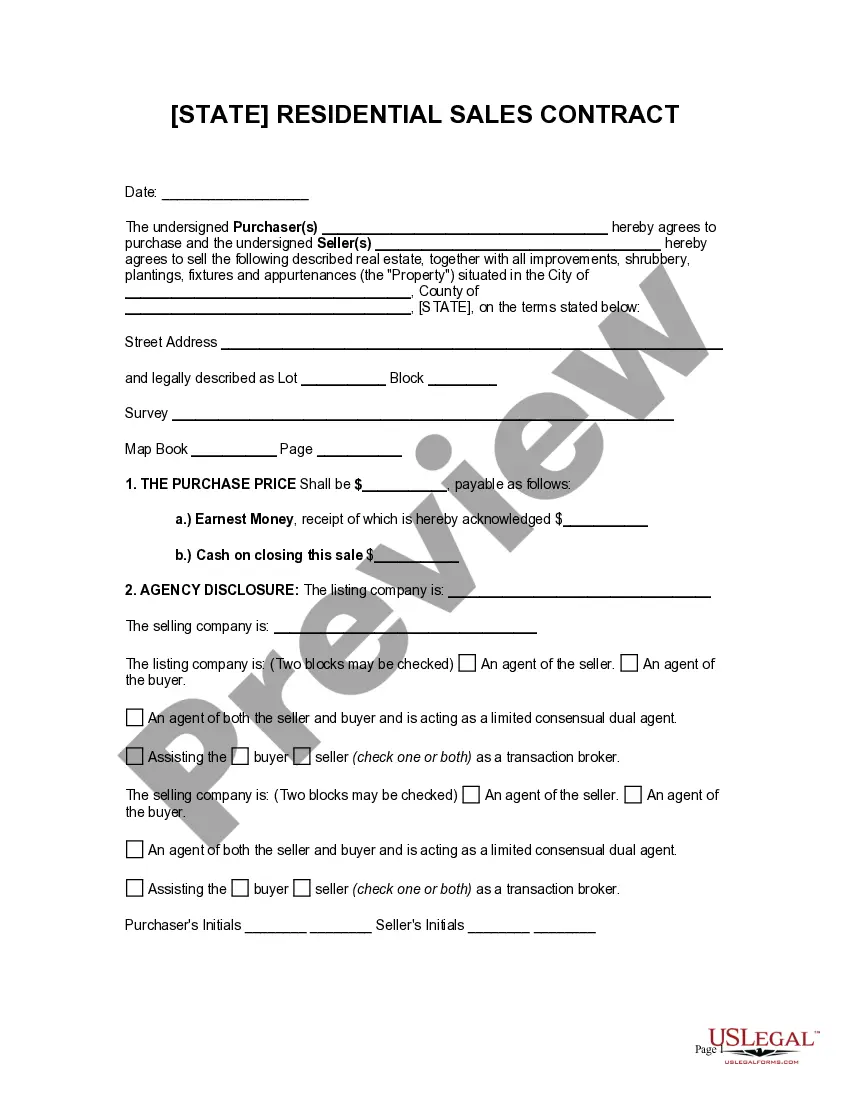
Financial Statement Form - Individual
Overview of this form
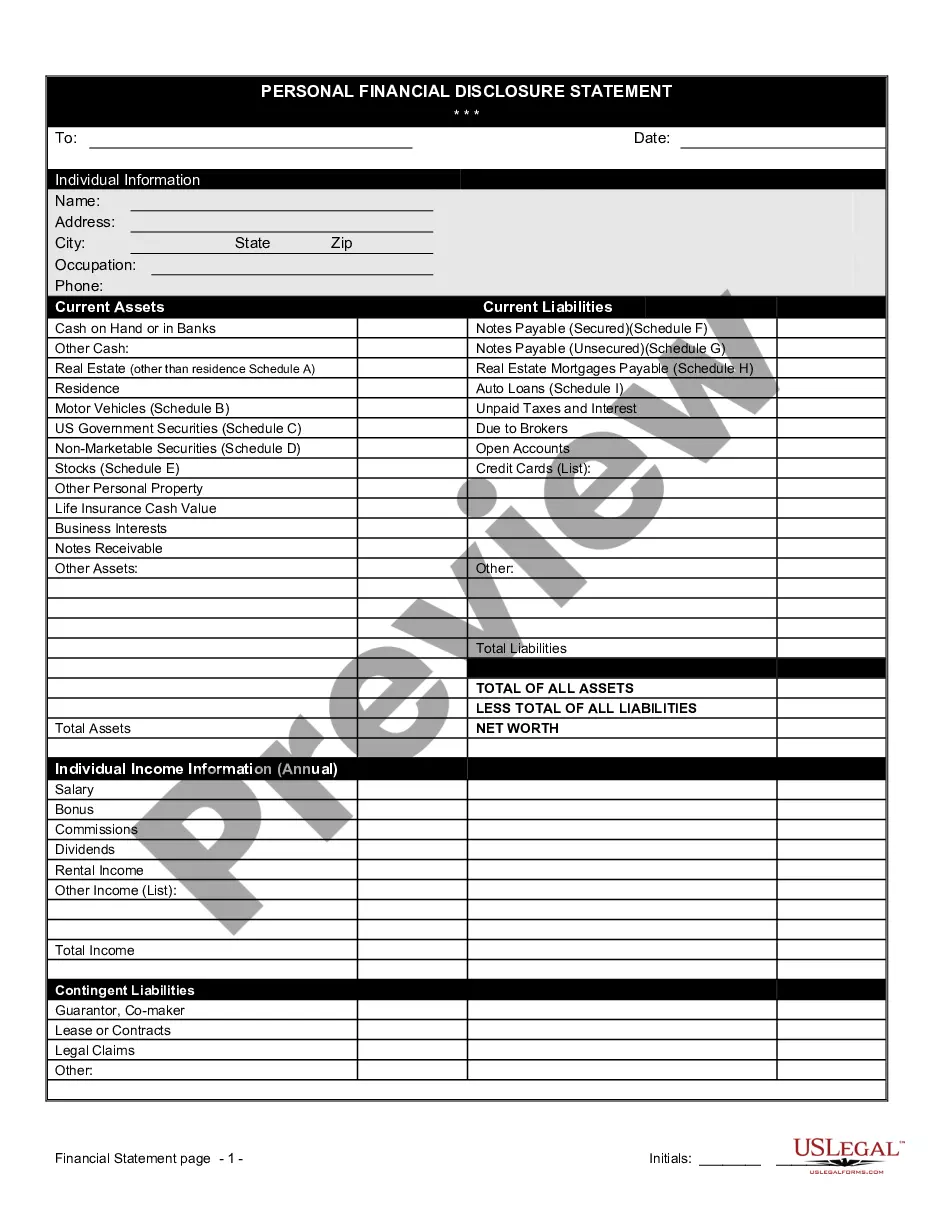
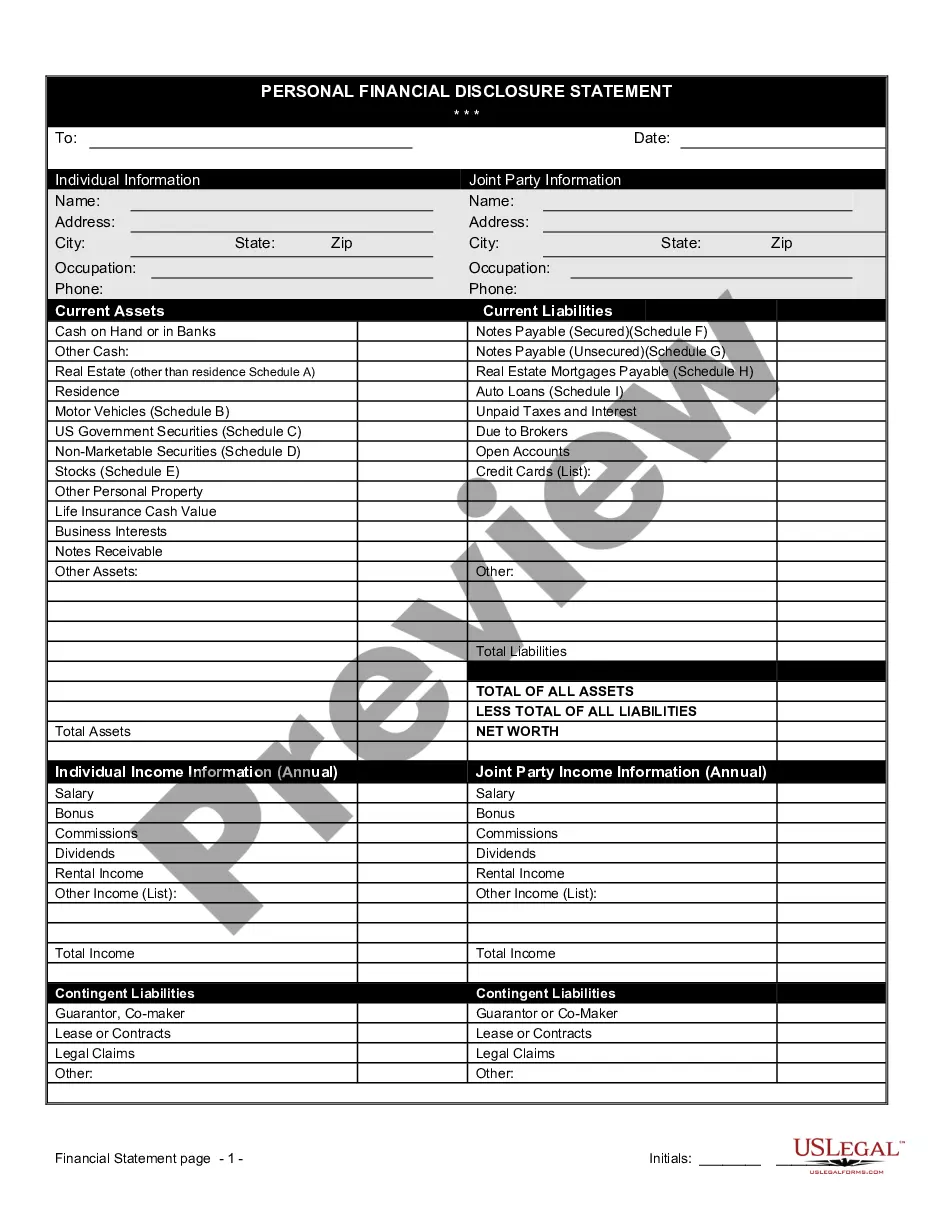
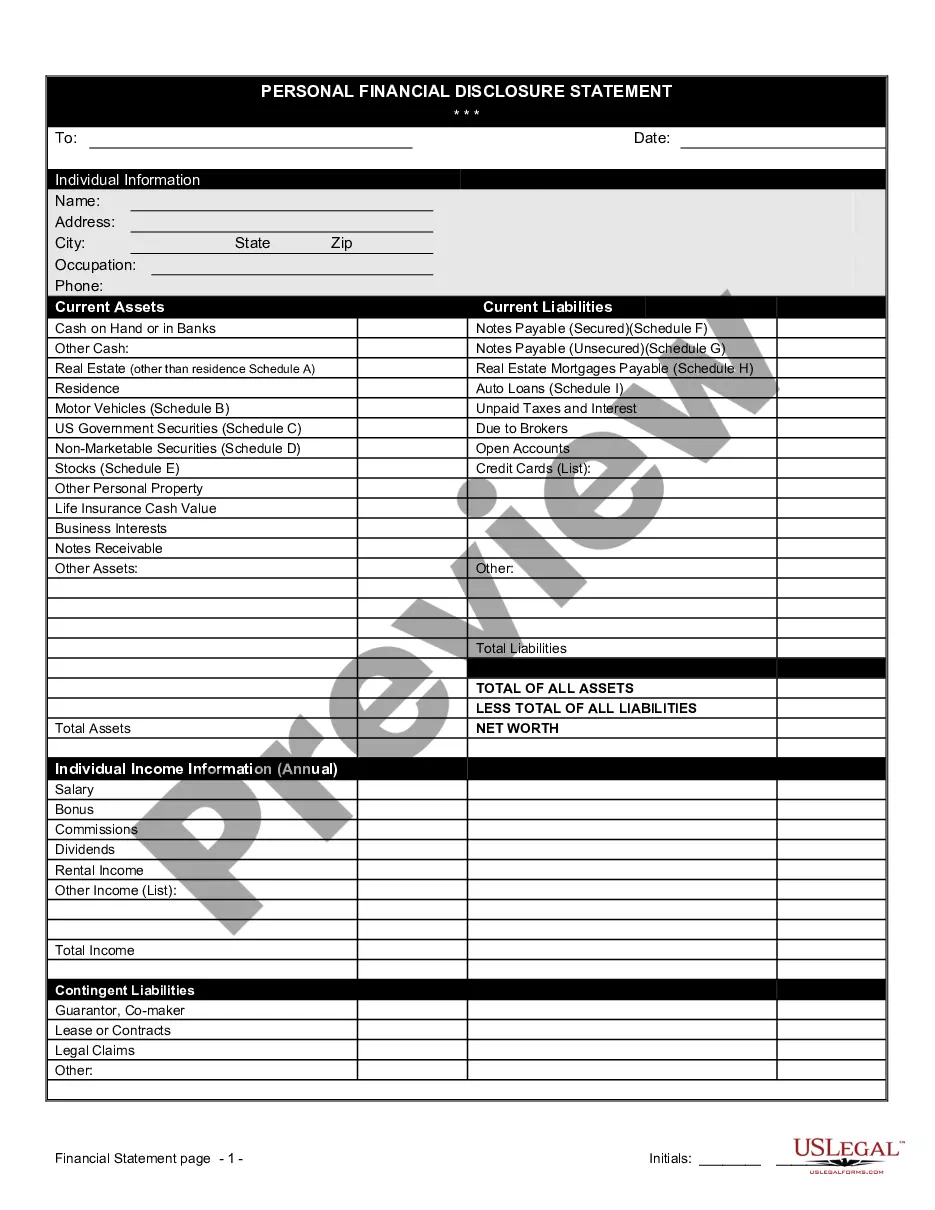
The Financial Statement Form - Individual is a crucial document that outlines an individual's assets and liabilities. It serves to clarify oneâs financial situation by detailing current assets, current liabilities, deferred assets, and net worth, distinguishing it from other financial statements used in various contexts.
What’s included in this form
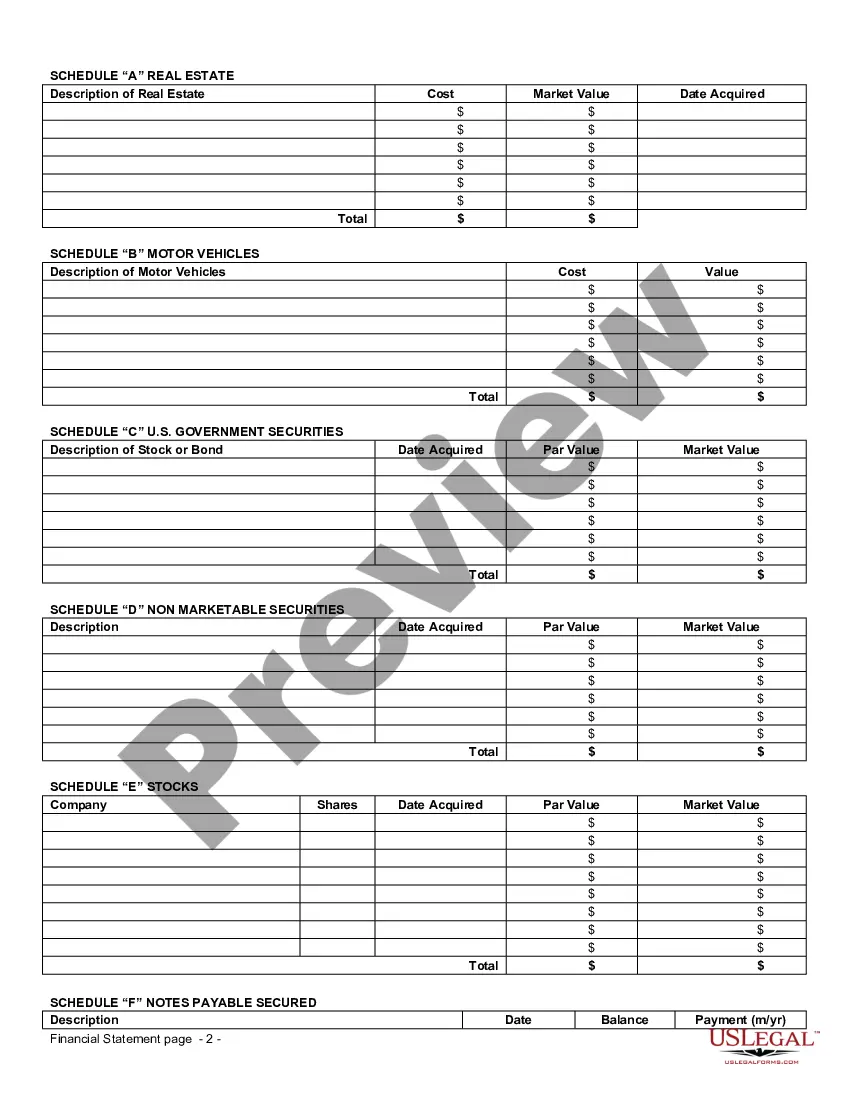
- Current assets: Lists all liquid and tangible assets.
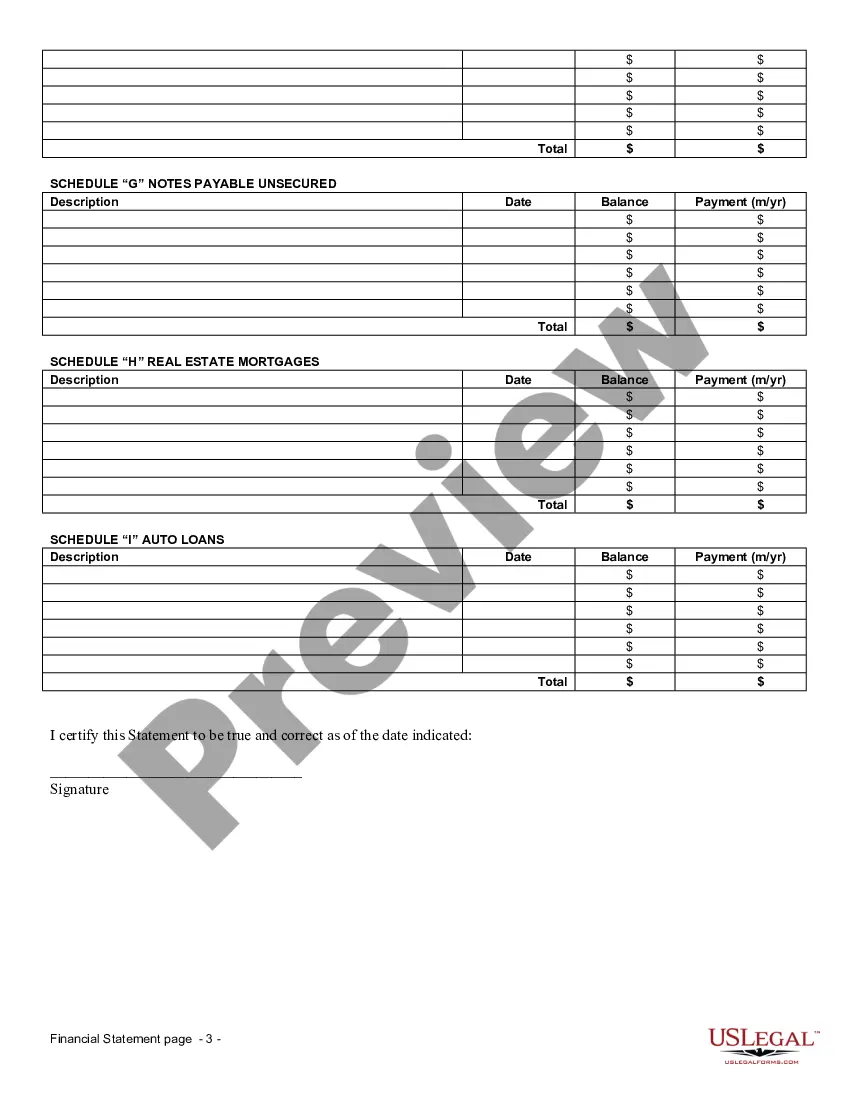
- Current liabilities: Includes debts and obligations due within a year.
- Deferred assets: Accounts for assets not yet realized.
- Net worth: Calculates the difference between total assets and total liabilities.
When to use this form
This form is commonly used when an individual needs to present their financial condition for various purposes, such as loan applications, bankruptcy filings, or personal financial assessments. It can also be helpful in legal cases that require a clear understanding of oneâs financial position.
Who this form is for
- Individuals seeking loans or credit.
- People undergoing bankruptcy or financial restructuring.
- Those involved in legal proceedings requiring a financial overview.
- Anyone needing to assess their financial health for personal or business reasons.
Instructions for completing this form
- Gather all financial records, including bank statements, asset documents, and loan information.
- Fill in the section for current assets by listing all properties, cash, and investments.
- Complete the current liabilities section by detailing all outstanding debts and obligations.
- Detail deferred assets to show future financial benefits that are recognized but not yet realized.
- Calculate your net worth by subtracting total liabilities from total assets and enter the result.
Notarization requirements for this form
This form does not typically require notarization unless specified by local law.
Get your form ready online
Our built-in tools help you complete, sign, share, and store your documents in one place.
Make edits, fill in missing information, and update formatting in US Legal Forms—just like you would in MS Word.
Download a copy, print it, send it by email, or mail it via USPS—whatever works best for your next step.
Sign and collect signatures with our SignNow integration. Send to multiple recipients, set reminders, and more. Go Premium to unlock E-Sign.
If this form requires notarization, complete it online through a secure video call—no need to meet a notary in person or wait for an appointment.
We protect your documents and personal data by following strict security and privacy standards.

Make edits, fill in missing information, and update formatting in US Legal Forms—just like you would in MS Word.

Download a copy, print it, send it by email, or mail it via USPS—whatever works best for your next step.

Sign and collect signatures with our SignNow integration. Send to multiple recipients, set reminders, and more. Go Premium to unlock E-Sign.

If this form requires notarization, complete it online through a secure video call—no need to meet a notary in person or wait for an appointment.

We protect your documents and personal data by following strict security and privacy standards.
Mistakes to watch out for
- Failing to include all current liabilities, which may understate your financial obligations.
- Not updating the form with the most recent financial information.
- Omitting deferred assets that could impact future financial assessments.
- Calculating net worth incorrectly due to data entry errors.
Why complete this form online
- Convenience of downloading the form and completing it at your own pace.
- Editability allows you to revise your financial details as needed without bureaucratic hassle.
- Reliability, as the form is drafted by licensed attorneys to ensure legal compliance.
Quick recap
- The Financial Statement Form - Individual summarizes financial assets and liabilities.
- This form is useful for loan applications, legal proceedings, and personal finance management.
- Accurate completion ensures a true reflection of oneâs financial situation.
Looking for another form?


Form popularity
FAQ
The Financial Statement Form - Individual is a document that outlines an individual's assets and liabilities to present their financial condition. It lists current assets, current liabilities, deferred assets, and net worth, helping lenders, bankruptcy reviewers, or legal proceedings understand the person’s financial position. It is commonly used for loan applications, bankruptcy filings, and personal financial assessments, or any situation requiring a clear financial overview.
Yes. An individual can have a financial statement, and this form is designed for that purpose. It provides sections for current assets, current liabilities, deferred assets, and net worth, enabling a concise snapshot of the person’s finances. It is typically used when applying for credit, during bankruptcy proceedings, or in legal contexts requiring a financial overview.
You could create your own financial statement, but using the Financial Statement Form - Individual provides standardized sections for current assets, current liabilities, deferred assets, and net worth, ensuring consistency. This can be especially helpful for lenders, bankruptcy reviews, or legal proceedings that require a clear, uniform presentation of finances and reduces ambiguity for professionals reviewing the data.
It is a report that itemizes current assets, current liabilities, deferred assets, and net worth to convey the individual's financial condition. This form serves that purpose and is commonly used for loan applications, bankruptcy filings, or personal financial assessments, as well as in legal proceedings requiring a formal financial overview.
It means they want a structured report of assets, liabilities, and net worth to assess financial health. This form provides a clear overview by listing current assets, current liabilities, deferred assets, and net worth, for use in lending decisions, bankruptcy proceedings, or other legal or financial reviews.
This form standardizes reporting with defined sections for current assets, current liabilities, deferred assets, and net worth, helping ensure consistent information across borrowers and cases. It is designed for multi-state use and aligns with common lending, bankruptcy, and legal review needs, unlike generic templates that may omit key categories.