Cash Flow Statement
About this form
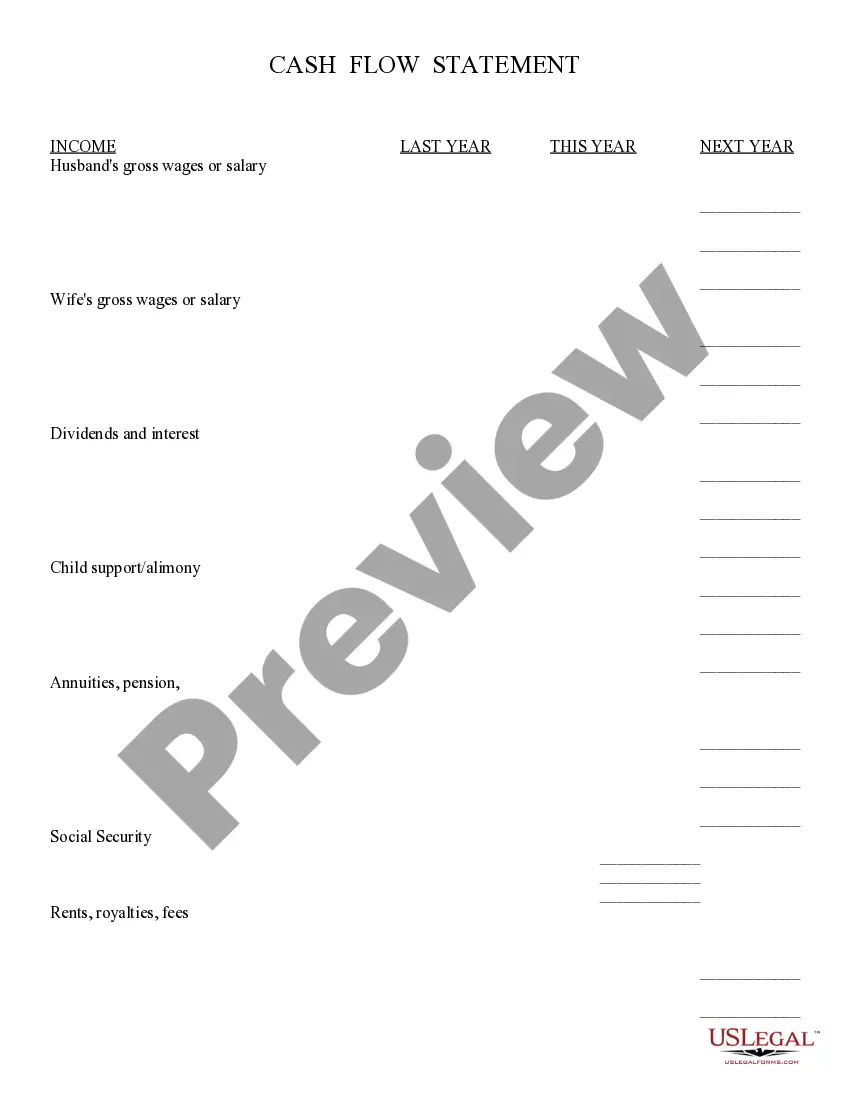
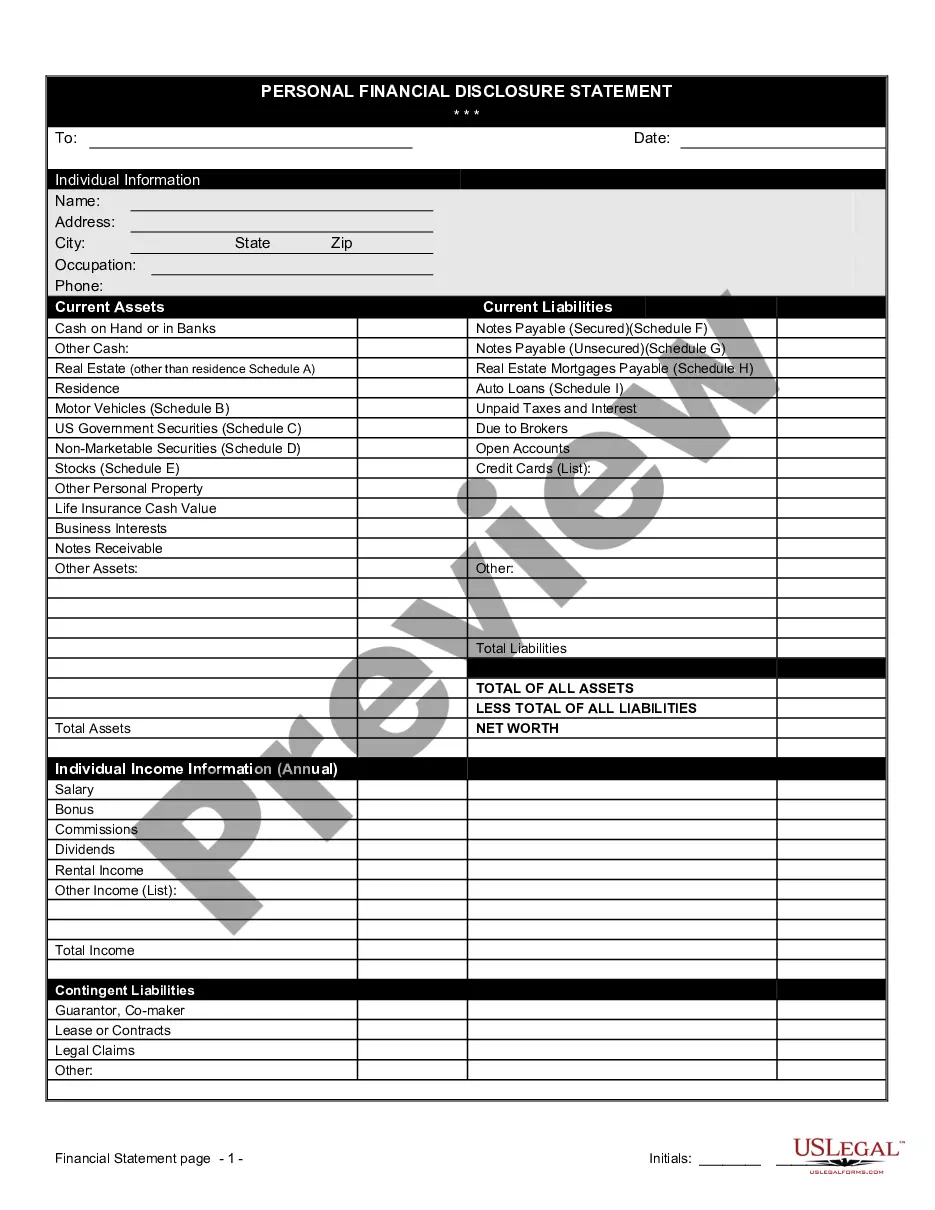
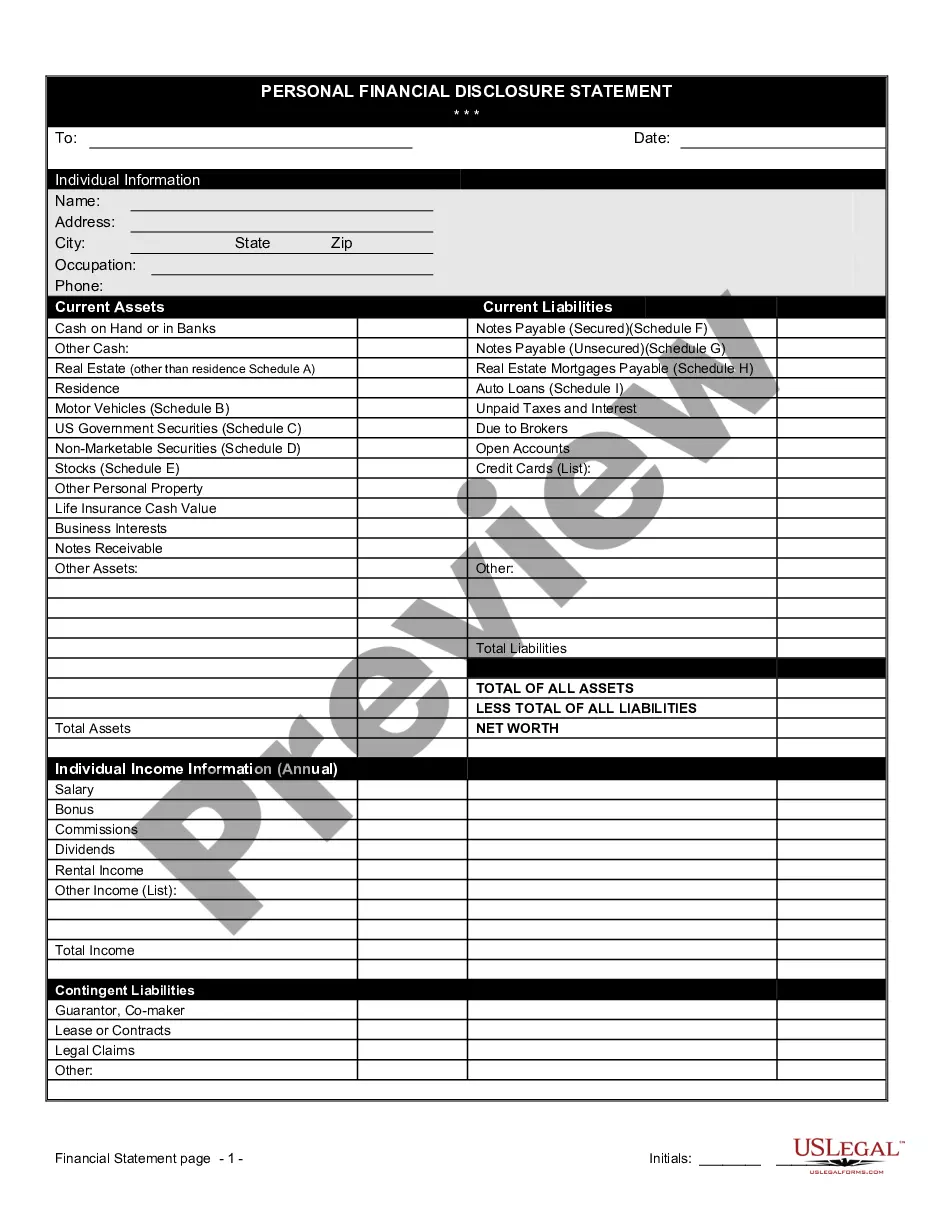
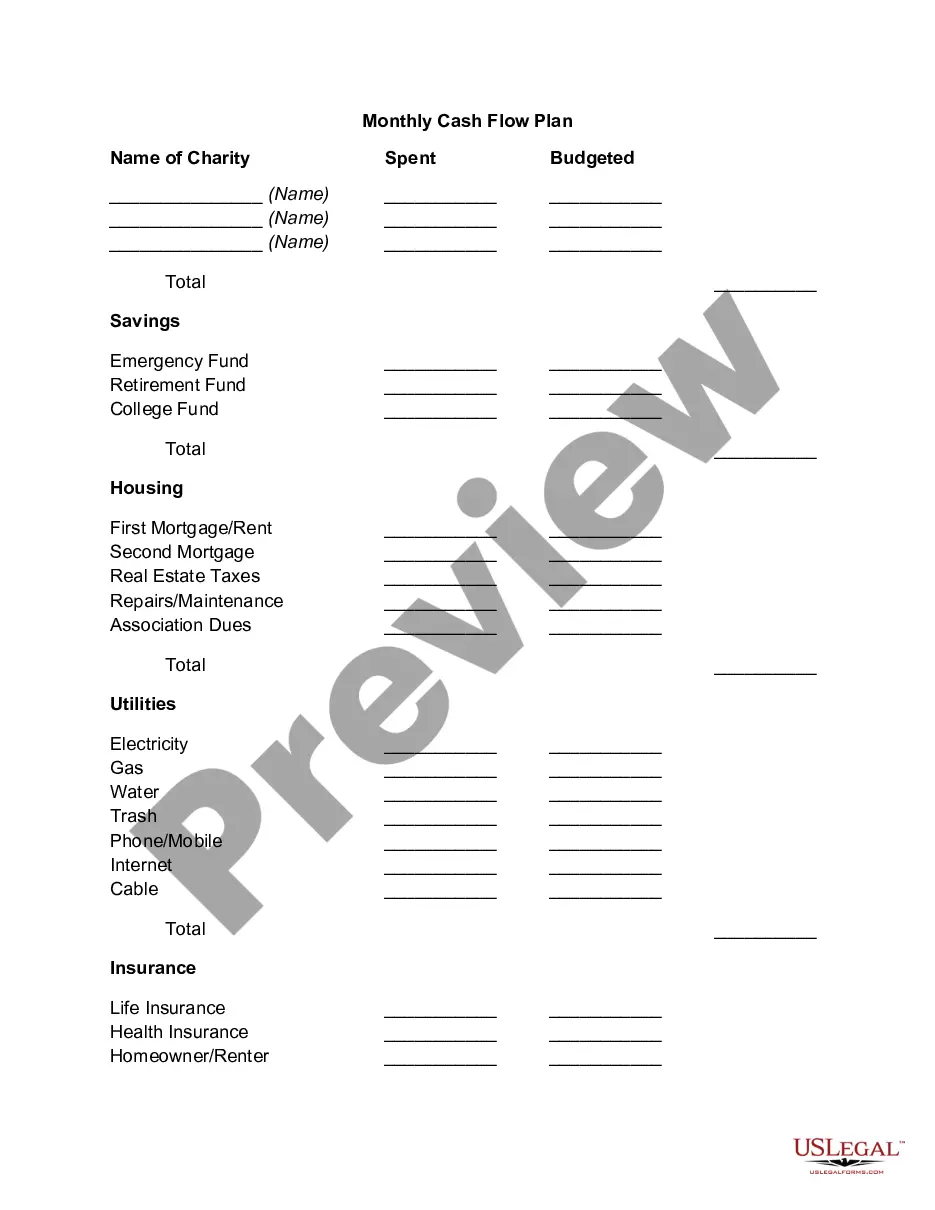
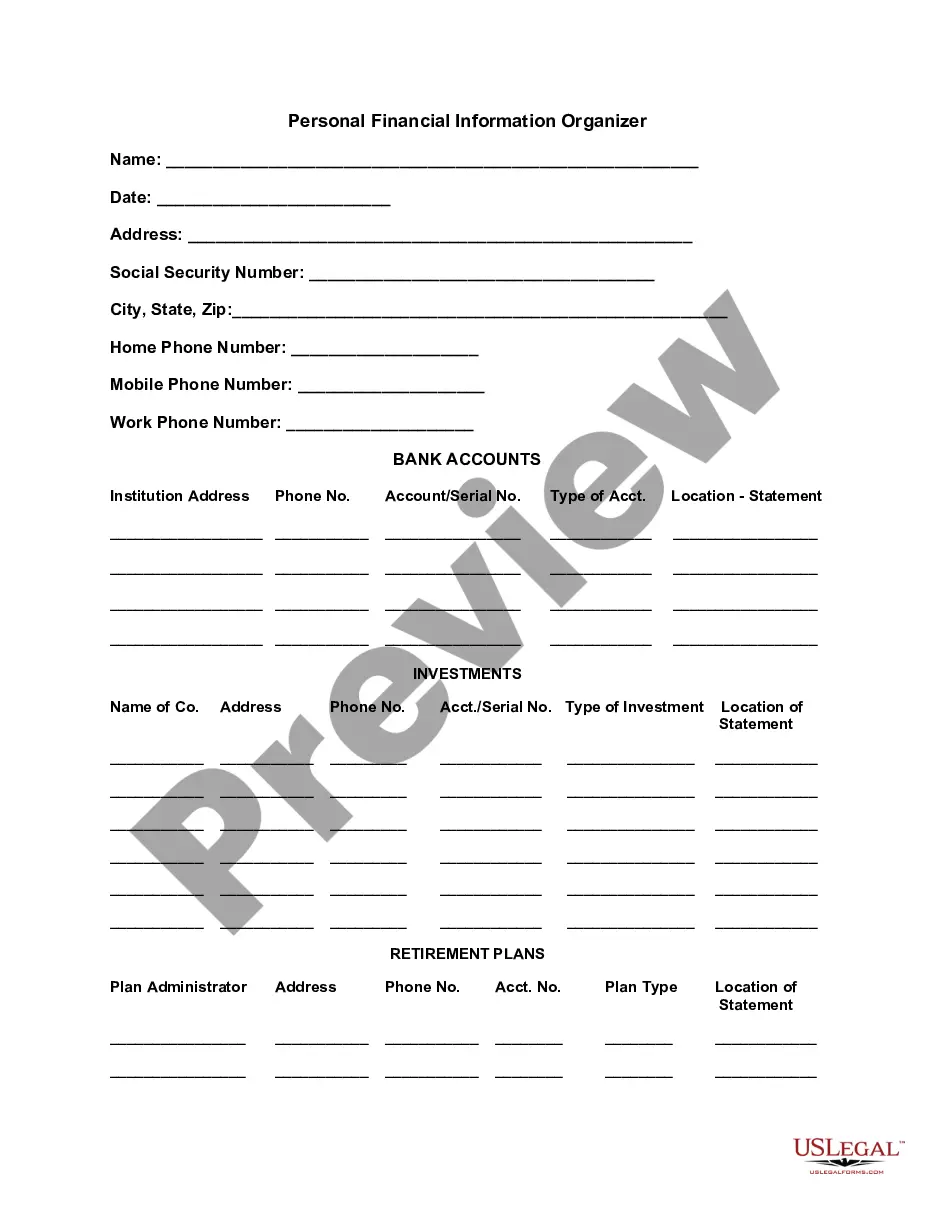
The cash flow statement is a financial document that outlines the incoming and outgoing income and expenses of a typical household. This form is essential for effective budgeting, enabling users to track financial health over multiple years. Unlike other financial forms, the cash flow statement specifically focuses on cash movements, making it easier to identify patterns in income and expenditure.
Key parts of this document
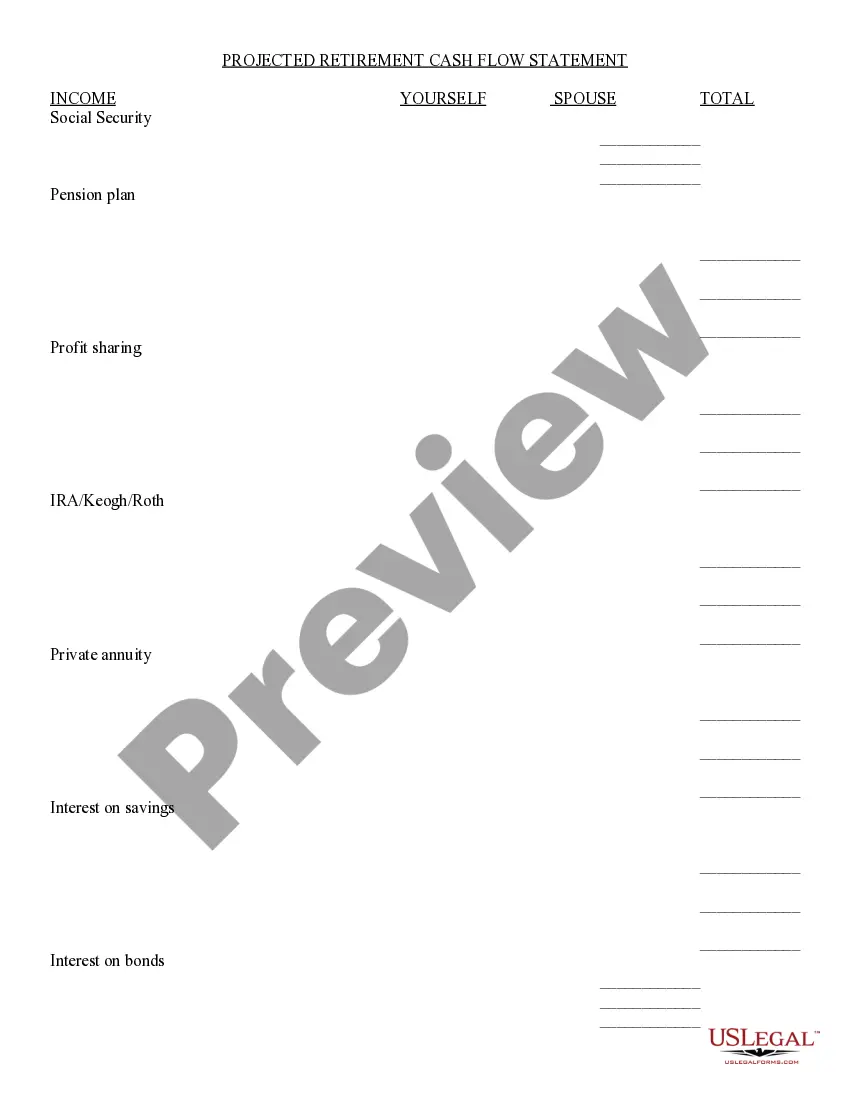
- Income section: Tracks various sources of income, including salaries, dividends, and support payments.
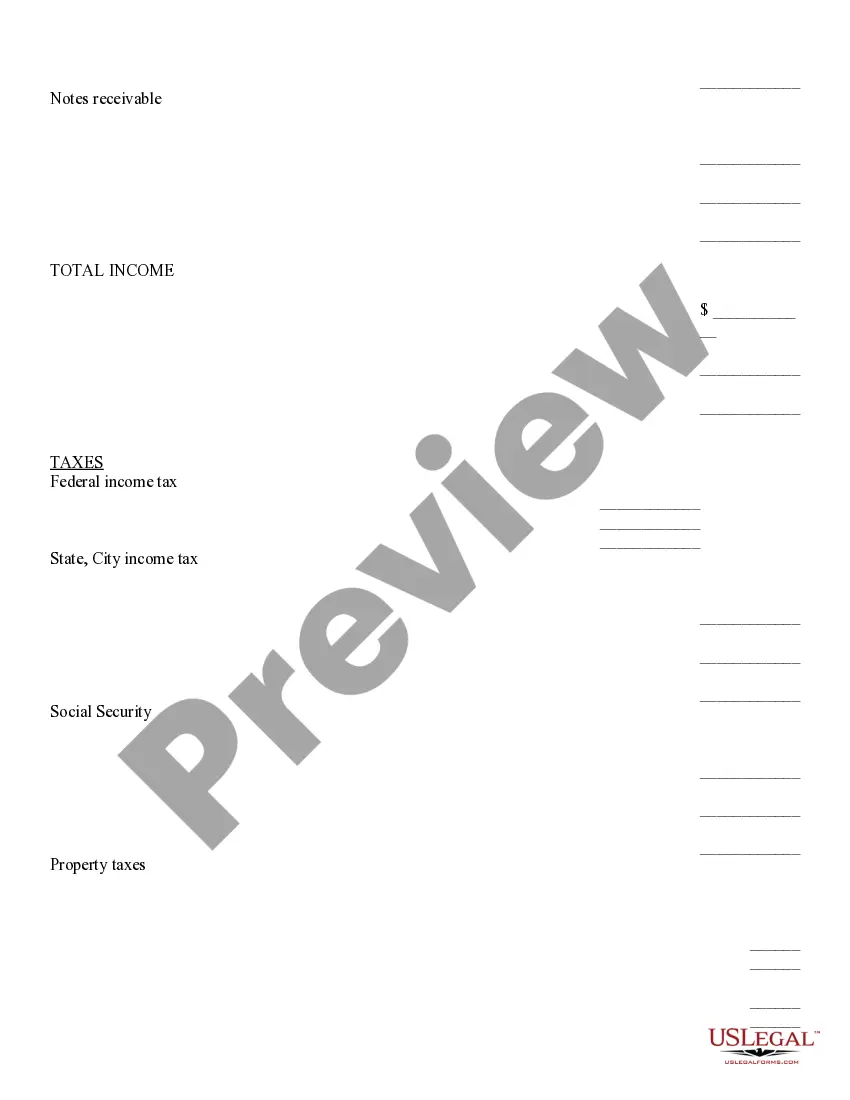
- Taxes section: Details federal and state income taxes, property taxes, and Social Security contributions.
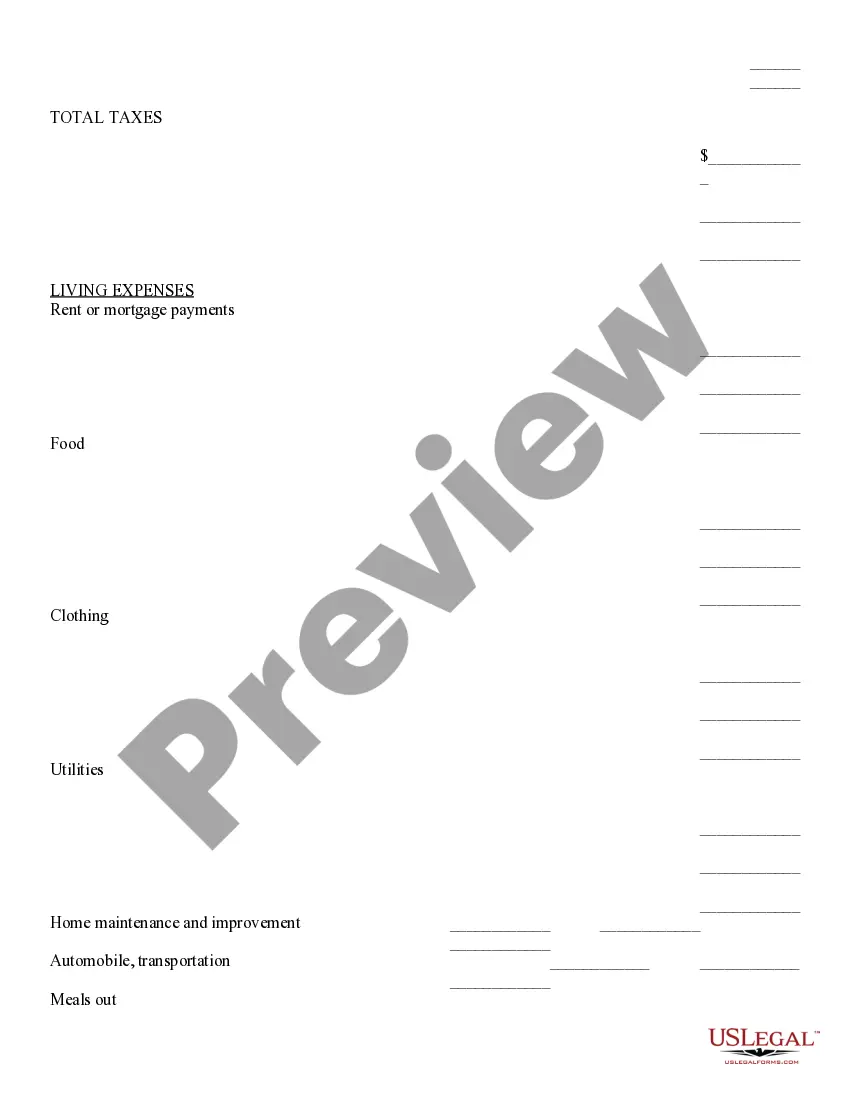
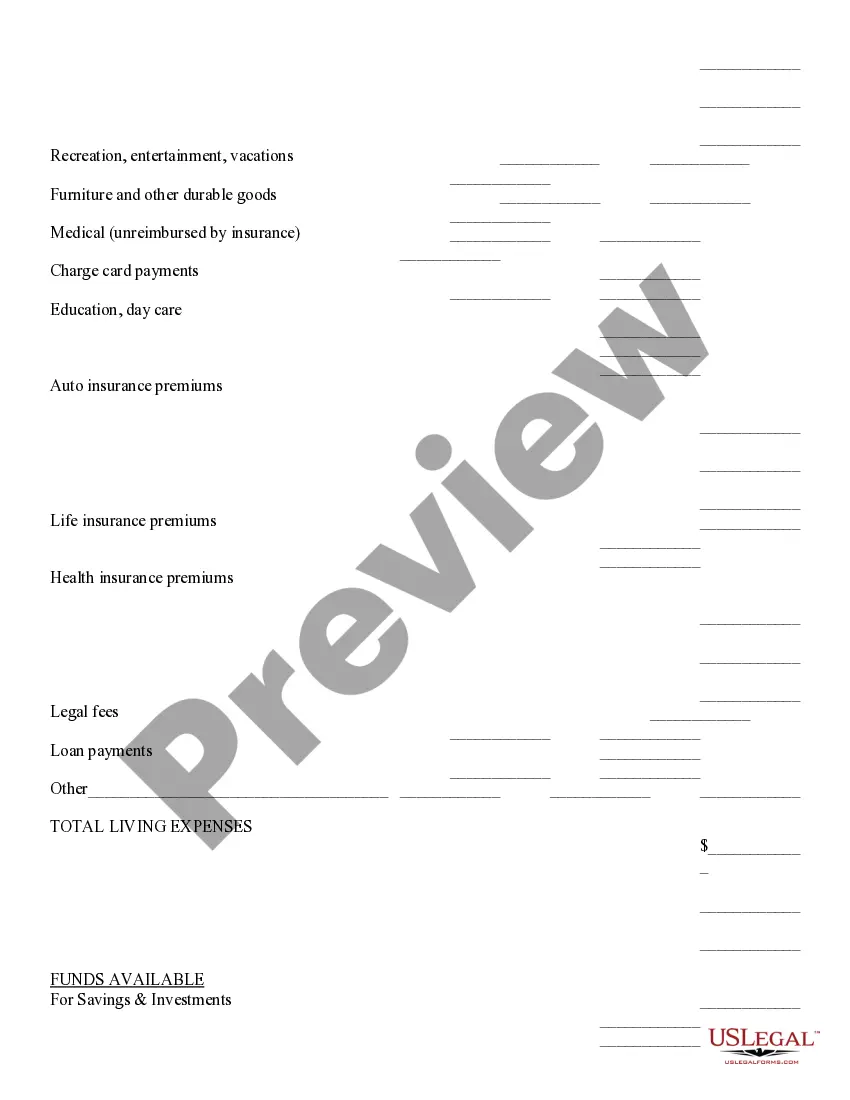
- Living expenses section: Lists typical household expenses such as rent, groceries, medical care, and entertainment.
- Funds available for savings: Summarizes remaining funds after all income and expenses have been accounted for.
When to use this form
This form should be utilized by individuals or households looking to create or evaluate their budget. It is particularly useful during financial planning sessions, especially when assessing past spending behaviors and forecasting future income and expenses. Additionally, those preparing for significant financial decisions, such as buying a home or taking on loans, may find this form invaluable.
Who needs this form
- Homeowners looking to manage their household budgets effectively.
- Individuals planning for retirement or financial independence.
- Families needing to track spending and income for educational or childcare expenses.
- Anyone preparing for major financial commitments like buying a vehicle or property.
Instructions for completing this form
- Gather financial documents that detail all sources of income, such as pay stubs, bank statements, and tax returns.
- Fill in the income section by entering the amounts for each income source for the last year, this year, and next year.
- Complete the taxes section with applicable federal and state taxes paid during the respective years.
- List all living expenses, ensuring to account for monthly, quarterly, and annual expenses to get a complete overview.
- Calculate total income, total taxes, and total living expenses to determine funds available for savings or investments.
Is notarization required?
This form does not typically require notarization to be legally valid. However, some jurisdictions or document types may still require it. US Legal Forms provides secure online notarization powered by Notarize, available 24/7 for added convenience.
Get your form ready online
Our built-in tools help you complete, sign, share, and store your documents in one place.
Make edits, fill in missing information, and update formatting in US Legal Forms—just like you would in MS Word.
Download a copy, print it, send it by email, or mail it via USPS—whatever works best for your next step.
Sign and collect signatures with our SignNow integration. Send to multiple recipients, set reminders, and more. Go Premium to unlock E-Sign.
If this form requires notarization, complete it online through a secure video call—no need to meet a notary in person or wait for an appointment.
We protect your documents and personal data by following strict security and privacy standards.

Make edits, fill in missing information, and update formatting in US Legal Forms—just like you would in MS Word.

Download a copy, print it, send it by email, or mail it via USPS—whatever works best for your next step.

Sign and collect signatures with our SignNow integration. Send to multiple recipients, set reminders, and more. Go Premium to unlock E-Sign.

If this form requires notarization, complete it online through a secure video call—no need to meet a notary in person or wait for an appointment.

We protect your documents and personal data by following strict security and privacy standards.
Common mistakes
- Neglecting to include all sources of income or expenses, leading to an inaccurate cash flow assessment.
- Forgetting to update financial figures, making the statement outdated.
- Underestimating variable expenses, such as medical bills or entertainment, which can significantly affect budget accuracy.
- Ignoring the future projections for income and expenses, which are crucial for long-term financial planning.
Benefits of using this form online
- Easy access: Downloadable format allows for quick and convenient usage.
- Editability: Users can modify the form as their financial situation changes.
- Reliability: Forms are drafted by licensed attorneys, ensuring legal efficacy.
- Time-saving: Quickly calculate and visualize financial trends with ready-made templates.
Key takeaways
- A cash flow statement is crucial for budgeting and financial management.
- This form helps track income, expenses, and funds available for savings.
- Common mistakes can undermine its effectiveness, so attention to detail is vital.
- Using the form online offers convenience and reliability.
Looking for another form?


Form popularity
FAQ
There is no ideal figure, but a ratio of at least 0.5 to 1 is usually preferred. The cash ratio may not provide a good overall analysis of a company, as it is unrealistic for companies to hold large amounts of cash.
A projection of future flows of cash is called a cash flow budget.For example, it may list monthly cash inflows and outflows over a year's time. It not only projects the cash balance remaining at the end of the year but also the cash balance for each month. Working capital is an important part of a cash flow analysis.
To calculate FCF from the cash flow statement, find the item cash flow from operationsalso referred to as "operating cash" or "net cash from operating activities"and subtract capital expenditures required for current operations from it.
A good cash flow, in terms of cash-zone, is anything that is between 8 to 10 percent or more. For more on cash flow property analysis and investment property analysis, start your trial with Mashvisor to use its investment property calculator!
A cash flow analysis is a method for checking up on your firm's financial health. It is the study of the movement of cash through your business, also called a cash budget, to determine patterns of how you take in and pay out money.
The purpose of cash flow statement analysis is to attain details of cash inflows and outflows. It is one of three required financial statements of public entities. The other two are the balance sheet and the income statement.
As a general rule, P/FCF under 5 (or price is less than 5 times free cash flow per share) is considered undervalued, which means the stock may be trading at too low of a price and may rise in the future to properly reflect the free cash flow generated by the firm.
A ratio less than 1 indicates short-term cash flow problems; a ratio greater than 1 indicates good financial health, as it indicates cash flow more than sufficient to meet short-term financial obligations.
How Much is Enough? Usually, companies aim for cash flow to debt ratio of anywhere above 66%. The higher the percentage, the better are the chances that the company would be able to service its debts. However, the ratio should neither be very high nor too low.