Ultima Voluntad y Testamento - Last Will and Testament
Overview of this form
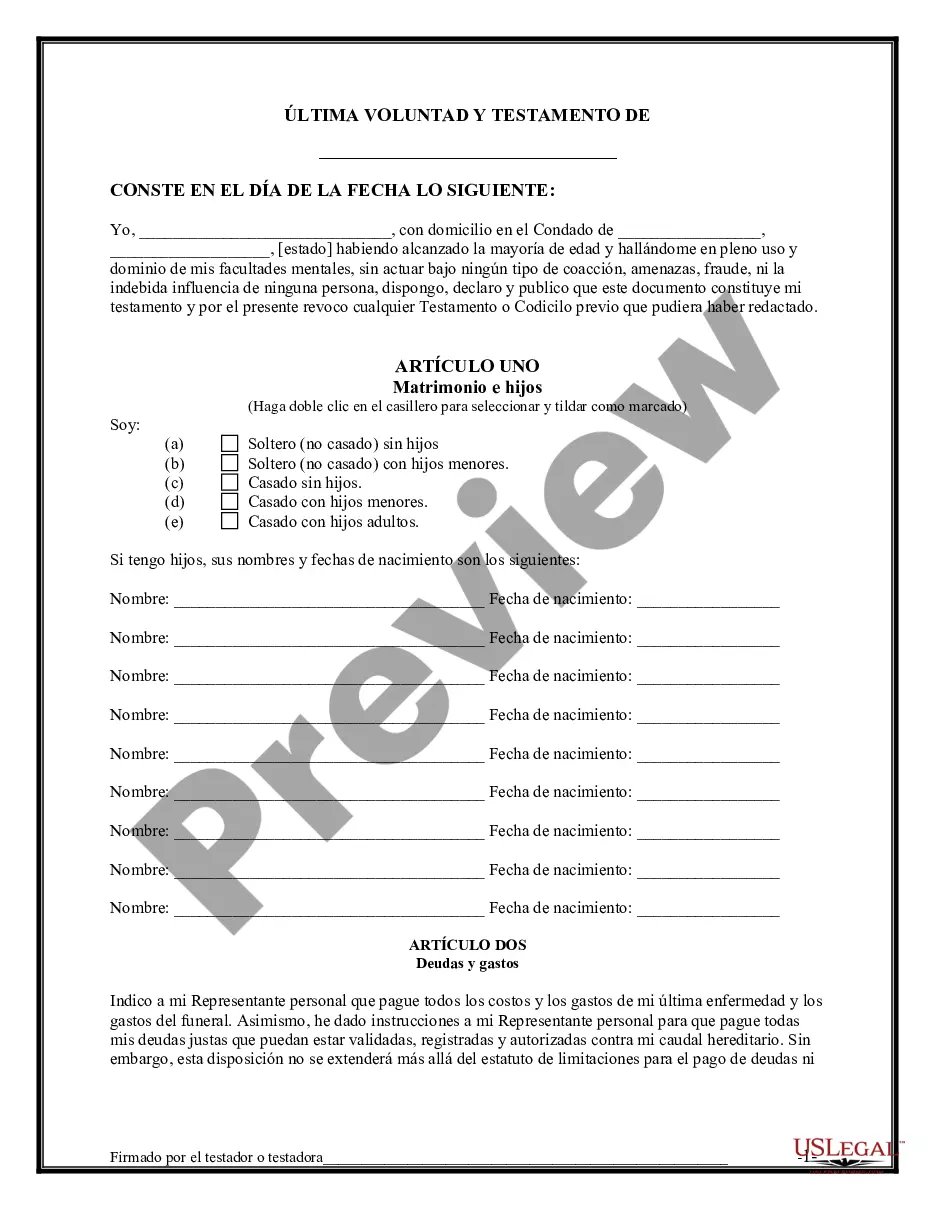
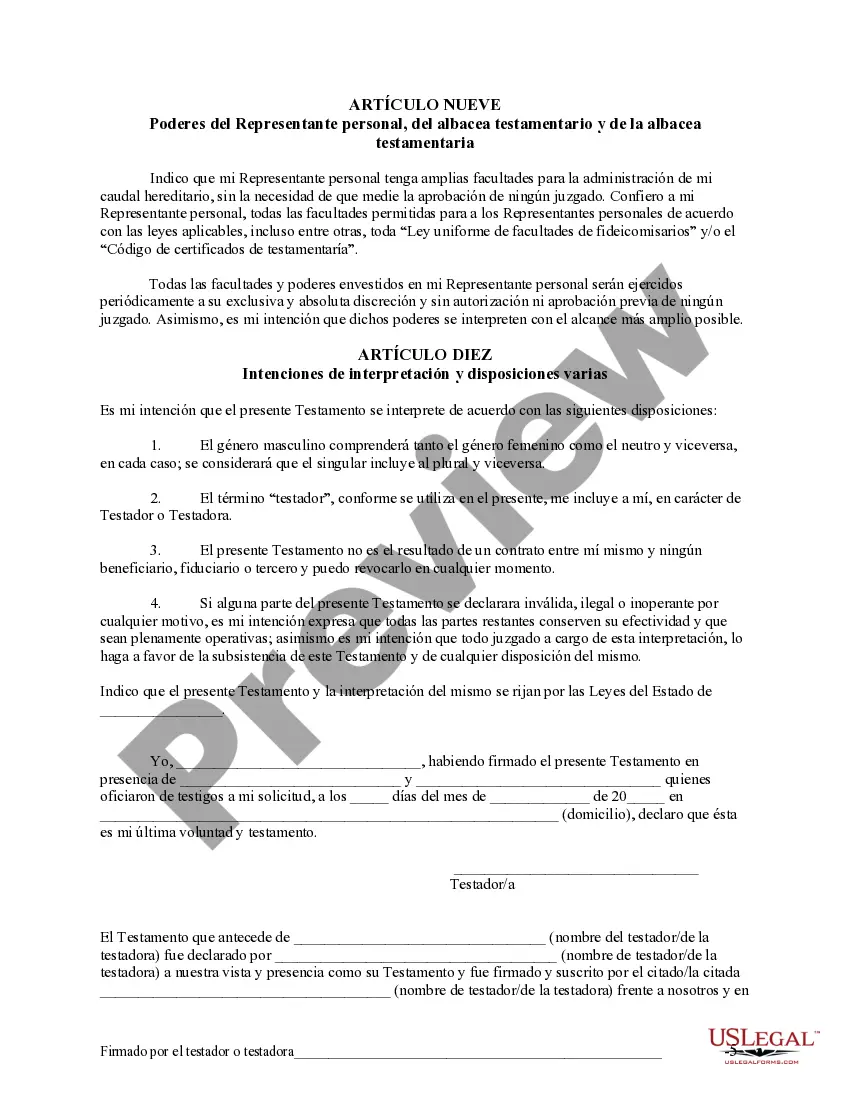
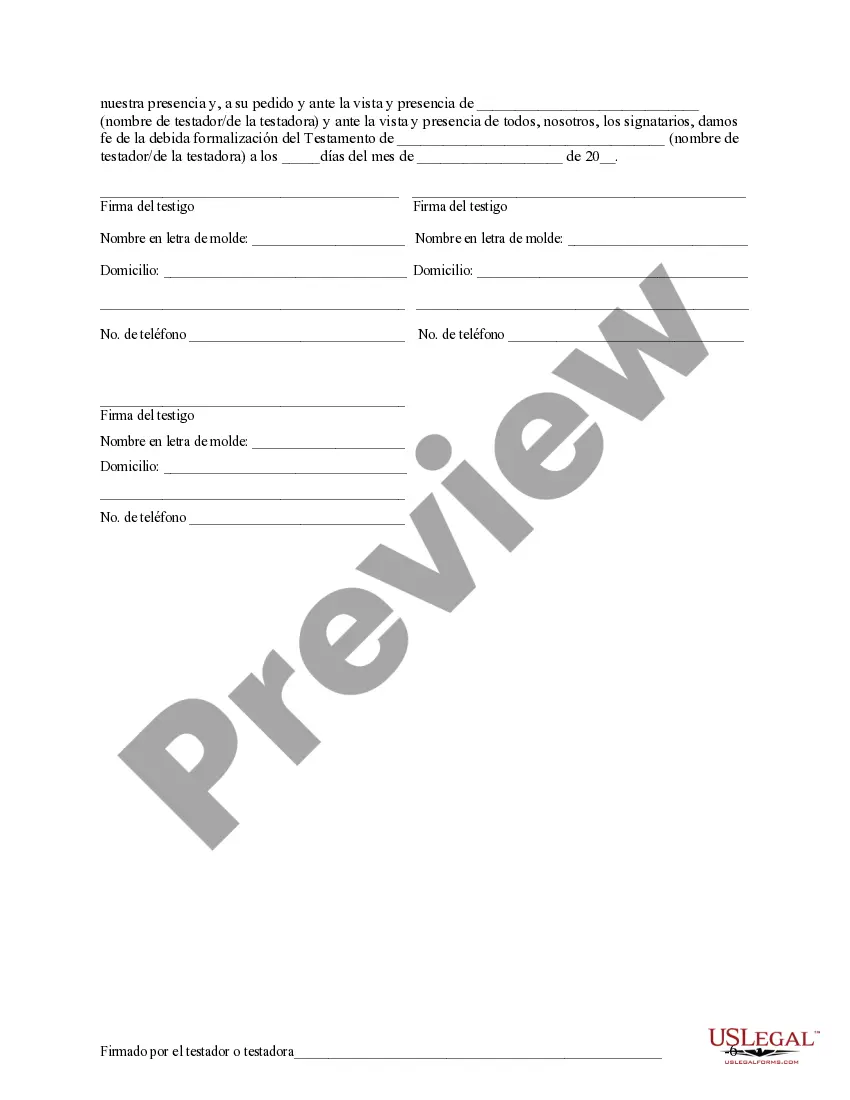
Ultima Voluntad y Testamento, or Last Will and Testament, is a legal document that outlines your wishes regarding the distribution of your assets after your death. Unlike other forms, this testament is specifically crafted to ensure that your property is allocated according to your intentions, allowing you to name heirs, designate guardians for minor children, and appoint a personal representative. This form is adaptable to most situations, ensuring your final wishes are respected and legally formalized.
Main sections of this form
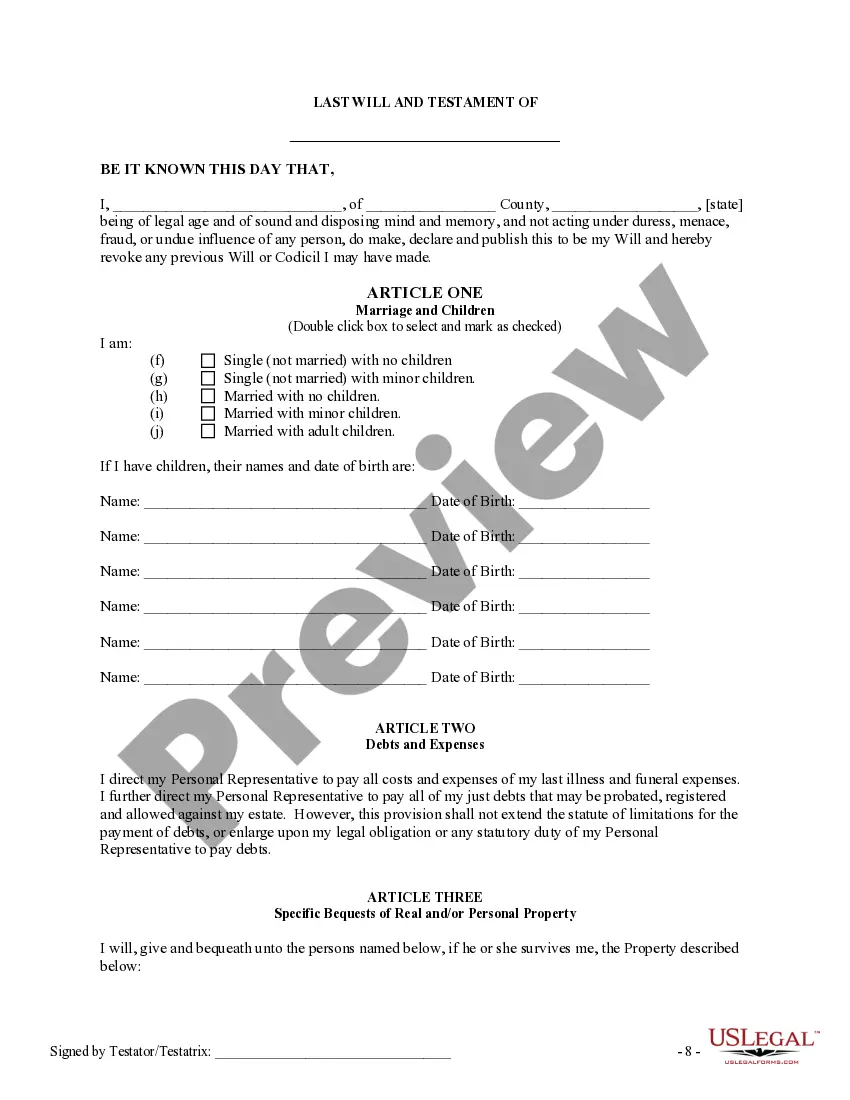
- Personal information of the testator (the individual creating the will).
- Provisions for marriage status and children, along with their details.
- Instructions for settling debts and funeral expenses.
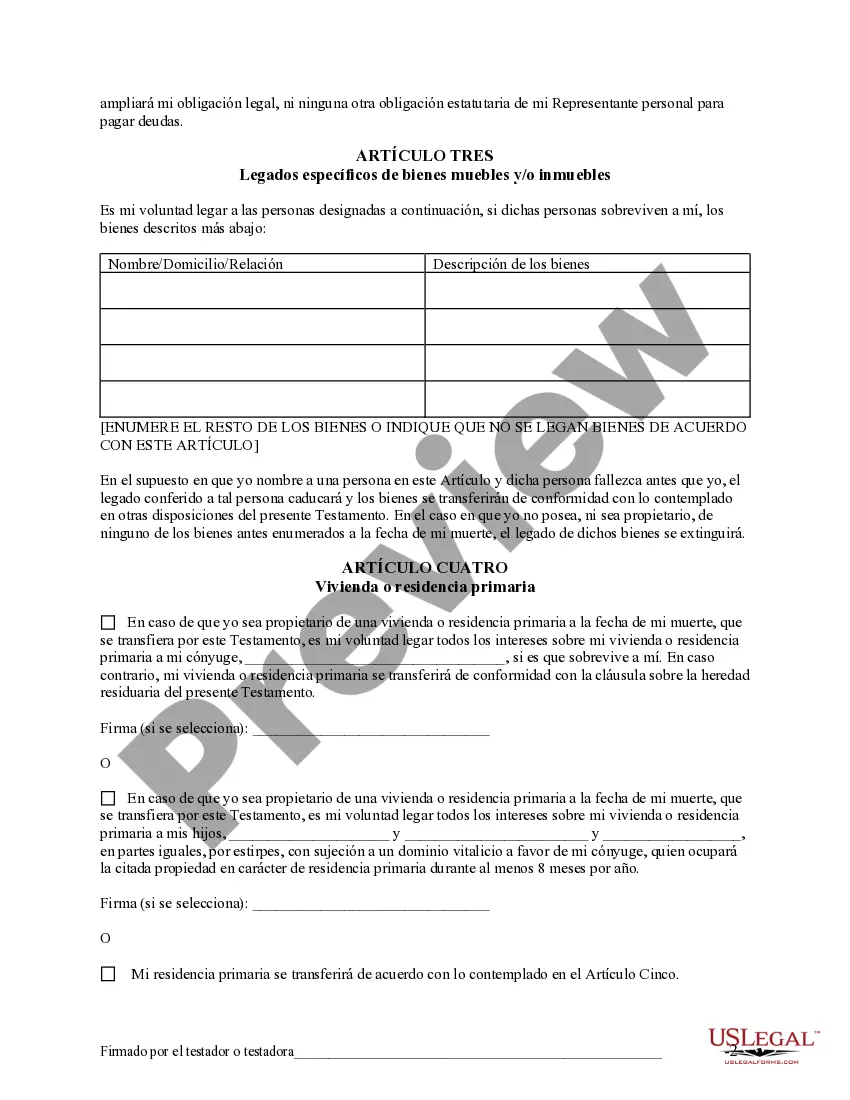
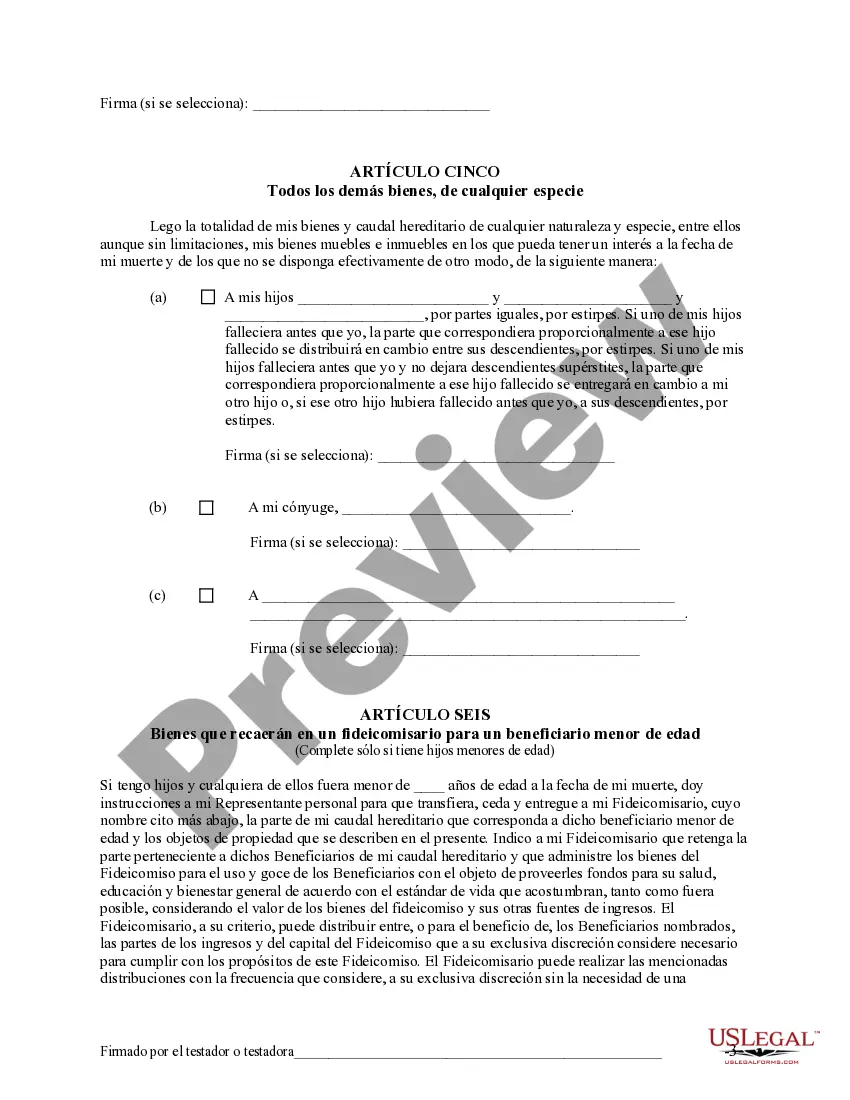
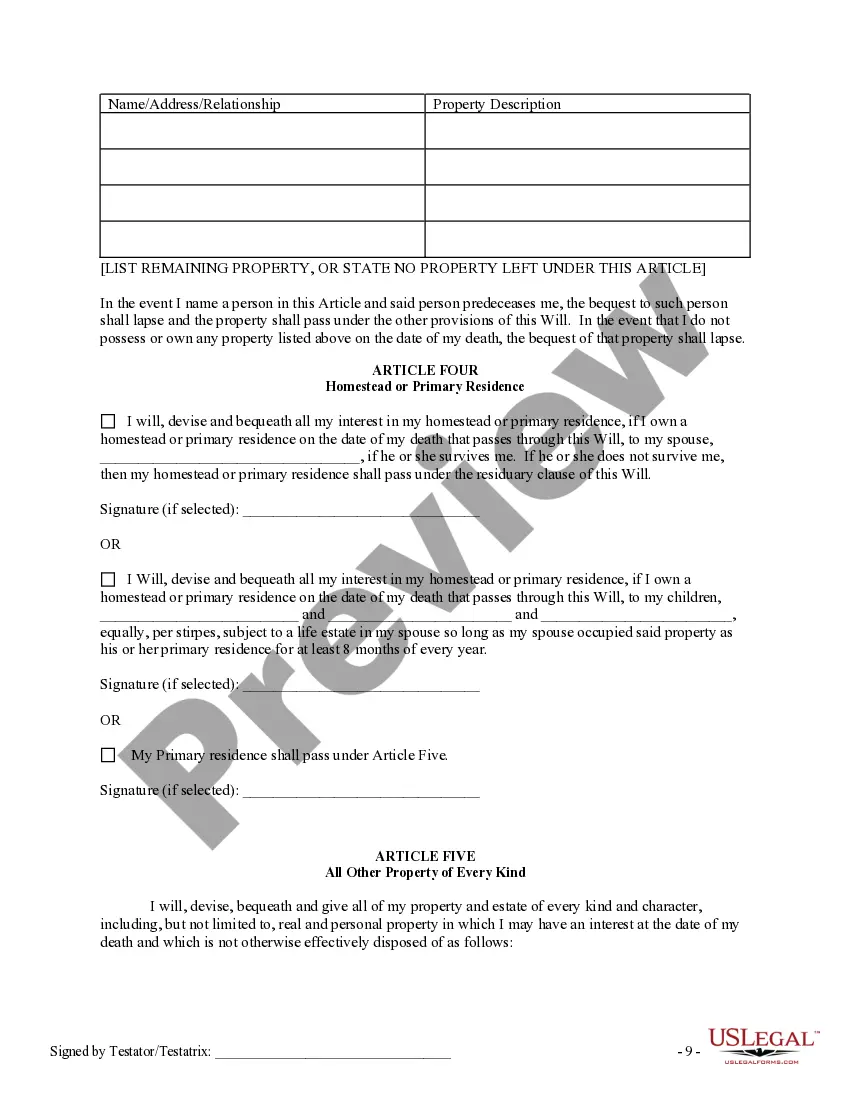
- Specific bequests detailing the distribution of particular assets.
- Provisions regarding the primary residence and other properties.
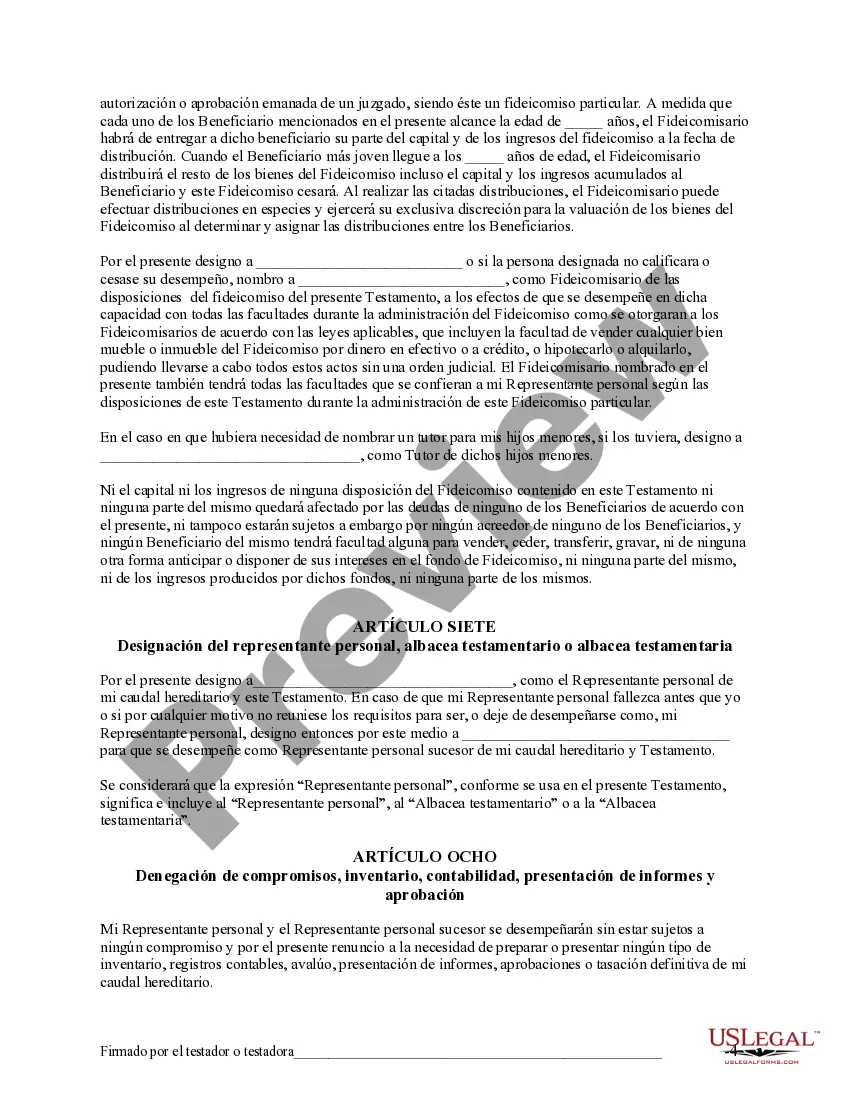
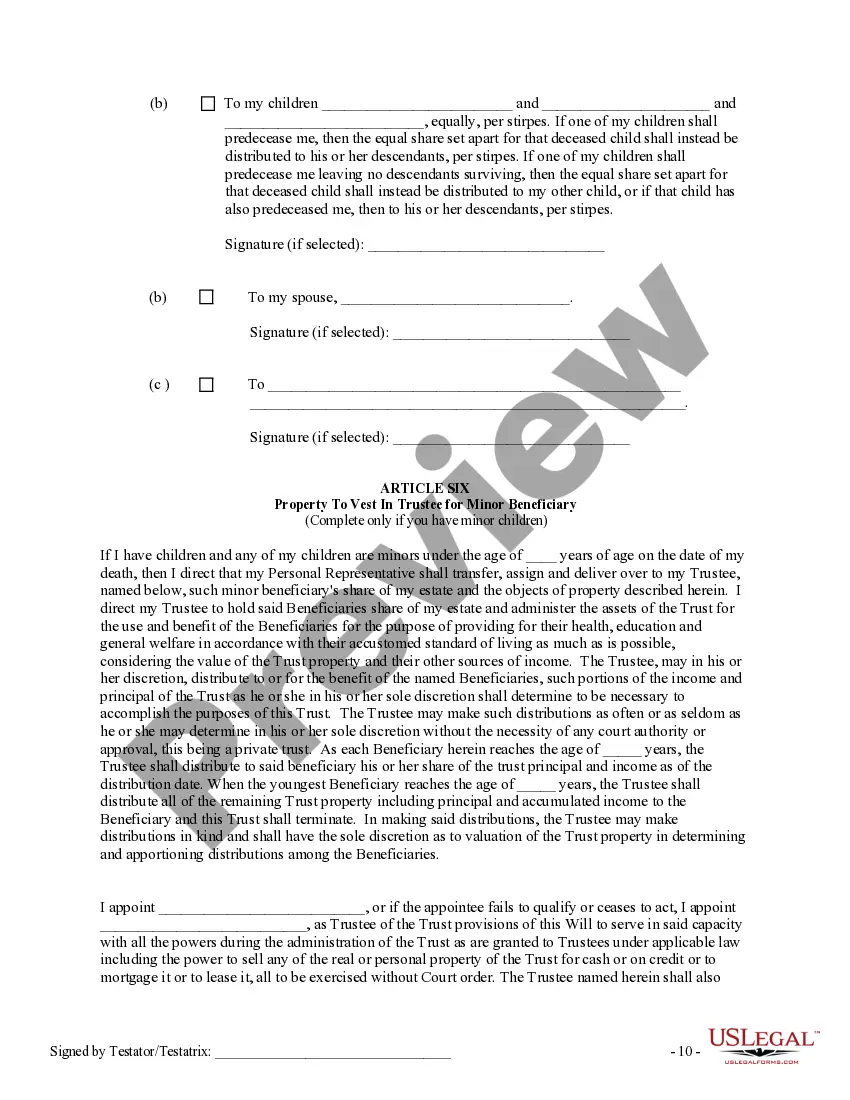
- Appointment of a personal representative to administer the estate.


When to use this form
This form is necessary when you want to outline how your assets will be managed and distributed after your death. Use this will if you have specific assets to be allocated, children who require guardianship, or debts that need settling. It helps prevent disputes among heirs and ensures that your wishes are documented and legally binding.
Who should use this form
- Individuals who own property or assets and wish to specify their distribution.
- Parents of minor children looking to designate a guardian.
- Married persons who want to declare their spouse as the primary beneficiary.
- Anyone desiring to establish clear instructions for settling debts and funeral arrangements.
Completing this form step by step
- Provide your full name, address, and the date you are executing the will.
- Specify your marital status and list the names and birthdates of any children.
- Detail instructions for paying debts and funeral expenses.
- Clearly outline specific bequests of property and other assets.
- Designate your primary residence and indicate who will inherit it.
- Appoint a personal representative to manage your estate and confirm their acceptance.
Notarization guidance
Notarization is generally not required for this form. However, certain states or situations might demand it. You can complete notarization online through US Legal Forms, powered by Notarize, using a verified video call available anytime.
Get your form ready online
Our built-in tools help you complete, sign, share, and store your documents in one place.
Make edits, fill in missing information, and update formatting in US Legal Forms—just like you would in MS Word.
Download a copy, print it, send it by email, or mail it via USPS—whatever works best for your next step.
Sign and collect signatures with our SignNow integration. Send to multiple recipients, set reminders, and more. Go Premium to unlock E-Sign.
If this form requires notarization, complete it online through a secure video call—no need to meet a notary in person or wait for an appointment.
We protect your documents and personal data by following strict security and privacy standards.

Make edits, fill in missing information, and update formatting in US Legal Forms—just like you would in MS Word.

Download a copy, print it, send it by email, or mail it via USPS—whatever works best for your next step.

Sign and collect signatures with our SignNow integration. Send to multiple recipients, set reminders, and more. Go Premium to unlock E-Sign.

If this form requires notarization, complete it online through a secure video call—no need to meet a notary in person or wait for an appointment.

We protect your documents and personal data by following strict security and privacy standards.
Common mistakes
- Failing to update the will after major life events like marriage, divorce, or the birth of a child.
- Omitting crucial details about debts or funeral arrangements.
- Not signing the document in accordance with state requirements.
- Leaving assets without clear instructions for distribution.
Benefits of completing this form online
- Convenient access from anywhere, allowing you to complete the document at your own pace.
- Editability to tailor the will according to your specific needs and circumstances.
- Reliability in ensuring that the form meets legal standards, reducing the risk of errors.
Looking for another form?
Form popularity
FAQ
Generally, to be valid in California, the document must be in writing and signed by the testator, or the person making the document, and two witnesses. A last will and testament is a legal instrument that allows you to distribute property after your death to the people and organizations of your choosing.
Create the initial document. Start by titling the document Last Will and Testament" and including your full legal name and address. Designate an executor. Appoint a guardian. Name the beneficiaries. Designate the assets. Ask witnesses to sign your will. Store your will in a safe place.
Yes, a last will and testament normally must be filed with the court. That applies whether or not the estate is going to probate.Also, if you are in possession of a signed will, most states legally require you to file the will with the appropriate county court if you are the executor.
Create the initial document. Start by titling the document Last Will and Testament" and including your full legal name and address. Designate an executor. Appoint a guardian. Name the beneficiaries. Designate the assets. Ask witnesses to sign your will. Store your will in a safe place.
Bank accounts. Brokerage or investment accounts. Retirement accounts and pension plans. A life insurance policy.
For as little as $5 to $20, you can also buy a standard will and testament on ready-made forms sold in stores such as OfficeMax, Office Depot or Staples.
It must be in writing. Generally, of course, wills are composed on a computer and printed out. The person who made it must have signed and dated it. A will must be signed and dated by the person who made it. Two adult witnesses must have signed it. Witnesses are crucial.
Decide what property to include in your will. Decide who will inherit your property. Choose an executor to handle your estate. Choose a guardian for your children. Choose someone to manage children's property. Make your will. Sign your will in front of witnesses.
You can make your own will in California, using Nolo's do-it-yourself online will or will software. You may, however, want to consult a lawyer in some situations; for example, if you suspect your will might be contested or if you want to disinherit your spouse, you should talk with an attorney.