Foreign Commerce - Defined
What this document covers
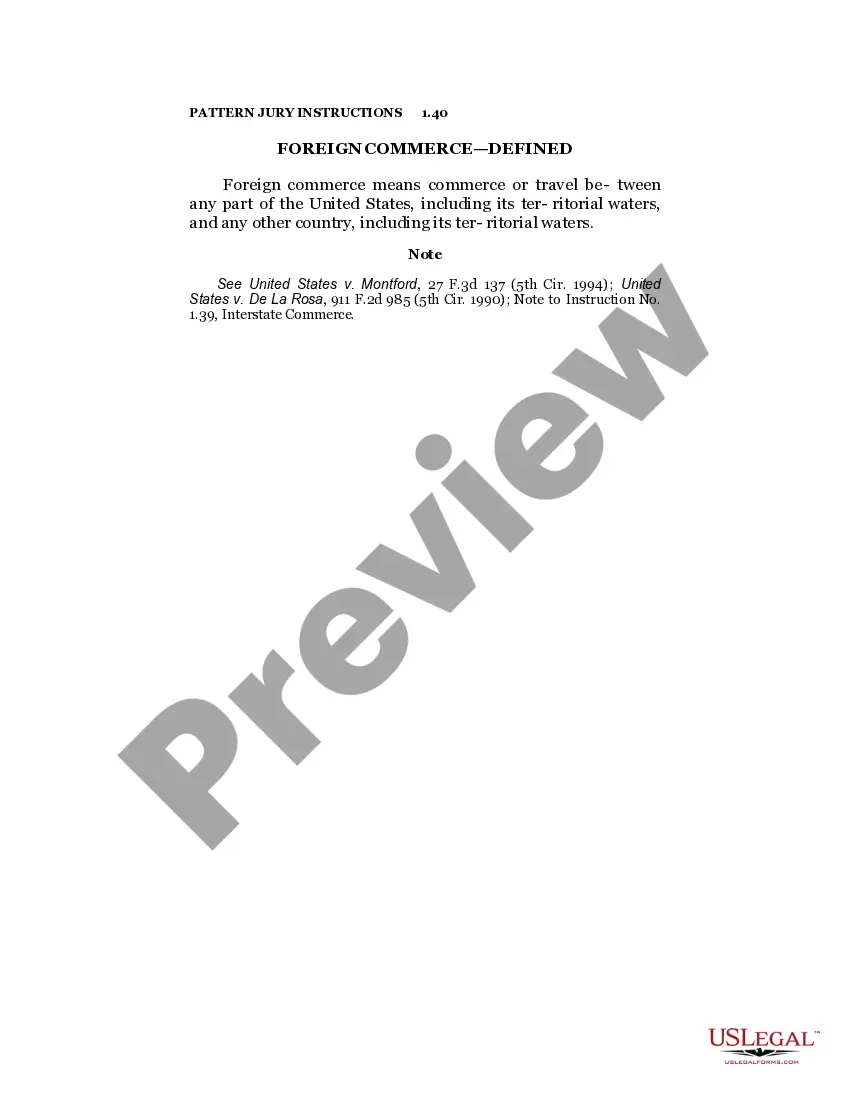
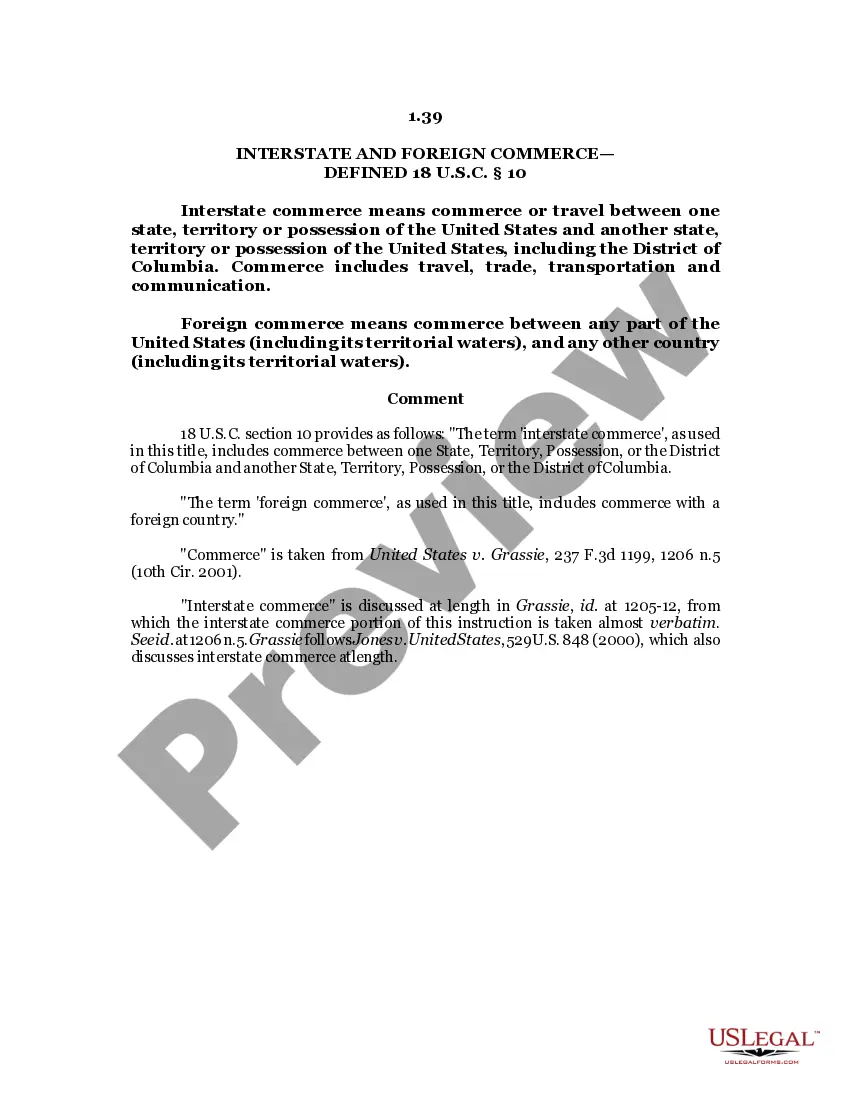
The Foreign Commerce - Defined form is a legal document that outlines the definition of foreign commerce, encompassing commerce and travel between the United States and other countries. Understanding this term is essential for businesses and individuals engaging in activities that cross international borders. This form serves to clarify the legal framing of foreign commerce, distinct from other types of commerce, such as interstate commerce.
Key components of this form
- Definition of foreign commerce, including its scope between the U.S. and other countries.
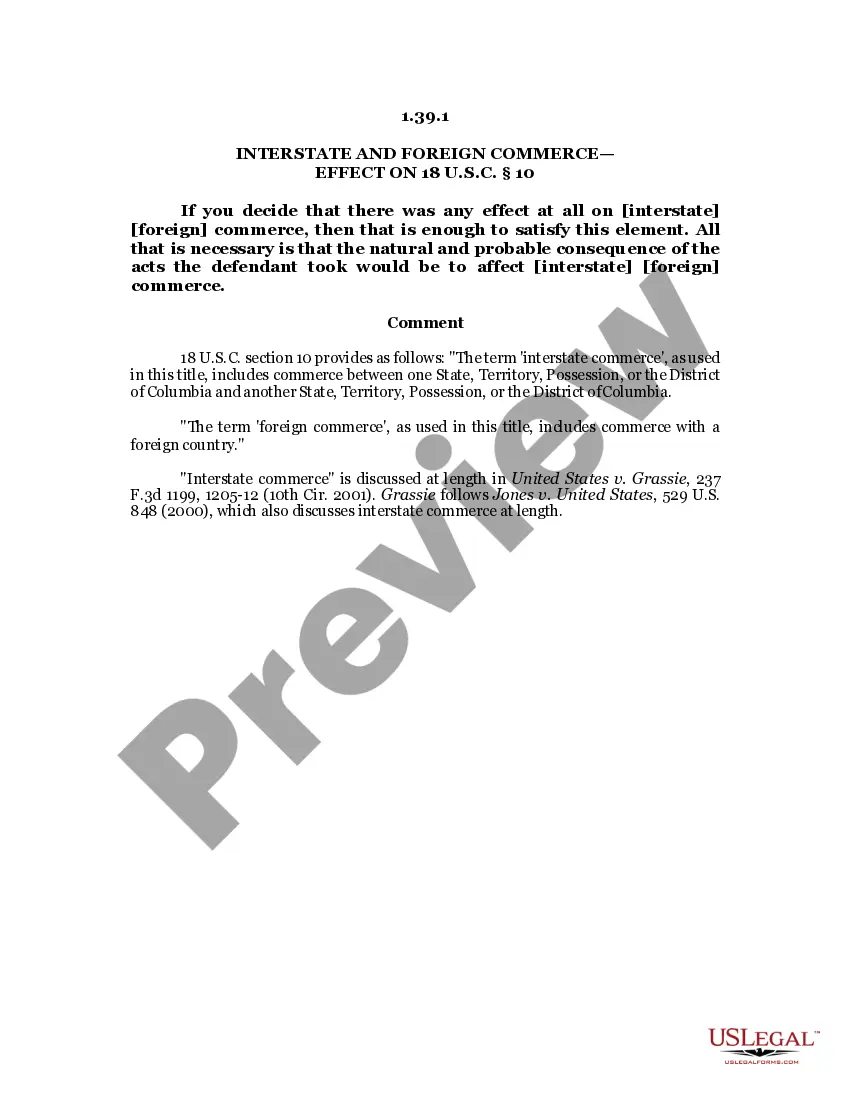
- Clarification of relevant legal references, such as case law that may influence the interpretation of foreign commerce.
- Instructions outlining the importance of understanding foreign commerce in legal contexts.
Situations where this form applies
This form is useful when individuals or businesses need to comprehend the legal framework surrounding foreign commerce for regulatory compliance, international trade agreements, or legal actions involving foreign parties. It is particularly applicable in scenarios involving import/export activities, multinational contracts, or any interaction that may involve crossing U.S. borders for commerce or travel.
Who should use this form
This form is intended for:
- Business owners engaged in international trade.
- Legal professionals needing to reference the definition of foreign commerce.
- Individuals traveling or conducting business with foreign entities.
How to complete this form
- Read the definition of foreign commerce provided in the form.
- Review the relevant legal references and case law for deeper understanding.
- Consider how the definition applies to your specific circumstances.
Notarization guidance
In most cases, this form does not require notarization. However, some jurisdictions or signing circumstances might. US Legal Forms offers online notarization powered by Notarize, accessible 24/7 for a quick, remote process.
Get your form ready online
Our built-in tools help you complete, sign, share, and store your documents in one place.
Make edits, fill in missing information, and update formatting in US Legal Forms—just like you would in MS Word.
Download a copy, print it, send it by email, or mail it via USPS—whatever works best for your next step.
Sign and collect signatures with our SignNow integration. Send to multiple recipients, set reminders, and more. Go Premium to unlock E-Sign.
If this form requires notarization, complete it online through a secure video call—no need to meet a notary in person or wait for an appointment.
We protect your documents and personal data by following strict security and privacy standards.

Make edits, fill in missing information, and update formatting in US Legal Forms—just like you would in MS Word.

Download a copy, print it, send it by email, or mail it via USPS—whatever works best for your next step.

Sign and collect signatures with our SignNow integration. Send to multiple recipients, set reminders, and more. Go Premium to unlock E-Sign.

If this form requires notarization, complete it online through a secure video call—no need to meet a notary in person or wait for an appointment.

We protect your documents and personal data by following strict security and privacy standards.
Typical mistakes to avoid
- Misinterpreting foreign commerce as solely interstate commerce.
- Failing to review relevant legal cases that might affect understanding.
- Overlooking local regulations that could apply when engaging in foreign commerce.
Advantages of online completion
- Easy access and immediate download of the legal definition.
- Editability allows for customization to fit specific needs.
- Reliability, as the forms are prepared by licensed attorneys.
Looking for another form?


Form popularity
FAQ
The Commerce Clause refers to Article 1, Section 8, Clause 3 of the U.S. Constitution, which gives Congress the power ?to regulate commerce with foreign nations, and among the several states, and with the Indian tribes.?
The Commerce Clause gives Congress broad power to regulate interstate commerce and restricts states from impairing interstate commerce. Early Supreme Court cases primarily viewed the Commerce Clause as limiting state power rather than as a source of federal power.
The Commerce Clause is the source of federal drug prohibition laws under the Controlled Substances Act. In a 2005 medical marijuana case, Gonzales v. Raich, the U.S. Supreme Court rejected the argument that the ban on growing medical marijuana for personal use exceeded the powers of Congress under the Commerce Clause.
Commerce clause, provision of the U.S. Constitution (Article I, Section 8) that authorizes Congress ?to regulate Commerce with foreign Nations, and among the several States, and with Indian Tribes.? The commerce clause has been the chief doctrinal source of Congress's regulatory power over the economy of the United
Commerce refers generally to the activity of exchanging products, goods, and services for financial gain.
Primary tabs. Interstate commerce is the general term for transacting or transportation of products, services, or money across state borders. Article I section 8 clause of the U.S. Constitution, the commerce clause, grants Congress the power to ?regulate commerce. . .
Foreign commerce means commerce or travel between any part of the United States and any place outside the United States. Commerce includes among other things: travel; trade; transportation and communication.