Louisiana Motion to Fix Case for Trial
Overview of this form
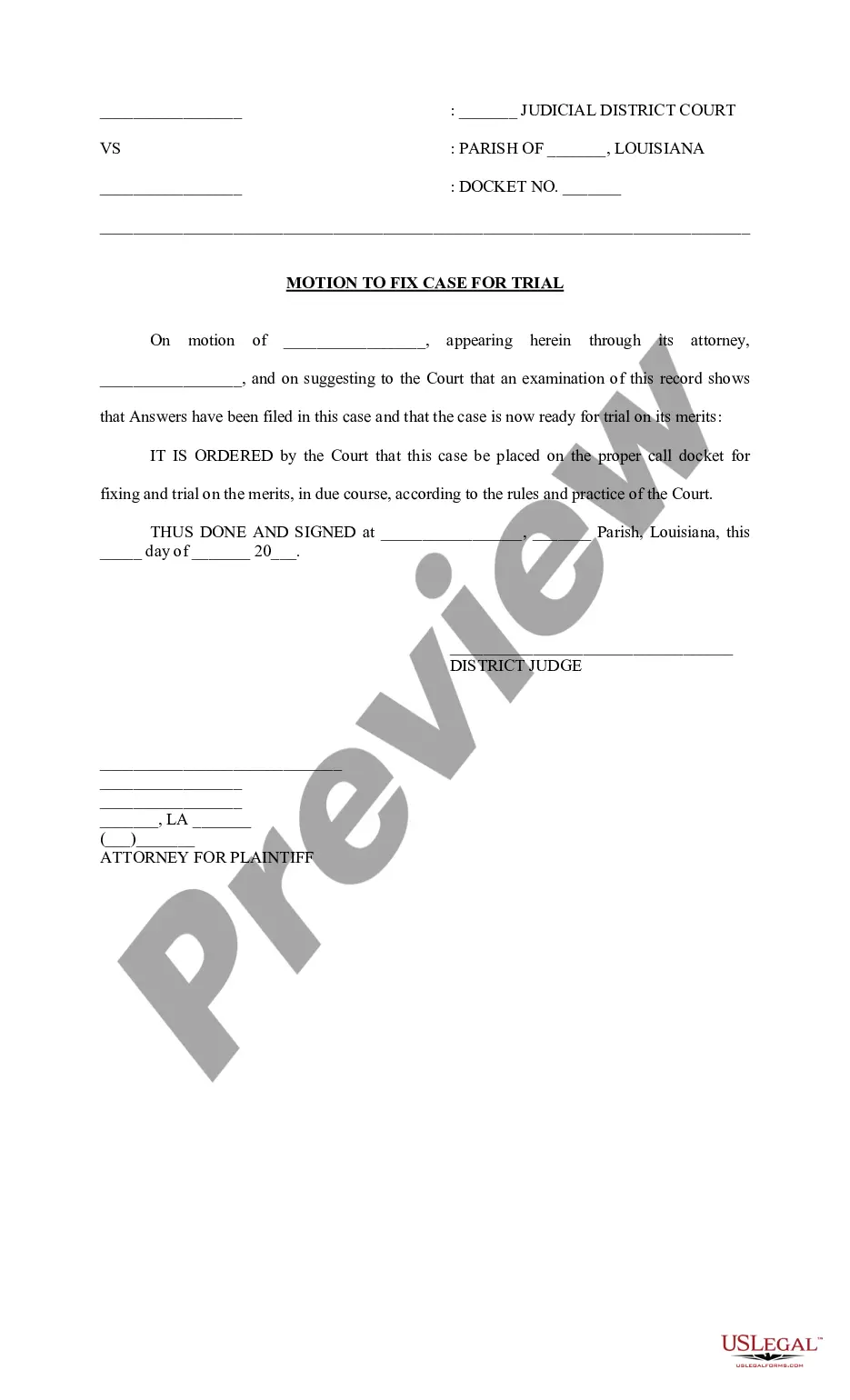
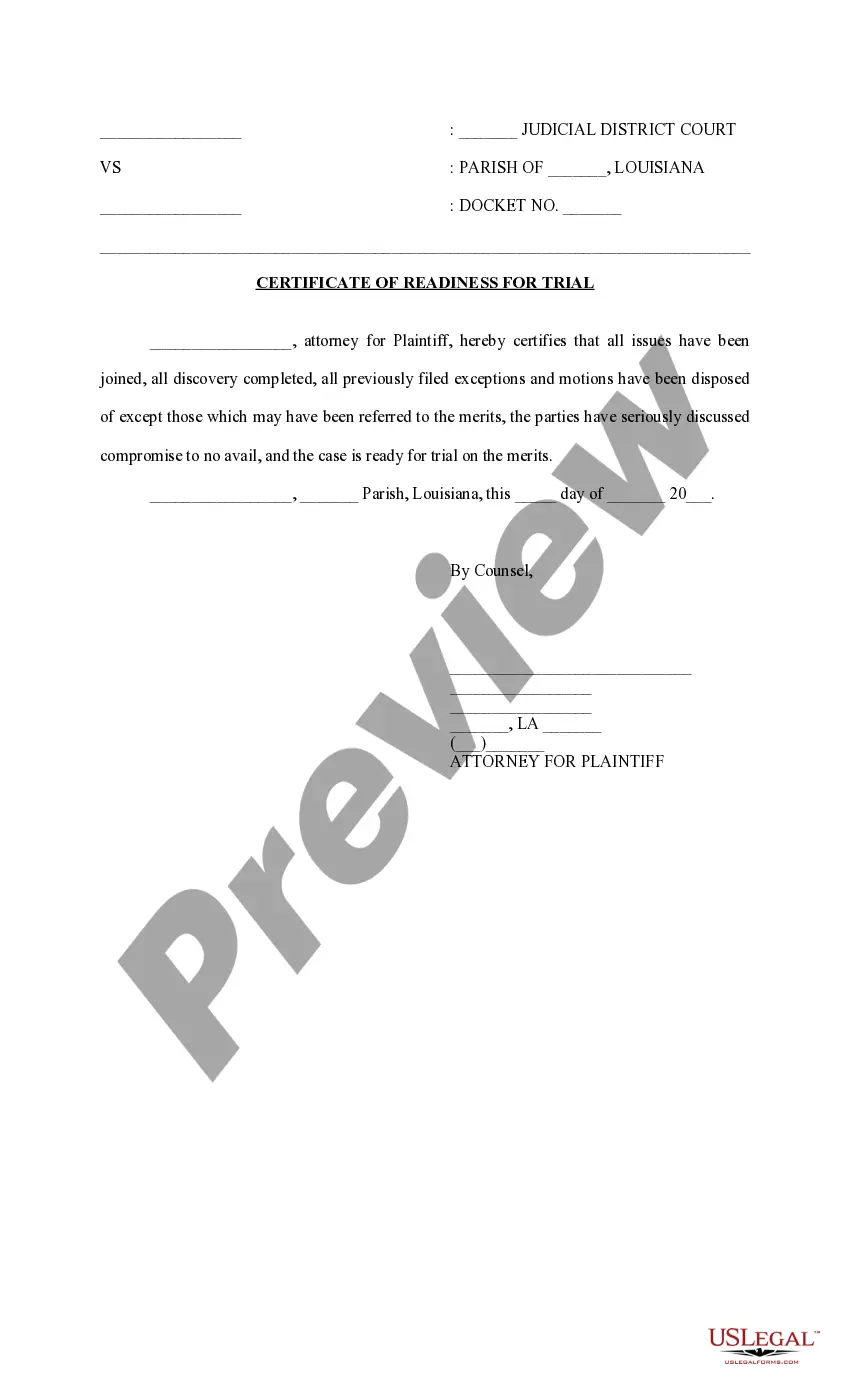
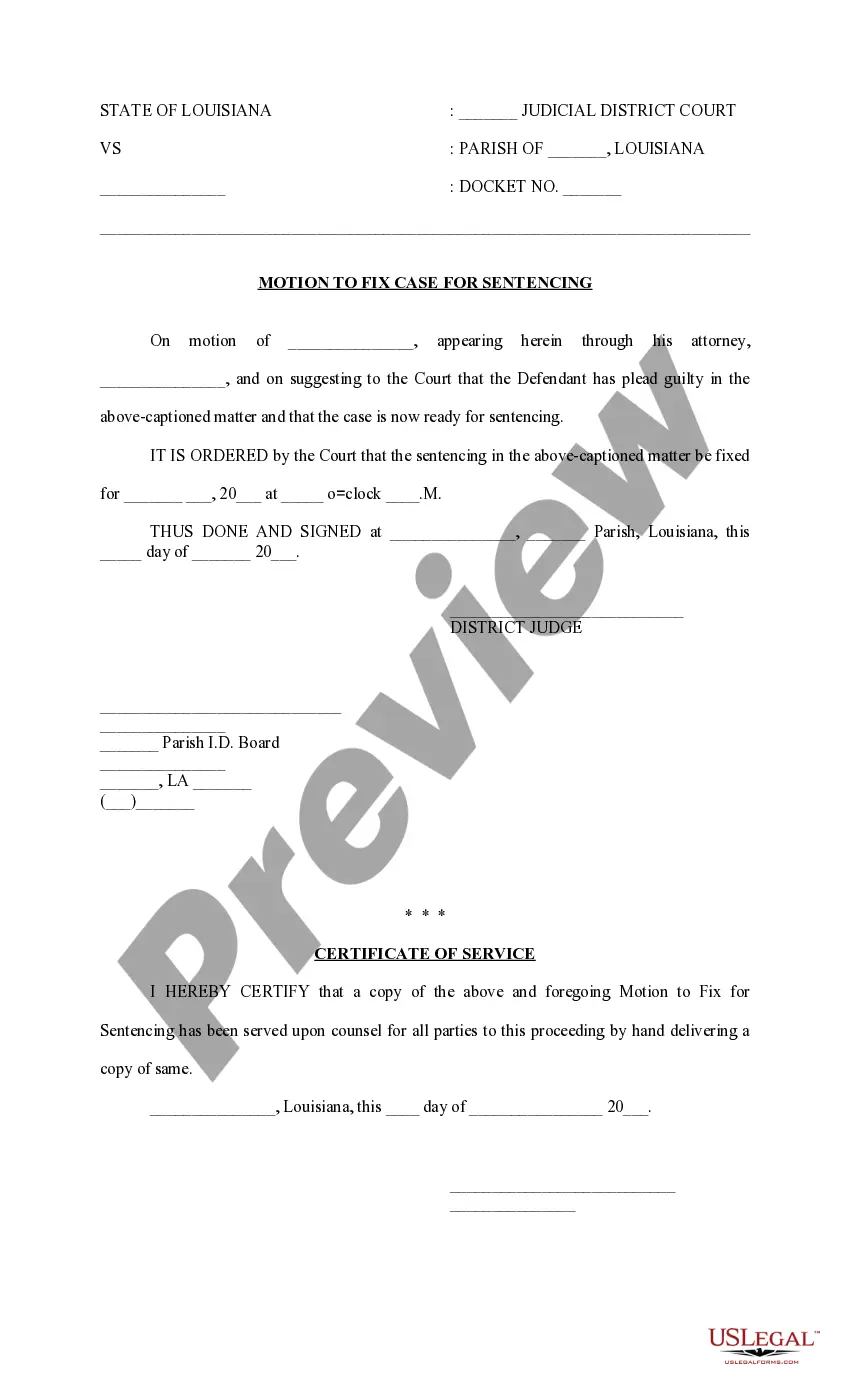
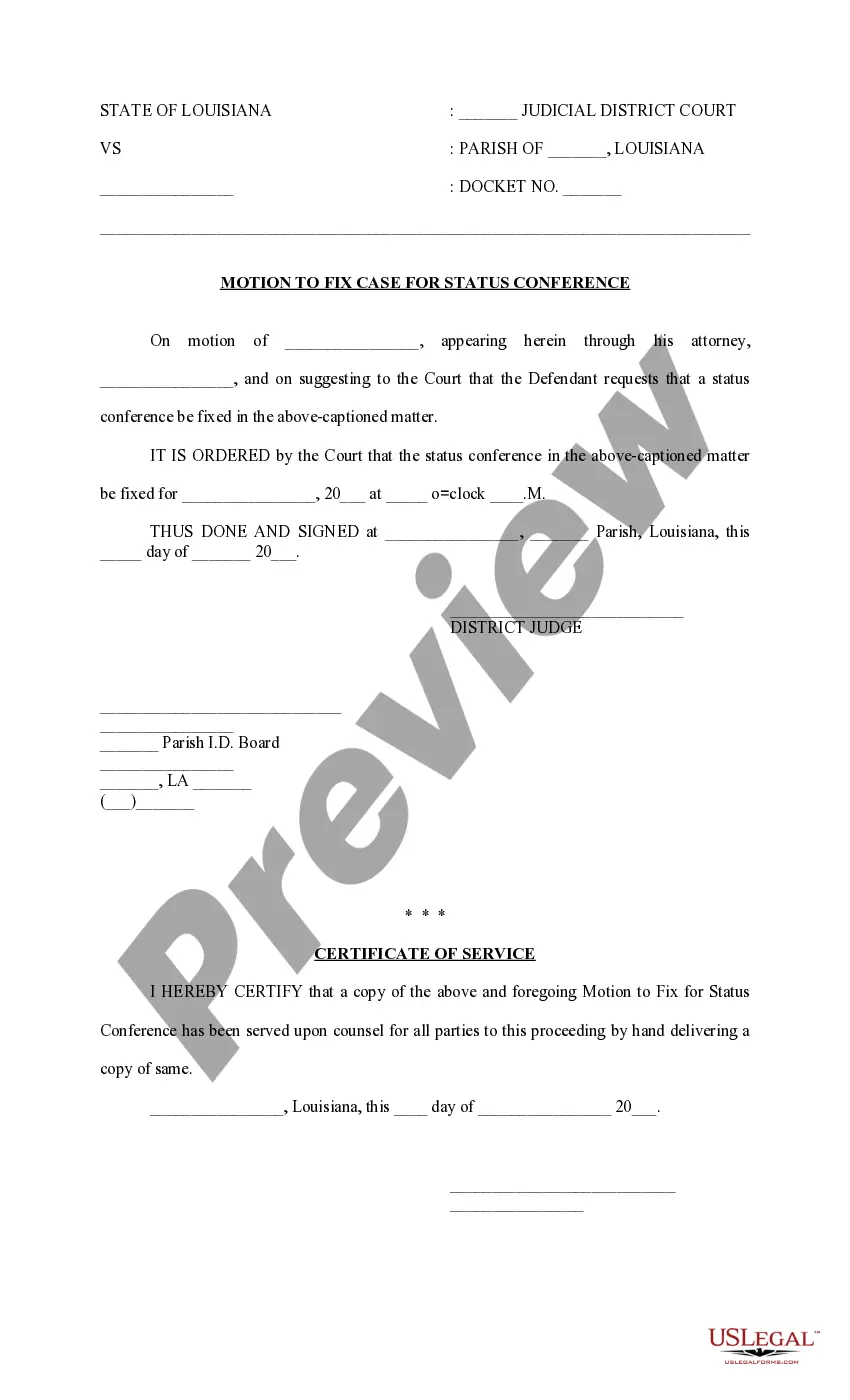
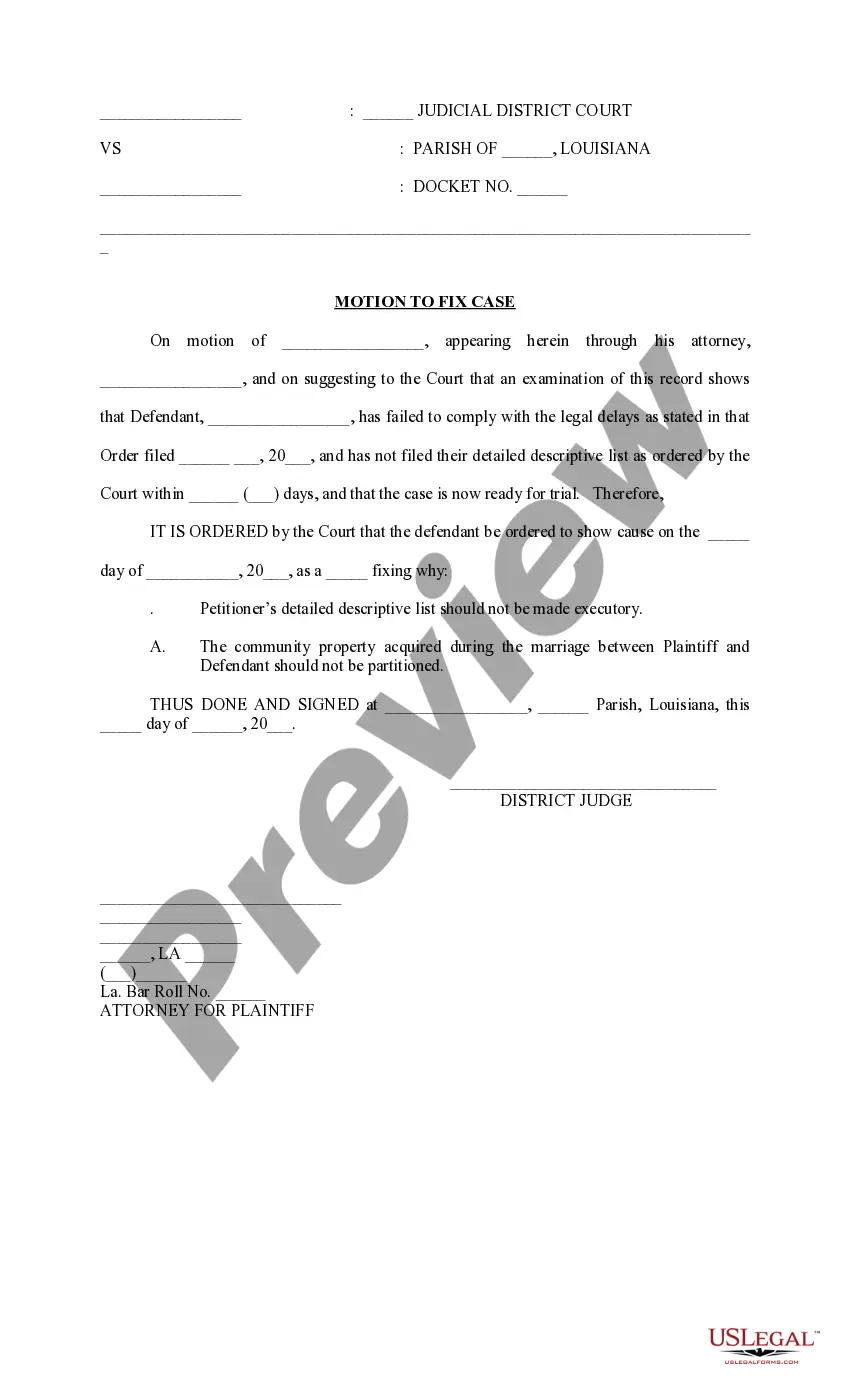
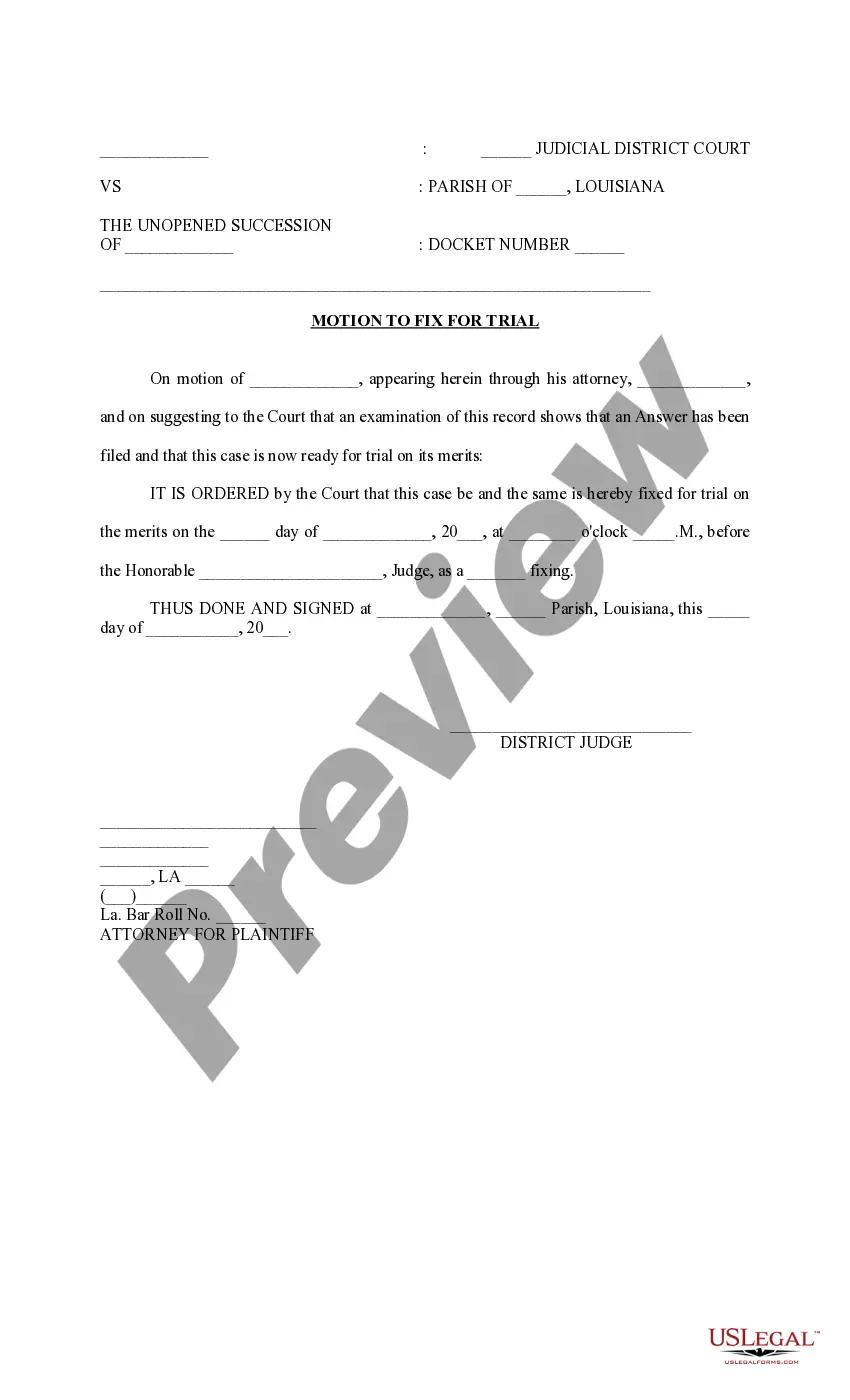
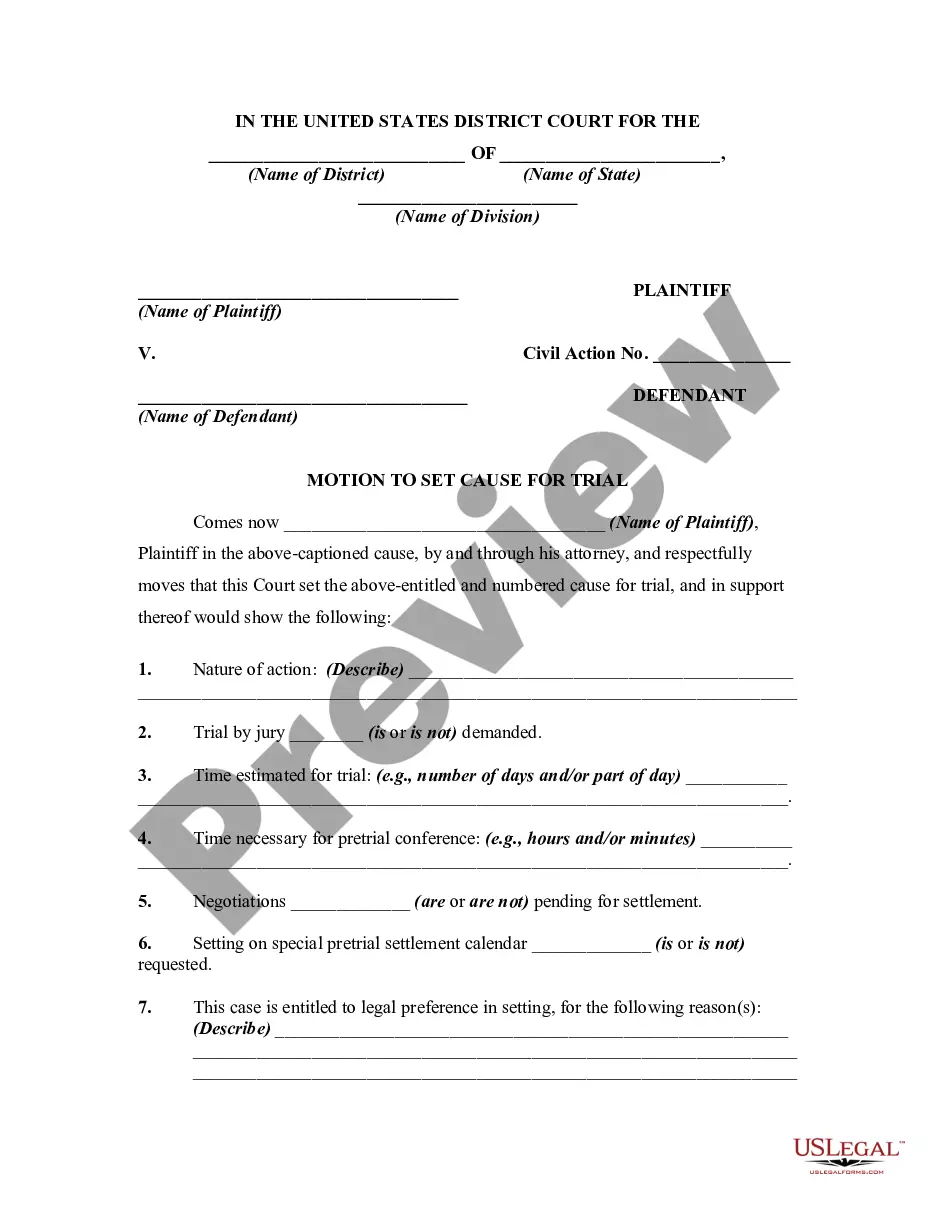
The Motion to Fix Case for Trial is a legal document used in Louisiana to request the court to schedule a trial once all necessary steps in the litigation process have been completed. This form ensures that the case is officially placed on the court's docket for trial and includes a Certificate of Readiness for Trial, confirming that both parties are prepared to proceed. Unlike other motions, this form specifically addresses the readiness of the case for trial and outlines the steps taken to reach this point.
Key parts of this document
- Identifying information: Includes case title, docket number, and parties involved.
- Motion request: Asks the court to schedule the case for trial.
- Certificate of readiness: Confirms all issues have been resolved and the case is ready for trial.
- Order for trial: Document that the court will sign to officially place the case on the docket.
- Signature lines: For the attorney's signature and judge's signature.

When to use this document
This form is necessary when both parties have completed their pre-trial obligations, such as filing answers and completing discovery. It is typically filed when the parties are ready to advance their case to trial and wish to schedule a court date to resolve the matter definitively. If you believe that your case is settled in terms of legal questions and that further delays would be detrimental to your interests, this form should be used.
Who can use this document
- Defendants in a civil case who have filed answers and wish to set a trial date.
- Attorneys representing parties involved in litigation in Louisiana.
- Parties looking for a formal method to request trial scheduling from the court.
How to complete this form
- Identify the parties involved in the case, including the plaintiff and defendant.
- Provide the docket number and title of the case as recorded by the court.
- State the request for the court to fix a trial date and indicate readiness.
- Complete the Certificate of Readiness section, certifying that all pre-trial work is done.
- Obtain the necessary signatures from the attorney and the judge upon submission.
Notarization guidance
This form does not typically require notarization unless specified by local law. It is advisable to check with local legal guidelines to confirm notarization needs.
Get your form ready online
Our built-in tools help you complete, sign, share, and store your documents in one place.
Make edits, fill in missing information, and update formatting in US Legal Forms—just like you would in MS Word.
Download a copy, print it, send it by email, or mail it via USPS—whatever works best for your next step.
Sign and collect signatures with our SignNow integration. Send to multiple recipients, set reminders, and more. Go Premium to unlock E-Sign.
If this form requires notarization, complete it online through a secure video call—no need to meet a notary in person or wait for an appointment.
We protect your documents and personal data by following strict security and privacy standards.

Make edits, fill in missing information, and update formatting in US Legal Forms—just like you would in MS Word.

Download a copy, print it, send it by email, or mail it via USPS—whatever works best for your next step.

Sign and collect signatures with our SignNow integration. Send to multiple recipients, set reminders, and more. Go Premium to unlock E-Sign.

If this form requires notarization, complete it online through a secure video call—no need to meet a notary in person or wait for an appointment.

We protect your documents and personal data by following strict security and privacy standards.
Typical mistakes to avoid
- Failing to complete the Certificate of Readiness, which is essential for the motion to be considered.
- Not including the correct docket number or party information.
- Submitting the motion without proper signatures, which can lead to dismissal.
Why use this form online
- Convenience of filing from anywhere at any time, without the need to visit the court.
- Editability allows for immediate updates to reflect any changes in the case.
- Reliability of access to attorney-drafted templates, ensuring legal compliance.
Looking for another form?

Form popularity
FAQ
Rule of Court 10.1 in Louisiana governs the practice surrounding the assignment and scheduling of cases. It aims to streamline case management processes within the court system. Being aware of Rule 10.1 is important when preparing a Louisiana Motion to Fix Case for Trial, as it helps you navigate the scheduling complexities that can arise.
Article 42 of the Louisiana Code of Civil Procedure establishes the necessity of having a proper caption in legal documents. It outlines the essential components of a filing, ensuring that it meets the court's standards. This is crucial when drafting a Louisiana Motion to Fix Case for Trial, as compliance with this article prevents unnecessary delays.
General format - each motion generally consists of a case caption, a title that briefly identifies the relief sought, a series of numbered paragraphs that explains -- in a logical way -- why you are entitled to that relief, a prayer for relief, a signature block, a certification that a copy of the motion was sent to
What is a motion hearing? The hearing on the motion is the time set for the judge to hear from each of the parties about information contained in the written papers (motion and opposition). At the hearing, each party can argue its position and the judge can ask specific questions about the fact or law.
What this means is that if police or investigators violate those rights, a judge may dismiss your case. Additionally, before going to trial, the prosecutor's office and a grand jury will review the evidence against you. If there is a substantial lack of evidence, a grand jury or a judge may dismiss your case.
The motion must include a separate "Notice of Motion" which includes a brief summary of the nature of the motion, the deadline for filing a response, and if there is a hearing, the date, time, and location of the hearing.
Ask the court for a motion date. Identify and fill out your motion forms. Serve and file your motion forms. Confirm that you will attend the motion. Go to your motion hearing. Receive the judge's decision.
Can a Case Be Dismissed at a Pretrial Hearing? It is important to note that during a pretrial hearing judges will rule on any motions or matters brought up during a pretrial conference. This means that pretrial motions to dismiss will be ruled upon during the pretrial hearing.
Know the Rules. Know Your Judge. Know Your Opponent. Write Effectively. Prepare for Oral Argument. Practice! Make Your Oral Argument Count.
A motion is an application to the court made by the prosecutor or defense attorney, requesting that the court make a decision on a certain issue before the trial begins. The motion can affect the trial, courtroom, defendants, evidence, or testimony.