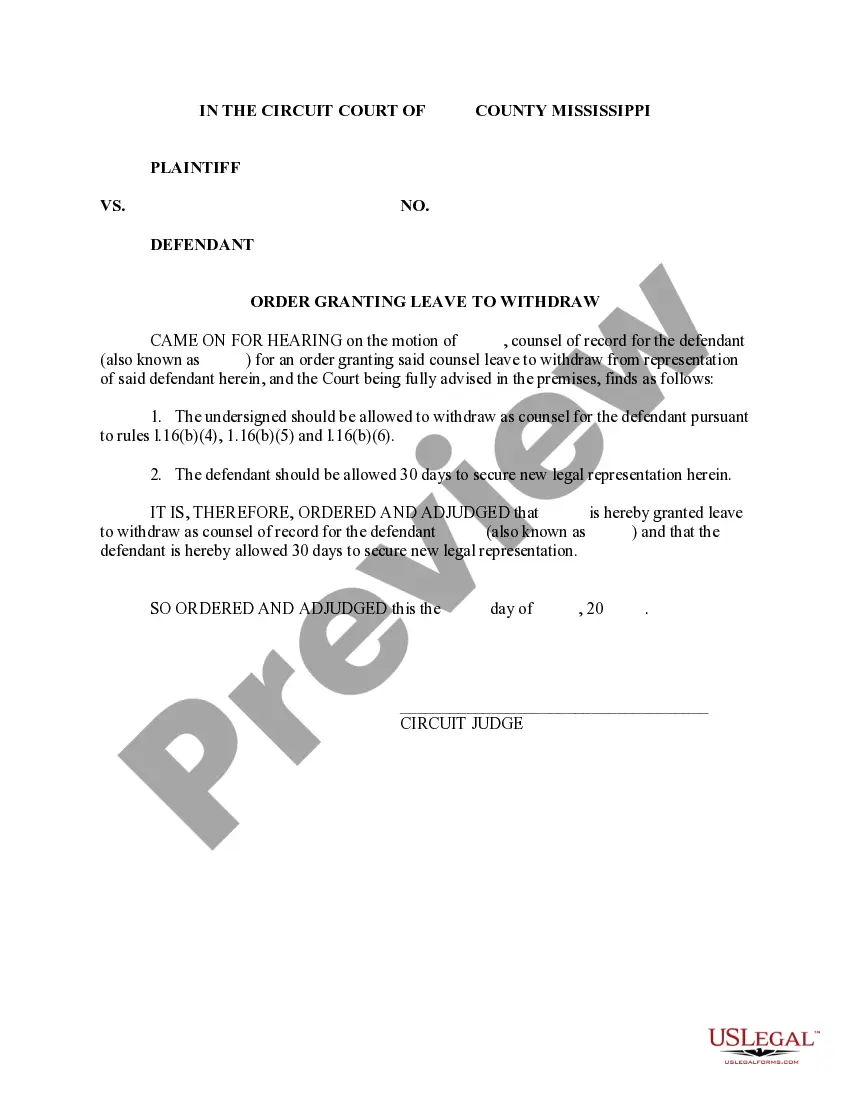
Simple Indemnity Agreement
Overview of this form
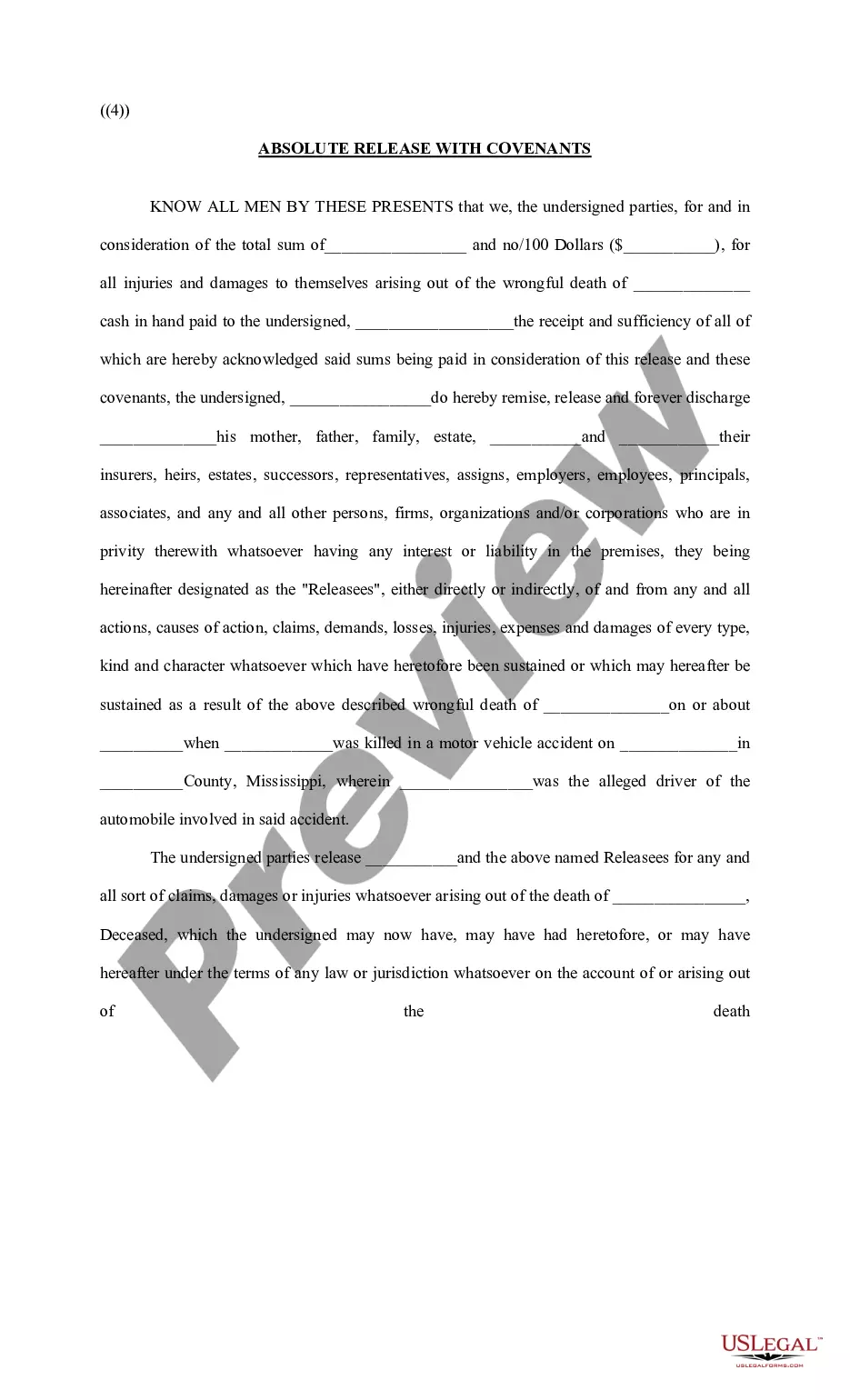
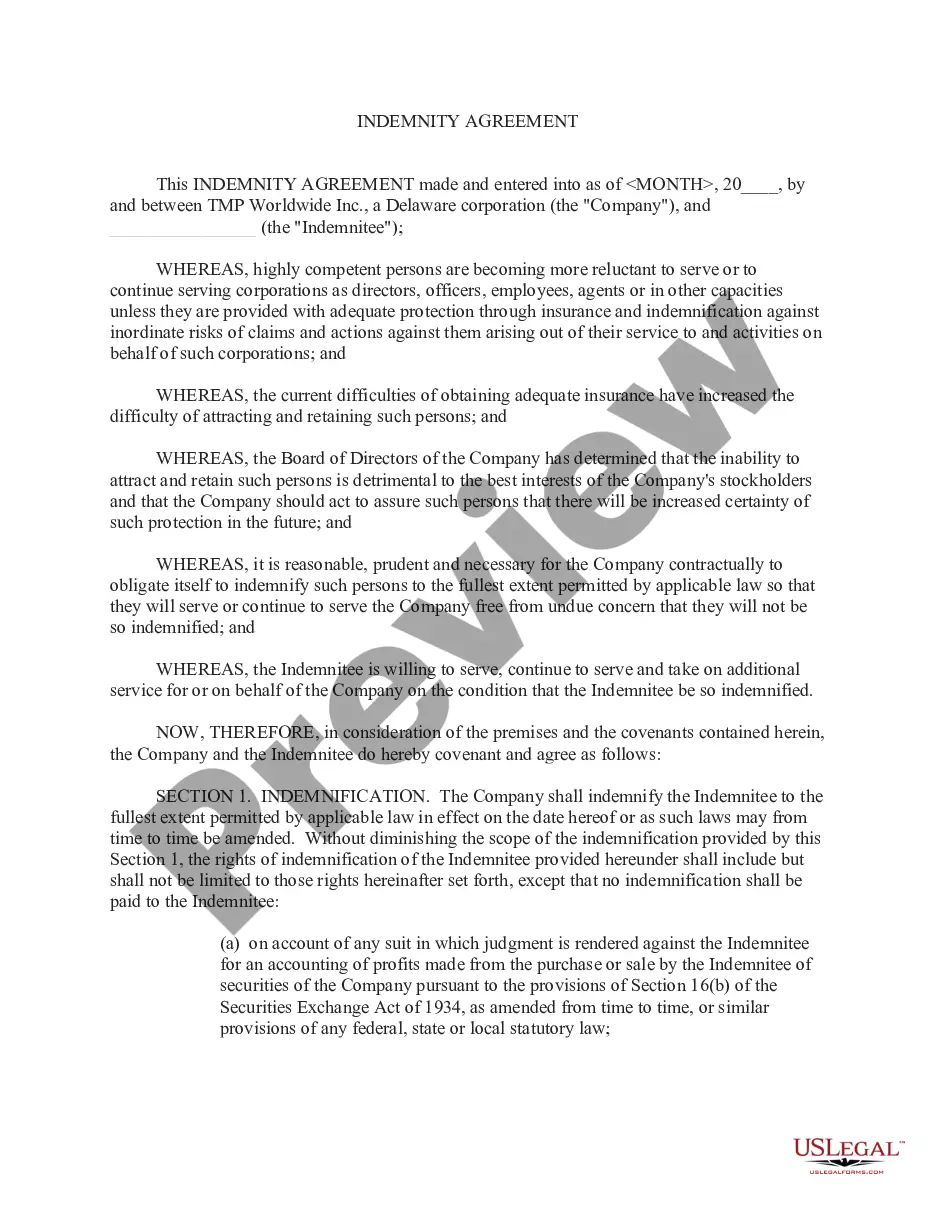
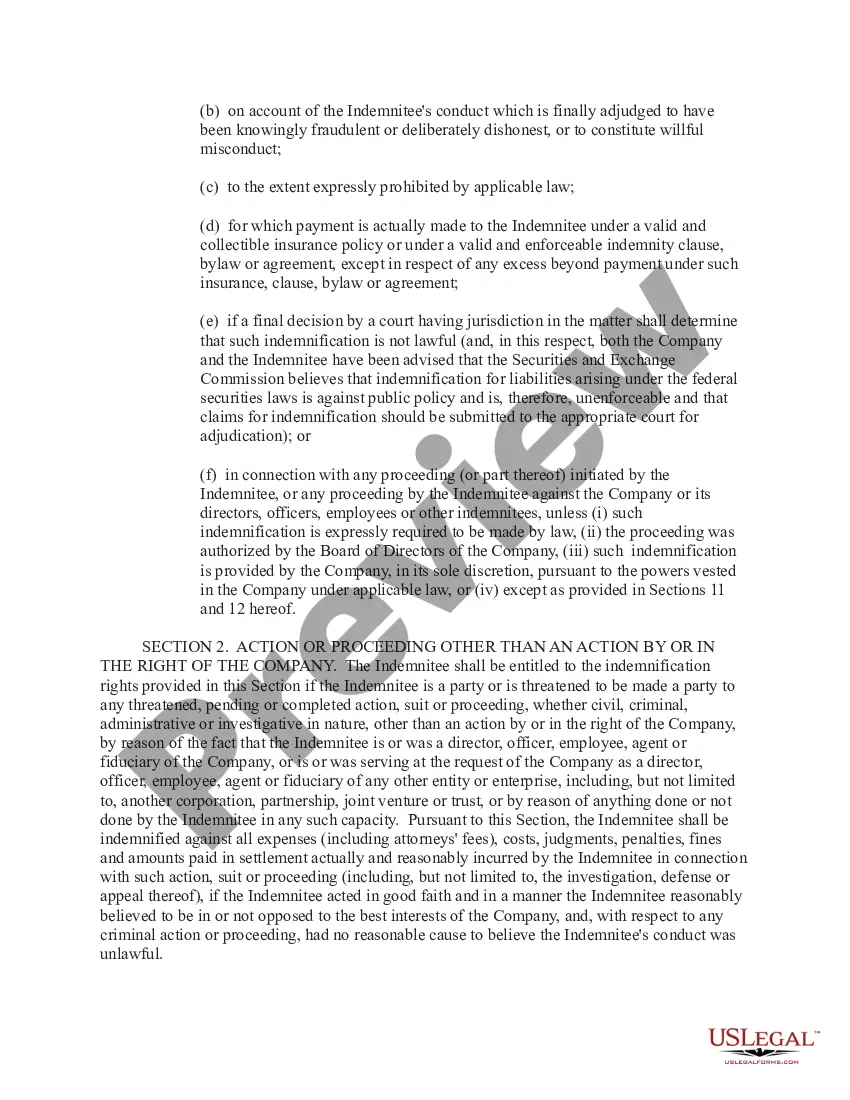
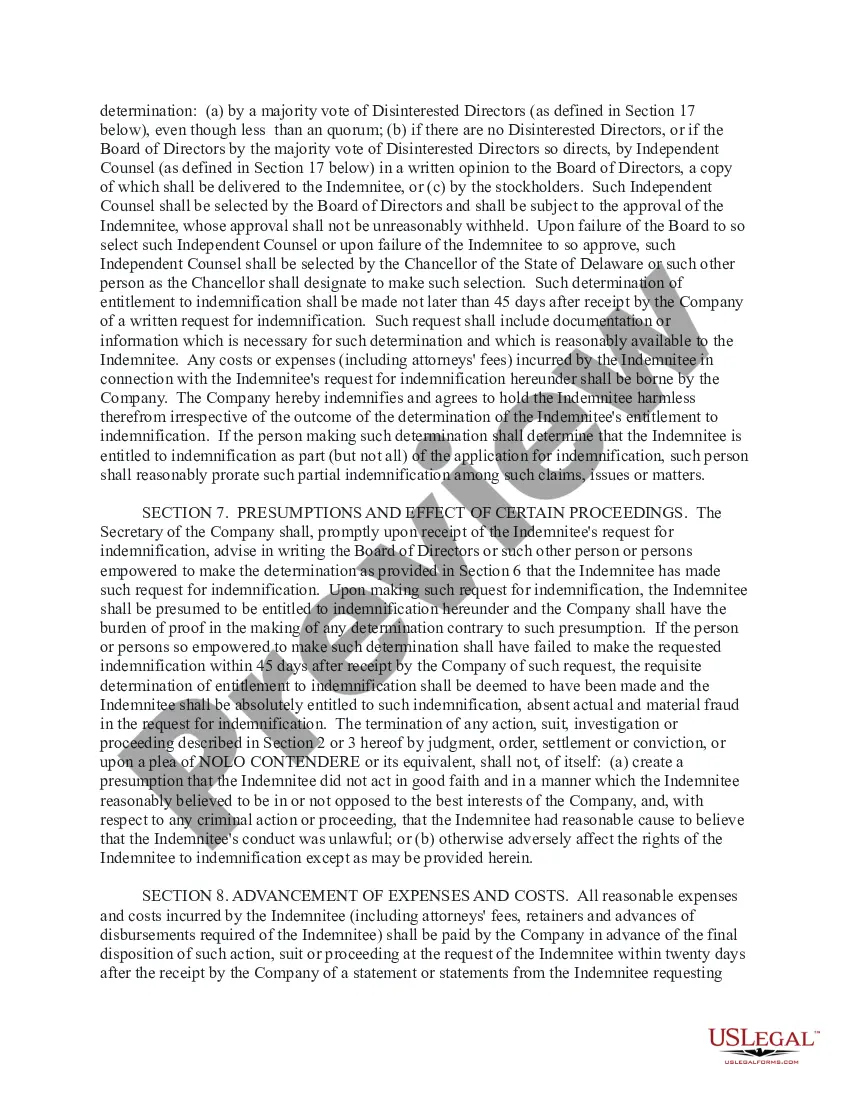
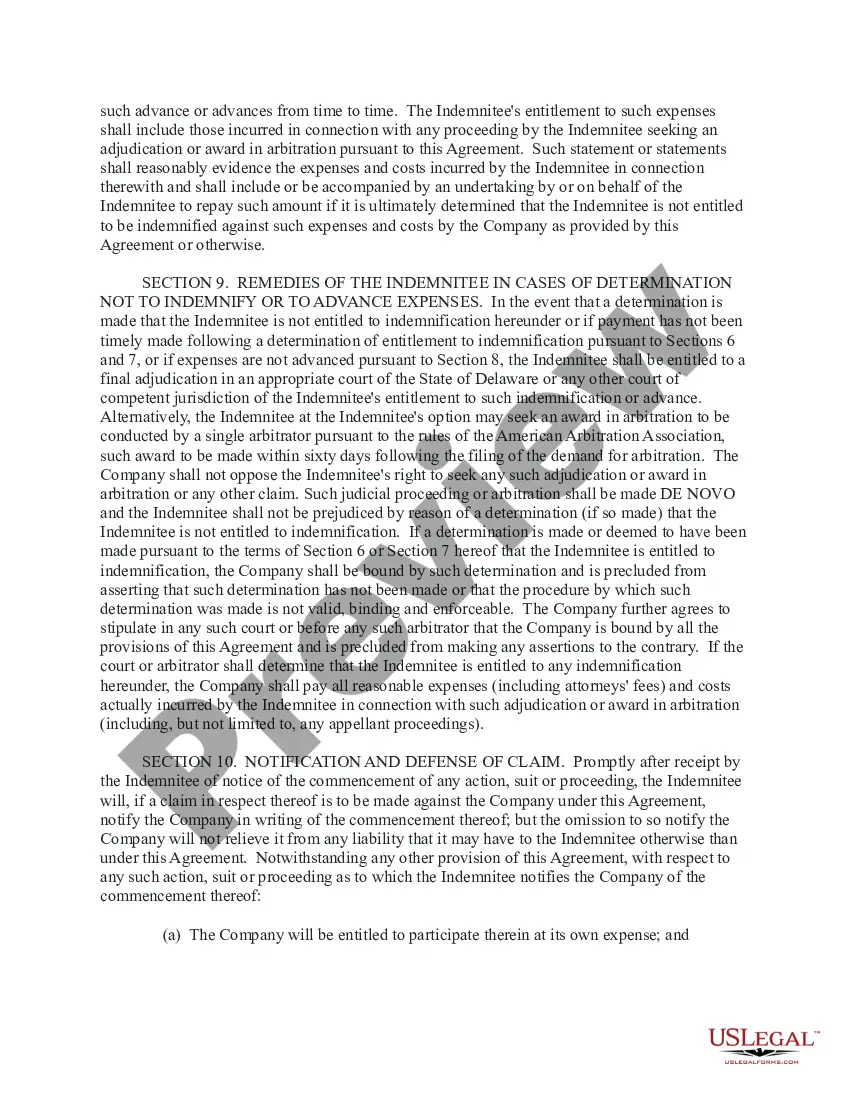
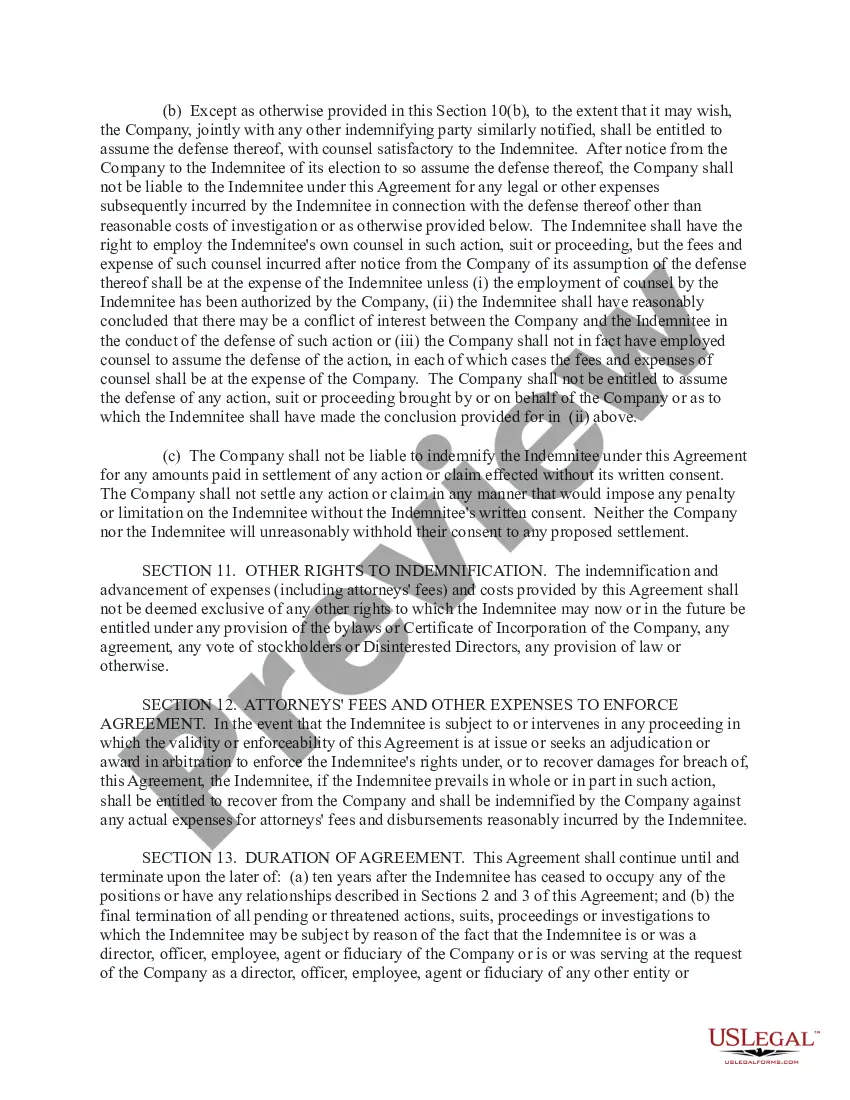
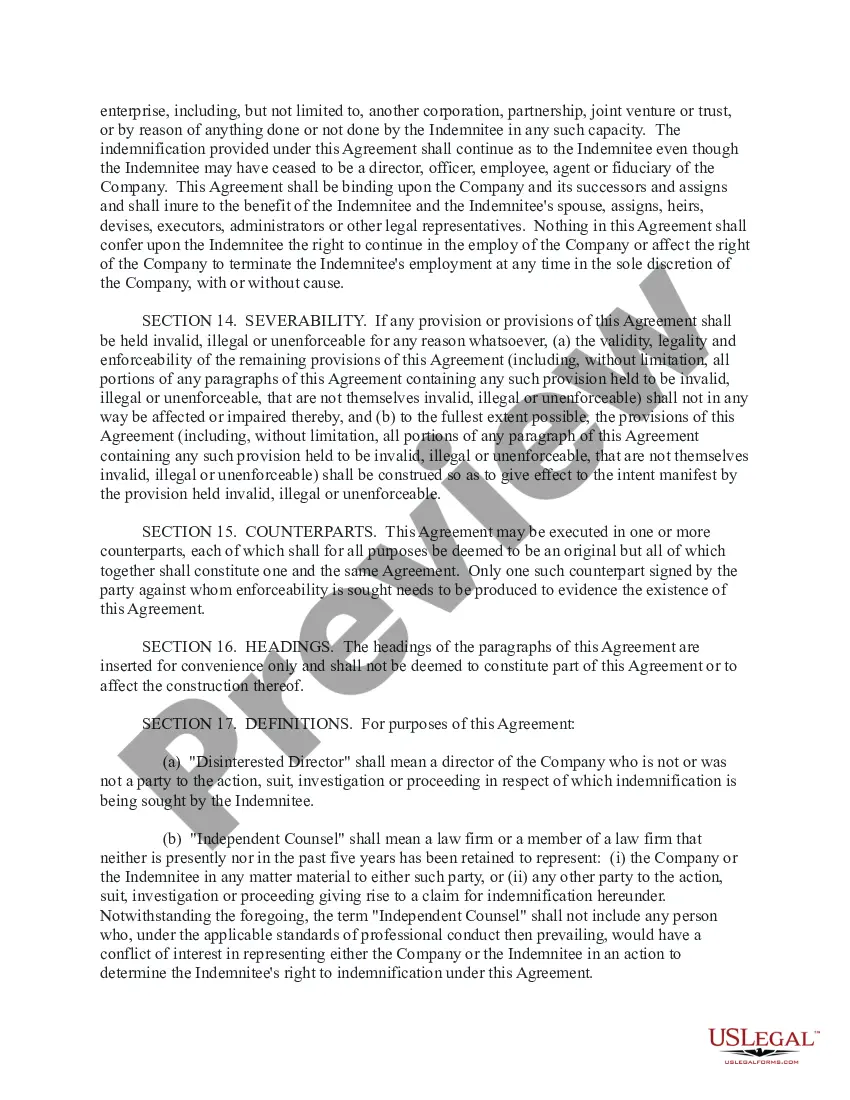
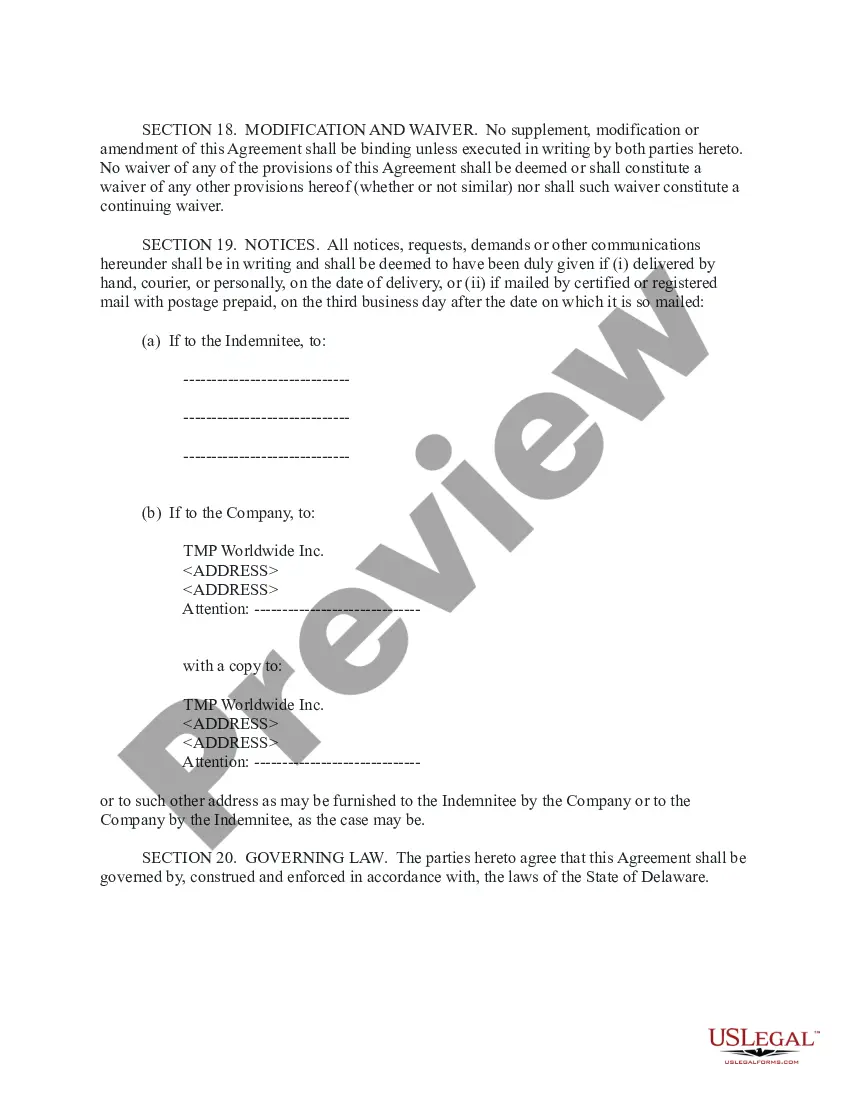
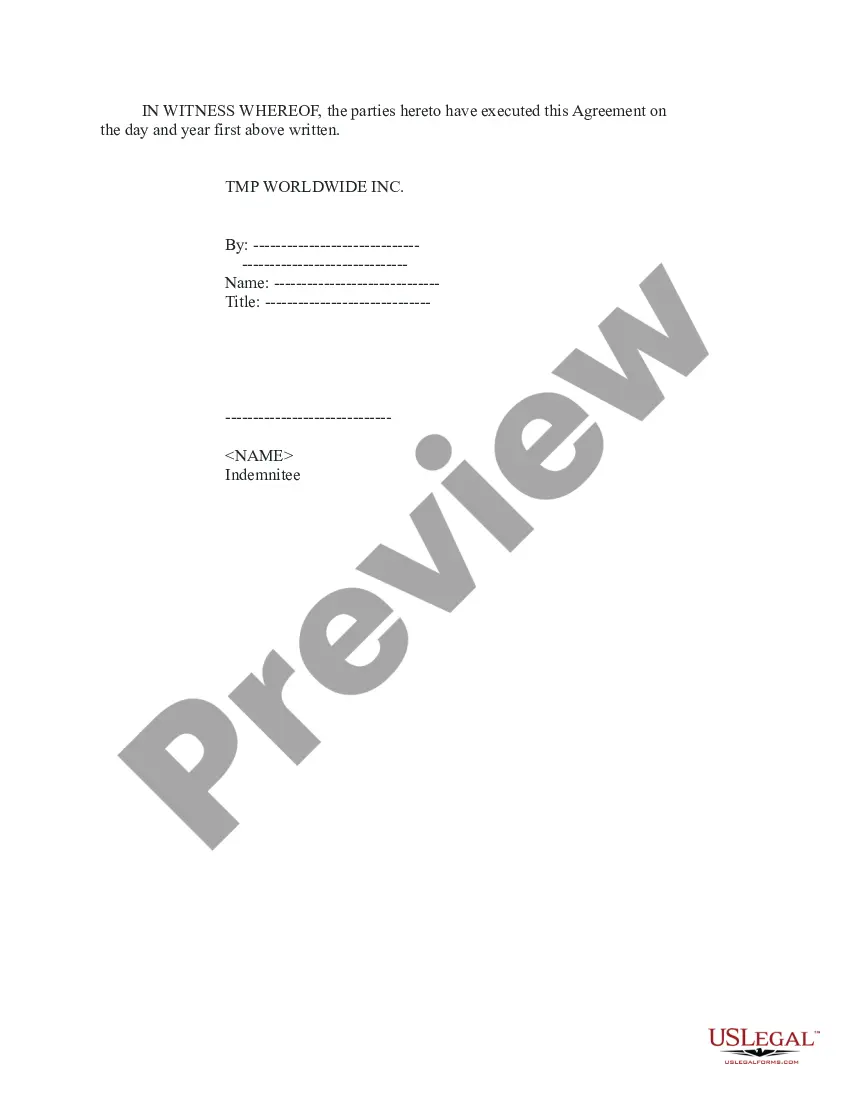
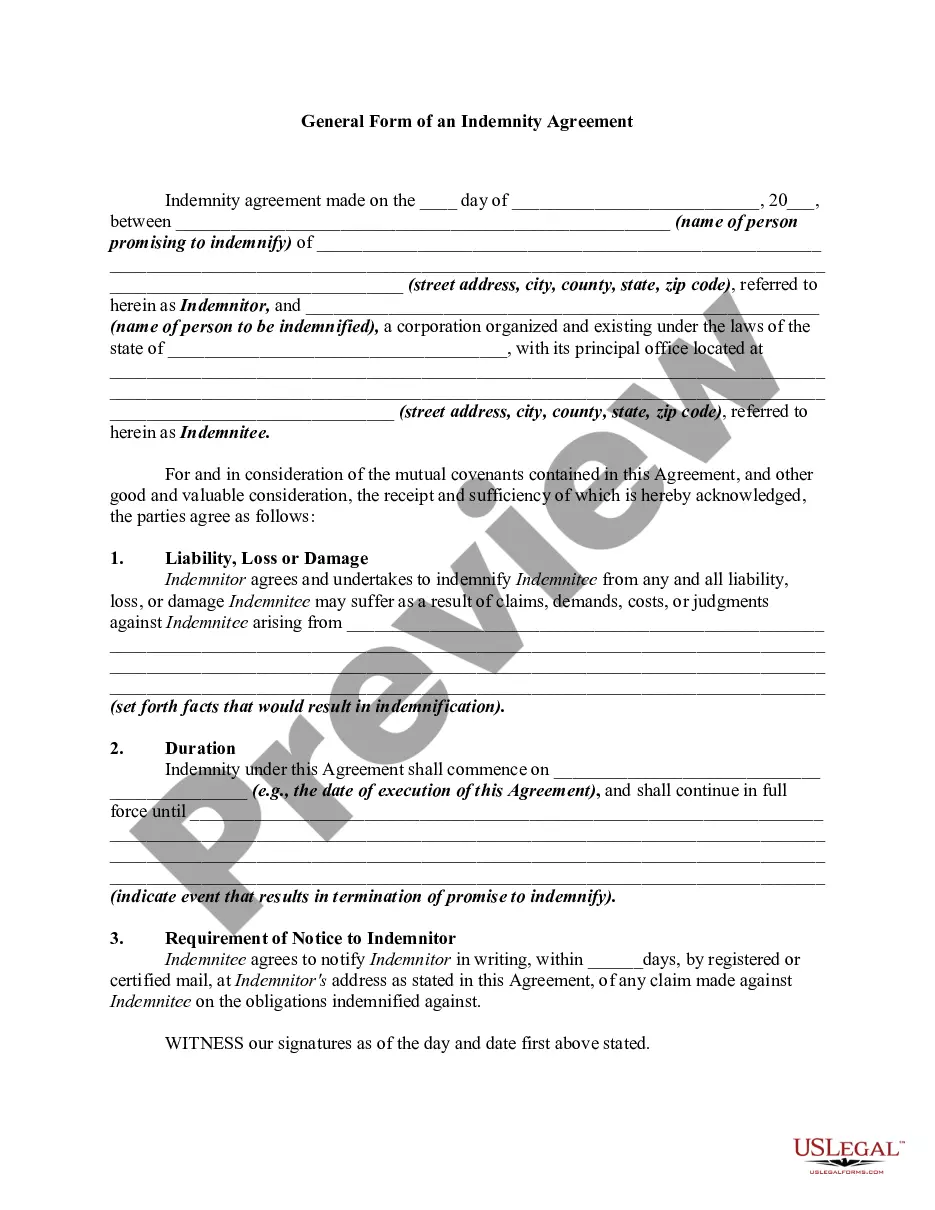
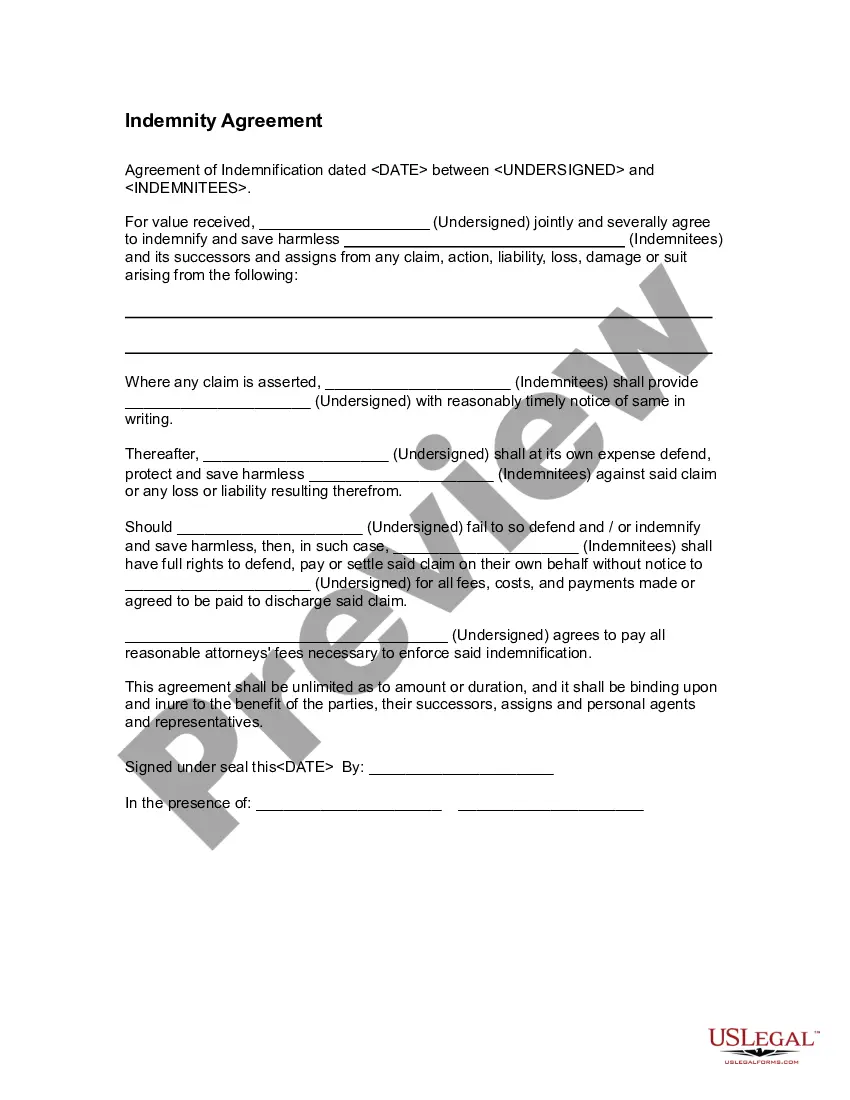
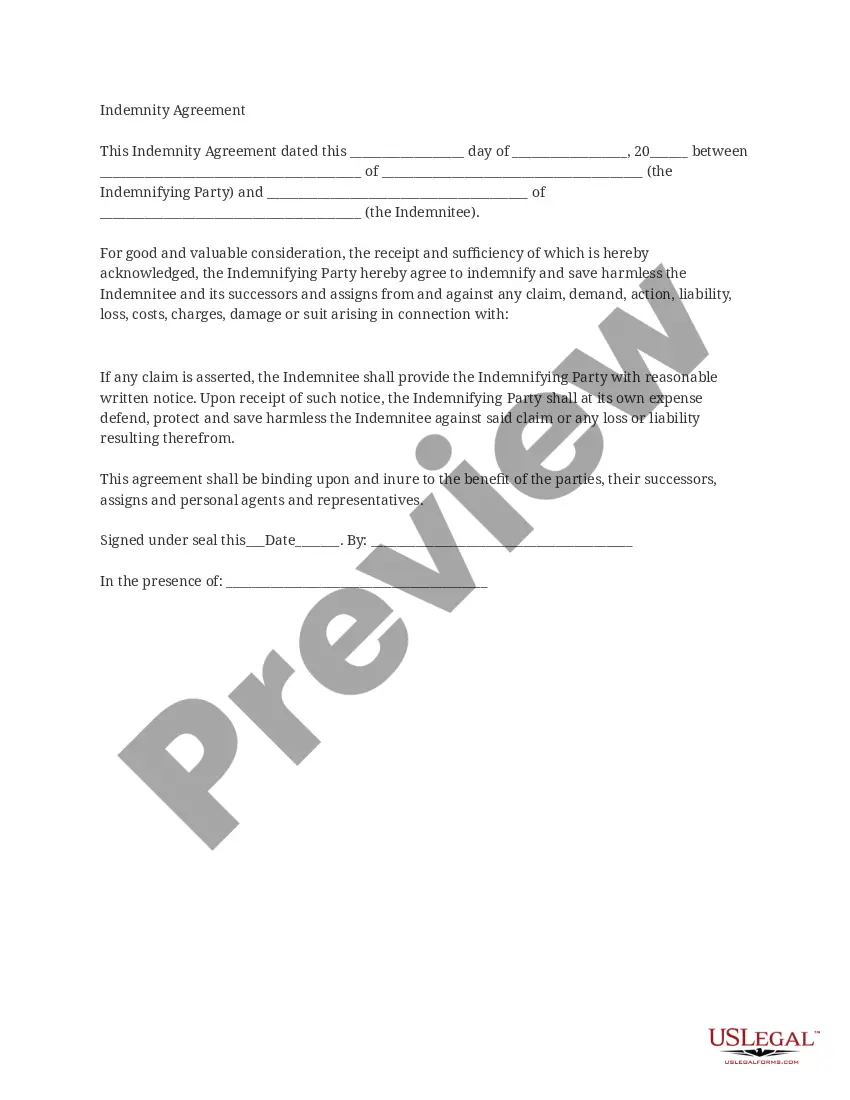
The Simple Indemnity Agreement is a legal contract designed to protect one party from liabilities or risks arising from another party's actions in a transaction. This form is also referred to as a hold harmless agreement or a release of liability. It ensures that individuals serving in significant roles, such as directors or employees, are indemnified against certain claims, making it easier for organizations to attract and retain talent while minimizing their exposure to lawsuits.
What’s included in this form
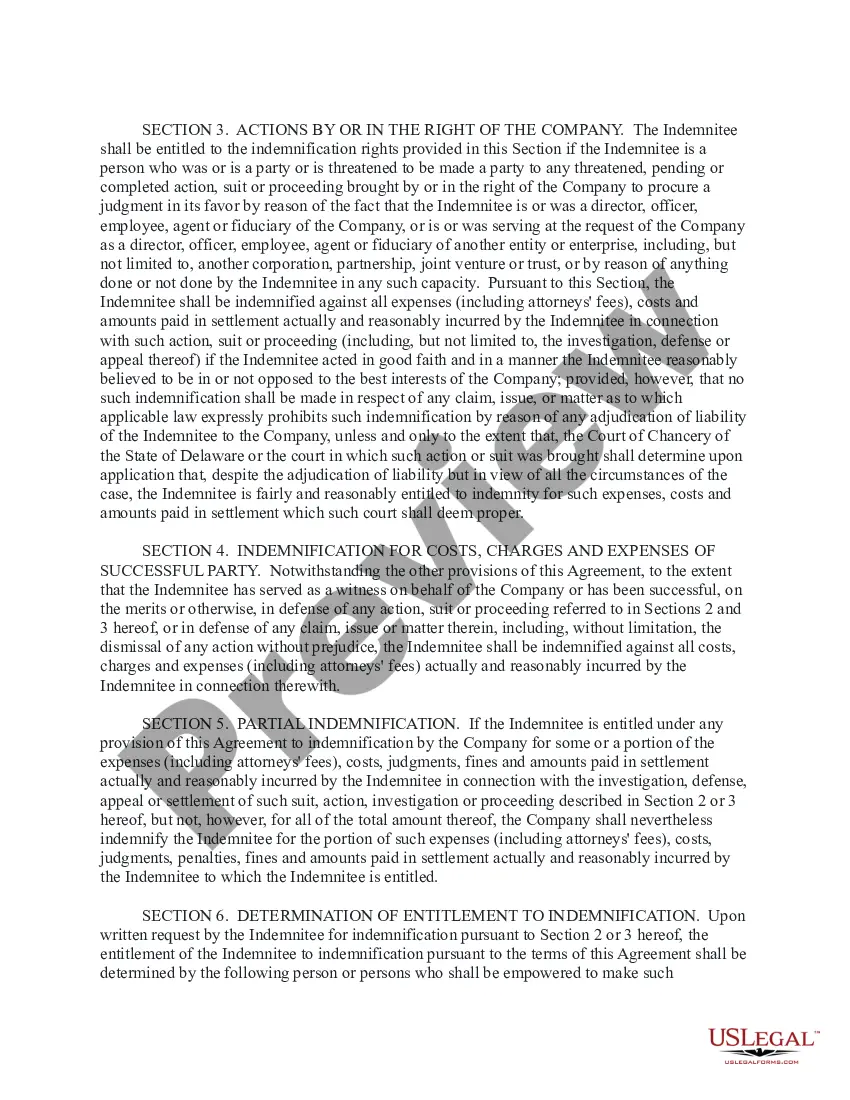
- Indemnification obligations of the company to the indemnitee.
- Eligibility criteria for receiving indemnification.
- Procedures for requesting indemnification.
- Limitations on indemnification, including exclusions for unlawful actions.
- Guidance on the advancement of legal expenses during proceedings.
Situations where this form applies
This form is useful for businesses or organizations that want to provide indemnity protection to their directors, officers, employees, and agents. It is typically used when these individuals are facing potential legal claims arising from their actions taken in their professional roles, ensuring they are supported and protected against unforeseen liabilities.
Who needs this form
- Corporations seeking to attract and retain qualified individuals for key positions.
- Organizations that want to mitigate legal risks associated with corporate governance.
- Individuals serving in leadership roles who desire assurance against personal liability.
Completing this form step by step
- Identify the parties involved in the agreement, including the company and the indemnitee.
- Specify the terms of indemnification, including what actions are covered.
- Detail any limitations or exclusions related to indemnification.
- Provide the date the agreement will take effect.
- Have the agreement signed by both parties to validate the terms.
Is notarization required?
This form does not typically require notarization unless specified by local law.
Get your form ready online
Our built-in tools help you complete, sign, share, and store your documents in one place.
Make edits, fill in missing information, and update formatting in US Legal Forms—just like you would in MS Word.
Download a copy, print it, send it by email, or mail it via USPS—whatever works best for your next step.
Sign and collect signatures with our SignNow integration. Send to multiple recipients, set reminders, and more. Go Premium to unlock E-Sign.
If this form requires notarization, complete it online through a secure video call—no need to meet a notary in person or wait for an appointment.
We protect your documents and personal data by following strict security and privacy standards.

Make edits, fill in missing information, and update formatting in US Legal Forms—just like you would in MS Word.

Download a copy, print it, send it by email, or mail it via USPS—whatever works best for your next step.

Sign and collect signatures with our SignNow integration. Send to multiple recipients, set reminders, and more. Go Premium to unlock E-Sign.

If this form requires notarization, complete it online through a secure video call—no need to meet a notary in person or wait for an appointment.

We protect your documents and personal data by following strict security and privacy standards.
Typical mistakes to avoid
- Failing to specify clear indemnification limits.
- Not having the agreement signed by both parties.
- Using vague language that may lead to misinterpretation of the agreement.
- Ignoring to review state-specific legal requirements.
Why use this form online
- Easy customization to fit specific needs and circumstances.
- Immediate access to important legal protections without the need for lengthy consultations.
- Reliable templates drafted by licensed attorneys to ensure legal compliance.
Legal use & context
- The agreement is enforceable as long as it complies with applicable laws.
- It is important to note any state-specific regulations that may affect the indemnity terms.
- Indemnification cannot protect individuals from all types of liability, especially for willful misconduct.
What to keep in mind
- A Simple Indemnity Agreement helps protect individuals in corporate roles from certain legal claims.
- Customization is crucial to align with specific state laws and organizational policies.
- Both parties must sign the agreement for it to be valid and enforceable.
Looking for another form?
Form popularity
FAQ
The best example of indemnity would be insurance indemnification. Let's say the commercial property owner has consistently paid insurance premiums for the property. The money is paid to an insurance company that promises to take full responsibility for repaying any losses if any loss or damages ever occurs.
How to Write an Indemnity Agreement Consider the Indemnity Laws in Your Area.Draft the Indemnification Clause.Outline the Indemnification Period and Scope of Coverage.State the Indemnification Exceptions.Specify How the Indemnitee Notifies the Indemnitor About Claims.Write the Settlement and Consent Clause.
Indemnity is a contractual agreement between two parties in which one party agrees to pay for potential losses or damage caused by another party.
A typical indemnification clause consists of two separate and distinct obligations: an obligation to indemnify, and an obligation to defend.
Insurance policies are a common example of one party indemnifying another. When you purchase an insurance policy, the company essentially agrees to indemnify the policy holder, or another party, against any damages that may occur.
For example, in the case of home insurance, the homeowner pays insurance premiums to the insurance company in exchange for the assurance that the homeowner will be indemnified if the house sustains damage from fire, natural disasters, or other perils specified in the insurance agreement.
There are 3 levels of indemnification: broad form, intermediate form, and limited form. This requires the indemnitor to pay not only for its liabilities but also for the indemnitee's liability whether the indemnitee is solely (i.e. 100%) at fault or partially at fault.