Triple Net Lease
About this form
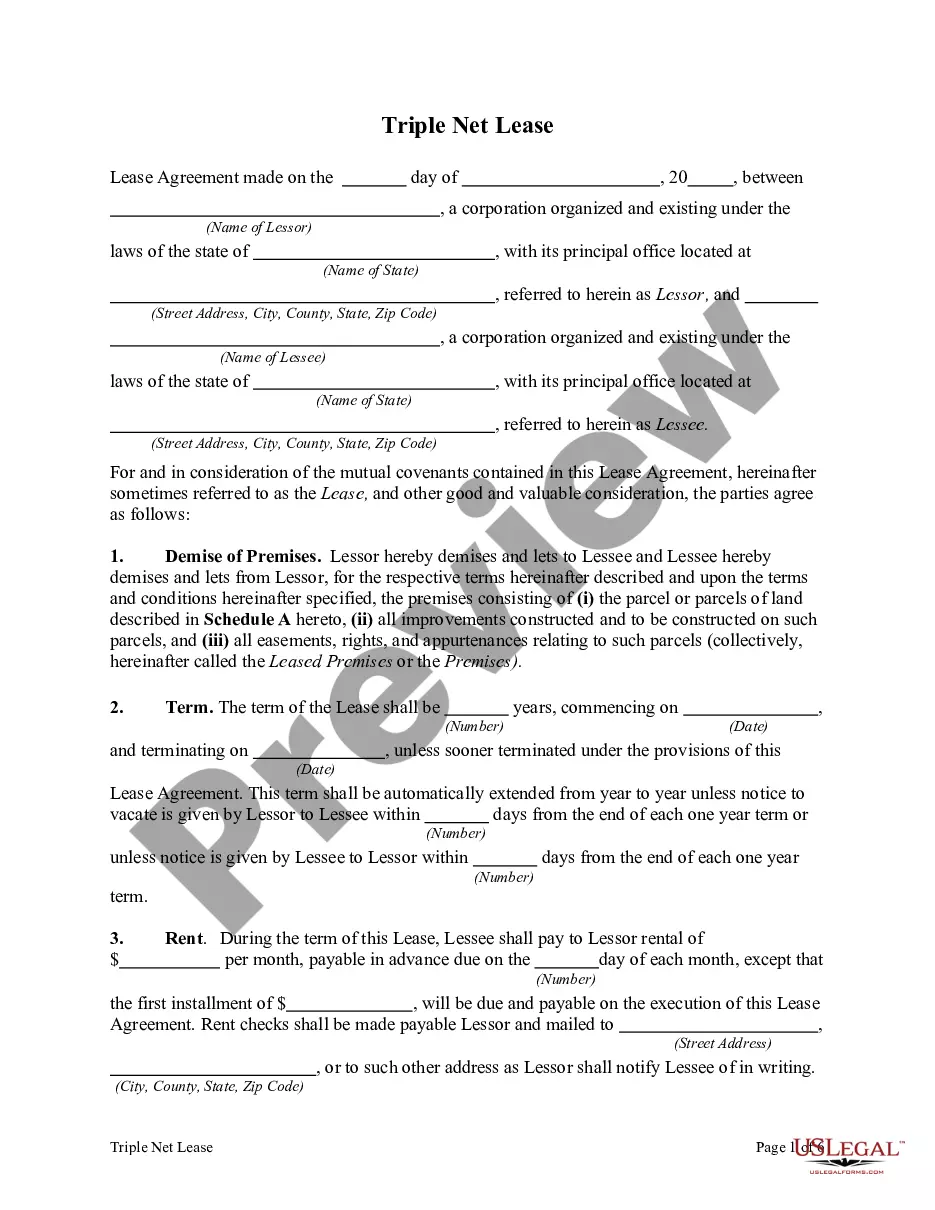
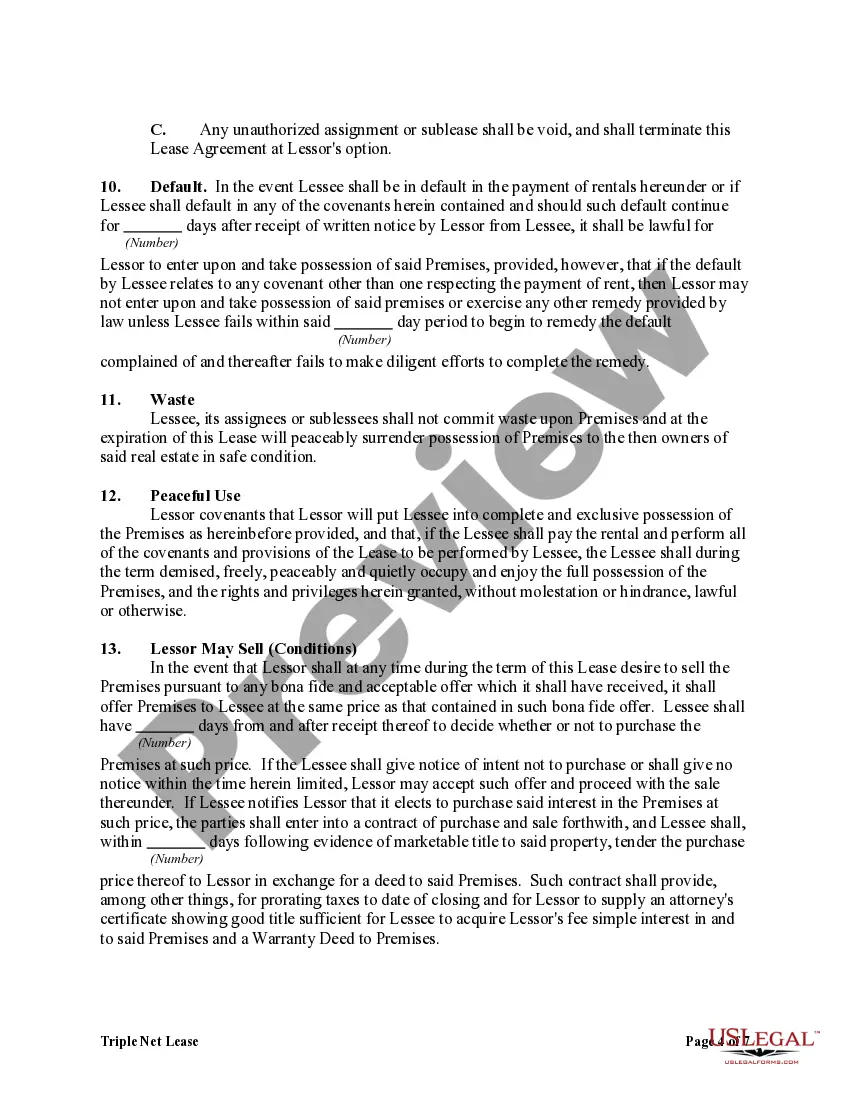
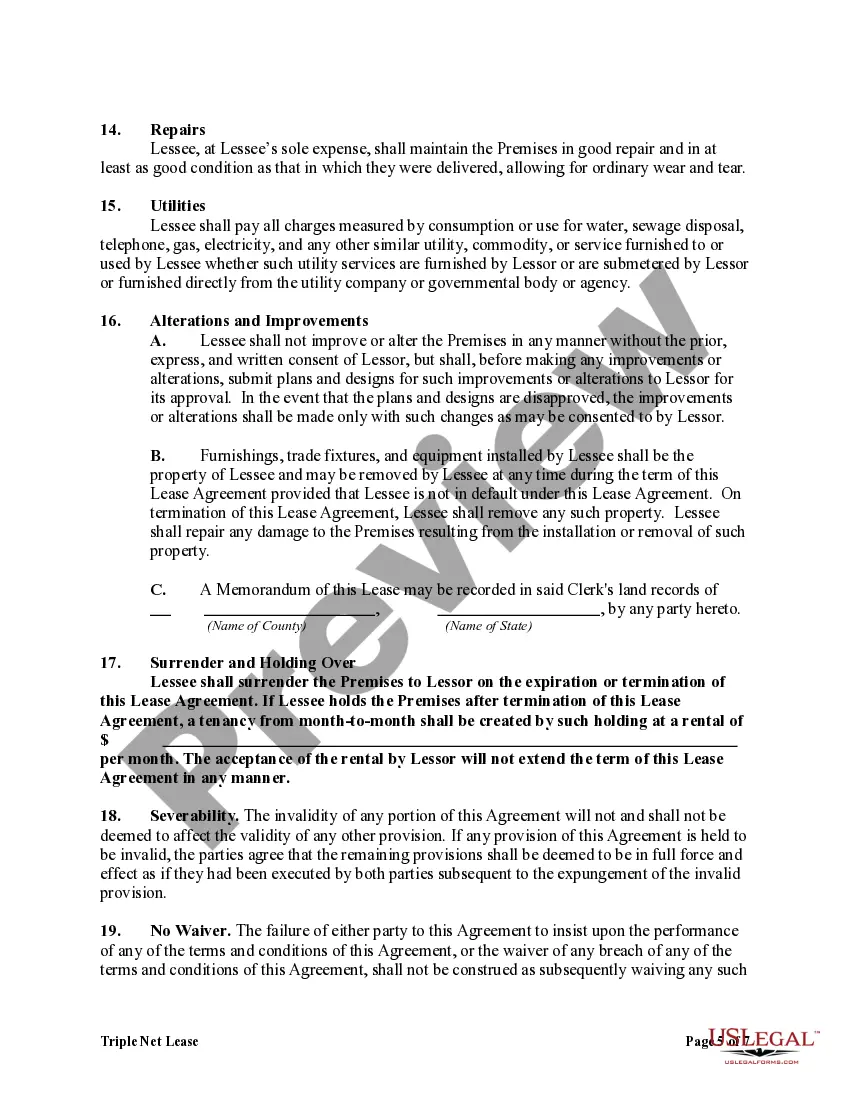
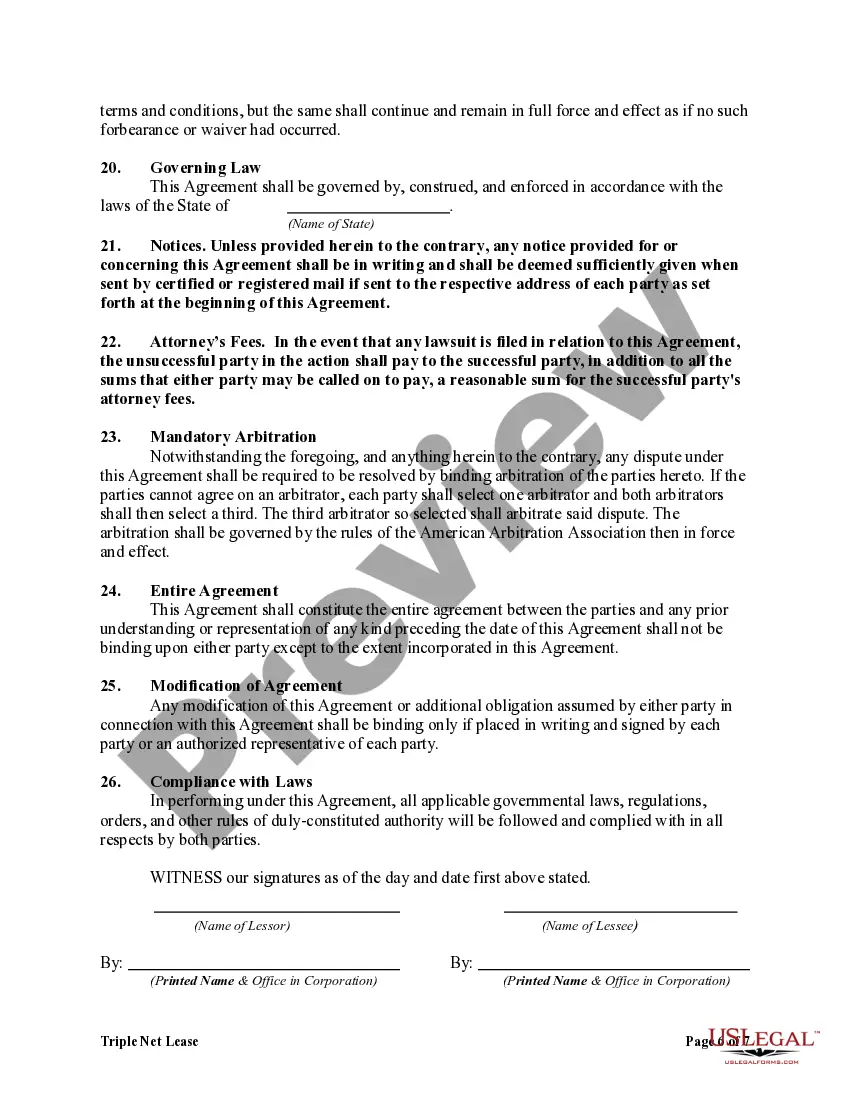
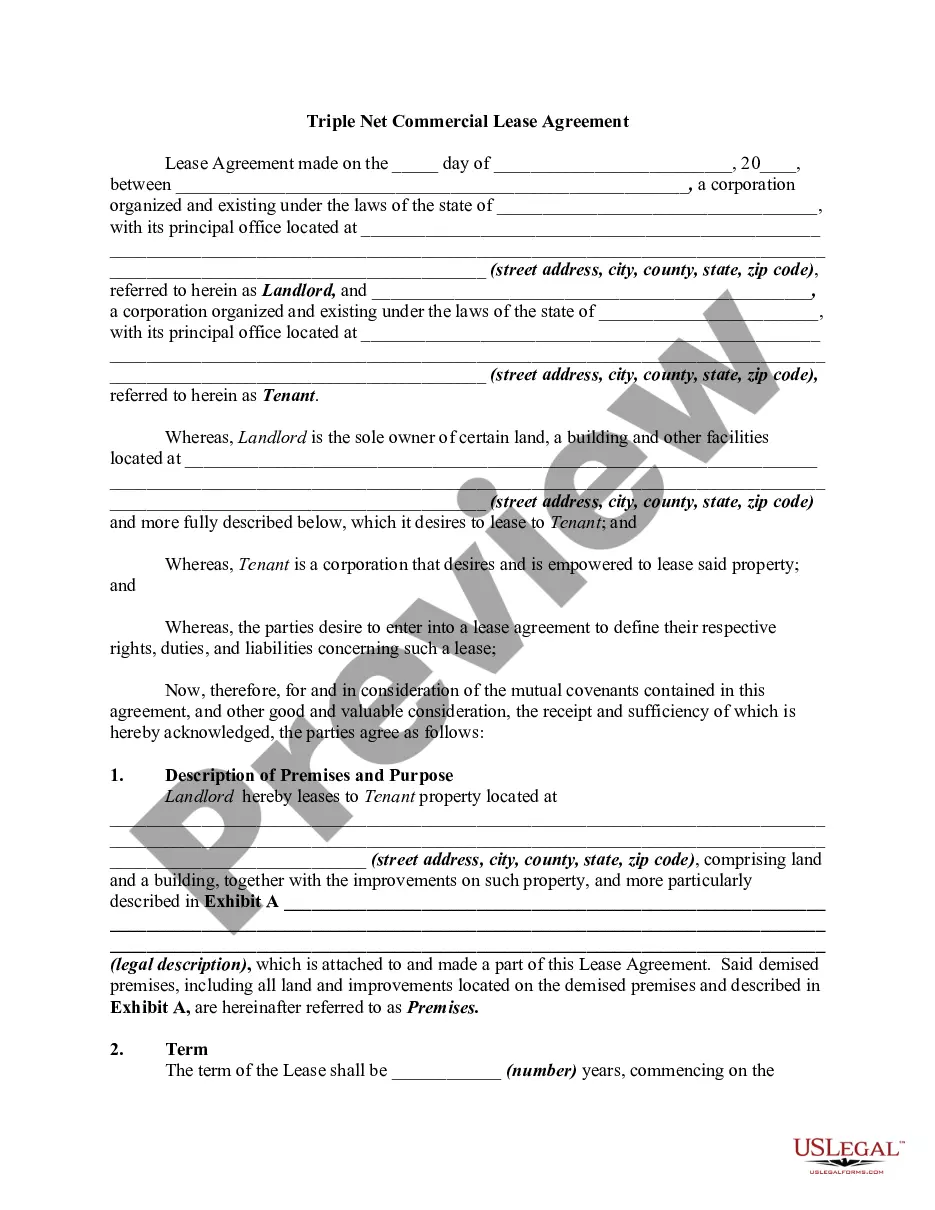
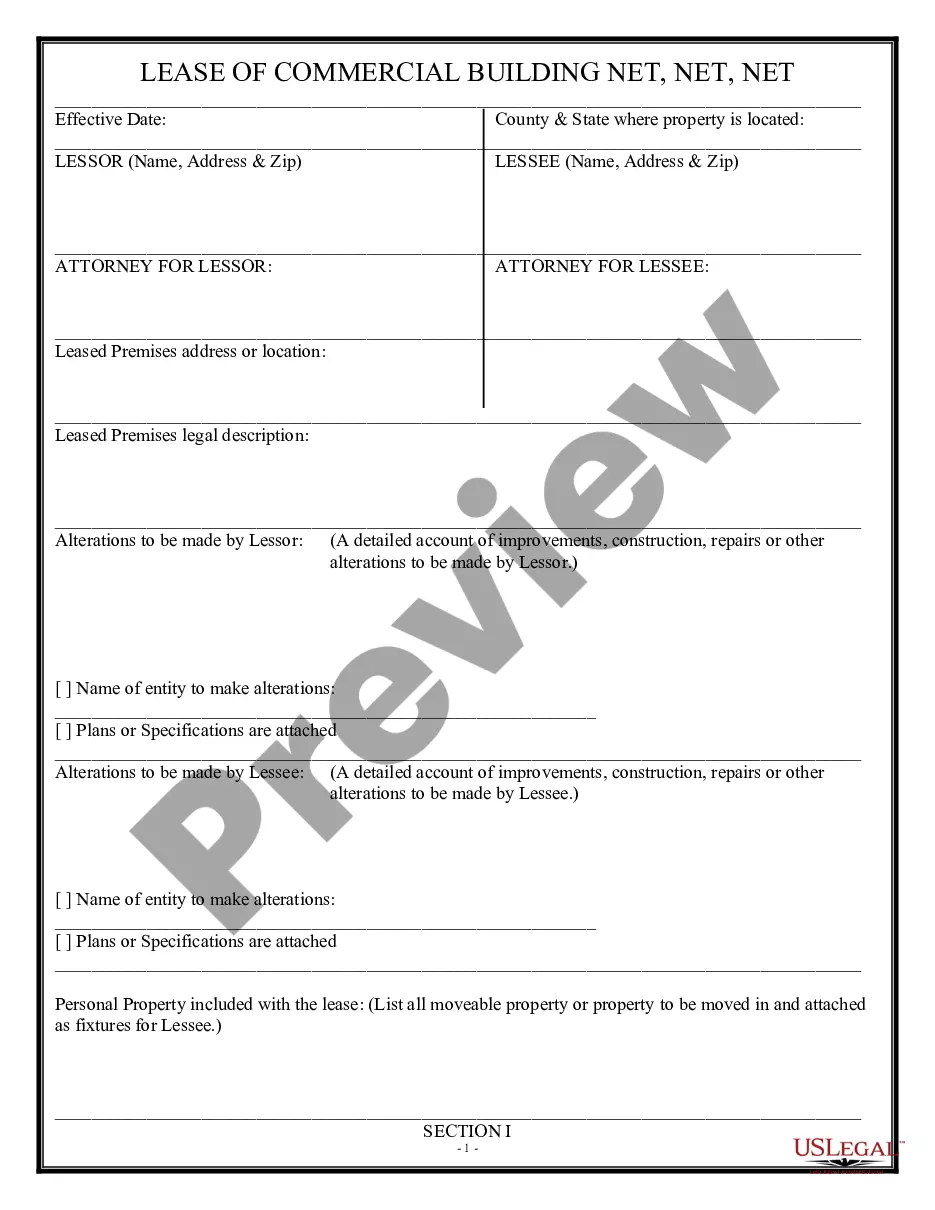
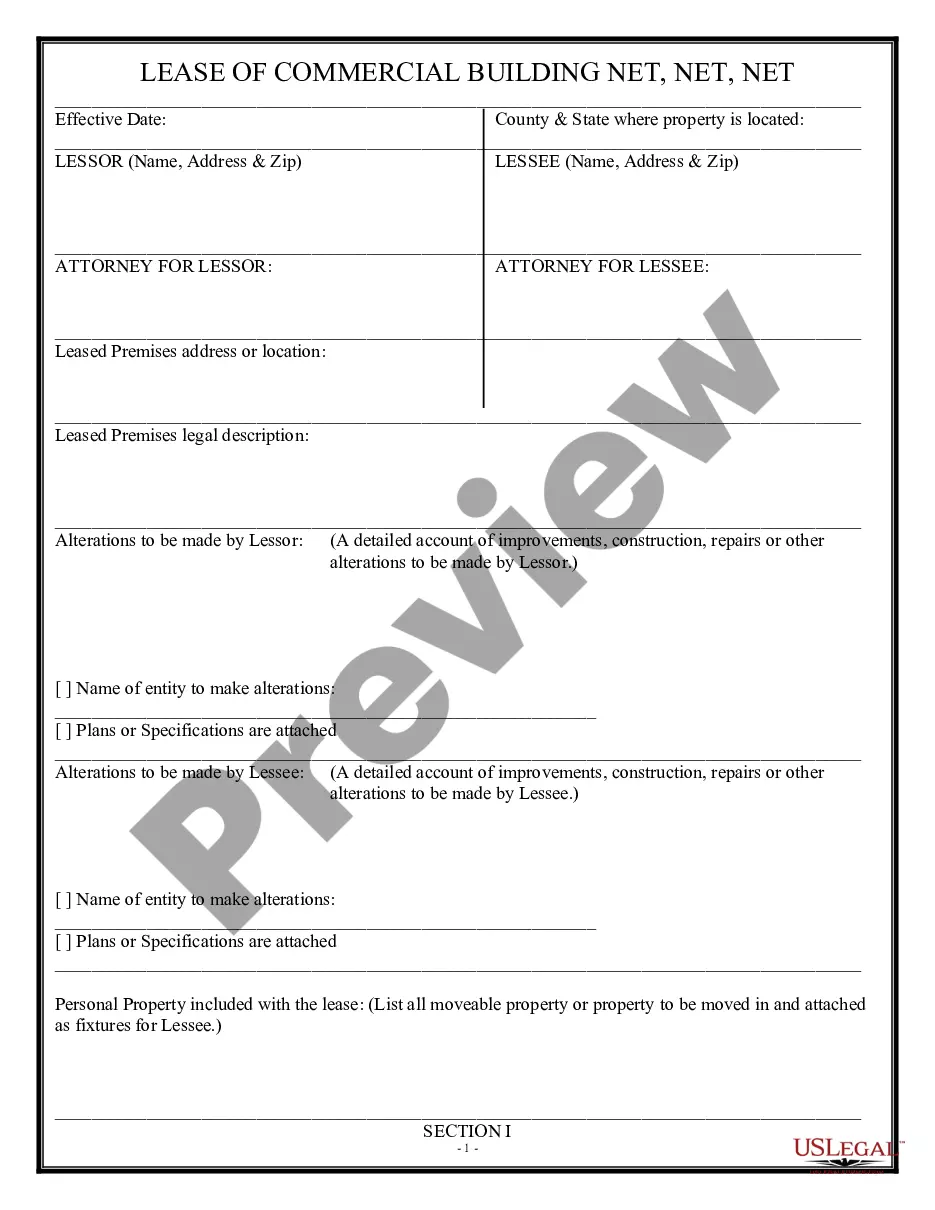
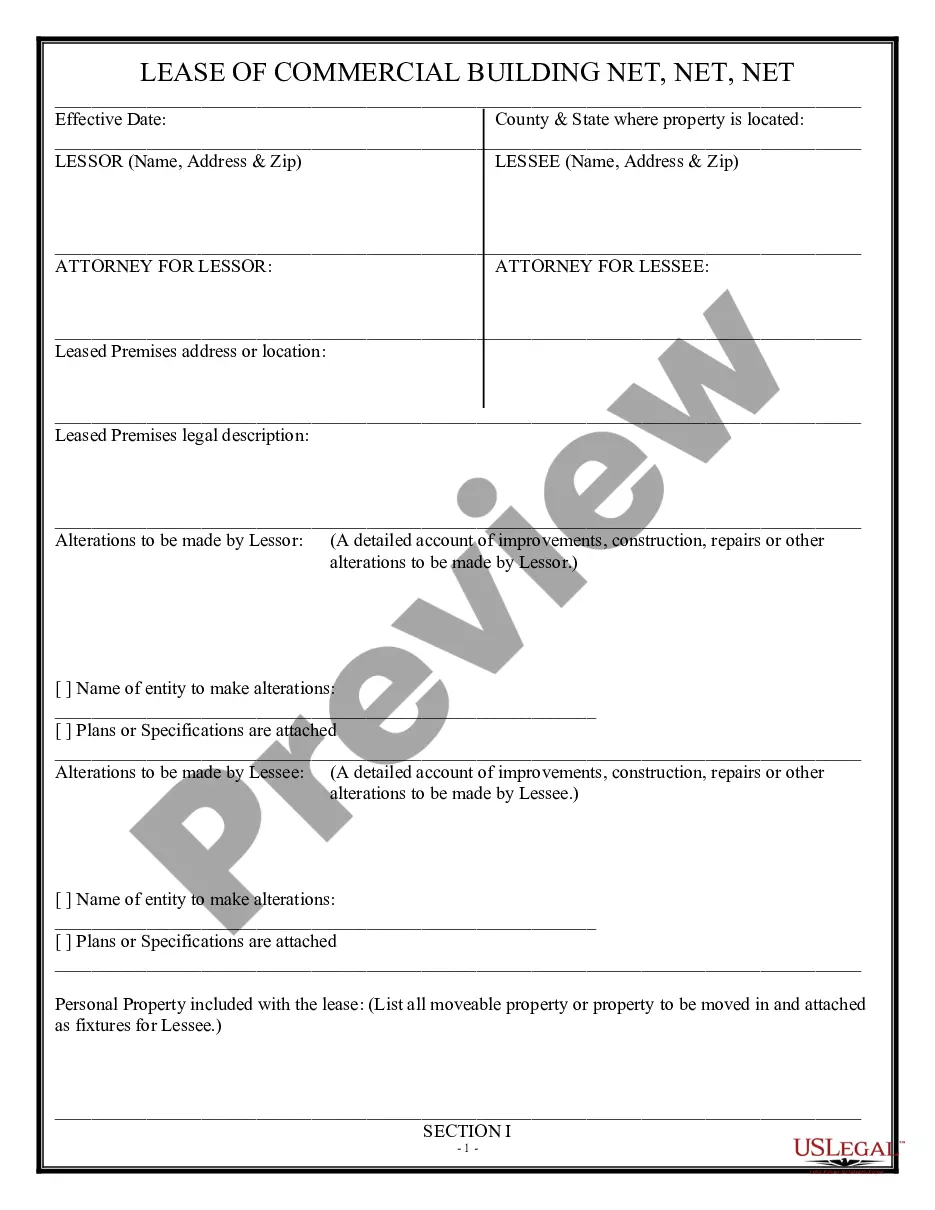
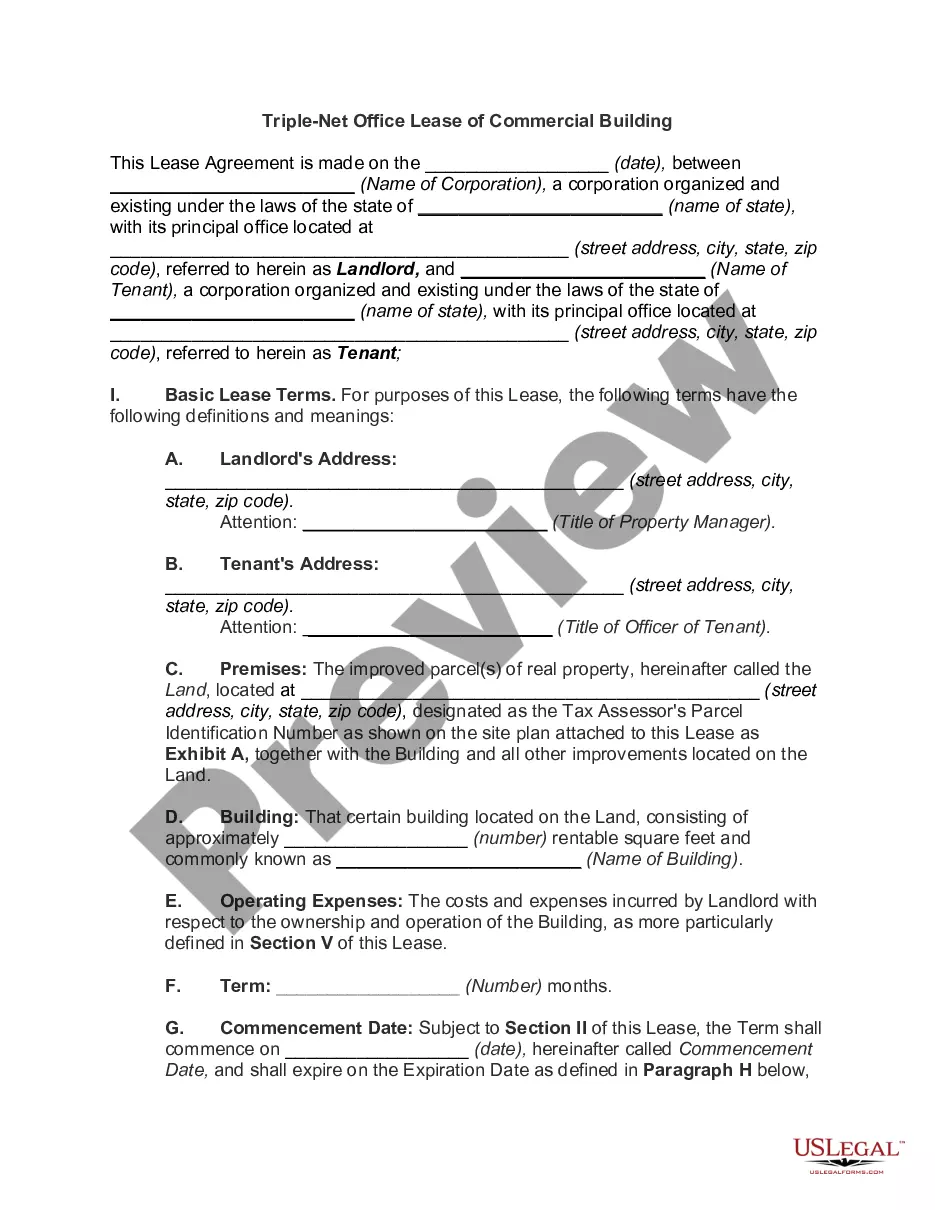
A triple net lease is a lease agreement where the tenant (lessee) agrees to pay not only the rent but also all real estate taxes, insurance, and maintenance costs associated with the property. This arrangement, often referred to as a "NNN lease," distinguishes itself from standard lease agreements by placing the financial responsibility for property upkeep directly on the tenant, making it particularly common in commercial real estate transactions.
Key components of this form
- Title and Condition: Outlines the condition of the property and existing rights before the lease begins.
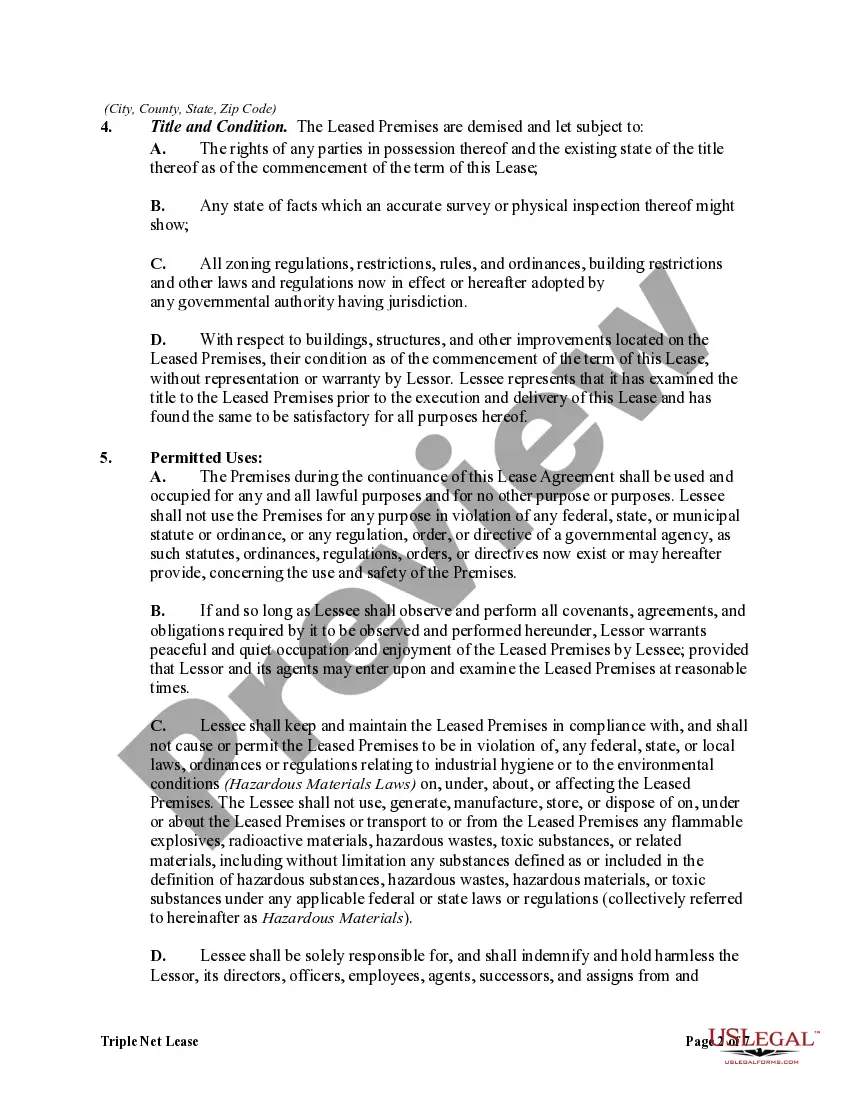
- Permitted Uses: Specifies what purposes the tenant can use the premises for, ensuring compliance with local laws.
- Taxes: States that the tenant is responsible for all real estate taxes and assessments on the property.
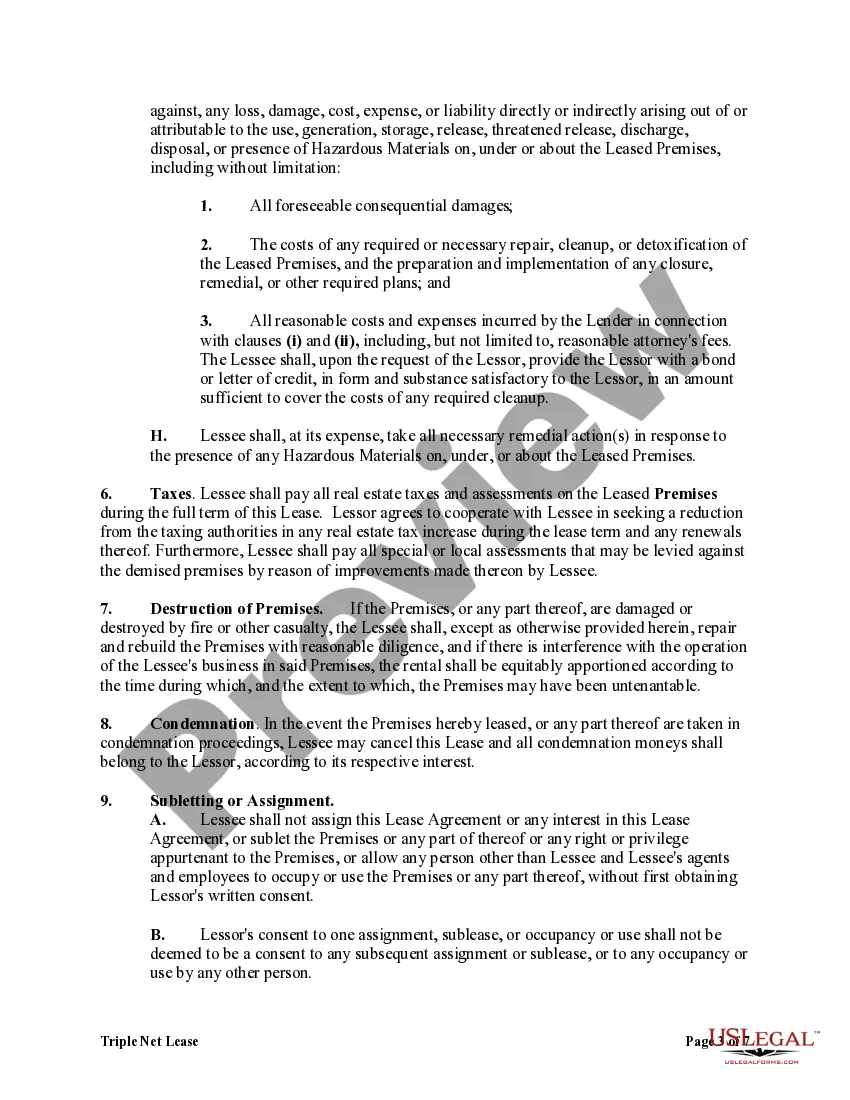
- Destruction of Premises: Details the responsibilities for repairs if the property is damaged or destroyed.
- Subletting or Assignment: Clearly specifies the conditions under which the tenant may sublet or assign the lease.
When to use this document
This form is used when landlords and tenants wish to establish a clear understanding of their responsibilities in a commercial rental agreement. It's especially beneficial when leasing properties where maintenance costs, taxes, and insurance need to be well-defined and are vital for property management, ensuring clarity on financial obligations.
Who this form is for
This form is ideal for:
- Property owners looking to lease commercial real estate.
- Businesses seeking to rent properties while being aware of their additional responsibilities.
- Real estate professionals involved in managing commercial leases.
How to complete this form
To complete the triple net lease, follow these steps:
- Identify the parties involved in the lease agreement.
- Specify the property address, including city, county, state, and zip code.
- Define the permitted uses of the property within the contract.
- Outline the responsibilities for taxes, insurance, and maintenance.
- Make sure both parties sign and date the agreement.
Does this form need to be notarized?
This form does not typically require notarization unless specified by local law. Tenants and landlords should check their jurisdiction for any additional requirements to ensure the lease's validity.
Get your form ready online
Our built-in tools help you complete, sign, share, and store your documents in one place.
Make edits, fill in missing information, and update formatting in US Legal Forms—just like you would in MS Word.
Download a copy, print it, send it by email, or mail it via USPS—whatever works best for your next step.
Sign and collect signatures with our SignNow integration. Send to multiple recipients, set reminders, and more. Go Premium to unlock E-Sign.
If this form requires notarization, complete it online through a secure video call—no need to meet a notary in person or wait for an appointment.
We protect your documents and personal data by following strict security and privacy standards.

Make edits, fill in missing information, and update formatting in US Legal Forms—just like you would in MS Word.

Download a copy, print it, send it by email, or mail it via USPS—whatever works best for your next step.

Sign and collect signatures with our SignNow integration. Send to multiple recipients, set reminders, and more. Go Premium to unlock E-Sign.

If this form requires notarization, complete it online through a secure video call—no need to meet a notary in person or wait for an appointment.

We protect your documents and personal data by following strict security and privacy standards.
Mistakes to watch out for
- Failing to specify maintenance responsibilities can lead to disputes.
- Not properly defining permitted uses may cause issues with local authorities.
- Overlooking local laws that could affect tax liabilities or property conditions.
Advantages of online completion
- Convenient access to legally drafted forms tailored for specific needs.
- Ease of editing provisions to fit unique lease requirements.
- Reliability in legal compliance, reducing potential disputes.
Legal use & context
- A triple net lease transfers significant financial responsibility to the lessee, making it crucial for both parties to understand their obligations.
- This lease type is legally enforceable as long as it complies with state laws governing property leases.
- Understanding local regulations is important to avoid misunderstandings or disputes in the future.
What to keep in mind
- A triple net lease is a lease where the tenant is responsible for all costs associated with the property.
- It is ideal for landlords wanting reduced management liability and for tenants capable of handling property expenses.
- Careful completion and understanding of the lease terms are critical for avoiding disputes.
- Triple Net Lease: A lease structure where the tenant is responsible for property expenses beyond rent.
- Lessee: The individual or entity renting the property.
- Lessor: The property owner or landlord leasing out the space.
Looking for another form?

Form popularity
FAQ
A triple net lease is one of three types of net leases, a type of real estate lease where a tenant pays one or more additional expenses. Net leases generally include property taxes, property insurance premiums, or maintenance costs, and are often used in commercial real estate.
With a triple net lease, the tenant agrees to pay the property expenses such as real estate taxes, building insurance, and maintenance in addition to rent and utilities.A single net lease on a commercial property includes property taxes in addition to rent.
A net lease is a real estate lease in which a tenant pays one or more additional expenses.Double net leases include property taxes and insurance premiums, in addition to the base rent. A triple net lease includes property taxes, insurance, and maintenance costs, in addition to the base rent.
Net lease expenses payable by the tenant are typically divided into three categories: property taxes, insurance, and common area maintenance.
As the triple net property owner (unless otherwise specified in the NNN lease), you'll generally be responsible for maintaining and repairing these 3 main aspects of your building: Roof (repairs, maintenance, upgrades) Exterior Walls. Utility Repairs and Upkeep (for major things such as plumbing and electricity)
An NNN lease is the most common type of commercial lease and is commonly called a triple net lease. On an NNN lease, tenants pay additional expenses in addition to the lease fee, to the landlord or lessor. The NNN fees includes property taxes, property insurance and common area maintenance for a building (CAM).
The most obvious benefit of using a triple net lease for a tenant is a lower price point for the base lease. Since the tenant is absorbing at least some of the taxes, insurance, and maintenance expenses, a triple net lease features a lower monthly rent than a gross lease agreement.
A triple net lease might have some sort of cap, but likely, a tenant would be forced to cover rising taxes and insurance rates. Granted, this might not be much, but it could potentially cost a tenant a substantial amount of capital. Imagine tax or insurance changes over the course of a DECADE; it could be substantial.