Arizona Order for Discharge
What is this form?
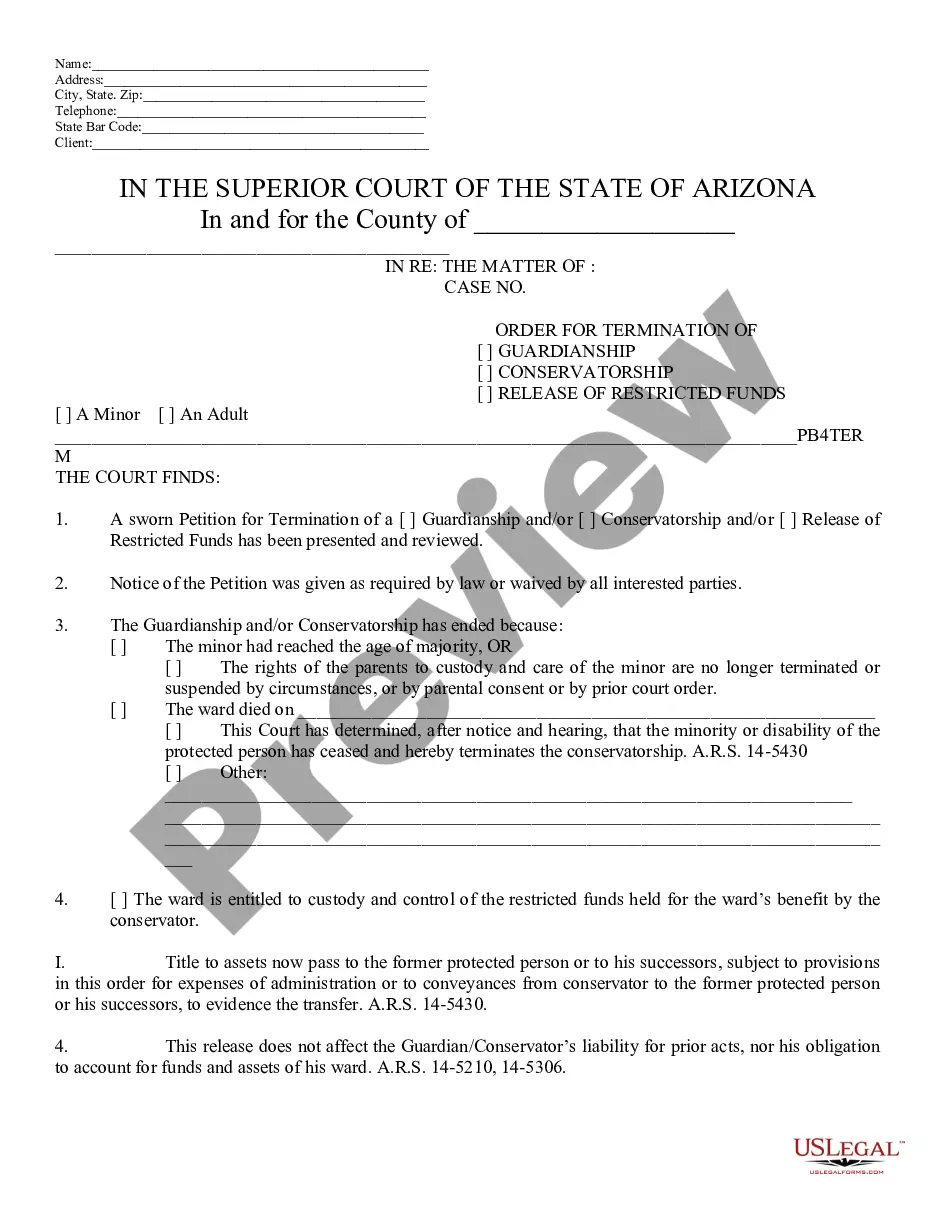
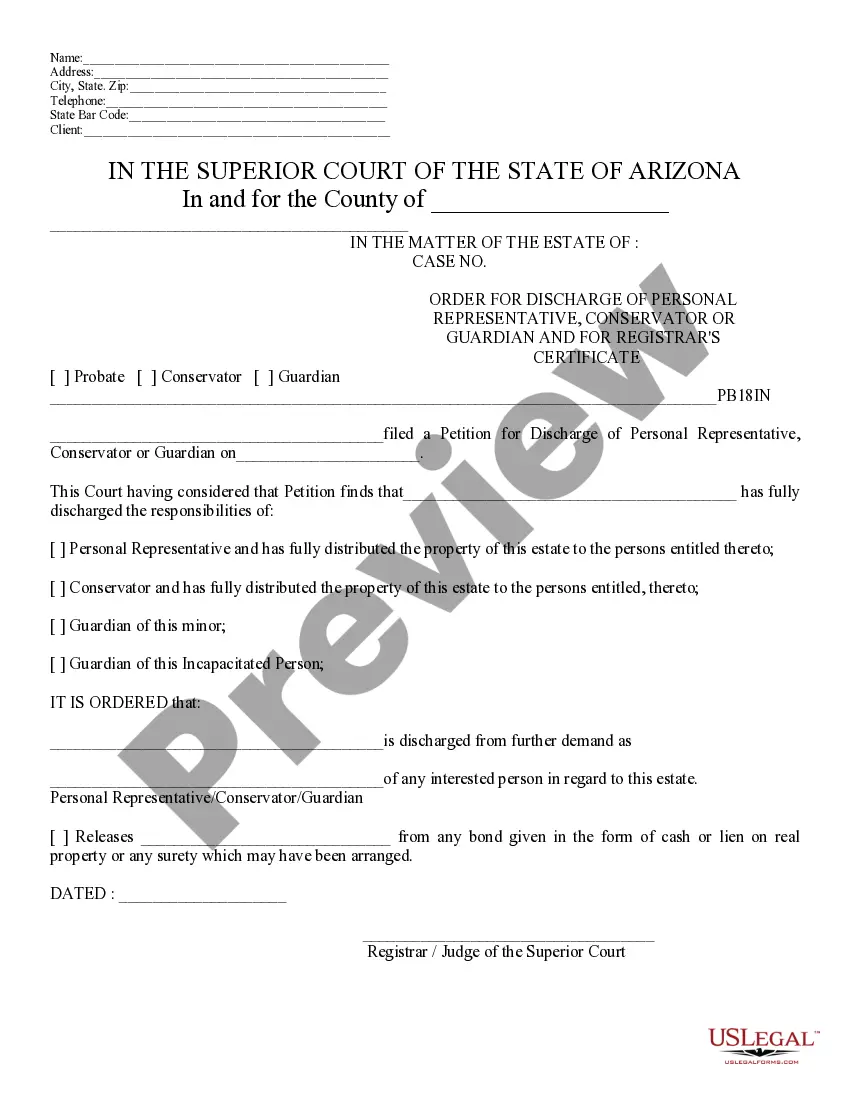
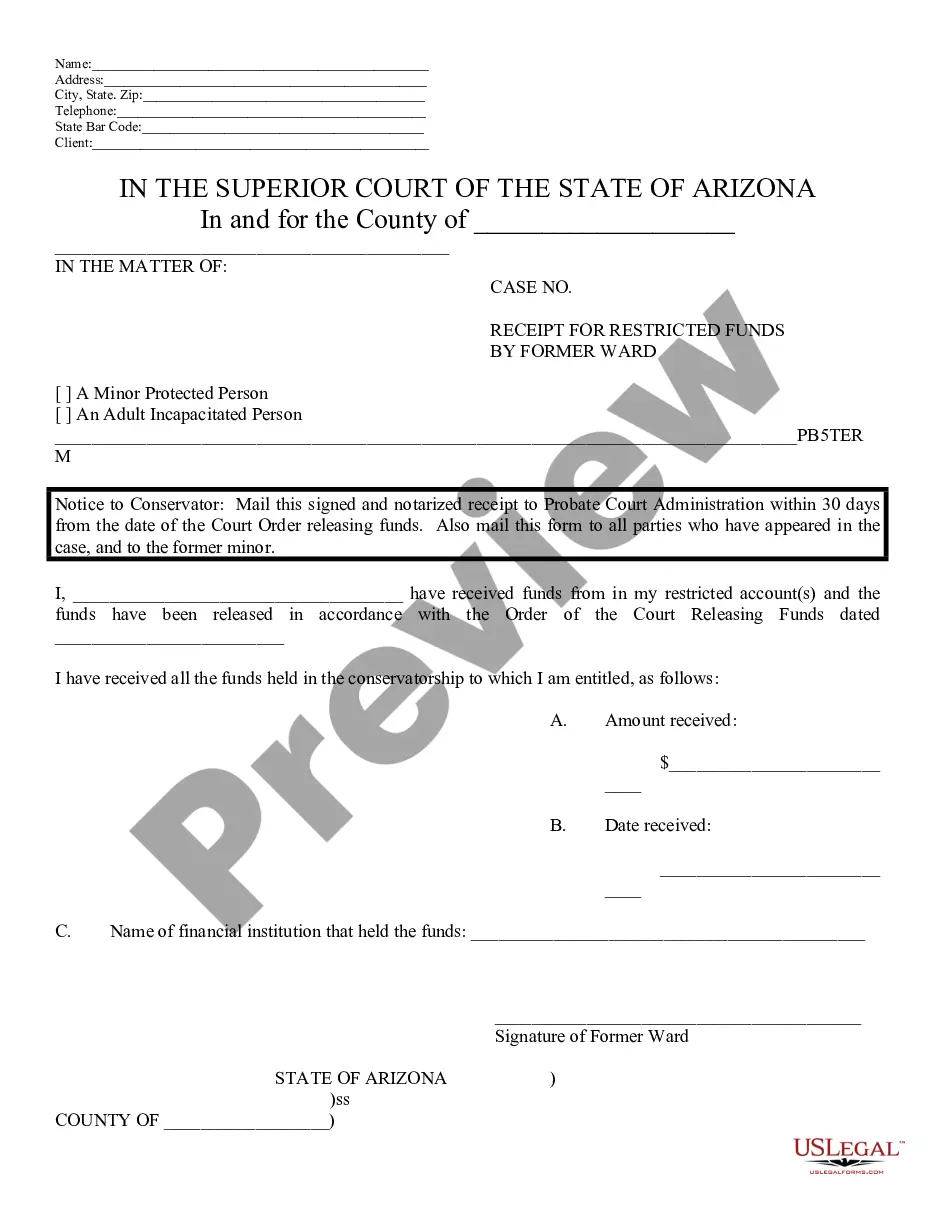
An Order for Discharge is a legal document issued by a court to formally terminate a guardianship or conservatorship. This order commands specific actions regarding the custody and control of a minor or adult's restricted funds. Unlike other legal documents, this order explicitly details the findings of the court and provides guidance on the release of assets. It is essential for ensuring that beneficiaries regain their rights and access to any held funds once the guardianship or conservatorship ends.
Main sections of this form
- Address fields for relevant parties involved.
- Details of the case including the case number and type of petition.
- Findings of the court outlining the reasons for discharge.
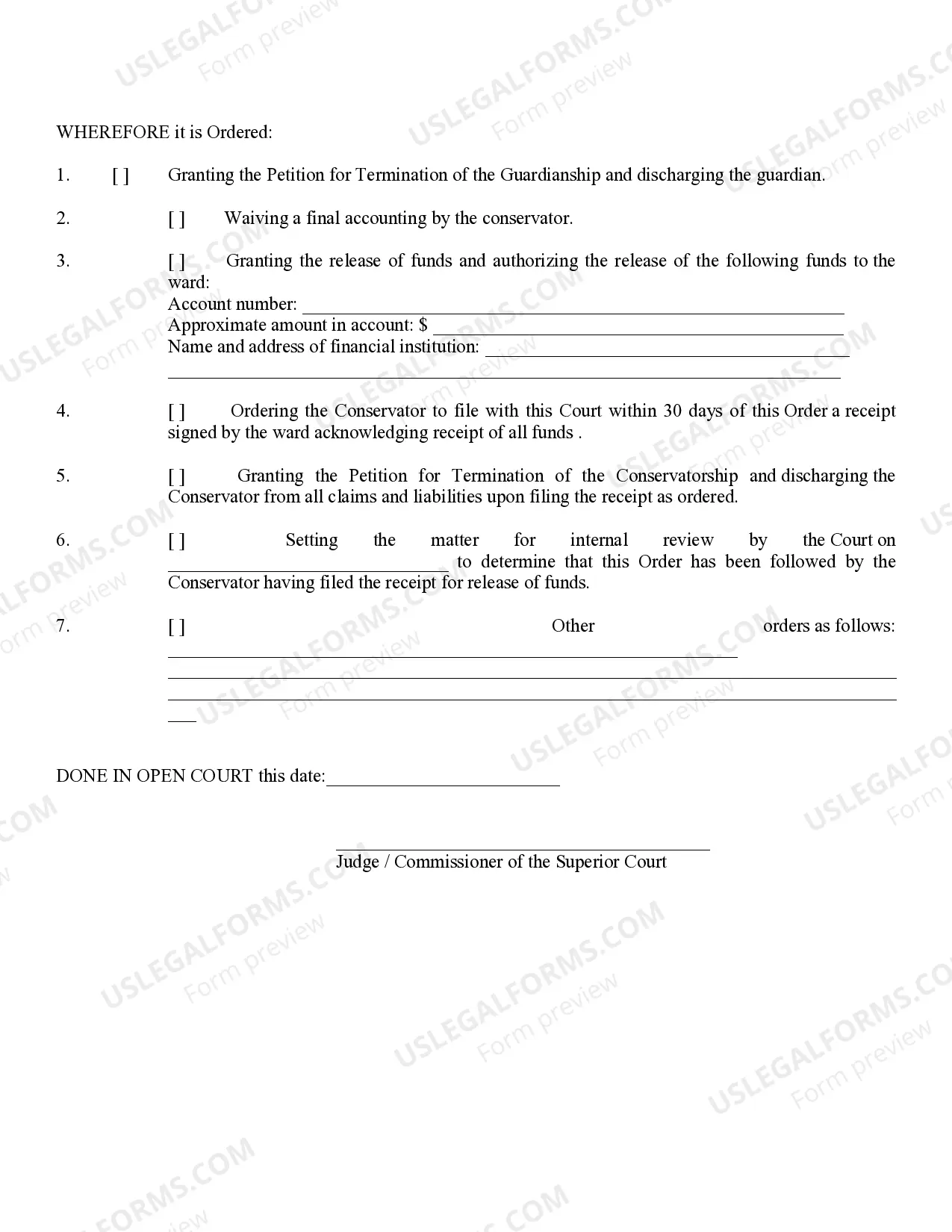
- Orders pertaining to the termination of guardianship or conservatorship.
- Specific instructions for the release of restricted funds.
- Signature line for the judge or commissioner.

When to use this form
This form is necessary when a guardianship or conservatorship is no longer required, such as when a minor reaches the age of majority, or when a ward's disability has ceased. It is also used in situations where a guardianship or conservatorship needs to be formally terminated due to changes in circumstances or when a ward passes away. Filing this order ensures compliance with court directives and protects the rights of the individual involved.
Who this form is for
- Guardians or conservators seeking to terminate their legal responsibilities.
- Legal representatives acting on behalf of a minor or adult ward.
- Family members of a ward wishing to regain custody or control of assets.
- Anyone involved in a court case regarding guardianship or conservatorship in Arizona.
Completing this form step by step
- Provide the address, city, state, zip, and telephone number at the top of the document.
- Fill in the case number and relevant details about the parties involved.
- Outline the court findings that justify the discharge, adhering to the specified conditions.
- Detail the orders for releasing restricted funds, including account numbers and estimated amounts.
- Sign and date the document in the designated area for the judge or commissioner.
Notarization requirements for this form
To make this form legally binding, it must be notarized. Our online notarization service, powered by Notarize, lets you verify and sign documents remotely through an encrypted video session.
Get your form ready online
Our built-in tools help you complete, sign, share, and store your documents in one place.
Make edits, fill in missing information, and update formatting in US Legal Forms—just like you would in MS Word.
Download a copy, print it, send it by email, or mail it via USPS—whatever works best for your next step.
Sign and collect signatures with our SignNow integration. Send to multiple recipients, set reminders, and more. Go Premium to unlock E-Sign.
If this form requires notarization, complete it online through a secure video call—no need to meet a notary in person or wait for an appointment.
We protect your documents and personal data by following strict security and privacy standards.

Make edits, fill in missing information, and update formatting in US Legal Forms—just like you would in MS Word.

Download a copy, print it, send it by email, or mail it via USPS—whatever works best for your next step.

Sign and collect signatures with our SignNow integration. Send to multiple recipients, set reminders, and more. Go Premium to unlock E-Sign.

If this form requires notarization, complete it online through a secure video call—no need to meet a notary in person or wait for an appointment.

We protect your documents and personal data by following strict security and privacy standards.
Avoid these common issues
- Failing to provide complete and accurate addresses for all parties involved.
- Not clearly stating the reasons for termination as per legal requirements.
- Omitting necessary signatures or dates on the order.
- Providing insufficient details about the restricted funds being released.
Why use this form online
- Convenience of downloading and completing the form at home.
- Editability allows users to customize the document for specific cases.
- Reliability of professionally drafted templates ensuring legal compliance.
Quick recap
- An Order for Discharge is crucial for formally terminating guardianship or conservatorship.
- Ensure that all required fields are accurately completed to avoid delays.
- This form is compliant with Arizona state law, making it suitable for local court use.
Looking for another form?




Form popularity
FAQ
In Arizona, an Order for Protection can be sought for various compelling reasons, such as experiencing domestic violence or threats of harm. The petitioner must provide evidence of fear for their safety and show a history of abusive behavior. This order aims to safeguard individuals from further harm while legally prohibiting the abuser from making unwanted contact. To navigate this complex process, consider using the resources available on the US Legal Forms platform, which can help you complete the necessary filings.
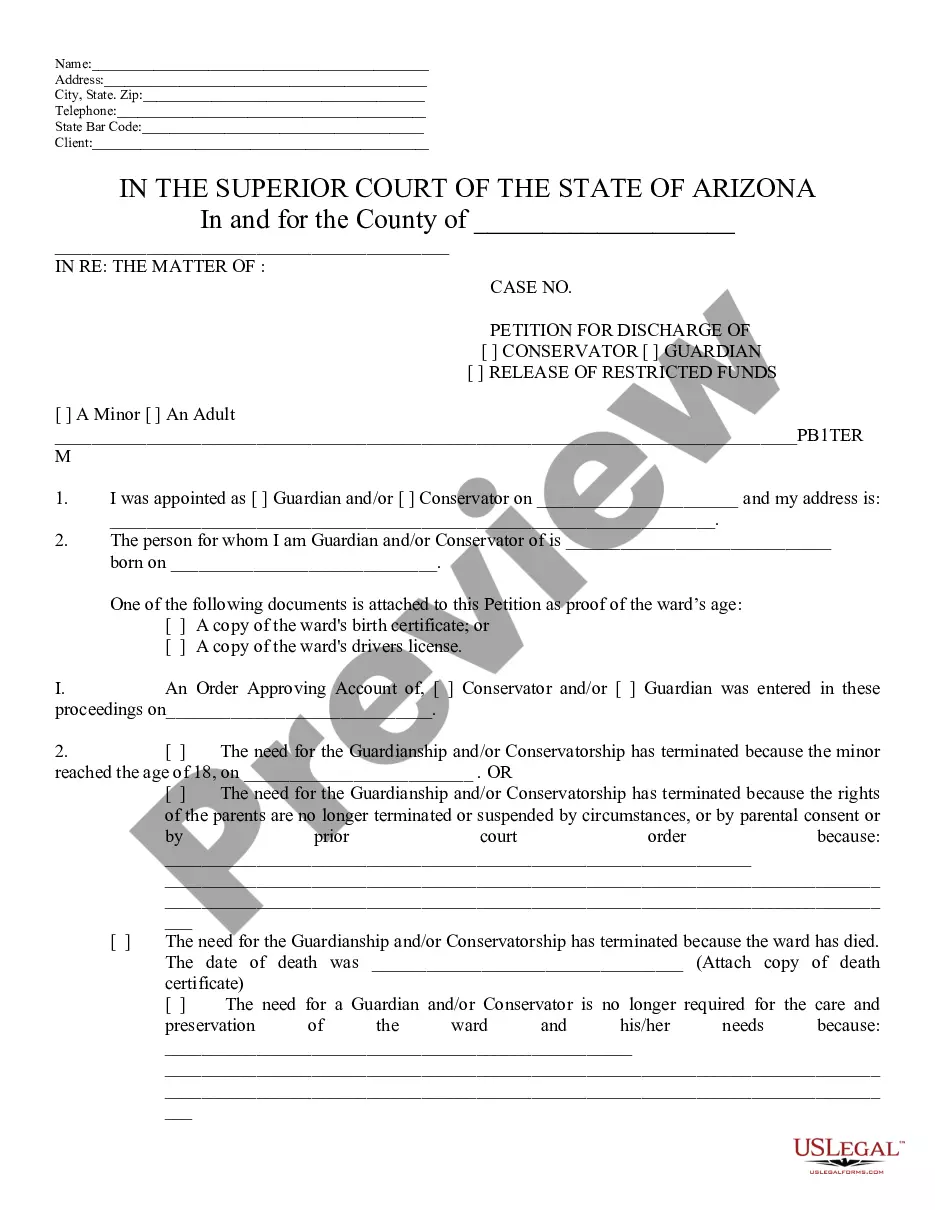
To remove a guardian in Arizona, you need to file a petition for an Arizona Order for Discharge of Guardianship with the court. This petition should outline the grounds on which you believe the guardian should be removed. A court hearing will follow, where you can present your case. Having a knowledgeable legal guide, such as uslegalforms, can help you prepare your petition and understand the necessary steps.
Terminating guardianship in Arizona can be straightforward or complex, depending on the specific circumstances. When you file for an Arizona Order for Discharge, the court considers various factors before making a decision. A clear rationale and evidence supporting your request can significantly improve your chances of success. If you need assistance navigating this process, consider using the resources provided by uslegalforms to better understand your legal rights and obligations.
Arizona law allows for guardianship to be established when an individual requires assistance in making decisions due to incapacity or age. The law outlines the responsibilities of guardians and the rights of wards, ensuring decisions are made in the best interest of those under guardianship. If you believe a guardianship is no longer necessary, you can look into obtaining an Arizona Order for Discharge. Familiarizing yourself with these laws can help you navigate your options effectively.
In Arizona, guardianship can last until the ward reaches adulthood, which is typically 18 years old, or until the court decides otherwise. However, it may be possible to seek an Arizona Order for Discharge to end guardianship earlier if it's in the best interest of the ward. Each case is unique, so the duration may vary based on individual circumstances. Consulting a legal expert can provide clarity on the specifics of your case.
To terminate guardianship in Arizona, you must file a petition for an Arizona Order for Discharge in the court that granted the guardianship. This petition needs to include the reasons for termination and supporting documentation. After submitting the petition, a hearing will be scheduled, allowing interested parties to voice their opinions. If the court finds your reasons valid, they will issue an order discharging the guardian.
Rule 26.2 in Arizona pertains to the requirements for disclosure of witness statements and evidence in criminal cases. This rule ensures that defendants receive fair treatment and access to information. While it may not directly relate to the Arizona Order for Discharge, understanding such rules can be beneficial during legal proceedings.
Rule 27.4 of the Arizona Rules of Criminal Procedure outlines the procedures for discharging probation early based on fulfillment of conditions. This legal framework is crucial for understanding how to pursue an Arizona Order for Discharge effectively. Engaging legal resources can enhance the understanding of this rule and its implications.
The 27.6 rule in Arizona allows individuals convicted of certain crimes to seek an early termination of probation under specific circumstances. This rule offers a pathway toward regaining full freedom sooner than expected. Utilizing the Arizona Order for Discharge can simplify the process of achieving an early termination of probation.
The 15.7 rule in Arizona establishes guidelines for the early release of inmates based on good behavior and participation in rehabilitation programs. This rule is important for understanding eligibility for modifications to original sentences. Knowing how the 15.7 rule interacts with the Arizona Order for Discharge can aid individuals in navigating the release process more effectively.