Statutory Notices Required for California Foreclosure Consultants
About this form
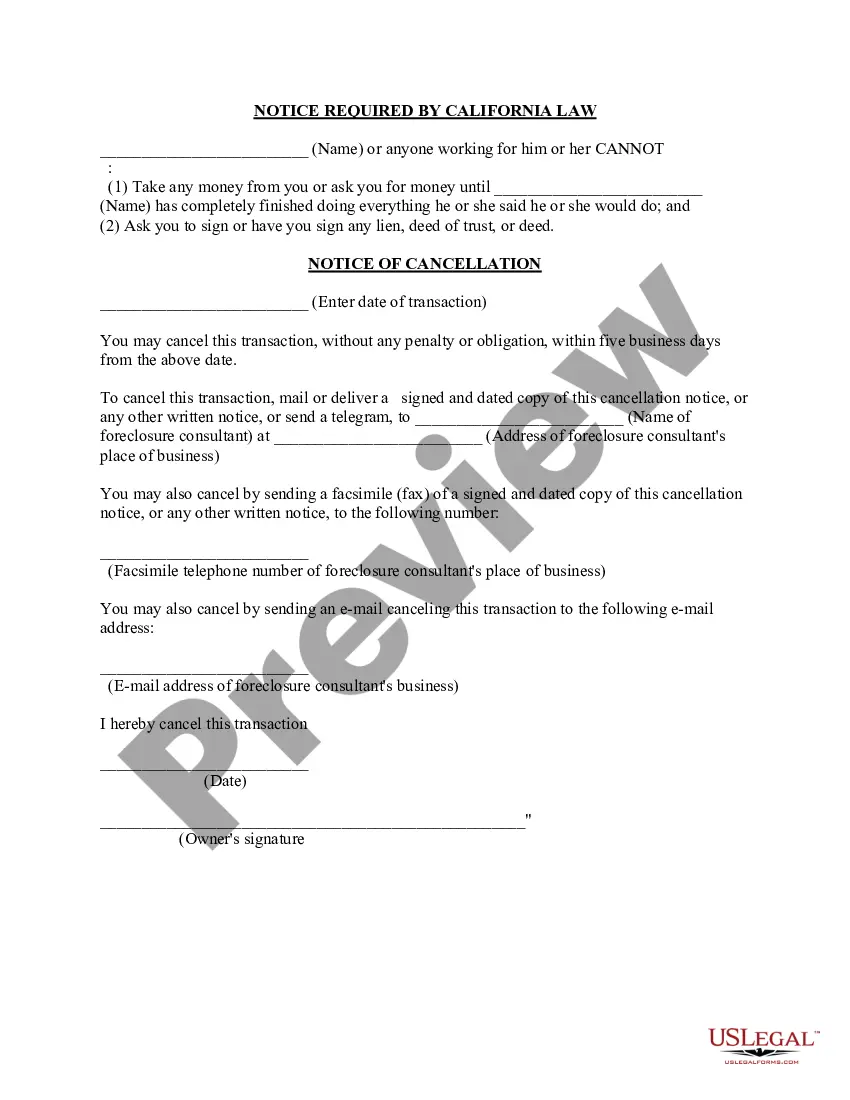
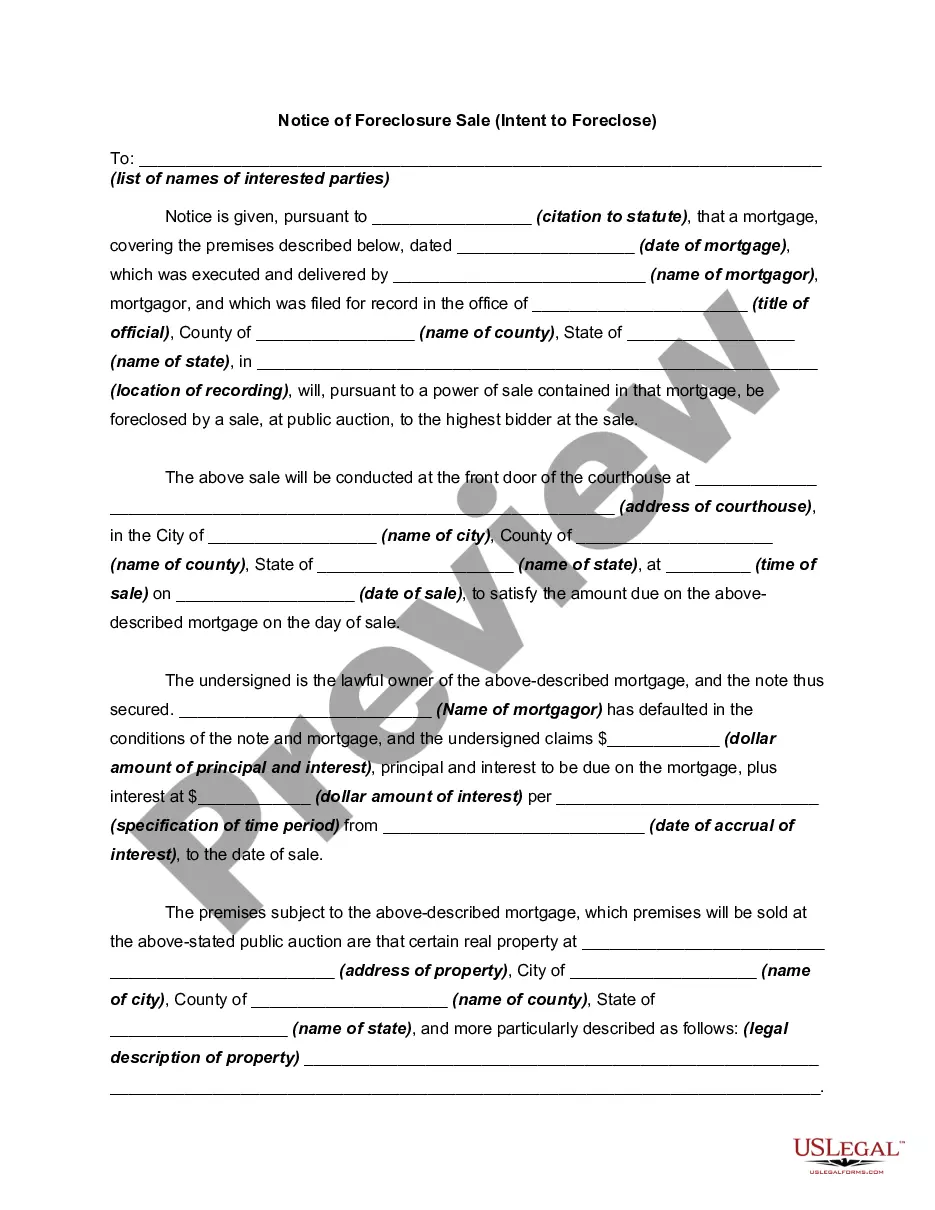
The Statutory Notices Required for California Foreclosure Consultants form informs homeowners about their rights as stipulated by California law. It is essential for foreclosure consultants to provide these notices to ensure transparency and legal compliance. This form serves a vital role in protecting consumers, distinguishing it from other legal forms by focusing specifically on the rights and cancellation options available to homeowners in foreclosure situations.
Key components of this form
- Identification of the foreclosure consultant and their obligations.
- Notice about fees and the prohibition against payment until services are rendered.
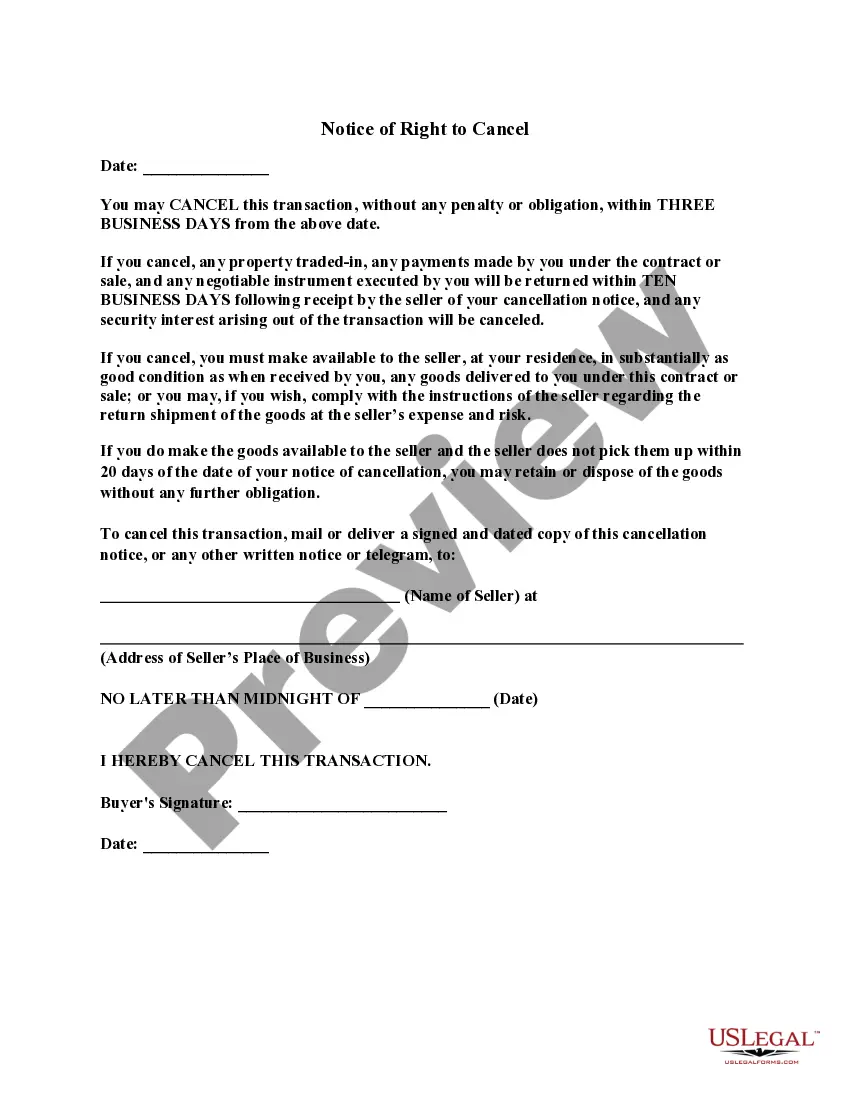
- Instructions on how to cancel the transaction within five business days.
- Signature section for homeowners to formally cancel the agreement.
When this form is needed
This form should be used by foreclosure consultants when entering into agreements with homeowners facing foreclosure. It is specifically relevant when the consultant must inform clients of their rights and provide crucial information regarding cancellation options. Using this form ensures that homeowners are aware of their rights and the steps they can take should they choose to cancel the service.
Who can use this document
- Foreclosure consultants operating in California.
- Homeowners who are considering hiring a foreclosure consultant.
- Individuals seeking to understand their rights during the foreclosure process.
Completing this form step by step
- Enter the name of the foreclosure consultant and the date of the transaction.
- Review the terms regarding fee payments and signature requirements.
- Fill out the cancellation notice details, including the address and contact information for the consultant.
- Ensure the homeowner signs and dates the cancellation notice at the bottom of the form.
Is notarization required?
This form usually doesn’t need to be notarized. However, local laws or specific transactions may require it. Our online notarization service, powered by Notarize, lets you complete it remotely through a secure video session, available 24/7.
Get your form ready online
Our built-in tools help you complete, sign, share, and store your documents in one place.
Make edits, fill in missing information, and update formatting in US Legal Forms—just like you would in MS Word.
Download a copy, print it, send it by email, or mail it via USPS—whatever works best for your next step.
Sign and collect signatures with our SignNow integration. Send to multiple recipients, set reminders, and more. Go Premium to unlock E-Sign.
If this form requires notarization, complete it online through a secure video call—no need to meet a notary in person or wait for an appointment.
We protect your documents and personal data by following strict security and privacy standards.

Make edits, fill in missing information, and update formatting in US Legal Forms—just like you would in MS Word.

Download a copy, print it, send it by email, or mail it via USPS—whatever works best for your next step.

Sign and collect signatures with our SignNow integration. Send to multiple recipients, set reminders, and more. Go Premium to unlock E-Sign.

If this form requires notarization, complete it online through a secure video call—no need to meet a notary in person or wait for an appointment.

We protect your documents and personal data by following strict security and privacy standards.
Typical mistakes to avoid
- Failing to provide the correct contact information for the consultant.
- Not signing and dating the cancellation notice.
- Waiting longer than five business days to cancel the transaction.
Why use this form online
- Convenient access to legally drafted forms tailored to California's requirements.
- Easy download and completion, allowing for immediate use.
- Reliable and up-to-date information reflecting current California laws.
Quick recap
- The form is crucial for informing homeowners of their rights during foreclosure.
- It outlines the process for cancellation of the agreement within a specified timeframe.
- Both foreclosure consultants and homeowners benefit from understanding this form's requirements.
Looking for another form?
Form popularity
FAQ
During foreclosure, the mortgage lender may seize the property and sell it to recoup the money it lost from the mortgage default. The lender is allowed to take back the home because a mortgage is a secured loan. That means the borrower guarantees repayment by providing collateral.
The borrower defaults on the loan. The lender issues a notice of default (NOD). A notice of trustee's sale is recorded in the county office. The lender tries to sell the property at a public auction.
The foreclosure process is defined by California civil code 2924 and begins with the filing of a Notice of Default (NOD) with the county recorder. Once a borrower is at least 90 days behind in making mortgage payments, the lender will file a Notice of Default with the court of the county where the property is located.
(1) Defendant must be served with Summons and Complaint. (2) The time for responding to the Summons and Complaint must have passed. (3) Defendant must have failed to file a responsive pleading to the Complaint. (4) Defendant must be served with a Statement of Damages.
"Commencement of Foreclosure" for HUD's purposes is the first public action required by law such as filing a complaint or petition, recording a notice of default, or publication of a notice of sale.
The Notice of Sale states that the trustee will sell your home at auction in 21 days. The Notice of Sale must: Be sent to you by certified mail. Be published weekly in a newspaper of general circulation in the county where your home is located for 3 consecutive weeks before the sale date.
Foreclosure is what happens when a homeowner fails to pay the mortgage. More specifically, it's a legal process by which the owner forfeits all rights to the property. If the owner can't pay off the outstanding debt, or sell the property via short sale, the property then goes to a foreclosure auction.
The length of the entire foreclosure process depends on state law and other factors, including whether negotiations are taking place between the lender and the borrower in an effort to stop the foreclosure. Overall, completing the foreclosure process can take from 6 months to more than a year.
In most states, lenders are required to provide a homeowner with sufficient notice of default. The lender must also provide notice of the property owner's right to cure the default before the lender can initiate a foreclosure proceeding. Written proof of money owed under the mortgage.