Notice of Intent to Foreclose - Mortgage Loan Default

State:
Multi-State
Control #:
US-02069BG
Format:
Word; 
Rich Text
Instant download

Overview of this form

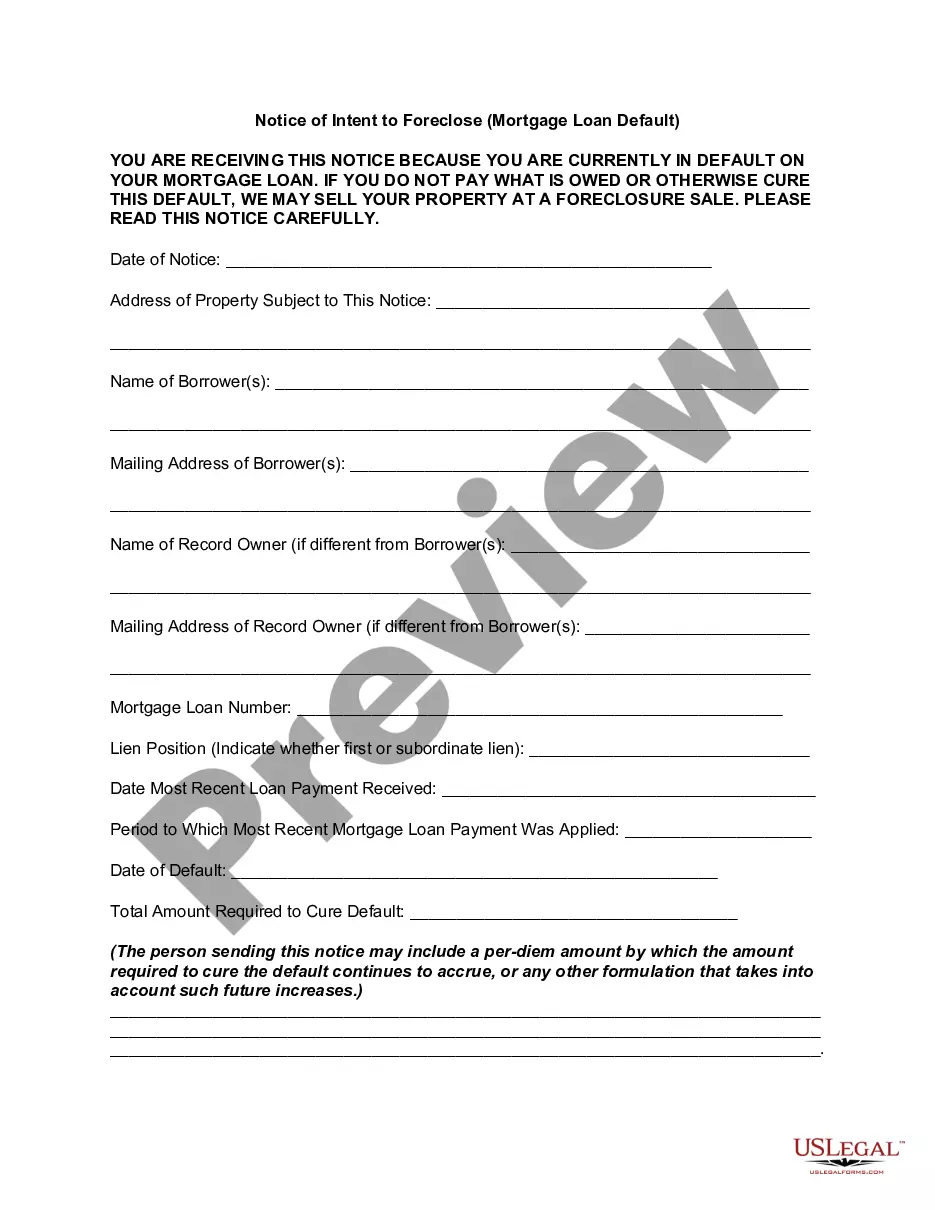
The Notice of Intent to Foreclose is a legal document that informs a borrower of their mortgage loan default and the potential initiation of a foreclosure action. This form is intended to facilitate communication between borrowers and lenders by providing detailed information about the default, the amounts due, and the options available to the borrower. It is different from other forms because it specifically serves as a prior notification before any foreclosure proceedings commence, helping to slow down the rate of foreclosures in compliant states.

Key components of this form

  • Date of notice and property address.
  • Name and mailing address of the borrower(s) and record owner.
  • Details of the mortgage loan, including loan number and lien position.
  • Amounts required to cure the default and dates of default.
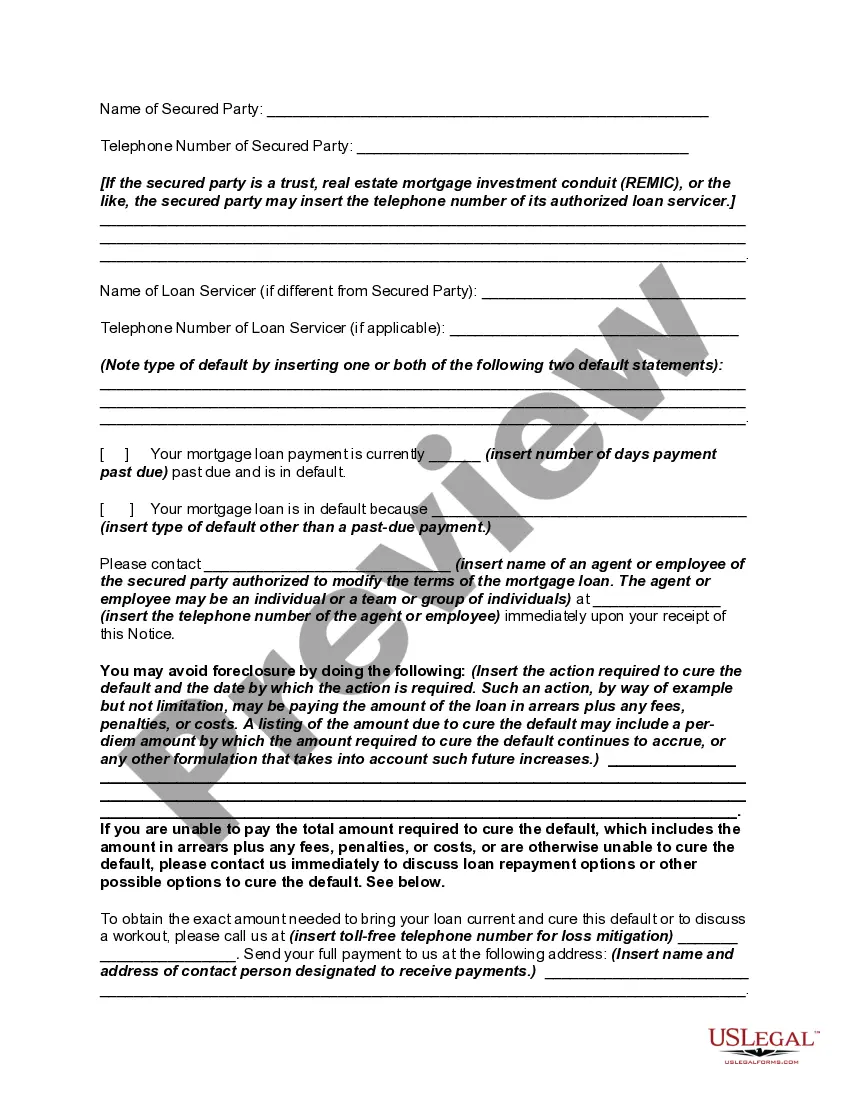
  • Contact information for the secured party and loan servicer.
  • Instructions for avoiding foreclosure and contact details for resolution.
Free preview
  • Preview Notice of Intent to Foreclose - Mortgage Loan Default
  • Preview Notice of Intent to Foreclose - Mortgage Loan Default
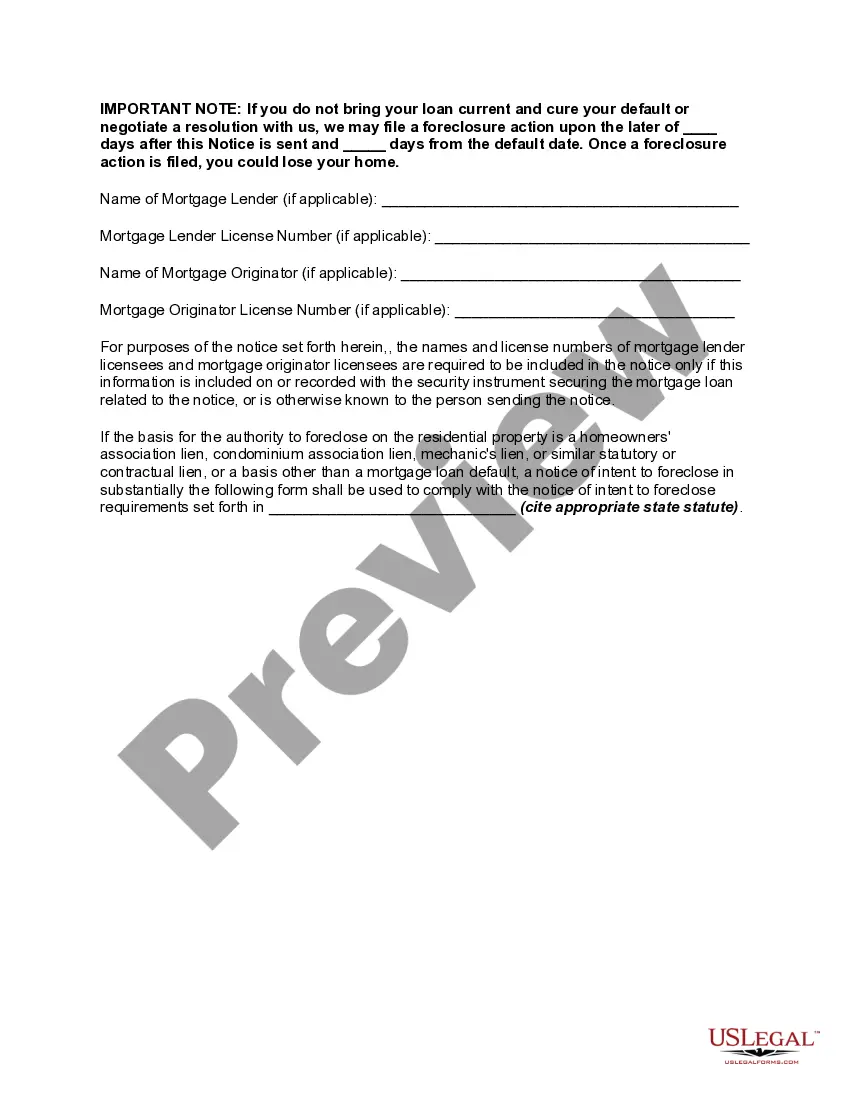
  • Preview Notice of Intent to Foreclose - Mortgage Loan Default

Common use cases

This form should be used when a borrower has defaulted on their mortgage payments. It is a necessary step for lenders to comply with state laws requiring prior notice to be given before initiating foreclosure proceedings. Utilizing this form can help the borrower understand their current mortgage status and explore potential alternatives to foreclosure.

Who can use this document

This form is intended for:

  • Mortgage servicers or lenders seeking to notify borrowers of default.
  • Borrowers facing mortgage loan default who need to understand their rights and obligations.
  • Real estate professionals assisting clients with foreclosure issues.

Instructions for completing this form

  • Fill in the date of the notice and the address of the property in default.
  • Provide the names and mailing addresses of the borrower(s) and record owner.
  • Include details about the mortgage loan, including the loan number and lien position.
  • Specify the total amount required to cure the default, including any fees.
  • List the contact information for the secured party and loan servicer.
  • Clearly state the actions required to remedy the default and the deadline for these actions.

Notarization guidance

Notarization is generally not required for this form. However, certain states or situations might demand it. You can complete notarization online through US Legal Forms, powered by Notarize, using a verified video call available anytime.

Common mistakes to avoid

  • Failing to include the correct total amount required to cure the default.
  • Not providing accurate contact information for the secured party or loan servicer.
  • Missing the required dates or failing to adhere to state-specific timeframes for notice.
  • Inadequately detailing the type of default or actions needed to rectify the situation.

Advantages of online completion

  • Immediate access to a correctly formatted legal document reduces the risk of errors.
  • Easy editing allows customization to fit specific circumstances.
  • Access to attorney-drafted forms ensures compliance with current laws.
  • Convenient downloading and printing options for personal use.

Form popularity

FAQ

The notice of default doesn't affect your credit file, but when the account defaults this will be recorded.If the debt is regulated by the Consumer Credit Act, you must be sent a default notice warning letter and have time to act on it before the default is recorded on your credit file.

If you cannot work out a doable solution with the mortgage lender, or you ignore their notices completely, you will then go into foreclosure. Typically, this happens once your payment becomes 120 days past due.The IRS views any financial loss on the part of the lender for your mortgage as taxable income for you.

A notice of default is typically the final action lenders take before activating the lien and seizing the collateral for foreclosure. A notice of default is usually filed with the state court in which the lien is recorded followed by a hearing to activate the perfected lien recorded with the mortgage closing.

A notice of default is the first step to a bank or mortgage lender's foreclosure process.If the mortgage is not paid up to date, the lender will seize the home. A notice of default is also known as a reinstatement period, notice of public auction, or notice of foreclosure.

You can stop the foreclosure process by informing your lender that you will pay off the default amount and extra fees. Your lender would prefer to have the money much more than they would have your home, so unless there are extenuating circumstances, this should work.

A default occurs when a borrower does not make his or her mortgage loan payment and falls behind. When this happens, he or she risks the home heading into the foreclosure process. Usually, the foreclosure process is started within thirty days after the due date is not met.

After the lender files the Notice of Default, you get 90 days to bring your past-due bill current. After the 90 days pass, the lender files a Notice of Sale with the clerk. The Notice of Sale displays the location, date and time of the sale. It lists the trustee's name and contact information.

Trusted and secure by over 3 million people of the world’s leading companies

Notice of Intent to Foreclose - Mortgage Loan Default