Triple Net Lease for Residential Property
What is this form?
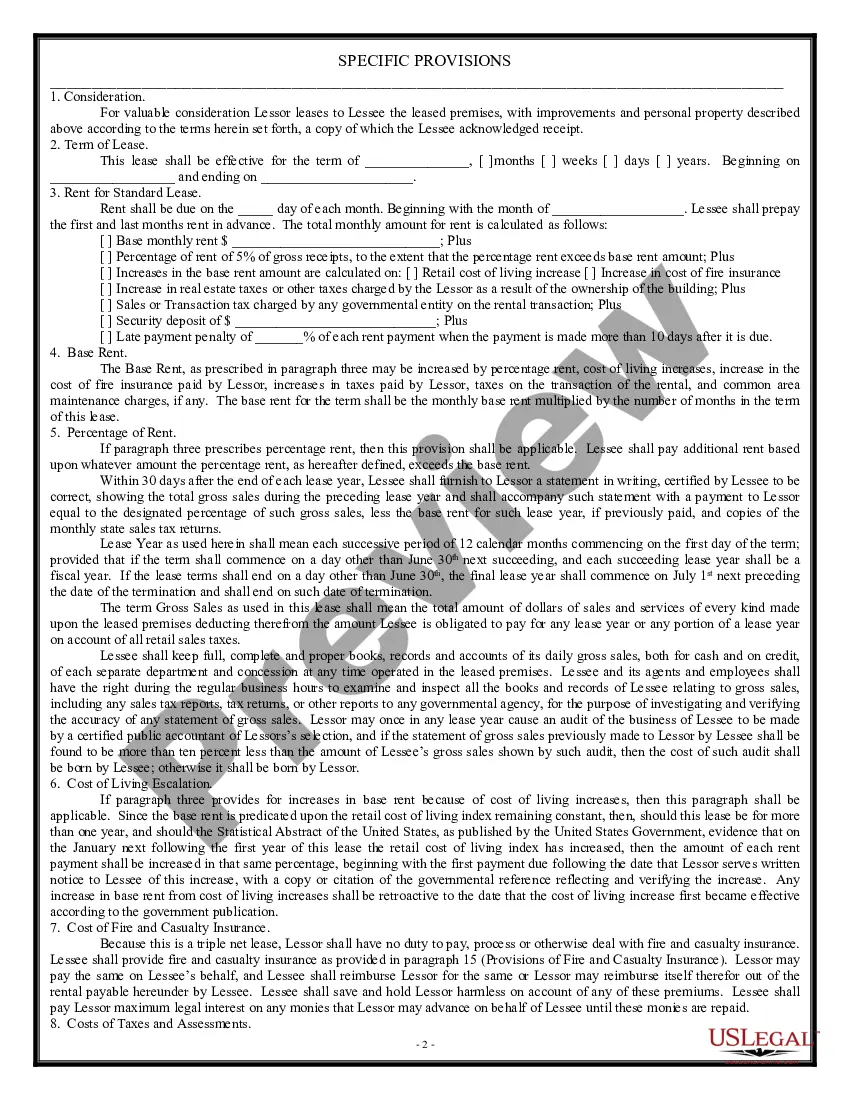
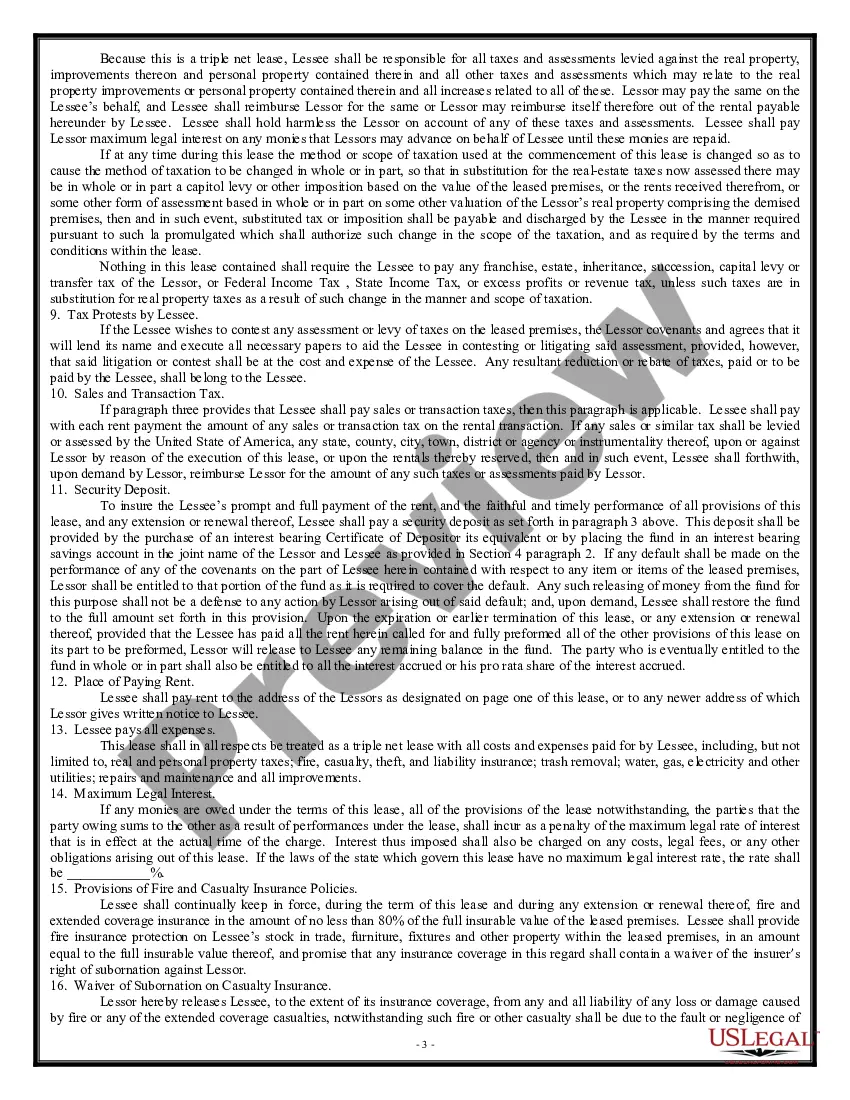
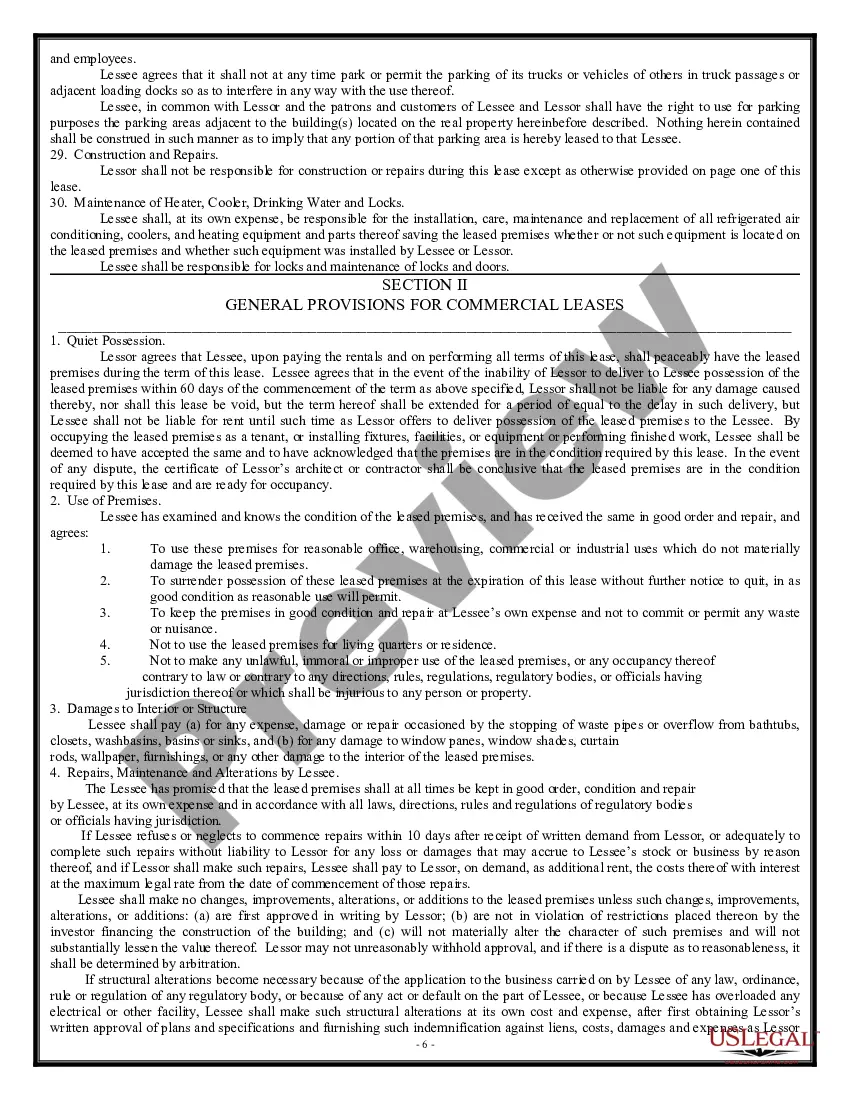
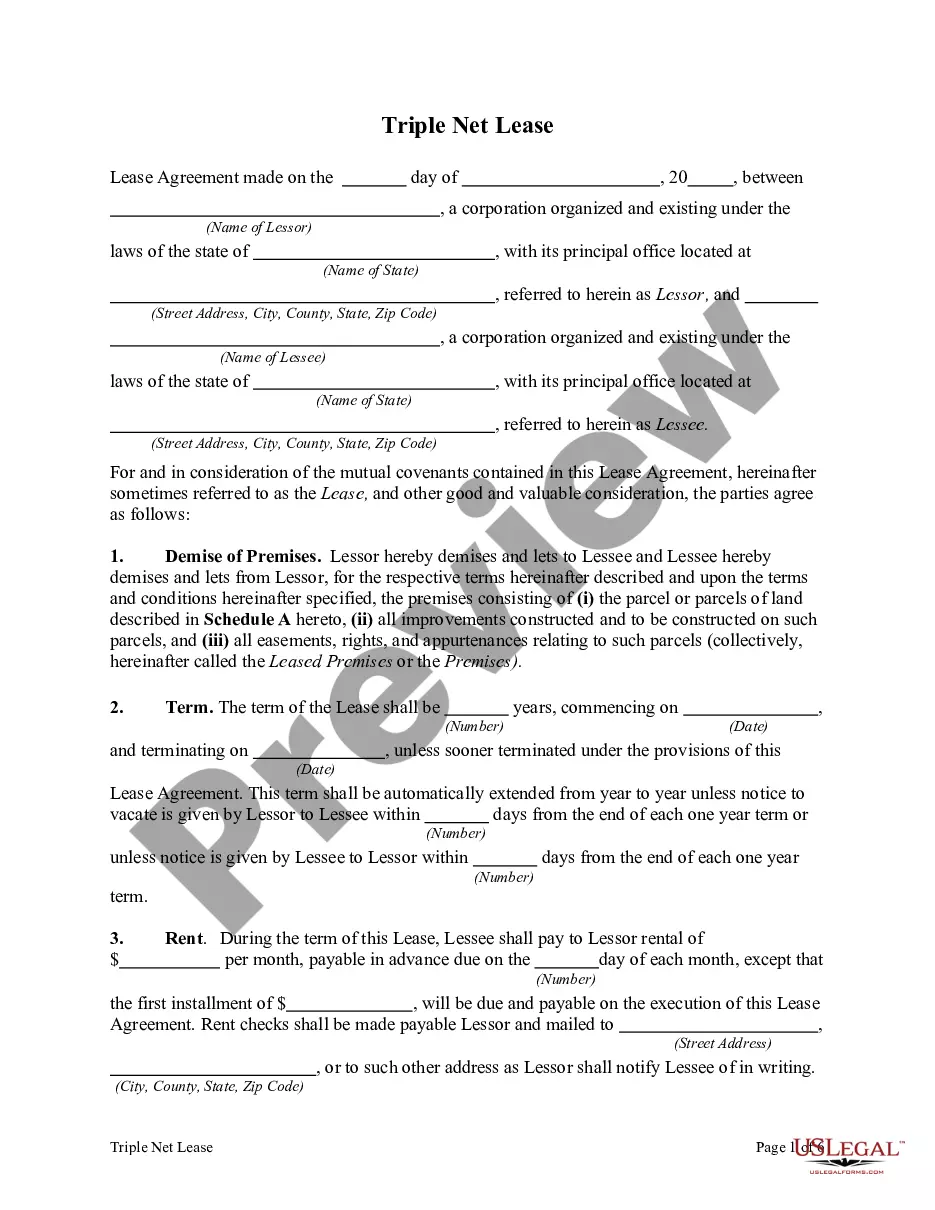
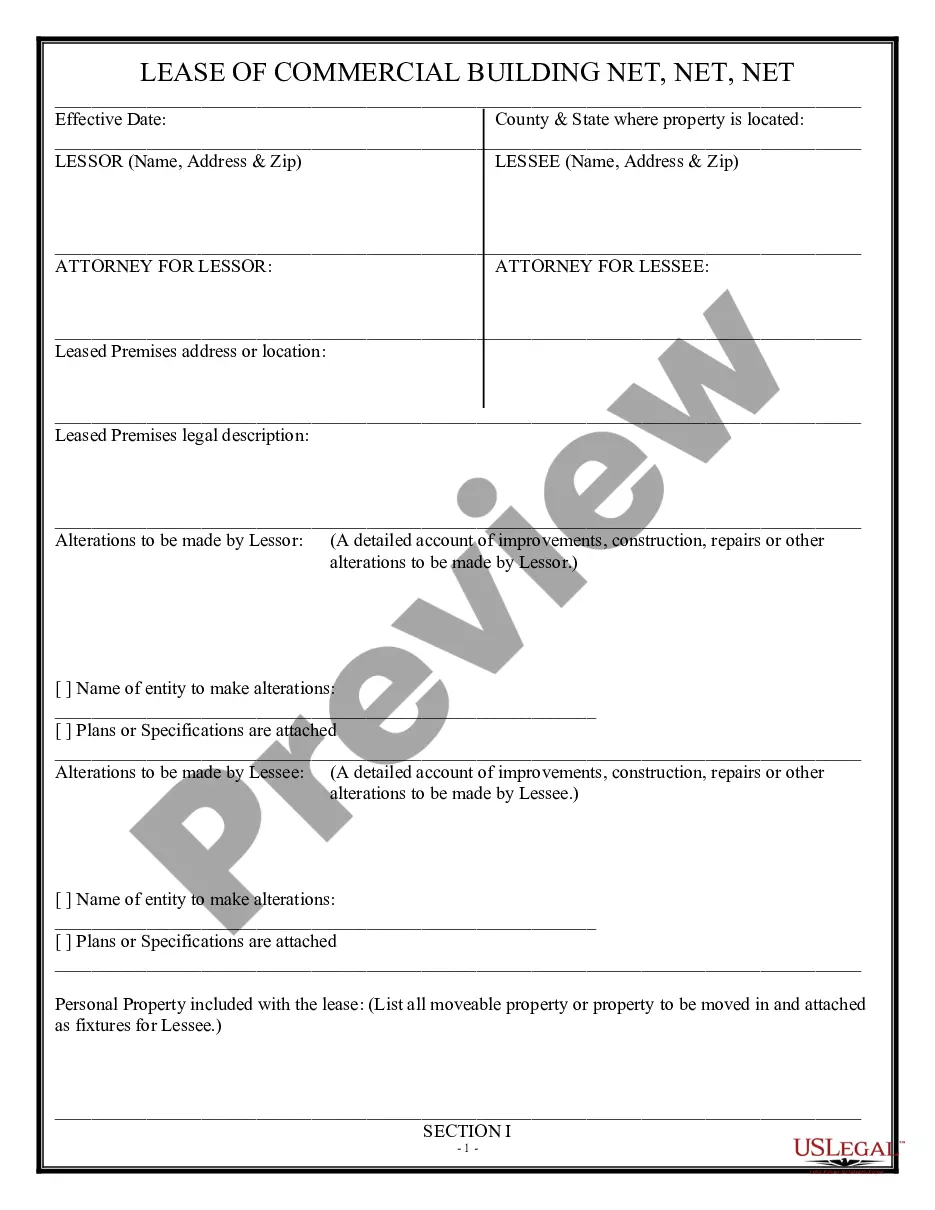
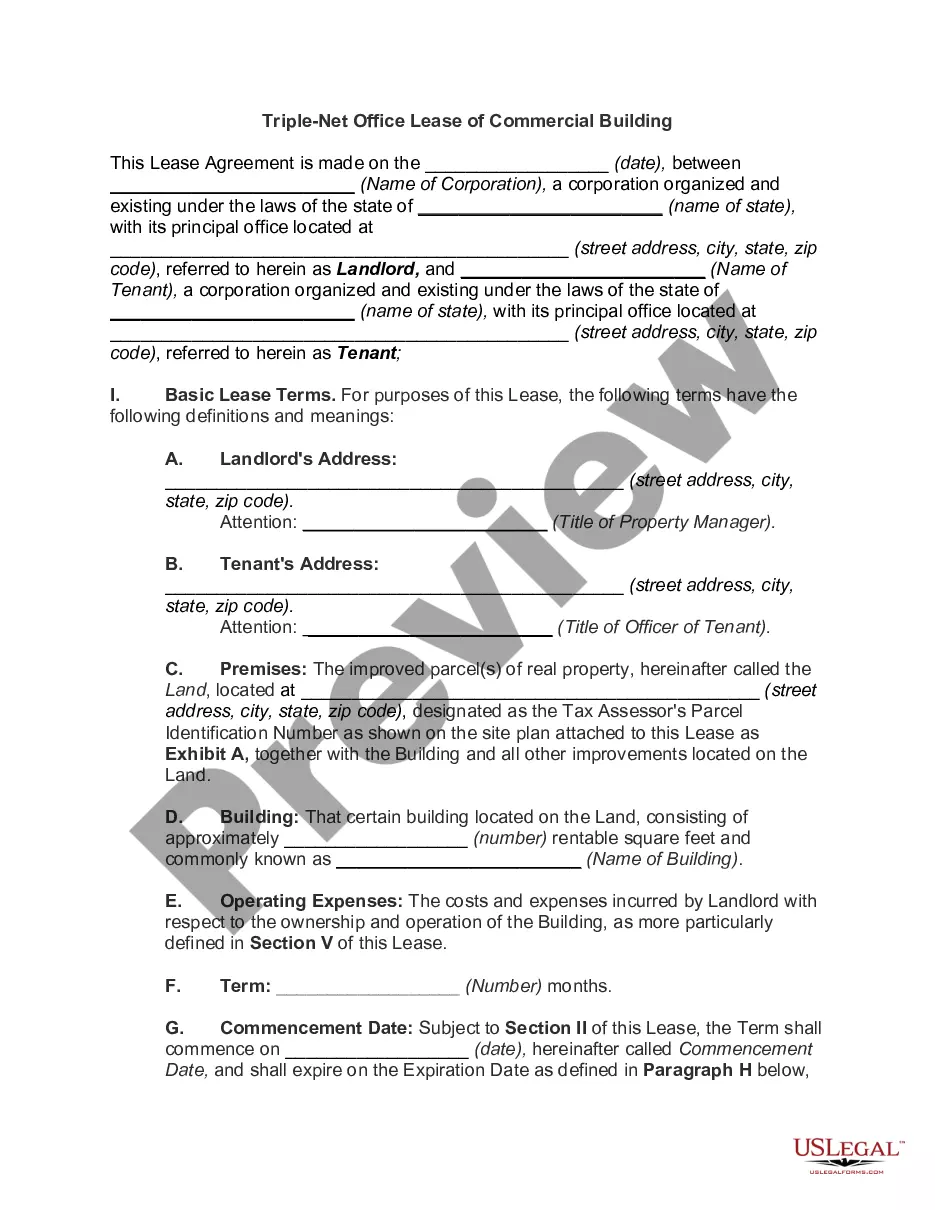
The Triple Net Lease for Residential Property is a legally binding agreement in which the lessee agrees to pay all costs associated with leasing the property, including property taxes, insurance, and maintenance. Unlike standard leases, this form shifts the financial responsibility for these expenses to the lessee, making it essential for landlords seeking to minimize their operating costs and for tenants willing to take on additional responsibilities for their leased property.
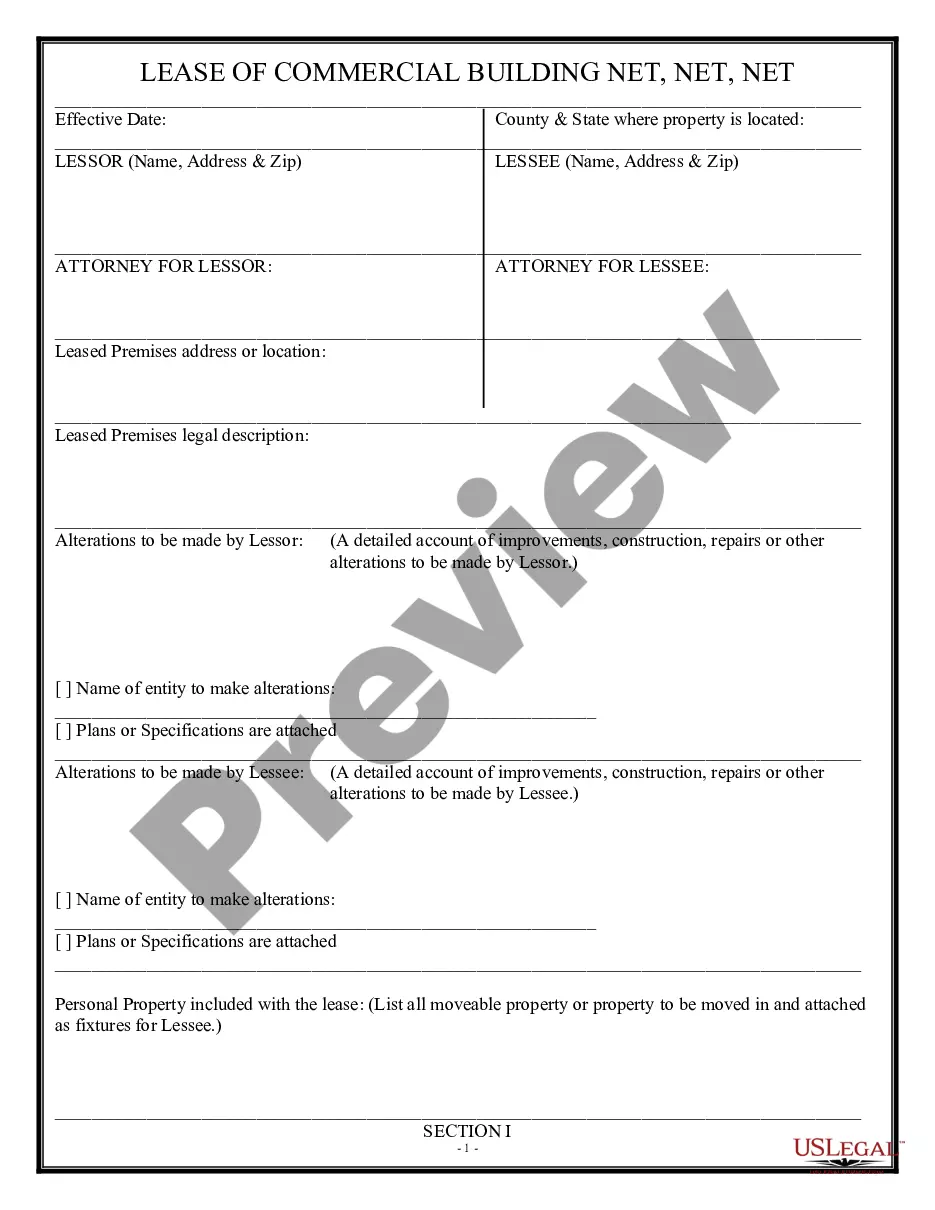
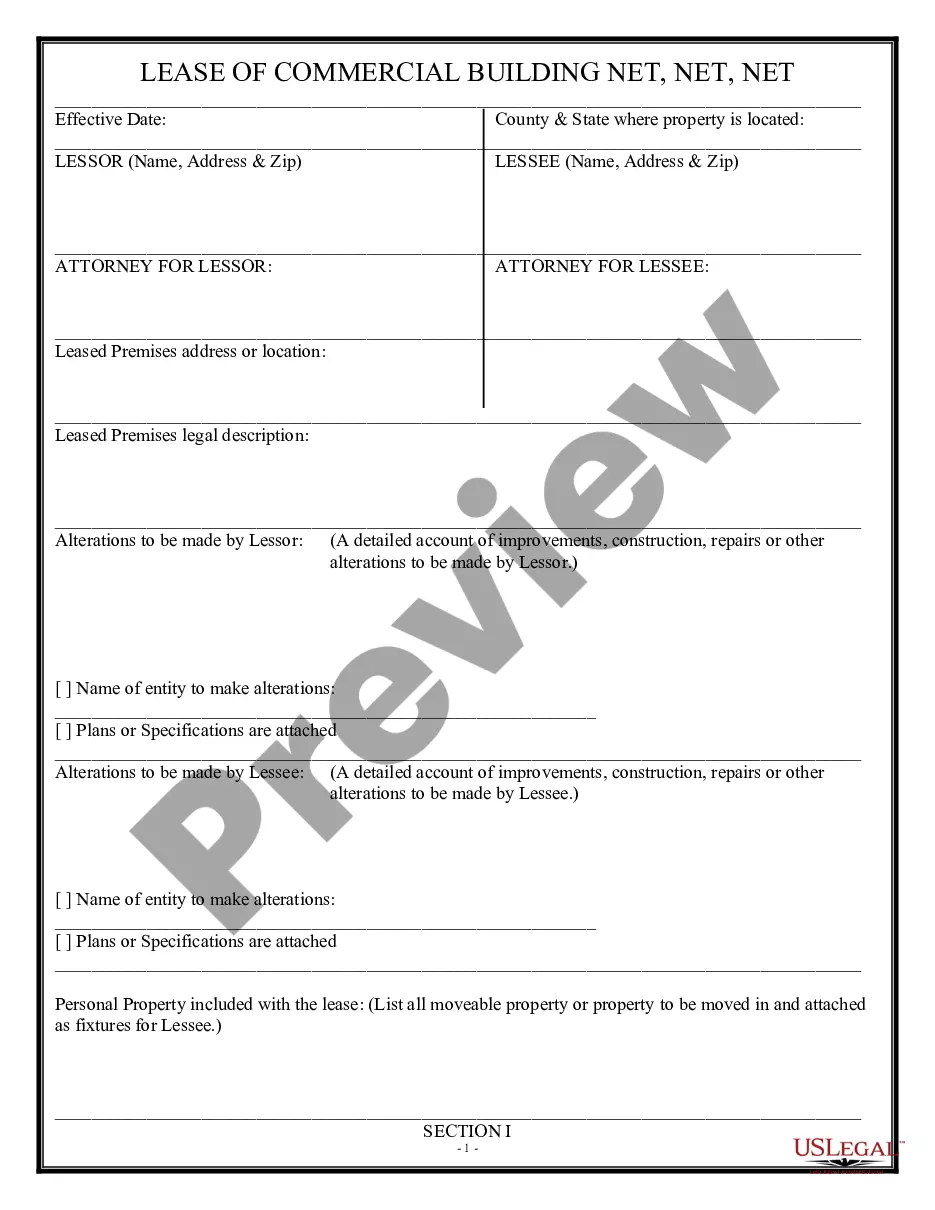
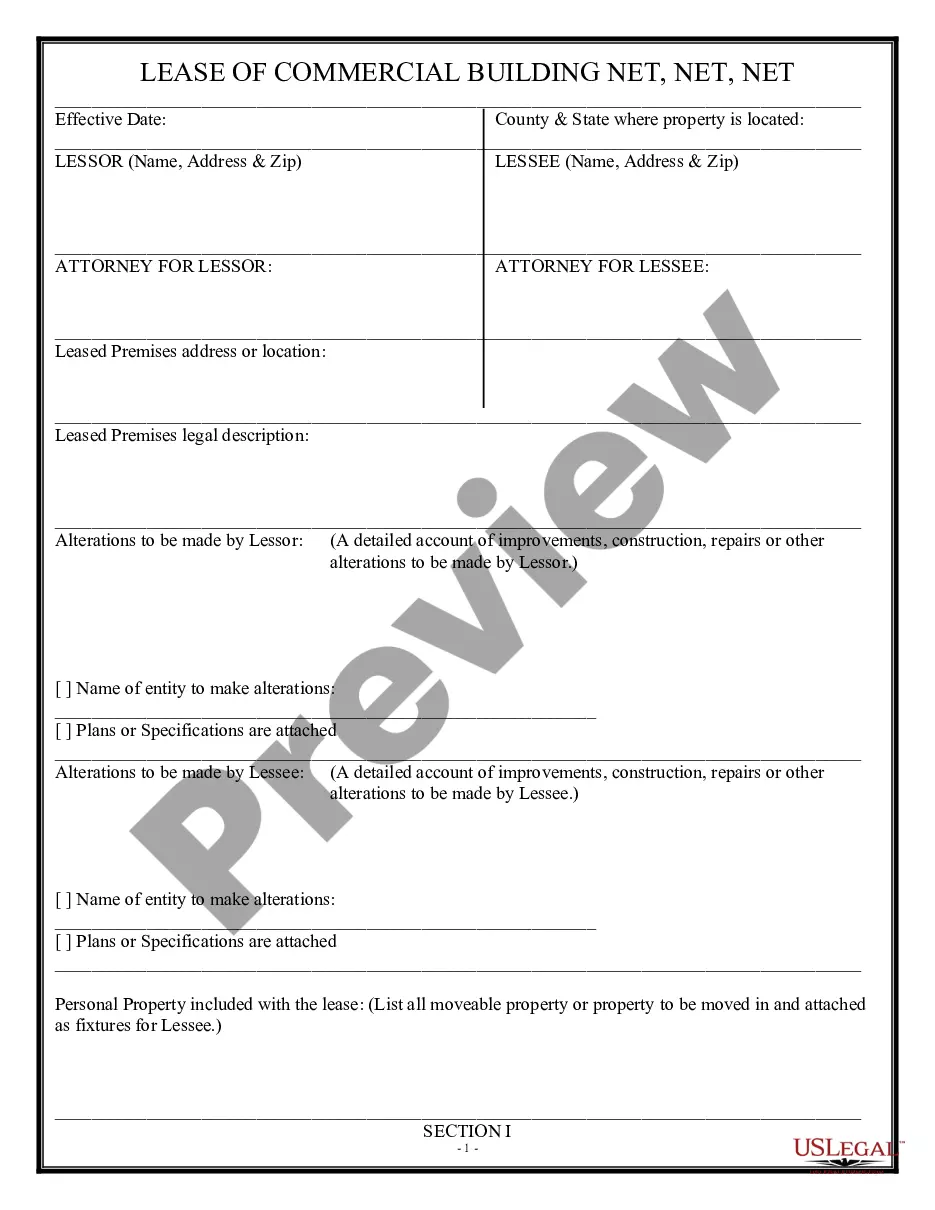
Key parts of this document
- Effective date and jurisdiction of the lease.
- Identification of the lessor and lessee, including contact details.
- Terms of the lease including duration, rent amount, and due dates.
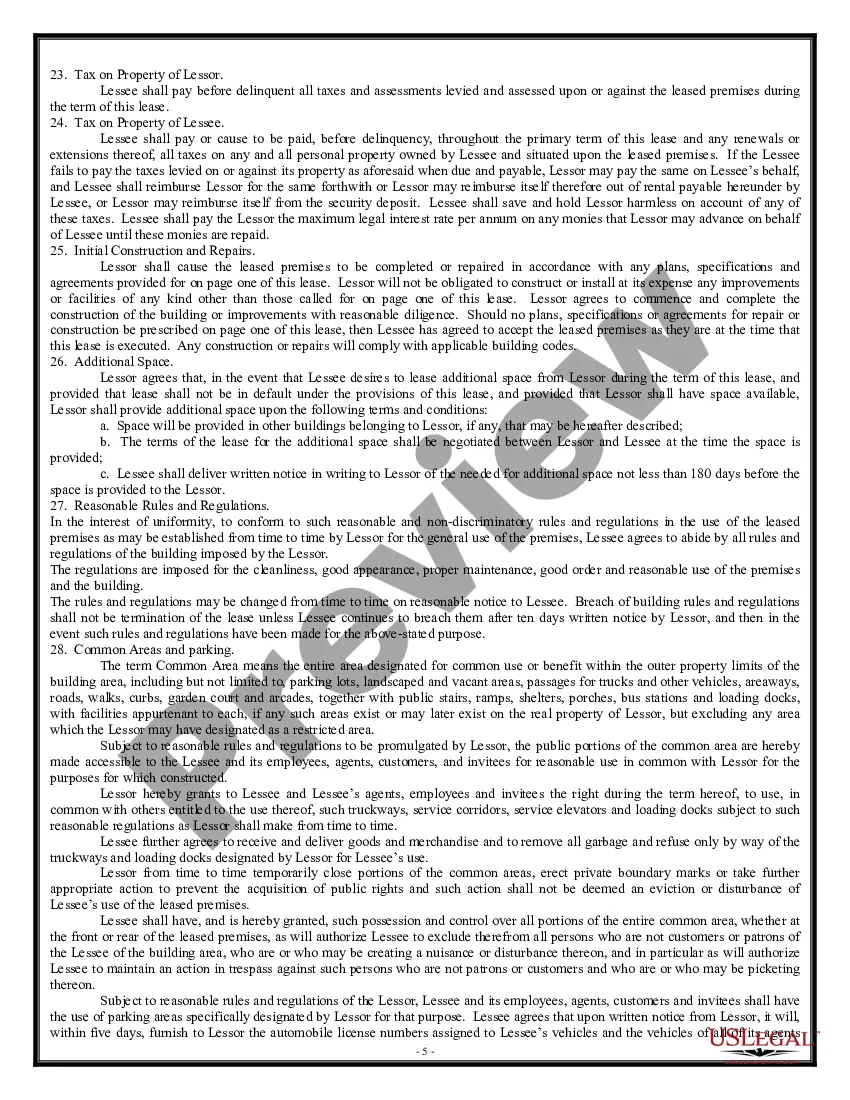
- Provisions for maintenance and repair responsibilities.
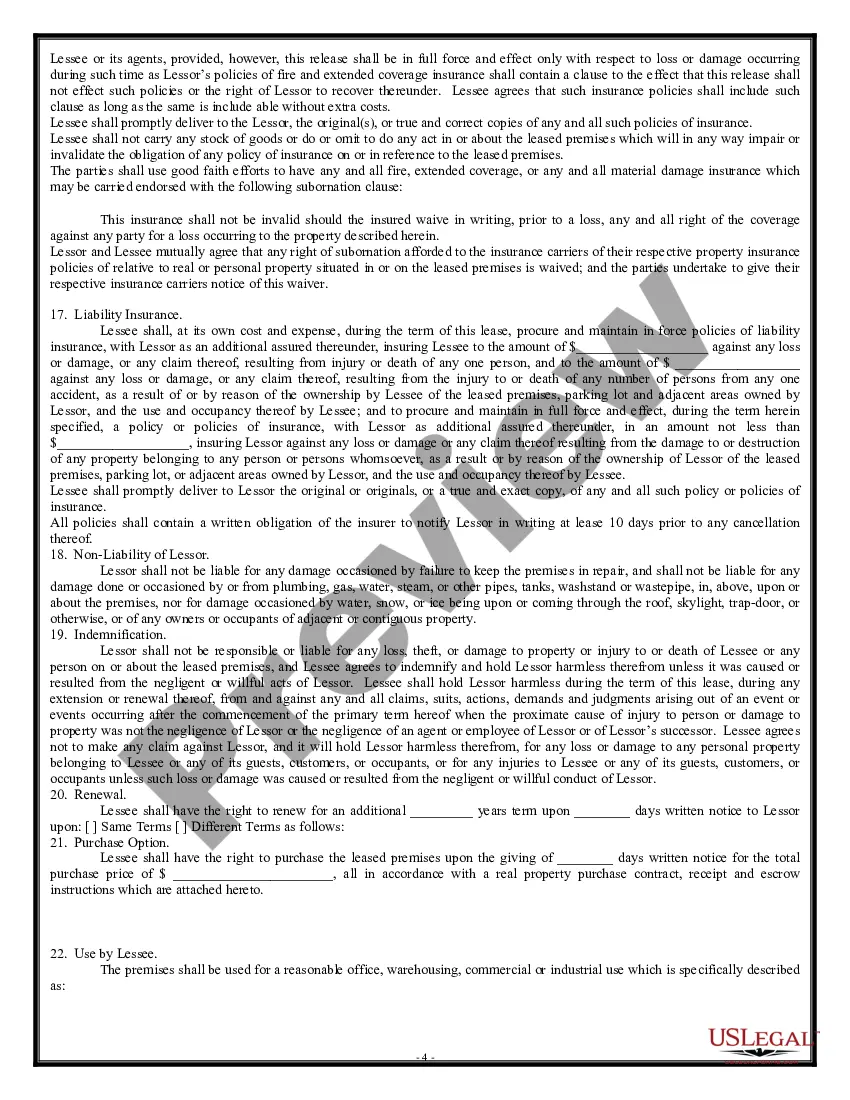
- Clarification of insurance requirements to protect the property and reduce liability.
- Details on alterations allowed by both parties.
- Specifications regarding taxes and additional costs the lessee must cover.
- Renewal options and the process for lease termination.
When this form is needed
This form is ideal for landlords of residential properties looking to transfer financial responsibilities for taxes, insurance, and maintenance to the tenant. It should be used in situations where the lessee is expected to manage these costs proactively, such as in single-family rentals or small multi-family homes, especially in a commercial context where expenses can be significant and predictable.
Who can use this document
- Landlords who wish to offer a lease with minimal ongoing financial obligations.
- Tenants who are financially able and willing to take on additional responsibilities associated with their lease.
- Real estate agents acting on behalf of clients who require a triple net lease format.
How to prepare this document
- Identify and enter the names and addresses of both the lessor and lessee.
- Specify the effective date of the lease and geographical location of the property.
- Define the lease term, including start and end dates.
- Enter rental payment details, including the base amount, due date, and any applicable penalties.
- Outline any necessary alterations or improvements to be made by both parties.
- Include signatures of both lessee and lessor for validation.
Is notarization required?
This form does not typically require notarization unless specified by local law. However, it is advisable to check state regulations to confirm if any additional notarization is necessary for legal validation.
Get your form ready online
Our built-in tools help you complete, sign, share, and store your documents in one place.
Make edits, fill in missing information, and update formatting in US Legal Forms—just like you would in MS Word.
Download a copy, print it, send it by email, or mail it via USPS—whatever works best for your next step.
Sign and collect signatures with our SignNow integration. Send to multiple recipients, set reminders, and more. Go Premium to unlock E-Sign.
If this form requires notarization, complete it online through a secure video call—no need to meet a notary in person or wait for an appointment.
We protect your documents and personal data by following strict security and privacy standards.

Make edits, fill in missing information, and update formatting in US Legal Forms—just like you would in MS Word.

Download a copy, print it, send it by email, or mail it via USPS—whatever works best for your next step.

Sign and collect signatures with our SignNow integration. Send to multiple recipients, set reminders, and more. Go Premium to unlock E-Sign.

If this form requires notarization, complete it online through a secure video call—no need to meet a notary in person or wait for an appointment.

We protect your documents and personal data by following strict security and privacy standards.
Common mistakes to avoid
- Failing to specify the exact allocation of expenses, leading to disputes later.
- Not clearly defining the terms of maintenance and repairs.
- Overlooking necessary state-specific clauses, which may void the lease.
- Neglecting to document all alterations made to the property.
- Not including clear instructions for renewing or terminating the lease.
Advantages of online completion
- Convenience of accessing and downloading the form immediately.
- Easy customization to suit specific needs without complex legal language.
- Reliability, as forms are drafted by licensed attorneys to ensure compliance with current laws.
- Save time and effort with a straightforward step-by-step completion process.
Looking for another form?
Form popularity
FAQ
A triple net lease might have some sort of cap, but likely, a tenant would be forced to cover rising taxes and insurance rates. Granted, this might not be much, but it could potentially cost a tenant a substantial amount of capital. Imagine tax or insurance changes over the course of a DECADE; it could be substantial.
With a triple net lease, the tenant promises to pay all the expenses of the property, including real estate taxes, building insurance, and maintenance. These payments are in addition to the fees for rent and utilities.
In a triple net lease property, the tenant agrees to pay for all the expenses involved in operating the property. These expenses include fixed and variable expenses, as well as common area maintenance costs (CAM). Generally, the owner is responsible only for structural repairs.
I mentioned that gross leases are the most common lease type among consumer-facing types of real estate, but they are often used for other property types, for which buildings are shared among multiple tenants. A gross lease is often referred to as a full-service lease in commercial applications.
As the triple net property owner (unless otherwise specified in the NNN lease), you'll generally be responsible for maintaining and repairing these 3 main aspects of your building: Roof (repairs, maintenance, upgrades) Exterior Walls. Utility Repairs and Upkeep (for major things such as plumbing and electricity)
STNL properties can be great investments, but they aren't without risk.The NNN refers to the nature of the triple net lease, which requires the tenant to pay (in addition to the rent) property taxes, insurance, and maintenance on the property.
The most obvious benefit of using a triple net lease for a tenant is a lower price point for the base lease. Since the tenant is absorbing at least some of the taxes, insurance, and maintenance expenses, a triple net lease features a lower monthly rent than a gross lease agreement.
Absolutely not! There are many areas where a tenant can negotiate a NNN lease to make it more favorable.If the tenant is taking on all responsibility and risk of the landlord's overhead, then the tenant may be able to negotiate a more favorable base rental amount.
A net lease is a real estate lease in which a tenant pays one or more additional expenses.Double net leases include property taxes and insurance premiums, in addition to the base rent. A triple net lease includes property taxes, insurance, and maintenance costs, in addition to the base rent.