Triple Net Lease for Industrial Property
What is this form?
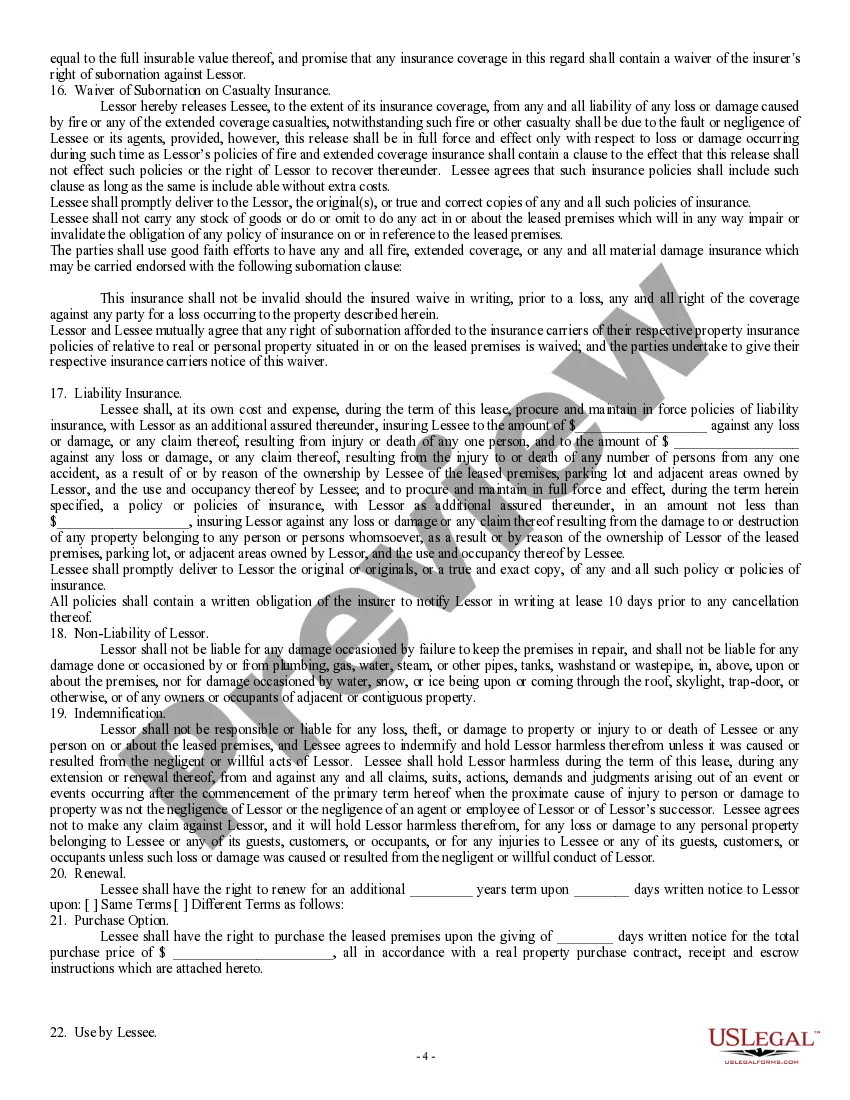
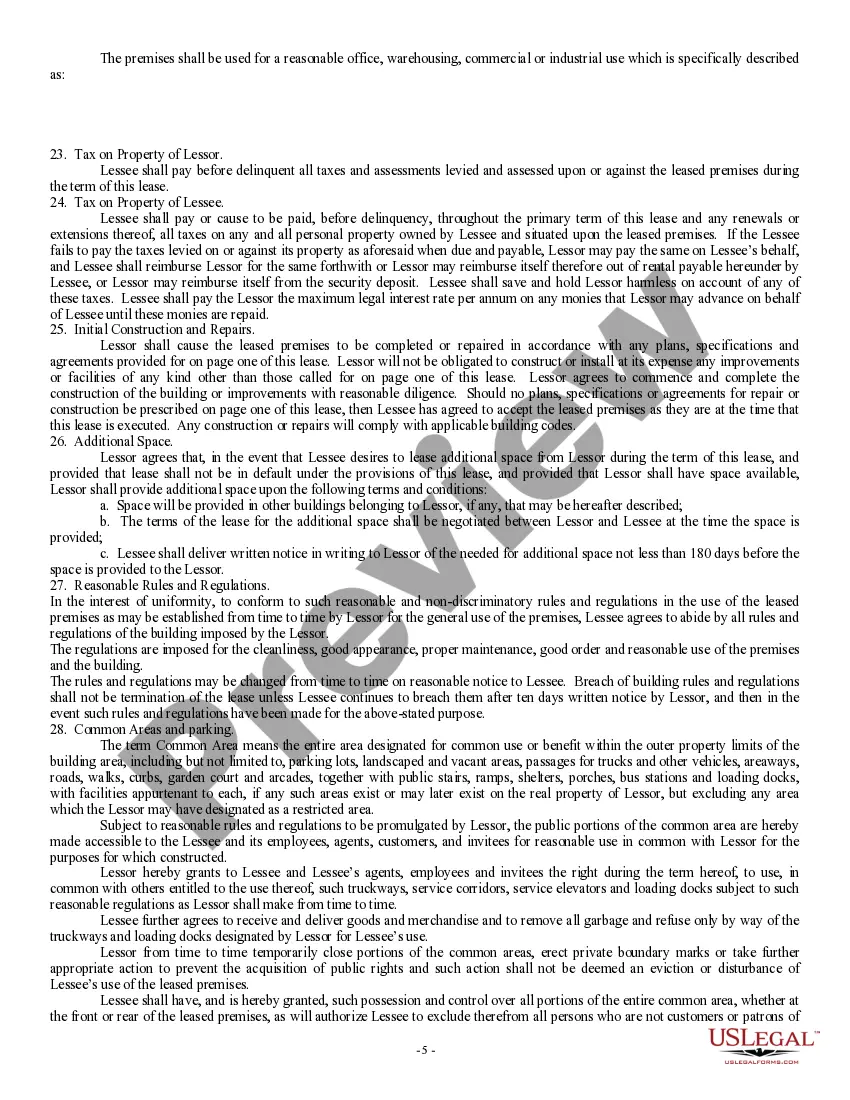
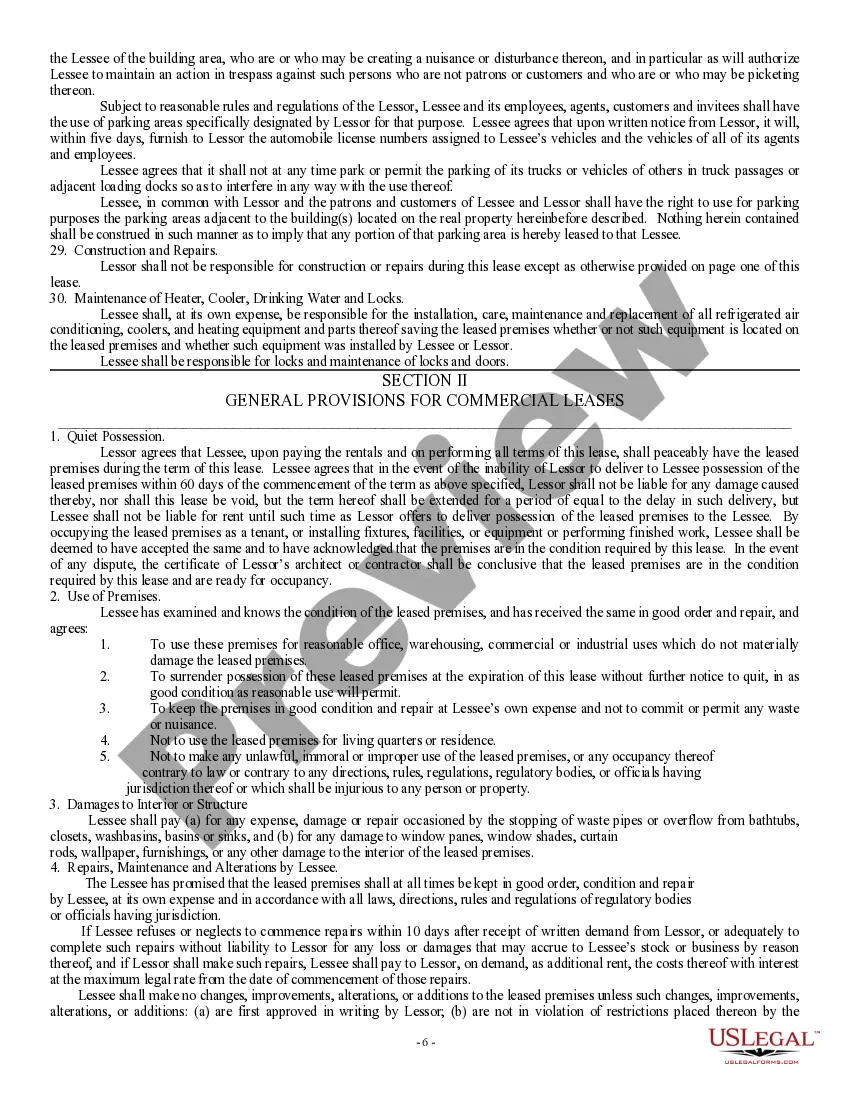
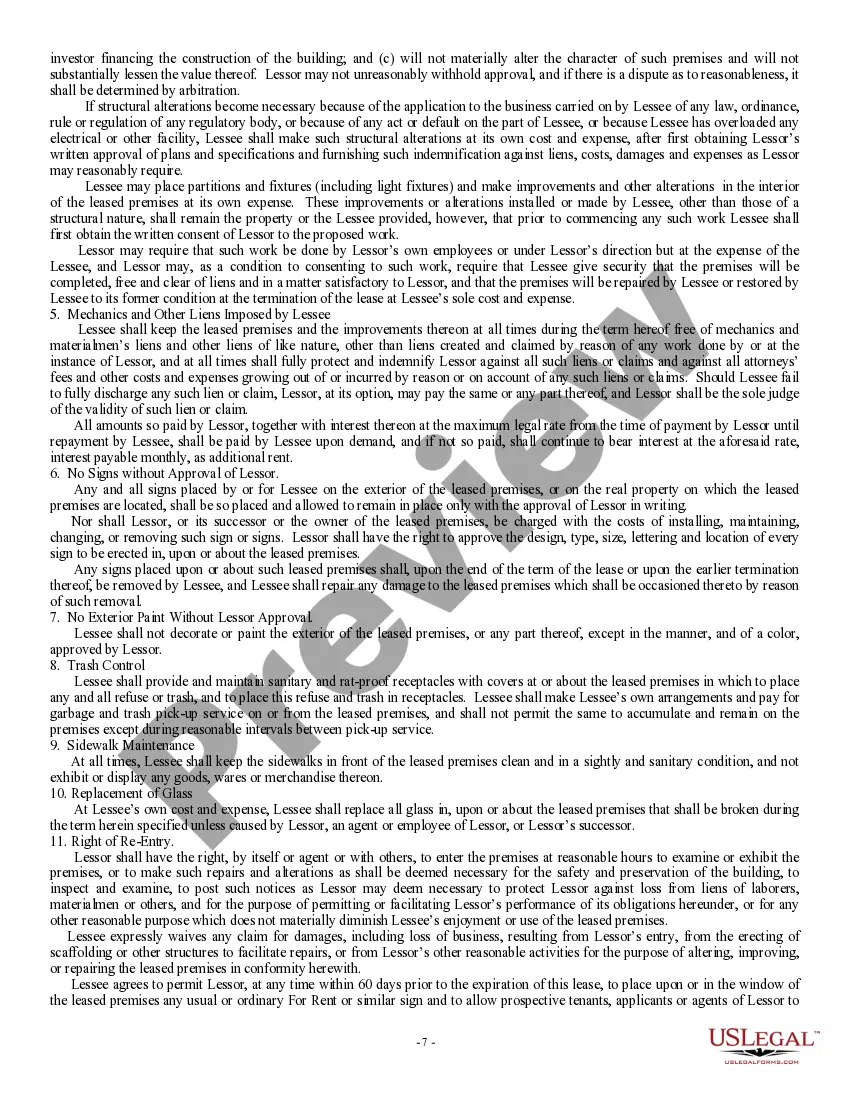
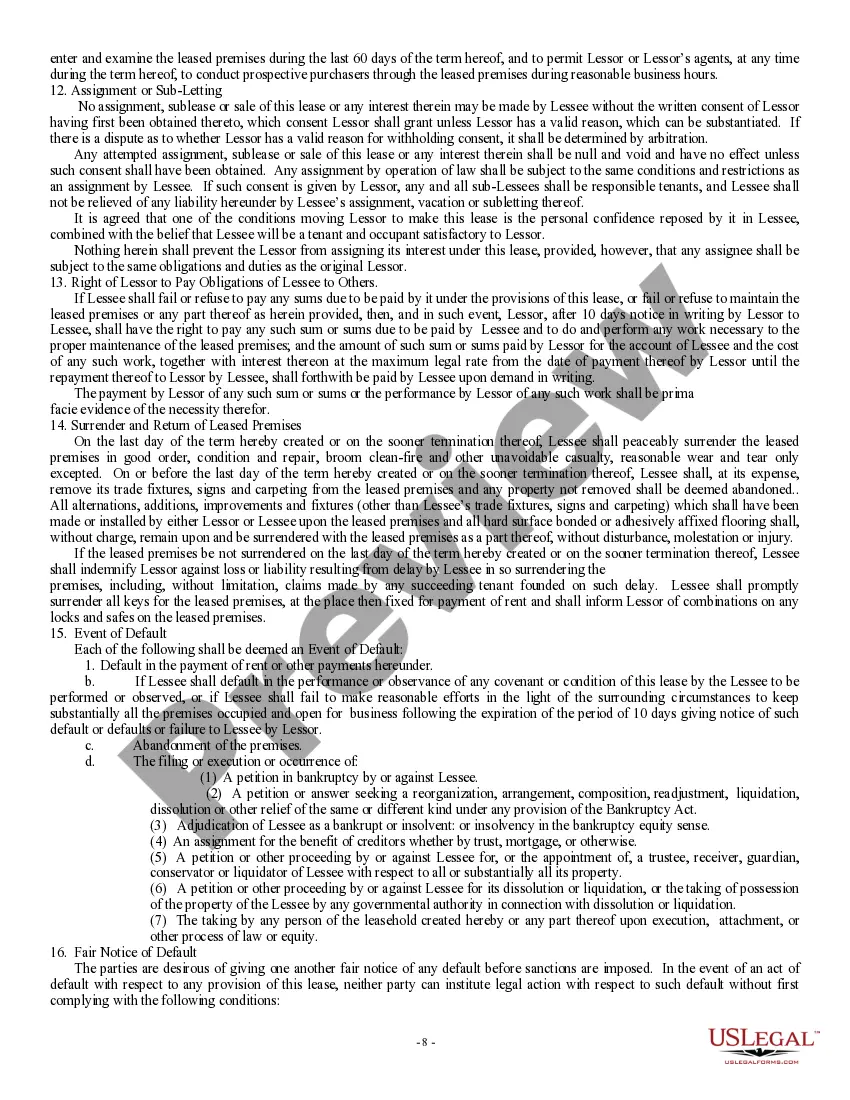
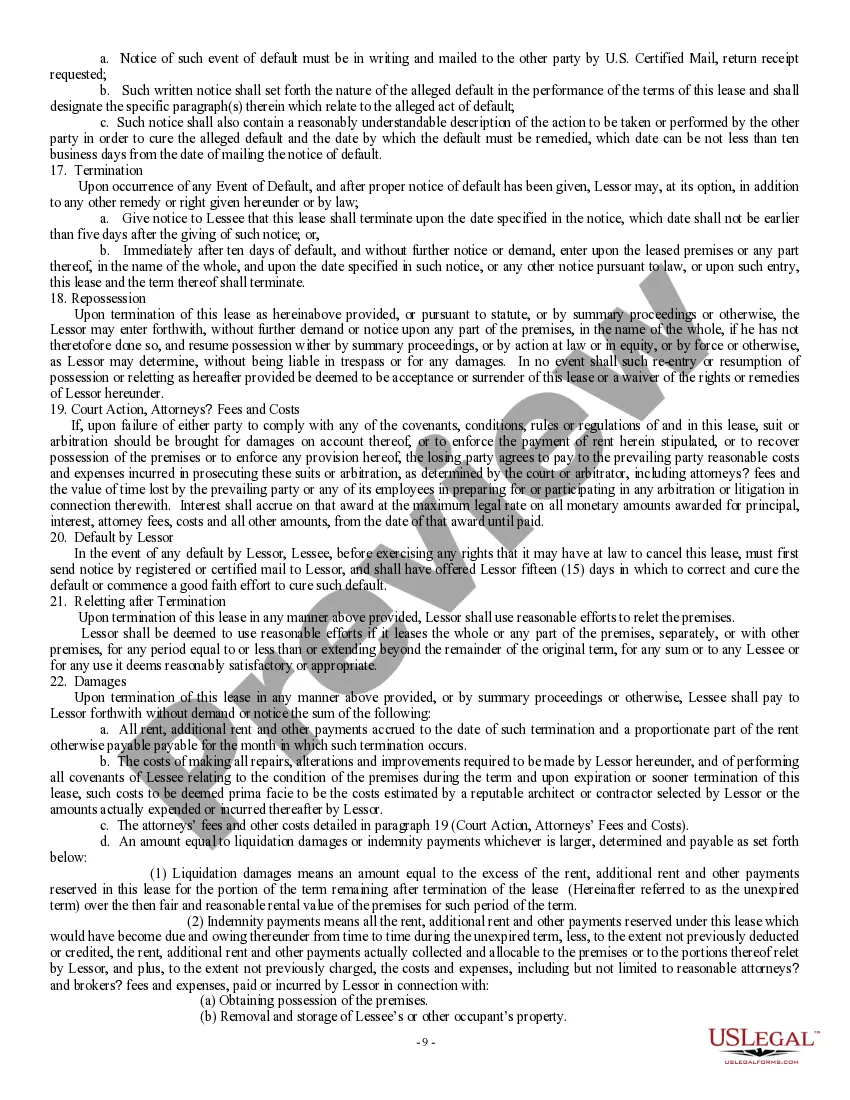
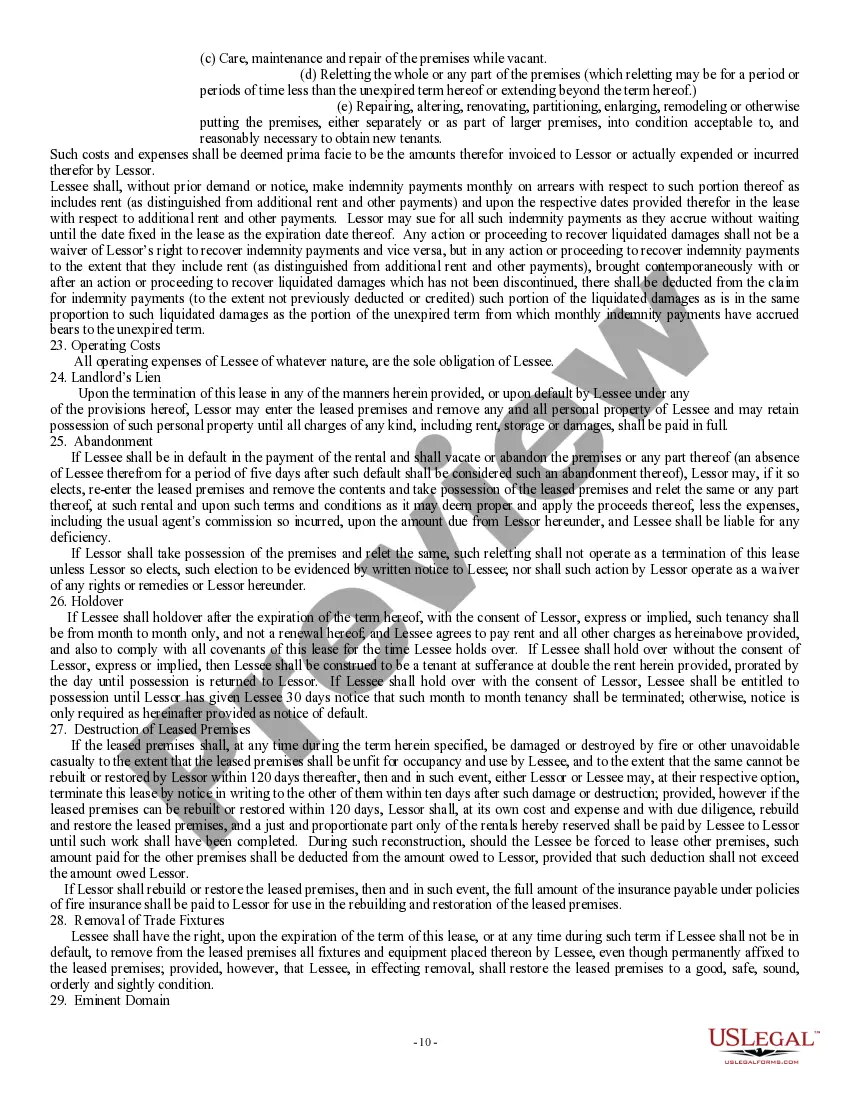
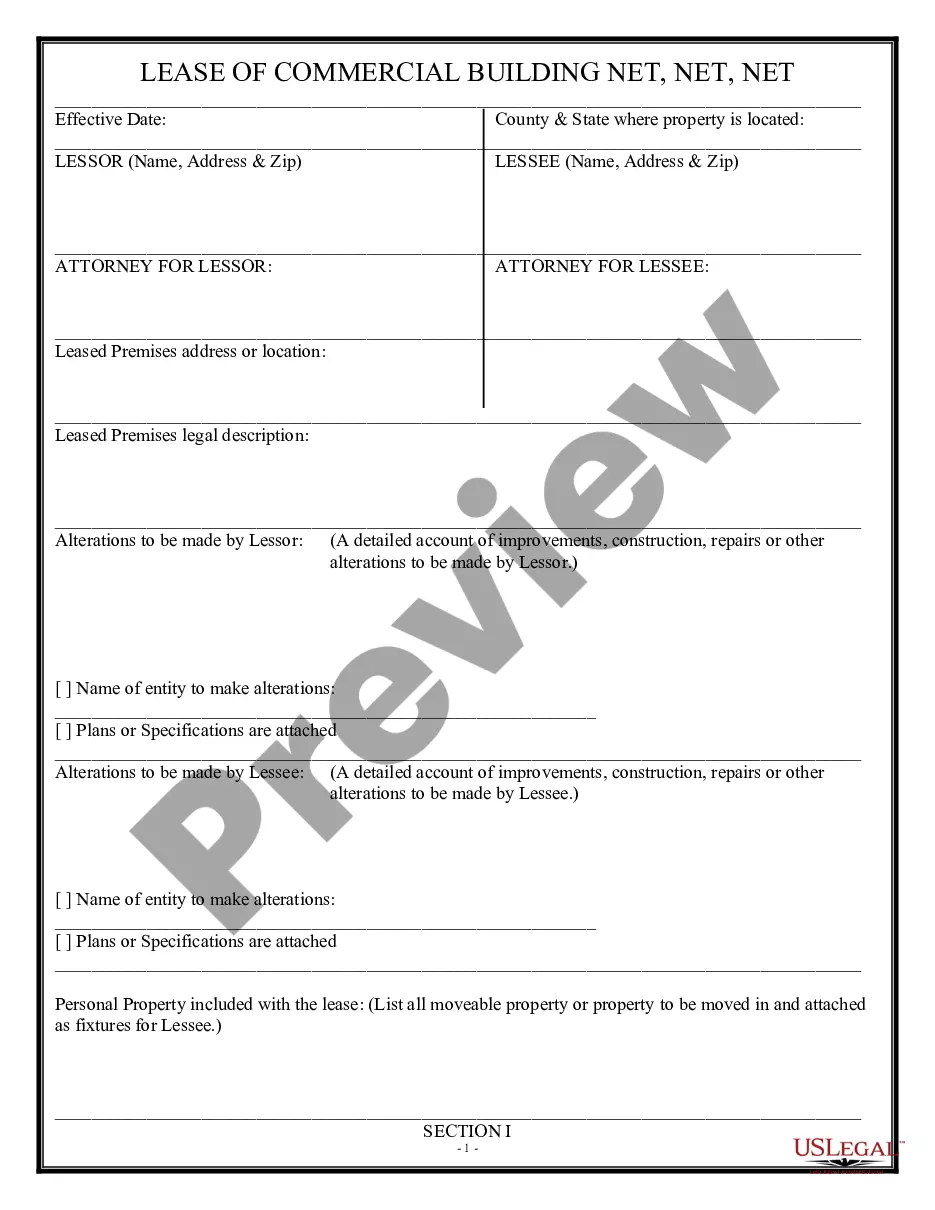
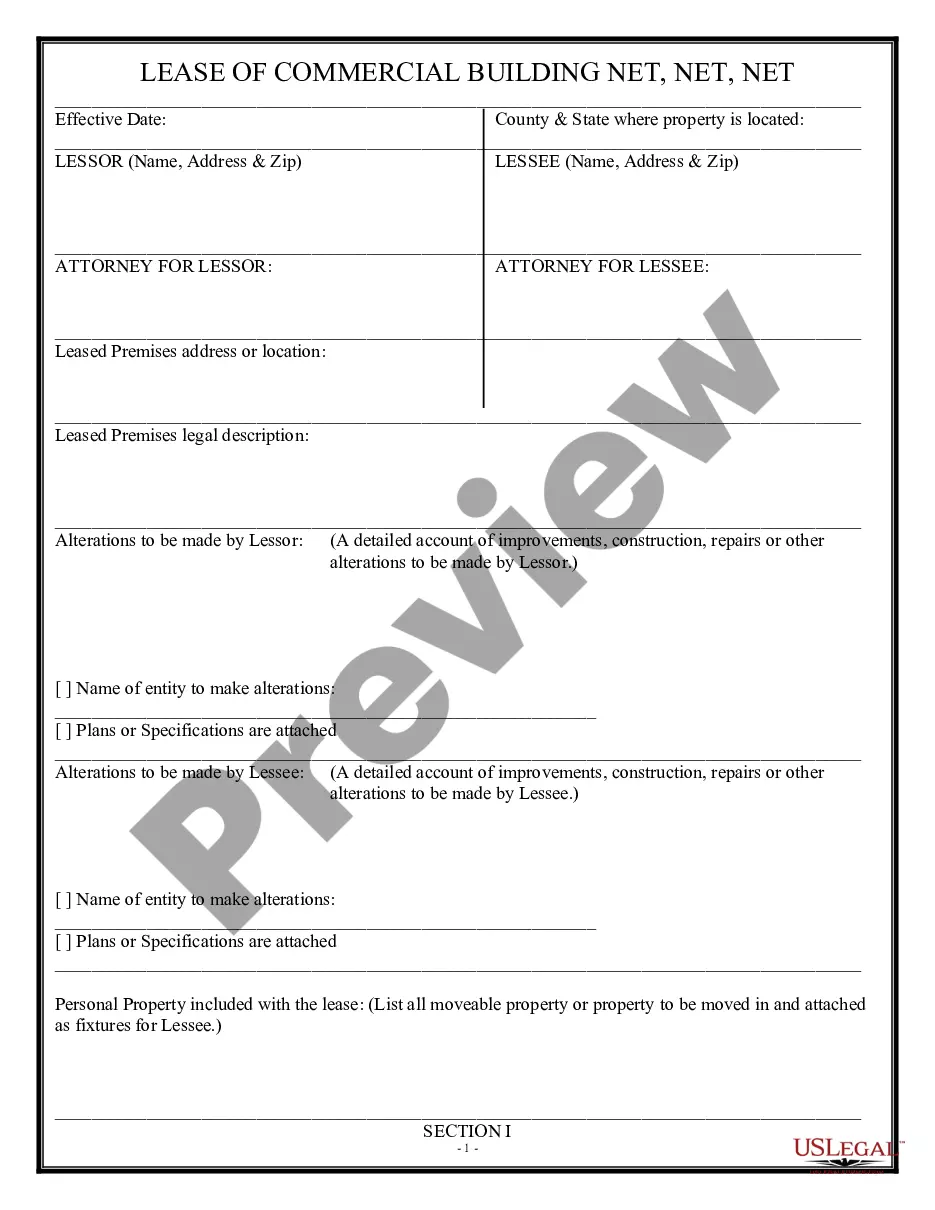
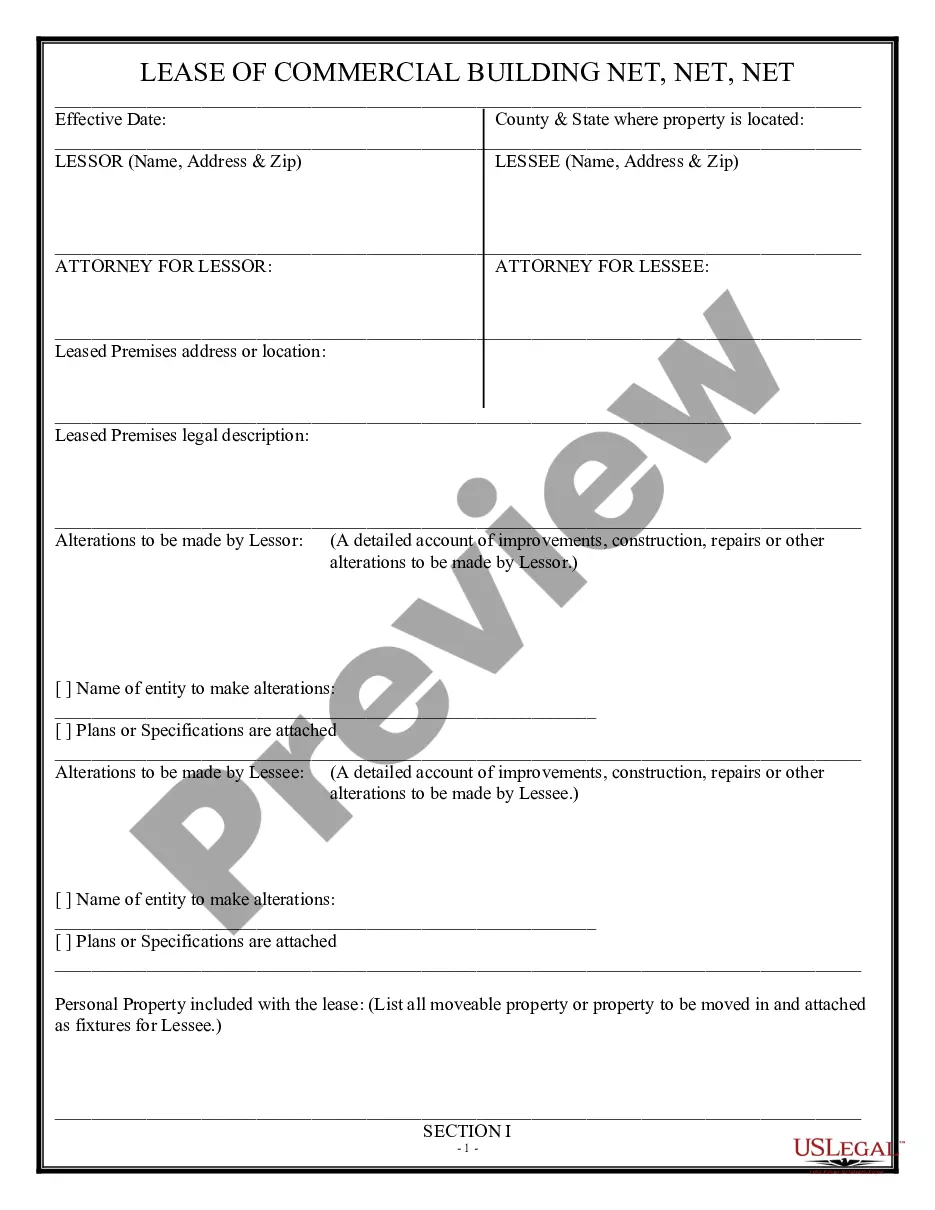
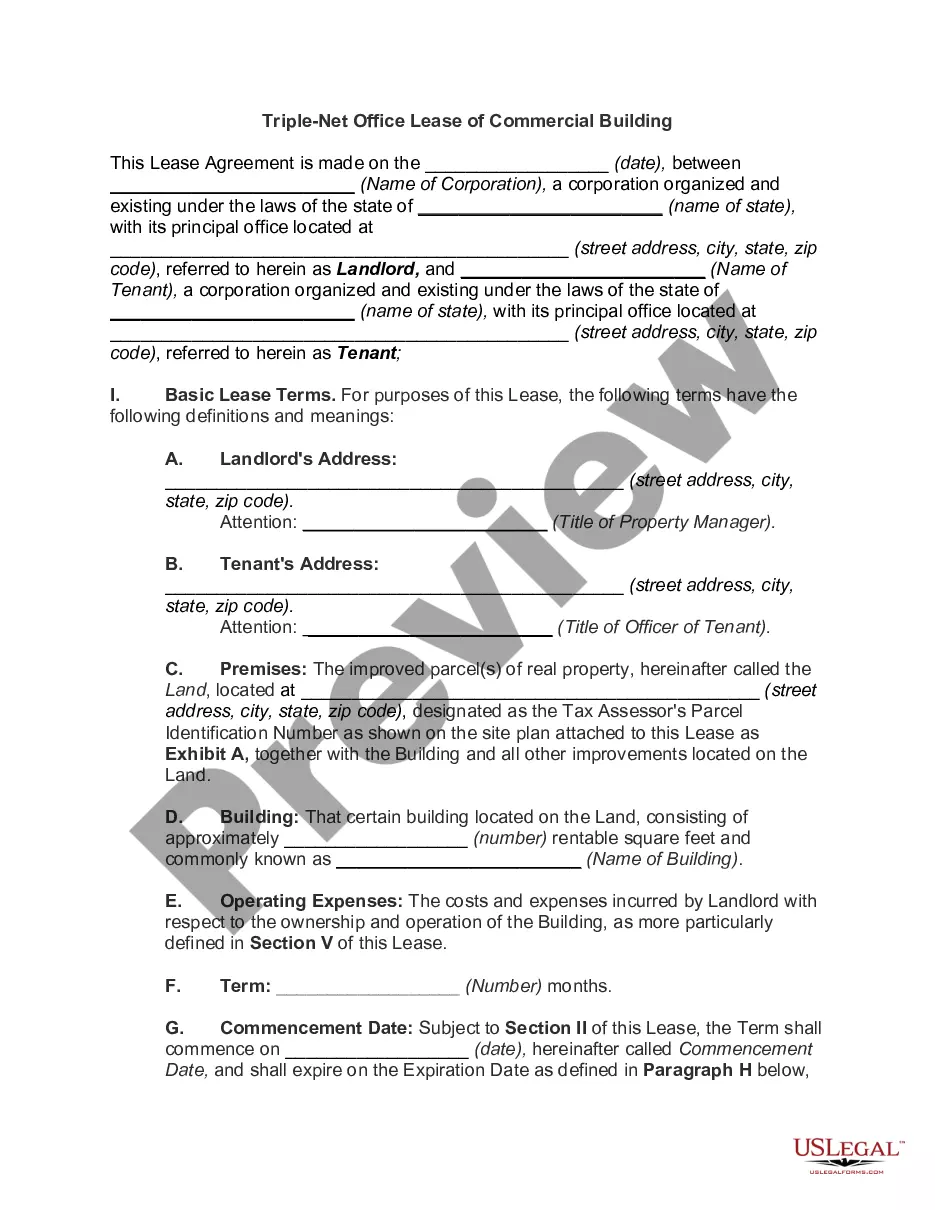
The Triple Net Lease for Industrial Property is a legal document used for leasing commercial buildings specifically within industrial sectors. This form establishes a lease agreement in which the lessee, or tenant, is responsible for all property-related expenses, including property taxes, insurance, and maintenance. Unlike traditional leases where landlords carry these costs, this document clarifies the lesseeâs responsibilities, making it suitable for businesses that prefer direct control over property-related expenses.
What’s included in this form
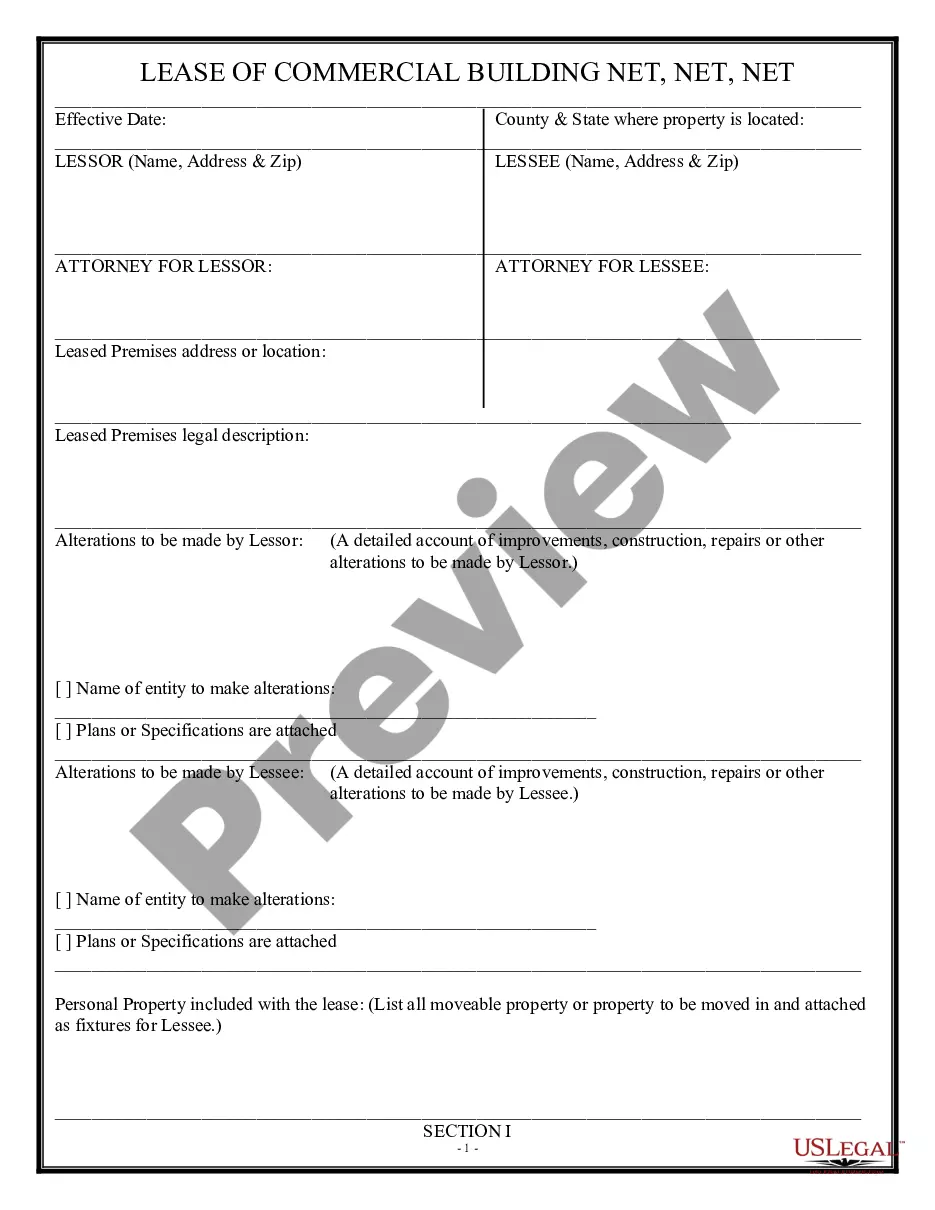
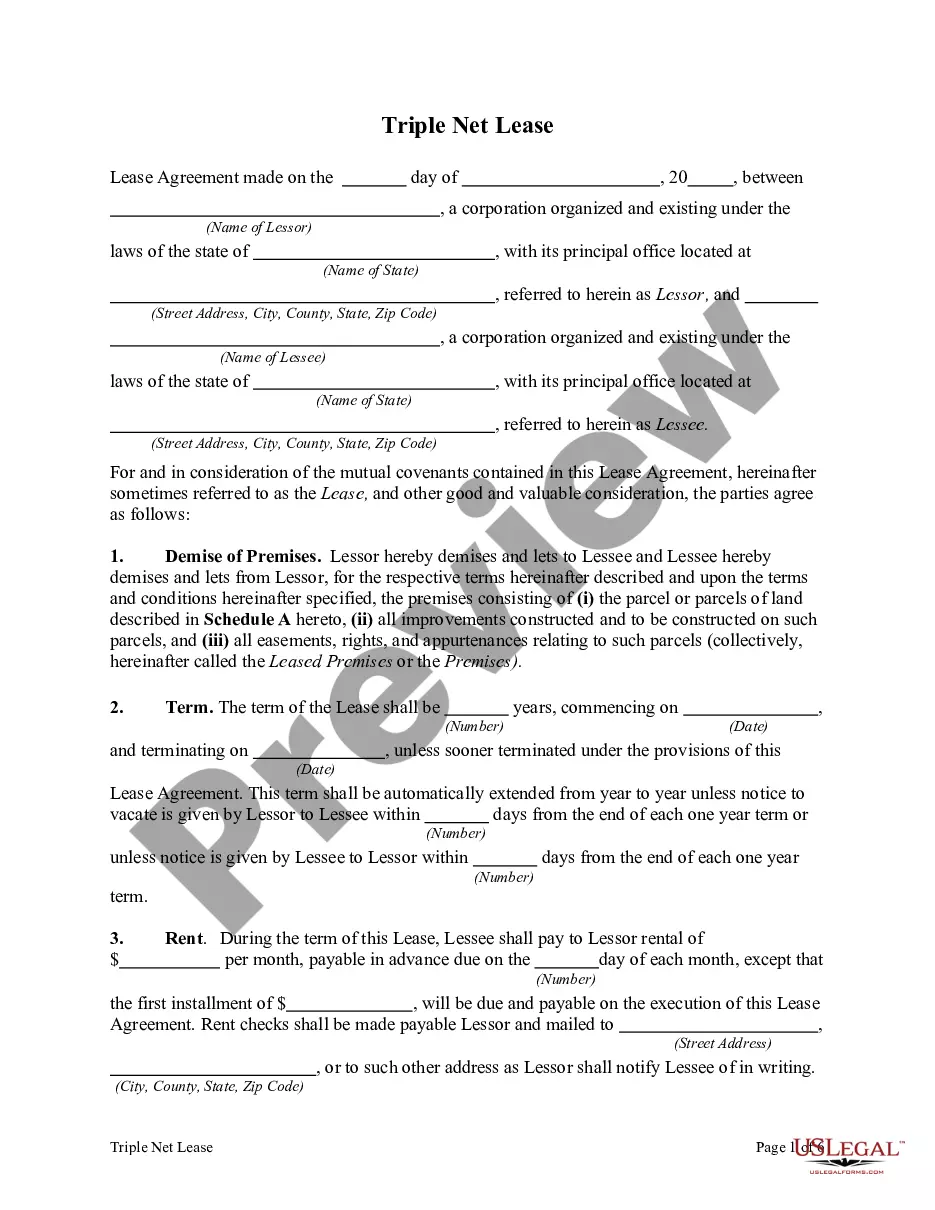
- Effective date and location details (County and State)
- Information for lessor and lessee, including names and addresses
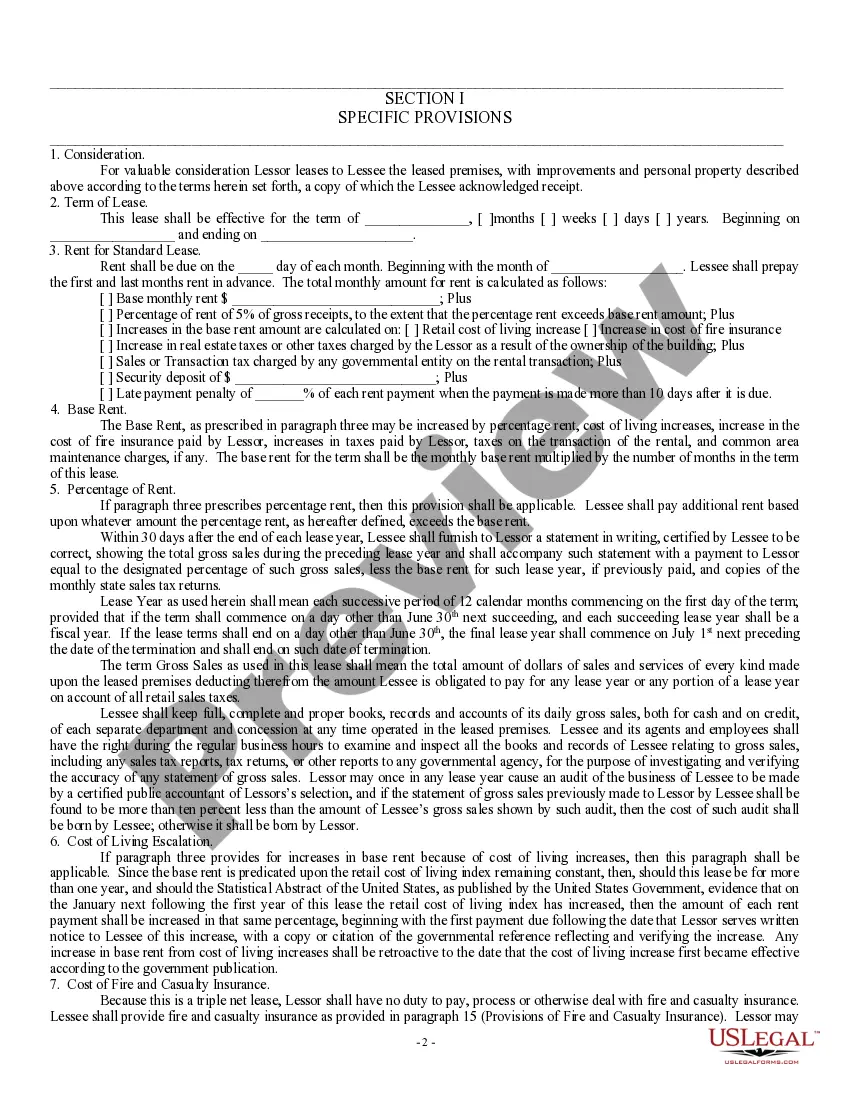
- Detailed provisions regarding rent, including base rent and additional costs
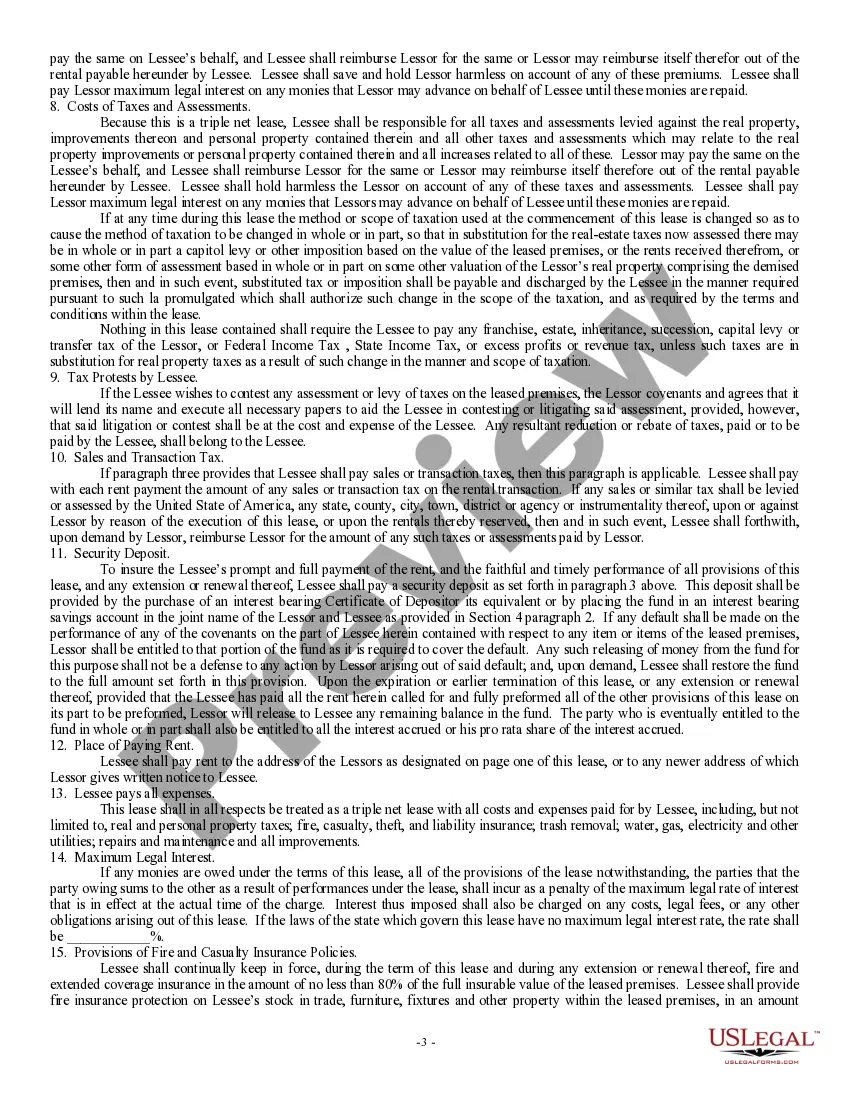
- Responsibilities for property upkeep, including maintenance responsibilities and improvements
- Insurance requirements and liability clauses for both parties
- Terms related to lease renewal and purchase options

When this form is needed
This form is ideal for landlords and tenants entering into a commercial lease for industrial property, particularly when the landlord wants to relieve themselves of expenses related to property taxes, insurance, and maintenance. Property owners looking to attract tenants in manufacturing, warehousing, or similar sectors will find this document beneficial to clarify financial responsibilities and establish a mutual understanding regarding property management.
Who needs this form
This form is intended for:
- Commercial property owners (lessors) renting out industrial spaces.
- Businesses (lessees) seeking to lease industrial property and willing to cover operational expenses.
- Real estate professionals assisting in commercial lease agreements.
How to complete this form
- Identify the parties involved by entering the lessor's and lessee's names and addresses.
- Specify the property details, including the address and legal description of the leased premises.
- Outline the lease term, including start and end dates, and specify the rental amounts and payment due dates.
- Detail the responsibilities for property maintenance and any alterations planned by either party.
- Review and ensure that all clauses are complete and signed by both parties, including notarization if required.
Notarization guidance
This form does not typically require notarization unless specified by local law. However, verifying the signatures is a good practice, especially in real estate transactions, to prevent future disputes.
Get your form ready online
Our built-in tools help you complete, sign, share, and store your documents in one place.
Make edits, fill in missing information, and update formatting in US Legal Forms—just like you would in MS Word.
Download a copy, print it, send it by email, or mail it via USPS—whatever works best for your next step.
Sign and collect signatures with our SignNow integration. Send to multiple recipients, set reminders, and more. Go Premium to unlock E-Sign.
If this form requires notarization, complete it online through a secure video call—no need to meet a notary in person or wait for an appointment.
We protect your documents and personal data by following strict security and privacy standards.

Make edits, fill in missing information, and update formatting in US Legal Forms—just like you would in MS Word.

Download a copy, print it, send it by email, or mail it via USPS—whatever works best for your next step.

Sign and collect signatures with our SignNow integration. Send to multiple recipients, set reminders, and more. Go Premium to unlock E-Sign.

If this form requires notarization, complete it online through a secure video call—no need to meet a notary in person or wait for an appointment.

We protect your documents and personal data by following strict security and privacy standards.
Mistakes to watch out for
- Failing to adequately specify maintenance responsibilities, leading to disputes.
- Not clarifying the amount and timing of rent payments, resulting in payment delays.
- Overlooking local regulations that might affect lease terms.
- Not obtaining signatures from all necessary parties, potentially voiding the lease.
Advantages of online completion
- Immediate access to a legally compliant template tailored for industrial leases.
- Easy customization to fit specific lease terms and conditions.
- Convenience of digital completion and storage, reducing the risk of lost documents.
- Availability of online support to guide users through the completion process.
Looking for another form?

Form popularity
FAQ
As the triple net property owner (unless otherwise specified in the NNN lease), you'll generally be responsible for maintaining and repairing these 3 main aspects of your building: Roof (repairs, maintenance, upgrades) Exterior Walls. Utility Repairs and Upkeep (for major things such as plumbing and electricity)
In a triple net lease (also referred to as a NNN lease), the tenant pays all expenses associated with the property. This includes real estate taxes, building insurance, maintenance (including structural repairs), rent, and utilities.
The most obvious benefit of using a triple net lease for a tenant is a lower price point for the base lease. Since the tenant is absorbing at least some of the taxes, insurance, and maintenance expenses, a triple net lease features a lower monthly rent than a gross lease agreement.
Why are triple net leases a good investment? Because single-tenant triple net (NNN) properties can provide some of the most reliable income streams in the commercial real estate investment industry.
A triple net lease (triple-Net or NNN) is a lease agreement on a property whereby the tenant or lessee promises to pay all the expenses of the property including real estate taxes, building insurance, and maintenance.
The most obvious benefit of using a triple net lease for a tenant is a lower price point for the base lease. Since the tenant is absorbing at least some of the taxes, insurance, and maintenance expenses, a triple net lease features a lower monthly rent than a gross lease agreement.
NNN leases are considered to be one of the most secure investment opportunities. This is because, similar to bonds, single-tenant net-leased properties provide steady and predictable returns over time.