Mississippi Jury Instruction - Evidence Excluded by Court
Understanding this form
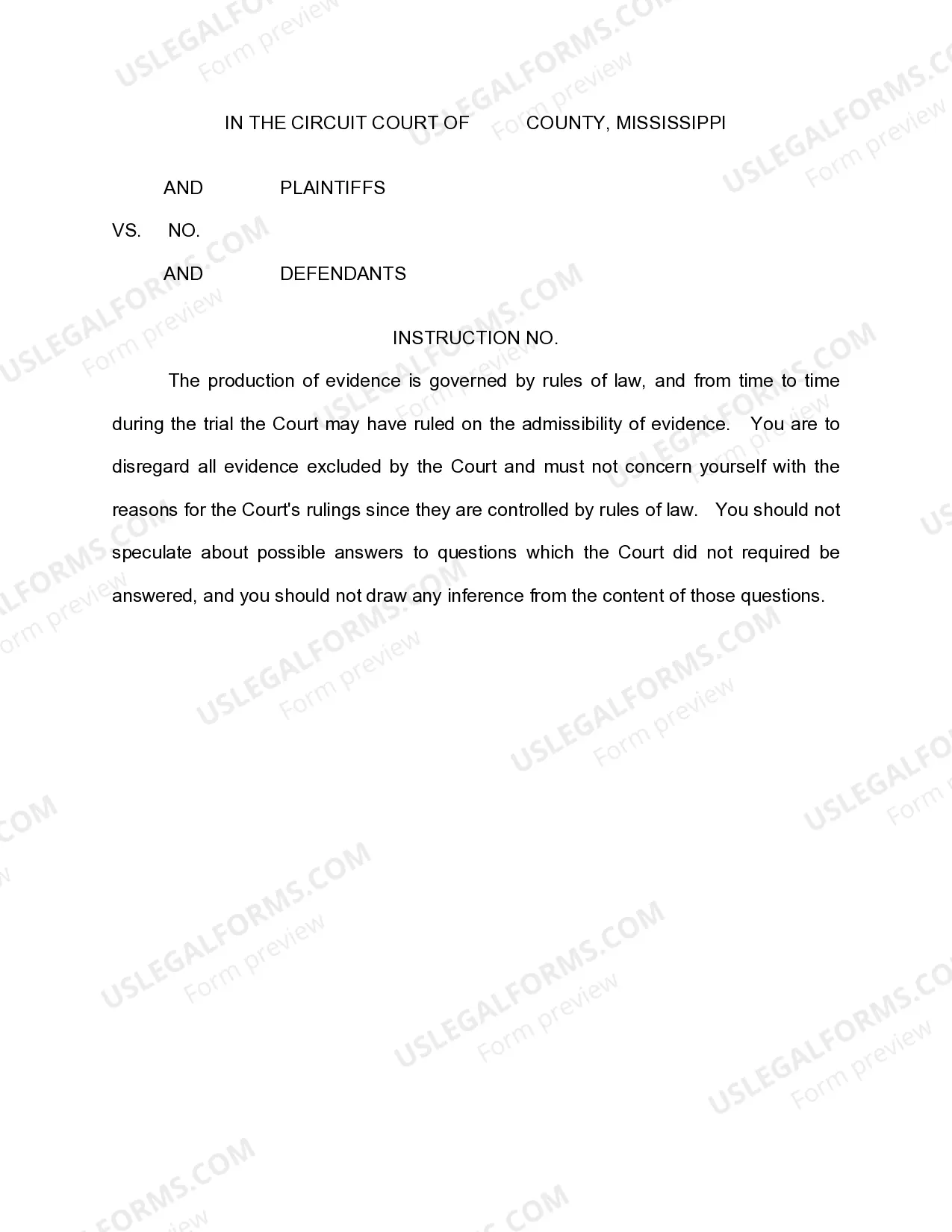
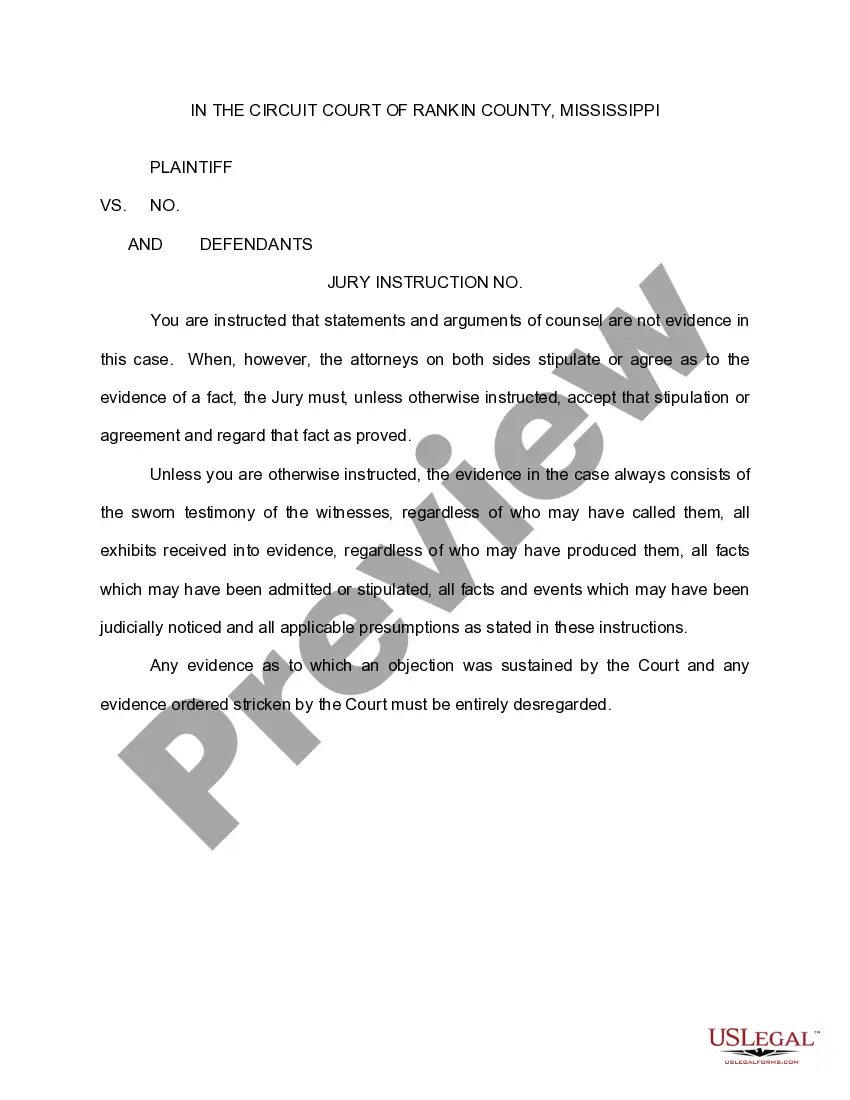
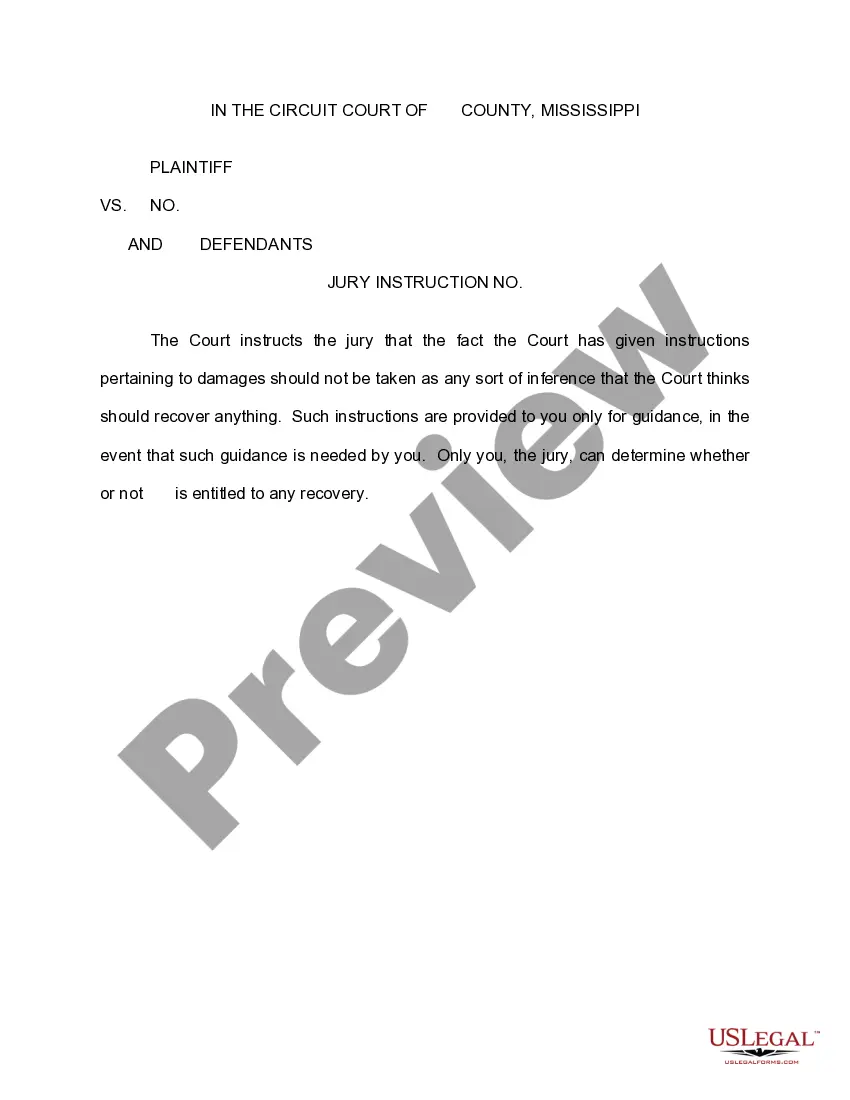
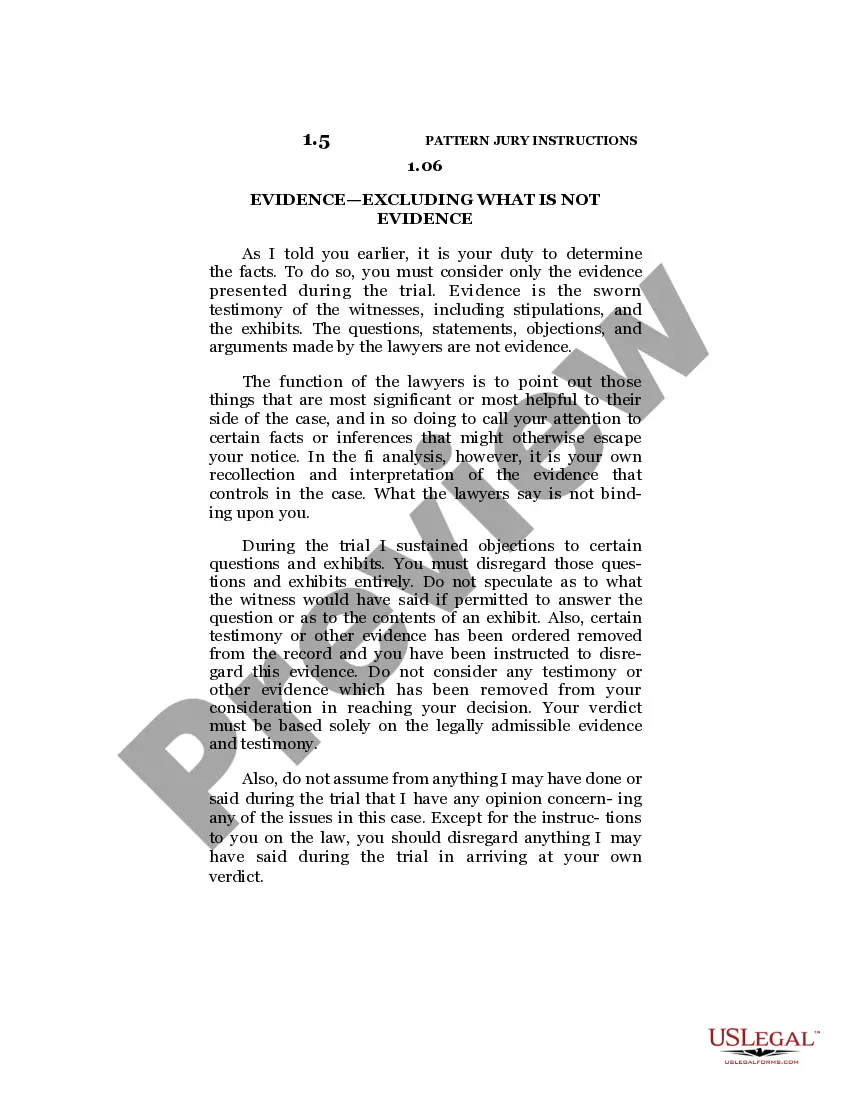
This Jury Instruction on Evidence Excluded by Court is a legal document specific to Mississippi that provides guidance to juries regarding types of evidence that may not be considered during a trial. This form is vital in ensuring that jurors understand which evidence is admissible, thereby maintaining the integrity of the legal process. Unlike general jury instructions, this form focuses specifically on the exclusion of evidence, helping to clarify legal standards for the jury.
Key parts of this document
- Instructions on types of evidence that are excluded from consideration.
- Legal definitions relevant to the exclusion of evidence.
- Guidance on how jurors should handle excluded evidence in their deliberations.
- References to applicable Mississippi laws and case law regarding jury instructions.
Common use cases
This form should be used in a court trial scenario where certain evidence has been ruled inadmissible by the court. It is particularly necessary when a judge needs to instruct the jury on how to proceed in regards to this excluded evidence to ensure a fair trial. Attorneys might use this during jury selection or trial to prepare jurors for evidence exclusion that may arise during deliberations.
Who should use this form
- Judges who are providing jury instructions in a trial.
- Attorneys preparing for trial who need a reference for jury instructions.
- Legal clerks assisting with documentation for jury procedures.
Instructions for completing this form
- Review the specific evidence that has been ruled inadmissible by the court.
- Read the provided legal definitions and ensure they align with current law.
- Integrate the instructions on handling this evidence into trial preparations.
- Use the form to draft clear and concise jury instructions for jurors.
- Finalize and submit the instructions to the court as part of the trial documentation.
Does this form need to be notarized?
In most cases, this form does not require notarization. However, some jurisdictions or signing circumstances might. US Legal Forms offers online notarization powered by Notarize, accessible 24/7 for a quick, remote process.
Get your form ready online
Our built-in tools help you complete, sign, share, and store your documents in one place.
Make edits, fill in missing information, and update formatting in US Legal Forms—just like you would in MS Word.
Download a copy, print it, send it by email, or mail it via USPS—whatever works best for your next step.
Sign and collect signatures with our SignNow integration. Send to multiple recipients, set reminders, and more. Go Premium to unlock E-Sign.
If this form requires notarization, complete it online through a secure video call—no need to meet a notary in person or wait for an appointment.
We protect your documents and personal data by following strict security and privacy standards.

Make edits, fill in missing information, and update formatting in US Legal Forms—just like you would in MS Word.

Download a copy, print it, send it by email, or mail it via USPS—whatever works best for your next step.

Sign and collect signatures with our SignNow integration. Send to multiple recipients, set reminders, and more. Go Premium to unlock E-Sign.

If this form requires notarization, complete it online through a secure video call—no need to meet a notary in person or wait for an appointment.

We protect your documents and personal data by following strict security and privacy standards.
Mistakes to watch out for
- Failing to update the language of the instruction to reflect current case law.
- Using vague terminology that could confuse jurors.
- Overlooking the inclusion of necessary legal definitions.
Benefits of completing this form online
- Convenient access to downloadable content, enabling quick preparation for trials.
- Editability allows for customization to meet specific case needs.
- Reliability as the form is created by licensed attorneys familiar with Mississippi laws.
Main things to remember
- This form provides essential guidance on evidence exclusion in Mississippi trials.
- Accurate jury instructions help maintain the integrity of legal proceedings.
- Use this form to ensure compliance with local laws and to prepare jurors appropriately.
Looking for another form?
Form popularity
FAQ
Jury instructions, directions to the jury, or judge's charge are legal rules that jurors should follow when deciding a case.
These are civil or criminal jury instructions approved by a state court, bench committee, or bar association. They are commonly used by courts in the relevant jurisdiction, as they ease the process of drafting fair jury instructions and theoretically do not have errors.
The judge instructs the jury about the relevant laws that should guide its deliberations. (In some jurisdictions, the court may instruct the jury at any time after the close of evidence.The judge reads the instructions to the jury. This is commonly referred to as the judge's charge to the jury.
The criminal statute of limitations requires prosecutors to file criminal charges against a suspect within two years for misdemeanors and within five years for certain felonies, but there is no time limit in Mississippi for charges of murder, kidnapping, rape, burglary, robbery, larceny, and several other serious
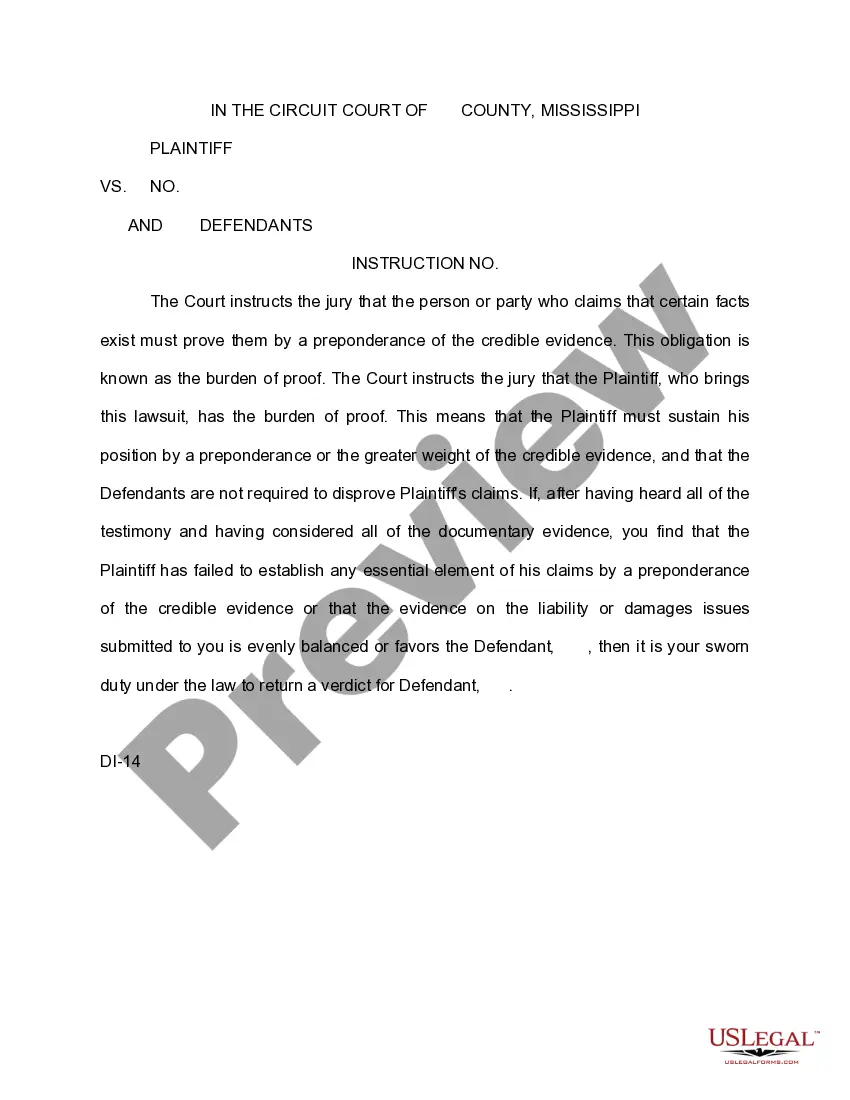
Preponderance of the evidence is one type of evidentiary standard used in a burden of proof analysis. Under the preponderance standard, the burden of proof is met when the party with the burden convinces the fact finder that there is a greater than 50% chance that the claim is true.
The lowest standard of proof is known as the 'preponderance of evidence. ' The preponderance of evidence standard comes into play when the plaintiff satisfies the burden of proof by offering evidence that demonstrates their claims have a greater than 50% chance to be true.
The preponderance-of-the-evidence standard is the default for most civil lawsuits. In these cases a plaintiff is typically suing a defendant for lost money because of acts like breaking a contract or causing a car accident (the money loss might be due to vehicle damage and medical bills, for example).
Preponderance of the evidence is required in a civil case and is contrasted with "beyond a reasonable doubt," which is the more severe test of evidence required to convict in a criminal trial.
"Preponderance of the evidence means evidence that has more convincing force than that opposed to it. If the evidence is so evenly balanced that you are unable to say that the evidence on either side of the issue preponderates, your finding on that issue must be against the party who had the burden of proving it.