Business Deductibility Checklist
Understanding this form
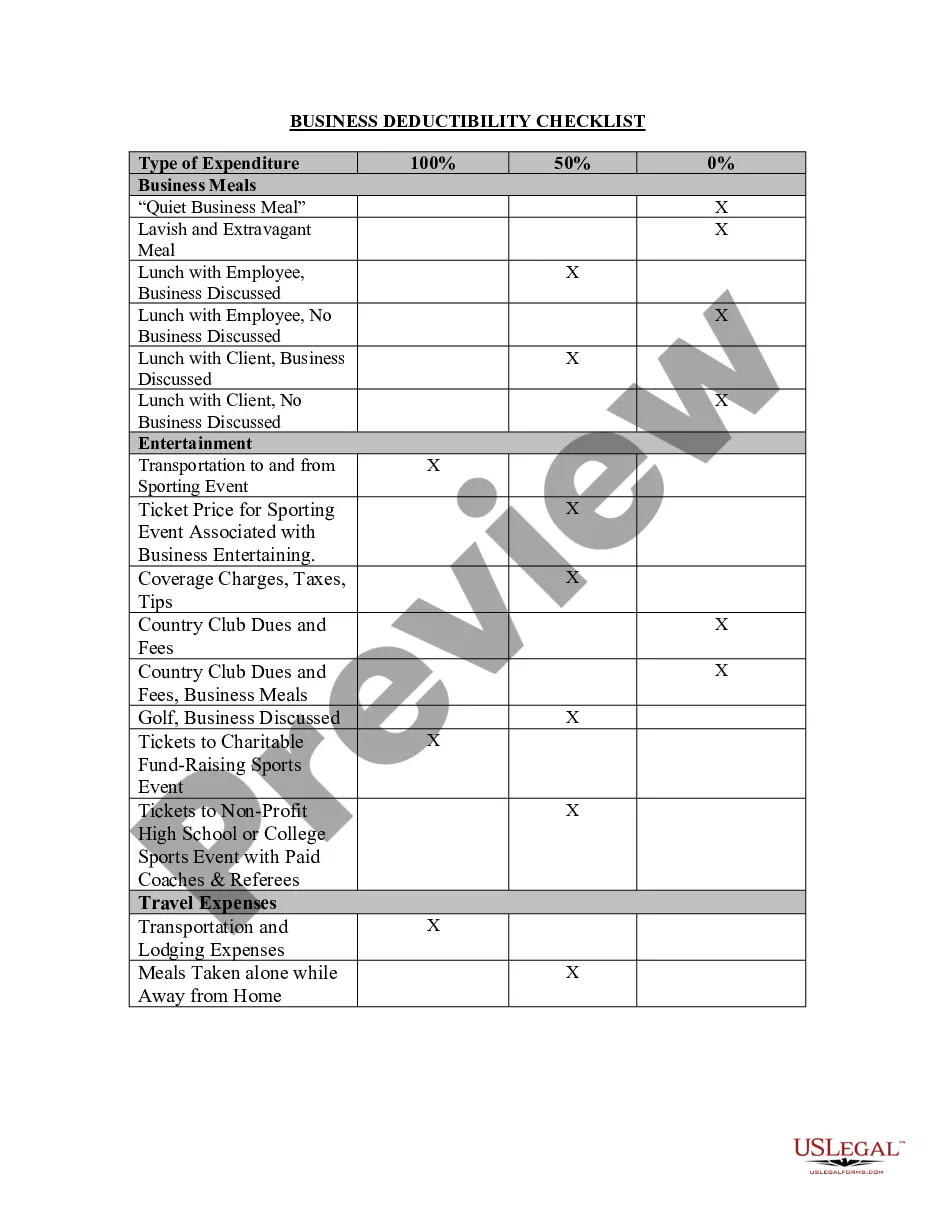
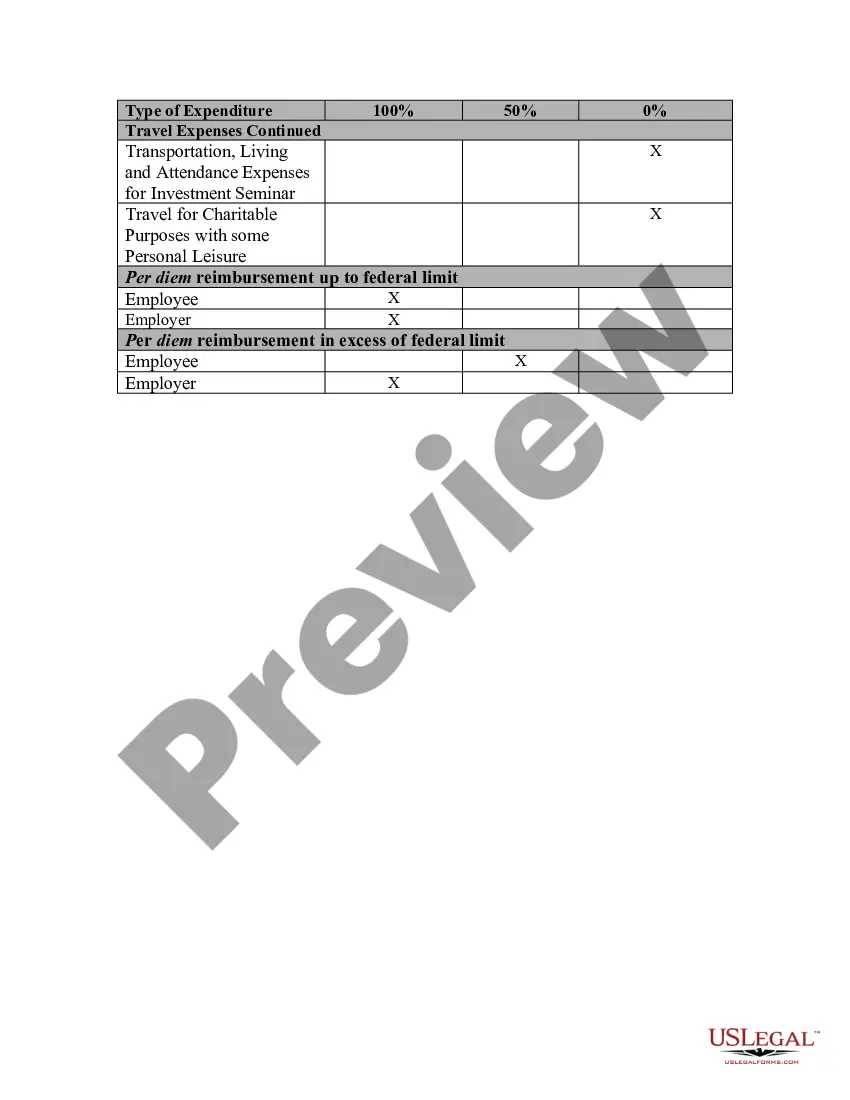
The Business Deductibility Checklist is a comprehensive tool designed to help employers assess various business expenditures eligible for tax deductions. This form distinguishes itself by providing a detailed breakdown of expenses, ensuring that businesses can document their spending accurately for tax purposes. It is especially useful for those seeking to identify which costs are deductible under IRS guidelines.
Key parts of this document
- Business meals and their classifications
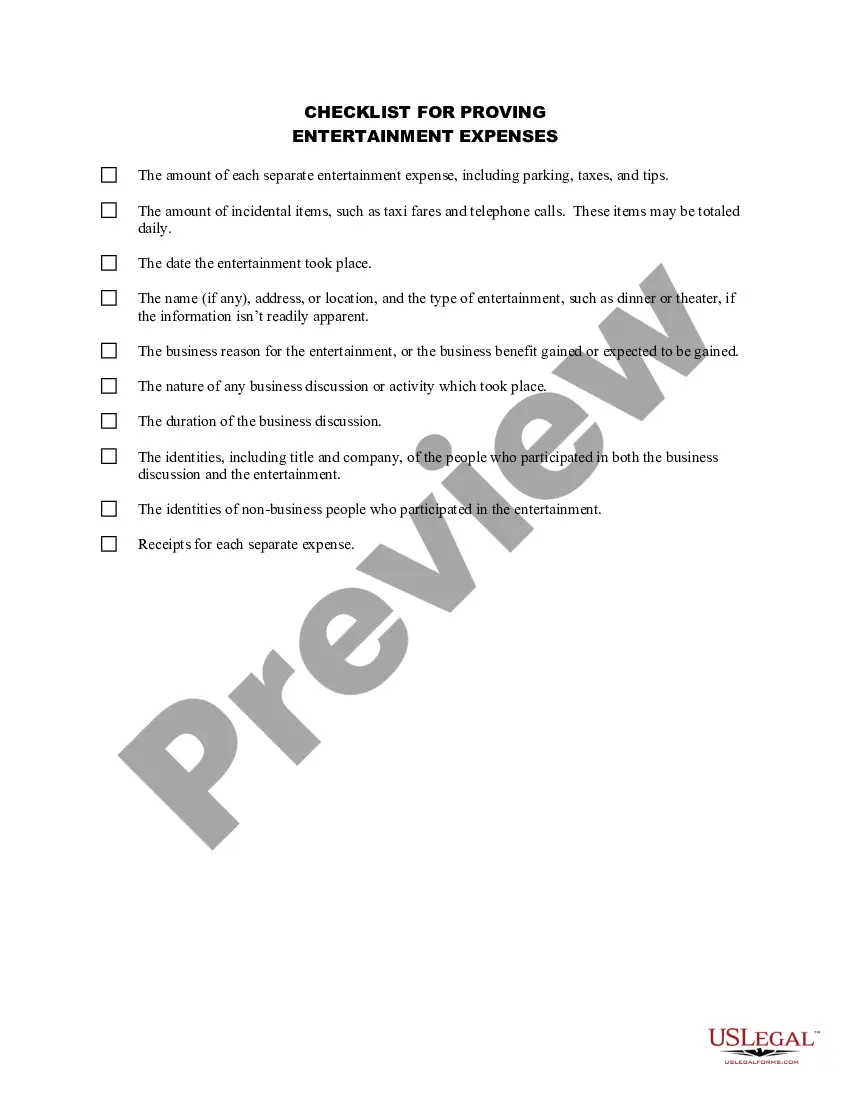
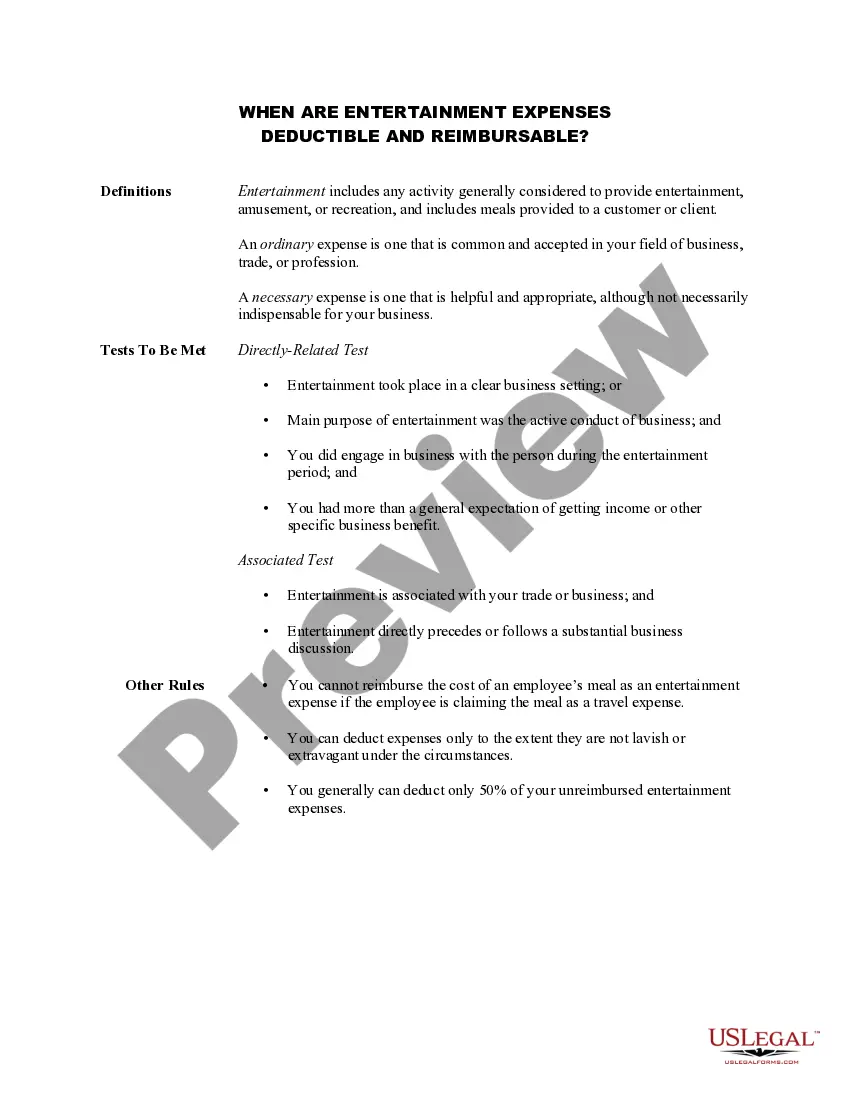
- Entertainment expenses related to business activities
- Travel expenses covering transportation and lodging
- Specific allowances for meals and travel reimbursements
- Charitable contribution guidelines for event attendance
Situations where this form applies
This form is ideal for business owners and HR professionals who need to evaluate and document expenditures that can be deducted for tax purposes. It is particularly useful during tax season or when preparing for an audit. Utilizing this checklist can help ensure compliance with tax regulations and optimize potential savings on deductible expenses.
Who should use this form
This form is intended for:
- Small business owners seeking to maximize tax deductions
- Human resources professionals managing employee reimbursements
- Accounting professionals assisting clients with tax preparation
- Non-profit organizations evaluating deductible expenses for events
How to prepare this document
- Identify the type of expenditure you are evaluating (e.g., meals, entertainment, travel).
- Gather documentation and receipts associated with each expenditure.
- Check off the applicable categories for each type of expense on the checklist.
- Calculate total amounts based on IRS limits for deductibility.
- Keep this checklist for your records and tax filing purposes.
Notarization guidance
This form does not typically require notarization to be legally valid. However, some jurisdictions or document types may still require it. US Legal Forms provides secure online notarization powered by Notarize, available 24/7 for added convenience.
Get your form ready online
Our built-in tools help you complete, sign, share, and store your documents in one place.
Make edits, fill in missing information, and update formatting in US Legal Forms—just like you would in MS Word.
Download a copy, print it, send it by email, or mail it via USPS—whatever works best for your next step.
Sign and collect signatures with our SignNow integration. Send to multiple recipients, set reminders, and more. Go Premium to unlock E-Sign.
If this form requires notarization, complete it online through a secure video call—no need to meet a notary in person or wait for an appointment.
We protect your documents and personal data by following strict security and privacy standards.

Make edits, fill in missing information, and update formatting in US Legal Forms—just like you would in MS Word.

Download a copy, print it, send it by email, or mail it via USPS—whatever works best for your next step.

Sign and collect signatures with our SignNow integration. Send to multiple recipients, set reminders, and more. Go Premium to unlock E-Sign.

If this form requires notarization, complete it online through a secure video call—no need to meet a notary in person or wait for an appointment.

We protect your documents and personal data by following strict security and privacy standards.
Mistakes to watch out for
- Failing to keep proper documentation for each business expense.
- Confusing personal expenses with business-related expenditures.
- Not understanding the limits on meal and entertainment deductions.
- Neglecting to categorize expenses correctly, which may lead to missed deductions.
Benefits of using this form online
- Instant access to professionally drafted templates, saving you time.
- Ability to customize the checklist for your specific business needs.
- Convenient download options ensure you can maintain digital and physical records.
- Reliable documentation assists in preparing for audits and tax submissions.
Legal use & context
- This checklist is designed to comply with IRS guidelines for business deductions.
- Using this form helps ensure you are documenting expenses correctly.
- Understanding allowable deductions can reduce overall business tax liability.
Looking for another form?
Form popularity
FAQ
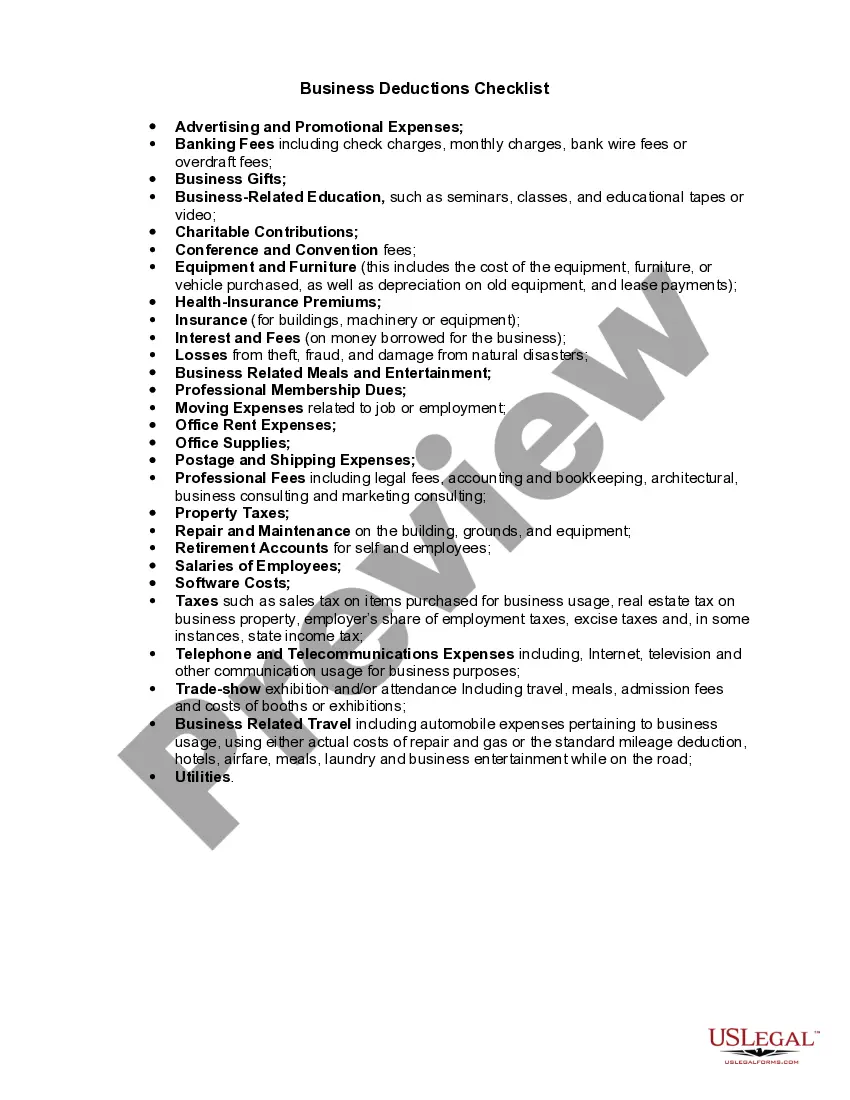
Accounting fees. Advertising. Bank charges. Commissions and sales costs. Consultation expenses. Continuing professional education costs. Contract labor costs. Credit and collection fees.
Business car use. Charitable contributions. Medical and dental expenses. Health Savings Account. Child care. Moving expenses. Student loan interest. Home offices expenses.
Business Meals. As a small business, you can deduct 50 percent of food and drink purchases that qualify. Work-Related Travel Expenses. Work-Related Car Use. Business Insurance. Home Office Expenses. Office Supplies. Phone and Internet Expenses. Business Interest and Bank Fees.
What Are the Limits of Startup Deductions? The Internal Revenue Service (IRS) limits how much you can deduct for LLC startup expenses. If your startup costs total $50,000 or less, you are entitled to deduct up to $5,000 for startup organizational costs.
Can I write off business expenses if I don't have an LLC or an S-Corp? Yes, even if you are filing as an individual, you can still write off business expenses. All businesses can deduct ordinary and necessary expenses from their revenue. The IRS will tax you as a sole proprietor if you are the only owner.
Rental expense. LLCs can deduct the amount paid to rent their offices or retail spaces. Charitable giving. Insurance. Tangible property. Professional expenses. Meals and entertainment. Independent contractors. Cost of goods sold.
Advertising and marketing expenses. Credit card processing fees. Education and training expenses for employees. Certain legal fees. License and regulatory fees. Wages paid to contract employees. Employee benefits programs. Equipment rentals.
Can I write off business expenses if I don't have an LLC or an S-Corp? Yes, even if you are filing as an individual, you can still write off business expenses. All businesses can deduct ordinary and necessary expenses from their revenue. The IRS will tax you as a sole proprietor if you are the only owner.
Lobbying expenses. Political contributions. Governmental fines and penalties (e.g., tax penalty) Illegal activities (e.g., bribes or kickbacks) Demolition expenses or losses. Education expenses incurred to help you meet minimum. requirements for your business.