Employee Evaluation Form for Salary Increase
Overview of this form
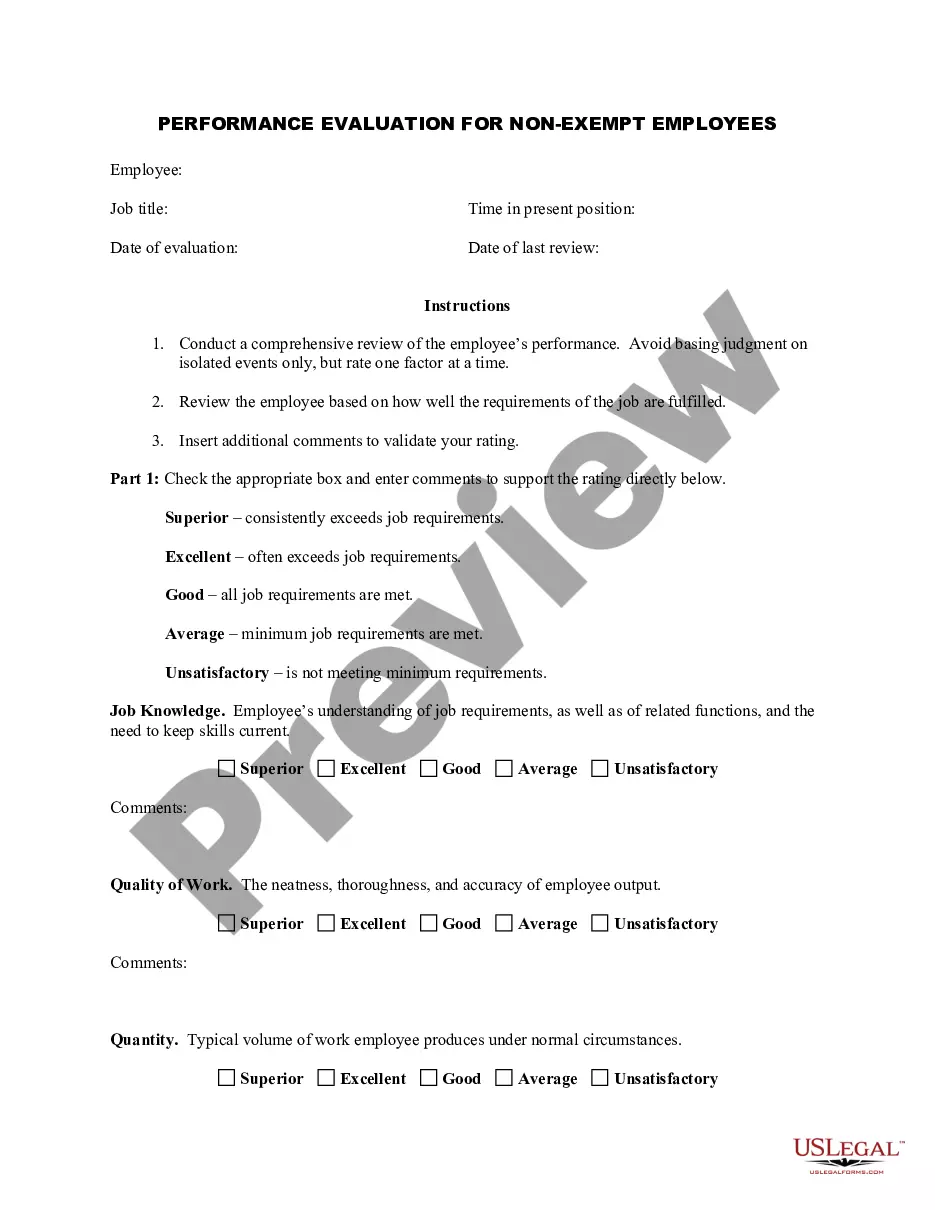
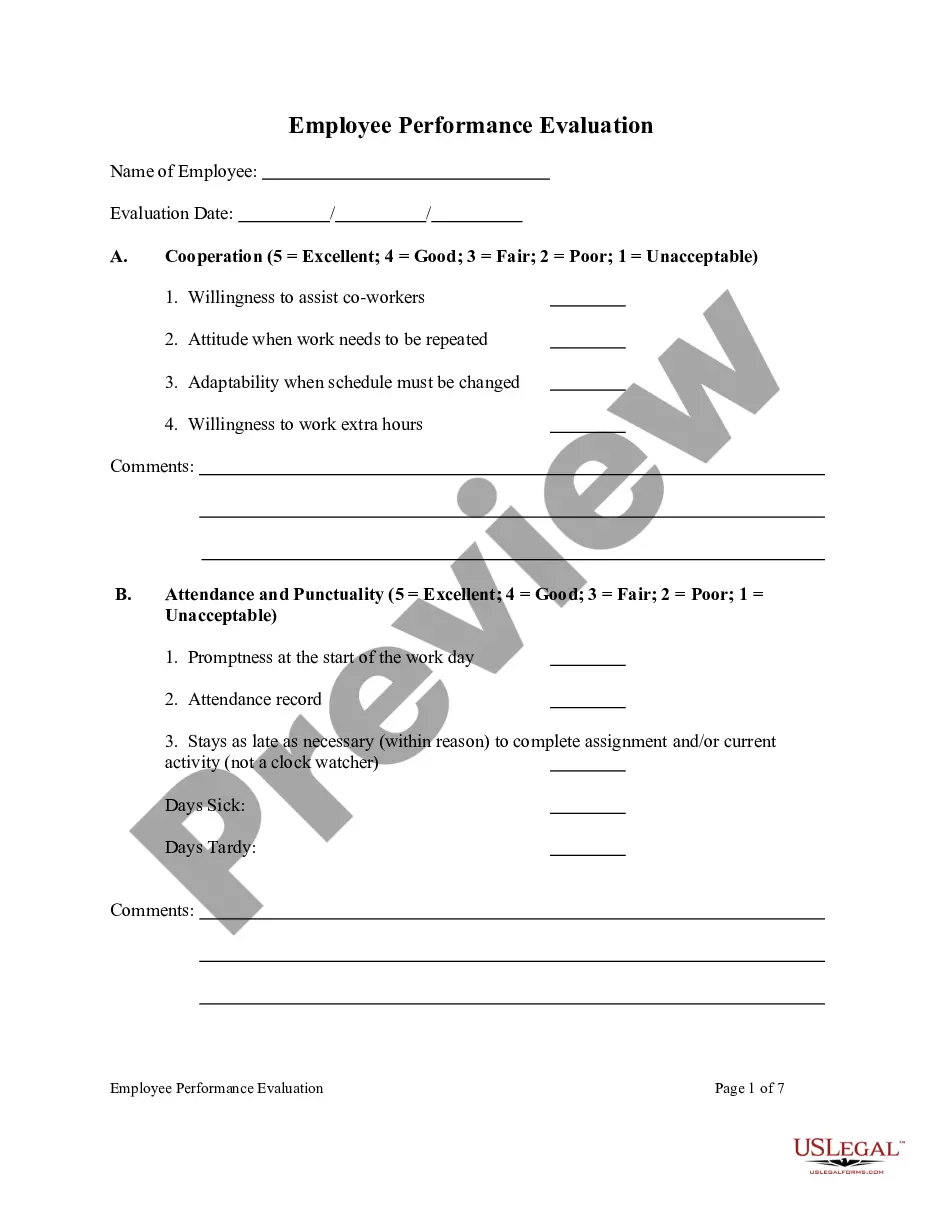
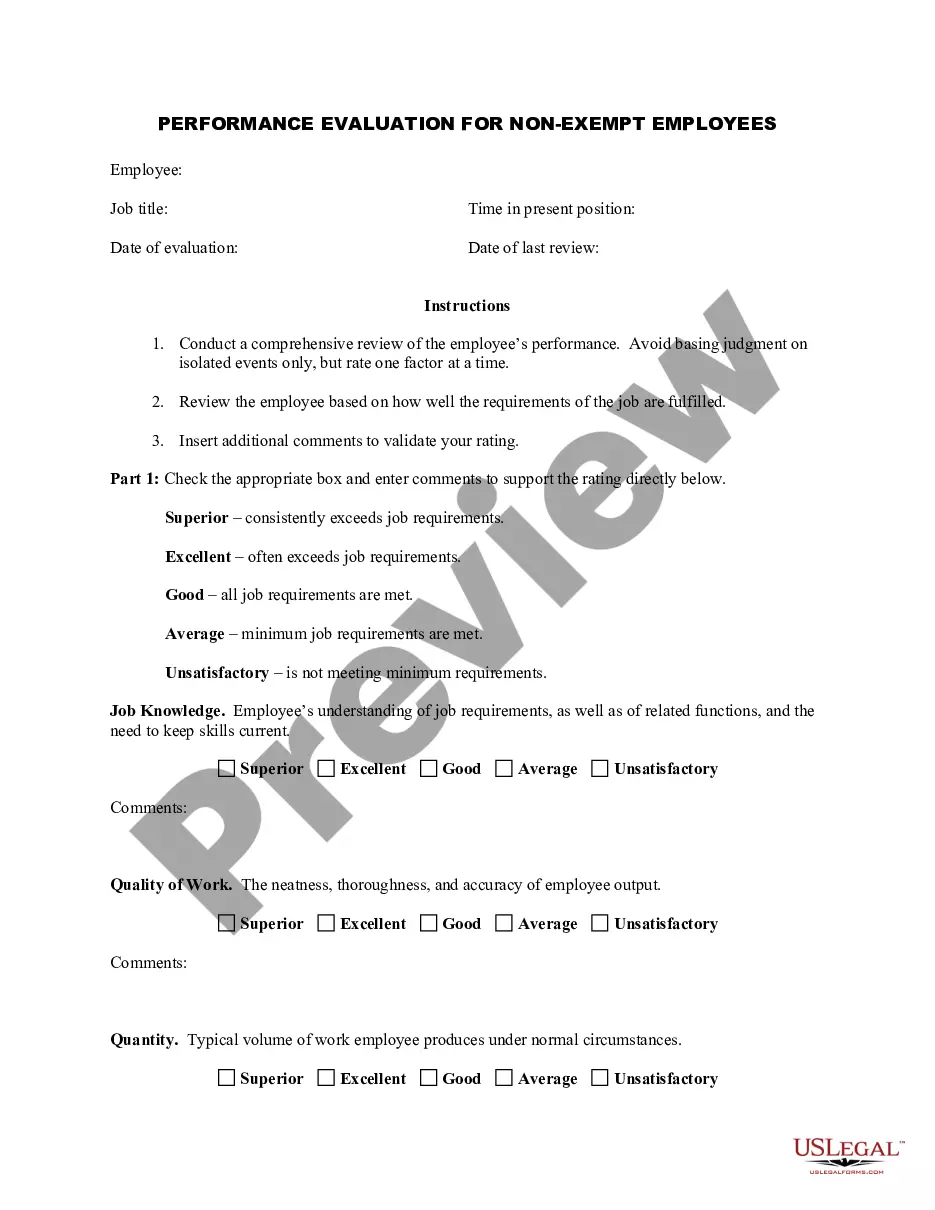
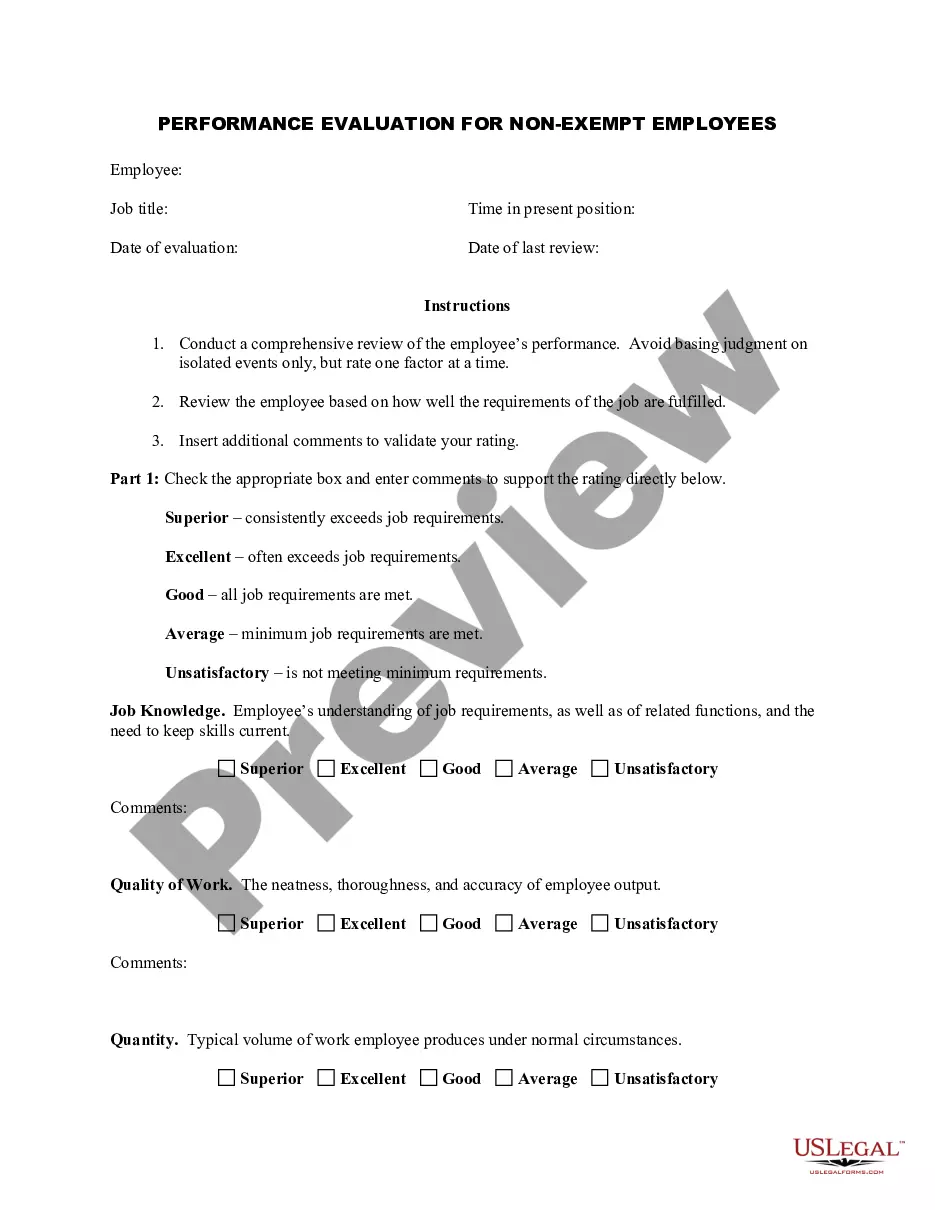
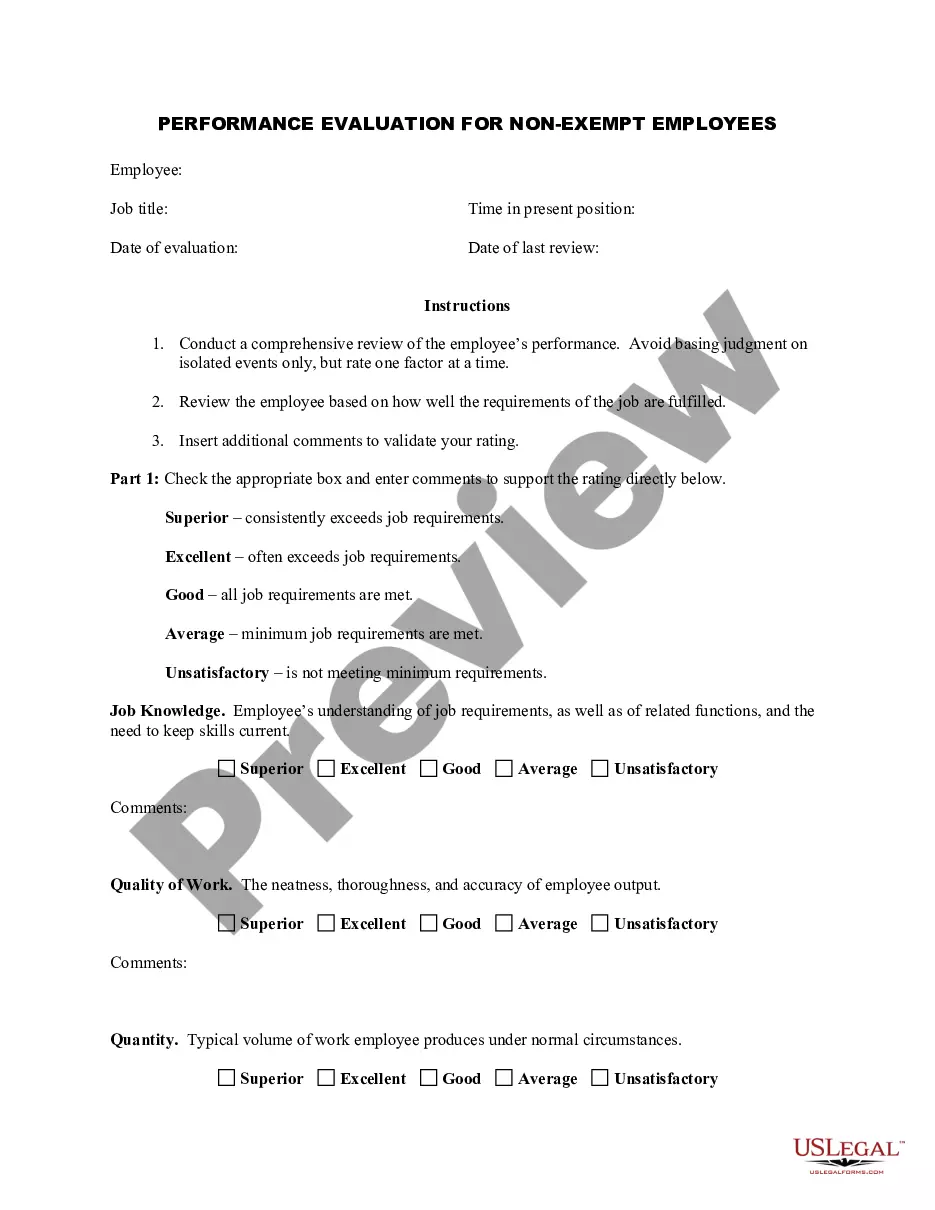
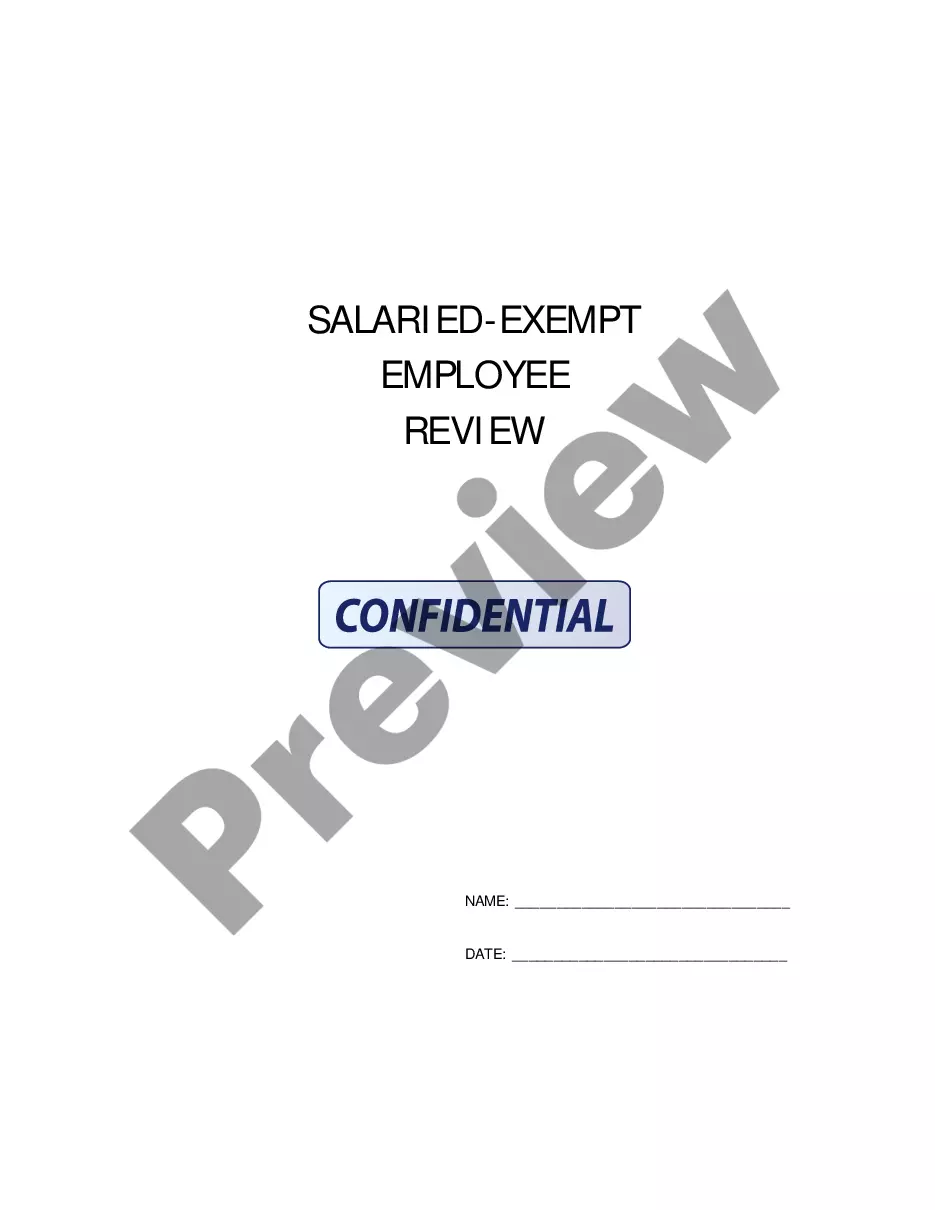
The Employee Evaluation Form for Salary Increase is a structured document designed to assess the performance of non-exempt employees within an organization. This evaluation form facilitates a comprehensive review of an employee's job performance over a specified period and helps determine their eligibility for a salary increase. Unlike generic performance assessments, this form incorporates specific criteria relevant to salary discussions, ensuring that all factors influencing pay decisions are considered.
Key parts of this document
- Employee details: Name, job title, and department.
- Date of evaluation and prior review date.
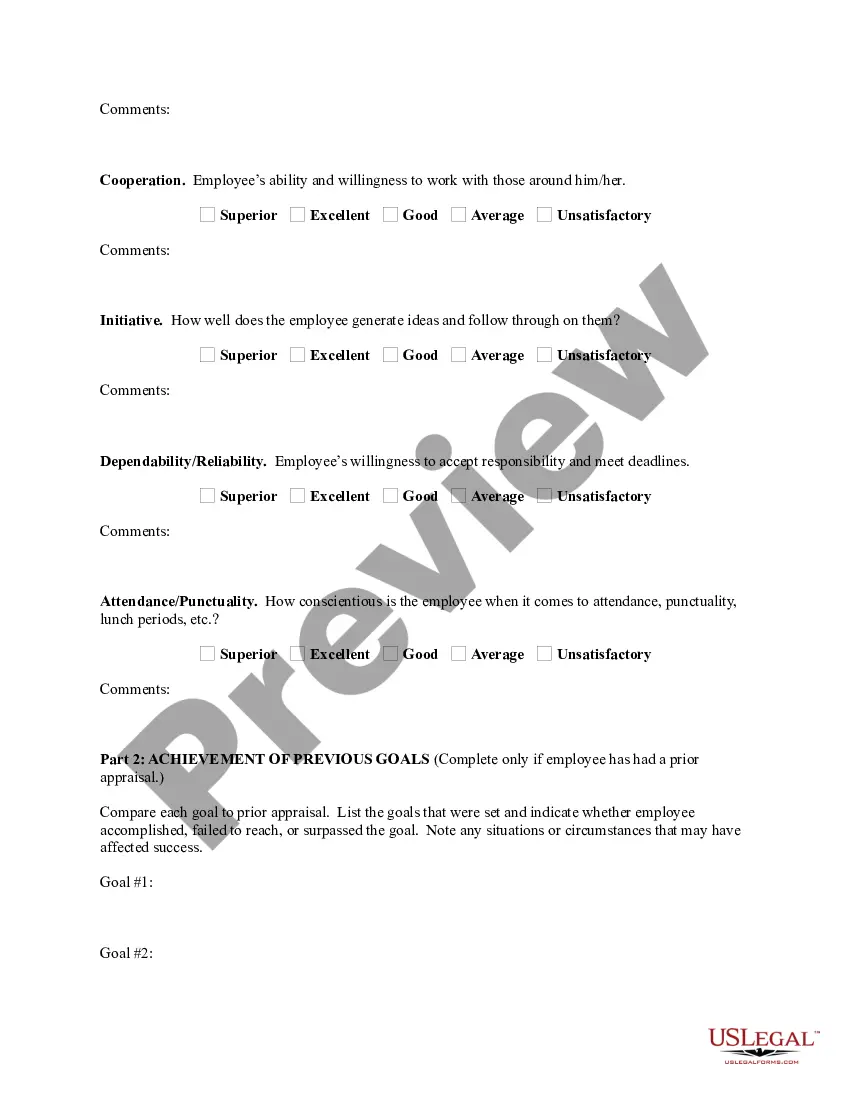
- Performance categories: Includes job knowledge, quality of work, quantity, cooperation, initiative, reliability, and attendance.
- Rating scale: Options for superior, excellent, good, average, and unsatisfactory.
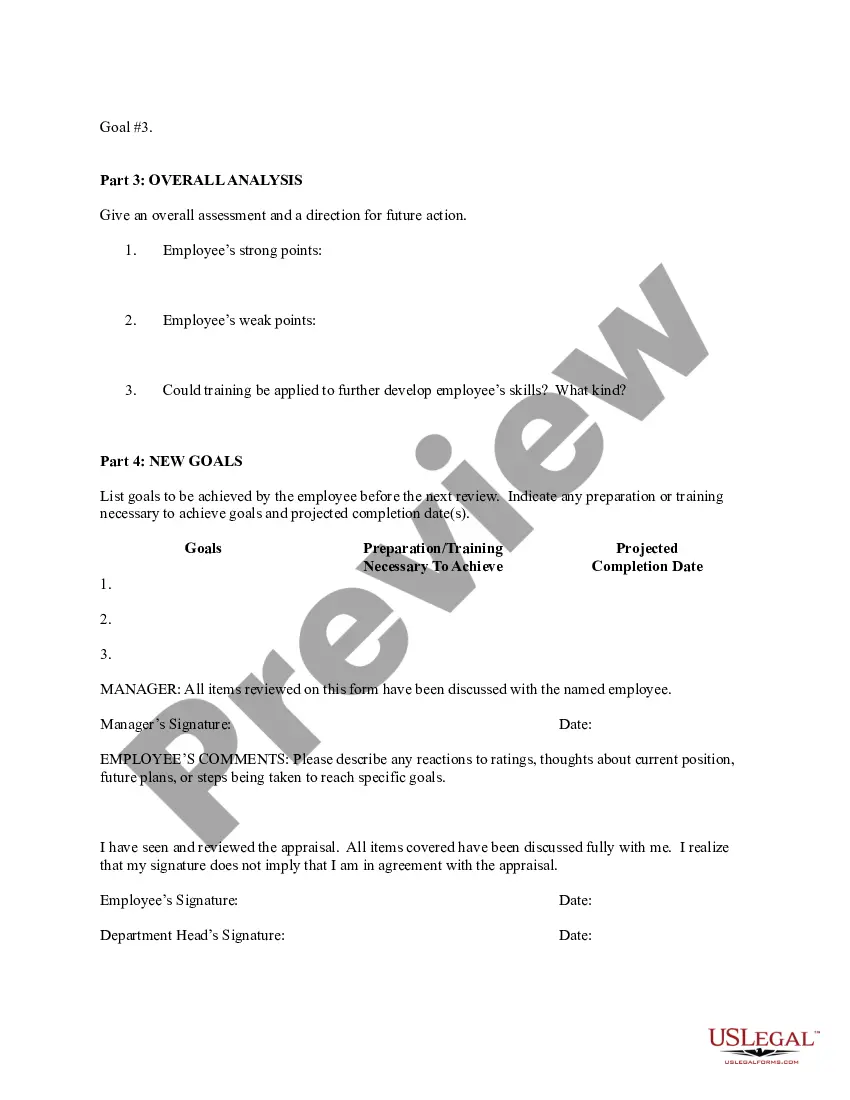
- Accomplishment of previous goals and setting new goals for future performance.
- Sections for manager and employee comments, including signatures.
When to use this form
This form is utilized during regular performance reviews, particularly when discussing salary increases. It is essential when an employee has met the specified review period, typically annually or biannually, and should be used to evaluate those who have shown measurable performance impacts or changes. This form provides a clear framework for discussing raises based on merit, ensuring that all employer-employee conversations regarding salary adjustments are standardized and documented.
Who can use this document
- Managers and supervisors conducting employee performance evaluations.
- Human Resources professionals involved in salary review processes.
- Company executives making decisions regarding employee compensation.
- Any organization seeking a structured approach to performance-based salary increases.
How to prepare this document
- Fill in the employee's details, including name, job title, and department.
- Enter the dates for the evaluation and the last performance review.
- Assess the employee's performance in various categories using the provided rating scale.
- Provide comments to support each rating, elaborating on strengths and areas for improvement.
- Discuss previous and new goals with the employee, documenting them within the form.
- Obtain signatures from both the manager and employee, ensuring mutual acknowledgment of the evaluation process.
Notarization requirements for this form
This form does not typically require notarization unless specified by local law. It's designed for internal use within your organization and serves as a record of performance appraisal discussions.
Get your form ready online
Our built-in tools help you complete, sign, share, and store your documents in one place.
Make edits, fill in missing information, and update formatting in US Legal Forms—just like you would in MS Word.
Download a copy, print it, send it by email, or mail it via USPS—whatever works best for your next step.
Sign and collect signatures with our SignNow integration. Send to multiple recipients, set reminders, and more. Go Premium to unlock E-Sign.
If this form requires notarization, complete it online through a secure video call—no need to meet a notary in person or wait for an appointment.
We protect your documents and personal data by following strict security and privacy standards.

Make edits, fill in missing information, and update formatting in US Legal Forms—just like you would in MS Word.

Download a copy, print it, send it by email, or mail it via USPS—whatever works best for your next step.

Sign and collect signatures with our SignNow integration. Send to multiple recipients, set reminders, and more. Go Premium to unlock E-Sign.

If this form requires notarization, complete it online through a secure video call—no need to meet a notary in person or wait for an appointment.

We protect your documents and personal data by following strict security and privacy standards.
Common mistakes
- Failing to provide specific examples to support performance ratings.
- Not timely completing evaluations, leading to rushed assessments.
- Over-relying on subjective opinion without backing it with performance data.
- Not setting clear, measurable goals for the next evaluation period.
Advantages of online completion
- Convenience: Easily accessible for managers and HR personnel anywhere there is internet access.
- Editability: Fields can be filled out digitally, allowing for easy updates and modifications.
- Document retention: Saves time and reduces paperwork through digital storage.
- Consistency: Streamlined process ensures that all employees are evaluated against the same criteria.
Key takeaways
- The Employee Evaluation Form for Salary Increase assesses performance for potential pay raises.
- It includes multiple performance categories, ensuring a comprehensive evaluation.
- Managers should provide specific examples when rating employee performances.
- This form can standardize salary review processes across varying positions and departments.
Looking for another form?
Form popularity
FAQ
With a flat raise, you determine how much additional money you want to give the employee and add it to their annual salary. To figure out how much the raise increases the employee's weekly or biweekly gross pay, you can divide the annual salary by 52 (weekly), 26 (biweekly), 24 (semimonthly), or 12 (monthly).
Decide on the timing and frequency of salary increases. Determine the criteria that you will use to determine salary increases. Establish goals & targets. Evaluate performance against those goals & targets. Determine the amount of salary increase.
Make it easy to use. Ensure that the information your evaluation form seeks is clear and concise. Determine the focus of the form. There needs to be a clear purpose. Establish a clearly defined rating scale.
Communication. Collaboration and teamwork. Problem-solving. Quality and accuracy of work. Attendance, punctuality and reliability. The ability to accomplish goals and meet deadlines.
Be proud. One major goal of the self-evaluation is to highlight your accomplishments and recollect milestones in your professional development. Be honest and critical. Continuously strive for growth. Track your accomplishments. Be professional.
To convert the percentage to decimal form, move the decimal two places to the left. For example, 3% is 0.03. Then, add 1. (1 + 0.03 = 1.03) Multiply your employee's current pay rate by that decimal. The answer is your employee's new rate.
Inform their team member they're getting a pay raise. Explain why they believe the employee deserves the extra salary (consistent high-quality work, particular achievements etc.) Briefly mention future expectations (without putting undue pressure on the employee).
Typically, it's appropriate to ask for a raise of 10-20% more than what you're currently making. You can also use various online websites that take into account your job title, geographic location and experience level when determining a reasonable raise.
Make it easy to use. Ensure that the information your evaluation form seeks is clear and concise. Determine the focus of the form. There needs to be a clear purpose. Establish a clearly defined rating scale.